




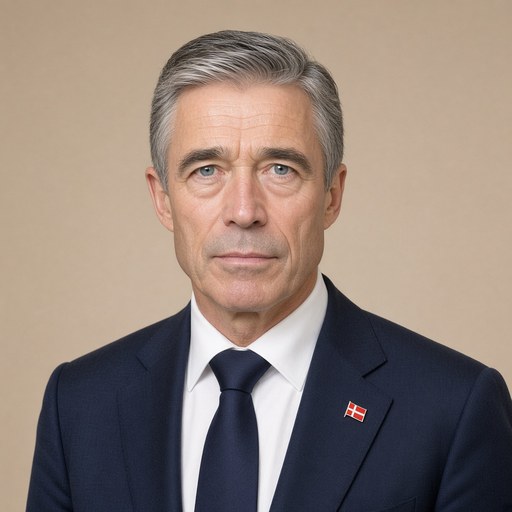
The Prime Minister's speech in connection with the Foreign Policy Committee's hearing on Iraq on March 24, 2004.
 Anders Fogh Rasmussen · Prime Minister of Denmark
- Context
- Rasmussen addressed the Danish Foreign Policy Committee's hearing on Iraq on March 24, 2004, defending Denmark's decision to join the military intervention.
- Main themes
- Denmark's participation in Iraq War, basis for military action, UN Security Council resolutions, weapons of mass destruction, Saddam Hussein's non-cooperation, intelligence assessments, international law, forward-looking defense perspectives, human rights violations in Iraq, post-September 11 security
- Duration
- ~25 min
- Words
- 3,046
- Sentences
- 186
- Readability
- 42
- Grade
- 11.1
- Syntax
- 2.73
- Vocabulary
- 2.14
Translated from Danish
The broad sphere of national life a sentence belongs to. Every sentence has an Arena, so it is the denominator the other indices are read against.
Other186 sentences in 100 paragraphs
"Perspectives on Denmark's Participation in Military Interventions in Light of Iraq"
The spoken word is valid
I would like to thank the Foreign Policy Committee for the initiative for today's hearing.
The debate on Iraq has so far been narrowly focused on the basis for military action. However, the Iraq situation raises a number of principled and more forward-looking questions about how we should handle the new threats we face.
The time has come for these questions to be debated. Therefore, I welcome today's hearing.
I will focus on three things in my statement:
the basis for the war,
the developments in Iraq, and the forward-looking perspectives.
* * *
I would like to begin by stating that the decision to participate in the military action in Iraq was difficult. Using military force will always be the heaviest decision a government and Parliament can face. Many conflicting considerations and arguments had to be weighed against each other in March last year. Hardly any other issue in recent times has been debated as intensely around the world. There were no easy answers or simple solutions.
But it is my and the government's firm belief that the basis for the decision to participate in Iraq was sound – and that the decision was right. Let me recap why.
First: The government supported the military action against Iraq due to the country's lack of cooperation with the UN.
The government's justification for participation is outlined in proposal B 118 from March 2003. The justification was that Saddam Hussein would not take the last chance that a united Security Council had given him to cooperate immediately, actively, and unconditionally with the UN.
Iraq had previously produced and used weapons of mass destruction. The Iraqi regime would not account for what had happened to the weapons it had previously acknowledged possessing.
This behavior created significant uncertainty in the region and internationally. Only through Saddam Hussein's active cooperation could the uncertainty about Iraq's weapons of mass destruction be removed. Therefore, cooperation was absolutely central.
And there was reason to be concerned about Iraq's lack of cooperation. It was an aggressive regime that had previously invaded its neighboring countries and used chemical weapons against its own population.
It was a barbaric and totalitarian regime of the worst kind. The Iraqi people suffered from massive violations of human rights. Violence, torture, and mass graves were part of everyday life.
At the same time, it was a regime that did not shy away from supporting terrorists. A regime that actively supported Palestinian suicide bombers and that would not cooperate with the UN on the dismantling of illegal weapons of mass destruction – we could not live with that after September 11, 2001.
Second: It was not the Danish government, or for that matter the British or American government, that claimed that Iraq's lack of cooperation with the UN and the country's proliferation of weapons of mass destruction posed a threat to international peace and security.
The UN Security Council had established this in November 2002 in resolution 1441.
Unanimously.
Third: The government based its decision to participate in the Iraq war on open sources.
We relied on the same open sources that were available to Parliament. First and foremost, the Security Council's resolutions and the reports that the UN's weapons inspectors continuously provided to the UN Security Council regarding how cooperation between Saddam Hussein and the UN was progressing.
As the government has openly stated all along, we also received ongoing information from other sources, including from the Defense Intelligence Service.
However, it was not this information that made the difference. For the Danish government, the open sources constituted a fully sufficient basis.
The information we received from intelligence services did not give us grounds to question the Security Council's assessment of the threat from Iraq's proliferation of weapons of mass destruction.
Thus, in the period leading up to the Iraq war, the Defense Intelligence Service's assessment was that Iraq likely possessed biological and chemical weapons.
Fourth: The military action against Iraq was clearly anchored in the UN.
The Security Council had authorized the use of force to disarm Iraq with resolution 678 and later resolutions. There was broad consensus in Parliament back in 1998. And that authorization was still in effect when the military action took place.
Resolution 1441 actually strengthened and clarified the basis for the use of military means against Iraq that was already laid out in the earlier resolutions.
We share this assessment of the legal basis with a number of countries. But international law is not an exact science. And not surprisingly, not all international law experts have agreed on the assessment. But the government's position has always been clear. And we have from the outset presented our legal assessments openly.
In this context, I would like to remind you that a broad majority in Parliament in 1998 and 1999 approved Danish participation in the military action in Kosovo. This occurred, as is well known, without a proper mandate from the UN Security Council.
It was also discussed at that time whether there was a legal basis for the intervention. From certain quarters, it is now described as if everyone was in agreement that the action was fully in accordance with international law. But it was, as mentioned, controversial. The broad recognition today of the justification for the Kosovo action is a good illustration that international law is constantly evolving and is challenged by new situations.
And let me finally emphasize that the fact that no weapons of mass destruction have been found in Iraq does not mean that the government's basis for participating in Iraq was flawed.
The Danish decision was precisely not based on secure evidence of Saddam Hussein's stockpiles of weapons of mass destruction. It was based on the lack of cooperation with the UN.
Precisely because Saddam Hussein would not cooperate, there was a fundamental and unacceptable uncertainty about what illegal weapons he had. It was this unacceptable uncertainty that we had to contend with in March last year.
The overarching political question was: Could we take the risk that a ruler like Saddam Hussein had these weapons and would use them? Should we let doubt benefit a ruthless and unpredictable dictator? Could we, in the twelfth year, accept that he defied the UN Security Council?
For me, there was no doubt. We not only had the right to act. It was our duty.
* * *
Today, Saddam Hussein's regime is gone. The world is rid of an aggressive tyrant. The capture of Saddam Hussein put the final period on 30 years of oppression of the Iraqi people.
A free, independent, and democratic Iraq is now being rapidly established. Reconstruction is in full swing. Sovereignty will be transferred to the Iraqis on July 1 of this year.
On March 8, a temporary Iraqi constitution was signed. Even now, the law must be described as one of the most democratic in the Middle East. It has the most liberal section on human rights and civil rights in the entire region.
The temporary constitution contains two main elements: First, a two-phase roadmap for the establishment of the final Iraqi government.
Second, the legal basis for the temporary administration of Iraq until a final elected parliament is in place. This is expected to happen around the turn of 2005.
The signing of the temporary constitution is a significant step towards an independent Iraq. And furthermore, it is an example of the Iraqi parties' willingness to make the necessary compromises and move the transition process forward.
We must acknowledge that a long and difficult road lies ahead. Ruthless terrorists are doing everything they can to derail the process in order to seize power themselves and impose a new despotic regime.
But we should take heart that less than a year after the Iraqi regime fell, there is now actually a temporary Iraqi constitution. And that sovereignty will be transferred to the Iraqi people within a few months.
At the same time, it is positive that there are signs of increasing UN engagement in Iraq. And there should be no doubt that the government supports a strengthened UN role in Iraq.
It is also encouraging that Iraqi society – despite the terror – has actually begun to function again:
The command economy has been replaced by a market economy.
The supply of energy and water is back to the same level as before the military action.
Oil production is up to over 2 million barrels of oil per day.
33,000 Iraqi teachers have been retrained and 2,300 schools have been renovated.
Education is again focused on acquiring knowledge. Not on indoctrination for war and hatred.
3 million Iraqi children under five years old have been vaccinated against preventable diseases.
And local markets are seeing an increasing supply of food.
I had the opportunity to observe some of these advances during my visit to Iraq last month.
My impression was that the Iraqi people are very interested in moving forward quickly and bringing Iraq back into the international community.
And I am pleased that the majority of Iraqis, according to a recent BBC poll, share this optimism.
Although the poll reflects a critical view of the military action in Iraq among many Iraqis in several ways, it is encouraging that nearly 57 percent of those surveyed believe that life in Iraq is better now than under Saddam. And that 71 percent believe that their lives will be even better in a year's time.
It is crucial that countries like Denmark do not betray this hope in Iraq. That countries like Denmark actively support efforts to stabilize Iraq and bring Iraq back into the international community. That we do everything to prevent destructive forces from taking over. And that we support the difficult cooperation between Iraq's internal factions.
Therefore, the government has no plans to withdraw Danish forces. But it is clear that the Danish troops will only remain in Iraq after the transfer of sovereignty in July if the new Iraqi government wishes it.
The Danish effort is extensive and broad-based. It covers both military, humanitarian, and commercial aspects. We have over 500 soldiers, police officers, and advisors in Iraq. So far, 350 million kroner have been allocated solely for reconstruction and humanitarian efforts.
The reconstruction of Iraq has implications beyond the country's own borders. A free and independent Iraq based on democratic values will have a stabilizing effect throughout the region.
A new and democratic Iraq will also serve as an important model for reform processes in other countries in the region. These are reform processes that the government wishes to actively support both bilaterally, in the EU, and together with the USA through efforts that can strengthen dialogue with Arab countries and promote reform and modernization in the Arab world.
This is an effort that is extremely important for stability in the Middle East and for addressing Islamic terror at its roots. We must enter into a partnership with Arab countries to promote democratic development, advance human rights, improve women's opportunities, and strengthen education and social systems.
* * *
Let me finally turn to the more principled and forward-looking questions that the Iraq effort raises.
The course of the Iraq situation should give rise to reflection in Denmark and in the international community.
We must recognize that the international threat landscape has changed. And we must consider what consequences this should have for the UN, for international law, and for the rules on the use of force.
Here, I would like to remind you that it is not only Iraq that has given rise to difficult considerations. In a number of other cases, the international community has faced difficult choices for or against military intervention in recent years.
In Kosovo, NATO chose to take action when the UN Security Council was blocked and did not live up to its responsibility to stop massive violations of human rights and deportations that posed a threat to peace and stability in the region.
In Rwanda, however, the international community did not intervene, despite a full-blown genocide taking place.
And in Iraq, the USA, as is well known, led an international military action in 1991 and 1998 to enforce the Security Council's resolutions.
It is easy to state that the international threat landscape has changed dramatically in recent years. It is much more difficult to assess what consequences this should have for the development of the international legal order and the rules for the use of force.
The right to self-defense is enshrined in Article 51 of the UN Charter. It is generally recognized that this right to self-defense not only includes cases where an attack has taken place but also cases where an attack is imminent.
The question, however, is whether this right also applies in cases where there is reason to fear an attack, but it is not known with certainty whether the threat is imminent.
Let me ask: Can we, in an age where the threats from terrorism and weapons of mass destruction cannot be ignored, afford to wait for secure evidence before we intervene?
From several quarters, there is talk of the need for so-called preemptive defense and preventive actions. The main argument is that thousands of lives are put at risk if one waits until the threat has become a reality.
There are international law experts who speak of a genuine obligation for UN member states to prevent such a threat from arising. This is obviously particularly relevant in cases where leaders without political control over their exercise of power are acquiring weapons of mass destruction.
In any case, it must be acknowledged that a state that fears massive attacks, e.g., from weapons of mass destruction or terrorists, cannot or will not passively watch if the Security Council is unable to act.
From the perspective of the threatened state, a necessary alternative to collective action approved by the Security Council in such a situation may be for the individual state to take matters into its own hands and resort to military force out of the desire to protect its population. Whether we like it or not, that is the actual reality.
To avoid any misunderstanding: I advocate for an international legal order where all countries – large and small – adhere to a set of common rules. I am firmly against an international legal disorder where individual countries simply take matters into their own hands. But there is a need to consider international legal rules that take into account the threats of the new era.
In the same way, there is a need for clearer international legal rules regarding humanitarian interventions. The developments during the 1990s clearly showed that massive violations of human rights can evolve into threats to international peace and security. And that we cannot afford to passively watch while ruthless tyrants commit unspeakable crimes, even if they do not pose a direct threat to us.
Despite the recent unrest, everyone today can agree that the military intervention in Kosovo was right and had a significant and positive impact on the developments in the Balkans. As I mentioned earlier, there are voices from several quarters stating that the international community not only has a right but indeed an obligation to intervene in such situations.
The UN Secretary-General Kofi Annan is fully aware of these issues. Kofi Annan spoke on September 23, 2003, to the UN General Assembly about the need to develop criteria for so-called early authorization from the Security Council to use force against this new type of threat. Following his speech, the Secretary-General has established a high-level panel to propose possible common responses to the threats of the new era.
The government supports an expansion of the international legal order. Kofi Annan's thoughts are important contributions to the absolutely necessary debate.
There is a need for a discussion of criteria for the use of force and other options that can better enable the Security Council – and the international community in general – to address the threats of the new era.
These are significant questions that I hope will be discussed at today's hearing. But which should also be discussed and analyzed afterwards.
The Danish Parliament's inquiry debate F 7 in November 2003 contributed constructively to the discussion here at home. The government has, in follow-up to the inquiry, requested the Danish Institute for International Studies to prepare an update of its 2001 report on humanitarian interventions. I look forward to this contribution to the considerations in the field.
It is particularly important for Denmark to consider these questions in light of our upcoming membership in the UN Security Council. Membership gives us a special responsibility that we must prepare for as best as we can.
* * *
It is difficult to talk about handling the threats of the new era without touching on the threat of terrorism. Especially not after the horrifying terrorist attacks in Madrid.
Terror and the proliferation of weapons of mass destruction today represent the two most serious threats to our security. This situation is relatively new. It is crucial that we recognize it. That we equip ourselves to handle it. That we act with firmness and consistency.
It is a particularly frightening thought that weapons of mass destruction may one day fall into the hands of utterly unscrupulous terrorists. Let us sincerely hope that it never happens.
But hope is not enough in politics. As responsible politicians, it is our duty to confront the risk. To prepare for the worst possible scenario.
The decisions made by political leaders today have implications for how our children and grandchildren will live with this risk. It is therefore a great responsibility that rests on today’s political leaders.
We fail in our responsibility if we push uncomfortable but necessary decisions aside. If we remain paralyzed with the desire to give the benefit of the doubt to the guilty. And if we cling to a naive hope that evil will somehow disappear on its own.
The Danish population can expect from this government that it will continue to demonstrate the firmness and consistency that the decision to participate in Iraq represented.
With that, I wish the participants a good and fruitful hearing.
The original Danish. The tags above are read on the English translation's sentences.
”Perspektiver for Danmarks deltagelse i militære interventioner i lyset af Irak”
Det talte ord gælder
Jeg vil gerne takke Det Udenrigspolitiske Nævn for initiativet til høringen i dag.
Debatten om Irak har hidtil været snævert fokuseret på grundlaget for den militære aktion. Men Irak-forløbet rejser en række principielle og mere fremadrettede spørgsmål om, hvordan vi skal håndtere de nye trusler, som vi står over for.
Tiden er inde til, at disse spørgsmål kommer til debat. Derfor byder jeg dagens høring velkommen.
Jeg vil fokusere på tre ting i mit indlæg:
grundlaget for krigen,
udviklingen i Irak, og
de fremadrettede perspektiver.
* * *
Jeg vil gerne indledningsvis slå fast, at afgørelsen om deltage i den militære aktion i Irak var svær. At bruge militære magtmidler vil altid være den tungeste beslutning regering og Folketing kan stå over for. Mange modstridende hensyn og argumenter måtte i marts sidste år vejes op mod hinanden. Næppe noget andet spørgsmål i nyere tid er blevet debatteret så intenst verden rundt. Der var ingen lette svar eller nemme løsninger.
Men det er min og regeringens faste overbevisning, at grundlaget for beslutningen om at deltage i Irak var i orden – og at beslutningen var rigtig. Lad mig rekapitulere hvorfor.
For det første: Regeringen støttede den militære aktion mod Irak på grund af landets manglende samarbejde med FN.
Regeringens begrundelse for at deltage fremgår af beslutningsforslag B 118 fra marts 2003. Begrundelsen var, at Saddam Hussein ikke ville benytte sig af den sidste chance, som et enigt Sikkerhedsråd havde givet ham til at samarbejde øjeblikkeligt, aktivt og betingelsesløst med FN.
Irak havde tidligere fremstillet og anvendt masseødelæggelsesvåben. Det irakiske regime ville ikke gøre rede for, hvad der var blevet af våben, som det tidligere selv havde erkendt at være i besiddelse af.
Den adfærd skabte betydelig usikkerhed i regionen og internationalt. Kun gennem Saddam Husseins aktive samarbejde kunne usikkerheden om Iraks masseødelæggelsesvåben fjernes. Derfor var samarbejdet helt centralt.
Og der var grund til at være bekymret over Iraks manglende samarbejde. Der var tale om et aggressivt regime, som tidligere havde invaderet sine nabolande og anvendt giftgas mod sin egen befolkning.
Der var tale om et barbarisk og totalitært regime af værste slags. Den irakiske befolkning led under massive krænkelser af menneskerettighederne. Vold, tortur og massegrave hørte til dagens orden.
Samtidig var der tale om et regime, der ikke veg tilbage fra at støtte terrorister. Et regime der aktivt støttede palæstinensiske selvmordsbombere og som ikke ville samarbejde med FN om afvikling af ulovlige masse-ødelæggelsesvåben – det kunne vi ikke leve med efter 11. september 2001.
For det andet: Det var ikke den danske regering, eller for den sags skyld den britiske eller amerikanske regering, der påstod, at Iraks manglende samarbejde med FN og landets spredning af masseødelæggelsesvåben udgjorde en trussel mod international fred og sikkerhed.
Det havde FN’s Sikkerhedsråd slået fast i november 2002 i resolution 1441.
I enighed.
For det tredje: Regeringen byggede sin beslutning om at deltage i Irak-krigen på åbne kilder.
Vi baserede os på de samme åbne kilder, som var til rådighed for Folketinget. Først og fremmest Sikkerhedsrådets resolutioner og de redegørelser som FN’s våbeninspektører løbende gav til FN’s Sikkerhedsråd, om hvordan det gik med samarbejdet mellem Saddam Hussein og FN.
Som regeringen åbent har sagt hele tiden modtog vi naturligvis også løbende oplysninger fra andre kilder, herunder fra Forsvarets Efterretningstjeneste.
Det var bare ikke disse oplysninger, der gjorde udslaget. For den danske regering udgjorde de åbne kilder et fuldt tilstrækkeligt grundlag.
De oplysninger vi fik fra efterretningstjenester gav os ikke grundlag for at betvivle Sikkerhedsrådets vurdering af truslen fra Iraks spredning af masseødelæggelsesvåben.
Det var således i perioden frem til Irak-krigen Forsvarets Efterretnings-tjenestes vurdering, at Irak sandsynligvis rådede over biologiske og kemiske våben.
For det fjerde: Den militære aktion mod Irak var klart forankret i FN.
Sikkerhedsrådet havde med resolution 678 og senere resolutioner bemyndiget magtanvendelse med henblik på at afvæbne Irak. Det var der bred enighed om i Folketinget tilbage i 1998. Og den bemyndigelse stod stadig ved magt, da den militære aktion fandt sted.
Resolution 1441 styrkede og præciserede i virkeligheden det grundlag for anvendelse af militære midler mod Irak, der allerede lå i de tidligere resolutioner.
Denne vurdering af det folkeretlige grundlag deler vi med en række lande. Men folkeret er ikke en eksakt videnskab. Og ikke overraskende har ikke alle folkeretseksperter været enige i vurderingen. Men regeringens holdning har hele tiden været klar. Og vi har fra starten lagt vores juridiske vurderinger åbent frem.
Jeg vil i denne forbindelse gerne minde om, at et bredt flertal i Folketinget i 1998 og 1999 godkendte dansk deltagelse i den militære aktion i Kosovo. Det skete som bekendt uden et egentligt mandat fra FN’s Sikkerhedsråd.
Det blev også dengang diskuteret, om der var et folkeretligt grundlag for interventionen. Fra visse sider beskrives det nu som om alle dengang var enige om, at aktionen var i fuld overensstemmelse med folkeretten. Men det var som sagt kontroversielt. Den brede anerkendelse i dag af Kosovo-aktionens berettigelse er en god illustration af, at folkeretten er under konstant udvikling og udfordres af nye situationer.
Og lad mig endelig for det femte slå fast: At der ikke er fundet masseødelæggelsesvåben i Irak betyder ikke, at regeringens grundlag for at deltage i Irak har været fejlagtigt.
Den danske beslutning var jo netop ikke baseret på sikre beviser for Saddam Husseins beholdninger af masseødelæggelsesvåben. Den var baseret på det manglende samarbejde med FN.
Netop fordi Saddam Hussein ikke ville samarbejde var der en grundlæggende og uacceptabel usikkerhed om, hvilke ulovlige våben han havde. Det var denne uacceptable usikkerhed, vi måtte forholde os til i marts sidste år.
Det overordnede politiske spørgsmål var: Kunne vi løbe risikoen for, at en magthaver som Saddam Hussein havde disse våben og ville anvende dem ? Skulle vi lade tvivlen komme en samvittighedsløs og uberegnelig diktator til gode ? Kunne vi på 12. år acceptere, at han bød FN’s Sikkerhedsråd trods?
For mig var der ingen tvivl. Vi havde ikke blot ret til at handle. Det var vores pligt.
* * *
I dag er Saddam Husseins regime væk. Verden er befriet for en aggressiv tyran. Tilfangetagelsen af Saddam Hussein satte det endelige punktum for 30 års undertrykkelse af den irakiske befolkning.
Et frit, uafhængigt og demokratisk Irak er nu under hastig etablering. Genopbygningen er i fuld gang. Suveræniteten vil blive overdraget til irakerne den 1. juli i år.
Den 8. marts blev en midlertidig irakisk grundlov undertegnet. Allerede nu må loven betegnes som en af de mest demokratiske i Mellemøsten. Den har det mest liberale afsnit om menneskerettigheder og borgerlige rettigheder i hele regionen.
Den midlertidig grundlov rummer to hovedelementer: For det første en køreplan i to faser for etableringen af den endelige irakiske regering.
For det andet det juridiske grundlag for den midlertidige forvaltning af Irak indtil et endeligt folkevalgt parlament er på plads. Det forventes at ske omkring årsskiftet 2005.
Undertegnelsen af den midlertidige grundlov er et stort skridt på vejen mod et uafhængigt Irak. Og desuden et eksempel på de irakiske parters vilje til at indgå de nødvendige kompromisser og drive overgangsprocessen fremad.
Vi må erkende, at der venter en lang og vanskelig vej forude. Hensynsløse terrorister forsøger af al magt at afspore processen for selv at kunne gribe magten og indføre et nyt despotisk styre.
Men vi bør glæde os over, at der mindre end et år efter, at det irakiske regime faldt nu faktisk ligger en midlertidig irakisk grundlov. Og at suveræniteten overdrages til det irakiske folk selv i løbet af nogle måneder.
Samtidig er det positivt, at der er tegn på stigende FN-engagement i Irak. Og der skal ikke herske tvivl om, at regeringen støtter en styrket FN-rolle i Irak.
Det er også glædeligt, at det irakiske samfund – på trods af terroren – rent faktisk er begyndt at fungere igen:
Kommandoøkonomien er afløst af markedsøkonomi.
Forsyningen af energi og vand er oppe på samme niveau som før den militære aktion.
Olieproduktionen er oppe på over 2 millioner tønder olie om dagen.
33.000 irakiske lærere er blevet efteruddannet og 2.300 skoler istandsat.
Undervisningen lægger igen vægt på tilegnelse af viden. Ikke på opdragelse til krig og had.
3 millioner irakiske børn under fem år er blevet vaccineret mod sygdomme, der kan forebygges.
Og de lokale markeder får et stadig større udbud af fødevarer.
Jeg har selv haft lejlighed til at betragte nogle af disse fremskridt under mit besøg i Irak i sidste måned.
Mit indtryk var, at den irakiske befolkning er stærkt interesseret i at komme hurtigt videre og få Irak bragt tilbage til det internationale samfund.
Og jeg glæder mig over, at hovedparten af irakerne ifølge en nylig BBC-måling deler denne optimisme.
Selvom meningsmålingen på flere måder afspejler et kritisk syn på den militære aktion i Irak blandt mange irakere, er det opmuntrende, at knap 57 procent af de adspurgte mener, at livet i Irak er bedre nu end under Saddam. Og at 71 procent tror, at deres liv vil være endnu bedre om et års tid.
Det er afgørende, at lande som Danmark ikke svigter dette håb i Irak. At lande som Danmark aktivt støtter bestræbelserne for at stabilisere Irak og bringe Irak tilbage i det internationale samfund. At vi gør alt for at forhindre, at de destruktive kræfter får overtaget. Og at vi bakker op om det svære samarbejde mellem Iraks interne grupperinger.
Derfor har regeringen heller ingen planer om at trække de danske styrker hjem. Men det er klart, at de danske tropper kun vil forblive i Irak efter overdragelsen af suverænitet i juli, såfremt den nye irakiske regering ønsker det.
Den danske indsats er omfattende og bredspektret. Den dækker både militære, humanitære og kommercielle aspekter. Vi har over 500 soldater, politifolk og rådgivere i Irak. Alene til genopbygning og humanitære indsatser er der foreløbig afsat 350 mio. kr.
Genopbygningen af Irak trækker spor ud over landets egne grænser. Et frit og uafhængigt Irak baseret på demokratiske værdier vil have en stabiliserende effekt i hele regionen.
Et nyt og demokratisk Irak vil samtidig kunne tjene som et vigtigt forbillede for reformprocesser i andre lande i regionen. Det er reformprocesser, som regeringen ønsker at støtte aktivt både bilateralt, i EU og sammen med USA gennem indsatser der kan styrke dialogen med de arabiske lande og fremme reform og modernisering i den arabiske verden.
Det er en indsats som er uhyre vigtig for stabiliteten i Mellemøsten og for at angribe den islamiske terror ved dens rødder. Vi må indgå et partnerskab med de arabiske lande for at fremme en demokratiske udvikling, fremme menneskerettigheder, forbedre kvinders muligheder samt styrke uddannelserne og de sociale systemer.
* * *
Lad mig til slut vende mig mod de mere principielle og fremadrettede spørgsmål, som Irak indsatsen rejser.
Forløbet af Irak-sagen bør give anledning til eftertanke i Danmark og i det internationale samfund.
Vi må gøre os klart, at det internationale trusselsbillede er ændret. Og vi må overveje, hvilke konsekvenser dette skal have for FN, for folkeretten og for reglerne om magtanvendelse.
Her vil jeg erindre om, at det ikke alene er Irak, som har givet anledning til vanskelige overvejelser. Også i en række andre tilfælde har det internationale samfund de seneste år været stillet over for svære valg for eller imod militær indsats.
I Kosovo valgte NATO at skride til handling, da FN’s Sikkerhedsråd var blokeret og ikke levede op til sit ansvar for at standse massive krænkelser af menneskerettigheder og deportationer, der udgjorde en trussel mod fred og stabilitet i regionen.
I Rwanda skred det internationale samfund derimod ikke ind, på trods af at der blev gennemført et regulært folkemord.
Og i Irak stillede USA sig i 1991 og 1998 som bekendt i spidsen for en international militær aktion for at gennemtvinge Sikkerhedsrådets resolutioner.
Det er enkelt at konstatere, at det internationale trusselsbillede har ændret sig voldsomt over de senere år. Det er langt vanskeligere at vurdere, hvilke konsekvenser det bør have for udbygningen af den internationale retsorden og reglerne for magtanvendelse.
Retten til selvforsvar er indskrevet i FN-Pagtens artikel 51. Det er almindeligt anerkendt, at denne ret til selvforsvar ikke alene omfatter tilfælde, hvor et angreb har fundet sted, men også tilfælde, hvor et angreb er umiddelbart forestående.
Spørgsmålet er imidlertid, om denne ret også gælder i tilfælde, hvor der nok er grund til at frygte et angreb, men hvor det ikke vides med sikkerhed, om truslen er overhængende.
Lad mig spørge: Kan vi i en tidsalder, hvor truslerne fra terrorisme og masseødelæggelsesvåben ikke er til at ignorere, tillade os at afvente sikre beviser, før vi griber ind?
Fra flere sider tales der om behovet for såkaldt tidligt forsvar og forebyggende aktioner. Hovedargumentet er, at tusindvis af menneskeliv bringes i fare, hvis man venter, til truslen er blevet til virkelighed.
Der er folkeretseksperter, som taler om en egentlig pligt for FN’s medlemslande til at forhindre, at en sådan trussel opstår. Dette er selvsagt navnlig relevant i tilfælde, hvor ledere uden politisk kontrol med deres magtudøvelse er ved at få masseødelæggelsesvåben.
Under alle omstændigheder må det erkendes, at en stat, der frygter massive angreb, f.eks. fra masseødelæggelsesvåben eller terrorister, ikke kan eller vil se passivt til, hvis Sikkerhedsrådet ikke er i stand til at handle.
Set fra den truede stats synspunkt kan et nødvendigt alternativ til kollektiv handling godkendt af Sikkerhedsrådet i en sådan situation være, at den enkelte stat tager sagen i sin egen hånd og griber til militær magt ud fra ønsket om at beskytte sin befolkning. Hvad enten vi kan lide det eller ej, er det jo den faktiske virkelighed.
For at undgå enhver misforståelse: Jeg går ind for en international retsorden, hvor alle lande – store som små – følger et sæt fælles spilleregler. Jeg går på det bestemteste imod en international rets-uorden, hvor det enkelte land bare tager sig selv til rette. Men der er behov for at overveje folkeretlige regler, som tager højde for den nye tids trusler.
På samme måde er der behov for mere klare folkeretlige regler i forbindelse med humanitære interventioner. Udviklingen i løbet af 1990’erne viste tydeligt, at massive krænkelser af menneskerettigheder kan udvikle sig til trusler mod international fred og sikkerhed. Og at vi ikke kan tillade os at se passivt til, mens hensynsløse tyranner begår ubeskrivelige forbrydelser, uanset om de ikke udgør nogen direkte trussel mod os.
Trods de seneste uroligheder kan alle i dag vist enes om, at den militære indsats i Kosovo var rigtig og havde stor og positiv betydning for udviklingen på Balkan. Som jeg nævnte tidligere tales der fra flere sider om, at det internationale samfund ikke alene har en ret, men ligefrem en pligt til at gribe ind i denne slags situationer.
FN’s generalsekretær Kofi Annan er fuldt opmærksom på disse problemstillinger. Kofi Annan talte den 23. september 2003 til FN's generalforsamling om behovet for at udvikle kriterier for såkaldt tidlig bemyndigelse fra Sikkerhedsrådet til at anvende magt over for denne nye type trusler. I opfølgning af sin tale har generalsekretæren nedsat et høj-niveau panel, som skal komme med forslag til mulige fælles svar på den nye tids trusler.
Regeringen støtter en udbygning af den internationale retsorden. Kofi Annans tanker er vigtige bidrag til den helt nødvendige debat.
Der er brug for en drøftelse af kriterier for magtanvendelse og andre muligheder, der kan sætte Sikkerhedsrådet - og verdenssamfundet generelt - bedre i stand til at håndtere den nye tids trusler.
Dette er væsentlige spørgsmål, som jeg håber vil blive diskuteret på høringen i dag. Men som også efterfølgende bør diskuteres og analyseres.
Folketingets forespørgselsdebat F 7 i november 2003 bidrog konstruktivt til diskussionen herhjemme. Regeringen har i opfølgning af forespørgslen anmodet Dansk Institut for Internationale Studier om at udarbejde en opdatering af sin rapport fra 2001 om humanitære interventioner. Jeg ser frem til dette bidrag til overvejelserne på området.
Det er særligt vigtigt for Danmark at overveje disse spørgsmål op til vort kommende medlemskab af FN’s Sikkerhedsråd. Medlemskabet giver os et særligt ansvar, som vi må forberede os bedst muligt på.
* * *
Det er vanskeligt at tale om håndtering af den nye tids trusler uden at berøre truslen fra terrorisme. Især ikke efter de forfærdende terrorangreb i Madrid.
Terror og spredning af masseødelæggelsesvåben udgør i dag de to mest alvorlige trusler mod vor sikkerhed. Den situation er forholdsvis ny. Det er afgørende, at vi erkender den. At vi sætter os i stand til at håndtere den. At vi handler med fasthed og konsekvens.
Det er en særligt skræmmende tanke, at masseødelæggelsesvåben måske en dag kan falde i hænderne på fuldstændigt skruppelløse terrorister. Lad os inderligt håbe, det aldrig sker.
Men håb er ikke nok i politik. Som ansvarlige politikere er det vores opgave at forholde os til risikoen. At forberede os på det værst tænkelige.
De beslutninger, der træffes af politiske ledere i dag har betydning for, hvordan vore børn og børnebørn kommer til at leve med denne risiko. Det er derfor et stort ansvar, der påhviler dagens politiske ledere.
Vi svigter vores ansvar, hvis vi skyder ubehagelige, men nødvendige beslutninger fra os. Hvis vi sidder handlingslammede tilbage med ønsket om at lade tvivlen komme den skyldige til gode. Og hvis vi klamrer os til et naivt håb om, at ondet nok skal forsvinde af sig selv.
Den danske befolkning kan forvente af denne regering, at den fortsat vil udvise den fasthed og konsekvens, som beslutningen om at deltage i Irak var udtryk for.
Hermed vil jeg ønske deltagerne en god og udbytterig høring.