




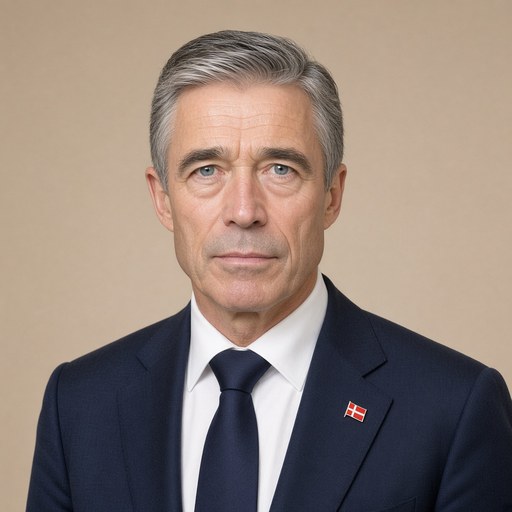
The Prime Minister's speech at the 57th session of the Nordic Council in Reykjavik on October 25, 2005. General debate.
 Anders Fogh Rasmussen · Prime Minister of Denmark
- Context
- Rasmussen addressed the 57th Nordic Council session in Reykjavik on October 25, 2005, presenting outcomes of the Danish presidency of the Nordic Council of Ministers.
- Main themes
- Nordic cooperation reform, knowledge and innovation, free movement across borders, globalization strategy, competitiveness and growth, education and cohesion, self-governing areas, development assistance, Africa, Nordic Council presidency, research and innovation, border obstacle removal
- Duration
- ~11 min
- Words
- 1,261
- Sentences
- 90
- Readability
- 48
- Grade
- 9.6
- Syntax
- 2.58
- Vocabulary
- 2.14
Translated from Danish
The broad sphere of national life a sentence belongs to. Every sentence has an Arena, so it is the denominator the other indices are read against.
Other90 sentences in 33 paragraphs
Madam President, the Danish philosopher Søren Kierkegaard writes that everyone wants development, but no one wants change. In politics, we often experience the truth of this statement. But I am pleased to note that the Danish presidency of the Nordic Council of Ministers has achieved both development and change. And all Nordic countries have agreed that greater focus, priority, and efficiency are absolutely crucial for future Nordic cooperation.
I would like to highlight three themes from the Danish presidency: · Knowledge and innovation · free movement across borders · and an effective and politically relevant Nordic cooperation.
First: Nordic cooperation has just demonstrated its usefulness in research and innovation. The Danish presidency has sought to promote new investments in research and attract more EU research funds.
More resources have been allocated to Nordic research and innovation in the budgets for both 2005 and 2006. And the new organization NordForsk will become a focal point for Nordic innovation. We are thus making progress towards our goal of the Nordic region as a globally leading and attractive area for research.
Second: Free movement across borders - both for citizens and for businesses - is essential in a global economy. The presidency, together with our special representative, Poul Schlüter, has accelerated the work to remove border obstacles. And good progress has been made:
· A Nordic job portal on the Internet. · A new Nordic tax portal and a virtual Nordic tax office. · And a business portal on the Internet.
Third: The cooperation ministers have developed a plan for a stronger and more effective Nordic cooperation. The number of ministerial councils will be reduced from 18 to 11. And the work in the councils will be concentrated in 10 areas. The reform will take effect from January 1, 2006.
It is a good plan. It will strengthen effective Nordic cooperation.
Change and reforms are also about giving the self-governing areas a stronger position in Nordic cooperation. The Danish government therefore supports the desire for a strengthened role for the self-governing areas.
We do this because we want equality between the Nordic countries and the self-governing areas. No one should doubt that the self-governing areas are part of Nordic cooperation. Whether one lives in Mariehamn, Nuuk, or Tórshavn.
The Danish presidency has thus taken concrete steps to ensure a strengthened and more effective Nordic cooperation. This is work that extends far beyond just a single presidency period. We therefore look forward to continuing this work under Norway's presidency.
Madam President, the Nordic region must become a winner in the global economy. This requires constant adaptation to the surroundings and focus in cooperation. Our starting point is good. In the World Economic Forum's annual competitiveness ranking, all the Nordic countries are in the top 10.
In the report "The Nordic Region as a Global Winning Region," published by the Danish think tank Mandag Morgen and the Nordic Council of Ministers, it is highlighted that the populations of the Nordic countries dare to take initiative and engage.
And many Nordic companies are already part of a European forefront when it comes to seizing the opportunities of globalization. These are ideal conditions for both competitiveness and growth.
But we must not rest on our laurels. We must ensure that the good times in the Nordic region become sustainable in the long term.
There is a need for a globalization strategy with two overarching goals: To strengthen competitiveness so that we can continue to belong to the richest countries in the world. And to ensure social cohesion so that no groups in the labor market are left behind in development.
It is absolutely central to ensure a better education system. As also stated in the report "The Nordic Region as a Global Winning Region," education is the foundation for both goals: competitiveness and cohesion.
Therefore, all Nordic countries are working to strengthen education at all levels. It is clear that this is an area where the Nordic countries benefit from close cooperation. We must invest in people. It is our most important raw material.
* * *
Madam President, I have been encouraged to also speak about our development assistance. I am happy to do so. I have just visited Tanzania and Mozambique in Africa, so it is very much on my mind.
We face great challenges in Africa. Africa is seriously lagging behind in the fight against disease and poverty. If development in Africa is to be reversed, it will first and foremost require an extraordinary effort from the Africans themselves. The will for development and reforms must come from within.
But there is also a need for an extraordinary effort from the rest of the world. Here, the Nordic countries should play a strong role. I would like to point out five areas where the Nordic countries should stand together for a forward-looking development policy.
First, there is a need for more aid to Africa. From the Nordic side, we must maintain pressure for all rich countries to meet the UN target of providing at least 0.7 percent in aid.
Second, there is a need for better governance in a number of developing countries. Money for development is wasted if the administration in the recipient country is corrupt and ineffective, or if those in power oppress the population and do not respect human rights and fundamental democratic principles. The Nordic countries are among the least corrupt in the world. And we have a relatively efficient public administration. We must use this strong status to demand good governance in the countries that receive development assistance.
Third, we should focus development assistance on developing and expanding the private sector. We have set the goal of halving poverty by 2015. Achieving that goal requires higher economic growth in Africa. We must help developing countries create better education and better conditions for business and private initiative. In this context, we must ensure better opportunities for women. They represent a significant positive resource in developing countries.
Fourth, we must make a massive effort to improve health. Dangerous diseases such as HIV/AIDS, malaria, and tuberculosis threaten to undermine development opportunities, especially in countries south of the Sahara. Better water supply and better sanitation are also important for improving health.
Finally, fifth, the Nordic countries must push internationally to promote free trade. Poor countries must have better access to the global market so they can earn their own money.
Madam President, this year has in many ways been a landmark year for international development cooperation. The G-8 summit in July. The UN summit in September. And the upcoming WTO ministerial meeting in December.
Nordic cooperation was put to the test at the UN. We stood together during the preparation for the summit in September. This led to good highlights of Nordic key issues. Among other things, the need for more development assistance to Africa.
There is good reason to repeat this at the WTO ministerial conference in Hong Kong. Trade is the best help for self-help we can give to the world's poorest countries. A lack of results in Hong Kong would be harmful.
It is hypocritical to give aid with one hand while maintaining trade barriers and agricultural support with the other. We must therefore work together to promote a positive outcome of the Doha Round.
* * *
I would like to conclude by thanking the Icelandic hosts for a splendid arrangement. And I would like to thank the entire Nordic circle for the good cooperation and the support we have received as the presidency of the Nordic Council of Ministers.
The original Danish. The tags above are read on the English translation's sentences.
Fru Præsident, Den danske filosof Søren Kirkegaard skriver, at alle ønsker udvikling, men ingen ønsker forandring. I politik oplever vi ofte sandheden i dette udsagn. Men jeg er glad for at konstatere, at det danske formandskab for Nordisk Ministerråd har opnået både udvikling og forandringer. Og alle nordiske lande har været enige om, at større fokus, prioritet og effektivitet er helt afgørende for det fremtidige nordiske samarbejde.
Jeg vil fremhæve tre temaer fra det danske formandskab: · Viden og innovation · fri bevægelighed over grænserne · og et effektivt og politisk relevant nordisk samarbejde,
For det første: Det nordiske samarbejde har netop vist sin nytte inden for forskning og innovation. Det danske formandskab har ønsket at fremme nye investeringer i forskning og tiltrække flere EU-forskningsmidler.
Der er afsat flere ressourcer til nordisk forskning og innovation på budgetterne for både 2005 og 2006. Og den nye organisation NordForsk vil blive et samlingspunkt for nordisk innovation. Vi gør således fremskridt mod vort mål om Norden som en globalt ledende og attraktiv region for forskning.
For det andet: Fri bevægelighed over grænserne - både for borgere og for virksomheder - er afgørende i en global økonomi. Formandskabet har sammen med vor særlige repræsentant, Poul Schlüter, fremskyndet arbejdet med at fjerne grænsehindringer. Og der er sket gode fremskridt:
· En nordisk formidling af jobs på Internettet. · En ny nordisk skatteportal og et virtuelt nordisk skattekontor. · Og en virksomhedsportal på internettet.
For det tredje: Samarbejdsministrene har udarbejdet en plan for et stærkere og mere effektivt nordisk samarbejde. Antallet af ministerråd bliver reduceret fra 18 til 11. Og arbejdet i Ministerrådene bliver koncentreret i 10 områder. Reformen træder i kraft fra 1. januar 2006.
Det er en god plan. Den vil styrke et effektivt nordisk samarbejde.
Forandringer og reformer handler også om at give de selvstyrende områder en stærkere stilling i det nordiske samarbejde. Den danske regering støtter derfor ønsket om en styrket rolle for de selvstyrende områder.
Det gør vi, fordi vi ønsker ligeværdighed mellem de nordiske lande og de selvstyrende områder. Ingen skal være i tvivl om, at de selvstyrende områder er en del af det nordiske samarbejde. Hvad enten man bor i Mariehamn, Nuuk eller Tórshavn.
Det danske formandskab har således taget konkrete skridt for at sikre et styrket og mere effektivt nordisk samarbejde. Det er et arbejde, der rækker langt videre end blot en enkelt formandskabsperiode. Vi ser derfor frem til at fortsætte dette arbejde under Norges formandskab.
Fru præsident, Den nordiske region skal blive en vinder i den globale økonomi. Det kræver hele tiden tilpasning til omgivelserne og fokus i samarbejdet. Vores udgangspunkt er godt. I World Economic Forums årlige opgørelse over konkurrencedygtighed ligger alle de nordiske lande i top 10.
I rapporten ”Norden som global vinderregion”, som er udgivet af den danske tænketank, Mandag Morgen, og Nordisk Ministerråd, fremhæves det, at befolkningerne i de nordiske lande tør tage initiativ og engagere sig.
Og mange nordiske virksomheder tilhører allerede en europæisk fortrop, når det handler om at udnytte globaliseringens muligheder. Det er helt ideelle vilkår for både konkurrencedygtighed og vækst.
Men vi skal ikke hvile på laurbærrene. Vi skal sørge for, at de gode tider i Norden bliver langtidsholdbare.
Der er behov for en globaliseringsstrategi med to overordnede mål: At forstærke konkurrencekraften, så vi fortsat kan tilhøre de rigeste lande i verden. Og at sikre samfundets sammenhængskraft, så ingen grupper på arbejdsmarkedet bliver hægtet af udviklingen.
Det er helt centralt at sikre et bedre uddannelsessystem. Som det også fremgår af rapporten, ”Norden som global vinderregion”, er uddannelse fundamentet for begge mål: Konkurrencekraft og sammenhængskraft.
Derfor arbejder alle nordiske lande for at styrke uddannelserne på alle niveauer. Det er klart, at det er et område, hvor de nordiske lande har fordel af et tæt samarbejde. Vi skal investere i mennesker. Det er vores vigtigste råstof.
* * *
Fru præsident, Jeg er blevet opfordret til også at tale om vores udviklingsbistand. Det gør jeg meget gerne. Jeg har netop besøgt Tanzania og Mozambique i Afrika, så det ligger mig meget på sinde.
Vi står over for store udfordringer i Afrika. Afrika halter alvorligt bagud, når det gælder bekæmpelsen af sygdom og fattigdom. Hvis udviklingen i Afrika skal vendes, vil det først og fremmest kræve en ualmindelig stor indsats fra afrikanerne selv. Viljen til udvikling og reformer skal komme inde fra.
Men der er også behov for en ekstraordinær indsats fra den øvrige verden. Her bør de nordiske lande spille en stærk rolle. Jeg vil pege på fem punkter, hvor de nordiske lande bør stå sammen om en fremadrettet udviklingspolitik.
For det første er der behov for mere bistand til Afrika. Fra nordisk side skal vi fastholde presset for, at alle rige lande lever op til FN’s målsætning om at give mindst 0,7 pct. i bistand.
For det andet er der behov for bedre regeringsførelse i en række udviklingslande. Pengene til udvikling er spildt, hvis administrationen i modtagerlandet er korrupt og ineffektiv, eller magthaverne undertrykker befolkningen og ikke overholder menneskerettighederne og fundamentale demokratiske principper. De nordiske lande er de mindst korrupte i verden. Og vi har en relativt effektiv offentlig administration. Den stærke status skal vi bruge til at kræve god regeringsførelse i de lande, der modtager udviklingsbistand.
For det tredje bør vi fokusere udviklingsbistanden på at udvikle og udvide den private sektor. Vi har sat det mål at halvere fattigdommen inden 2015. Det kræver en højere økonomisk vækst i Afrika at nå det mål. Vi skal hjælpe udviklingslandene til at skabe bedre uddannelser og bedre rammer for næringslivet og det private initiativ. I den forbindelse skal vi sikre bedre muligheder for kvinderne. De udgør en betydelig positiv ressource i udviklingslandene.
For det fjerde skal vi sætte massivt ind for at forbedre sundheden. Farlige sygdomme som HIV/AIDS, malaria og tuberkulose truer med at underminere udviklingsmulighederne, især i landene syd for Sahara. Bedre forsyning med vand og bedre sanitet er også vigtig for at forbedre sundheden.
Endelig for det femte, skal de nordiske lande presse på internationalt for at fremme frihandel. De fattige lande skal have bedre adgang til verdensmarkedet, så de kan tjene deres egne penge.
Fru præsident, Dette år har på mange måder været et mærkeår for det internationale udviklingssamarbejde. G-8 topmødet i juli. FN-topmødet i september. Og det kommende WTO-ministermøde i december.
Det nordiske samarbejde stod sin prøve i FN. Vi stod sammen under forberedelsen af topmødet i september. Det førte til gode markeringer af nordiske mærkesager. Blandt andet om behovet for mere udviklingsbistand til Afrika.
Der er god grund til at gentage dette ved WTO’s ministerkonference i Hongkong. Handel er den bedste hjælp til selvhjælp, vi kan give verdens fattigste lande. Et manglende resultat i Hongkong vil være skadeligt.
Det er hyklerisk at give bistand med den ene hånd og samtidig opretholde handelshindringer og landbrugsstøtte med den anden. Vi må derfor i fællesskab arbejde for at fremme et positivt udfald af Doha runden.
* * *
Jeg vil gerne afslutningsvis takke de islandske værter for et flot arrangement. Og jeg vil takke hele den nordiske kreds for det gode samarbejde og den støtte, vi har fået som formand for Nordisk Ministerråd.