




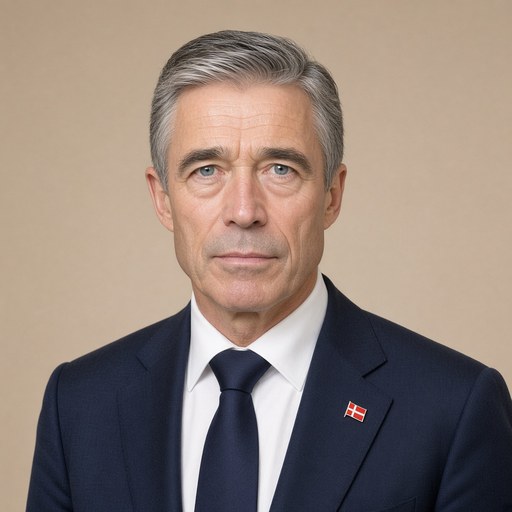
The Prime Minister's speech at the Security Council summit on September 14, 2005 (The speech is in English)
 Anders Fogh Rasmussen · Prime Minister of Denmark
- Context
- Rasmussen addressed the UN Security Council summit on September 14, 2005, urging stronger collective action against terrorism and WMD proliferation.
- Main themes
- Counterterrorism, definition of terrorism, UN role in global security, weapons of mass destruction, Iran and North Korea nuclear programs, freedom of speech vs. incitement, African conflicts and displacement, international obligations and compliance, civilian protection, capacity building for developing countries
- Duration
- ~4 min
- Words
- 467
- Sentences
- 31
- Readability
- 42
- Grade
- 11.1
- Syntax
- 2.58
- Vocabulary
- 2.16
The broad sphere of national life a sentence belongs to. Every sentence has an Arena, so it is the denominator the other indices are read against.
Other31 sentences in 16 paragraphs
Thank you, Mr. Chairman,
Our discussion here is timely and relevant. Terror attacks in several countries during the last years have underlined our obligation to joint, efficient action against this major scourge of our generation.
Let me be very clear: Terrorism can never be justified. Terrorism is never a legitimate weapon. The targeting and deliberate killing of civilians is unacceptable. Full stop.
I therefore find it appalling that today, four years after two passenger planes created havoc in this very city, a few countries are still blocking agreement on a common definition of terrorism.
There ought to be absolutely no doubt or ambiguity about the obligation of each and every Government to destroy terror-networks, to dismantle training facilities and to cut off the supply of money and recruits.
It must be made completely clear to our citizens what is acceptable and what is not.
Freedom of speech and expression is the very foundation of any modern, democratic society. But it must never be an excuse for inciting terrorism and fostering hatred.
I see a major role for the United Nations in this battle. And I welcome the Secretary General’s outline of a counter terrorism strategy. But this is not enough. We need to empower the United Nations so that it can fulfil its obligation to ensure security for all in the age of global terrorism.
All Member States need to sign, ratify and implement the UN terrorism conventions. All countries must incorporate the relevant provisions into their national legislations in order to hamper the terrorists’ room of manoeuvre.
And the UN should constantly monitor that Member States fulfil their obligations.
Countries that lack the necessary capacity to enforce the new legislation deserve our full and generous assistance. Countries that lack the necessary political will deserve our wrath.
The threat of terrorists or irresponsible dictators armed with weapons of mass destruction is a shared nightmare for all mankind. This Council has the obligation to ensure that the nightmare will never materialize.
The nuclear programmes of Iran and North Korea are a particular and urgent concern. We shall be ready to deal with them here at this table, if other avenues fail. Acquiring nuclear weapons does not enhance the security of any state – it only decreases it for us all.
Mr. Chairman,
70 percent of all conflicts discussed by this Council take place in Africa. The impact on civilians on this continent is particularly devastating: Africa alone has around 20 million refugees and internally displaced people.
For that reason, the draft resolution put forward here today by the Council’s three African members is an important one. I hope that the adoption of this resolution will enable the international community to better prevent international disputes and internal crises from spilling over into armed conflicts – in particular in Africa.