




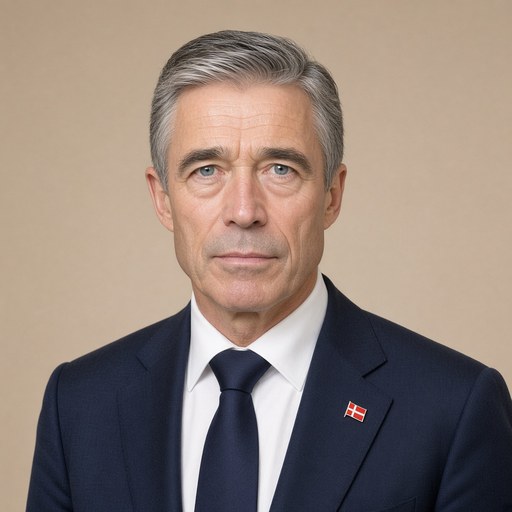
Grundtvig and Kierkegaard - some of my important sources. Lecture by Prime Minister Anders Fogh Rasmussen, Vartov, Wednesday, November 30, 2005.
 Anders Fogh Rasmussen · Prime Minister of Denmark
- Context
- Rasmussen delivered a lecture at Vartov on November 30, 2005, reflecting on Grundtvig and Kierkegaard as formative influences on his political and philosophical worldview.
- Main themes
- Grundtvig and Kierkegaard as intellectual influences, personal worldview formation, freedom and liberalism, Danish national identity, folk high school tradition, socialist misappropriation of Grundtvig, economic liberalism, Danish philosophical heritage, religious and cultural upbringing
- Duration
- ~48 min
- Words
- 5,717
- Sentences
- 379
- Readability
- 55
- Grade
- 9.0
- Syntax
- 2.69
- Vocabulary
- 2.31
Translated from Danish
The broad sphere of national life a sentence belongs to. Every sentence has an Arena, so it is the denominator the other indices are read against.
Other379 sentences in 143 paragraphs
First and foremost, I would like to express my appreciation for the great work that the Søren Kierkegaard Research Center has done and continues to do. Both in connection with the unique publication of Søren Kierkegaard's works. And as an internationally oriented research center that attracts researchers from all over the world to study the great Danish philosopher.
The research center has now moved in here at Vartov. This has provided a unique opportunity to continue the posthumous conversation or dialogue between Kierkegaard and Grundtvig, which was initiated in 2002 when the Grundtvig Society and the Søren Kierkegaard Center organized the Grundtvig-Kierkegaard week.
I do not know what the two gentlemen would say to the fact that we are now forcing them into the dialogue that they themselves were unable to establish. But let them deal with it. They cannot protest. And they have both contributed so much to the development of Danish society that it is entirely relevant for us today to illuminate their possible agreements and disagreements.
Therefore, I am also pleased to be invited to talk about my inspiration from Grundtvig and Kierkegaard as sources for the formation of my worldview, human perspective, and understanding of society.
Let me start by saying that I have had a problematic relationship with both. But I have come to terms with them. And they have both meant quite a lot for the formation of my views.
I came to Grundtvig in a somewhat skewed way because my source was skewed. And I came to Kierkegaard late because he was difficult to digest.
I grew up in a Grundtvigian home and environment. Not in the sense that there was talk of Grundtvig at the dinner table. But my parents were influenced by agricultural school, household school, and folk high school, and their views were passed on to us children – without Grundtvig or Kristen Kold being mentioned in every sentence. One could say that the Grundtvigian spirit hung in the living room.
I had an intuitive sense of Grundtvig, without being particularly aware of the precise content of his thinking. And in school and high school, I learned not the least about Grundtvig.
My entry to him was somewhat peculiar. For it was Ebbe Kløvedal Reich. He published in 1972 the so-called folk book, "Frederik," about Grundtvig's time and life. I read it. And here I saw Grundtvig appropriated for the most peculiar views. For communism and Mao. Against capitalism and the USA.
It was the year we voted on Denmark's membership in the EEC. Kløvedal mobilized Grundtvig to fight against the EEC: "It is necessary that Grundtvig's way of being Danish, and his opinion on what it means to be responsible for precisely this language, precisely this land, and precisely this people's history, is remembered before our sales-crazy politicians squander the last remnants of us."
And he continued: "The Common Market and the entire northwestern capitalist conspiracy aim to poison the peoples with a stereotypical internationalism, a worldwide network of pseudo-power roles, based on an absurd belief in money and blind growth, secretly controlled by the technological and economic priesthood."
Yes, we have almost forgotten the socialist rhetoric of the time.
So I not only set aside the book, "Frederik," but also Grundtvig. For there was, in general, a romantic Grundtvigianism in those years that took Grundtvig to account for all sorts of viewpoints that were completely contrary to my fundamental beliefs. It was as if Grundtvig was being used as a driving force for socialist projects.
I did not engage in the discussion about the interpretation of Grundtvig. I simply set him aside. I concentrated on other aspects of the political debate.
But I returned to Grundtvig. He was, in my eyes, rehabilitated. Fortunately, Grundtvig was born in 1783. Fortunately, because it meant that the 200th anniversary of his birth was marked in 1983, when the spirit of the times had changed significantly. The socialist side of the spirit from '68 was already fading. And perhaps that is why the celebration of Grundtvig's birthday that year took place in a completely new atmosphere.
What truly rekindled my positive interest in Grundtvig was Kaj Thaning's anniversary book from 1983, "Grundtvig." For the first time, I really grasped Grundtvig and his thinking. And by reading Thaning's book, I found the sides of Grundtvig that I had intuitively sensed during my upbringing on the farm at home.
Grundtvig had a sharp eye for the necessity of freedom. Thus, he wrote, among other things: '(.....) if one denies freedom, voluntariness, courage, and happiness the opportunity to show themselves and act with power, then one prevents the only thing that can save Denmark.'
And about economic liberalism, he wrote enthusiastically: 'The means of production must therefore be made and kept free to a high degree, so that they are neither bound by guild coercion, licensing constraints, and customs prohibitions, nor burdened with production tax and poor tax, nor undermined by large factories, but one must not at all attempt to secure the producers their residence, as that only feeds laziness and all evil, encroaches on property, and halts the free circulation, which, like the free circulation of blood in our body, is the condition for the healthy state of civil society' (Danskeren, June 28, 1848, p. 237).
But at the same time, Grundtvig had an eye for the duty to help those who need help. He formulated it this way: 'Any wise and humane authority will (.....) seriously strive, with the greatest possible freedom of enterprise and property security, to promote common prosperity and desirable equilibrium, while as far as possible, through charitable arrangements, providing for the children and the elderly, sick and disabled, who are found helpless in their immediate circle.'
In other words: It is not laws and paragraphs that can ensure social security. Ultimately, it is only production and prosperity in society that can provide the opportunity for help to the weakest.
What Grundtvig advocated was the genuine community of helping the weakest. In the song, 'Now it shall be revealed,' he writes, among other things:
Yes, the chain of dear memories one can easily dare to praise, the stronger it binds, the freer it makes.
No one is born homeless, but we all enter into family structures and local trust relationships. It was Grundtvig's vision that freedom does not mean hunger and social distress, but on the contrary develops a strong society linked together by dear memories.
In other words: Freedom and community are not opposites. On the contrary. The community becomes stronger and more genuine when it is formed by people who each feel a personal responsibility to contribute to the community.
There is something good about marking round anniversaries for deceased personalities, as their lives, works, and thoughts are placed in a contemporary light. And for my part, the 200th anniversary of Grundtvig's birth was at least an eye-opener that reinstated Grundtvig in the place in my universe where I felt he belonged. I recognized, so to speak, the old Grundtvig – he had returned home after the forced guest visit with the socialist ideologues of '68.
* * *
It was not until about 10 years later that I truly began to take an interest in Søren Kierkegaard. Of course, I was generally aware of a few main features of Kierkegaard's thinking. But I had not been properly introduced to Kierkegaard, and I had not set out to study him more closely. He was not a thinker I explicitly referred to in my political work.
Looking back today, I am strongly critical of the fact that I did not learn more about Kierkegaard during my high school years. High school was, after all – and still is – intended as a general youth education. But in the years immediately after '68, it was certainly not a general education.
And at the university, the exciting subject, "philosophy," was replaced with a dry discipline called "social science theory and method." The basic book was titled, "Positivism, Marxism, and Critical Theory."
So it has been quite a laborious task to catch up on some of the neglected material afterward.
It was during the preparation for my much-discussed book, "From Welfare State to Minimal State," that I truly began to take an interest in Søren Kierkegaard.
When the book was published in 1993, it was immediately used as ammunition in a general party-political trench war over the politics of the day and the road ahead.
I believe that Søren Kierkegaard would have shaken his head at all the commotion that followed the publication of my book.
I drew sharp lines in the book. To provoke a debate about the status quo. That method is entirely in Kierkegaard's spirit.
Søren Kierkegaard once wrote about the necessity of what he called "the corrective to the established":
"The one who is to provide the 'Corrective' must now accurately and thoroughly study the weak sides of the Established – and then one-sidedly present the opposite; skillfully one-sidedly. Just therein lies the Corrective, and therein again the resignation in the one who is to do it. The Corrective is indeed spent in a certain sense on the Established.
When this relationship is correct, then again a formally sharp-witted head can come and make the objection against the 'Corrective' that it is one-sided – and he can get the whole audience to believe there is something to it. You mild God. Nothing is easier for the one who provides the Corrective than to set the other side aside; but then it ceases to be the Corrective and becomes an Established itself.
Such an objection therefore comes from one who completely lacks the resignation to provide the 'Corrective' and does not even have the patience to grasp it." (Journal NB12:97, from 1849, SKS 20, 194-95).
In the party-political barrage that my "corrective" was subjected to, it completely got lost in the smoke of gunpowder that the book also contained some substantial sections on what I would call "applied political philosophy."
In that context, I drew quite a bit on Kierkegaard. Not to appropriate Kierkegaard for a specific political viewpoint. For one cannot do that. All the more so as Kierkegaard was very skeptical of, yes, perhaps even felt disgust for politics and politicians.
Søren Kierkegaard once compared politicians to demons. Of these, he said: "...... they lived off sacrificial smoke and incense, they were very mobile and could quickly traverse the whole world."
It is hardly meant as a recognition of politicians.......
But serious politics is precisely something other than sacrificial smoke and incense. And in the work on the book, I needed to get closer to the concepts of "freedom" and "responsibility." And that simply cannot be done without also drawing on Søren Kierkegaard's thinking.
Kierkegaard's original writings can be difficult to access. So therefore, I used Aarhus professor Johannes Sløk as an entry point to gain a good overview.
Sløk was, as is well known, a provocative and skilled storyteller. His book, "Kierkegaard's Universe – a New Guide to the Genius" from 1983, is well-written and pedagogical. I followed it up with the somewhat heavier book from the same year, "Existentialism" – finally rounding off Sløk with the rather entertaining and debate-provoking book from 1993, "The Morality That Went Missing."
Since then, I have read much more about and by Søren Kierkegaard. But my first real entry was Sløk. And Sløk's version harmonized well with my immediate reflections and fundamental beliefs. So I openly acknowledge that my use of and interpretation of Kierkegaard is heavily influenced by Johannes Sløk's presentation.
When I had to engage with Kierkegaard, it was to resolve a dilemma that everyone dealing with political philosophy inevitably encounters sooner or later.
I would call it the confrontation between absolutism and relativism. For a liberal, it is easy enough to distance oneself from any form of absolutism. My problem arose when I had to relate to relativism.
Absolutism means that the individual must obey ethical rules that are given from the outside. This can be in a religious variant or a non-religious variant.
In the religious variant, the norm system is a creation of God – or humans have interpreted what they believe is God-given. It rests in its own unshakeable validity. Humans cannot intervene in it, change it, or abolish it. The human task is to blindly obey the divine commandments. Violations of these commandments are severely punished – in the worst case, with death. We see this, among other things, in religious dictatorships, such as Iran.
Then we have the secular variant. Here, the norm system is produced by a higher, secular authority, for example, a dictator. The individual must obey orders from the powers that be. Hitler, Stalin, Mao, Pol Pot are just some of the most prominent tyrants who have killed millions and millions of people for the ideological cause.
We can easily conclude that both a religious and a secular dictatorship are completely incompatible with freedom for the individual. For the individual must blindly obey orders in the form of ethical or other rules set by an authority outside of the individual itself.
Well then, it must be true freedom that the individual shapes its own moral stance in accordance with ethical rules established by the individual itself?
A juhuu-freedom, where no values are given and absolute. Where the individual has total freedom to create its own set of norms.
That is relativism. There are no orientation markers. The individual can and must make free choices – without any guidance for what is good and what is evil. Even doing nothing is a free choice. All values and all choices are equally valid.
One or another may perceive it as truly real and unlimited freedom. But the reality is that it is a freedom in emptiness. And from this freedom in emptiness follows a far-reaching ethical consequence: We must constantly make exemplary actions.
Since there are no valid norms, it is impossible to choose an action without thereby choosing it as the right one. Every choice is made, so to speak, on behalf of humanity.
Thus, as I act, so should everyone in a similar situation act. Immanuel Kant calls this unconditional demand, "the categorical imperative." And Jean Paul Sartre precisely speaks of "the unbearable necessity of making exemplary actions."
Søren Kierkegaard has provided a thorough depiction of the despair that grips the individual who discovers that no values hold absolute validity. Existence loses all values, purposes, and norms. Nothing in existence becomes important. All efforts become futile, and life itself ends in utter indifference.
Consequently, it is ridiculous to take anything seriously, let alone to engage in it. Since everything is equally valid, one cannot choose one thing over another. And when one can just as well choose one thing as another, it becomes pointless to choose at all.
No human can bear this emptiness of values. At some point, we will embark on a quest for absolute values, anchors that can serve as a guide in existence.
Value relativism leaves a void that we wish to fill. The question is, who will fill the void – and with what.
It is a dilemma between ethical subjectivism and ethical objectivism: Subjective ethics leads to value emptiness – because it is created by humans who have simultaneously abolished all absolute values. All moral values are, in principle, equal. Thus, they also become equally valid – and indifferent. Existence becomes meaningless, and the way out of despair becomes to seek refuge in authoritarian systems that can fill the void left by value relativism.
Conversely, the ultimate ethical objectivism means that the ethical code is established by a higher power, divine or secular. The moral norms are given and absolute. Humanity's task is to blindly obey the ethical commandments. Humans are reduced to will-less beings, held captive by a religious or secular dictatorship.
Apparently, we are faced with a knot that we cannot untie.
Ethical subjectivism gives humans unlimited freedom, but no anchors to orient themselves by. Freedom thus leads to its own contradiction.
Ethical objectivism provides humans with some absolute anchors, but no freedom.
In my view, there is a way out of the dilemma. The solution lies in recognizing that there are certain objective ethical values. That is to say, there exists a higher ethical principle that is not determined by the individual human itself. There is "an instance" outside of and above the individual human, which provides the basis for ethics.
But human moral actions are not thereby governed from the outside. The objective ethical values only gain concrete content through human lives. There is a demand placed on humanity. But we have our own task, a responsibility.
It was Søren Kierkegaard who opened my eyes to this solution. For Kierkegaard operates with both an absolute instance outside of the human and at the same time a personal responsibility and personal freedom.
As I understand Kierkegaard, the absolute instance is what we could call "the eternal in humanity." For Kierkegaard, it is religious. This instance – or middle determination – as Kierkegaard says, is God. God is the ahistorical, that which is independent of history and society, the eternal.
From a Christian perspective, the absolute value lies in the commandment of love: You shall love your neighbor as yourself. Indeed, Kierkegaard even goes so far as to say that love for one's neighbor is synonymous with helping one's neighbor to love God. It is almost a double commandment of love.
Well, I will not delve further into that. To understand Kierkegaard, one must use the religious approach. But I will return later to the idea that one can also argue a bit more secularly or worldly.
Kierkegaard is clearly a deontologist. But that does not mean that humans are exempt from living their own lives and taking responsibility for their own lives. On the contrary, Kierkegaard says that humans must choose themselves, take responsibility for themselves.
It is not a traditional choice. It is not a matter of choosing the outer role of whether we want to be farmers, writers, merchants, or politicians. It is also not a matter of choosing traits, such as whether we want to be diligent or amiable or virtuous.
No, we must choose ourselves, as we are. We can also say: Take responsibility for ourselves, as we are.
We must take responsibility for ourselves simply because there is no one else to do it. Take, for example, an alcoholic. It does not help to excuse oneself by saying that it is an innate tendency, or that his father was a drunkard, or that he had a sad childhood and early fell into bad company.
All of this may be objectively true. But it does not help to present it. For the first prerequisite for doing something about the problem is that he himself is willing to make an effort. He must therefore take responsibility for himself, just as if he were the cause of it all.
This does not mean that he stands alone with his problem. He can decide to seek help from others to rid himself of his burden. We others can decide to help him. But without his own will and effort, no help can succeed. It starts with the personal responsibility for one's own life.
To choose oneself is a far-reaching choice. For we choose ourselves with all our faults and shortcomings. If I am lazy or irritable or a tobacco addict, I choose myself as lazy or irritable or a tobacco addict and do not seek refuge in an ideal image that represents something else.
This does not mean that I passively accept myself as I am and let five and seven be equal. But it means that I take responsibility for myself with skin and hair and faults and shortcomings and thus also the responsibility to correct the flaws.
But responsibility presupposes freedom. For if we do not have freedom, then we cannot reasonably be held accountable.
This is where I am captivated by Kierkegaard. The personal responsibility and personal freedom combined with some overarching ethical anchors.
It is my fundamental position that we humans have a basic right to freedom. And that we not only have a right but also a duty to take responsibility. But at the same time, we need some firm anchors in existence so that it does not merely become a freedom in emptiness.
If there is to be seriousness in responsibility, there must also be something firm and enduring to be responsible to.
It was Søren Kierkegaard who opened my eyes to the solution. Kierkegaard saw the solution in faith in God. And for many people, that will indeed be the solution.
But I believe that there can be advantages in expanding the solution so that it extends beyond Christianity. So that it is universal and general. So that it does not distinguish between God and Allah and other metaphysical instances. So that it does not depend on one prophet or another. So that it addresses all people solely by virtue of their humanity.
It would contribute to creating a more peaceful world if we could universally agree on a common set of fundamental ethical principles, independent of societies and religions. So to speak, a cross-religious set of norms.
* * *
The question is, then: Can we find an overarching ethical norm set without reference to Christianity, Islam, or any other religion? An ethical norm set that expresses the eternal, which is independent of time, place, history, society, and religion, which springs from something objective, something inherent in humanity or nature?
The late Professor K. E. Løgstrup spoke of "the sovereign expressions of life." He mentions as examples "mercy," "trust," and "the openness of speech." According to Løgstrup, these phenomena are elementary. They are fundamental traits of human existence before our cultural shaping of this existence.
Let us look at mercy.
The parable of "The Good Samaritan" is part of our childhood lessons.
Most would say that, of course, we should help another person in need. Nevertheless, Jesus included in his story two priests who simply leave the distressed person lying there.
Most feel a genuine outrage that the priest and the Levite just walk by the assaulted person. In contrast, the Samaritan did the right and necessary thing.
Now, it is easy to be outraged at the priest and the Levite who just pass by. But take an example from our own everyday life. If one day you see two bikers in the process of mutilating an innocent person on the open street, will you intervene to stop the assault – or will you hurry past to avoid getting your head smashed?
There is hardly a clear answer. Some will try to stop the assault – and there are indeed several tragic examples of those who try to stop a fight ending up being beaten down themselves and even mutilated to death. For the same reason, the police can report examples of many people deliberately looking the other way and not even wanting to testify in cases of violence and terror. But deep down, we know that it is base and wrong to react so passively and indifferently.
The very fact that we think this way shows that we feel a responsibility towards a person in need. If we see someone drowning or burning, will we not try to save them? Yes, and there are even many examples of people putting their own lives at risk to save others.
Why do we feel this obligation to help other people? Yes, it is one of life's fundamental questions, and so far it remains unanswered. Let me just state that no matter how selfish one may perceive humanity, there are certain principles in our nature that make us interested in the well-being of others, and make others' happiness and misfortune, joy and sorrow a part of our own existence.
To make a large topic short and concrete, I will assert that it has to do with conscience. Conscience binds us into a community with other people. Conscience urges us to help our fellow humans when they are in need. Conscience imposes a responsibility on us.
Perhaps conscience is precisely the eternal in humanity. Perhaps conscience is the objective ethical norm set, which is the instance above humanity. In that case, I believe one can argue for the existence of an objective ethical norm set without taking a religious starting point. For conscience, I believe, is something inherent in humanity. I do not believe that we help a person in need merely because it is stated in a religious commandment. I believe that the urge to help another person in need lies in our nature.
Conscience is universal. But the voices of conscience are not necessarily the same from person to person.
In other words: Conscience expresses an ethical norm set. How we actually live up to our own conscience requires personal choices and personal responsibility.
* * *
The eternal could also be the very fundamental principle that every human has the right to life. If we do not have the right to our own life, existence, yes, being human, becomes absurd.
From the very fundamental right to life follows the right to freedom. For the individual must be guaranteed the freedom to undertake the actions and choices that make it possible to sustain life, yes, to strive for the good life for the individual. This also implies property rights to the fruits of one's own labor. For that is the prerequisite for the individual to support themselves and thus sustain life.
The right to life and freedom is such a fundamental prerequisite for humanity to live as humans that I will call these rights natural rights. They are natural rights because they follow from human nature. The natural rights apply to every human solely by virtue of being human. They exist independently of conventions and agreements and religions. They are absolute and inviolable.
But again, the point is that they do not constitute an ethical answer key. We can only fill them out through personal choices and through personal responsibility.
We have the right to life, yes. But this right gives rise to a concrete stance on several questions and dilemmas in everyday life. What about access to abortion? What about assisted dying? What about the death penalty?
We have the right to freedom, yes. But the freedom of the individual must, however, be limited by the fact that it must not hinder others' right to the same freedom. Otherwise, freedom ends in its own contradiction. So where do we draw the line in practical life for the individual's freedom in relation to others?
I will call these natural rights the rights to human freedom. For me, they are the ethical anchors. But precisely not an ethical answer key. The answer we humans can only achieve by making an effort with the intermediate calculations.
* * *
The rights to freedom are fundamentally cross-religious. This ethical norm set can be reconciled with the existence of multiple religions. Yes, it is even the case that the rights to freedom demand respect for personal religious beliefs.
On the other hand, it is clear that the rights to freedom are not compatible with a legal religion that demands to be superior to the nation and the state. The rights to freedom are not compatible with a legal religion that seeks to dictate the believer's existence from cradle to grave.
But the rights to freedom are fully compatible with having a personal religious belief. Yes, the rights to freedom are based on the premise that the individual has the right to have their personal religious conviction – without interference from either the state or other people.
This also leads me to say a few words about the significance of religion in society. I have great respect for other people's faith. And it is my clear opinion that one should always behave tactfully and respectfully towards the religious beliefs that the individual may hold.
But I also must emphasize that religion is and remains a personal matter between the individual and the God that the individual may believe in. It is dangerous when personal faith is replaced by a legal religion, where society must conform to religious mandates – which may even be based on millennia-old prescriptions.
With all due respect for the Bible of us Christians, the Koran of Muslims, and the Torah of Jews, these are indeed ancient texts, written in a distant past. They were authored by people who have subjectively interpreted what they consider to be divine commandments. But they were written in a time and in a society that is fundamentally different from our own.
No enlightened society can live with the notion that such ancient texts must be taken literally and translated directly into our modern times.
It is the fundamentalists who create unrest with their insistence on their God, their prophets, and their religious texts. And with their insistence that millennia-old writings must be taken completely literally even in our modern times.
We see this when fanatical Muslims become suicide bombers in the name of Allah. We see it in Israel, where Orthodox Jews refuse to evacuate settlements. We saw it in Northern Ireland in the conflict between Catholics and Protestants.
I therefore must warn against fundamentalists in all camps. We must respect each individual's personal religious beliefs. But we must combat religious fundamentalism.
Denmark has so far been spared from religious fundamentalism. The Danish people have a good tradition of approachability and peacefulness. We talk things through. Opinions clash and decisions are made over the table and a cup of coffee. We could call it a conversation democracy.
Religion has found its place within this framework. The majority of Danes are members of the Church of Denmark. The Church of Denmark is therefore widely popular. Rooted in the local congregations. And no one goes to extremes. While there are different directions within the Church of Denmark. While there can be differences in the intensity of religious belief.
There is, however, a consensus and a community around some fundamental principles. Among other things, about not mixing politics and religion. And it is always possible to have a sensible conversation and to talk things through.
It is not quite as self-evident anymore. In the wake of a couple of decades of immigration of many people with a Muslim background, some groups have emerged that practice a very aggressive form of Islam.
These are minority groups. But they occupy a significant space in the public debate.
They come from a background where Islam is not just a religion, but a societal order. Religion is not a private matter. Islam is a total worldview that guides the believer's existence, from birth through death to life beyond.
On that point, we must clearly state our position. That form of Islam is not compatible with the societal order we have in Denmark.
In my view, Danish society can accommodate multiple religions. We already do. But there is a clear condition that must be met for it to be combined with a strong cohesion in Danish society. And that is that Islam and any other religion find their place within the jovial Danish conversation democracy. That all Muslims practice Islam in a way that is in accordance with Danish traditions of down-to-earthness, pragmatism, peaceful dialogue, and respect for others' opinions.
I believe that a significant majority of the Muslims living in Denmark share exactly the same wish. To be free from aggressive religious practice. To be free from being imposed upon by some fundamentalist and medieval religious mandates. To be allowed to live in peace with their personal relationship to Allah and Muhammad.
* * *
If we take our starting point in Kierkegaard, there is a radical effect in asserting the equality of all people before God. The radical effect is that no human being can make themselves into the Lord. No human being can elevate themselves to the judge who decides between good and evil. No human being can appoint themselves as the manufacturer of ethics who determines the rule set by which all others must live.
In my view, Christianity is a worldview that turns against all that is authoritarian and oppressive, thereby emphasizing the individual's freedom and responsibility.
Even those who do not believe in God should feel completely secure with the Lord. For without the Lord, humanity would be inclined to take God's place, indeed, to elevate themselves to the creator and savior of the world. And that role is too fragile for the human mind to fulfill.
When people take it upon themselves to play the creator and savior of humanity, the result is unfathomable cruelty, evil, and oppression.
The belief that in the end we alone must answer to God, and not to humans, is precisely the strongest protection of each individual's freedom against oppression from other humans.
But something similar could be said if we perceive the instance above humanity as something inherent to humanity, something fundamentally natural, which provides a basis for an ethical norm set, some ethical reference points.
The crucial point is simply to establish that each individual has a personal freedom and a personal responsibility to take the right actions to fulfill these norms.
Each individual has a responsibility to make an effort in life here and now. To give God a helping hand, so to speak.
I can best summarize my fundamental position in the story of the priest who visited the farmer, Hans Pedersen. Hans had cleared the harsh piece of land of trees, weeds, and stones. In the sweat of his brow, he had cultivated the land and could now enjoy the fruits of his labor with a fine grain harvest.
The priest stopped to talk with Hans Pedersen. "Hans," he said, "you have indeed produced a blessed and beautiful grain field. Let us thank the Lord for His gift to you."
"Yes, thank you," said Hans Pedersen, "I am also very grateful to the Lord. But the pastor should have seen how the land looked when the Lord was alone in taking care of it!"
The original Danish. The tags above are read on the English translation's sentences.
Først og fremmest vil jeg gerne udtale min påskønnelse af det store arbejde, som Søren Kierkegaard Forskningscenteret har udført og udfører. Dels i forbindelse med den unikke udgivelse af Søren Kierkegaards værker. Dels som et internationalt orienteret forskningscenter, der tiltrækker forskere fra hele verden til at studere den store danske filosof.
Forskningscenteret er nu rykket ind her på Vartov. Det har givet en enestående mulighed for at videreføre den posthume samtale eller dialog mellem Kierkegaard og Grundtvig, som blev indledt i 2002, da Grundtvig Samfundet og Søren Kierkegaard Centeret arrangerede Grundtvig-Kierkegaard ugen.
Jeg ved ikke, hvad de to herrer ville sige til, at vi nu tvinger dem ind i den dialog, som de ikke selv formåede at få i stand. Men lad dem om det. De kan jo ikke protestere. Og de har begge bidraget med så meget til det danske samfunds udvikling, at det er helt relevant for os i nutiden at belyse deres eventuelle enighed og uenighed.
Derfor er jeg også glad for at være inviteret til at fortælle om min inspiration fra Grundtvig og Kierkegaard som kilder til dannelsen af min livsanskuelse, menneskesyn og samfundsforståelse.
Lad mig starte med at sige, at jeg har haft et problematisk forhold til begge. Men jeg er kommet overens med dem. Og de har begge betydet ganske meget for dannelsen af mine holdninger.
Jeg kom skævt ind på Grundtvig, fordi min kilde var skæv. Og jeg kom sent ind på Kierkegaard, fordi han var svær at fordøje.
Jeg er vokset op i et grundtvigiansk hjem og miljø. Ikke sådan at forstå, at der blev talt om Grundtvig ved middagsbordet. Men mine forældre var præget af landbrugsskole, husholdningsskole og højskole, og deres holdninger blev givet videre til os børn – uden at der blev sagt Grundtvig eller Kristen Kold i hver en sætning. Man kan sige, at den grundtvigske ånd hang i stuen.
Jeg havde en intuitiv fornemmelse af Grundtvig, uden dog at være særlig bevidst om det præcise indhold i hans tænkning. Og i skolen og gymnasiet lærte jeg ikke det mindste om Grundtvig.
Min indgang til ham blev lidt særpræget. For det var Ebbe Kløvedal Reich. Han udgav i 1972 den såkaldte folkebog, ”Frederik”, om Grundtvigs tid og liv. Jeg læste den. Og her så jeg Grundtvig taget til indtægt for de mest besynderlige holdninger. For kommunismen og Mao. Mod kapitalismen og USA.
Det var det år, hvor vi stemte om Danmarks medlemskab af EF. Kløvedal mobiliserede Grundtvig til kamp mod EF: ”Det er nødvendigt, at Grundtvigs måde at være dansk på, og hans mening om, hvad det vil sige at have ansvar for præcis dette sprog, præcis dette land og præcis dette folks historie, bringes i erindring, før vores salgsgale politikere formøbler den sidste rest af os”.
Og han fortsatte: ”Fællesmarkedet og hele den nordvestlige kapitalistsammensværgelse har til formål at forpeste folkeslagene med en stereotyp internationalisme, et verdensomspændende net af pseudo-magthaverroller, baseret på en absurd tro på penge og blind vækst, styret i det skjulte af det teknologiske og økonomiske præsteskab”.
Ja, vi har jo næsten glemt datidens socialistiske retorik.
Så lagde jeg ikke blot bogen, ”Frederik”, til side, men også Grundtvig. For der var i det hele taget i de år en sværmerisk grundtvigianisme, som tog Grundtvig til indtægt for alverdens synspunkter, der var stik imod mine grundholdninger. Det var som om, Grundtvig blev brugt som trækkraft for socialistiske projekter.
Jeg gik ikke ind i diskussionen om tolkningen af Grundtvig. Lagde ham blot til side. Koncentrerede mig om andre sider af den politiske debat.
Men jeg vendte tilbage til Grundtvig. Han blev i mine øjne rehabiliteret. Lykkeligvis blev Grundtvig født i 1783. Lykkeligvis, fordi det betød, at 200-året for hans fødsel blev markeret i 1983, hvor tidsånden var skiftet markant. Den socialistiske side af ånden fra ’68 var allerede ved at klinge af. Og det er måske årsagen til, at fejringen af Grundtvigs fødselsdag det år skete i en helt ny atmosfære.
Det, der for alvor genskabte min positive interesse for Grundtvig, var Kaj Thanings jubilæumsbog fra 1983, ”Grundtvig”. For første gang fik jeg rigtig greb om Grundtvig og hans tænkning. Og ved at læse Thanings bog fandt jeg de sider af Grundtvig, som jeg intuitivt havde fornemmet under min opvækst på gården derhjemme.
Grundtvig havde et skarpt blik for frihedens nødvendighed. Således skrev han bl.a.: '(.....) hvis man nægter friheden, frivilligheden, modet og lykken lejlighed til at vise sig og virke med kraft, da forhindrer man det eneste, der kan frelse Danmark'.
Og om den økonomiske liberalisme skrev han begejstret: 'Næringsvejene må altså i høj grad gøres og holdes frie, så de hverken bindes ved laugstvang, bevillings klemme og toldforbud, eller bebyrdes med næringsskat og fattigskat, eller undergraves af store fabrikker, men man må slet ikke lægge an på at sikre de næringsdrivende deres ophold, da man derved kun føder dovenskab og alt ondt, forgriber sig på ejendommen og standser den fri omsætning, der, ligesom blodets fri omløb i vort legeme, er vilkåret for det borgerlige selskabs sunde tilstand' (Danskeren, d. 28. juni 1848, s.237).
Men samtidig havde Grundtvig blik for pligten til at hjælpe de mennesker, som har behov for hjælp. Han formulerede det sådan: 'Enhver klog og menneskekærlig øvrighed vil (.....) alvorlig stræbe, ved den størst mulige næringsfrihed og ejendomssikkerhed, at fremme den jævne velstand og ønskelige ligevægt, mens den så vidt muligt, ved velgørende indretninger sørger for de børn og gamle, syge og vanføre, der findes hjælpeløse i deres nærmeste kreds'.
Med andre ord: Det er ikke love og paragraffer, der kan sikre den sociale tryghed. Til syvende og sidst er det kun produktion og velstand i samfundet, der kan give mulighed for hjælp til de svageste.
Det, Grundtvig talte for, var det ægte fællesskab om at hjælpe de svageste. I sangen, 'Nu skal det åbenbares', skriver han bl.a.:
Ja, kæden af kærminder man sagtens prise tør, jo stærkere den binder, des friere den gør
Ingen fødes hjemløs, men vi indgår alle i familiestrukturer og lokale tillidsforhold. Det var Grundtvigs vision, at frihed ikke betyder sult og social nød, men tværtimod udvikler et stærkt samfund kædet sammen af kærminder.
Med andre ord: Frihed og fællesskab er ikke modsætninger. Tværtimod. Fællesskabet bliver stærkere og mere ægte, når det er dannet af mennesker, som hver især føler et personligt ansvar for at bidrage til fællesskabet.
Der er det gode ved markering af runde dage for afdøde personligheder, at deres liv, værker og tænkning bliver sat ind i et nutidigt lys. Og for mit vedkommende var 200-året for Grundtvigs fødsel i hvert fald en øjen-åbner, der genindsatte Grundtvig på den plads i mit univers, hvor jeg følte, at han hørte hjemme. Jeg genkendte så at sige gamle Grundtvig – han var vendt hjem efter den tvungne gæstevisit hos ’68-ernes socialistiske ideologer.
* * *
Det var først omkring 10 år senere, at jeg for alvor begyndte at interessere mig for Søren Kierkegaard. Selvfølgelig kendte jeg helt overordnet til nogle få hovedtræk i Kierkegaards tænkning. Men jeg var ikke blevet rigtigt introduceret til Kierkegaard, og jeg havde ikke sat mig til at studere ham nærmere. Det var ikke en tænker, jeg eksplicit refererede til i mit politiske arbejde.
Når jeg i dag ser tilbage, så er jeg stærkt kritisk over for, at jeg ikke lærte mere om Kierkegaard i min gymnasietid. Gymnasiet var dog – og er dog – tænkt som en almen ungdomsuddannelse. Men i årene lige efter ’68 var det i hvert fald ikke en almen dannelse.
Og på universitetet blev det spændende fag, ”filosofi” udskiftet med en tør disciplin, som hed ”samfundsvidenskabelig teori og metode”. Grundbogen hed, ”Positivisme, marxisme og kritisk teori”.
Så det har været lidt af et hestearbejde at indhente noget af det forsømte efterfølgende.
Det var under forarbejdet til min meget omtalte bog, ”Fra Socialstat til Minimalstat”, at jeg for alvor begyndte at interessere mig for Søren Kierkegaard.
Da bogen kom på gaden i 1993, blev den straks brugt som kasteskyts i en almindelig partipolitisk skyttegravskrig om dagens og vejens politik.
Jeg tror, at Søren Kierkegaard ville have rystet på hovedet ad al den ståhej, som fulgte udgivelsen af min bog.
Jeg trak fronterne skarpt op i bogen. For at få en debat om det bestående. Den metode er helt i Kierkegaards ånd.
Søren Kierkegaard skrev en gang om nødvendigheden af det, han kaldte, ”korrektivet til det bestående”:
”Den, der skal afgive ”Correctivet”, har nu nøjagtigt og grundigt at studere det Bestaaendes svage Sider – og saa eensidigen at stille det Modsatte; dygtigt eensidigt. Just deri ligger Correctivet, og deri igjen Resignationen i Den, som skal gjøre det. Correctivet spenderes jo i en vis Forstand på det Bestaaende.
Naar saa dette Forhold er rigtigt, saa kan igjen et formeentlig skarpsindigt Hoved komme og gjøre den Indvending mod ”Correctivet”, at det er eensidigt – og han kan faae hele Publikum til at troe, der er Noget i det. Du milde Gud. Intet er lettere for Den, der afgiver Correctivet, end at sætte den anden side til; men så ophører det jo just at være Correctivet og bliver selv et Bestaaende.
En saadan Indvending kommer derfor fra En, som aldeles mangler Resignationen til at afgive ”Correctivet” og ikke engang har Taalmodighed til at fatte det.” (Journalen NB12:97, fra 1849, SKS 20, 194-95).
I den partipolitiske kanonade, som mit ”korrektiv” blev udsat for, fortabte det sig aldeles i krudtrøgen, at bogen også indeholdt nogle fyldige afsnit om det, jeg vil kalde ”anvendt politisk filosofi”.
I den forbindelse trak jeg ganske meget på Kierkegaard. Ikke for at tage Kierkegaard til indtægt for et bestemt politisk synspunkt. For det kan man ikke. Så meget mere som Kierkegaard var meget skeptisk over for, ja, måske endda følte afsky over for politik og politikere.
Søren Kierkegaard sammenlignede en gang politikere med dæmoner. Om disse sagde han: ”...... de levede af offerrøg og virak, de var meget bevægelige og kunne i en hast overfare hele verden”.
Det er næppe ment som en anerkendelse af politikere.......
Men seriøs politik er jo netop andet end offerrøg og virak. Og i arbejdet med bogen havde jeg brug for at komme tættere ind på begreberne, ”frihed” og ”ansvar”. Og det lader sig ganske enkelt ikke gøre uden også at trække på Søren Kierkegaards tænkning.
Kierkegaards originale skrifter kan være svært tilgængelige. Så derfor brugte jeg Århus-professoren, Johannes Sløk, som indgang for at skaffe et godt overblik.
Sløk var som bekendt en provokerende og dygtig fortæller. Hans bog, ”Kierkegaards univers – en ny guide til geniet” fra 1983, er velskrevet og pædagogisk. Den fulgte jeg op med den lidt tungere bog fra samme år, ”Eksistentialisme” – for endelig at runde Sløk af med den ret underholdende og debatskabende bog fra 1993, ”Moralen der blev væk”.
Siden har jeg læst meget mere om og af Søren Kierkegaard. Men min første rigtige indgang var Sløk. Og Sløks version harmonerede godt med mine umiddelbare refleksioner og grundholdninger. Så jeg erkender blankt, at min brug af og tolkning af Kierkegaard er meget præget af Johannes Sløks fremstilling.
Når jeg måtte have fat i Kierkegaard, så var det for at løse et dilemma, som alle, der beskæftiger sig med politisk filosofi, før eller senere støder ind i.
Jeg vil kalde det konfrontationen mellem absolutisme og relativisme. For en liberal er det let nok at tage afstand fra enhver form for absolutisme. Mit problem opstod, da jeg skulle forholde mig til relativismen.
Absolutisme betyder, at det enkelte menneske skal adlyde etiske regler, der er givne udefra. Det kan være i en religiøs variant eller en ikke-religiøs variant.
I den religiøse variant er normsystemet en frembringelse af Gud – eller mennesker har tolket, hvad de mener er gudsskabt. Det hviler i sin egen urokkelige gyldighed. Mennesket kan ikke gribe ind i det, ændre det eller ophæve det. Menneskets opgave er blindt at adlyde de guddommelige bud. Krænkelser af disse bud bliver straffet hårdt – i værste fald med døden. Det ser vi bl.a. i religiøse diktaturer, som f.eks. Iran.
Så har vi den verdslige variant. Her er normsystemet frembragt af en overordnet, verdslig autoritet, f.eks. en diktator. Det enkelte menneske skal adlyde ordrer fra magthaverne. Hitler, Stalin, Mao, Pol Pot er blot nogle af de mest prominente tyranner, som har dræbt millioner og atter millioner af mennesker for den ideologiske sag.
Vi kan uden videre fastslå, at såvel et religiøst som et verdsligt diktatur er fuldstændig uforeneligt med frihed for det enkelte menneske. For mennesket skal blindt adlyde ordrer i form af etiske eller andre regler, som er fastsat af en autoritet uden for mennesket selv.
Jamen, så må det vel være sand frihed, at det enkelte menneske udformer sin egen moralske holdning i overensstemmelse med etiske regler fastsat af mennesket selv?
En juhuu-frihed, hvor ingen værdier er givne og absolutte. Hvor mennesket har den totale frihed til at lave sit eget normsæt.
Det er relativisme. Der findes ingen orienteringsmærker. Mennesket kan og skal foretage frie valg – uden nogen ledetråd for, hvad der er godt, og hvad der er ondt. Også det ingenting at gøre er et frit valg. Alle værdier og alle valg er lige gyldige.
Én og anden vil nok opfatte det som virkelig sand og ubegrænset frihed. Men realiteten er, at det er en frihed i tomhed. Og af denne frihed i tomhed følger en meget vidtgående etisk konsekvens: Vi skal bestandigt foretage eksemplariske handlinger.
Da der ikke findes gyldige normer, er det umuligt at vælge en handling uden derigennem at vælge den som den rette. Ethvert valg foretages så at sige på menneskehedens vegne.
Således som jeg handler, bør enhver i en lignende situation handle. Immanuel Kant kalder dette ubetingede krav, ”det kategoriske imperativ”. Og Jean Paul Sartre taler netop om ”ustandseligt at foretage eksemplariske handlinger”.
Søren Kierkegaard har givet en indgående skildring af den fortvivlelse, som griber det menneske, der opdager, at ingen værdier har absolut gyldighed. Tilværelsen mister alle værdier, formål og normer. Intet i tilværelsen bliver af vigtighed. Alle anstrengelser bliver ørkesløse, og livet selv ender i det aldeles ligegyldige.
Følgelig er det latterligt at tage noget alvorligt, endsige da at engagere sig i det. Da alting er lige gyldigt, kan man ikke vælge det ene frem for det andet. Og når man lige så godt kan vælge det ene som det andet, bliver det ørkesløst overhovedet at vælge.
Ingen mennesker kan bære denne værditomhed. På et tidspunkt vil vi indlede en jagt på absolutte værdier, holdepunkter, som kan være en guide i tilværelsen.
Værdirelativismen efterlader et hulrum, som vi ønsker fyldt op. Spørgsmålet er, hvem der fylder hulrummet op – og med hvad.
Det er et dilemma mellem etisk subjektivisme og etisk objektivisme: Den subjektive etik fører til værditomhed – fordi den er skabt af mennesker, som samtidig har ophævet alle absolutte værdier. Alle moralske værdier er i princippet ligeværdige. Derved bliver de også lige gyldige – og ligegyldige. Tilværelsen bliver meningsløs, og vejen ud af fortvivlelsen bliver at søge tilflugt i autoritære systemer, der kan fylde det tomrum ud, som værdirelativismen har efterladt.
Omvendt betyder den ultimative etiske objektivsme, at det etiske regelsæt er fastsat af en højere magt, guddommelig eller verdslig. Moralnormerne er givne og absolutte. Menneskets opgave er blindt at adlyde de etiske bud. Mennesket er reduceret til et viljeløst væsen, der er holdt i fangenskab af et religiøst eller verdsligt diktatur.
Tilsyneladende står vi med en knude, vi ikke kan løse op.
Den etiske subjektivisme giver mennesket den ubegrænsede frihed, men ingen holdepunkter at orientere sig efter. Friheden fører derfor til sin egen modsætning.
Den etiske objektivisme giver mennesket nogle absolutte holdepunkter, men ingen frihed.
Efter min opfattelse er der en vej ud af dilemmaet. Løsningen ligger i at erkende, at der findes visse objektive etiske værdier. Det vil sige, at der eksisterer et overordnet etisk princip, som ikke er fastlagt af det enkelte menneske selv. Der findes ”en instans” uden for og hævet over det enkelte menneske, som giver grundlaget for etikken.
Men menneskets moralske handlinger er ikke dermed styret udefra. De objektive etiske værdier får kun et konkret indhold gennem menneskers eget liv. Der er en fordring til mennesket. Men vi har selv en opgave, et ansvar.
Det var Søren Kierkegaard, som åbnede mine øjne for denne løsning. For Kierkegaard opererer både med en absolut instans uden for mennesket og samtidig et personligt ansvar og en personlig frihed.
Som jeg forstår Kierkegaard, så er den absolutte instans det, vi kunne kalde, ”det evige i mennesket”. For Kierkegaard er det religiøst. Denne instans – eller mellembestemmelse – som Kierkegaard siger, er Gud. Gud er det a-historiske, det, der er uafhængigt af historien og samfundet, det evige.
Kristeligt set ligger den absolutte værdi i kærlighedsbudet: Du skal elske din næste som dig selv. Ja, Kierkegaard går endda så vidt som til at sige, at kærligheden til næsten er ensbetydende med at hjælpe næsten til at elske Gud. Det er nærmest et dobbelt kærlighedsbud.
Vel, jeg vil ikke gå længere ind i det. For at forstå Kierkegaard må man bruge den religiøse indgangsvinkel. Men jeg vil lidt senere vende tilbage til, at man også kan argumentere lidt mere sekulært eller verdsligt.
Kierkegaard er helt klart pligtetiker. Men det betyder ikke, at mennesket er fritaget for at leve sit eget liv og tage ansvaret for sit eget liv. Tværtimod siger Kierkegaard, at mennesket skal vælge sig selv, overtage ansvaret for sig selv.
Det er ikke et traditionelt valg. Det er ikke et spørgsmål om at vælge den ydre rolle om vi vil være landmænd, forfattere, købmænd og politikere. Det er heller ikke et spørgsmål om at vælge egenskaber, såsom om vi vil være flittige eller elskværdige eller dydige.
Nej, vi skal vælge os selv, som det vi er. Vi kan også sige: Tage ansvaret for os selv, som det vi er.
Vi må tage ansvaret for os selv simpelthen, fordi der ikke er andre til det. Tag f.eks. en alkoholiker. Det nytter ikke at undskylde sig med, at det er en medfødt tilbøjelighed, eller at hans far var fordrukken, eller at han havde en trist barndom og tidligt kom i dårligt selskab.
Alt dette kan være rigtigt objektivt set. Men det hjælper ikke at fremføre det. For den første forudsætning for at gøre noget ved problemet er, at han selv er indstillet på at gøre en indsats. Han må altså påtage sig ansvaret for sig selv, akkurat som om han selv var årsag til det hele.
Det betyder ikke, at han står alene med sit problem. Han kan beslutte at søge hjælp hos andre til at komme af med sin last. Vi andre kan beslutte at hjælpe ham. Men uden hans egen vilje og indsats kan ingen hjælp lykkes. Det starter med det personlige ansvar for eget liv.
At vælge sig selv er et vidtgående valg. For vi vælger os selv med alle vore fejl og mangler. Hvis jeg er doven eller hidsig eller et tobaksvrag, vælger jeg mig selv som doven eller hidsig eller tobaksvrag og søger ikke tilflugt i et idealbillede, der forestiller noget andet.
Det betyder ikke, at jeg passivt accepterer mig selv, som jeg er, og lader fem og syv være lige. Men det betyder, at jeg tager et ansvar for mig selv med hud og hår og fejl og mangler og dermed også ansvaret for at rette op på skavankerne.
Men ansvar forudsætter frihed. For hvis vi ikke har frihed, så kan vi ikke med nogen rimelighed blive stillet til ansvar.
Det er her, jeg er besnæret af Kierkegaard. Det personlige ansvar og den personlige frihed kombineret med nogle overordnede etiske holdepunkter.
Det er min grundholdning, at vi mennesker har en grundlæggende ret til frihed. Og at vi har ikke blot en ret, men også en pligt til at tage ansvar. Men samtidig har vi brug for nogle faste holdepunkter i tilværelsen for, at det ikke blot skal blive en frihed i tomhed.
Hvis der skal være alvor i ansvaret, må der også være noget fast og bestandigt at være ansvarlig overfor.
Det var Søren Kierkegaard, som åbnede mine øjne for løsningen. Kierkegaard så løsningen i troen på Gud. Og for mange mennesker vil det netop være løsningen.
Men jeg tror, at der kan være fordele i at udvide løsningen, så den rækker ud over kristendommen. Så den er almen og generel. Så den ikke skelner mellem Gud og Allah og andre metafysiske instanser. Så den ikke beror på den ene eller den anden profet. Så den henvender sig til alle mennesker alene i kraft af, at de er mennesker.
Det ville bidrage til at skabe en mere fredelig verden, hvis vi universelt kunne enes om et fælles sæt af bærende etiske grundprincipper, uafhængigt af samfund og religioner. Så at sige et tværreligiøst normsæt.
* * *
Spørgsmålet er altså: Kan vi finde et overordnet etisk normsæt uden afsæt i kristendom, islam eller nogen anden religion. Et etisk normsæt, som udtrykker det evige, som er uafhængigt af tid, sted, historie, samfund og religion, som udspringer af noget objektivt, noget i mennesket eller naturen iboende?
Afdøde professor K. E. Løgstrup talte om ”de suveræne livsytringer”. Han nævner som eksempler ”barmhjertighed”, ”tillid” og ”talens åbenhed”. Ifølge Løgstrup er disse fænomener er elementære. De er grundtræk ved den menneskelige tilværelse før vor kulturelle formning af denne tilværelse.
Lad os se på barmhjertighed.
Lignelsen om ”Den barmhjertige samaritaner” hører med til vor børnelærdom.
De fleste vil sige, at selvfølgelig skal vi hjælpe et andet menneske i nød. Ikke desto mindre indlagde Jesus i sin fortælling to præster, som bare lader den nødstedte ligge.
De fleste føler en oprigtig forargelse over, at præsten og levitten bare lader den overfaldne ligge. Derimod gjorde samaritaneren det rigtige og nødvendige.
Nu er det nemt at blive forarget på præsten og levitten, der bare går forbi. Men tag et eksempel fra vor egen hverdag. Hvis I en dag ser to rockere i færd med at lemlæste et uskyldigt menneske på åben gade, vil I så gå hen at blande jer for at stoppe overfaldet - eller vil I haste forbi for at undgå selv at få hovedet smadret?
Der gives næppe et entydigt svar. Nogle vil prøve at stoppe overfaldet - og der er da også adskillige tragiske eksempler på, at den, der prøver at stoppe et slagsmål, ender med selv at blive slået ned og endda blive lemlæstet til døde. Af samme grund kan politiet berette om eksempler på, at mange mennesker bevidst kigger den anden vej og end ikke vil vidne i sager om vold og terror. Men inderst inde ved vi godt, at det er lumpent og forkert at reagere så passivt og ligeglad.
Alene det, at vi tænker sådan, viser, at vi føler et ansvar over for et menneske i nød. Hvis vi ser et menneske, der er ved at drukne eller brænde inde, vil vi så ikke prøve at redde vedkommende? Jo, og der er tilmed mange eksempler på, at mennesker sætter deres eget liv på spil for at redde andres.
Hvorfor føler vi denne forpligtelse til at hjælpe andre mennesker? Ja, det er eet af livets fundamentale spørgsmål, og hidtil er det ubesvaret. Lad mig nøjes med at konstatere, at hvor selvisk, man end vil opfatte mennesket, så er der visse principper i vor natur, som gør os interesseret i andres ve og vel, og gør andres lykke og ulykke, glæde og sorg til en del af vor egen tilværelse.
For at gøre et stort emne kort og konkret vil jeg påstå, at det har at gøre med samvittighed. Samvittigheden binder os ind i et fællesskab med andre mennesker. Samvittigheden byder os at hjælpe vore medmennesker, når de trænger til det. Samvittigheden pålægger os et ansvar.
Måske er samvittigheden netop det evige i mennesket. Måske er samvittigheden det objektive etiske normsæt, som er instansen over mennesket. I så fald mener jeg godt, at man kan argumentere for eksistensen af et objektivt etisk normsæt uden at tage et religiøst udgangspunkt. For samvittighed, tror jeg, er noget mennesket iboende. Jeg tror ikke, at vi hjælper et menneske i nød, blot fordi det står i et religiøst bud. Jeg tror, at trangen til at hjælpe et andet menneske i nød ligger i vor natur.
Samvittigheden er universel. Men samvittighedens stemmer er ikke nødvendigvis ens fra menneske til menneske.
Med andre ord: Samvittigheden udtrykker et etisk normsæt. Hvordan vi rent faktisk lever op til vor egen samvittighed, kræver personlige valg og et personligt ansvar.
* * *
Det evige kunne også være det helt fundamentale, at ethvert menneske har retten til livet. Hvis vi ikke har retten til vort eget liv, bliver tilværelsen, ja, det at være menneske, absurd.
Af den helt fundamentale ret til livet følger også retten til frihed. For den enkelte må være sikret frihed til at foretage de handlinger og valg, som gør det muligt at opretholde livet, ja, at tilstræbe det gode liv for den enkelte. Heraf følger også ejendomsret til frugten af eget arbejde. For det forudsætningen for, at den enkelte kan forsørge sig selv og dermed opretholde livet.
Retten til liv og frihed er en så fundamental forudsætning for, at mennesket kan leve som menneske, at jeg vil kalde disse rettigheder for naturlige rettigheder. De er naturlige rettigheder, fordi de følger af menneskets natur. De naturlige rettigheder gælder for ethvert menneske alene i kraft af at være menneske. De eksisterer uafhængigt af konventioner og aftaler og religioner. De er absolutte og ukrænkelige.
Men igen er pointen, at de ikke udgør en etisk facitliste. Vi kan kun fylde dem ud gennem personlige valg og gennem et personligt ansvar.
Vi har retten til livet, ja. Men denne ret afføder en konkret stillingtagen til adskillige spørgsmål og dilemmaer i dagligdagen. Hvad med adgangen til abort? Hvad med aktiv dødshjælp? Hvad med dødsstraf?
Vi har retten til frihed, ja. Men friheden for den enkelte må dog være begrænset af, at den ikke må hindre andres ret til samme frihed. Ellers ender friheden i sin egen modsætning. Så hvor sætter vi i det praktiske liv grænsen for den enkeltes frihed i forhold til andre?
Disse naturlige rettigheder vil jeg kalde menneskets frihedsrettigheder. For mig er de etiske holdepunkter. Men netop ikke en etisk facitliste. Facit får vi som mennesker kun ved selv at anstrenge os med mellemregningerne.
* * *
Frihedsrettighederne er fundamentalt set tværreligiøse. Dette etiske normsæt kan vi forene med eksistensen af flere religioner. Ja, det er tilmed sådan, at frihedsrettighederne fordrer respekt for den personlige religiøse opfattelse.
Derimod er det klart, at frihedsrettighederne ikke er forenelige med en lovreligion, der kræver at være overordnet nationen og staten. Frihedsrettighederne er ikke forenelige med en lovreligion, der vil diktere den troendes tilværelse fra vugge til grav.
Men frihedsrettighederne er fuldt forenelige med at have en personlig religiøs opfattelse. Ja, frihedsrettighederne bygger på, at det enkelte menneske har ret til at have sin personlige religiøse overbevisning – uden overgreb fra hverken staten eller andre mennesker.
Det får mig også til at sige et par ord om religionens betydning i samfundet. Jeg har stor respekt over for andre menneskers tro. Og det er min klare opfattelse, at man altid skal opføre sig taktfuldt og respektfuldt over for den religiøse overbevisning, som det enkelte menneske måtte have.
Men jeg er også nødt til at slå fast, at religion er og bliver et personligt anliggende mellem det enkelte menneske og den Gud, som den pågældende måtte tro på. Det er farligt, når personlig tro bliver erstattet af en lovreligion, hvor samfundet skal indrette sig efter religiøse påbud – der måske oven i købet bygger på årtusinde gamle forskrifter.
Med al respekt for vi kristnes bibel, muslimernes Koranen og jødernes Torah, så er det altså ældgamle skrifter, som er forfattet i en fjern fortid. De er forfattet af mennesker, som subjektivt har tolket, hvad de anser for guddommelige bud. Men det er skrevet på en tid og i et samfund, som er fundamentalt anderledes end vor tid.
Intet oplyst samfund kan leve med, at sådanne ældgamle skrifter ord for ord skal tages for pålydende og helt håndgribeligt omsættes til vor moderne tid.
Det er fundamentalisterne, som skaber ufreden med deres insisteren på netop deres Gud, deres profeter og deres religiøse tekster. Og med deres insisteren på, at årtusinde gamle skrifter skal tages helt bogstaveligt også i vores moderne tid.
Det ser vi, når fanatiske muslimer bliver selvmordsbombere i Allahs navn. Det ser vi i Israel, hvor ortodokse jøder ikke vil rømme bosættelser. Det så vi i Nordirland i kampen mellem katolikker og protestanter.
Jeg er derfor nødt til at advare mod fundamentalister i alle lejre. Vi skal respektere det enkelte menneskes personlige religiøse overbevisning. Men vi skal bekæmpe religiøs fundamentalisme.
Danmark har hidtil været forskånet for religiøs fundamentalisme. Det danske folk har en god tradition for fremkommelighed og fredsommelighed. Vi snakker os til rette om tingene. Holdninger brydes og beslutninger træffes hen over bordet og en kop kaffe. Vi kunne kalde det et samtaledemokrati.
Religionen har fundet sin plads inden for denne ramme. Hovedparten af danskerne er medlem af folkekirken. Folkekirken er derfor bredt folkelig. Forankret i de lokale menigheder. Og ingen går til yderligheder. Vel er der forskellige retninger inden for folkekirken. Vel kan der være forskelle i skarpheden i den religiøse overbevisning.
Men der er en enighed og et fællesskab om nogle grundprincipper. Blandt andet om ikke at blande politik og religion. Og det lader sig altid gøre at føre en fornuftig samtale og at snakke sig til rette om tingene.
Det er ikke helt så selvfølgeligt mere. I kølvandet på et par årtiers indvandring af mange mennesker med en muslimsk baggrund er der opstået nogle grupper, som praktiserer en meget aggressiv udøvelse af islam.
Det er nogle minoritetsgrupper. Men de fylder meget i den offentlige debat.
De kommer med en baggrund, hvor islam ikke blot er en religion, men en samfundsorden. Religionen er ikke en privat sag. Islam er en total livsopfattelse, der vejleder den troendes tilværelse, fra fødslen over døden til livet hinsides.
På det punkt er vi nødt til at sige klart fra. Den form for islam er ikke forenelig med den samfundsorden, vi har i Danmark.
Efter min opfattelse kan det danske samfund godt rumme flere religioner. Det gør vi allerede. Men der er en klar forudsætning, der skal være opfyldt for, at det kan kombineres med en stærk sammenhængskraft i det danske samfund. Og den er, at islam og enhver anden religion finder sin plads inden for det joviale danske samtaledemokrati. At alle muslimer praktiserer islam på en måde, der er i overensstemmelse med de danske traditioner for jordnærhed, pragmatisme, fredelig samtale og respekt for andres holdninger.
Jeg tror, at et markant flertal af de muslimer, som bor i Danmark, har nøjagtig samme ønske. At slippe for den aggressive religionsudøvelse. At slippe for at blive påduttet nogle fundamentalistiske og middelalderlige religiøse påbud. At få lov at leve i fred med hver sit personlige forhold til Allah og Muhammed.
* * *
Hvis vi tager udgangspunkt i Kierkegaard, så er der en radikal virkning af at hævde alle menneskers ligeværdighed i forhold til Gud. Den radikale virkning er, at intet menneske kan gøre sig selv til Vorherre. Intet menneske kan ophøje sig selv til den dommer, som dømmer mellem godt og ondt. Intet menneske kan udnævne sig selv til den etikfabrikant, som bestemmer det regelsæt, hvorefter alle andre skal leve.
Efter min opfattelse er kristendom en livsopfattelse, som vender sig imod alt det autoritære og undertrykkende, og som derved betoner den enkeltes frihed og ansvar.
Selv de, der ikke tror på Gud, burde føle sig helt trygge ved Vorherre. For uden Vorherre ville mennesket være tilbøjelig til at sætte sig i Guds sted, ja, at ophøje sig selv til verdens skaber og frelser. Og den rolle er menneskesindet for skrøbeligt til at udfylde.
Når mennesker tager sig på at spille menneskehedens skaber og frelser, bliver produktet en ufattelig grusomhed og ondskab og undertrykkelse.
Troen på, at vi i sidste ende alene skal stå Gud, og ikke mennesker, til regnskab, er vel netop den stærkeste beskyttelse af det enkelte menneskes frihed mod undertrykkelse fra andre mennesker.
Men noget lignende kunne man sige, hvis vi opfatter instansen over mennesket som noget mennesket iboende, noget grundlæggende naturgivent, som giver afsæt til et etisk normsæt, nogle etiske holdepunkter.
Det afgørende er blot at slå fast, at det enkelte menneske har en personlig frihed til og et personligt ansvar for at foretage de rette handlinger til udfyldelse af disse normer.
Den enkelte har et ansvar for selv at gøre en indsats i livet her og nu. At give Gud en hjælpende hånd, så at sige.
Jeg kan nok bedst sammenfatte min grundholdning i historien om præsten, der kom forbi husmanden, Hans Pedersen. Hans havde selv ryddet det barske jordstykke for træer og ukrudt og sten. I sit ansigts sved havde han opdyrket jorden og kunne nu nyde frugten af sin indsats med en pæn kornhøst.
Præsten stoppede op for at snakke med Hans Pedersen. ”Hans”, sagde han, ”det er vel nok en velsignet og flot kornmark, du har fået ud af det. Lad os takke Herren for hans nådegave til dig”.
”Joh tak”, sagde Hans Pedersen, ”jeg er også Herren vældig taknemmelig. Men pastoren skulle nu have set, hvordan jorden den så ud, da Vorherre var alene om at passe den!”