




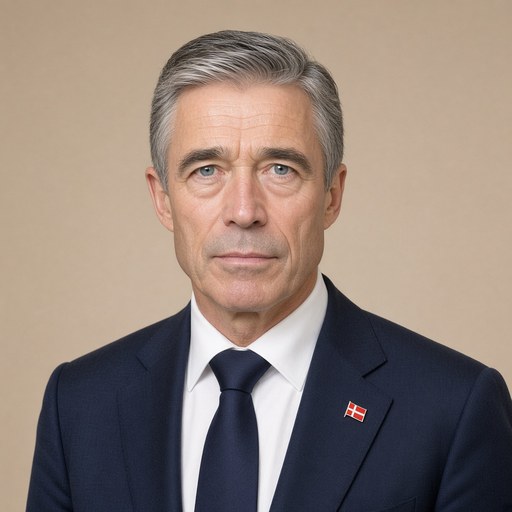
Prime Minister Anders Fogh Rasmussen's speech at Mindelunden on August 29, 2008.
 Anders Fogh Rasmussen · Prime Minister of Denmark
- Context
- Rasmussen addressed a commemoration at Mindelunden on August 29, 2008, marking the 65th anniversary of Denmark's break with German occupation in 1943.
- Main themes
- Danish resistance movement, WWII occupation and collaboration policy, August 29 1943 commemoration, freedom fighters and veterans, moral duty to oppose tyranny, democracy vs. dictatorship, Danish national honor, sinking of the Danish fleet, anti-Nazism, rule of law and civil liberties
- Duration
- ~6 min
- Words
- 688
- Sentences
- 47
- Readability
- 63
- Grade
- 8.2
- Syntax
- 2.64
- Vocabulary
- 2.14
Translated from Danish
The broad sphere of national life a sentence belongs to. Every sentence has an Arena, so it is the denominator the other indices are read against.
Other47 sentences in 22 paragraphs
Your Majesty, ladies and gentlemen,
August 29, 1943, is a pivotal date in Denmark's history. The Danish government ceased cooperation with the German occupying power and resigned. After more than three years of collaboration with the Germans, clear lines were finally drawn.
That day, Denmark's honor was saved.
The break with the occupying power was forced by the growing dissatisfaction of the population with the policy of collaboration and the efforts of brave resistance fighters.
We owe a great debt of gratitude to the resistance fighters who, through sabotage against the Germans and cooperation with the Allies, defied the collaboration politicians. For the freedom fighters ensured that Denmark ultimately emerged from the war on the right side in the fight against Nazism. After the war, Denmark could take its place among the world's free nations.
Therefore, I pay tribute to the freedom fighters, the resistance movement, the war sailors, and others who chose active resistance. And I honor the decisive Danish naval officers who, 65 years ago today, resolutely sank the fleet to prevent it from falling into German hands.
Here, 65 years later, it can still stir strong emotions to discuss whether the then government was right to collaborate so actively with the German occupying power.
Supporters of the collaboration policy argue that resistance against the German might was futile. That cooperation with the occupying power spared the Danish population from the worst horrors and destruction of the war. And that it aimed to preserve and defend democratic values.
My viewpoint is short and clear: If the rest of the world had thought like the collaboration politicians in Denmark, then Hitler would have won the war and Europe would have been Nazi.
The problem was that we left it to others to fight Nazism while we saved our own skin. That we let others bleed and suffer for our sake and our freedom. That we wanted to enjoy the fruits of peace. But did not contribute anything in the fight against tyranny.
The active policy of adaptation led to interventions in citizens' rights and freedoms contrary to the fundamental principles of a rule of law. And one cannot compromise on one's principles and at the same time claim that society is governed in accordance with those very principles.
In a struggle between freedom and unfreedom, between democracy and dictatorship, one cannot remain neutral. One must take a stand. One must fight for freedom and democracy and combat tyranny and oppression.
In matters of right and wrong, one should never ask whether it pays off, for that is in the interest of tyrants and oppressors.
It will never be humane or compassionate to make oneself available for injustice—whether it occurs out of cowardice, compliance, or greed.
Dear veterans,
You made a choice in your time. You did not follow what might pay off, but what you found to be right.
You made a personal choice. But at the same time, a choice that saved the self-respect of the Danish people.
You are getting on in years. And there are not many of you left. I have understood that this 65th anniversary is the last time the Veterans of the Freedom Struggle will hold a commemoration of August 29. I would therefore like to take this opportunity to thank the association—and especially its chairman, Jørgen Barfod—for the great effort you have made over the years to mark this important day.
August 29, 1943, will forever stand as a significant mark in Denmark's history. Therefore, August 29, 1943, is also included as one of the prominent events in the Danish history canon. Thus, one of the events in Danish history that children and young people should learn about in history classes.
We commemorate August 29 because that day the will of the people to fight against injustice prevailed.
And we remember the freedom fighters who paid the highest price in the struggle for freedom, peace, and democracy. They did not ask what would be useful. But what was true. They did not settle for saving themselves. They acted. They gave their lives for our freedom.
May their memory be honored.
The original Danish. The tags above are read on the English translation's sentences.
Deres Majestæt, mine damer og herrer,
Den 29. august 1943 er en skelsættende dato i Danmarks historie. Den danske regering stoppede samarbejdet med den tyske besættelsesmagt og gik af. Efter godt tre års samarbejde med tyskerne blev der endelig rene linjer.
Den dag blev Danmarks ære reddet.
Bruddet med besættelsesmagten blev tvunget frem af befolkningens voksende utilfredshed med samarbejdspolitikken og modige modstandsfolks indsats.
Vi skylder en stor tak til de modstandsfolk, som gennem sabotage mod tyskerne og samarbejde med de allierede trodsede samarbejdspolitikerne. For frihedskæmperne sikrede, at Danmark i sidste ende kom ud af krigen på den rigtige side i kampen mod nazismen. Danmark kunne efter krigen indtage sin plads blandt verdens frie nationer.
Derfor hylder jeg frihedskæmperne, modstandsbevægelsen, krigssejlerne og andre, der valgte den aktive modstand. Og jeg hylder de handlekraftige danske søofficerer, som i dag for 65 år siden resolut sænkede flåden for at forhindre den i at falde i tyskernes hænder.
Her 65 år senere kan det stadig sætte stærke følelser i kog at diskutere, om den daværende regering gjorde ret i at samarbejde så aktivt med den tyske besættelsesmagt.
Tilhængerne af samarbejdspolitikken anfører, at modstand mod den tyske overmagt var nytteløs. At samarbejdet med besættelsesmagten skånede den danske befolkning for krigens værste rædsler og ødelæggelser. Og havde til hensigt at bevare og forsvare de demokratiske værdier.
Mit synspunkt er kort og klart: Hvis resten af verden havde tænkt som samarbejdspolitikerne i Danmark, så ville Hitler have vundet krigen og Europa været nazistisk.
Problemet var, at vi overlod det til andre at bekæmpe nazismen, medens vi hyttede vort skind. At vi lod andre bløde og lide for vor skyld og vor frihed. At vi gerne ville nyde fredens frugter. Men ikke yde noget i kampen mod tyranniet.
Den aktive tilpasningspolitik førte til indgreb i borgernes frihedsrettigheder i strid med de grundlæggende principper for en retsstat. Og man kan ikke gå på kompromis med sine principper og samtidig hævde, at samfundet bliver styret i overensstemmelse med de selv samme principper.
I en skæbnekamp mellem frihed og ufrihed, mellem demokrati og diktatur kan man ikke forholde sig neutralt. Da må man tage stilling. Da må man slås for frihed og folkestyre og bekæmpe tyranni og undertrykkelse.
I sagen ret og uret skal man aldrig spørge, om det betaler sig, for det er i tyrannernes og undertrykkernes interesse.
Det bliver aldrig medmenneskeligt eller humant at stille sig til rådighed for uretten - hvad enten det sker af fejhed, føjelighed eller griskhed.
Kære veteraner,
I traf i sin tid et valg. I fulgte ikke, hvad der kunne betale sig, men hvad I fandt rigtigt.
I traf et personligt valg. Men samtidig et valg, som reddede det danske folks selvrespekt.
I er ved at være oppe i årene. Og I er ikke så mange tilbage. Jeg har forstået, at denne 65 års dag er den sidste gang, hvor Frihedskampens Veteraner vil stå for en højtideligholdelse af 29. august. Jeg vil derfor gerne benytte lejligheden til at takke foreningen – og ikke mindst dens formand, Jørgen Barfod – for den store indsats, I har gjort gennem årene for at markere denne vigtige dag.
Den 29. august 1943 vil for altid stå som et markant mærke i Danmarks historie. Derfor er 29. august 1943 også optaget som én af de fremtrædende begivenheder i den danske historie-kanon. Altså én af de begivenheder i Danmarks-historien, som børn og unge bør lære om i historie-undervisningen.
Vi højtideligholder den 29. august, fordi den dag sejrede folkets vilje til kamp mod uretten.
Og vi mindes de frihedskæmpere, som betalte den højeste pris i kampen for frihed, fred og folkestyre. De spurgte ikke om, hvad der kunne nytte. Men om, hvad der var sandt. De nøjedes ikke med at hytte sig. De handlede. De gav deres liv for vores frihed.
Æret være deres minde.