




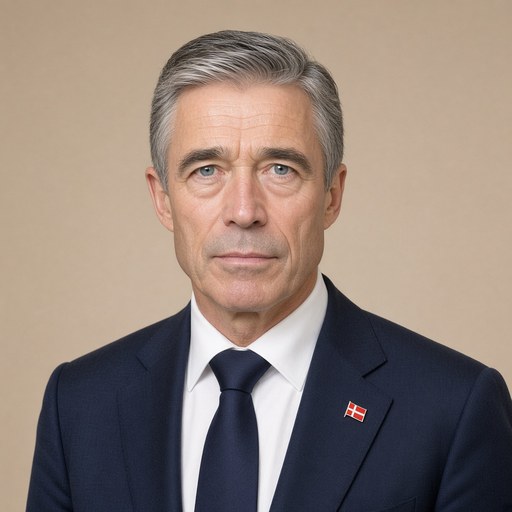
Prime Minister Anders Fogh Rasmussen's speech at the Defense Academy's anniversary on Friday, October 31, 2003.
 Anders Fogh Rasmussen · Prime Minister of Denmark
- Context
- Rasmussen addressed the Danish Defense Academy's anniversary on October 31, 2003, outlining priorities for defense transformation and international engagement.
- Main themes
- Defense transformation, international military operations, civil-military cooperation, defense budget and resource allocation, Danish forces abroad, security policy adaptation, military capabilities and technology, humanitarian and reconstruction aid, emergency preparedness, Home Guard reform, foreign policy coherence, post-9/11 threat landscape
- Duration
- ~23 min
- Words
- 2,764
- Sentences
- 170
- Readability
- 43
- Grade
- 11.0
- Syntax
- 2.65
- Vocabulary
- 2.20
Translated from Danish
The broad sphere of national life a sentence belongs to. Every sentence has an Arena, so it is the denominator the other indices are read against.
Other170 sentences in 86 paragraphs
Denmark in the World
Thank you for the invitation to speak here today on the occasion of the Royal Danish Defence College's anniversary day.
The topic "Denmark in the World" is well chosen.
Defence policy today is something other than gunpowder and bullets. It is very much foreign and security policy. In my address today I will look at Danish defence in a broader foreign and security policy context. Denmark must make an active contribution to securing freedom, peace and democracy in the world around us. That is why we must improve the ability of Danish defence to take part in international military operations. And that is why we must view the development of the armed forces in the light of the changed and ever-changing foreign and security policy conditions.
* * *
The security and foreign policy starting point
The reorientation of Danish foreign policy that we find ourselves in the middle of today truly began with the general election in 1988. That put a stop to the harmful and unsupportive footnote policy of the 1980s. The people made a choice. They chose active commitment and responsibility over accommodation.
Since the fall of the Wall we have experienced a development – in Europe and globally – that has created interesting new opportunities for Danish foreign policy. But also new challenges, which we cannot run away from.
For me it is absolutely crucial to state clearly that it is in the interest of Denmark and the EU to develop in close cooperation with the USA. The only power with truly global reach. That applies militarily, economically and culturally. To embark on a course where we Europeans were to define ourselves in confrontation with the USA is not only to ignore history, but also shows no understanding of the fundamental realities of the present and no regard whatsoever for the challenges of the future.
Cooperation with the USA is not a policy of accommodation. It is a natural partnership with a like-minded friend, partner and ally that upholds the same principles and values as we do: Democracy, freedom of expression, a market economy and respect for human rights.
There is no contradiction between wanting strong cooperation in the EU and a strong Europe and at the same time supporting close cooperation with the USA. On the contrary, a strong and stable Europe will be a better partner for the USA. Danish foreign and security policy must therefore follow two equal and parallel tracks: A strong EU and an unbreakable bond with the USA.
The current situation on our continent – not least the enlargement of NATO and the EU – underlines that Denmark is in a rather favourable position in terms of security policy.
The long-familiar threat of invasion against Denmark has been replaced by a more complex threat picture. Our first line of defence today lies in places such as the Afghan mountains, where our special forces and F-16 pilots have made a fine contribution that we can be proud of.
In Denmark we must gear our security and defence policy towards dealing with the new threats. In the coming years we must prepare ourselves to meet a complicated set of challenges. Familiar notions and traditional solutions are no longer adequate.
International security problems are too great and complex to be solved by any single country. Countering threats and challenges such as international terrorism, the proliferation of weapons of mass destruction and regional instability calls for strong international cooperation in foreign and security policy.
Denmark has a fundamental interest in promoting a world order characterised by stability. Denmark must therefore continue to make an active effort to strengthen international cooperation – first and foremost in the organisations of greatest importance to our security and stability – NATO, the UN and the EU.
That is why it also remains an essential
Danish security and defence policy task to help maintain NATO as the central forum for solidary and binding security cooperation between Europe and North America.
* * *
The development of the Danish engagement
Today's foreign policy challenges place Denmark in a situation where we can and must pursue an active foreign policy. We must take a position. And we must take responsibility. We must not sail under a flag of convenience.
We must have opinions, and we must express them actively to the outside world. That also applies to the armed forces, which, in interaction with our other foreign policy instruments, must do their part to make Denmark and what is Danish known and visible.
International operations have not always had the prominent role among the armed forces' tasks that they have today. But if we go back to the post-war period, we can see that this activity arose as a result of Denmark abandoning neutrality in 1949 and becoming a member of NATO.
Many have probably forgotten it, but we took part in the Allied occupation of Germany with a brigade. Sending Danish soldiers outside the country's borders was an entirely new type of responsibility that we took on. That is why it was significant.
Later we were among the first contributors to the UN's new peacekeeping operations: Gaza, Congo, Cyprus. Let us not forget that some of these tasks were definitely at the "sharp" end. That applied to parts of the effort in Congo/Katanga in the early 1960s.
Gradually the operations of the "blue berets" settled into a fixed pattern. The forces were deployed in conflict areas with the consent of the parties concerned in order to stabilise a situation, typically along ceasefire lines. The use of force was only considered in self-defence.
It is far from my intention to belittle the importance of these classic peacekeeping operations. Danish UN soldiers did useful work that helped prevent conflicts from flaring up again.
But it is questionable whether this type of operation ever contributed decisively to preventing, let alone resolving, conflicts. The very long-standing engagement in Cyprus is surely an example of this. That is why we eventually withdrew. And things went completely wrong in the Yugoslav civil war, when uncertainty arose about the nature of the UN's engagement and its ability to solve the difficult tasks. The result was the massacre in Srebrenica.
I do not believe we will ever again expose the UN to anything similar. The UN's current operations are characterised by a better match between ends and means.
The deployment of the corvette "Olfert Fischer" in 1991 marked the beginning of the type of Danish international military engagement that has prevailed ever since. Without the necessary precondition of impartiality, that is, with a position taken on the substance of conflicts. Often at great distance and with higher risk.
The defence of the future
Given the security and defence policy challenges the world faces today, I believe that the type of military operations Denmark began in 1991 will continue to be the prevailing trend in the field of defence policy.
The terrorist attack on New York and the Pentagon on 11 September 2001 woke us up and showed that international terrorism constitutes the greatest and most dangerous security threat of our time.
The scale of this unprovoked attack shows that terrorists do not shrink from causing destruction on a mass scale against innocent civilians. The USA's military headquarters was also chosen as a target.
It is clear that the terrorist threat confronts the rest of the Western world, including Denmark, with new challenges.
The new threat picture forces us to reassess our basic military attitudes and doctrines. Today we have to recognise that evil must be fought at the root. The terrorists must be stopped where they are hatched.
If we are to keep up with developments, the armed forces must be organised according to the actual conditions and realities.
And the reality is that safeguarding Denmark's security no longer begins at the borders of the realm as in the old days. While the Cold War was fundamentally characterised by a static threat picture, the threats of the 21st century are unpredictable and change rapidly. Denmark's security policy can no longer be based on a defence that is like a mirror image of our enemy.
The mobilisation defence is therefore no longer relevant.
Instead, the armed forces must to an ever greater degree than today prepare to carry out their tasks far away from Denmark.
Denmark's international military engagement must in future be the pivot of the armed forces.
The government will in future organise defence planning on the basis of an international perspective, where the main rule is that Denmark must continue to be able to participate in conflict areas and with substantial military contributions.
The armed forces must be able to contribute to international conflict management on both sides of the line between traditional peacekeeping and more robust peacemaking.
At the same time, the armed forces must at all times be able to meet the demands that the government and the Folketing place on the international effort.
In future the armed forces must focus on deploying even more soldiers to international operations than is the case today.
During his visit to Denmark, NATO's Secretary General mentioned that Europe has a standing force of approximately 3 million personnel, but is only able to deploy 80,000 soldiers to international tasks.
That is thought-provoking, and it must be possible to do better. We must get far more out of the available resources in the form of forces available for deployment.
For me it is important to stress that Denmark should lead the way on this point.
I believe that the hallmarks of the Danish armed forces' engagement in international operations in future should be:
better use of resources, so that we can deploy more soldiers, flexibility with regard to the nature of the task, and the ability to deploy quickly.
Development trends:
Military development is moving towards having military units that use the latest technology and can be deployed immediately in all types of operations.
The demands on the units' education and training are increasing. The armed forces must be prepared for both the enemy and his whereabouts to be unknown – and the armed forces must be prepared for the enemy to change tactics.
This places great demands on the armed forces' ability to adapt. And it requires dynamic planning that constantly keeps pace with developments. At the same time, the demands for better use of resources and durable solutions, both on the personnel side and on the materiel side, are becoming more stringent.
No NATO country other than the USA has the resources to transform all of its armed forces so that they take full advantage of technological development.
The military transformation is driven by the Americans, and it is through NATO cooperation that we in Europe can keep up with developments.
It is therefore necessary for Denmark to continue to specialise and to make the armed forces even more oriented towards international operations.
In terms of resources, a small country like Denmark cannot keep up with military-technological development in all areas. That is why we must be aware of the positive gains to be had from entering into close cooperation with other small allied nations.
But we must continue to focus on the competences we already have and build on them.
* * *
Against this background I will set out five requirements for the future defence arrangement.
Firstly,
we must increase the capacity to participate in international military operations. I believe that we should aim to deploy twice as many soldiers as today. In other words, the armed forces must in future produce more soldiers for international operations.
This means, among other things, that the International Brigade must be expanded. In this connection we should increase the number of soldiers in the special forces, the Jaeger Corps and the Frogman Corps. And the units must be ready for deployment at shorter notice than today.
We must aim to be able to assign highly qualified units to the NATO Response Force and generally to be able to fulfil our obligations under the decisions of the NATO summit in Prague on improved capabilities.
Participation in international military operations with combat contributions requires a high level of security, a high level of training and weapons and equipment at a high technological level. All this requires new investments.
In return we must free up resources by abolishing the mobilisation defence. And we must free up personnel from staff functions, commands and other administrative tasks for operational military tasks.
In this connection we must also consider, with an open mind, fundamental reforms of conscription. But I consider it something very valuable that Danish soldiers today are recruited from broad sections of society. It is a factor to which the government attaches great importance for the armed forces' roots in the population.
Secondly,
we must demand that the armed forces in future are capable of deploying the Danish forces more quickly and more flexibly than is the case today. This requires, among other things, a core of permanently employed, professional soldiers who can be deployed at short notice.
But it also requires a transport capacity that Denmark does not currently have. That is why we need investments in capacity for rapid and flexible transport. On the other hand, we can easily manage with somewhat fewer tanks.
But the armed forces must also think in terms of new solutions. We must move away from the mindset that the armed forces must own everything and be able to do everything themselves. In future the armed forces must cooperate more closely with other nations and possibly with private business on transport capacity. The long-term lease of the transport ship is a good start.
Thirdly,
there must be money for rapid deployment to international flashpoints where a Danish effort is desirable. The overall defence budget will not be increased. But within the known framework, we must set aside a pool that is always available for international operations.
I envisage that, through reprioritisation and better use of resources, the armed forces will in future be able to set aside an annual reserve. The reserve must be secured and must only be usable following a decision by the government and the Folketing. In return, we as politicians must be disciplined and not touch the pool for day-to-day operations. It must be like a blocked account that may only be activated for international operations.
Fourthly,
we must expand civil-military cooperation. I have just returned from a visit to the Danish forces in Kosovo. During the visit I experienced how fruitful civil-military cooperation is. In addition to drawing on each other's experience, the cooperation offers opportunities to focus the Danish effort and thereby achieve far better results. We are seeing the same trend in Iraq.
We must become even better at integrating the military effort with the other Danish efforts such as development aid, reconstruction aid and humanitarian aid. Coherence in foreign policy dictates that we achieve maximum effect from the overall effort and thereby strengthen Denmark's ability to take on responsibility.
It is important that the local population does not only see armoured personnel carriers, but also experiences an effort to secure necessary supplies and rebuild infrastructure.
Fifthly,
we must bring together civil and military emergency preparedness. In future there must be one single emergency preparedness system that handles all types of emergency tasks. In this connection we can continue to use the volunteers of the Home Guard, but we should take an open-minded look at the Home Guard's organisation.
* * *
There are surely many in the armed forces who long for peace and quiet after the dramatic upheavals of the last defence agreement. But I do not think I can promise that. On the contrary, I can promise new challenges and changes.
The armed forces are today an integral part of foreign and security policy. Foreign and security policy conditions change constantly. During the current defence agreement period, 11 September 2001 alone has turned the threat picture upside down.
We still have armed forces that are primarily geared to dealing with an old-fashioned threat directly against Danish territory. That is not the threat we face. That is why the armed forces must, in the coming years, prepare for a very extensive transformation to the new era.
Thank you for your attention. The time has now come for dialogue on the topics I have touched upon. I do, however, ask for your understanding that I cannot anticipate the government's detailed proposal for the coming negotiations on the agreement. With this reservation, I am ready to answer questions.
The original Danish. The tags above are read on the English translation's sentences.
Danmark i verden
Tak for invitationen til at tale her i dag i anledning af Forsvarsakademiets årsdag.
Emnet ”Danmark i verden” er velvalgt.
Forsvarspolitik er i dag andet end krudt og kugler. Det er i høj grad udenrigs- og sikkerhedspolitik. I mit indlæg i dag vil jeg se på dansk forsvar i en bredere udenrigs- og sikkerhedspolitisk sammenhæng. Danmark skal yde et aktivt bidrag til at sikre frihed, fred og folkestyre i verden omkring os. Derfor skal vi forbedre dansk forsvars evne til at deltage i internationale militære operationer. Og derfor må vi se forsvarets udvikling i lyset af de ændrede og stadigt skiftende udenrigs- og sikkerhedspolitiske vilkår.
* * *
Det sikkerheds- og udenrigspolitiske udgangspunkt
Den nyorientering af dansk udenrigspolitik, vi i dag befinder os midt i, tog for alvor sin begyndelse med folketingsvalget i 1988. Her blev sat en stopper for 80’ernes skadelige og usolidariske fodnotepolitik. Befolkningen traf et valg. Man valgte aktiv stillingtagen og ansvarlighed frem for tilpasning.
Siden Murens fald har vi oplevet en udvikling – i Europa og globalt – der har skabt interessante nye muligheder for dansk udenrigspolitik. Men også nye udfordringer, som vi ikke kan løbe fra.
For mig er det helt afgørende at slå fast, at det er i Danmarks og EU’s interesse at udvikle sig i tæt samarbejde med USA. Den eneste magt med virkelig global rækkevidde. Det gælder militært, økonomisk og kulturelt. At slå ind på en kurs, hvor vi europæere skulle definere os selv i konfrontation med USA, er ikke blot historieløst, men også uden forståelse for de grundlæggende realiteter i nutiden og helt uden blik for udfordringerne i fremtiden.
Samarbejdet med USA er
ikke
tilpasningspolitik. Det er et naturligt samvirke med en ligesindet ven, partner og allieret, som hylder de samme principper og værdier, som vi gør: Demokrati, ytringsfrihed, markedsøkonomi og respekt for menneskerettighederne.
Der er ikke nogen modsætning mellem at ønske et stærkt samarbejde i EU og et stærkt Europa og så samtidig gå ind for et tæt samarbejde med USA. Tværtimod vil et stærkt og stabilt Europa være en bedre partner for USA. Dansk udenrigs- og sikkerhedspolitik skal derfor følge to ligeværdige og parallelle spor: Et stærkt EU og et ubrydeligt bånd med USA.
Den aktuelle situation på vort kontinent – herunder ikke mindst udvidelsen af NATO og EU – understreger, at Danmark sikkerhedspolitisk befinder sig i en ganske gunstig position.
Den gammelkendte invasionstrussel mod Danmark er afløst af et mere komplekst trusselsbillede. Vor første forsvarslinje går i dag på steder som de afghanske bjerge, hvor vore specialstyrker og F-16 piloter har ydet en fin indsats, vi kan være stolte af.
Vi skal i Danmark indrette sikkerheds- og forsvarspolitikken på at håndtere de nye trusler. Vi skal i de kommende år indstille os på at leve op til et kompliceret sæt af udfordringer. Vante forestillinger og traditionelle løsninger slår ikke længere til.
De internationale sikkerhedspolitiske problemer er for store og komplekse til, at de kan løses af noget enkelt land. Imødegåelse af trusler og udfordringer som international terrorisme, spredning af masseødelæggelsesvåben og regional ustabilitet kalder på et stærkt internationalt udenrigs- og sikkerhedspolitisk samarbejde.
Danmark har en grundlæggende interesse i at fremme en verdensorden karakteriseret af stabilitet. Danmark skal derfor fortsat yde en aktiv indsats for at styrke det internationale samarbejde - først og fremmest i de organisationer, der har størst betydning for vores sikkerhed og stabilitet – NATO, FN og EU.
Derfor er det også fortsat en
væsentlig
dansk sikkerheds- og forsvarspolitisk opgave at medvirke til at fastholde NATO som det centrale forum for solidarisk og forpligtende sikkerhedspolitisk samarbejde mellem Europa og Nordamerika.
* * *
Udviklingen i det danske engagement
Dagens udenrigspolitiske udfordringer bringer Danmark i en situation, hvor vi kan og skal føre en aktiv udenrigspolitik. Vi skal tage stilling. Og vi skal tage ansvar. Vi skal ikke sejle under bekvemmelighedsflag.
Vi skal have holdninger, og vi skal markere dem aktivt udadtil. Det gælder også forsvaret, der i sammenspil med vores øvrige udenrigspolitiske instrumenter, skal gøre sit til, at Danmark og det danske bliver kendt og synligt.
De internationale operationer har ikke altid haft den fremtrædende rolle i forsvarets opgaver, som de har i dag. Men går vi tilbage til efterkrigstiden kan vi se, at denne virksomhed opstod som følge af, at Danmark i 1949 opgav neutraliteten og blev medlem af NATO.
Mange har nok glemt det, men vi medvirkede i den allierede besættelse af Tyskland med en brigade. Udsendelsen af danske soldater uden for landets grænser var en helt ny type ansvar, vi påtog os. Derfor var den betydningsfuld.
Senere var vi blandt de første bidrageydere til FN’s nye fredsbevarende operationer: Gaza, Congo, Cypern. Lad os ikke glemme, at nogle af disse opgaver absolut befandt sig i den ”skarpe” ende. Det gjaldt dele af indsatsen i Congo/Katanga i begyndelsen af 1960’erne.
Efterhånden kom de ”blå baretter”’s operationer ind i et fast mønster. Styrkerne blev indsat i konfliktområder med de berørte parters samtykke for at stabilisere en situation, typisk langs våbenstilstandslinjer. Magtanvendelse kom kun på tale i selvforsvar.
Det ligger mig fjernt at forklejne betydningen af disse klassiske fredsbevarende operationer. Danske FN-soldater udførte en nyttig indsats, som var med til at forhindre konflikters genopblussen.
Men det er spørgsmålet, om denne type operationer nogensinde bidrog til at forebygge, endsige løse konflikter på afgørende vis. Det meget langvarige engagement på Cypern er vel et eksempel på dette. Derfor trak vi os til sidst ud. Og helt galt gik det i den jugoslaviske borgerkrig, da der kom uklarhed omkring karakteren af FN’s engagement og evne til at løse de svære opgaver. Resultatet blev massakren i Srebrenica.
Jeg tror ikke, vi nogensinde påny vil udsætte FN for noget lignende. FN’s nuværende operationer er kendetegnet af bedre overensstemmelse mellem mål og midler.
Udsendelsen af korvetten ”Olfert Fischer” i 1991 blev indledningen på den type dansk internationalt militært engagement, som siden har været fremherskende. Uden nødvendig forudsætning om upartiskhed, det vil sige med stillingtagen til konflikters substans. Ofte på lang afstand og med højere risiko.
Fremtidens forsvar
Med de sikkerheds- og forsvarspolitiske udfordringer, som verden står over for i dag, tror jeg at den type militære operationer, som Danmark indledte i 1991 også fremover vil være den fremherskende tendens på det forsvarspolitiske område.
Terrorangrebet imod New York og Pentagon den 11. september 2001 vækkede os og viste at den internationale terrorisme udgør vor tids største og farligste sikkerhedstrussel.
Dette uprovokerede angrebs omfang viser, at terroristerne ikke viger tilbage fra at forvolde ødelæggelser af massekarakter imod sagesløse civile. Også USA’s militære hovedkvarter var udset som mål.
Det står klart, at terrortruslen stiller resten af den vestlige verden, også Danmark, over for nye udfordringer.
Det nye trusselsbillede tvinger os til at revurdere vores militære grundindstillinger og doktriner. I dag er vi nød til at indse, at ondet skal bekæmpes ved roden. Terroristerne skal stoppes, dér hvor de udklækkes.
Hvis vi skal følge med udviklingen, så må forsvaret indrettes efter de faktiske forhold og realiteterne.
Og realiteterne er, at varetagelsen af Danmarks sikkerhed ikke længere begynder ved rigets grænser som i gamle dage. Mens Den Kolde Krig grundlæggende var karakteriseret ved et statisk trusselbillede, er truslerne i det 21. århundrede uforudsigelige og forandrer sig hastigt. Danmarks sikkerhedspolitik kan ikke længere basere sig på et forsvar, der er som et spejlbillede af vores fjende.
Mobiliseringsforsvaret er derfor ikke længere relevant.
Forsvaret skal i stedet i stadig højere grad end i dag indstille sig på at løse sine opgaver langt væk fra Danmark.
Danmarks internationale militære engagement skal fremover være omdrejningspunktet i forsvaret.
Regeringen vil fremover tilrettelægge forsvarsplanlægningen med udgangspunkt i et internationalt perspektiv, hvor hovedreglen er, at Danmark fortsat skal være i stand til at deltage i konfliktområder og med betydelige militære bidrag.
Forsvaret skal kunne bidrage til international konflikthåndtering på begge sider af grænsen mellem traditionel fredsbevarelse og mere håndfast fredsskabelse.
Samtidig skal forsvaret til stadighed være i stand til at honorere de krav, som regering og Folketing stiller til den internationale indsats.
Forsvaret skal fremover fokusere på at udsende endnu flere soldater til internationale operationer end tilfældet er i dag.
NATO’s generalsekretær nævnte under sit besøg i Danmark, at Europa råder over en stående styrke på ca. 3 mio. mand, men kun er stand til at udsende 80.000 soldater til internationale opgaver.
Det er tankevækkende og det må kunne gøres bedre. Vi skal have langt større udbytte af de forhåndenværende ressourcer i form af styrker til rådighed for udsendelse.
For mig er det vigtigt at understrege, at Danmark bør går foran på dette punkt.
Jeg mener, at kendetegnet for det danske forsvars engagement i internationale operationer fremover bør være:
bedre ressourceudnyttelse, så vi kan udsende flere soldater,
fleksibilitet i forhold til opgavens karakter, og
evne til hurtig udsendelse.
Udviklingstendenser:
Den militære udvikling går i retning af at råde over militære enheder, der anvender den nyeste teknologi og umiddelbart kan indsættes i alle typer operationer.
Kravene til enhedernes uddannelse og træning er stigende. Forsvaret skal indstille sig på at såvel fjenden som hans opholdssted kan være ukendt – og forsvaret skal være forberedt på, at fjenden kan ændre taktik.
Dette stiller store krav til forsvarets omstillingsevne. Og det kræver en dynamisk planlægning, der konstant følger med udviklingen. Samtidig skærpes kravene til bedre ressourceudnyttelse og langtidsholdbare løsninger både på personelsiden og på materielsiden.
Ingen andre NATO-lande end USA har ressourcerne til at omdanne alle deres væbnede styrker, så de til fulde udnytter den teknologiske udvikling.
Den militære omstilling drives af amerikanerne, og det er igennem NATO-samarbejdet, at vi i Europa kan holde os på højde med udviklingen.
Det er derfor nødvendigt, at Danmark fortsat specialiserer sig og gør forsvaret endnu mere orienteret mod de internationale operationer.
Ressourcemæssigt kan et lille land som Danmark ikke følge med den militærteknologiske udvikling på alle områder. Derfor skal vi være opmærksomme på de positive gevinster, der er ved at indgå i et tæt samarbejde med andre små alliancenationer.
Men vi skal fortsat fokusere på de kompetencer, vi allerede har og bygge videre på dem.
* * *
På denne baggrund vil jeg opstille fem krav til den fremtidige forsvarsordning.
For det første
skal vi øge kapaciteten til deltagelse i internationale militære operationer. Jeg mener, at vi bør stræbe efter at udsende dobbelt så mange soldater som i dag. Forsvaret skal altså i fremtiden producere flere soldater til de internationale operationer.
Det indebærer bl.a., at Den Internationale Brigade skal udbygges. Vi bør i den forbindelse udvide antallet af soldater i specialstyrkerne, jæger- og frømandskorps. Og enhederne skal være klar til udsendelse med kortere varsel end i dag.
Vi skal sigte på at kunne tilmelde højt kvalificerede enheder til NATO Responce Force og i det hele taget at kunne opfylde vore forpligtelser i henhold til beslutningerne på NATO’s topmøde i Prag om forbedret kapacitet.
Deltagelse i internationale militære operationer med skarpe bidrag kræver et højt sikkerhedsniveau, en uddannelse på højt niveau og våben og udstyr på et højt teknologisk niveau. Alt dette kræver nye investeringer.
Til gengæld må vi frigøre ressourcer ved at afskaffe mobiliseringsforsvaret. Og vi skal frigøre personale fra stabsfunktioner, kommandoer og andre administrative opgaver til operative militære opgaver.
I den forbindelse må vi også fordomsfrit overveje grundlæggende reformer af værnepligten. Men jeg anser det for noget meget værdifuldt, at danske soldater i dag rekrutteres fra brede samfundslag. Det er en faktor, som regeringen tillægger stor betydning for forsvarets folkelige forankring.
For det andet
må vi kræve, at forsvaret i fremtiden evner at udsende de danske styrker hurtigere og mere fleksibelt, end tilfældet er i dag. Det kræver bl.a., at der er en kerne af fastansatte, professionelle soldater, som kan udsendes med kort varsel.
Men det kræver også en transportkapacitet, som Danmark ikke p.t. råder over. Derfor behøver vi investeringer i kapacitet til hurtig og fleksibel transport. Til gengæld kan vi godt klare os med nogle færre kampvogne.
Men forsvaret må også tænke i nye løsninger. Vi skal væk fra tankegangen om, at forsvaret skal eje alt og kunne alt selv. Forsvaret må fremover samarbejde tættere med andre nationer og eventuelt det private erhvervsliv om transportkapacitet. Langtidsleasingen af transportskibet er en god begyndelse.
For det tredje
skal der være penge til hurtig indsats i internationale brændpunkter, hvor en dansk indsats er ønskelig. Det samlede forsvarsbudget bliver ikke forøget. Men inden for den kendte ramme, må vi afsætte en pulje, som altid er til rådighed for internationale operationer.
Jeg forestiller mig, at forsvaret fremover ved hjælp af omprioriteringer og bedre ressourceudnyttelse bliver i stand til at afsætte en årlig reserve. Reserven skal være sikret og skal kun kunne anvendes efter beslutning i regering og Folketinget. Til gengæld må vi som politikere være disciplinerede og ikke røre puljen til løbende drift. Den skal være som en spærret konto, der kun må aktiveres til internationale operationer.
For det fjerde
skal vi udbygge det civil/militære samarbejde. Jeg er netop vendt hjem fra et besøg hos de danske styrker i Kosovo. Under besøget oplevede jeg, hvor udbytterigt det civil/militære samarbejde er. Foruden at drage nytte af hinandens erfaringer rummer samarbejdet muligheder for at fokusere den danske indsats og dermed opnå langt bedre resultater. Vi oplever den samme tendens i Irak.
Vi skal blive endnu bedre til at sammentænke den militære indsats med de øvrige danske indsatser som udviklingsbistand, genopbygningsbistand og humanitær bistand. Sammenhængen i udenrigspolitikken tilsiger, at vi opnår maksimal effekt af den samlede indsats og dermed styrker Danmarks mulighed for at påtage sig et ansvar.
Det er vigtigt, at lokalbefolkningen ikke kun ser pansrede mandskabsvogne, men også oplever en indsats for at sikre nødvendige forsyninger og genopbygge infrastruktur.
For det femte
skal vi samle det civile og militære beredskab. Fremover skal det være ét samlet beredskab, der løser alle typer af beredskabsopgaver. I den forbindelse kan vi fortsat bruge Hjemmeværnets frivillige, men vi bør fordomsfrit se på Hjemmeværnets organisation.
* * *
Der er sikkert mange i forsvaret, som sukker efter ro og fred efter de voldsomme omvæltninger i det sidste forsvarsforlig. Men det tror jeg ikke, at jeg kan love. Tværtimod kan jeg love nye udfordringer og omstillinger.
Forsvaret er i dag en integreret del af udenrigs- og sikkerhedspolitikken. De udenrigs- og sikkerhedspolitiske forhold skifter konstant. I løbet af indeværende forsvarsforligsperiode har alene 11. september 2001 vendt op og ned på trusselsbilledet.
Vi har stadigvæk et forsvar, som først og fremmest er gearet til at håndtere en gammeldags trussel direkte mod dansk territorium. Det er ikke den trussel, som vi står overfor. Derfor må forsvaret i de kommende år indstille sig på en meget omfattende omstilling til den nye tid.
Tak for opmærksomheden. Tiden er nu inde til dialog om de emner, jeg har berørt. Jeg beder dog om forståelse for, at jeg ikke kan foruddiskontere regeringens detaljerede oplæg til de kommende forligsforhandlinger. Med dette forbehold er jeg rede til at besvare spørgsmål.