




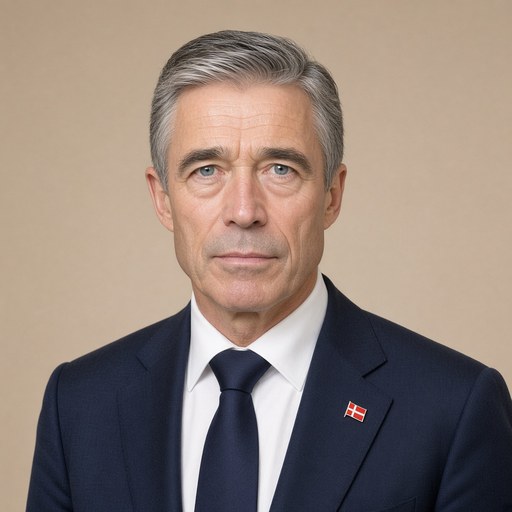
The Prime Minister's speech at the Ceremony in the Mosaic Faith Community on October 28, 2003, on the occasion of the 60th anniversary of the rescue operation for the Danish Jews.
 Anders Fogh Rasmussen · Prime Minister of Denmark
- Context
- Rasmussen addressed a ceremony at Copenhagen's synagogue on the 60th anniversary of the 1943 rescue of Danish Jews from Nazi deportation.
- Main themes
- Rescue of Danish Jews, Holocaust remembrance, antisemitism and Nazi persecution, Danish national identity and solidarity, integration of Jewish community in Denmark, totalitarianism vs. freedom, lessons from history, ethnic hatred and genocide, Swedish humanitarian role, Auschwitz Day commemoration
- Duration
- ~7 min
- Words
- 871
- Sentences
- 54
- Readability
- 47
- Grade
- 10.4
- Syntax
- 2.63
- Vocabulary
- 2.34
Translated from Danish
The broad sphere of national life a sentence belongs to. Every sentence has an Arena, so it is the denominator the other indices are read against.
Other54 sentences in 23 paragraphs
Your Majesty, Your Royal Highness, Honored representatives, Dear Chief Rabbi Lexner,
Ladies and gentlemen,
We are gathered here in Copenhagen's beautiful old synagogue to commemorate the days 60 years ago when it was possible to save the Danish Jews from the cruel fate that befell many Jewish communities in Germany and the occupied parts of Europe during World War II.
The organized persecution, the systematic attempt to uniquely exterminate the Jewish people, its culture and traditions, is an indelible stain on the European history of the 20th century. On the guilty and on those who allowed it to happen. The atrocity was of such magnitude and such evil that it must never be forgotten.
That is why we have instituted a national Auschwitz Day. On January 27 of this year, we marked the first Auschwitz Day at Copenhagen City Hall. The memory of these dark historical chapters must be used to prevent repetitions. For we still see, unfortunately, very current examples of what ethnic hatred and persecution can lead to in new extermination madness – the mass graves in Cambodia, the Balkans, Rwanda, Iraq speak their sorrowful and gruesome language.
Extermination policy was and is a perverse trait of totalitarianism. In the struggle between dictatorship and freedom, there is therefore no room for neutrality.
The brave rescue of the Jewish citizens by the Danish people is well known and praised. They took a stand and acted. As the population also did in the months prior by confronting the policy of collaboration. We can also learn from this today.
Before we completely fall into self-congratulation, it is appropriate to note a number of circumstances that recent historical research has uncovered about the events: The German occupying power in Denmark did not approach the task with the same uncompromising zeal as in other parts of Europe. Warnings about the impending action against the Danish Jews came from the top of the German side, and in several cases, the German side turned a blind eye to the rescue of Jews. And unfortunately, there were also Danes who reported their Jewish fellow citizens.
None of this, however, changes the significance of the event. At the somber Holocaust Museum in Washington, there is a plaque with the names of the "righteous gentiles," that is, non-Jewish individuals who often risked their lives to save Jews, gypsies, and other victims of Nazi persecution. One of the names is "the people of Denmark," the only nation found worthy of remembrance in that regard. At Denmark Square in Jerusalem, a Danish fishing boat stands in memory of the rescue operation.
Unfortunately, large well-established Jewish communities were completely wiped out elsewhere in Europe. Incomprehensible tragedies were carried out before the eyes of European populations.
That did not happen in Denmark. Today, we can look back with gratitude and pride on the people who held on to human decency – and defied boot stomping and betrayal to save their fellow human beings.
And we send our thanks to the Swedish people, who willingly received the refugees.
In Denmark, the persecution of the Jews was regarded as a persecution of Danes. The Danish Jews were – and are – rightly considered citizens. As a natural part of Danish society. Therefore, the majority of Danes found it natural and necessary to defend their Jewish fellow citizens. This is also the case today when threats arise from extremist quarters.
The Danish Jews received, by the Ordinance of 1814, the same right as the country's other citizens to earn a living in any lawful manner, and by the Constitution of 1849, they were granted full civil rights.
However, the history of Denmark over the past centuries is not entirely free of antisemitism. When this tendency appeared so weak here in the country under the pressure of Nazism, it is undoubtedly because the Jewish community was and is so integrated. Integrated, not assimilated. For the Jewish culture and religion thrive unscathed.
A strong expression of this was given with Chief Rabbi Marcus Melchior's response to David Ben Gurion's call to seek the new Jewish homeland: The Danish Jews have chosen their homeland! The Danish population, for its part, welcomed them into its midst and proved it in October 60 years ago.
Your Majesty, Your Royal Highness, ladies and gentlemen,
Sixty years ago, there was darkness over Denmark. And over Europe. And the darkest sides of the human mind erupted in organized cruelty.
The rescue of the Danish Jews lit a light in this oppressive and threatening darkness. A light that, amidst the darkness, gave faith in the best of humanity. A light that gives hope that we will learn from the past and never again allow ethnic persecution.
* * *
During the German action in October 1943, 481 Danish Jews were taken to the concentration camp Theresienstadt in Czechoslovakia. 52 of them died there, while the survivors fortunately returned home in the white buses at the end of the war. 17 Danish Jews perished during the flight to Sweden.
Let us remember and honor them and all other Danish victims of the Occupation. And let their memory be a reminder to us to always combat any form of ethnic persecution – resolutely and uncompromisingly.
Thank you.
The original Danish. The tags above are read on the English translation's sentences.
Deres Majestæt, Deres Kongelige Højhed Ærede repræsentantskab, Kære overrabbiner Lexner,
Mine damer og herrer,
Vi er samlede her i Københavns smukke gamle synagoge for at mindes de dage for 60 år siden, hvor det lykkedes at redde de danske jøder fra den grusomme skæbne, der overgik mange jødiske samfund i Tyskland og de besatte dele af Europa under Anden Verdenskrig.
Den organiserede forfølgelse, det systematiske forsøg på uden sidestykke at udrydde det jødiske folk, dets kultur og traditioner, er en uafvaskelig skamplet på det 20. århundredes europæiske historie. På de skyldige og på dem, der lod det ske. Ugerningen var af et sådant omfang og af en sådan ondskab, at den aldrig må blive glemt.
Derfor har vi indført en national Auschwitz-dag. Den 27. januar i år markerede vi den første Auschwitz-dag på Københavns Rådhus. Mindet om disse mørke historiske kapitler skal vi bruge til at forebygge gentagelser. For vi ser desværre stadig helt aktuelle eksempler på, hvad etnisk had og forfølgelse kan føre til af nyt udryddelsesvanvid – massegravene i Cambodia, Balkan, Rwanda, Irak taler deres sørgelige og grusomme sprog.
Udryddelsespolitik var og er et perverst træk ved totalitarismen. I kampen mellem diktatur og frihed er der derfor ingen plads til neutralitet.
Det danske folks modige undsætning af de jødiske medborgere er kendt og berømmet. Man tog stilling og handlede. Som befolkningen også gjorde i månederne inden ved at gøre op med samarbejdspolitikken. Det kan vi også drage lære af i dag.
Inden vi forfalder helt til selvros, er det på sin plads at notere en række af de omstændigheder, som nyere historisk forskning har afdækket om begivenhederne: Den tyske besættelsesmagt i Danmark gik ikke til opgaven med samme kompromisløse ildhu som i andre dele af Europa. Der gik advarsler om den forestående aktion mod de danske jøder fra toppen af tysk side og der blev fra tysk side set gennem fingrene med undsætningen af jøder i adskillige tilfælde. Og desværre var der også danskere, der angav deres jødiske medborgere.
Intet af dette ændrer imidlertid ved begivenhedens betydning. På det dystre Holocaust-museum i Washington er der en tavle med navnene på de ”righteous gentiles”, altså ikke-jødiske personer, som ofte med livet på spil reddede jøder, sigøjnere og andre ofre for nazistisk forfølgelse. Et af navnene er ”the people of Denmark”, den eneste nation, som er fundet værdig at mindes i den anledning. På Denmark Square i Jerusalem står en dansk fiskerbåd til minde om redningsaktionen.
Desværre blev store veletablerede jødiske samfund fuldstændigt udslettet andre steder i Europa. Ufattelige tragedier blev fuldbyrdet for øjnene af europæiske befolkninger.
Sådan gik det ikke i Danmark. Vi kan i dag med taknemmelighed og stolthed tænke tilbage på de mennesker, som holdt fast i den menneskelige anstændighed – og trodsede støvletramp og stikkeri for at redde deres medmennesker.
Og vi sender en tak til det svenske folk, som beredvilligt modtog flygtningene.
I Danmark blev forfølgelsen af jøderne anset for en forfølgelse af danskere. De danske jøder blev - og bliver - med rette anset som medborgere. Som en naturlig del af det danske samfund. Derfor fandt flertallet af danskerne det naturligt og nødvendigt at forsvare de jødiske medborgere. Dette er også tilfældet i dag, når der fremkommer trusler fra ekstremistisk hold.
De danske jøder fik ved Anordningen af 1814 samme ret som landets øvrige borgere til at ernære sig på enhver lovlig måde, og fik ved Grundloven af 1849 fulde borgerrettigheder.
Men de seneste århundreders danmarkshistorie er ikke helt fri for antisemitisme. Når denne tendens viste sig så svag her i landet under nazismens pres, skyldes det utvivlsomt, at det jødiske samfund i den grad var og er integreret. Integreret, ikke assimileret. For den jødiske kultur og religion trives uantastet.
Et stærkt udtryk for dette blev givet med overrabbiner Marcus Melchiors svar på David Ben Gurions opfordring om at søge til det nye jødiske hjemland: De danske jøder har valgt fædreland! Den danske befolkning har på sin side budt dem velkommen i sin midte og beviste det i oktober for 60 år siden.
Deres Majestæt, Deres Kongelige Højhed, mine damer og herrer,
For 60 år siden var der mørke over Danmark. Og over Europa. Og de mørkeste sider af menneskesindet slog ud i organiseret grusomhed.
Redningen af de danske jøder tændte et lys i dette knugende og truende mørke. Et lys, som midt i mørket gav tro på det bedste i mennesket. Et lys, som giver håb om, at vi vil lære af fortiden og aldrig mere tillade etnisk forfølgelse.
* * *
Ved den tyske aktion i oktober 1943 blev 481 danske jøder ført til KZ-lejren Theresienstadt i Tjekkoslovakiet. 52 af dem døde der, medens de overlevende lykkeligvis kom hjem i de hvide busser ved krigens afslutning. 17 danske jøder omkom under flugten til Sverige.
Lad os mindes og ære dem og alle andre danske ofre for Besættelsen. Og lad mindet om dem være påmindelsen til os om til enhver tid at bekæmpe enhver form for etnisk forfølgelse – beslutsomt og kompromisløst.
Tak.