




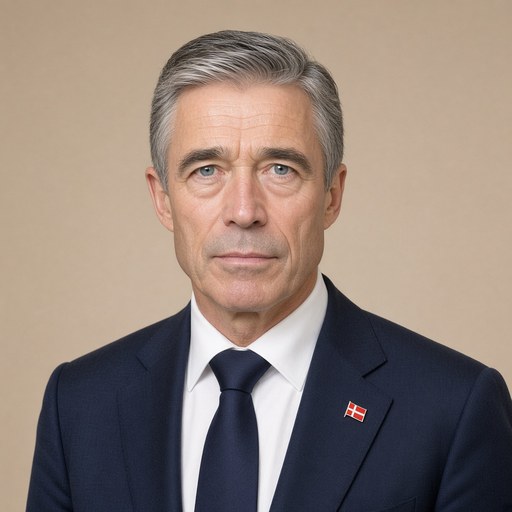
The Prime Minister's speech in the plenary debate at the 55th session of the Nordic Council in Oslo.
 Anders Fogh Rasmussen · Prime Minister of Denmark
- Context
- Rasmussen addressed the 55th Nordic Council session in Oslo on October 27, 2003, outlining Denmark's priorities for Nordic cooperation amid EU enlargement.
- Main themes
- Nordic cooperation, EU enlargement and Nordic-Baltic integration, border obstacles, Faroe Islands and Greenland membership, efficiency and results-oriented cooperation, shared Nordic cultural identity, regional cooperation in Europe
- Duration
- ~5 min
- Words
- 637
- Sentences
- 45
- Readability
- 48
- Grade
- 10.1
- Syntax
- 2.51
- Vocabulary
- 2.22
Translated from Danish
The broad sphere of national life a sentence belongs to. Every sentence has an Arena, so it is the denominator the other indices are read against.
Other45 sentences in 16 paragraphs
President, dear Nordic friends,
We live in a time of great changes in Europe. On May 1st next year, the European Union will be expanded with 10 new countries. This also has implications for Nordic cooperation. Nordic cooperation must keep pace with and reflect the new opportunities and conditions. In my speech, I will highlight five points.
First.
A closer and more integrated Nordic-Baltic cooperation is a natural consequence of the changed conditions. Yesterday, I and the other Nordic Prime Ministers met with our Baltic colleagues here in Oslo. The Baltic countries have moved closer to Nordic cooperation – also as potential participants in the Nordic institutions. This was expressed in the principle decision to invite the Baltic countries to join as partners in the Nordic Investment Bank. I believe that we should be open to the Balts if they have desires for closer cooperation or participation in other common Nordic institutions.
Second.
Although the development in Nordic-Baltic cooperation is significant, it is clear that there is a core in Nordic cooperation that is reserved for the Nordic countries. A core that can only be managed by the Nordic countries. This follows from our linguistic community and our shared cultural identity.
The Danish government places a high priority on Nordic cooperation. We wholeheartedly support the cooperation that takes place within the frameworks of the Nordic Council and the Nordic Council of Ministers. And we wish for a continued development and renewal of the cooperation. Nordic cooperation can serve as a model for regional cooperation elsewhere in Europe.
Third.
Border obstacles can be a great inconvenience for our citizens when they move across the Nordic borders. The Danish government attaches crucial importance to working to remove the border obstacles that exist between our countries. Even though we cannot completely eliminate the border obstacles, we can do much to reduce the problems so that they become bearable for our citizens. We should focus our efforts on removing inappropriate procedures and ensuring better information for citizens about handling issues related to commuting and relocation. The appointment of former Prime Minister Poul Schlüter as the personal representative of the Swedish presidency has proven to be a good initiative. It is gratifying to note that Poul Schlüter has created momentum in the process with a very energetic effort.
Fourth.
The Faroe Islands have submitted an application for independent membership in the Nordic Council and the Nordic Council of Ministers. The Danish government supports the Faroese wishes for a strengthened role in Nordic cooperation. And we are prepared to give the Faroe Islands and Greenland as strong a role in the binding Nordic cooperation as our Constitution allows. On this basis, we have made a quite far-reaching and constructive proposal to increase the role of the self-governing areas in Nordic cooperation. We are ready to continue working on this basis.
Fifth,
I would like to emphasize that Nordic cooperation as a regional cooperation in Europe will have greater, not lesser, significance in the future. The time has long passed when Nordic cooperation was seen as an alternative to the European. Today, most view the Nordic as a useful and valuable supplement. But even in Nordic cooperation, we must do our utmost to meet the demands for efficiency and appropriate resource use. These are demands that the Nordic countries also place on other international work. Nordic cooperation must be both concrete and results-oriented.
President, dear Nordic friends,
Nordic cooperation is built on a common value foundation and on shared historical, cultural, and personal ties. Therefore, we all nurture a love for the Nordic community. But to make the work in the Nordic Council relevant and pertinent for the populations in our countries, we must produce concrete results for the benefit of the citizens.
It is my hope that this session will create such results.
The original Danish. The tags above are read on the English translation's sentences.
Præsident, kære nordiske venner,
Vi lever i en tid med store forandringer i Europa. Den 1. maj næste år bliver Den Europæiske Union udvidet med 10 nye lande. Dette har også betydning for det nordiske samarbejde. Det nordiske samarbejde må følge med og afspejle de nye muligheder og vilkår. Jeg vil i mit indlæg fremhæve fem ting.
For det første.
Et tættere og mere integreret nordisk-baltisk samarbejde er en naturlig følge af de ændrede vilkår. Jeg og de øvrige nordiske statsministre mødtes i går med vore baltiske kolleger her i Oslo. De baltiske lande er rykket tættere på det nordiske samarbejde – også som mulige deltagere i de nordiske institutioner. Dette kom til udtryk ved principbeslutningen om at invitere de baltiske lande med som partnere i Nordisk Investeringsbank. Jeg mener, at vi skal være åbne over for balterne, hvis de har ønsker om et tættere samarbejde eller deltagelse i andre fælles nordiske institutioner.
For det andet.
Selvom udviklingen i det nordisk-baltiske samarbejde er betydningsfuld, så er det klart, at der er en kerne i det nordiske samarbejde, som er forbeholdt de nordiske lande. Som kun kan varetages af de nordiske lande. Det følger af vort sproglige fællesskab og vor fælles kulturelle identitet.
Den danske regering giver høj prioritet til det nordiske samarbejde. Vi støtter helhjertet det samarbejde, som foregår indenfor rammerne af Nordisk Råd og Nordisk Ministerråd. Og vi ønsker en fortsat udvikling og fornyelse af samarbejdet. Det nordiske samarbejde kan tjene som model for regionalt samarbejde andre steder i Europa.
For det tredje.
Grænsehindringer kan være til stor gene for vore borgere, når de bevæger sig over de nordiske grænser. Den danske regering tillægger det afgørende betydning, at vi arbejder for at fjerne de grænsehindringer, som eksisterer mellem vore lande. Selv om vi ikke kan fjerne grænsehindringerne helt, så kan vi gøre meget for at reducere problemerne, så de bliver tålelige for vore borgere. Vi bør rette indsatsen mod at fjerne uhensigtsmæssige procedurer og sikre bedre information til borgerne om håndteringen af problemer i forbindelse med pendling og flytning. Udnævnelsen af tidligere statsminister Poul Schlüter som det svenske formandskabs personlige repræsentant har vist sig at være et godt initiativ. Det er glædeligt at konstatere, at Poul Schlüter har skabt fremdrift i processen med en meget energisk indsats.
For det fjerde.
Færøerne har sendt en ansøgning om selvstændigt medlemskab af Nordisk Råd og Nordisk Ministerråd. Den danske regering støtter de færøske ønsker om en styrket rolle i det nordiske samarbejde. Og vi er indstillet på at give Færøerne og Grønland en så stærk rolle i det forpligtende nordiske samarbejde, som vores Grundlov tillader. På denne baggrund har vi stillet et ganske vidtgående og konstruktivt forslag om at forøge de selvstyrende områders rolle i det nordiske samarbejde. Vi er rede til at arbejde videre på dette grundlag.
For det femte
vil jeg fremhæve, at det nordiske samarbejde som et regionalt samarbejde i Europa vil få større og ikke mindre betydning i fremtiden. Det tidspunkt er for længst overstået, hvor det nordiske samarbejde blev betragtet som et alternativ til det europæiske. I dag betragter de fleste det nordiske som et nyttigt og værdifuldt supplement. Men også i det nordiske samarbejde må vi gøre vort yderste for at leve op til kravet om effektivitet og hensigtsmæssig ressourceanvendelse. Det er krav, som de nordiske lande også stiller til andet internationalt arbejde. Det nordiske samarbejde skal være både kontant og resultatorienteret.
Præsident, kære nordiske venner,
Det nordiske samarbejde bygger på et fælles værdigrundlag og på fælles historiske, kulturelle og personlige bånd. Derfor nærer vi alle en kærlighed til det nordiske fællesskab. Men for at gøre arbejdet i Nordisk Råd nærværende og vedkommende for befolkningerne i vore lande skal vi producere konkrete resultater til gavn for borgerne.
Det er mit håb, at denne session vil skabe sådanne resultater.