




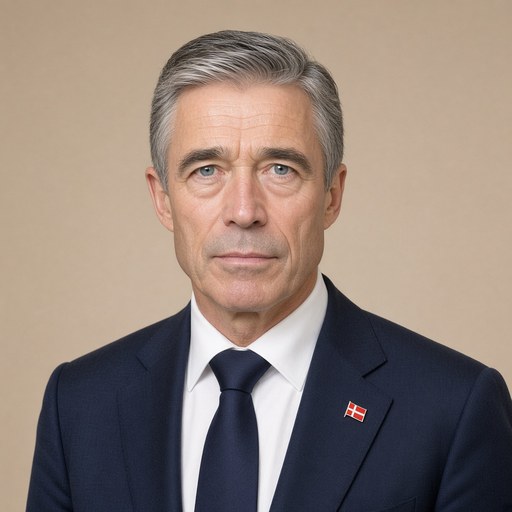
Prime Minister Anders Fogh Rasmussen's speech at the European Conference on May 24.
 Anders Fogh Rasmussen · Prime Minister of Denmark
- Context
- Rasmussen addressed the European Conference on 24 May 2002, outlining Denmark's EU presidency priorities and his vision for the future of Europe.
- Main themes
- EU enlargement negotiations, Danish EU presidency, future of Europe, division of competencies between EU and member states, national parliaments' role, democratic transparency, EU efficiency, subsidiarity, security and counter-terrorism, sustainable development, EU citizenship rights, European Convention
- Duration
- ~21 min
- Words
- 2,539
- Sentences
- 170
- Readability
- 56
- Grade
- 8.7
- Syntax
- 2.69
- Vocabulary
- 2.08
Translated from Danish
The broad sphere of national life a sentence belongs to. Every sentence has an Arena, so it is the denominator the other indices are read against.
Other170 sentences in 72 paragraphs
I will concentrate my speech on two topics: the Presidency and the future of Europe. The main emphasis will be on the latter.
* * *
The Danish Presidency has one very clear main task - to conclude the enlargement negotiations with up to 10 new countries. Not only because enlargement is and has long been a Danish priority. But because the negotiations have now reached a point where it is a realistic goal. The EU countries have collectively decided to place this task in our hands.
But enlargement is not the only task. We also face a packed and very content-rich agenda in other areas. I emphasize that we must also take these tasks seriously and deliver a focused and professional presidency there as well.
The headlines are:
greater
security and safety
– the fight against terrorism and crime sustainable development
- economic, social, and environmental.
food security
– mid-term evaluation of the agricultural policy and new fisheries policy.
the EU's global responsibility, including the common foreign policy and the two major meetings under the Danish presidency: the Johannesburg Summit on sustainable development and the ASEM summit with the Asian countries.
I have elaborated on the content under these headlines in the Folketing and will not repeat it here. During our debate afterwards, I would be happy to elaborate on our plans for the presidency, if desired.
These are the tasks we can foresee. But as always in European and international politics, one must expect the unexpected
. We
know that there will be crises that need to be managed under the Danish presidency. We just do not know which ones and when. But we are also preparing for this challenge as well as we can.
* * *
That was what I wanted to say about the presidency. But we should also already be thinking about the time after January 1, 2003. The discussion about the future of Europe is in full swing. We must not neglect it.
My starting point for the discussion about the future of Europe is actually very simple: We need a strong and effective EU. This is crucial for a smaller country like Denmark. But we also need an EU that people can comprehend, and that does not take up more space in everyday life than people can accept. Otherwise, support for the EU will disappear.
Today, I will present some of my ideas on how we can meet this dual challenge. Not as a definitive list. Not as a final government position. But as a basis for discussion.
In my view, we should aim for five goals in the convention and in the intergovernmental conference:
1.
We need a clearer description of the division of labor between the EU and the member states.
2.
The national parliaments should be strengthened. National parliamentarians should be more involved in the daily work of the EU.
3.
We need more openness, transparency, and democratic control - openness should be the rule and not the exception.
4.
We must have clear and distinct rights for citizens.
5.
The EU should be made more efficient - pomp, grandeur, and festive speeches should be discarded in favor of practical work for the benefit of EU citizens.
The first two of these headlines are the most important, and I will therefore focus on them the most.
* * *
First: a clearer division of labor.
If there is one theme that has recurred when we have discussed the EU in Denmark, it is uncertainty about the boundaries of the EU. What is it that the EU should actually deal with, and what should the EU countries keep to themselves? And how do we ensure that the Commission, the European Parliament, and the countries in the Council adhere to the agreed division of labor once we have decided on it?
Therefore, I would like to emphasize: the distribution of competencies is still on the agenda. The crucial point is not whether we call the reform a "catalog of competencies" or something else. The crucial point is the content. And the political goal is crystal clear. We need a better and clearer description of the distribution of competencies between the EU and the member states.
When I originally brought this theme into the Danish debate – on the evening of September 28, 2000 – I used the term catalog of competencies. This did not imply a commitment to a specific legal-technical model, but merely a desire to focus on an important problem area. I must say that this has been successful. Today, I believe everyone agrees with me that this is where we, from the Danish side, should focus our efforts.
Fortunately, we have good allies in the other countries. The division of labor – or the distribution of competencies, if you will – is a central question for the convention that has now begun its work. And it is a question that attracts interest in both the EU countries and the upcoming member states. I experience this myself when I discuss the work in the convention with colleagues from other countries.
I would like to emphasize that for me, it is not a question of rolling back the development in the EU. On the contrary. In a number of areas, we need stronger cooperation than we have today. But we also need to make it clearer what the EU is responsible for and what the member states are responsible for.
So how can this be done?
First: we can state more clearly what the EU does not deal with.
Today, the treaty states what the EU must deal with - what the EU's tasks are. However, the treaty generally does not say anything about what the EU does not deal with - what the tasks of the member states are. The EU must solve the tasks specified in the treaty - and only those. If nothing is stated, it is because the member states have not delegated the competence but have chosen to retain it themselves.
Although this is the fundamental principle, there have still been some areas where it has been decided what the EU does not do. Just to be on the safe side, so to speak. This has especially begun in recent years. For example, in connection with the fact that in some areas, majority voting has been adopted. When countries relinquish the lever of unanimity, they want to be completely sure of what the treaty can be used for.
In my opinion, there could be more such statements about what the EU does not deal with. Not to roll back cooperation – as I said. But to clarify where the boundaries lie. To emphasize the rights of the member states.
Let me give a couple of examples.
There is general agreement among the member states that distribution policy and the countries' social arrangements are not a matter for the EU. One must adhere to certain principles for sound economic policy, and one must not discriminate, but once those conditions are met, there should be free rein. That should be possible to express in some way.
There is also broad agreement that the arrangement of income tax systems is a matter for the individual EU countries, and that the EU as such has no competence to levy taxes. Again, there are of course some principles that must be adhered to, and when it comes to cross-border issues such as taxation of interest income, there is also a role for the EU. But even here, it should be possible to find formulations that everyone can agree on.
In addition, one could also consider setting clearer boundaries on some of the more marginal EU areas. Since we do not want to legislate on culture and sports in the EU, does the EU need to deal with such topics at all? And when everyone agrees that we should continue to determine the content of education in the member states ourselves, how many resolutions, support programs, and action plans do we need?
Finally, I believe we should establish certain fundamental ideas and overarching principles for cooperation.
For example, it could be the principle that the EU can only act where the member states have conferred competence to the EU. For experts, this is self-evident, but it may still be useful to state it more clearly than today.
It could also be that the EU is a community of independent states that have chosen to exercise part of their sovereignty together. Again, this is probably obvious to many, but it can still be useful to write it down.
One can discuss what the form should be for such formulations. Both regarding statements of what the EU does not deal with and regarding fundamental principles. Perhaps they should be included in the treaty itself. Perhaps in the preamble to the treaty or in a separate document. That is not the most important thing. What matters is whether one can agree on texts that lead to a clearer description of the division of labor than we have today.
* * *
The second goal should be to strengthen the national parliaments. Not least when it comes to ensuring that decisions are made as close to the citizens as possible, and that decisions do not go further than necessary. This means that the so-called principles of proximity and proportionality must be respected.
Today, the parliaments of the EU countries primarily play a role through the control of their respective governments. This should also be their most important role in the future. But to ensure that they can fulfill that role, we must provide them with the best possible working conditions. This means that decisions in the EU system must be made with as much openness as possible. It means that the parliaments must have access to the documents being processed. And it means that there must be sufficient time for EU issues to be addressed nationally.
But the control function in relation to their own governments does not need to be the only role for the national parliaments. Already today, we have the association of European committees – the so-called COSAC. And already today, COSAC has the opportunity under the treaty to express its views on how the EU institutions manage the principles of proximity and proportionality. This could be built upon.
Today, it is primarily up to the EU's legislative institutions – the Commission, the European Parliament, and the Council - to ensure that the two principles are respected. In principle, the Court can review the political discretion of the other three institutions, but in practice, it is difficult to legally challenge such political decisions. In my opinion, there is a need for political control that is independent and therefore cannot be exercised by the EU institutions themselves.
This does not mean that we should build yet another legislative chamber in the EU in addition to the Council and the European Parliament. We should generally avoid creating new institutions that would only make the legislative process heavier and more bureaucratic. But even with that starting point, we should be able to find a way to involve the national parliaments more.
I would like to see us establish a forum of national parliamentarians that can continuously evaluate the legislative activities of the Commission, the Council, and the European Parliament.
One could consider integrating such a forum into the legislative process itself. This would allow the national parliaments to express their views on the Commission's proposals before they are adopted. In return, such a model could easily affect efficiency. A better option might be to allow the national parliamentarians to express their views on already adopted proposals. How far-reaching the powers of the forum should be can be discussed.
For example, one could ask this forum to express its views on the institutions' respect for the principles of proximity and proportionality at each meeting of the European Council. The forum could both comment on legislation in general and draw the European Council's attention to specific cases where the Council, the European Parliament, and the Commission, in the opinion of the national parliamentarians, have gone too far.
One could also introduce the rule that a number of national parliaments could request a specific legislative act to be presented to this forum, and that the forum could then take a position on it. The forum could then decide that the Council and the European Parliament should reconsider the matter, or that it should be brought before the Court. Possibly, one could require that a special qualified majority be needed for the forum to intervene. This would probably not happen very often, but the mere possibility could have a certain preventive effect.
Finally, one could strengthen the direct role of the individual national parliaments in the EU. One could consider whether the national parliaments – individually or if some of them agreed – should have the authority to go to the Court – for example, regarding compliance with the division of labor, the principles of proximity and proportionality, and perhaps also the application of the so-called "rubber clause," Article 308.
Again, the specific model is not crucial. I have given some examples of what can be done. What matters is that a solution is found that simultaneously strengthens the national parliaments and ensures stronger political control over the principles of proximity and proportionality.
* * *
My last three points I will only mention briefly.
My third goal is greater openness, transparency, and democratic control. We should work towards full openness regarding the Council's legislative activities, and we should try to see if we can write a simpler and clearer treaty.
My fourth goal is clearer rights for citizens. The Charter of Fundamental Rights is a good and clear text, which has the additional advantage of already existing. We should explore the various possibilities for reflecting the charter in the treaty.
My fifth goal is to make the EU more efficient. This can, among other things, be achieved by introducing group presidencies and more extensive and consistent use of qualified majority voting.
* * *
Those were my five points. They represent, in my view, an improved EU, but not a completely different EU. I am not proposing to wipe the slate clean and start all over again. The existing model is far too valuable for that – not least for the smaller countries. The risk of throwing the baby out with the bathwater would be far too great. We should remember that the existing EU is, after all, a unique construction, and that it has been a colossal success. This is evidenced by the very great interest from other countries in becoming members.
Some may think that my five points together would equip the EU with a constitution. If this means a new fundamental pact that replaces the constitutions of the countries, that is incorrect. The outcome of the next intergovernmental conference will also be a new treaty between the countries. But if it means a clearer and better foundation that clarifies both the rights of citizens and the rights of member states, then for my part, no alarm. I would gladly sign such a constitutional treaty.
The original Danish. The tags above are read on the English translation's sentences.
Jeg vil koncentrere mit indlæg om to emner: Formandskabet og Europas fremtid. Hovedvægten vil ligge på det sidste.
* * *
Det danske formandskab har én meget klar hovedopgave - at afslutte udvidelsesforhandlingerne med op til 10 nye lande. Ikke kun fordi udvidelsen er og længe har været en dansk prioritet. Men fordi forhandlingerne nu er nået dertil, at det er en realistisk målsætning. EU-landene har i fællesskab besluttet at placere opgaven i vores hænder.
Men udvidelsen er ikke den eneste opgave. Vi står også på andre områder med en tætpakket og meget indholdsrig dagsorden. Jeg lægger vægt på, at vi også tager disse opgaver alvorligt og også dér leverer et målrettet og professionelt formandskab.
Overskrifterne er:
større
sikkerhed og tryghed
– kampen mod terrorisme og kriminalitet
bæredygtig udvikling
- økonomisk, socialt og miljømæssigt.
sikre fødevarer
– midtvejsevaluering af landbrugspolitikken og ny fiskeripolitik.
EU’s globale ansvar, herunder den fælles udenrigspolitik og de to store møder under dansk formandskab: Johannesburg-topmødet om bæredygtig udvikling og ASEM-topmødet med de asiatiske lande.
Jeg har redegjort nærmere for indholdet under disse overskrifter i Folketinget og skal ikke gentage det her. Under vores debat bagefter vil jeg gerne, om ønsket, uddybe vore planer for formandskabet.
Det er de opgaver, vi kan forudse. Men som altid i europæisk og international politik skal man vente det
uventede
. Vi
ved, at der vil komme kriser, som skal håndteres under dansk formandskab. Vi ved bare ikke hvilke og hvornår. Men også denne udfordring forbereder vi os på, så godt som det nu er muligt.
* * *
Det var, hvad jeg ville sige om formandskabet. Men vi bør også allerede nu tænke på tiden efter 1. januar 2003. Diskussionen om Europas fremtid er i fuld gang. Den må vi ikke forsømme.
Mit udgangspunkt for diskussionen om Europas fremtid er egentlig meget enkelt: Vi har brug for et stærkt og effektivt EU. Det er helt afgørende for et mindre land som Danmark. Men vi har også brug for et EU, som folk kan overskue, og som ikke fylder mere i hverdagen, end folk kan acceptere. Ellers forsvinder støtten til EU.
Jeg vil i dag præsentere nogle af mine idéer til, hvordan vi løfter den dobbelte udfordring. Ikke som en facitliste. Ikke som en endelig regeringsholdning. Men som oplæg til diskussion.
For mig at se bør vi i konventet og i regeringskonferencen gå efter fem mål:
1.
Vi skal have en klarere beskrivelse af arbejdsdelingen mellem EU og medlemslandene.
2.
De nationale parlamenter skal styrkes. Nationale parlamentarikere skal inddrages mere i det daglige arbejde i EU.
3.
Vi har brug for mere åbenhed, gennemskuelighed og demokratisk kontrol - åbenhed skal være reglen og ikke undtagelsen.
4.
Vi må have klare og tydelige rettigheder for borgerne.
5.
EU skal gøres mere effektivt - pomp, pragt og festtaler skal skrottes til fordel for praktisk arbejde til gavn for EU's borgere.
De to første af disse overskrifter er de vigtigste, og dem vil jeg derfor gøre mest ud af.
* * *
For det første: en klarere arbejdsdeling.
Hvis der er et tema, som er gået igen, når vi har diskuteret EU i Danmark, er det usikkerhed om grænserne for EU. Hvad er det egentlig EU skal beskæftige sig med, og hvad skal EU-landene beholde for sig selv? Og hvordan sikrer vi, at Kommissionen, Europa-Parlamentet og landene i Rådet holder sig til den aftalte arbejdsdeling, når først vi har besluttet den?
Derfor vil jeg gerne slå fast: Kompetencefordeling er fortsat på dagsordenen. Det afgørende er ikke, om vi kalder reformen et ”kompetencekatalog” eller noget andet. Det afgørende er indholdet. Og det politiske mål er krystalklart. Vi skal have en bedre og klarere beskrivelse af kompetencefordelingen mellem EU og medlemslandene.
Da jeg oprindelig bragte dette tema ind i den danske debat – om aftenen den 28. september 2000 – brugte jeg udtrykket kompetencekatalog. Heri lå der ikke en stillingtagen til en bestemt juridisk-teknisk model, men alene et ønske om at sætte fokus på et vigtigt problemfelt. Det er lykkedes, må jeg sige. I dag tror jeg alle er enige med mig i, at det ikke mindst er her vi fra dansk side skal sætte ind.
Heldigvis har vi godt med allierede i de andre lande. Arbejdsdelingen – eller kompetencefordelingen, om man vil – er et helt centralt spørgsmål for det konvent, som nu er kommet i gang med sit arbejde. Og det er et spørgsmål, som påkalder sig interesse i såvel EU-landene som i de kommende medlemslande. Det oplever jeg selv, når jeg drøfter arbejdet i konventet med kolleger fra de andre lande.
Jeg vil gerne understrege, at det ikke for mig er et spørgsmål om at rulle udviklingen i EU tilbage. Tværtimod. På en række områder har vi brug for et stærkere samarbejde end i dag. Men vi har også brug for at gøre det mere klart, hvad EU tager sig af, og hvad medlemslandene tager sig af.
Hvordan kan man så gøre det?
For det første: man kan sige klarere, hvad EU
ikke
tager sig af.
I dag er det sådan, at traktaten siger, hvad EU
skal
tage sig af - hvad der er EU’s opgaver. Derimod siger traktaten som hovedregel ikke noget om, hvad EU
ikke
skal tage sig af – hvad der er medlemslandenes opgaver. EU skal løse de opgaver, som er angivet i traktaten - og kun dem. Hvis ikke der står noget, er det fordi medlemslandene ikke har overladt kompetencen, men har valgt at beholde den selv.
Selvom det er grundprincippet, har man alligevel valgt på nogle områder at angive, hvad EU
ikke
skal gøre. For en sikkerheds skyld, så at sige. Det er noget man især er begyndt på i de senere år. Fx i forbindelse med, at man på nogle områder er overgået til flertalsafgørelser. Når landene slipper det håndtag, som enstemmighed udgør, vil de gerne være helt sikre på, hvad traktaten kan bruges til.
Den slags angivelser af, hvad EU ikke tager sig af, kunne der efter min opfattelse godt være nogle flere af. Ikke for at rulle samarbejdet tilbage – som sagt. Men for gøre det tydeligere, hvor grænserne går. For at understrege medlemsstaternes rettigheder.
Lad mig give et par eksempler.
Der er blandt medlemslandene almindelig enighed om, at fordelingspolitik og landenes sociale ordninger ikke er et anliggende for EU. Man skal overholde nogle principper for sund økonomisk politik, og man må ikke diskriminere, men når den slags betingelser er opfyldt, er der frit slag. Det burde man kunne finde en måde at udtrykke på.
Der er også bred enighed om, at indretningen af indkomstskattesystemet er et anliggende for de enkelte EU-lande, og at EU som sådan ikke har nogen kompetence til at udskrive skatter. Igen er der selvfølgelig nogle principper der skal overholdes, og når det gælder grænseoverskridende spørgsmål som beskatning af renteindtægter er der også en rolle for EU. Men også her burde det være muligt at finde formuleringer, som alle kan blive enige om.
Herudover kunne man også overveje at sætte nogle klarere grænser ned på nogle af de mere marginale EU-områder. Når nu vi alligevel ikke vil lovgive om kultur og sport i EU, behøver EU så overhovedet beskæftige sig med den slags emner? Og når alle er enige om, at vi også fremover selv skal bestemme indholdet af uddannelser i medlemslandene, hvor mange resolutioner, støtteprogrammer og handlingsplaner har vi så brug for?
Endelig synes jeg, man skulle slå visse grundidéer og overordnede principper for samarbejdet fast.
Det kunne fx være princippet om, at EU kun kan handle, hvor medlemslandene har tillagt EU kompetence. For kendere giver dette sig selv, men derfor kan det måske alligevel være nyttigt at skrive det tydeligere end i dag.
Det kunne fx også være, at EU er et fællesskab af selvstændige stater, der har valgt at udøve en del af deres suverænitet i fællesskab. Igen er det nok indlysende for mange, men derfor kan det alligevel være nyttigt at skrive det ned.
Man kan diskutere, hvad formen skal være for den slags formuleringer. Både når det gælder angivelser af, hvad EU ikke tager sig af, og når det gælder grundlæggende principper. Måske skal de stå i selve traktaten. Måske i indledningen til traktaten eller i et separat dokument. Det er ikke det vigtigste. Det afgørende er, om man kan blive enige om tekster, der fører til en klarere beskrivelse af arbejdsdelingen, end den vi har i dag.
* * *
Det andet mål bør være en styrkelse af de nationale parlamenter. Ikke mindst når det gælder om at sikre, at beslutningerne træffes så tæt på borgerne som muligt, og at beslutningerne ikke går videre end nødvendigt. Det vil sige, at de såkaldte principper om nærhed og proportionalitet overholdes.
I dag spiller EU-landenes parlamenter først og fremmest en rolle gennem kontrollen med de enkelte landes regeringer. Det skal også i fremtiden være deres vigtigste rolle. Men for at sikre, at de kan udfylde den rolle, må vi sikre dem de bedst mulige arbejdsbetingelser. Det betyder, at beslutninger i EU-systemet skal træffes i størst mulig åbenhed. Det betyder, at parlamenterne skal have adgang til de dokumenter, som behandles. Og det betyder, at der må være tilstrækkeligt med tid til, at EU-spørgsmål kan behandles nationalt.
Men kontrolfunktionen i forhold til egne regeringer behøver ikke være den eneste rolle for de nationale parlamenter. Allerede i dag har vi sammenslutningen af Europaudvalg – det såkaldte COSAC. Og allerede i dag har COSAC i henhold til traktaten mulighed for at udtale sig om den måde, EU-institutionerne forvalter principperne om nærhed og proportionalitet. Det kunne man bygge videre på.
I dag er det først og fremmest op til EU’s lovgivende institutioner – Kommissionen, Europa-Parlamentet og Rådet - selv at sikre, at de to principper efterleves. I princippet kan Domstolen efterprøve de tre øvrige institutioners politiske skøn, men i praksis er det vanskeligt juridisk at anfægte den slags politiske beslutninger. Efter min opfattelse er der behov for en politisk kontrol, som er uafhængig, og som derfor ikke kan udøves af EU-institutionerne selv.
Det betyder ikke, at vi skal opbygge endnu et lovgivende kammer i EU ud over Rådet og Europa-Parlamentet. Vi bør i det hele taget undgå at opbygge nye institutioner, som blot ville gøre lovgivningsprocessen mere tung og bureaukratisk. Men selv med det udgangspunkt bør vi kunne finde en måde at involvere de nationale parlamenter mere på.
Jeg så gerne, at vi oprettede et forum af nationale parlamentarikere, som løbende kan evaluere Kommissionens, Rådets og Europa-Parlamentets lovgivende virksomhed.
Man kunne overveje at bygge et sådant forum ind i selve lovgivningsprocessen. Det ville give de nationale parlamenter mulighed for at tage stilling til Kommissionens forslag, før de vedtages. Til gengæld ville en sådan model let kunne gå ud over effektiviteten. En bedre mulighed kunne måske være at lade de nationale parlamentarikere udtale sig om allerede vedtagne forslag. Hvor vidtgående beføjelser forummet så skal have, kan man diskutere.
For eksempel kunne man bede dette forum om op til hvert møde i Det Europæiske Råd at udtale sig om institutionernes respekt for nærhedsprincippet og proportionalitetsprincippet. Forummet kunne dels udtale sig om lovgivningen generelt, dels henlede Det Europæiske Råds opmærksomhed på konkrete tilfælde, hvor Rådet, Europa-Parlamentet og Kommissionen efter de nationale parlamentarikeres opfattelse er gået for langt.
Man kunne også indføre den regel, at et antal nationale parlamenter kunne bede om at få en konkret retsakt forelagt for dette forum, og at forummet så kunne tage stilling til den. Forummet kunne så beslutte, at Rådet og Europa-Parlamentet skulle se på sagen en gang til, eller at den skulle prøves for Domstolen. Eventuelt kunne man kræve, at der skulle et særligt kvalificeret flertal til for at forummet kunne gribe ind. Det ville så nok ikke ske så tit, men selve muligheden kunne have en vis præventiv effekt.
Endelig kunne man styrke de enkelte nationale parlamenters direkte rolle i EU. Man kunne overveje, om de nationale parlamenter – enkeltvis eller hvis nogle stykker af dem var enige – skulle have beføjelse til at gå til Domstolen – fx når det gælder overholdelse af arbejdsdelingen, principperne og nærhed og proportionalitet og måske også anvendelsen af den såkaldte ”gummiparagraf”, artikel 308.
Igen er det afgørende ikke den konkrete model. Jeg har givet nogle eksempler på, hvad man kan gøre. Det afgørende er, at man finder en løsning, som på én gang styrker de nationale parlamenter og sikrer en stærkere politisk kontrol med nærheds- og proportionalitetsprincippet.
* * *
Mine tre sidste punkter skal jeg kun omtale kort.
Mit tredje mål er større åbenhed, gennemskuelighed og demokratisk kontrol. Vi bør arbejde hen mod fuld åbenhed om Rådets lovgivende virksomhed, og vi bør prøve om vi kan skrive en enklere og klarere traktat.
Mit fjerde mål er klarere rettigheder for borgerne. Charteret for grundlæggende rettigheder er en god og klar tekst, som har den yderligere fordel, at den allerede eksisterer. Vi bør undersøge de forskellige muligheder for at afspejle charteret i traktaten.
Mit femte mål er at gøre EU mere effektivt. Det kan blandt andet ske ved indførelsen af gruppeformandskaber og mere omfattende og konsekvent anvendelse af kvalificeret flertal.
* * *
Det var mine fem punkter. De indebærer for mig at se et forbedret EU, men ikke et fuldstændig anderledes EU. Jeg lægger ikke op til at vaske tavlen ren og starte helt forfra. Dertil er den eksisterende model alt for værdifuld – ikke mindst for de små lande. Risikoen for at hælde barnet ud med badevandet ville være alt for stor. Vi bør huske på, at det eksisterende EU trods alt er en enestående konstruktion, og at det har været en kolossal succes. Det vidner andre landes meget store interesse for at blive medlem om.
Nogle vil måske mene, at mine fem punkter tilsammen ville udstyre EU med en forfatning. Hvis der dermed menes en ny grundlæggende pagt, der træder i stedet for landenes forfatninger, er det forkert. Også resultatet af næste regeringskonference vil være en ny traktat mellem landene. Men hvis der menes et klarere og bedre grundlag, som tydeliggør både borgernes og medlemsstaternes rettigheder, så for min skyld ingen alarm. En sådan forfatningstraktat skriver jeg gerne under på.