




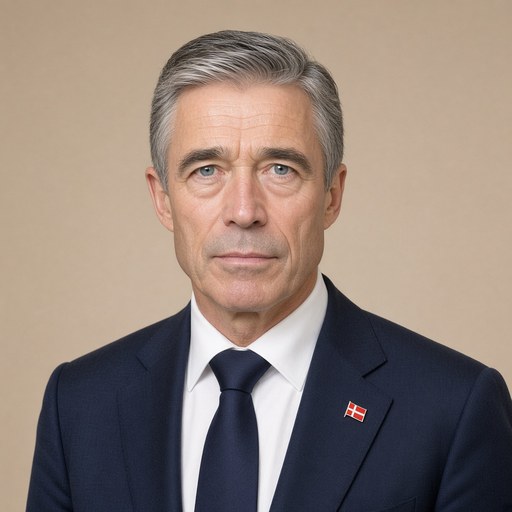
Prime Minister Anders Fogh Rasmussen's speech at the handover of the Opera House on Friday, October 1, 2004.
 Anders Fogh Rasmussen · Prime Minister of Denmark
- Context
- Rasmussen spoke at the October 2004 handover ceremony of the new Copenhagen Opera House, gifted to Denmark by Mærsk Mc-Kinney Møller and the A.P. Møller Foundation.
- Main themes
- Copenhagen Opera House gift handover, philanthropy and private cultural patronage, architectural excellence and design, Danish cultural heritage, acoustic quality, Royal Danish Theatre, Copenhagen Harbor landmark, legacy for future generations
- Duration
- ~6 min
- Words
- 715
- Sentences
- 49
- Readability
- 59
- Grade
- 8.6
- Syntax
- 2.69
- Vocabulary
- 2.41
Translated from Danish
The broad sphere of national life a sentence belongs to. Every sentence has an Arena, so it is the denominator the other indices are read against.
Other49 sentences in 19 paragraphs
Dear Mærsk Mc-Kinney Møller,
On behalf of the government and all Danes, I would like to thank you for this magnificent gift.
I would like to thank A.P. Møller and Mrs. Chastine McKinney Møller's Foundation. And I would like to thank you personally, Mr. Møller. You have been the tireless driving force behind the project.
I still remember how, as a new Prime Minister, I was invited down to Esplanaden to see the model of the upcoming Opera. A couple of offices had been cleared for the purpose. On the floor lay samples of various building materials. And as we navigated around tiles and stones and glass and wood, you enthusiastically and passionately told us about every detail, about the appearance, durability, and quality of the materials, about your personal journeys around the world to see how the different materials looked in reality.
I had no doubt that you were seeking the highest quality. And I clearly sensed that your firm opinions and strong commitment could also become a source of energetic dialogue with the architect. Who also seeks the highest quality. And who also has firm opinions.
Out of this dialogue has come an absolutely splendid result.
It has required vision, initiative, determination, and willpower to reach the point where we stand today.
It is a historic day. Denmark's first building specifically designed for opera and ballet is complete.
The location of the Opera is unique. On the old naval area, at the entrance to Copenhagen Harbor. Face to face with the most beautiful part of Copenhagen.
The Opera completes the axis that begins with Marmorkirken, goes over Amalienborg, and now naturally concludes here at Dokøen. A distinguished axis with church, royal house, and culture.
Marmorkirken at one end of the axis was completed by C.F. Tietgen. Your family's name, Mr. Møller, will be linked to the Opera at the other end of the axis. While it took 150 years to build Marmorkirken, the Opera has been built in 4 years. In itself, a remarkable achievement. Names like Eigtved, Meldahl, Saly, and now Henning Larsen are associated with this axis and testify to some of the finest architecture that has been produced in Denmark.
The place we are at – Dokøen – has proud maritime traditions. It is not surprising that a shipowner chooses precisely the harbor and the old naval site as the home for this beautiful and functional building.
Here at Dokøen, the new opera will stand as a landmark for Copenhagen and the Øresund region. An invaluable asset – not just for the city, but for all of Denmark.
An invaluable asset – not just for our generation, but also for future generations. It is a great joy for me that with this magnificent opera, a building has been created that delivers something valuable for posterity. A testament to the future of what architecture and building art could achieve in our time.
Every detail has been carefully considered. From the angle of the chairs, upholstery, and coverings to the opera's dressing rooms, stages, and balconies. Everywhere, the best materials, furnishings, and equipment have been used. All to ensure the greatest experiences for artists and guests.
Much indicates that Copenhagen will technically and acoustically have one of the best opera houses in the world, which will be able to attract the greatest artists. Music director Michael Schønwandt was enthusiastic after the first orchestra rehearsals and said, among other things: "It is a world-class acoustics that is both analytical, warm, and round. We have received a Stradivarius, which we now have to learn to play. Every nuance reaches cleanly and clearly to the back rows. It is an opera house for both the intimate and the grand sound."
It is a great privilege and a great responsibility to receive this gift. The state and the City of Copenhagen therefore declared from the outset their readiness to financially support the operation of the Opera.
I know that there has been fruitful cooperation with the Royal Danish Theatre on this major project. The Royal Danish Theatre is ready to take over the building with the joy and respect such a gift deserves.
Mr. Møller, once again – thank you! I promise that we will take good care of this magnificent gift to the Danish people.
The original Danish. The tags above are read on the English translation's sentences.
Kære Mærsk Mc-Kinney Møller,
På regeringens vegne og på vegne af alle danskere vil jeg gerne takke for denne storslåede gave.
Jeg vil takke A.P. Møller og Hustru Chastine McKinney Møllers Fond. Og jeg vil takke Dem personligt, hr. Møller. De har været den utrættelige drivkraft bag projektet.
Jeg husker endnu, hvordan jeg som ny statsminister blev inviteret ned på Esplanaden for at se modellen af den kommende Opera. Her var ryddet et par kontorer til formålet. På gulvet lå der prøver af forskellige byggematerialer. Og medens vi kantede os rundt mellem fliser og sten og glas og træ, fortalte De med begejstring og engagement om hver en detalje, om materialernes udseende, holdbarhed og kvalitet, om Deres personlige rejser rundt i verden for at se, hvordan de forskellige materialer tog sig ud i virkeligheden.
Jeg var ikke i tvivl om, at De søgte den højeste kvalitet. Og jeg fornemmede klart, at Deres faste holdninger og stærke engagement også kunne blive kilde til en energisk dialog med arkitekten. Som også søger den højeste kvalitet. Og som også har faste meninger.
Ud af denne dialog er der kommet et aldeles pragtfuldt resultat.
Det har krævet vision, initiativ, målbevidsthed og viljestyrke at nå hertil, hvor vi står i dag.
Det er en historisk dag. Danmarkshistoriens første hus bygget specielt til opera og ballet står færdig.
Placeringen af Operaen er unik. På flådens gamle område, ved indsejlingen til Københavns Havn. Ansigt til ansigt med den smukkeste del af København.
Operaen fuldender aksen, der begynder med Marmorkirken, går over Amalienborg, og nu naturligt bliver afsluttet her på Dokøen. En fornem akse med kirke, kongehus og kultur.
Marmorkirken i den ene ende af aksen blev færdiggjort af C.F. Tietgen. Deres families navn, hr. Møller, vil være knyttet til Operaen i den anden ende af aksen. Mens det tog 150 år at opføre Marmorkirken, er Operaen opført på 4 år. I sig selv en fornem præstation. Navne som Eigtved, Meldahl, Saly og nu Henning Larsen knytter sig til denne akse og vidner om noget af den ypperste arkitektur, der er præsteret i Danmark.
Stedet, vi befinder os – Dokøen – har stolte maritime traditioner. Ikke mærkeligt, at en skibsreder vælger netop havnen og flådens gamle leje som hjemsted for denne smukke og funktionelle bygning.
Her på dokøen vil den nye opera ligge som vartegn for København og Øresundsregionen. Et uvurderligt aktiv – ikke blot for byen, men for hele Danmark.
Et uvurderligt aktiv – ikke blot for vor generation, men også for kommende generationer. Det er en stor glæde for mig, at der med denne pragtfulde opera er skabt et bygningsværk, som leverer noget værdifuldt til eftertiden. Et vidnesbyrd til fremtiden om hvad arkitektur og byggekunst kunne præstere på vor tid.
Der er kælet for enhver detalje. Fra stolenes ryghældning, polstring og betræk til operaens omklædningsrum, scener og balkoner. Overalt er der anvendt de bedste materialer, inventar og udstyr. Alt sammen for at sikre de største oplevelser for kunstnere og gæster.
Meget tyder på, at København teknisk og akustisk får et af verdens bedste operarum, som vil kunne tiltrække de helt store kunstnere. Musikchef Michael Schønwandt var begejstret efter de første orkesterprøver og sagde bl.a.: ”Det er en akustik i verdensklasse, som både er analytisk, varm og rund. Vi har fået en Stradivarius, som vi nu skal lære at spille på. Hver en nuance når rent og klart ud til de bagerste rækker. Det er et operahus til både den intime og den helt store klang”.
Det er et stort privilegium og et stort ansvar at modtage denne gave. Staten og Københavns Kommune erklærede sig derfor fra starten af rede til økonomisk at stå inde for driften af Operaen.
Jeg ved, at der har været et frugtbart samarbejde med Det Kongelige Teater om dette store projekt. Det Kongelige Teater står parat til at overtage bygningen med den glæde og respekt en sådan gave fortjener.
Hr. Møller, endnu en gang – tak! Jeg lover, at vi vil passe godt på denne storslåede gave til det danske folk.