




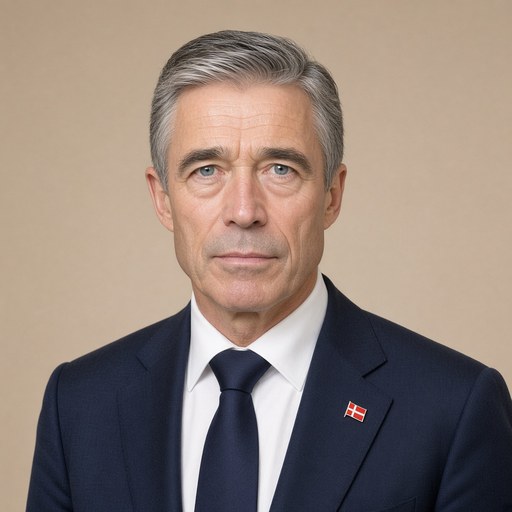
The Prime Minister's speech at the Nordic Council's 56th session in Stockholm on November 1, 2004 - The Nordic region in a new era: Knowledge, dynamism, and cooperation.
 Anders Fogh Rasmussen · Prime Minister of Denmark
- Context
- Rasmussen addressed the Nordic Council's 56th session in Stockholm on November 1, 2004, outlining Denmark's presidency priorities on globalization, innovation, and border cooperation.
- Main themes
- Globalization and Nordic response, knowledge and innovation, border obstacle removal, Nordic cooperation, research and education, Baltic Sea region integration, Nordic-Baltic relations, free movement, Nordic welfare, regional organizations, democratic development
- Duration
- ~11 min
- Words
- 1,297
- Sentences
- 77
- Readability
- 47
- Grade
- 10.8
- Syntax
- 2.75
- Vocabulary
- 2.23
Translated from Danish
The broad sphere of national life a sentence belongs to. Every sentence has an Arena, so it is the denominator the other indices are read against.
Other77 sentences in 27 paragraphs
Mr. President, new winds are blowing in the North and in the world. We are increasingly dependent on each other across borders and cultures. A strike in Nigeria or a terrorist attack in Iraq has direct consequences when we fill up our cars. When we call for help with computer problems, the call center might as well be located in Madras as in Malmö.
Globalization can be seen as a threat or an opportunity. When the storm rises, one can either erect windbreaks or build windmills. In the North, we have traditionally been good at building windmills. It is in this spirit that the Nordic countries must together tackle globalization.
The North is entering a new era that places entirely new demands on:
· Knowledge and innovation · Free movement across borders · And effective Nordic cooperation that is politically relevant.
These are themes that the Danish presidency will place special emphasis on.
The North must maintain its leadership in research and innovation if we are to secure Nordic welfare also in the 21st century.
Many perceive globalization as a threat. They fear that jobs will move to countries where wages are significantly lower than in the North. But we should not compete on low wages. We must create new and better jobs by competing on skills. Here, we should utilize and expand the good Nordic cooperation in the field of education and research.
We already have good cooperation on, for example, health education and academic programs. Our language community allows for joint workshops and seminars.
But we can still do more. Under the Danish presidency, we will, among other things:
1) Look at how we can remove barriers for researchers and students to move freely in the North.
2) Strengthen cooperation between research and business, for example, by making greater use of the opportunities for virtual networks.
3) Establish a dialogue forum on research and innovation, where we can discuss how to organize a coherent Nordic innovation effort.
A Nordic region without borders is another cross-cutting theme for the Danish presidency.
The opening of the Øresund Bridge showed that there are still many barriers in the North despite many years of Nordic cooperation and the EU's internal market. Individuals wishing to seek work on the other side of the bridge have often been met with opaque tax rules and other bureaucracy. Companies experience differences in marketing legislation and VAT rules that complicate cross-border work.
It is therefore positive that the fight against border obstacles has become a permanent part of the Council of Ministers' work. Not least Poul Schlüter's work to identify and combat barriers for people and goods is of great importance. And the efforts have already yielded results. The Danish-Swedish commuter agreement takes effect this year. The agreement makes it easier to commute across the bridge in a number of areas. The establishment of special tax offices for commuters has also already had a positive effect and significantly expanded services for citizens. Finally, it is positive that we have now decided to establish a Nordic tax portal and a "virtual tax office" that makes it easier for our citizens to navigate the tax rules in the other Nordic countries.
I am pleased that Poul Schlüter will focus particularly on border obstacles for small and medium-sized enterprises during the Danish presidency.
The Danish presidency will also take the initiative to expand the work of removing border obstacles to the Baltic Sea region. We must have the same debate in the Baltic Sea Council and the Barents Council as we have here in the Nordic Council of Ministers.
Finally, we will seek to make the North a model region in the EU when it comes to combating border obstacles. We will particularly look at how we in the North can ensure a more uniform implementation of EU directives that are significant for citizens and businesses.
When we talk about breaking down borders and barriers between the Nordic countries, we must not forget the neighboring area. Great changes are also taking place here.
On January 1, 2005, the Baltic countries will join the board of the Nordic Investment Bank (NIB). This marks the beginning of a new era in Nordic-Baltic relations. At the same time, we will prioritize cooperation with northwestern Russia.
The Danish presidency will emphasize that cooperation in the neighboring area in the future takes place in close collaboration with other regional organizations (the Barents Council, the Arctic Council, and the Baltic Sea Council). There are now many regional cooperation organizations in our neighboring area. The time has come to take a closer look at whether the division of labor between them and the Nordic Council of Ministers is appropriate.
We must also consider whether we can better involve a country like Belarus in cooperation than we do today. This could, for example, be through support for democratic development and cooperation at the civil society level (municipalities, trade unions, etc.).
Nordic cooperation has historically had strong support among the Nordic populations. But we must not forget that cooperation today competes with collaboration in a number of other international organizations and forums. The political and public interest in Nordic cooperation will depend on our ability to create results that benefit the citizens of the Nordic countries.
Nordic cooperation must be results-oriented and relevant. It must not drown in bureaucracy and technocracy. Denmark will therefore continue to streamline Nordic cooperation. We should, among other things, consider whether it makes sense that we have more ministerial councils in the Nordic Council of Ministers than in the EU.
A few weeks ago, I said in my opening speech to the Danish Parliament that things are going well in Denmark. The same can be said for the North as a whole. All the Nordic countries have solid economies and strong international competitiveness. Economic growth in all the Nordic countries has outpaced growth in the euro area since the mid-1990s. This indicates that we in the North have indeed been able to build windmills rather than windbreaks. And we must continue to do so. Nordic cooperation should enable us to stand stronger together against globalization – both economic and political.
"It is nice to be Norwegian in Denmark," they say in an advertisement that has become a national sensation in Norway. I would like to add that I hope the same applies to all Nordic peoples. A walk in Copenhagen certainly confirms that with the Øresund Bridge, we have succeeded in making it completely natural to take a trip across the bridge and shop in each other's countries. If you go to a café or restaurant in Copenhagen, there is a good chance that the bartender or waiter is Swedish. The newest hot spot in Nørrebro is Icelandic. And a Copenhagen restaurant focusing on Nordic food – horse mussels from the Faroe Islands, halibut from Iceland, and musk ox from Greenland – has been a resounding success. Do I need to mention that everyone standing at the bar is talking on their Finnish and Swedish mobile phones? So even though it may not always go as quickly as we would like, we are indeed well on our way to breaking down barriers – both physical and mental.
After spending the last day here in Stockholm, I can certainly confirm that it is nice to be Danish in Sweden. I would like to thank our Swedish hosts for a great event. I would also like to thank Iceland and the Icelandic Prime Minister for a great effort and good results over the past year. We on the Danish side will do everything we can to take up the baton and continue this important work. I wish you all a good gathering and broad cooperation in the coming year under the Danish presidency.
The original Danish. The tags above are read on the English translation's sentences.
Hr. Præsident, Der blæser nye vinde i Norden og i Verden. Vi bliver i stigende grad afhængige af hinanden på tværs af grænser og kulturer. Strejke i Nigeria eller terrorangreb i Irak får direkte konsekvenser, når vi tanker vores bil. Når vi ringer for at få hjælp med computerproblemer, vil callcenteret lige så godt kunne være placeret i Madras som i Malmø.
Globalisering kan betragtes som en trussel eller en mulighed. Når det blæser op til storm, kan man enten opstille læhegn eller bygge vindmøller. I Norden har vi traditionelt været gode til at bygge vindmøller. Det er i denne ånd, de nordiske lande sammen må tackle globaliseringen.
Norden befinder sig i en ny tid, der stiller helt nye krav til:
· Viden og innovation · Til fri bevægelighed over grænserne · Og til et effektivt nordisk samarbejde, der er politisk relevant.
Dette er temaer, det danske formandskab vil lægge særlig vægt på.
Norden må bevare førertrøjen indenfor forskning og innovation, hvis vi skal sikre den nordiske velfærd også i det 21. århundrede.
Mange opfatter globaliseringen som en trussel. De frygter, at arbejdspladserne flyttes til lande, hvor lønningerne er betydeligt lavere end i Norden. Men vi skal ikke konkurrere på lave lønninger. Vi skal skabe nye og bedre jobs ved at konkurrere på dygtighed. Her bør vi udnytte og udbygge det gode nordiske samarbejde på uddannelses- og forskningsområdet.
Vi har allerede et godt samarbejde om f.eks. sundhedsuddannelser og på de akademiske uddannelser. Vores sprogfællesskab giver mulighed for at afholde fælles workshops og seminarer.
Men vi kan stadig gøre mere. Under det danske formandskab vil vi bl.a.:
1) Se på hvordan vi kan fjerne hindringer for, at forskere og studerende kan bevæge sig frit i Norden.
2) Styrke samarbejdet mellem forskning og erhvervsliv, f.eks. i højere grad bruge mulighederne for virtuelle netværk.
3) Oprette et dialogforum om forskning og innovation, hvor vi kan drøfte, hvordan vi kan tilrettelægge en sammenhængende nordisk innovationsindsats.
Norden uden grænser er et andet tværgående tema for det danske formandskab.
Åbningen af Øresundsbroen viste, at der fortsat findes mange barrierer i Norden på trods af mange års nordisk samarbejde og EU’s indre marked. Personer, der ønsker at søge arbejde på den anden side af broen er ofte blevet mødt af uigennemsigtige skatteregler og andet bureaukrati. Virksomheder oplever forskelle i markedsføringslovgivningen og momsregler, der besværliggør arbejdet på tværs af grænser.
Det er derfor positivt, at bekæmpelse af grænsehindringer er blevet en fast del af ministerrådets arbejdet. Ikke mindst Poul Schlüters arbejde med at identificere og bekæmpe barrierer for personer og varer er af stor betydning. Og indsatsen har allerede givet resultater. Den dansk/svenske grænsegængeraftale får virkning fra i år. Aftalen gør det på en lang række områder lettere at pendle over broen. Etableringen af særlige skattekontorer for pendlerne har også allerede haft en positiv effekt og udvidet servicen for borgerne ganske betragteligt. Endelig er det positivt, at vi nu har truffet beslutning om at etablere en nordisk skatteportal og et ”virtuelt skattekontor”, der gør det lettere for vores borgere at orientere sig om skattereglerne i de øvrige nordiske lande.
Jeg er tilfreds med, at Poul Schlüter under det danske formandskab i særlig høj grad vil fokusere på grænsehindringer for små og mellemstore virksomheder.
Det danske formandskabet vil desuden tage initiativ til, at arbejdet med at fjerne grænsehindringer udvides til Østersøregionen. Vi må have samme debat i Østersørådet og Barentsrådet, som vi har her i Nordisk Ministerråd.
Endelig vil vi søge at gøre Norden til mønsterregion i EU, når det drejer som om bekæmpelse af grænsehindringer. Vi vil særligt se på, hvordan vi i Norden kan sikre en mere ensartet gennemførelse af EU-direktiver, der har betydning for borgere og virksomheder.
Når vi taler om at nedbryde grænser og barrierer mellem de nordiske lande må vi ikke glemme nærområdet. Her sker der også store forandringer.
Den 1. januar 2005 indtræder de baltiske lande i bestyrelsen for Nordisk Investeringsbank (NIB). Hermed indleder vi en ny epoke i det nordisk-baltiske forhold. Vi vil samtidig opprioritere samarbejdet med det nordvestlige Rusland.
Det danske formandskab vil lægge vægt på, at nærområdesamarbejdet i fremtiden sker i snævert samarbejde med de andre regionale organisationer (Barentsrådet, Arktisk Råd og Østersørådet). Der er efterhånden mange regionale samarbejdsorganisationer i vores nærområde. Tiden er inde til at se nærmere på, om arbejdsdelingen mellem dem og Nordisk Ministerråd er hensigtsmæssig.
Vi må også se på, om vi bedre end i dag kan inddrage et land som Hviderusland i et samarbejde. Det kunne f.eks. være gennem støtte til demokratiudvikling og samarbejde på civilsamfundsniveau (kommuner, fagforeninger mv.).
Det nordiske samarbejde har historisk haft stor opbakning blandt de nordiske befolkninger. Men vi må ikke glemme, at samarbejdet i dag konkurrerer med samarbejde i en række andre internationale organisationer og fora. Den politiske og offentlige interesse for det nordiske samarbejde vil afhænge af vores evne til at skabe resultater, der er til gavn for borgerne i de nordiske lande.
Det nordiske samarbejde må være resultatorienteret og relevant. Det må ikke drukne i bureaukrati og teknokrati. Danmark vil derfor fortsætte med at effektivisere det nordiske samarbejde. Vi bør bl.a. se på, om det giver mening, at vi har flere ministerråd i Nordisk Ministerråd end i EU.
For nogle uger siden sagde jeg i min åbningstale til det danske Folketing, at det går godt i Danmark. Det samme kan siges om Norden som helhed. Alle de nordiske lande har bundsolide økonomier og stærk international konkurrenceevne. Den økonomiske vækst i alle de nordiske lande har siden midten af 1990’erne overgået væksten i euro-området. Dette tyder på, at vi i Norden rent faktisk har været i stand til at bygge vindmøller frem for læhegn. Og det skal vi blive ved med. Det nordiske samarbejde skal gøre os i stand til sammen at stå stærkere overfor globaliseringen – både den økonomiske og den politiske.
”Det er dejligt at være norsk i Danmark” siger de i en reklame, der er blevet en landeplage i Norge. Jeg vil da gerne tilføje, at jeg håber, det samme gælder for samtlige nordiske folk. En gåtur i København bekræfter i hvert fald, at det med Øresundsbroen er lykkedes os at gøre det helt naturligt at tage en tur over broen og gå på indkøb i hinandens lande. Går man på en cafe eller restaurant i København, er der stor sandsynlighed for, at bartenderen eller tjeneren er svensk. Det nyeste in-sted på Nørrebro er islandsk. Og en københavnsk restaurant med fokus på nordisk mad – hestemuslinger fra Færøerne, helleflynder fra Island og moskusokse fra Grønland – har været en bragende succes. Behøver jeg at nævne, at alle, der står i baren, taler i deres finske og svenske mobiltelefoner? Så selv om det måske ikke altid går så hurtigt, som vi kunne ønske, er vi dog godt i gang med at nedbryde barrierer – både de fysiske og mentale.
Efter at have tilbragt det sidste døgn her i Stockholm kan jeg i hvert fald bekræfte, at det er dejligt at være dansk i Sverige. Jeg vil gerne takke vores svenske værter for et flot arrangement. Jeg vil samtidig gerne takke Island og den islandske statsminister for en stor indsats og gode resultater i det forløbne år. Vi vil dansk side gøre alt, hvad vi kan, for at tage stafetten op og videreføre dette vigtige arbejde. Jeg ønsker jer alle en god samling samt et bredt samarbejde i det kommende år under dansk formandskab.