




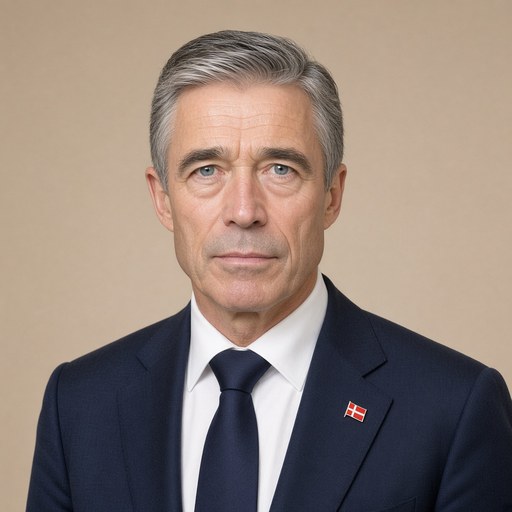
Prime Minister Anders Fogh Rasmussen's speech at the memorial concert on the occasion of the 50th anniversary of the Hungarian uprising, October 27, 2006.
 Anders Fogh Rasmussen · Prime Minister of Denmark
- Context
- Rasmussen addressed a memorial concert in Denmark on October 27, 2006, commemorating the 50th anniversary of the 1956 Hungarian uprising.
- Main themes
- Hungarian Revolution of 1956, freedom and democracy, Cold War history, Povl Bang-Jensen's legacy, Soviet oppression, UN investigation into Hungary, universal human rights, Denmark-Hungary relations, EU and NATO membership, courage of freedom fighters
- Duration
- ~8 min
- Words
- 974
- Sentences
- 74
- Readability
- 51
- Grade
- 8.7
- Syntax
- 2.46
- Vocabulary
- 2.38
Translated from Danish
The broad sphere of national life a sentence belongs to. Every sentence has an Arena, so it is the denominator the other indices are read against.
Other74 sentences in 30 paragraphs
Ladies and Gentlemen,
The Hungarian Revolution and Freedom Fight stand out as one of the most significant events during the Cold War. Our sympathy was with the Hungarian people and their courageous fight for freedom. I am truly pleased that freedom and democracy prevailed in the long run and that we are now partners in the EU and NATO. We have now joined forces in supporting the struggle for freedom and democracy in other parts of the world.
* * *
Your Royal Highness,
Ladies and gentlemen,
1956 was a busy year on the world political stage. But 1956 will primarily be remembered for the Hungarian revolution and freedom fight.
Rarely has sympathy for a people been so deeply felt and genuine. The Hungarian people fought for fundamental rights – for freedom, democracy, and human rights. The struggle was a reminder that we must never take these rights for granted. The events in Hungary showed us that a people can rise in an attempt to claim their rights to freedom.
Unfortunately, the Hungarian people initially lost, but today the struggle has been won, and Hungary is once again part of the European family.
* * *
The Hungarian revolution was brutally suppressed. The events ended tragically for Hungary and the Hungarian people.
Smoke screens were laid out, and propaganda was set in motion by the puppet government that the Soviet Union installed in Hungary.
The UN was tasked with unraveling the threads. To bring the real events to light. To learn from the costly experiences of those fateful days.
On January 10, 1957, the UN General Assembly established a committee to investigate the events in Hungary. The Danish politician Alsing Andersen was appointed chairman of the committee. The UN official Povl Bang-Jensen was one of its secretaries.
Povl Bang-Jensen was a remarkable figure who also played an important role in the Danish foreign service. During the war, he collaborated with the renowned Danish envoy Henrik Kauffmann at the independent Danish legation in Washington. Even then, Povl Bang-Jensen showed that he was ready to fight for freedom and justice.
During the UN's investigation into Hungary, Bang-Jensen insisted that every stone be turned, and the Soviet Union confronted with its criminal abuses.
In Bang-Jensen's view, the UN must not compromise with injustice. But certain circles in the UN sought to avoid confrontation with Moscow. A conflict arose between Bang-Jensen and the UN leadership. The conflict escalated into a crisis and then into a violent confrontation. Bang-Jensen was reassigned to other duties.
But the matter continued to develop. One of Bang-Jensen's tasks for the committee had been to contact witnesses among the Hungarians who had fled to the West. Many appeared anonymously to protect their families who had been left behind in Hungary.
After his reassignment, Bang-Jensen was ordered to hand over all UN documents he had in his possession. He refused to disclose the list that revealed the witnesses' real names. In fact, it ended with him burning the list under dramatic circumstances.
This provoked a sharp reaction from the UN leadership. Bang-Jensen was fired from the UN.
Shortly thereafter - in November 1959 - Bang-Jensen was found shot with a revolver in a park in New York.
Povl Bang-Jensen put everything on the line to ensure that the truth came to light. He fought against all attempts to compromise and showed the same courage and idealism as the Hungarian freedom fighters. For Povl Bang-Jensen, this struggle ended tragically. He paid the highest price for maintaining the viewpoint that there was no room for compromise or pragmatic considerations regarding the prevailing power relations in relation to the report on the suffering of the Hungarian people.
* * *
In the long run, freedom won. With the Hungarian uprising, the falsehood of communist propaganda and the brutality of the Soviet dictatorship was revealed once and for all. The groundwork was laid for the reckoning with the Soviet Union. In the Western countries, the Moscow-aligned communist parties lost the last remnants of credibility in the eyes of the general population.
The Hungarian uprising was brutally suppressed, but the Hungarian people were not broken. The ideals survived the October days of 1956. They remained a beacon in the coming decades. Throughout the Cold War, the Hungarians maintained their conviction and willpower. The events have shown us that when a people so deeply desires freedom, freedom ultimately prevails.
Every human being and every people has a right to freedom. It is a universal and inalienable right. We have an obligation to reach out to those peoples who are fighting for a life in freedom and peace.
The Hungarian people broke free from communist oppression. And we are happy that Hungary is today a member of the EU and NATO and once again part of the Europe where freedom, democracy, and human rights are fundamental values.
* * *
After the Soviet invasion in Hungary, thousands of Hungarians fled to the West. More than a thousand came to Denmark.
I would like to take this opportunity this evening to thank you. Thank you for coming with freedom as your ideal, with the dream of democracy as your luggage – and with an impressive will and ability to contribute to your new homeland. You have over the years made a highly valued contribution to our country. You have shown that integration can succeed – also in practice.
We look back on the horrific events in Budapest 50 years ago. We remember the many innocents who lost their lives for freedom. But they did not die in vain. For they set a benchmark for future generations with their example. And they laid the foundation for the free and democratic Hungary, with which we Danes are proud to work together in the development of the new and reunited Europe in freedom, peace, and prosperity.
The original Danish. The tags above are read on the English translation's sentences.
Ladies and Gentlemen,
The Hungarian Revolution and Freedom Fight stand out as one of the most significant events during the Cold War. Our sympathy was with the Hungarian people and their courageous fight for freedom. I am truly pleased that freedom and democracy prevailed in the long run and that we are now partners in the EU and NATO. We have now joined forces in supporting the struggle for freedom and democracy in other parts of the world.
* * *
Deres Kongelige Højhed,
Mine damer og herrer,
1956 var et travlt år på den verdenspolitiske scene. Men 1956 vil først og fremmest blive husket for den ungarske revolution og frihedskamp.
Sjældent har sympatien med et folk været så dybfølt og ægte. Det ungarske folks kæmpede for grundlæggende rettigheder – for frihed, demokrati og menneskerettigheder. Kampen var en påmindelse om, at vi aldrig må tage disse rettigheder for givet. Begivenhederne i Ungarn viste os, at et folk kan rejse sig i forsøget på at tilkæmpe sig frihedsrettigheder.
Desværre tabte det ungarske folk i første omgang, men i dag er kampen vundet, og Ungarn er igen en del af den europæiske familie.
* * *
Den ungarske revolution blev slået brutalt ned. Begivenhederne endte tragisk for Ungarn og det ungarske folk.
Røgslør blev lagt ud, og propaganda sat i værk af den marionet-regering, som Sovjetunionen satte ind i Ungarn.
FN blev sat til at udrede trådene. At få de virkelige begivenheder frem i lyset. For at lære af de dyrekøbte erfaringer fra de skæbnesvangre dage.
FN’s generalforsamling nedsatte den 10. januar 1957 en komite, der skulle afdække forløbet i Ungarn. Den danske politiker Alsing Andersen blev formand for komiteen. FN-tjenestemanden Povl Bang-Jensen en af dens sekretærer.
Povl Bang-Jensen var en bemærkelsesværdig skikkelse, som også spillede en vigtig rolle i den danske udenrigstjeneste. Under krigen samarbejdede han med den navnkundige danske gesandt Henrik Kauffmann på det uafhængige danske gesandtskab i Washington. Allerede der viste Povl Bang-Jensen, at han var parat til at kæmpe for frihed og retfærdighed.
Under FN’s Ungarn-undersøgelse insisterede Bang-Jensen på, at hver sten skulle vendes, og Sovjetunionen konfronteres med de forbryderiske overgreb.
FN måtte efter Bang-Jensens opfattelse ikke gå på kompromis med uretten. Men visse kredse i FN søgte at undgå konfrontation med Moskva. Der blev konflikt mellem Bang-Jensen og FN’s ledelse. Konflikten udviklede sig til en krise og siden til en voldsom konfrontation. Bang-Jensen blev forflyttet til andet arbejde.
Men sagen udviklede sig fortsat. En af Bang-Jensens opgaver for komiteen havde været at kontakte vidner blandt de ungarere, der var flygtet til Vesten. Mange optrådte anonymt for at beskytte deres familier, der var blevet tilbage i Ungarn.
Efter sin forflyttelse blev Bang-Jensen beordret til at aflevere alle FN-dokumenter, han havde i sin varetægt. Han nægtede at udlevere listen, der afslørede vidnernes virkelige navne. Ja, det endte med, at han brændte listen under dramatiske omstændigheder.
Det medførte en skarp reaktion fra FN’s ledelse. Bang-Jensen blev fyret fra FN.
Kort tid efter - i november 1959 - blev Bang-Jensen fundet skudt med en revolver i en park i New York.
Povl Bang-Jensen satte alt ind på, at sandheden kom frem. Han kæmpede mod alle forsøg på at gå på kompromis og viste samme mod og idealisme, som de ungarske frihedskæmpere. For Povl Bang-Jensen endte denne kamp tragisk. Han kom til at betale den højeste pris for at fastholde det synspunkt, at der i forhold til rapporten om den ungarske befolknings lidelser ikke var plads til kompromis eller pragmatiske hensyn til de herskende magtforhold.
* * *
I det lange løb vandt friheden. Med den ungarske opstand blev falskheden i den kommunistiske propaganda og sovjetdiktaturets brutalitet én gang for alle afsløret. Grunden blev lagt til opgøret med Sovjetunionen. I de vestlige lande mistede de Moskva-tro kommunistpartier den sidste rest af troværdighed i den brede befolknings øjne.
Det ungarske oprør blev brutalt nedkæmpet, men det ungarske folk blev ikke knækket. Idealerne overlevede oktoberdagene i 1956. De forblev et pejlemærke i kommende årtier. Gennem den kolde krig bevarede ungarerne deres overbevisning og viljestyrke. Begivenhederne har vist os, at når et folk så inderligt ønsker friheden, vinder friheden til sidst.
Ethvert menneske og ethvert folk har krav på frihed. Det er en universel og umistelig ret. Vi har en forpligtelse til at række hånden ud til de folk, der kæmper for et liv i frihed og fred.
Det ungarske folk vristede sig fri af den kommunistiske undertrykkelse. Og vi er lykkelige over, at Ungarn i dag er medlem af EU og NATO og atter en del af det Europa, hvor frihed, demokrati og menneskerettigheder er grundlæggende værdier.
* * *
Efter den sovjetiske invasion i Ungarn flygtede tusinder af ungarere til Vesten. Flere end tusind kom til Danmark.
Jeg vil gerne benytte lejligheden i aften til at takke jer. Takke jer, fordi I kom med friheden som ideal, med drømmen om demokrati som rejsebagage – og med en imponerende vilje og evne til at bidrage til jeres nye fædreland. I har gennem årene ydet et meget værdsat bidrag til vort land. I har vist, at integration kan lykkes – også i praksis.
Vi tænker tilbage på de grufulde begivenheder i Budapest for 50 år siden. Vi mindes de mange uskyldige, som måtte lade livet for friheden. Men de ikke døde forgæves. For de satte med deres eksempel et pejlemærke for kommende generationer. Og de lagde grunden til det frie og demokratiske Ungarn, som vi danskere med stor glæde og stolthed arbejder sammen med om udviklingen af det nye og genforenede Europa i frihed, fred og fremgang.