




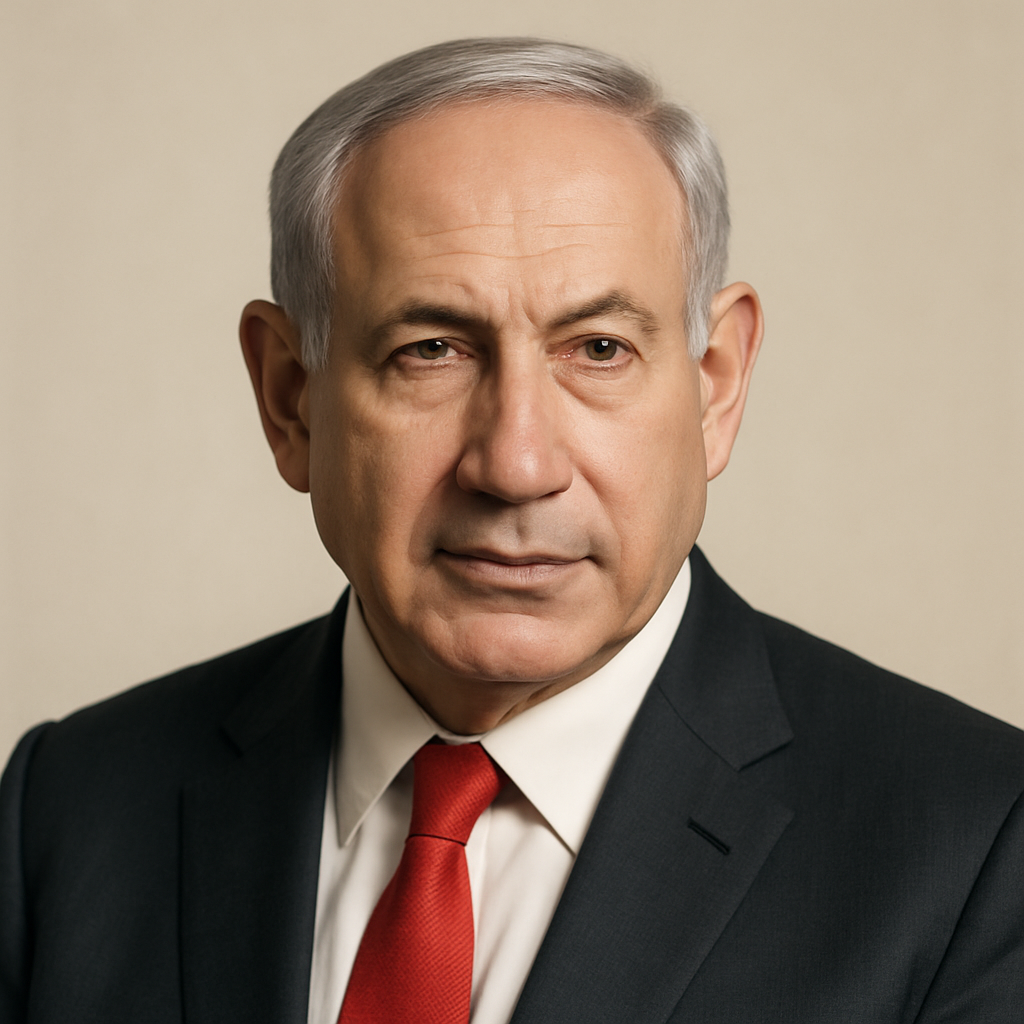
PM Netanyahu Participates in Cornerstone-Laying Ceremony for the Hall of Remembrance for Victims of Terrorism, on Mt. Herzl in Jerusalem
 Benjamin Netanyahu · Prime Minister of Israel
- Context
- Netanyahu spoke at the cornerstone-laying ceremony for the Hall of Remembrance for Victims of Terrorism on Mt. Herzl, Jerusalem, on April 19, 2023.
- Main themes
- Victims of terrorism memorial, national remembrance, Jewish resilience and statehood, fight against terrorism, unity in grief, memory and spirit, Mt. Herzl ceremony, civilian casualties, historical continuity of antisemitic hatred, family loss, national identity
- Duration
- ~6 min
- Words
- 761
- Sentences
- 37
- Readability
- 60
- Grade
- 9.9
- Syntax
- 2.97
- Vocabulary
- 2.18
The broad sphere of national life a sentence belongs to. Every sentence has an Arena, so it is the denominator the other indices are read against.
Other37 sentences in 11 paragraphs
The cornerstone that we are laying today in the ground on Mt. Herzl is for an additional memorial site in our country but it is a memorial site on a national scale. Several years ago, not far from here, we built the Hall of Remembrance for the Fallen of Israel's Wars, and in a few years a memorial hall for the victims of terrorism will stand here.
Abie and Roi, I remember that we gathered here several years ago. I think it was after one of the ceremonies, and you said 'The time has come for us to build a memorial hall here.' We discussed it and I promised you that the hall would be built, and I am very moved today, because it will be built.
Mayor of Jerusalem, my friend Moshe Lion, there will be another site here in our capital. Such sites reflect the spirit of the nation. We are realizing this together, founded on the understanding that the deaths of the victims of terrorism has national significance.
Our soldiers in uniform fell while guarding our homeland while civilians who were not in uniform fell at the hands of enemies that oppose our very existence in our homeland. Unfortunately, I must say this, the home front is also a front, the civilian front.
One hundred and seventy-two years separate the first victim of terrorism, Rabbi Avraham Shlomo Zalman Tzoref, who was among those who revived the Jewish community in Jerusalem, and the most recent victim, Lucy Dee, whose life was cut short, along with the lives of her daughters, Maya and Rina, by heinous terrorists less than two weeks ago in the Jordan Valley. The hatred is the same hatred. The incitement is the same incitement. The love of bloodshed is the same vicious love of bloodshed, but there is still a huge difference between then and today.
Thanks to our diplomatic strength, we settle accounts with every terrorist. We strike at the accursed terrorists including those who are responsible for the horrible murder of the women of the Dee family; we will not relent. The major difference is that then the murderers were dealing with a small community that barely succeeded in defending itself. Today, even though they diminish us and wound us and we live our lives amidst trials and tribulations, there is no doubt about our ability to rebuff them. The question of our existence was once in doubt; today it is not, even though the price is high.
Your loved ones are torn from you, and then the pain and the longing do not relent. Family after family, each one, experiences the void at home. Family after family has its memories, but here we intend to gather all the memories in one hall. The memory that unites will be etched on the walls of the building are will underscore the depth of our mutual responsibility.
Even if there are among us differences of opinion and outlook, before anything else, we are brothers and sisters. The terrorism that deliberately strikes at innocents does not distinguish between secular and religious, Jew and non-Jew, right-wing or left-wing. We are all bound to one fate. We remember all of them and we promise in their names to fight terrorism all-out.
I would like to say something else. Memory is not just a name or a photograph. Memory is also spirit, values and a life of meaning.
Yigal Yaniv, who was murdered two months ago along with his brother Hallel in the terrorist attack in Hawara, wrote a small note that was found after his death among his personal effects. On the eve of last Rosh Hashanah, Yigal wrote: 'To finish a tractate, to honor the family more, to volunteer more.' The mother of Hallel and Yigal, Esti Yaniv, on the night of the murder, recorded a message for the youth at the community of Har Bracha: 'Make soup and give it to the soldiers.' What greatness of spirit, what thinking of one's fellow, at the most painful of all moments, in which two of her children were laying lifeless before her, she was concerned about the soldiers.
Thousands of victims of terrorism in the years of our national revival are no longer with us but their presence, filled with light, will be preserved in this hall for generations to come. Everyone here, everyone who donates to it, will have great merit. I would like to thank you and tell you – the memory of your loved ones will be bound up in the heart of the nation forver.