




- Context
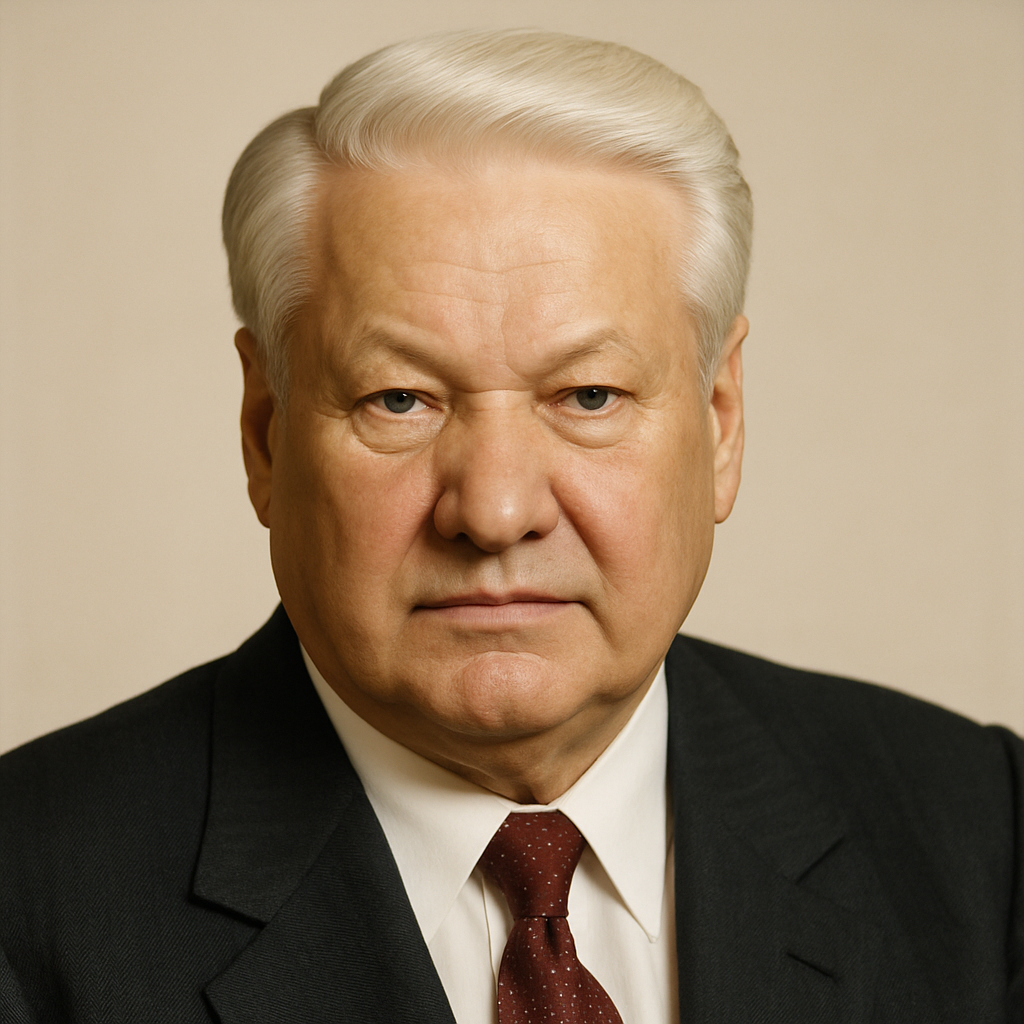
- Boris Yeltsin delivered a Presidential Address to the Federal Assembly on 23 February 1996 in Russia, during a period of economic reform and political transition following the dissolution of the Soviet Union.
- Main themes
- Historical development of Russia, socio-economic problems of the twentieth century, the communist project and its consequences, perestroika and reform, collapse of the USSR, creation of the Commonwealth of Independent States, restoration of Russian statehood
- Duration
- ~29 min
- Words
- 3,420
- Sentences
- 148
- Readability
- 41
- Grade
- 13.2
- Syntax
- 2.97
- Vocabulary
- 2.34
Russian Presidential Address to the Federal Assembly Translated from Russian
The broad sphere of national life a sentence belongs to. Every sentence has an Arena, so it is the denominator the other indices are read against.
Other148 sentences in 33 paragraphs
The history of Russia is full of glorious successes and harsh trials. We have repelled attacks and lived through times of troubles. From generation to generation Russians have sought the road to happiness and justice, lost their way and again stubbornly striven for a better lot. Despite the heavy trials that the twentieth century brought Russia, our Fatherland has stood firm. Russia was and remains a great country. Its place in the world has for centuries been determined by a particular breadth and might, whether the matter concerns geographical scale and population, natural resources, cultural or scientific achievements, spirituality or military strength.
Today we are free from ideological dictate and monopolism in politics. The economy, spiritual life and the initiative of citizens are being emancipated. As never before we are open to the world, delivered from dangerous and exhausting confrontations.
The history of human civilisation has known few turns as sharp as those Russia has been living through in recent years. It is therefore not surprising that the movement forward is proceeding with difficulty, painfully, contradictorily. Reference points have been washed away, the inertia of destructive struggle among ourselves is great, there is not enough patience to wait for stable positive results and, as a consequence, people frequently do not hear and do not understand one another. We are in acute need of a historical understanding of what is happening, of acquiring a sense of historical responsibility for the fate of the country. For only that society has a future which respects its own history, understands its present and sees the paths of further development.
In this Address is my conception of Russia's present day, my understanding of its future. For all its striving for objectivity, it retains the imprint of the personal convictions of a man bearing the burden of responsibility for everything that has happened in the country in recent years. In this Address is my experience, including the experience of mistakes, and above all a firm faith in a free Russia and its citizens. In accordance with the powers defined by point 'e' of Article 84 of the Constitution of the Russian Federation, I address the members of the Federation Council and the deputies of the State Duma of the Federal Assembly, and all citizens of Russia, with the annual Address on the situation in the country and the main directions of the policy of the Russian Federation.
At the beginning of the twentieth century the main socio-economic problems demanding solution from Russia and the other leading countries of the world proved to be the costs of the spontaneous market and the need for a more just distribution of social wealth to prevent mass destitution and social explosions. Life gave its own answers to the questions posed. States renounced authoritarian forms of rule and passed over to democracy, to the search for sensible combinations of freedom and justice, of the market and the social guarantees of the state. Tsarist Russia, weighed down by the burden of its own historical problems, was unable to take this road. The depth of social contradictions and the absence of democratic traditions predetermined the radicalism of the Russian revolutionary process, its precipitate slide from February to October. This destructive radicalism, razing everything 'to the foundations, and then', explains the fact that in the course of the breaking of the former order much was lost of the achievements of pre-revolutionary Russia in the sphere of culture, the economy, law and socio-political development.
Using the communist doctrine as an ideological instrument, the Bolsheviks offered their own answer to the challenge of the time. The result was a super-rigid mobilisation model of development, concentrating all resources in the hands of a state under the control of a single party. Civil society, the rudiments of democracy and private property were destroyed. The transformation of Russia into a powerful military-industrial power was achieved by straining the people's strength to breaking point, at the cost of colossal human losses.
The communist project did not withstand the test of the long historical distance. The economic system proved rigid, containing no mechanisms of adaptation to changing conditions and new tasks, and the political regime did not correspond to the demands of the time, for total coercion no longer matched accelerating scientific and technological development. The result was a continuing lag behind the most developed countries in living standards and labour productivity, and an obvious incapacity to answer the new, ever more complex demands of modernisation that declared themselves with full force in the second half of the twentieth century: the scientific-technological revolution, the information society and the globalisation of world economic ties.
It is important to recognise fully that the tragic consequences of the communist experiment were law-governed. Of course, something could have been avoided, and something could have been softened. But on the whole the mass repressions, the rigid political monopolism, the class purges, the total ideological 'thinning out' of culture, the walling-off from the outside world and the maintenance of an atmosphere of hostility and fear are all generic features of a totalitarian regime.
Now, on the eve of a new century, it is clear that states which suppress freedom are doomed to defeat. History has pronounced its verdict on those who ruled by means of violence and deception. And all this means that the road back is a road into a historical dead end, to the inevitable ruin of Russia.
The first attempt at reform within the framework of the former system was undertaken in the times of the 'Khrushchev thaw'. After Stalin's death, the weakening of total control over society and the introduction of certain elements of openness allowed the USSR to accelerate development and even to become one of the leaders of the scientific-technological revolution in the military and space spheres. But for anything else the means no longer sufficed. The absence of real changes in the economy and the socio-political order quickly extinguished the impulses of the scientific-technological revolution. The striving to maintain military parity with the 'world of capitalism', to help the countries of the 'socialist camp' and all 'progressive forces', sucked the last juices out of the economy and destroyed the consumer market. And the nomenklatura's fear of the necessity of political transformations, which should have reinforced the economic ones, led to the renunciation even of timid attempts at reform, and then to stagnation. This was evidence of the system's incapacity for self-reform.
At the end of the 1960s the next consumer crisis broke out, whose reality became the 'sausage trains' into the big cities. In the first half of the 1970s the decline in the efficiency indicators of the USSR economy also began. Suffice it to say that, despite enormous subsidies, in 1980 some 70 per cent of collective and state farms were loss-making. In those years our economy was rescued by the world energy crisis. A powerful surge of demand and a sharp jump in energy prices postponed the collapse of the economy.
The consequences of this crisis proved different for different countries. Thus, if to the West it gave a new stimulus of development, taught it to husband resources and became the threshold of the computer revolution, for the USSR the effect was quite different: the petrodollars went to satisfy administrative ambitions, dubious 'projects of the century', and foreign-policy and military adventures. The degradation of the natural environment intensified. The predatory use of lands, waters, forests and minerals, which in the twentieth century no society considering itself civilised could permit itself, was turning the USSR, one of the most resource-endowed countries, into a devastated territory. The country's technical potential was used not to multiply the inheritance received but in effect to destroy lands developed by the centuries-long labour of previous generations, which proved to be flooded by gigantic reservoirs or turned into zones of ecological disaster.
It cannot, of course, be said that all this time was spent in vain. The creative potential of the people remained as inexhaustible as ever. Science-intensive branches and high technologies appeared, and the educational level of the majority of the population rose. The achievements of that time are the merit of the people, who managed to preserve, despite everything, their best national traits and qualities; they are the result of its labour and talent.
And nevertheless all achievements were stubbornly hammered into the narrow framework of the 'competition of the two systems', above all in the military field, and, as a consequence, the lag behind the developed countries in the economy and in the level and quality of life grew. Several attempts to reverse these tendencies ended without result. This was an incurable disease whose symptoms worsened from the end of the 1950s, gradually growing into an economic coma.
In the second half of the 1980s, against the background of the progressive worsening of the economic situation, perestroika began: the most radical attempt to reform the system within the framework of preserving the party's and the state's control over the economy. But it too ended in failure, despite evident public support. Already after the start of 'acceleration', on 9 July 1986 the economic department of the Central Committee of the CPSU reported that in June of that year cases of the late payment of wages to workers and employees had become more frequent, with signals of the unfavourable situation coming from Ukraine, Moldavia, Latvia, Lithuania and many oblasts of the RSFSR. The situation was defused by means of the additional issue of money into circulation. In 1989 and 1990 rationed distribution already covered the whole country, which, however, did not save even rationed products from shortage. When an economy exists on the principle of 'guns instead of butter' (and precisely such it was), the principle of 'coupons for butter instead of butter' inevitably triumphs. In February 1990 the secretary of the Chita regional committee of the CPSU appealed to M. S. Gorbachev, reporting that the provision of the region's requirements for meat and dairy products had sharply worsened, that no credits had been allocated for these products and that a coupon system of distribution had been introduced, with one coupon buying from 0.2 to 0.5 kg of butter and 1 kg of meat, that there were no resources to honour coupons even at such norms, and that explaining the situation to the inhabitants of the towns and workers' settlements, to the miners, foresters and metallurgists, was becoming impossible.
The crisis was not confined to the consumer market. The disorganisation of centralised supply and of the economic ties based on it began. The fulfilment of state obligations for supply, which at the beginning of the 1980s amounted to about 70 per cent, fell sharply. The experiments with 'regional cost-accounting' gave a powerful push to disintegrative tendencies. As a result, by the beginning of the 1990s the country's economic space proved torn apart by republican, regional and local systems of administrative distribution and by semi-natural exchange between enterprises, regions and the population. The country became a kingdom of coupons and barter.
Economic ties between the Soviet republics were being destroyed, as a result of which trade between them fell by half in 1991. This contributed to the collapse of the USSR. Chaos was growing. The country stood on the edge of an abyss. That this was precisely so is known to everyone who stood for hours in queues and experienced on themselves the 'couponisation' of the whole country. In Tver, for example, where almost everything was already sold by coupon, from 1 April 1991 coupons were introduced even for salt, soap and washing powder. And such things were everywhere.
No less eloquent are the secret documents of the CPSU Central Committee revealing the real situation in the economy of the USSR in 1990 and 1991. Already in 1990 the general level of inflation (open and hidden, determined by the injection of 'empty money' into the economy and by commodity shortage) amounted to 119 per cent. In 1991 inflation became still higher. It differed little from the inflation of 1995. The difference is only that now the shop shelves are packed with goods, whereas five years ago they were empty.
Now, about production. In the first quarter of 1991 alone the fall in national income amounted to 13 per cent. Let me stress: even in the hardest years of the reform such a fall occurred only once. In January to November 1991 coal extraction fell by 10 per cent, finished rolled metal by 13 per cent, sawn timber by 13 per cent and oil by 19 per cent. Exports were contracting unstoppably: oil by 51 per cent, ferrous metals by 59 per cent, ferroalloys by 37 per cent. Now in these and other items we are observing not decline but growth.
Falling production, fixed prices and the headlong growth of the population's money incomes, unbacked by commodity cover: such was the explosive mixture that literally blew up the economy of 1991. The chairman of the State Bank, V. V. Gerashchenko, in a secret letter to M. S. Gorbachev complained that, working three shifts, Goznak simply could not keep up with printing money. If in 1989 and 1990 the state budget deficit amounted respectively to 10 and 12 per cent of gross domestic product, in 1991 its size reached 20 per cent. Such a deficit carried an inflationary charge of gigantic destructive force. Now the situation is completely different: the budget deficit does not exceed three per cent of gross domestic product, and moreover is financed mainly by non-inflationary means.
The trade balance deficit grew in 1991 to 10 billion dollars. Today everything is the other way round: the trade balance has been positive for several years now. Foreign-currency resources proved practically exhausted; they did not suffice even for the fulfilment of the state's unconditional obligations. In May 1991 the foreign-currency funds in Vnesheconombank's accounts abroad that could be used for daily payments fell to an indecently low sum, of the order of 60 million dollars (now the Central Bank alone has about 12 billion dollars). The country stood on the brink of insolvency. The external debt of the USSR at the beginning of 1992 reached 64.3 billion dollars. And this heavy burden weighs on Russia's economy to this day.
So, we inherited from our predecessors a bankrupt economy that had no way out of the systemic crisis.
The failures in the economy pushed the leadership of the USSR towards reforms in other spheres, above all the overcoming of the legacy of communist totalitarianism in the ideological and political spheres by means of glasnost and democratisation. The ideological emancipation of society became an enormous achievement of perestroika and the most important political conquest of the people. But without real shifts in the economy, against the background of shelves emptied once and for all, glasnost inevitably struck at the foundations of the political order. And this had twofold consequences.
On the one hand, the remnants of the totalitarian system were being uprooted, and the monopolistic hegemony of the party nomenklatura destroyed. Society revived; people, overcoming indifference, began to display great political activity; the first free elections took place. But, on the other hand, with the collapse of the party and repressive fastenings, the old 'drive belts', the state mechanism partly fell apart and partly ran idle. In the republics of the Union their own institutions of power began to gather strength, compensating for the weakness of the Union Centre. From Estonia to Tajikistan sentiments in favour of greater sovereignty grew, and an upsurge of national movements was observed, often setting as their goal secession from the USSR, as is testified also by the results of the general elections held at that time in some republics, where nationally oriented forces and leaders came to power.
The proclamation of the state sovereignty of Russia, supported by all the main political forces of the republic, paralysed the very possibility of using the Russian Federation as a springboard in a forcible struggle with the other republics and at the same time opened the way to the preservation of the Soviet Union on a fundamentally new basis. The belated answer of the Union Centre was the Novo-Ogarevo process. But even this provoked a reaction in the form of the GKChP: a desperate attempt to fasten the Union together by force, by means of the restoration of the old power structures. The result of the putschists' actions was the disappearance of any possibility of preserving the USSR. After the separation of the Baltic republics and the all-Ukrainian referendum on independence (1 December 1991), at which even the 'Russian-speaking' regions (including Crimea) came out for the independence of Ukraine, the collapse of the USSR was in fact accomplished. The 'time bomb' laid at the founding of the USSR, in the form of the propaganda formula of self-determination up to and including secession with the right of free exit, a formula that it was never supposed would be used, exploded.
The country was threatened either with uncontrolled disintegration or with military clashes in attempts to preserve the Union by force, which would have led to consequences more terrible than in Yugoslavia. The Belovezha agreements drew a line under what had come to pass. They consolidated the desire to preserve traditional relations of friendship and cooperation. They reflected a common understanding of the threats of uncontrolled disintegration. Precisely for this reason the decision taken, and then the Alma-Ata agreements on the creation of the Commonwealth of Independent States, were supported by the parliaments of the sovereign states that entered the new community.
The Soviet Union collapsed under the weight of an all-embracing crisis, torn to pieces by economic, political and social contradictions. Russia stood on the threshold of chaos, and it seemed there was no force capable of stopping it. In the autumn of 1991 it was necessary simultaneously to build a new state, to bring the mechanisms of administration out of paralysis, and to save the economy and the social sphere. There was no possibility of choosing what to do first and what later: the still unformed edifice of Russian statehood was already collapsing under the blows of the crisis, and it was necessary to react promptly to ever new threats of disintegration arising by the hour.
Before the leadership of Russia stood a strategic task: the re-creation of Russian statehood. Without exaggeration, this was a problem of survival.
What could be done in the conditions that had arisen? Various political forces offered society three variants: to return to the command-administrative system; to try to carry out reforms under rigid state control; or to rely to a greater degree on the strength of Russian society, on the forming market relations and on democracy.
The return to the past was closed. This was the conscious choice of Russians, who had repeatedly and convincingly confirmed their commitment to the ideals of democracy, freedom and a law-governed state. The communist experiment had ended, and there was no force that could turn time back. Dosed reforms under state control we could not carry out, because there was no longer a state in the full sense of the word. Any good wishes of the Russian authorities would have been worth no more than the sheet of paper on which they were written. There were no mechanisms of power capable of translating directives into life.
There remained the single real way out, which gave hope of passing along the edge of the abyss and not falling into it. The strategy consisted in using, in conditions of the insufficiency of the levers of state administration, the energy of the forming market institutions and stimuli, and in relying on the basic potential of the nascent democracy: the civic responsibility of people and the first manifestations of the free self-organisation of society.
Let us remember with what moods and expectations the citizens of Russia greeted 1992. There were optimists: there, we have defeated totalitarianism, now we shall give everyone economic freedom, and everything will become splendid. But few thought so. Far more often people spoke of catastrophes of various kinds. With alarm they awaited the collapse of Russia, territorial disintegration and inter-ethnic conflicts; they prophesied famine in freezing cities. All these threats were real.
In assessing now the results of the reforms and the price paid by society for the salvation of the country, it is necessary to take into account also the price of the many years of indecision of the Union leadership, which marked time and brought itself to ruin, and the sta
The original Russian. The tags above are read on the English translation's sentences.
История России полна славных успехов и суровых испытаний. Мы отражали нападения и переживали смуты. Из поколения в поколение россияне искали дорогу к счастью и справедливости, сбивались с пути и снова упрямо стремились к лучшей доле. Несмотря на тяжелые испытания, которые принес России XX век, наше Отечество выстояло. Россия была и остается великой страной. Ее место в мире на протяжении веков определяется особой широтой и мощью: идет ли речь о географических масштабах и населении, природных ресурсах, культурных или научных достижениях, духовности или военной силе. Сегодня мы свободны от идеологического диктата и монополизма в политике. Раскрепощаются экономика, духовная жизнь, инициатива граждан. Как никогда мы открыты миру, избавлены от опасных и изнуряющих противостояний. Таких крутых поворотов, какие Россия переживает в последние годы, история человеческой цивилизации знала немного. Поэтому неудивительно, что движение вперед идет трудно, болезненно, противоречиво. Размыты ориентиры, велика инерция разрушительной борьбы между собой, не хватает терпения дождаться устойчивых позитивных результатов и, как следствие, люди зачастую не слышат и не понимают друг друга. Мы остро нуждаемся в историческом понимании происходящего, в обретении чувства исторической ответственности за судьбу страны. Ведь будущее есть только у такого общества, которое уважает собственную историю, понимает свое настоящее и видит пути дальнейшего развития. В этом Послании - мое представление о сегодняшнем дне России, мое понимание ее будущего. При всем стремлении к объективности оно сохраняет отпечаток личных убеждений человека, несущего груз ответственности за все, что произошло в стране за последние годы. В этом Послании - мой опыт, в том числе опыт ошибок, а главное, твердая вера в свободную Россию и ее граждан. В соответствии с полномочиями, определенными пунктом "е" статьи 84 Конституции Российской Федерации, обращаюсь к членам Совета Федерации и депутатам Государственной Думы Федерального Собрания, ко всем гражданам России с ежегодным Посланием о положении в стране и основных направлениях политики Российской Федерации. В начале XX века главными социально-экономическими проблемами, требовавшими решения от России и других ведущих стран мира, оказались издержки стихийного рынка и необходимость более справедливого распределения общественного богатства для предотвращения массовой нищеты и социальных взрывов. Жизнь давала свои ответы на поставленные вопросы. Государства отказывались от авторитарных форм правления, переходили к демократии, к поиску разумных сочетаний свободы и справедливости, рынка и социальных гарантий государства. Царская Россия, обремененная грузом собственных исторических проблем, не смогла выйти на эту дорогу. Глубина общественных противоречий и отсутствие демократических традиций предопределили радикализм российского революционного процесса, его стремительный срыв от Февраля к Октябрю. Этим разрушительным радикализмом - "до основанья, а затем" - объясняется тот факт, что в ходе ломки прежних устоев оказалось утрачено многое из достижений дореволюционной России в сфере культуры, экономики, права, общественно-политического развития. Использовав в качестве идеологического инструмента коммунистическую доктрину, большевики предложили свой ответ на вызов времени. В результате появилась сверхжесткая мобилизационная модель развития, концентрировавшая все ресурсы в руках государства, находившегося под контролем одной партии. Были уничтожены гражданское общество, зачатки демократии и частная собственность. Превращение России в мощную военно-индустриальную державу было достигнуто надрывом сил народа, за счет колоссальных людских потерь. Коммунистический проект не выдержал испытания на большой исторической дистанции. Экономическая система оказалась косной, не содержащей механизмов приспособления к меняющимся условиям и новым задачам, а политический режим не соответствовал требованиям времени, ибо тотальное принуждение уже не соответствовало ускоряющемуся научно-техническому развитию. Как итог - продолжающееся отставание от наиболее развитых стран в уровне жизни и производительности труда и очевидная неспособность отвечать на новые, усложняющиеся требования модернизации, с полной силой заявившие о себе во второй половине XX века, - научно-техническая революция, информационное общество, глобализация мирохозяйственных связей. Важно до конца осознать, что трагические последствия коммунистического эксперимента были закономерны. Конечно, чего-то можно было избежать, что-то могло быть смягчено. Но в целом и массовые репрессии, и жесткий политический монополизм, и классовые чистки, и тотальное идеологическое "прореживание" культуры, и отгороженность от внешнего мира, и поддержание атмосферы враждебности и страха - все это родовые признаки тоталитарного режима. Теперь, в канун нового века, ясно, что государства, подавляющие свободу, обречены на поражение. История вынесла свой приговор тем, кто правил с помощью насилия и обмана. И все это означает, что путь назад - это путь в исторический тупик, к неизбежной гибели России. Первая попытка реформирования в рамках прежней системы была предпринята во времена "хрущевской оттепели". После смерти Сталина ослабление тотального контроля над обществом, введение некоторых элементов открытости позволили СССР ускорить развитие и даже стать одним из лидеров научно-технической революции в военной и космической сферах. Но на другое средств уже не хватало. Отсутствие реальных перемен в экономике и общественно-политическом устройстве быстро погасило импульсы научно-технической революции. Стремление поддерживать военный паритет с "миром капитализма", помогать странам "социалистического лагеря" и всем "прогрессивным силам" высасывало из экономики последние соки, разрушало потребительский рынок. А страх номенклатуры перед необходимостью политических преобразований, которые должны были подкреплять экономические, привел к отказу даже от робких попыток реформирования, а затем - к застою. Это было свидетельство неспособности системы к самореформированию. В конце 60-х годов разразился очередной потребительский кризис, реальностью которого стали "колбасные электрички" в крупные города. В первой половине 70-х годов началось и снижение показателей эффективности экономики СССР. Достаточно сказать, что, несмотря на огромные дотации, в 1980 году 70 процентов колхозов и совхозов были убыточны. В эти годы нашу экономику выручил мировой энергетический кризис. Мощный прилив спроса и резкий скачок цен на энергоносители отсрочили развал экономики. Последствия этого кризиса оказались различными для разных стран. Так, если Западу он дал новый стимул развития, научил беречь ресурсы и стал преддверием компьютерной революции, то для СССР эффект был совсем другим: нефтедоллары пошли на удовлетворение административных амбиций, сомнительные "проекты века", внешнеполитические и военные авантюры. Усилилась деградация природной среды. Хищническое использование земель, вод, лесов, полезных ископаемых, которое в XX веке не могло себе позволить ни одно считающее себя цивилизованным общество, превращало СССР - одну из наиболее ресурсообеспеченных стран - в разоренную территорию. Технический потенциал страны использовался не для приумножения полученного наследия, а фактически для уничтожения освоенных многовековым трудом предыдущих поколений земель, которые оказались затоплены гигантскими водохранилищами или превращены в зоны экологического бедствия. Нельзя, конечно, сказать, что все это время было потрачено впустую. Творческий потенциал народа по-прежнему оставался неиссякаем. Появились наукоемкие отрасли, высокие технологии, вырос образовательный уровень большинства населения. Достижения того времени - заслуга народа, сумевшего сохранить, несмотря ни на что, свои лучшие национальные черты и качества, результат его труда и таланта. И, тем не менее, все достижения упорно вбивались в узкие рамки "соревнования двух систем", прежде всего - в военной области, и, как следствие, нарастало отставание от развитых стран в экономике, в уровне и качестве жизни. Несколько попыток переломить эти тенденции закончились безрезультатно. Это была неизлечимая болезнь, симптомы которой усугублялись с конца 50-х годов, перерастая постепенно в экономическую кому. Во второй половине 80-х годов на фоне прогрессирующего ухудшения экономической ситуации началась перестройка - самая радикальная попытка реформирования системы в рамках сохранения контроля партии и государства над экономикой. Но и она закончилась неудачей, несмотря на явную общественную поддержку. Уже после начала "ускорения", 9 июля 1986 года экономический отдел ЦК КПСС сообщал: "В июне с. г. участились случаи несвоевременной выплаты заработной платы рабочим и служащим... Сигналы о неблагополучии положения с выплатой заработной платы поступили в экономический отдел ЦК КПСС с Украины, Молдавии, Латвии, Литвы, из многих областей РСФСР. Разрядить обстановку удалось за счет дополнительного выпуска денег в обращение. В 1989 - 1990 годах нормированное распределение охватило уже всю страну, что, однако, не спасло от дефицита даже нормируемых продуктов. Когда экономика существует по принципу "пушки вместо масла" (а именно такой она и была), неизбежно торжествует принцип "талоны на масло вместо масла". В феврале 1990 года секретарь Читинского обкома КПСС обращался к М.С.Горбачеву: "В этом году обеспечение потребностей области в мясе и молокопродуктах резко ухудшилось, на эти продукты ссуд не выделено, введена талонная система распределения. В январе с. г. на один талон отоваривается от 0,2 до 0,5 кг масла животного, 1 кг мяса. В дальнейшем для отоваривания и по таким нормам ресурсов нет. Объяснить сложившееся положение жителям городов, рабочих поселков, шахтерам, лесникам и металлургам становится невозможным". Кризис не ограничился потребительским рынком. Началась дезорганизация централизованного снабжения и основанных на нем хозяйственных связей. Выполнение государственных обязательств по снабжению, составлявшее в начале 80-х годов около 70 процентов, резко снизилось. Эксперименты с "региональным хозрасчетом" дали мощный толчок дезинтеграционным тенденциям. В результате экономическое пространство страны к началу 90-х годов оказалось разорванным республиканскими, региональными и местными системами административного распределения, полунатуральным обменом между предприятиями, регионами, населением. Страна стала царством талонов и бартера. Разрушались хозяйственные связи между советскими республиками, в результате чего товарооборот между ними сократился в 1991 году в два раза. Это способствовало распаду СССР. Нарастал хаос. Страна стояла на краю пропасти. О том, что это было именно так, знают все, кто часами стоял в очередях и испытал на себе "талонизацию" всей страны. В Твери, например, где и так почти все продавалось по талонам, с 1 апреля 1991 года ввели талоны даже на соль, мыло и стиральный порошок. И такое было повсеместно. Не менее красноречивы секретные документы ЦК КПСС, раскрывающие реальную ситуацию в экономике СССР в 1990 - 1991 годах. Уже в 1990 году общий уровень инфляции (открытой и скрытой, определяемой выбросом в экономику "пустых денег" и товарным дефицитом) составлял 119 процентов. В 1991 году инфляция стала еще выше. Она мало отличалась от инфляции 1995 года. Разница лишь в том, что сейчас полки магазинов забиты товарами, а пять лет назад они были пусты. Теперь - о производстве. Только за первый квартал 1991 года падение национального дохода составило 13 процентов. Подчеркну, даже в самые тяжелые годы реформы такое падение было всего один раз. За январь - ноябрь 1991 года добыча угля снизилась на 10 процентов, готового проката - на 13 процентов, пиломатериалов - на 13 процентов, нефти - на 19 процентов. Неудержимо сокращался экспорт: нефти - на 51 процент, черных металлов - на 59 процентов, ферросплавов - на 37 процентов. Теперь по этим и другим позициям мы наблюдаем не снижение, а рост. Снижение производства, фиксированные цены и стремительный рост денежных доходов населения, не обеспеченных товарным покрытием - такой была гремучая смесь, буквально взорвавшая экономику 1991 года. Председатель Госбанка В.В.Геращенко в секретном письме М.С.Горбачеву жаловался на то, что, работая в три смены, Гознак просто не успевает печатать деньги. Если в 1989 и 1990 годах дефицит госбюджета составлял соответственно 10 и 12 процентов валового внутреннего продукта, то в 1991 году его величина достигла 20 процентов. Такой дефицит нес в себе инфляционный заряд гигантской разрушительной силы. Сейчас ситуация совершенно иная: дефицит бюджета не превышает 3 процентов валового внутреннего продукта, да к тому же финансируется в основном неинфляционными способами. Дефицит торгового баланса вырос в 1991 году до 10 миллиардов долларов. Ныне все наоборот - торговый баланс уже не первый год положительный. Валютные ресурсы оказались практически исчерпанными, их не хватало даже для выполнения безусловных обязательств государства. В мае 1991 года валютные средства на счетах Внешэкономбанка за границей, которые могли использоваться для ежедневных платежей, снизились до неприлично низкой суммы, порядка 60 миллионов долларов (теперь только Центробанк имеет около 12 миллиардов долларов). Страна стояла на грани неплатежеспособности. Внешняя задолженность СССР на начало 1992 года достигла 64,3 миллиарда долларов. И этот тяжелый груз до сих пор давит на экономику России. Итак, нам досталась от предшественников обанкротившаяся экономика, не имевшая выхода из системного кризиса. Неудачи в экономике подтолкнули руководство СССР к реформам в других сферах, прежде всего - преодолению наследия коммунистического тоталитаризма в идейной и политической сферах с помощью гласности и демократизации. Идейное раскрепощение общества стало огромным достижением перестройки и главнейшим политическим завоеванием народа. Но без реальных сдвигов в экономике, на фоне вконец опустевших прилавков, гласность неизбежно била по основам политического устройства. И это имело двоякие последствия. С одной стороны, выкорчевывались остатки тоталитарной системы, разрушалась монопольная гегемония партийной номенклатуры. Общество воспряло, люди, преодолев безразличие, начали проявлять большую политическую активность, проходили первые свободные выборы. Но, с другой стороны, с распадом партийных и репрессивных скреп, старых "приводных ремней", государственный механизм частично развалился, частично работал вхолостую. В республиках Союза стали набирать силу собственные институты власти, компенсировавшие слабость союзного Центра. От Эстонии до Таджикистана нарастали настроения в пользу большего суверенитета, наблюдался подъем национальных движений, часто ставивших целью выход из СССР, о чем свидетельствуют и результаты проведенных в то время всеобщих выборов в некоторых республиках, где к власти пришли национально ориентированные силы и лидеры. Провозглашение государственного суверенитета России, поддержанное всеми основными политическими силами республики, парализовало саму возможность использования Российской Федерации в качестве плацдарма в силовой борьбе с другими республиками и вместе с тем открывало путь к сохранению Советского Союза на принципиально новой основе. Запоздалым ответом союзного Центра явился ново-огаревский процесс. Но даже это вызвало реакцию в форме ГКЧП - отчаянной попытки скрепить Союз силой, с помощью реставрации старых властных структур. Результатом действий путчистов стало исчезновение каких-либо возможностей сохранения СССР. После отделения прибалтийских республик и всеукраинского референдума о независимости (1 декабря 1991 г.), на котором за независимость Украины выступили даже "русскоязычные" регионы (включая Крым), распад СССР фактически свершился. Взорвалась "бомба замедленного действия", заложенная при основании СССР в виде пропагандистской формулы - самоопределение вплоть до отделения с правом свободного выхода, формулы, которую никогда не предполагалось использовать. Стране грозил либо неуправляемый распад, либо военные столкновения при попытках сохранить Союз силой, которые привели бы к последствиям более страшным, чем в Югославии. Беловежские соглашения подводили черту под свершившимся. Они закрепили желание сохранить традиционные отношения дружбы и сотрудничества. Они отражали общее понимание угроз неуправляемого распада. Именно поэтому принятое решение, а затем и Алма-Атинские соглашения о создании Содружества Независимых Государств были поддержаны парламентами суверенных государств, вошедших в новое сообщество. Советский Союз рухнул под тяжестью всеобъемлющего кризиса, разодранный на куски экономическими, политическими и социальными противоречиями. Россия стояла на пороге хаоса, и, казалось, не было силы, способной остановить его. Осенью 1991 года приходилось одновременно строить новое государство, выводить из паралича механизмы управления, спасать экономику и социальную сферу. Не было возможности выбирать, что делать сначала, а что потом: еще несложившееся здание российской государственности уже рушилось под ударами кризиса, и надо было оперативно реагировать на все новые и новые, ежечасно возникающие угрозы распада. Перед руководством России стояла стратегическая задача - воссоздание российской государственности. Без преувеличения, это была проблема выживания. Что можно было делать в создавшихся условиях? Различные политические силы предлагали обществу три варианта: вернуться к командно-административной системе; постараться провести реформы под жестким государственным контролем; положиться в большей степени на силу российского общества, на формирующиеся рыночные отношения и демократию. Возврат к прошлому был закрыт. Это был сознательный выбор россиян, неоднократно и убедительно подтверждавших свою приверженность идеалам демократии, свободы, правового государства. Коммунистический эксперимент закончился, и не было такой силы, которая могла бы повернуть время вспять. Дозированные реформы под государственным контролем мы не могли проводить потому, что уже не было государства в полном смысле этого слова. Любые благие пожелания российской власти стоили бы не больше листа бумаги, на котором они написаны. Не было властных механизмов, способных претворять директивы в жизнь. Оставался единственный реальный выход, дававший надежду пройти по краю пропасти и не упасть в нее. Стратегия заключалась в том, чтобы в условиях недостаточности рычагов государственного управления использовать энергию формирующихся рыночных институтов и стимулов, опереться на основной потенциал зарождающейся демократии - гражданскую ответственность людей и первые проявления свободной самоорганизации общества. Вспомним, с какими настроениями и ожиданиями встречали граждане России 1992 год. Были оптимисты: вот, победили тоталитаризм, сейчас дадим всем экономическую свободу, и все станет замечательно. Но так думали немногие. Гораздо чаще говорили о разного рода катастрофах. С тревогой ждали краха России, территориального распада, межнациональных конфликтов, пророчили голод в замерзающих городах. Все эти угрозы были реальными. Оценивая сейчас результаты реформ и цену, заплаченную обществом за спасение страны, необходимо учитывать и цену многолетней нерешительности союзного руководства, топтавшегося на месте и приведшего себя к гибели, а госуда