




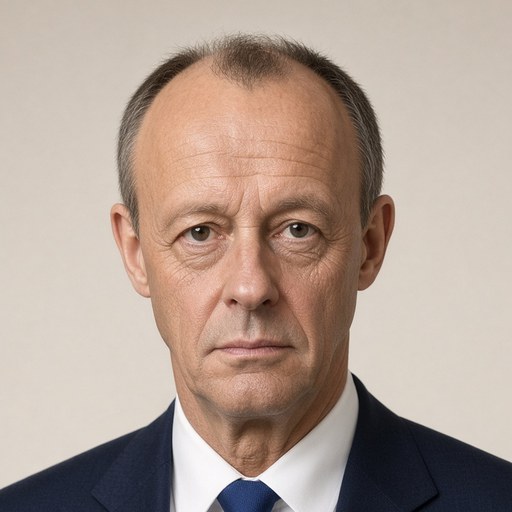
Greeting from the Federal Chancellor at the Saxony-Anhalt Evening In shared responsibility, mastering difficult times
 Friedrich Merz · Chancellor of Germany
- Context
- Merz addressed the Saxony-Anhalt Evening in Berlin in April 2026, marking the handover from outgoing Minister-President Reiner Haseloff to his successor Sven Schulze.
- Main themes
- Leadership transition in Saxony-Anhalt, tribute to Reiner Haseloff, federal-state cooperation, Christian values in politics, German reunification and East Germany, CDU party unity, federalism, shared responsibility in difficult times
- Duration
- ~12 min
- Words
- 1,445
- Sentences
- 67
- Readability
- 54
- Grade
- 10.8
- Syntax
- 2.82
- Vocabulary
- 2.18
Translated from German
The broad sphere of national life a sentence belongs to. Every sentence has an Arena, so it is the denominator the other indices are read against.
Other67 sentences in 18 paragraphs
Dear Mr. Prime Minister, dear Sven Schulze,
dear Reiner Haseloff,
Professor Ackermann,
ladies and gentlemen, also to the only mathematician in the room – thank you very much for the warm welcome –, dear colleagues from the federal government, from the German Bundestag, and from the state government of Saxony-Anhalt,
I am very pleased that we have the opportunity to spend this evening in this somewhat unusual, but no less beautiful setting today with two prime ministers, the outgoing and the new. It was a personal concern for me to be here when the baton is handed over once again, so to speak, with this traditional celebration, this traditional meeting, one of the first to celebrate such an occasion in Berlin at the beginning of summer. I want to say this from my perspective very personally. Reiner Haseloff knows it. We did not get to know each other in politics; rather, we met when I was the chairman of the supervisory board of a large company in the paper industry and negotiated with Reiner Haseloff as the Minister of Economics of Saxony-Anhalt about a large, new location. I got to know him then as a knowledgeable, reliable, and completely unpretentious conversation partner, who simply wanted to do something for his federal state and enable a company settlement. I must say, this has also shaped my view of the person Reiner Haseloff. I was really glad that we later saw each other again in the federal board, in the presidency of the CDU.
Dear Reiner, you have never made a secret of the fact that you are a Christian. Last year, you wrote a book titled "Living Christian Values" and in this book, you elaborated extensively on what sustains you, what shapes you, and what motivates you. You wrote a sentence: Politics must take actions that are truly signs of hope.
Ladies and gentlemen, in our secularized world, it is not a matter of course that a person not only professes the Christian faith but also expresses this in what he does politically and how he acts, and speaks openly about what guides him. I say it this way, Sven: The shoes are damn big.
Above all, the good conversations and the very reflective thoughts; also in turbulent times to calmly discuss what shapes us, what guides us, what path we want to walk together: I will miss you. I say this not only for myself personally, but I may also say this for the federal government as a partner in the office of the prime minister of a federal state. I also say this, if you allow me, ladies and gentlemen, as the party chairman of the CDU towards the long-standing member of the presidency of the CDU of Germany. We had the opportunity to bid you farewell at our last federal party conference. We were, so to speak, among ourselves in the family of the CDU. But I would like to do so here today as well, knowing that many colleagues from other parties and factions are also present. I think what unites us, beyond all party-political differences, is the great gratitude for having had such a companion as Reiner Haseloff for so many years. Thank you very much for your work!
You have shaped the state of Saxony-Anhalt, a state that I got to know a few years before the reunification during a visit to the Leipzig Fair and an illegal excursion to the city of Halle at that time. It was not allowed to move from one city to another. I did it anyway, and with a special goal, namely to visit a family that my family, my parents, and later we tried to make a little happier over many years at Christmas and Easter with small packages. It was such a warm and personal and also emotional encounter to meet the Köpke family in Halle – I remember the name and the family well – and simply to feel what connects us as human beings and as German citizens despite the decades-long separation and despite growing up in two completely different political systems.
This shaping is also a bit of my shaping in my work as Federal Chancellor. I said it at my inauguration. I want to be the Chancellor of all citizens of our country. But I also want to be, above all, the Chancellor of the East German states, as I want to emphasize that we in the federal state of the Federal Republic of Germany truly cannot solve a problem alone, the states not without the federal government, but the federal government also not without the states. In this federalism, our state order, lie many problems, and some decisions could be made faster in a different way. Whether they would necessarily be better if they were not achieved after a longer struggle with the states for all of us, that remains to be seen. In any case, I think and firmly believe that we can better solve the challenges we face in the good cooperation of the federal government with the states. This requires mutual understanding, and it requires mutual outreach.
But this also requires that we have a common understanding of what we are currently experiencing. Dear Sven, you said it. I want to emphasize it from my perspective as well: We are currently experiencing a deep turning point in our history.
The East Germans, at least the somewhat older ones, have now experienced it for the second time in a short time in their lives. We, the West Germans, those who are now over 70 and in part 80 years old, are experiencing it for the first time, such a deep turning point, such a break in epochs. It is a break in epochs. Ladies and gentlemen, the word is correct and remains unchanged. Every generation in our country experiences such a profound change. No generation in our history has been spared from this. We, the West Germans, simply had eight decades of luck, nothing more, an undeserved luck, solely due to origin and place of upbringing.
Shaping this time together requires strength of character, unity, but also responsibility. When I read that Saxony-Anhalt is entering this year with the motto #moderndenken, and when I incorporate the experiences of the East Germans into what we now have to achieve, then I know that it is of inestimable value that we have these people with this experience. Among these people is Reiner Haseloff with his life experience, with his professional experience, which he always brings into our conversations. Among these experiences is what all of you, as far as you come from the East, bring into the tasks we now have to solve.
I therefore connect my deep friendly thanks in close solidarity to Reiner Haseloff with an outstretched hand to the states, to the prime ministers, and today especially to you, dear Sven, for the cooperation in the coming weeks, months, and years. We have not yet passed the tests of endurance. Our democracy is facing a test of endurance.
But I also want to allow myself the following remark: How impressively it can be done to rein in self-proclaimed illiberal democracies with large majorities, we experienced last weekend in Hungary. Ladies and gentlemen, allow me to simply say this: There are no illiberal democracies. Democracies are either liberal, or they are not democracies.
In this sense, dear Reiner, I wish you all the best personally and for your family! Dear Sven, here’s to good cooperation in the tradition of your predecessor! To both of you, once again from this place, congratulations on the successful generational change in the office of the Prime Minister of Saxony-Anhalt! This is exemplary, and it obliges us all to continue the cooperation beyond all party-political preferences in such a way that something good continues to emerge from our country.
Allow me also this concluding remark: Yes, we have some problems and some challenges to face. But anyone who, like me, is often on the road by bicycle in Germany – I was also cycling in Saxony-Anhalt – who sees the people there and has the opportunity to talk to them, who sees our landscape, who also sees our industry, our medium-sized businesses, and our companies, must, like me, say: Ladies and gentlemen, we live in a fantastic country, despite all the problems we have! – Professor Ackermann, I also want to say this at this point: We are and remain a cultural nation in the broadest sense of the word.
In this sense, once again: Thank you, dear Reiner! All the best! Thank you, dear Sven! Here’s to good cooperation!
The original German. The tags above are read on the English translation's sentences.
Sehr geehrter Herr Ministerpräsident, lieber Sven Schulze,
lieber Reiner Haseloff,
Frau Professor Ackermann,
meine Damen und Herren, auch an den einzigen Mathematiker im Raum – herzlichen Dank für die freundliche Begrüßung –,
liebe Kolleginnen und Kollegen aus der Bundesregierung, aus dem Deutschen Bundestag und aus der Landesregierung von Sachsen Anhalt,
ich freue mich sehr, dass wir Gelegenheit haben, diesen Abend in dieser etwas ungewohnten, aber nicht weniger schönen Umgebung heute mit zwei Ministerpräsidenten, dem scheidenden und dem neuen, zu verbringen. Mir war es ein persönliches Anliegen, da zu sein, wenn hier sozusagen noch einmal der Staffelstab übergeben wird, auch mit diesem traditionellen Fest, dieser traditionellen Begegnung, einer der ersten, die so etwas in Berlin zu Beginn des Sommers feiern. Ich will es aus meiner Sicht auch sehr persönlich sagen. Reiner Haseloff weiß es. Wir beide haben einander ja gar nicht in der Politik kennengelernt, sondern wir haben uns kennengelernt, als ich Aufsichtsratsvorsitzender eines großen Unternehmens der Papierindustrie war und mit Reiner Haseloff als Wirtschaftsminister von Sachsen-Anhalt über einen großen, neuen Standort verhandelt habe. Ich habe ihn damals als einen sachkundigen, verlässlichen und vollkommen unprätentiösen Gesprächspartner kennengelernt, dem es ganz einfach darum ging, für sein Bundesland etwas zu tun und eine Unternehmensansiedlung zu ermöglichen. Ich muss sagen, das hat mich auch im Blick auf den Menschen Reiner Haseloff geprägt. Ich war wirklich froh, dass wir uns später im Bundesvorstand, im Präsidium der
CDU
wiedergesehen haben, aber vor allem auch als Ministerpräsident des Landes Sachsen-Anhalt.
Lieber Reiner, du hast nie einen Hehl daraus gemacht, dass du ein Christ bist. Du hast im vergangenen Jahr ein Buch mit dem Titel „Christliche Werte leben“ geschrieben und in diesem Buch sehr ausführlich begründet, was dich trägt, was dich prägt und was dich motiviert. Du hast einen Satz geschrieben: Die Politik muss Taten setzen, die wirklich Hoffnungszeichen sind.
Meine Damen und Herren, in unserer säkularisierten Welt ist es nicht selbstverständlich, dass sich ein Mensch nicht nur zum christlichen Glauben bekennt, sondern dies auch in dem, was er politisch tut und wie er handelt, zum Ausdruck bringt und offen darüber spricht, was ihn leitet. Ich sage es so, Sven: Die Schuhe sind verdammt groß.
Vor allem die guten Gespräche und die sehr reflektierten Gedanken; auch in bewegter Zeit einmal ruhig darüber zu sprechen, was uns prägt, was uns leitet, welchen Weg wir gemeinsam gehen wollen: Du wirst mir fehlen. Ich sage das nicht nur für mich persönlich, sondern ich darf das auch für die Bundesregierung als Partner im Amt des Ministerpräsidenten eines Bundeslandes sagen. Ich sage das aber auch, wenn Sie mir das erlauben, meine Damen und Herren, als Parteivorsitzender der
CDU
gegenüber dem langjährigen Mitglied des Präsidiums der
CDU
Deutschlands. Wir hatten Gelegenheit, dich auf unserem letzten Bundesparteitag zu verabschieden. Da waren wir sozusagen unter uns in der Familie der
CDU
. Aber ich möchte es doch heute auch gern an dieser Stelle tun, wissend, dass auch viele Kolleginnen und Kollegen aus anderen Parteien und Fraktionen dabei sind. Ich denke, uns eint jenseits aller parteipolitischen Differenzen die große Dankbarkeit, einen solchen Wegbegleiter wie Reiner Haseloff über so viele Jahre gehabt zu haben. Herzlichen Dank für deine Arbeit!
Du hast das Land Sachsen-Anhalt geprägt, ein Land, das ich wenige Jahre vor der Wende anlässlich eines Besuches der Leipziger Messe und eines damals illegalen Ausfluges in die Stadt Halle kennengelernt habe. Es war ja nicht erlaubt, sich von einer Stadt in die andere zu bewegen. Ich habe es trotzdem getan, und zwar mit einem besonderen Ziel, nämlich dem Ziel, eine Familie zu besuchen, die meine Familie, meine Eltern und später wir über viele Jahre zu Weihnachten und zu Ostern mit kleinen Päckchen etwas glücklicher zu machen versucht haben. Es war eine so herzliche und eine so persönliche und auch emotionale Begegnung, diese Familie Köpke in Halle – ich weiß mich an den Namen und die Familie gut zu erinnern – dort zu treffen und einfach auch zu spüren, was uns trotz der jahrzehntelangen Trennung und trotz dem Aufwachsen in zwei völlig unterschiedlichen politischen Systemen doch als Menschen und als deutsche Staatsbürger miteinander verbindet.
Diese Prägung ist auch ein bisschen meine Prägung in meiner Arbeit als Bundeskanzler. Ich habe es bei meinem Amtsantritt gesagt. Ich möchte der Bundeskanzler aller Bürgerinnen und Bürger unseres Landes sein. Ich möchte aber auch und vor allem der Bundeskanzler der ostdeutschen Länder sein, wie ich überhaupt betonen möchte, dass wir im föderalen Staat der Bundesrepublik Deutschland wahrlich kein Problem allein lösen können, die Länder nicht ohne den Bund, aber der Bund eben auch nicht ohne die Länder. In diesem Föderalismus, unserer staatlichen Ordnung, liegen viele Probleme, und manche Entscheidung ginge anders schneller. Ob sie aber unbedingt besser wäre, wenn sie nicht nach längerem Ringen mit den Ländern für uns alle gültig errungen wurde, das sei einmal dahingestellt. Ich jedenfalls denke und glaube fest daran, dass wir im guten Miteinander des Bundes mit den Ländern die Herausforderungen, vor denen wir stehen, besser lösen können. Das setzt ein gegenseitiges Verständnis voraus, und das setzt ein gegenseitiges Aufeinanderzugehen voraus.
Das setzt aber voraus, dass wir auch ein gemeinsames Verständnis von dem haben, was wir gegenwärtig erleben. Lieber Sven, du hast es gesagt. Ich will es auch aus meiner Sicht unterstreichen: Wir erleben zurzeit eine tiefe Zäsur in unserer Geschichte.
Die Ostdeutschen, jedenfalls die etwas älteren, haben es in ihrem Leben jetzt schon zum zweiten Mal in kurzer Zeit erlebt. Wir, die Westdeutschen, die, die jetzt über 70 Jahre und zum Teil 80 Jahre alt sind, erleben es zum ersten Mal, eine so tiefe Zäsur, einen solchen Epochenbruch. Es ist ein Epochenbruch. Meine Damen und Herren, das Wort stimmt und bleibt unverändert richtig. Jede Generation in unserem Land erlebt einen solchen tiefgreifenden Wandel. Keiner Generation in unserer Geschichte ist das erspart geblieben. Wir, die Westdeutschen, hatten einfach acht Jahrzehnte Glück, mehr war es nicht, ein unverdientes Glück, allein durch Herkunft und Ort des Aufwachsens.
Diese Zeit jetzt gemeinsam zu gestalten erfordert Nervenstärke, Gemeinsamkeit, aber auch Verantwortung. Wenn ich lese, dass Sachsen-Anhalt mit dem Motto #moderndenken in dieses Jahr geht, und wenn ich die Erfahrungen der Ostdeutschen in das einbeziehe, was wir jetzt zu leisten haben, dann weiß ich, dass es von unschätzbarem Wert ist, dass wir diese Menschen mit dieser Erfahrung haben. Zu diesen Menschen zählt Reiner Haseloff mit seiner Lebenserfahrung, mit seiner Berufserfahrung, die er immer wieder auch in unsere Gespräche einbringt. Zu diesen Erfahrungen zählt das, was Sie alle, soweit sie aus dem Osten kommen, in die Aufgaben mitbringen, die wir jetzt zu lösen haben.
Ich verbinde deshalb meinen tiefen freundschaftlichen Dank in enger Verbundenheit an Reiner Haseloff mit einer ausgestreckten Hand an die Länder, an die Ministerpräsidenten und heute insbesondere an dich, lieber Sven, für die Zusammenarbeit der nächsten Wochen, Monate und Jahre. Wir haben Bewährungsproben noch nicht bestanden. Unsere Demokratie steht vor einer Bewährungsprobe.
Ich will mir aber auch den folgenden Hinweis erlauben: Wie eindrucksvoll es gehen kann, mit großen Mehrheiten sich selbst so bezeichnende illiberale Demokratien auch wieder in die Schranken zu weisen, das haben wir am vergangenen Wochenende in Ungarn erlebt. Meine Damen und Herren, erlauben Sie mir, das einfach zu sagen: Es gibt keine illiberalen Demokratien. Demokratien sind entweder liberal, oder es sind keine Demokratien.
In diesem Sinne, lieber Reiner, alles Gute dir persönlich und deiner Familie! Lieber Sven, auf gute Zusammenarbeit in der Tradition deines Vorgängers! Euch beiden noch einmal auch von dieser Stelle aus einen Glückwunsch für den gelungenen Generationenwechsel im Amt des Ministerpräsidenten des Landes Sachsen-Anhalt! Das ist vorbildlich, und das verpflichtet uns alle, die Zusammenarbeit jenseits aller parteipolitischen Präferenzen jetzt gemeinsam so fortzusetzen, dass aus unserem Land weiterhin etwas Gutes wird.
Diese Schlussbemerkung erlauben Sie mir auch: Ja, wir haben einige Probleme und einige Herausforderungen zu bestehen. Aber wer wie ich häufiger auch mit dem Fahrrad in Deutschland unterwegs ist – ich war auch in Sachsen-Anhalt mit dem Fahrrad unterwegs –, wer die Menschen dort sieht und die Gelegenheit hat, sich mit ihnen zu unterhalten, wer unsere Landschaft sieht, wer auch unsere Industrie, unseren Mittelstand und unsere Betriebe sieht, der muss wie ich sagen: Meine Damen und Herren, wir leben in einem fantastischen Land, trotz allen Problemen, die wir haben! – Frau Professor Ackermann, auch das will ich an dieser Stelle sagen: Wir sind und bleiben auch eine Kulturnation im umfassenden Sinne des Wortes.
In diesem Sinne noch einmal: Danke dir, lieber Reiner! Alles Gute! Danke dir, lieber Sven! Auf gute Zusammenarbeit!