




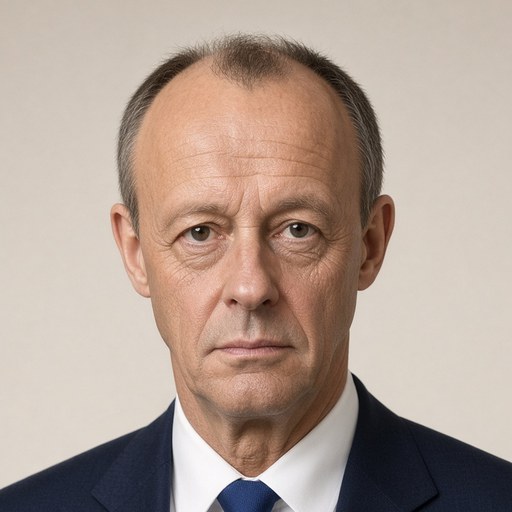
Speech by the Federal Chancellor on the 100th anniversary of Deutsche Lufthansa Lufthansa as a key company for Germany
 Friedrich Merz · Chancellor of Germany
- Context
- Merz addressed a ceremony marking the 100th anniversary of Deutsche Lufthansa, celebrating the airline's history and its significance to Germany.
- Main themes
- Lufthansa centenary, aviation history, German corporate history, forced labor and National Socialist era, state-private partnership, Lufthansa Group growth, pioneering spirit and innovation, German economic history, privatization, Landshut hijacking and German Autumn
- Duration
- ~19 min
- Words
- 2,225
- Sentences
- 145
- Readability
- 51
- Grade
- 9.9
- Syntax
- 2.83
- Vocabulary
- 2.17
Translated from German
The broad sphere of national life a sentence belongs to. Every sentence has an Arena, so it is the denominator the other indices are read against.
Other145 sentences in 38 paragraphs
Dear Chairman of the Supervisory Board of Deutsche Lufthansa, dear Karl-Ludwig Kley, dear Chairman of the Executive Board, dear Carsten Spohr, dear colleagues from the parliaments, especially Mr. Prime Minister, Mr. Federal Minister of Transport, Mr. Lord Mayor, and colleagues from the state governments, ladies and gentlemen, congratulations on "100 years of Deutsche Lufthansa"! Flying – for centuries, it has been the great dream of humanity; a fascinating utopia, but indeed a utopia. Flying – we encounter this dream even in the myths of antiquity, in the story of Icarus, and we see it in the almost visionary sketches of Leonardo da Vinci over 500 years ago, who designed flying machines. What was once a pure utopia, a product of imagination, has become a reality through human curiosity, courage, audacity, innovation, and inventiveness. And now, for not even 125 years, humanity has indeed taken to the skies with airplanes – initially as a bold experiment, today as a safe, comfortable, reliable form of transportation.
Flying – it is more than just a technical achievement. Flying represents humanity's ability to overcome boundaries. Flying connects continents, brings cultures closer together, and changes our perspective on the world. And in the history of flying, one name must not be omitted: Deutsche Lufthansa.
In the past 100 years, ladies and gentlemen, your company has contributed to making the dream of flying a reality. It has helped ensure that its continual realization has become an integral part of our modern world. That is precisely why we are celebrating this anniversary today.
We have seen and heard about the eventful history of this company in the film and in your contribution, Mr. Spohr. It was an impressive history book. The eventful history of Lufthansa is visible everywhere, especially here in this new
Hangar One
with these two aircraft, the JU 52 and the
Lockheed Super Star
– both iconic symbols of Lufthansa, icons of aviation, and with the crews in the historical uniforms we see here, embodying pioneering spirit and innovation, courage.
Ladies and gentlemen, at the founding of this company, there were just under 1,000 employees, including 88 pilots – at that time, of course, only men – in weatherproof leather jackets, with aviator glasses in visual flight and in open cockpits. Today, 100 years later – as you have heard – the Lufthansa
Group
employs 140,000 staff, including more than 11,000 – now many – female and male pilots, and they fly a fleet of around 700 aircraft in their distinctive uniforms. They bring 140 million passengers to their destinations every year. They fly billions of cargo ton-kilometers. This company, Lufthansa, connects people and markets around the world like no other in Germany. Your company, ladies and gentlemen, shows what is possible – indeed with courage and entrepreneurial spirit.
But the history of Lufthansa is more than just a corporate history. It is part of German history. It is part of the history of our Federal Republic of Germany. Yes, Lufthansa had a very close connection to the state for a long time. And yes, during the National Socialist regime, Lufthansa was part of this regime. Lufthansa also profited during the war and from the war. It took on repairs for the Luftwaffe and employed – Mr. Spohr, you mentioned it – thousands of forced laborers under inhumane conditions. I therefore want to explicitly welcome that Lufthansa is now addressing this part of its history on the occasion of this anniversary. Thank you very much for that!
At its re-establishment in 1953, Lufthansa was set up as a state-owned airline. It was thus an important project for the still young Federal Republic of Germany and for the young growing economy. Two years later, the new Lufthansa took off for the first time. Two
Convair
aircraft opened the scheduled service: the first flew from Hamburg to Munich with stopovers in Düsseldorf and Frankfurt, the other flew in the opposite direction with stopovers in Frankfurt and Cologne.
Ladies and gentlemen, in the 1960s, the company went public, leading to partial privatization, and in the 1990s, to complete privatization. However, regardless of this structural change, the collaboration between the state, the Federal Republic of Germany, and Lufthansa remained close and diverse over the decades. Many examples from post-war history illustrate this.
There have been ups and downs in this collaboration, necessarily also with the security authorities. A special person, a special pilot of the Bundeswehr and Lufthansa, was – you have already mentioned the name, Mr. Spohr – Jürgen Schumann. Jürgen Schumann was a Starfighter pilot in the Luftwaffe in the 1960s and then joined Lufthansa. Schumann was serving as the captain of the "Landshut" in 1977 when the aircraft was hijacked by Palestinian terrorists during what we later referred to as the "German Autumn."
Why do I mention this? The responsibility for the passengers, the responsibility for the crew and their protection always rests on the shoulders of the female and male pilots. In such moments, character is revealed. Until his murder by the terrorists, Schumann selflessly fought for his passengers. He communicated via radio and other means from the aircraft. It was probably only in this way that the rescue of the passengers was possible. He paid for it with his life. But the attitude and sense of duty of Jürgen Schumann remain a model to this day. He is therefore also the namesake of a Lufthansa flight training school and a barracks of the Bundeswehr's non-commissioned officer school.
Ladies and gentlemen, if I have read the participant list correctly, Gabriele von Lutzau, then Gabriele Dillmann, is also here in
Hangar One
today. She is one of the survivors from the crew
. I met you a few years after this tragic incident. Thank you for standing by the passengers so strongly at that time!
There are diverse partnerships between you and the federal government – or more accurately: with you at Lufthansa. For more than 60 years, Lufthansa, especially Lufthansa Technik, has supported the Air Force and Navy. Lufthansa provides technical and logistical support for the German government fleet, but you also modify and maintain the transport aircraft, reconnaissance aircraft, and tanker aircraft of the Bundeswehr, and you train: female and male pilots not only for Lufthansa but also for the Bundeswehr. The civilian know-how of your company thus also strengthens the defense capability of our country, the Federal Republic of Germany. As Federal Chancellor, I want to say to you: It is good that you are there in this regard as well. Thank you for your contribution!
Ladies and gentlemen, Lufthansa is indeed a key company for the economic location of Germany. Lufthansa has strategic significance for our country. It not only secures, as we have seen, jobs for generations of employees. Lufthansa strengthens the international competitiveness of our economy. And allow me to say this as well: This is a significant achievement of both of you, Karl-Ludwig Kley and Carsten Spohr, in your long-standing work and collaboration together with the Supervisory Board, the Executive Board, and also the workforce here in the company. To you personally, on behalf of many: Thank you very much for the work you have done together for so long!
You perform this work in an increasingly demanding strategic environment. Our world is reorganizing itself in these months. The now weekly new crisis situations clearly demonstrate this. Geopolitical conflicts and geo-economic uncertainties affect hardly any industry as directly and quickly as aviation. The aviation industry has faced many significant tests in recent years. I will only mention the COVID pandemic, which led to unprecedented drops in passenger numbers, but also the Russian war of aggression against Ukraine, the terrorist attack by Hamas on Israel – and now, quite recently, a war in the Near and Middle East.
Ladies and gentlemen, the pressures on your industry remain high: significant security risks, extensive airspace closures, longer flight routes, and now also massively increased fuel prices and a looming fuel shortage in Asia. We, as the federal government, have responded to this as far as possible and necessary. Lufthansa was able to fully repay the support provided during the COVID pandemic to the state in a very short time. This shows: the state and companies can find common paths – out of crises, to the benefit of both sides, the companies and our country. We can overcome crises.
Dear Lufthansa employees, you and other German airlines were ready at the beginning of the ongoing war in the Near and Middle East for repatriation flights to safely bring German citizens back home from the crisis area, as you have done so many times before. Our thanks also for that!
We want to remain a strong and successful air traffic location. Over 380,000 people are employed in the core area of the air traffic sector alone. You contribute significantly to German value creation. This is a foundation of our economy. That is why we have also put together a comprehensive package of measures that relieves air traffic and strengthens international competitiveness. I will briefly mention it. We already decided to abolish the fuel quota in November of last year. For the first time in years, we were able to reduce air navigation service fees – by around 47 million euros this year, and another ten percent next year. Finally, we are also reversing the increase in the air traffic tax from May 2024 to July 1, 2026. And last but not least: The federal government will continue to finance air traffic control at regional airports, which are of enormous importance to us even outside the major hubs. This entire package, amounting to 500 million euros per year, relieves your industry – a strong signal, I believe, for stability and planning security.
We are continuing to work on this. We are working on improvements for the entire industry. And we want, if possible, to present the federal government's air traffic strategy in time for the start of the ILA, the International Aerospace Exhibition, this summer in Berlin, to better utilize existing synergies – I also speak openly about this – between civil and military aviation. Our goal is to create good conditions for the growth of the air traffic economy and aviation industry in Germany. All of this, ladies and gentlemen, will contribute to ensuring that Germany remains a future-proof, innovative, and above all internationally competitive air traffic location. That is the standard we set for ourselves.
And what about the future? Dear Carsten Spohr, you said it: a growth industry for 100 years. It will remain a growth industry in the future. Serious forecasts suggest that global air traffic will double again by 2050. We must prepare for this. We need to create conditions to participate in this growth. The demand will arise. Flying less, ladies and gentlemen, is not an option for the economic location of Germany.
Yes, for this we need sustainable, climate-friendly technologies. Yes, we need reforms. We need lower costs and higher competitiveness. But, ladies and gentlemen, let me add one more thing alongside energy policy, social policy, tax policy, and labor market policy: The most important thing for all of us is that we continue to live in an open, free, democratic society in the future. This is the greatest challenge we currently face. Illiberal democracy is also not an option. And how those who have experienced 16 years of illiberal democracy react, we saw impressively last Sunday in Hungary.
Ladies and gentlemen, I speak openly and clearly about this: Following the temptations of political populism is the worst option among all the discussed economic and location policy alternatives for our country.
I know that I will receive some criticism for this. But let me say openly: I, too, find comfort and motivation in a word from aviation. The word is: When you think that everything is against you, remember: An airplane only takes off against the wind, never with the wind.
Ladies and gentlemen, in this sense, I congratulate you once again on this great anniversary. You have shaped Germany like no other company in the last 100 years with your logo and name. So look ahead with pride, confidence, and also with self-assurance! The challenges are great, but the opportunities are even greater.
Allow me to conclude by passionately returning to Leonardo da Vinci as a part of your thinking and life. He probably never flew, although he spoke and drew a lot about it. A saying attributed to him has impressed me time and again to this day. It goes as follows: Once you have experienced flying, you will walk the earth forever, and your gaze will be directed skyward. For you have been there once, and you will always want to go back. Isn't that a beautiful saying? 500 years old, ladies and gentlemen! I am sure many of you feel the same way, and it is exactly this feeling that Lufthansa represents, along with the employees in the air and on the ground. But it is also this feeling that millions of customers embody.
In this spirit, I wish you: May you continue to be so successful in the next 100 years! Keep the dream of flying alive! Wishing you always good and safe flights! And as we like to say:
Always happy landings!
Thank you very much!
The original German. The tags above are read on the English translation's sentences.
Sehr geehrter Herr Vorsitzender des Aufsichtsrats der Deutschen Lufthansa, lieber Karl-Ludwig Kley,
sehr geehrter Herr Vorsitzender des Vorstands, lieber Carsten Spohr,
liebe Kolleginnen und Kollegen aus den Parlamenten, insbesondere Herr Ministerpräsident, Herr Bundesverkehrsminister, Herr Oberbürgermeister und Kollegen aus den Landesregierungen,
meine sehr geehrten Damen und Herren,
herzlichen Glückwunsch zu „100 Jahre Deutsche Lufthansa“! Fliegen – das war über Jahrhunderte der große Traum der Menschheit; eine faszinierende Utopie, aber eben eine Utopie. Fliegen – wir begegnen diesem Traum selbst in den Mythen der Antike, in der Geschichte des Ikarus, und wir sehen ihn in den geradezu visionären Skizzen eines Leonardo da Vinci vor über 500 Jahren, der Flugapparate entworfen hat. Was einst eine reine Utopie, eine Vorstellungskraft war, ist durch menschliche Neugier, durch Mut, durch Todesmut, durch Innovationskraft und Erfindergeist Wirklichkeit geworden. Und jetzt, seit noch nicht einmal 125 Jahren, erhebt sich der Mensch tatsächlich mit Flugzeugen in die Lüfte – zunächst als kühnes Experiment, heute als eine sichere, komfortable, verlässliche Form der Fortbewegung.
Fliegen – das ist mehr als nur eine technische Errungenschaft. Fliegen steht für die Fähigkeit des Menschen, Grenzen zu überwinden. Fliegen verbindet Kontinente, Fliegen bringt Kulturen näher zueinander, Fliegen verändert unseren Blick auf die Welt. Und in der Geschichte des Fliegens darf ein Name nicht fehlen: Deutsche Lufthansa.
In den vergangenen 100 Jahren, meine Damen und Herren, hat Ihr Unternehmen dazu beigetragen, dass der Traum vom Fliegen Wirklichkeit geworden ist. Es hat dazu beigetragen, dass sein immer neues Wirklichkeitwerden ein fester Bestandteil unserer modernen Welt geworden ist. Genau deshalb feiern wir heute dieses Jubiläum.
Von der bewegten Geschichte dieses Unternehmens haben wir im Film und in Ihrem Beitrag, Herr Spohr, gesehen und gehört. Es war ein eindrucksvolles Geschichtsbuch. Die bewegte Geschichte dieses Unternehmens Lufthansa ist überall sichtbar, vor allem hier in diesem neuen
Hangar One
mit diesen beiden Flugzeugen, der JU 52 und der
Lockheed Super Star
– beides geradezu Ikonen der Lufthansa, Ikonen der Luftfahrt und mit den
Crews
in den historischen Uniformen, die wir hier sehen, eben wieder Pioniergeist und Innovationskraft, Mut.
Meine Damen und Herren, bei der Gründung dieses Unternehmens waren es gerade einmal knapp 1.000 Beschäftigte, darunter 88 Piloten – damals natürlich nur Männer – in wetterfesten Lederjacken, mit Fliegerbrillen im Sichtflug und im offenen Cockpit. Heute, 100 Jahre später – Sie haben es gehört –, beschäftigt die Lufthansa
Group
140.000 Mitarbeiterinnen und Mitarbeiter, darunter mehr als 11.000 – jetzt auch viele – Pilotinnen und Piloten, und sie fliegen in ihren markanten Uniformen eine Flotte von rund 700 Flugzeugen. Sie bringen 140 Millionen Passagiere jedes Jahr an ihr Ziel. Sie fliegen Milliarden Frachttonnenkilometer. Dieses Unternehmen Lufthansa verbindet Menschen und Märkte in aller Welt wie kein zweites in Deutschland. Ihr Unternehmen, meine Damen und Herren, zeigt, was möglich ist – eben mit Mut und mit Unternehmersgeist.
Aber die Geschichte der Lufthansa ist mehr als nur eine Unternehmensgeschichte. Sie ist Teil der deutschen Geschichte. Sie ist Teil der Geschichte unserer Bundesrepublik Deutschland. Ja, die Lufthansa hatte lange eine sehr enge Verbindung zum Staat. Und ja, im Nationalsozialismus war Lufthansa Teil dieses Regimes. Lufthansa verdiente auch im Krieg und mit dem Krieg. Es übernahm Reparaturen für die Luftwaffe und beschäftigte dafür – Herr Spohr, Sie haben es angesprochen – Tausende von Zwangsarbeitern unter menschenunwürdigen Bedingungen. Ich will es daher ausdrücklich begrüßen, dass Lufthansa anlässlich dieses Jubiläums diesen Teil seiner Geschichte jetzt aufarbeitet. Herzlichen Dank dafür!
Bei der Neugründung 1953 wurde die Lufthansa als staatseigene Fluggesellschaft aufgebaut. Sie war damit ein wichtiges Projekt für die noch junge Bundesrepublik Deutschland und für die junge wachsende Volkswirtschaft. Zwei Jahre später hob die neue Lufthansa zum ersten Mal ab. Zwei
Convair
-Maschinen eröffneten den Linienbetrieb: Die erste flog von Hamburg nach München mit Zwischenlandungen in Düsseldorf und Frankfurt, die andere flog in die umgekehrte Richtung mit Zwischenlandungen in Frankfurt und Köln.
Meine Damen und Herren, in den Sechzigerjahren erfolgte dann mit dem Börsengang die Teilprivatisierung, in den Neunzigerjahren die vollständige Privatisierung. Doch ganz unabhängig von dieser strukturellen Veränderung blieb die Zusammenarbeit zwischen Staat, Bundesrepublik Deutschland und Lufthansa über die Jahrzehnte hinweg eng und vielfältig. Viele Beispiele aus der Nachkriegsgeschichte verdeutlichen dies.
Es gibt Höhen und Tiefen in dieser Zusammenarbeit, auch notwendigerweise mit den Sicherheitsbehörden. Ein besonderer Mensch, ein besonderer Pilot der Bundeswehr und der Lufthansa, war – Sie haben den Namen eben bereits genannt, Herr Spohr – Jürgen Schumann. Jürgen Schumann war in den Sechzigerjahren bei der Luftwaffe
Starfighter
-Pilot und ging dann zur Lufthansa. Schumann war 1977 als Flugkapitän der „Landshut“ eingesetzt, als die Maschine im „Deutschen Herbst“, wie wir dann gesagt haben, von palästinensischen Terroristen entführt wurde.
Warum sage ich das? Die Verantwortung für die Passagiere, die Verantwortung für die
Crew
und für deren Schutz lastet immer auf den Schultern der Pilotinnen und Piloten. In solchen Augenblicken zeigt sich der Charakter. Bis zu seiner Ermordung durch die Terroristen setzte sich Schumann selbstlos für seine Passagiere ein. Über Funk und über andere Wege informierte er aus der Maschine heraus. Wahrscheinlich war nur so die Rettung der Passagiere möglich. Er hat dafür mit seinem Leben bezahlt. Aber die Haltung und das Pflichtbewusstsein von Jürgen Schumann sind bis heute ein Vorbild. Er ist deshalb auch Namensgeber einer Lufthansa-Verkehrsfliegerschule und einer Kaserne der Unteroffizierschule der Bundeswehr.
Meine Damen und Herren, wenn ich die Teilnehmerliste richtig gelesen habe, dann ist heute hier im
Hangar One
auch Gabriele von Lutzau, damals Gabriele Dillmann. Sie ist eine der Überlebenden aus der
Crew
. Ich habe Sie einige Jahre nach diesem tragischen Überfall kennengelernt. Danke, dass Sie damals den Passagieren so zur Seite gestanden haben!
Es gibt zwischen Ihnen und der Bundesregierung vielfältige Partnerschaften – oder richtiger gesagt: mit Ihnen in der Lufthansa. Seit mehr als 60 Jahren unterstützt Lufthansa, insbesondere Lufthansa Technik, Luftwaffe und Marine. Die Lufthansa betreut die deutsche Regierungsflotte technisch und logistisch, aber Sie modifizieren und warten auch die Transportflugzeuge, die Aufklärungsflugzeuge und die Tankflugzeuge der Bundeswehr, und Sie bilden aus: Pilotinnen und Piloten nicht nur für die Lufthansa, sondern auch für die Bundeswehr. Das zivile
Know-how
Ihres Unternehmens stärkt damit auch die Verteidigungsfähigkeit unseres Landes, der Bundesrepublik Deutschland. Als Bundeskanzler möchte ich Ihnen sagen: Gut, dass es Sie auch in dieser Hinsicht gibt. Danke für Ihren Beitrag!
Meine Damen und Herren, Lufthansa ist eben in dieser Hinsicht ein Schlüsselunternehmen für den Wirtschaftsstandort Deutschland. Lufthansa hat strategische Bedeutung für unser Land. Sie sichert nicht nur, wie wir gesehen haben, Arbeitsplätze für Generationen von Mitarbeiterinnen und Mitarbeitern. Lufthansa stärkt die internationale Wettbewerbsfähigkeit unserer Wirtschaft. Und erlauben Sie mir, auch das zu sagen: Das ist ein maßgebliches Verdienst von Ihnen beiden, Karl-Ludwig Kley und Carsten Spohr, in ihrer langjährigen Arbeit und Zusammenarbeit zusammen mit dem Aufsichtsrat, dem Vorstand und auch der Belegschaft hier im Unternehmen. Ihnen persönlich stellvertretend für die vielen: Herzlichen Dank für Ihre Arbeit, die Sie so lange gemeinsam geleistet haben!
Diese Arbeit leisten Sie in einem strategisch immer anspruchsvoller werdenden Umfeld. Unsere Welt ordnet sich in diesen Monaten neu. Die inzwischen wöchentlich neuen Krisenlagen beweisen dies hinlänglich. Die geopolitischen Konflikte und die geoökonomischen Unsicherheiten betreffen kaum eine Branche so unmittelbar und so schnell wie die Luftfahrt. Die Luftfahrt hat in den vergangenen Jahren viele große Belastungsproben bestanden. Ich nenne nur die COVID-Pandemie, die zu beispiellosen Einbrüchen bei den Passagierzahlen geführt hat, aber auch den russischen Angriffskrieg gegen die Ukraine, den Terrorangriff der Hamas auf Israel – und jetzt ganz aktuell, noch zu allem dazu, ein Krieg im Nahen und Mittleren Osten.
Meine Damen und Herren, die Belastungen für Ihre Branche bleiben hoch: erhebliche Sicherheitsrisiken, umfassende Luftraumsperrungen, längere Flugrouten und jetzt auch massiv gestiegene Kerosinpreise und drohender Kerosinmangel in Asien. Wir haben als Bundesregierung darauf reagiert, so wie es möglich und notwendig war. Lufthansa war in der Lage, in kürzester Zeit die in der Coronapandemie geleistete Unterstützung vollständig an den Staat zurückzuzahlen. Das zeigt: Staat und Unternehmen können gemeinsame Wege gehen – aus Krisen heraus, zum Nutzen beider Seiten, der Unternehmen und unseres Landes. Wir können Krisen bewältigen.
Liebe Lufthanseatinnen und Lufthanseaten, Sie und andere deutsche Fluggesellschaften waren zu Beginn des fortdauernden Krieges im Nahen und Mittleren Osten für Rückholflüge zur Stelle, um deutsche Staatsbürgerinnen und Staatsbürger aus dem Krisengebiet sicher nach Hause zurückzuholen, wie zuvor schon so viele Male auch. Meinen und unseren Dank auch dafür, dass Sie das getan haben!
Wir wollen ein leistungsstarker und erfolgreicher Luftverkehrsstandort bleiben. Über 380.000 Menschen sind allein im Kernbereich des Luftverkehrssektors beschäftigt. Sie tragen ganz wesentlich zur deutschen Wertschöpfung bei. Das ist ein Fundament unserer Volkswirtschaft. Deshalb haben wir auch ein umfassendes Maßnahmenpaket geschnürt, das den Luftverkehr entlastet und die internationale Wettbewerbsfähigkeit stärkt. Ich nenne es in aller Kürze. Die Streichung der Kerosinquote haben wir bereits im November des letzten Jahres beschlossen. Erstmals seit Jahren konnten wir die Flugsicherungsgebühren senken – für dieses Jahr um rund 47 Millionen Euro, weitere zehn Prozent im nächsten Jahr. Wir nehmen schließlich die Erhöhung der Luftverkehrssteuer vom Mai 2024 zum 1. Juli 2026 zurück. Und
last but not least
: Der Bund finanziert auch in Zukunft die Flugsicherung an den Regionalflughäfen, die für uns von enormer Bedeutung auch abseits der großen Drehkreuze in der Fläche sind. Dieses ganze Paket mit 500 Millionen Euro im Jahr entlastet Ihre Branche – ein starkes Signal, wie ich finde, für Stabilität und Planungssicherheit.
Wir arbeiten weiter daran. Wir arbeiten an Verbesserungen für die ganze Branche. Und wir wollen, wenn es möglich ist, pünktlich zum Beginn der ILA, der Internationalen Luft- und Raumfahrtausstellung, im Sommer in Berlin die Luftverkehrsstrategie der Bundesregierung vorlegen, um vorhandene Synergien – auch dies spreche ich offen an – zwischen ziviler und militärischer Luftfahrt besser zu nutzen. Unser Ziel sind gute Standortbedingungen für das Wachstum von Luftverkehrswirtschaft und Luftfahrtindustrie in Deutschland. All dies, meine Damen und Herren, wird dazu beitragen, dass Deutschland ein zukunftsfester, innovativer und vor allem international wettbewerbsfähiger Luftverkehrsstandort bleibt. Das ist der Anspruch, den wir an uns selbst stellen.
Und die weitere Zukunft? Lieber Carsten Spohr, Sie haben es gesagt: seit 100 Jahren eine Wachstumsbranche. Es wird auch in Zukunft eine Wachstumsbranche bleiben. Seriöse Prognosen gehen davon aus, dass sich der Luftverkehr weltweit bis 2050 erneut verdoppelt. Darauf müssen wir uns einstellen. Dafür müssen wir Bedingungen schaffen, um an diesem Wachstum teilzunehmen. Der Bedarf wird entstehen. Weniger fliegen, meine Damen und Herren, ist keine Option für den Wirtschaftsstandort Deutschland.
Ja, dazu brauchen wir nachhaltige, klimaschonende Technologien. Ja, dazu brauchen wir Reformen. Dazu brauchen wir niedrige Kosten und höhere Wettbewerbsfähigkeit. Aber, meine Damen und Herren, lassen Sie mich neben Energiepolitik, Sozialpolitik, Steuerpolitik und Arbeitsmarktpolitik eines hinzufügen: Das Wichtigste für uns alle ist, dass wir auch in Zukunft in einer offenen, freiheitlichen, demokratischen Gesellschaft leben. Das ist die größte Herausforderung, vor der wir gegenwärtig stehen. Illiberale Demokratie ist ebenfalls keine Option. Und wie diejenigen, die 16 Jahre Erfahrung mit illiberaler Demokratie gemacht haben, reagieren, konnten wir eindrucksvoll am letzten Sonntag in Ungarn sehen.
Meine Damen und Herren, ich spreche es hier so offen und deutlich an: Den Verlockungen des politischen Populismus zu folgen, ist die schlechteste Variante zwischen allen diskutierten wirtschaftspolitischen und standortpolitischen Alternativen für unser Land.
Ich weiß, dass ich dafür manche Kritik bekomme. Aber lassen Sie mich offen sagen: Auch mich tröstet und motiviert ein Wort aus der Luftfahrt. Das Wort lautet: Wenn du meinst, dass alles gegen dich steht, dann denke daran: Ein Flugzeug startet nur gegen den Wind, niemals mit dem Wind.
Meine Damen und Herren, in diesem Sinne gratuliere ich Ihnen noch einmal zu diesem großartigen Jubiläum. Sie haben in den letzten 100 Jahren mit Logo und Name Deutschland wie kein anderes Unternehmen geprägt. Blicken Sie also mit Stolz, mit Zuversicht und auch mit Selbstbewusstsein nach vorn! Die Herausforderungen sind groß, aber die Chancen sind noch größer.
Erlauben Sie mir, dass ich zum Schluss als leidenschaftlicher Teil Ihres Denkens und Lebens noch einmal auf Leonardo da Vinci zurückkomme. Er hat wahrscheinlich nie geflogen, obwohl er darüber viel gesprochen und viel gezeichnet hat. Von ihm ist ein Wort überliefert, das mich bis zum heutigen Tag immer wieder beeindruckt. Das lautet wie folgt: Wenn du das Fliegen einmal erlebt hast, dann wirst du für immer auf Erden wandeln, und dein Blick ist himmelwärts gerichtet. Denn da bist du einmal gewesen, und da willst du immer wieder hin. Ist das nicht ein schönes Wort? 500 Jahre alt, meine Damen und Herren! Ich bin sicher, vielen von Ihnen geht es ganz genauso, und für genau dieses Gefühl steht Lufthansa und stehen die Mitarbeiterinnen und Mitarbeiter in der Luft und am Boden. Aber für genau dieses Gefühl stehen auch Millionen Kundinnen und Kunden.
Ich wünsche Ihnen in diesem Sinne: Bleiben Sie auch in den nächsten 100 Jahren so erfolgreich! Leben Sie ihn weiter, den Traum vom Fliegen! Allzeit guten und sicheren Flug! Und wie wir zu sagen pflegen:
Always happy landings!
Herzlichen Dank!