




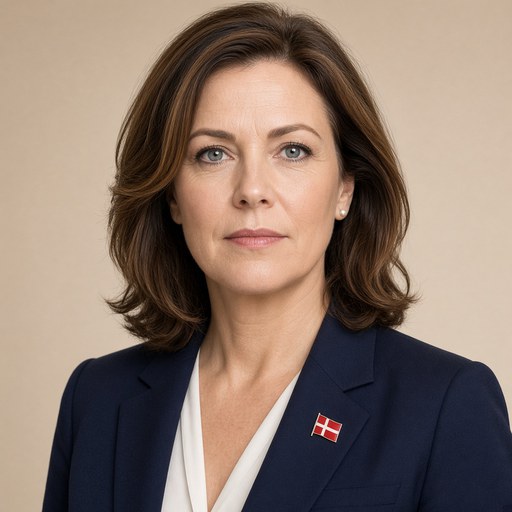
The Prime Minister's speech at the Danish Youth Council's delegate meeting.
 Helle Thorning-Schmidt · Prime Minister of Denmark
- Context
- Thorning-Schmidt addressed the Danish Youth Council's delegate meeting on December 1, 2012, celebrating youth civic engagement and democratic participation.
- Main themes
- Youth civic engagement, democracy, voluntary associations, Danish democratic tradition, political participation, generational criticism, community responsibility, peace movement, personal political journey, youth organizations, collective decision-making
- Duration
- ~17 min
- Words
- 2,039
- Sentences
- 172
- Readability
- 64
- Grade
- 7.0
- Syntax
- 2.46
- Vocabulary
- 1.96
Translated from Danish
The broad sphere of national life a sentence belongs to. Every sentence has an Arena, so it is the denominator the other indices are read against.
Other172 sentences in 67 paragraphs
Dear everyone. Thank you for allowing me to be here today. It is wonderful to be here.
It is wonderful because the Danish Youth Council is making a tremendous effort for the most precious thing we have: Our democracy.
You do this every day through the concrete work that hundreds of thousands of members and volunteers carry out in thousands of local associations within your 70 member organizations.
You are part of the popular movements that have created our democracy and that keep it alive.
In your associations, children and young people get democracy under their skin and into their hearts. They learn responsibility for one another. They learn responsibility towards society. And they become part of the special Danish tradition of bridging disagreements.
A tradition of involving broad interests and always insisting that decisions made collectively are stronger than decisions made by the strongest party alone.
Cooperation is a tradition that has brought us far. The common thread is a responsibility towards the community known as Denmark.
You take on that responsibility. And you deserve thanks for it.
Here in DUF, you represent a diversity of student organizations, church associations, environmental organizations, political youth organizations, and scouts.
And to you scouts, I want to say thank you for the last time. I visited your camp in Holstebro this summer. It was nothing less than the largest scout camp in Danish history. A huge community with guests from all over the world. A community where I know you place extra emphasis on also making room for those who may not know the scouting movement well or who are struggling.
Thank you for that. And thank you for a great experience on a lovely day in July.
* * *
Today – on a lovely December day – I am happy to stand before all you engaged young people. And I am sure that each of you has your own story about what has brought you into youth work and given you the desire to engage in the community.
For there are many paths into politics. My path was that I was the student council president at my high school. That was where I began to become politically active back in the 80s.
What was essential was that it was fun to be involved and the sense of community. And it felt good to think that I and the rest of the student council were helping to create a better school.
We also did some strange things in between. I can reveal that in this closed circle. On December 1st, I can tell a little Christmas story.
My friends and I were for peace and, of course, had formed "Ishøj for Peace," and one Christmas in the 80s, a couple of my friends and I sat at my mother's house in Ishøj cutting out peace doves. Those white doves made of paper. The plan was to hang the doves on the Christmas tree up by Ishøj Station. We thought it would be nice for people to see peace doves on the Christmas tree when they trudged to work in the morning.
On a cold and dark night, we went up to the Christmas tree by the station to hang up our doves. Just as we started, the police drove by. We hurried to hide under the branches. And when the police were out of sight, we dashed home to have rolls and hot cocoa at my mother's.
So the tired commuters in Ishøj had to settle for peace doves on the lower branches of the Christmas tree. That was our contribution to Christmas peace and world peace.
It was during my high school years that I was shaped as a political person. I became involved in the peace movement that was flaring up in Europe. I became engaged in the fight against apartheid. I became interested in gender equality. I listened to Shit and Chanel and Anne Linnet.
And in the years that followed, I traveled a lot. I backpacked in China and India. I made friends all over the world. And I became more and more caught up in politics. Just like many others of my generation.
We were called the "now generation." The "now generation!" Take that. It provoked me quite a bit back then and still does to this day.
It is just the way it is that youth is always a target for criticism from those who are no longer young. You, who are young today, are accused of lacking political engagement and of being individualists. The X-factor generation. Take that.
The older generations like to label subsequent generations, and it is obvious that the claim of lacking engagement does not apply to you here in the room. But does it apply to your peers? Are they unengaged?
I cannot recognize that. Not at all.
But each generation is engaged in its own way. Public political discussion and debate are crucial in a democracy. But the way one debates and participates is colored by the time one lives in. It may be that people under 25 are not as diligent in reading newspapers and writing letters to the editor. But you are diligent in Facebook groups, you are diligent in demonstrations, and you are also diligent in the network of grassroots movements that make up your organizations.
Today's youth are both politically engaged and responsible towards society. To a great extent.
When I look at you young people today, I see a generation that understands how to take advantage of the rich opportunities we have in Denmark. You seize opportunities all over the world. And yes, you also come from all parts of the world. Young people with roots in Pakistan, Turkey, Somalia, or other places in the world are helping to create a society where diversity is growing. And DUF is also contributing to that – in collaboration with new Danish youth organizations.
No, you are not an X-factor generation. You are a significant factor and a driving force that constantly moves Denmark forward.
And that is what it is all about. We need to move forward and renew Denmark. That is my entry into politics. A deep value that all people are entitled to an honest chance in life. And a knowledge that together we can change the world.
But it does not happen by itself. If women had not fought for equality, we would be in a completely different place today. And if political decisions had not been made that built the welfare state, my mother's generation would not have been able to try themselves as the first generation of women.
People can make things happen. You can make things happen. Together we can make things happen.
* * *
In Denmark, we have together created a very special country. A Denmark with a great deal of equality. There are few countries in the world where the gap between rich and poor is smaller than it is in Denmark. We insist on giving the many, and not just the few, the opportunity to use their abilities.
Women and men. Young and old. Also those who, for one reason or another, cannot give 100 percent. We insist on being a society that becomes richer and better by including everyone.
And the common opportunities have largely been created through education. Education for many, not just for the few. That has been the driving force throughout modern Danish history. And here, the Danish folk school has laid the foundation for generations, allowing us to become more and more skilled.
We are proud of our folk school. The folk school gives students an academic compass that guides you and us through life. And many learn in school what it means to be a good friend and that everyone deserves a chance to be included.
We can be proud of our folk school. It is good. But it needs to be even better.
I am convinced that when you need to learn more in school, you should spend more time at school with the teachers. You should have more and better teaching, especially in Danish and mathematics. And you should have a coherent school day where exciting activities support the academic teaching hours. So that you learn all the time in new and exciting ways.
That will be the main line in the proposal for a significant uplift of the folk school that we will present very soon.
And I encourage those of you who represent the students of the folk school to embrace it and participate in the discussion. We need to work together to make a good folk school even better. A school where you develop your personality and become engaged participants in a vibrant democracy.
* * *
It is nearly 100 years since democracy was truly established in Denmark. In 2015, we will celebrate the great birthday of democracy. I look forward to it.
Yes, as you can hear, I consider the establishment of democracy to be from the Constitution of 1915. For it was here that broad segments of the population gained their rightful place in the people's government: Women, servants, and young people.
However, only young people over 25 – we corrected that later.
And the future of democracy is, of course, you, the young people. That is why we will strengthen the participation of young people in democracy.
That is also why we are following up on some of the proposals from the Electoral Rights Commission together with you in DUF. This is something you have been asking for a long time. We are on it.
For example, at next year's municipal elections, we will do something extra to reach first-time voters. We are also looking at whether it might be a good idea to allow postal voting at educational institutions.
Voter participation is important. But democracy is much more than that. Denmark has a collaborative people's government. Danish democracy is woven into all parts of society. In our schools. In our workplaces. In our local communities. In our associations.
That collaborative people's government is something we must continue to nurture.
As part of that work, the government has changed the Adult Education Act in important areas – and the law is, of course, still a guarantee of financial support for association activities for children and young people. For your activities.
One of the most important messages is that "active citizenship" and "understanding of democracy" are now written into the law as declared purposes of association work.
That is a pat on the back for your organizations. The values that you have always built upon have been written into the law.
Another important aspect of the new law is that municipalities must now formulate a policy for the area of adult education.
I am convinced that this will strengthen associations in the local community. When opinions must be put in writing, they become binding. And that means in practice that municipalities must engage in close and sharp dialogue with you. To take you seriously.
I am glad that DUF is actively participating in the work to unfold and concretize the new law. We need to strengthen Danish civil society. We need to strengthen you. It is part of the foundation of our democracy.
* * *
I will begin to wrap up. I will do so with a call. Or perhaps rather a plea to you.
I am sure that there are several future members of parliament sitting here in the room, possibly even future ministers, maybe even a prime minister or two.
But promise me one thing: Do not become too much like us at Christiansborg too quickly.
It is good that you are professional. But you do not need to have an answer at the ready about public finances in 2020. You do not all need to sound like members of the government. You can leave that to your friends in DSU, SFU, and RU.
Maintain your diversity.
Keep your desire to be involved in civil society in a new way.
Remember the enthusiasm all the way through.
Make room for crazy ideas and peace doves on the Christmas tree.
And never stop dreaming.
Thank you for your attention!
The original Danish. The tags above are read on the English translation's sentences.
Kære alle sammen. Tak fordi jeg må være med i dag. Det er dejligt at være her.
Det er dejligt, fordi Dansk Ungdoms Fællesråd gør en kæmpe indsats for det dyrebareste, vi har: Vores demokrati.
Det gør I hver dag gennem det helt konkrete arbejde, som hundredetusinder af medlemmer og frivillige udfører i tusindvis af lokale foreninger i jeres 70 medlemsorganisationer.
I er en del af de folkelige bevægelser, som har skabt vores demokrati, og som holder det i live.
I jeres foreninger får børn og unge demokratiet ind under huden og ind i hjertet. Lærer ansvar for hinanden. Lærer ansvar over for samfundet. Og bliver en del af den særlige danske tradition for at bygge bro mellem uenigheder.
En tradition med at involvere brede interesser og altid insistere på, at beslutninger truffet i fællesskab er stærkere end beslutninger, som den stærkeste part træffer alene.
Samarbejde er en tradition, som har bragt os langt. Den røde tråd er et ansvar over for det fællesskab, som hedder Danmark.
Det ansvar tager I på jer. Og det fortjener I tak for.
Her i DUF er I en mangfoldighed af studenterorganisationer, kirkelige foreninger, miljøorganisationer, de politiske ungdomsorganisationer og spejderne.
Og til jer spejdere vil jeg sige tak for sidst. Jeg besøgte jeres lejr i Holstebro i sommer. Det var intet mindre end danmarkshistoriens største spejderlejr. Et kæmpe fællesskab med gæster fra hele verden. Et fællesskab, hvor jeg ved, at I lægger ekstra vægt på også at have plads til dem, som måske ikke kender spejderbevægelsen så godt eller som har det svært.
Tak for det. Og tak for en god oplevelse på en dejlig dag i juli.
* * *
I dag – på en dejlig decemberdag – er jeg glad for at stå over for alle jer engagerede unge. Og jeg er sikker på, at I sidder med hver jeres historie om, hvad der har bragt jer ind i ungdomsarbejde og givet jer lyst til at engagere jer i fællesskabet.
For der findes mange veje ind i politik. Min vej blev, at jeg var elevrådsformand på mit gymnasium. Det var dér, jeg begyndte at blive politisk aktiv dengang i 80’erne.
Det der var det bærende var, at det var sjovt at være med og fællesskabet. Og det føltes godt at tænke på, at jeg og resten af elevrådet var med til at skabe en bedre skole.
Vi lavede også nogle mærkelige ting indimellem. Det kan jeg godt røbe i den her sluttede kreds. Første december kan jeg godt fortælle en lille julehistorie.
Mine venner og jeg gik ind for fred og havde jo selvfølgelig dannet ”Ishøj for fred” og en jul i 80’erne sad et par af mine venner og jeg hjemme hos min mor i Ishøj og klippede fredsduer. Sådan nogle hvide duer af papir. Det var planen, at vi ville hænge duerne på juletræet oppe ved Ishøj Station. Vi syntes, det ville være fint, at folk kunne se fredsduer på juletræet, når de gik trætte på arbejde om morgenen.
En kold og mørk nat gik vi op til juletræet oppe ved stationen for at hænge vores duer op. Mens vi står der og netop er gået i gang, kommer politiet kørende. Vi skynder os at gemme os under grenene. Og da politiet er ude af sigte, så styrter vi hjem og får boller og varm kakao hos min mor.
Så de trætte pendlere i Ishøj måtte nøjes med fredsduer på de nederste grene af juletræet. Det var vores bidrag til julefreden og verdensfreden.
Det var i gymnasieårene, jeg blev formet som politisk menneske. Jeg blev optaget af fredsbevægelsen, der blussede op i Europa. Jeg blev optaget af kampen mod Apartheid. Jeg blev optaget af ligestilling mellem kønnene. Jeg hørte Shit og Chanel og Anne Linnet.
Og i årene efter rejste jeg meget. Var med rygsæk i Kina og Indien. Fik venner over hele verden. Og blev mere og mere hvirvlet ind i politik. Ligesom mange andre af min generation.
Vi blev ellers kaldt nå-generationen. Nå-generationen! Tag den. Det provokerede mig en del dengang og gør det stadig den dag i dag.
Det er nu engang sådan, at ungdommen altid er skydeskive for kritik fra folk, der ikke er unge længere. I, der er unge i dag, bliver beskyldt for at mangle politisk engagement og for at være individualister. X-faktor generationen. Tag den.
De ældre generationer kan godt lide at sætte mærkater på efterfølgende generationer, og det er åbenlyst, at det med manglende engagement ikke gælder jer her i salen. Men gælder det jeres jævnaldrende? Er de uengagerede?
Det kan jeg ikke genkende. Slet ikke.
Men hver generation er engageret på sin måde. Offentlig politisk diskussion og debat har afgørende betydning i demokratiet. Men måden man debatterer på og deltager på tager farve efter den tid, man lever i. Det kan godt være at folk under 25 ikke er så flittige til at holde avis og skrive læserbreve. Men I er flittige i facebookgrupper, I er flittige til demonstrationer, og I er også flittige i det net af græsrodsbevægelser, som udgøre jeres organisationer.
Nutidens unge er både politisk engagerede og ansvarlige over for samfundet. I den grad.
Når jeg i dag ser på jer unge, ser jeg en generation, som forstår at bruge de rige muligheder, vi har i Danmark. I griber mulighederne i hele verden. Og ja, I kommer også fra alle dele af verden. Unge med rødder i Pakistan, Tyrkiet, Somalia eller andre steder i verden er med til skabe et samfund, hvor mangfoldigheden bliver større. Og det hjælper DUF også til – i samarbejde med nydanske ungdomsorganisationer.
Nej, I er ikke en X-faktor generation. I er en væsentlig faktor og en drivende kraft, der konstant bringer Danmark videre.
Og det er jo det, det handler om. Vi skal videre og forny Danmark. Det er min indgang til politik. En dyb værdi om, at alle mennesker har krav på en ærlig chance her i livet. Og en viden om, at vi i fællesskab kan ændre verden.
Men det kommer ikke af sig selv. Hvis kvinderne ikke havde kæmpet for ligestillingen, så var vi et helt andet sted i dag. Og hvis man ikke politisk havde taget de beslutninger, som opbyggede velfærdssamfundet, så var min mors generation ikke blevet i stand til at forsøge sig selv som den første generation af kvinder.
Mennesker kan få ting til at ske. I kan få ting til at ske. Vi kan i fællesskab få ting til at ske.
* * *
I Danmark har vi i fællesskab skabt et helt specielt land. Et Danmark med meget stor lighed. Der er få lande i verden, hvor afstanden mellem rig og fattig er mindre, end den er i Danmark. Vi insisterer på at give de mange og ikke kun de få mulighed for at bruge deres evner.
Kvinder og mænd. Unge og gamle. Også dem, der af den ene eller anden grund ikke kan yde 100 procent. Vi insisterer på at være et samfund, bliver rigere og bedre ved at vi får alle med.
Og de fælles muligheder er i høj grad skabt gennem uddannelse. Uddannelse til mange, ikke kun til de få. Det har været drivkraften gennem den nyere danmarkshistorie. Og her har den danske folkeskole generation efter generation lagt grunden for, at vi kunne blive dygtigere og dygtigere.
Folkeskolen er vi stolte af. Folkeskolen giver eleverne et fagligt kompas, som styrer jer og os gennem livet. Og mange lærer i skolen, hvad det vil sige at være en god ven, og at alle fortjener en chance for at være med.
Vi kan være stolte af vores folkeskole. Den er god. Men den skal være endnu bedre.
Jeg er overbevist om, at når I skal lære mere i skolen, så skal I tilbringe mere tid på skolen sammen med lærerne. I skal have mere og bedre undervisning, især i dansk og matematik. Og I skal have en sammenhængende skoledag, hvor spændende aktiviteter understøtter de faglige undervisningstimer. Så man lærer hele tiden på nye og spændende måder.
Det bliver hovedlinjen i det udspil til et markant løft af folkeskolen, som vi vil fremlægge meget snart.
Og som jeg vil opfordre de af jer, der repræsenterer folkeskolens elever, til at tage godt imod og være med i diskussionen. Vi skal arbejde sammen om at gøre en god folkeskole endnu bedre. En skole, hvor I udvikler jeres personlighed og bliver engagerede deltagere i et levende demokrati.
* * *
Det er tæt på 100 år siden, demokratiet for alvor blev indført i Danmark. I 2015 skal vi holde den store fødselsdag for demokratiet. Det glæder jeg mig til.
Ja, som I kan høre, så regner jeg demokratiets indførelse fra grundloven af 1915. For det var her, de brede befolkningsgrupper fik deres rette plads i folkestyret: Kvinder, tjenestefolk og unge.
Dog kun unge over 25 år – det rettede vi op på siden.
Og demokratiets fremtid er selvfølgelig jer, de unge. Derfor vil vi styrke de unges deltagelse i demokratiet.
Derfor er vi også ved at følge op på nogle af valgretskommissionens forslag sammen med jer i DUF. Det er noget I har bedt om længe. Vi er i gang.
For eksempel vil vi ved næste års kommunalvalg gøre noget ekstra for at få fat på førstegangsvælgerne. Vi ser også på, om det kan være en idé at give mulighed for at brevstemme på uddannelsesinstitutioner.
Valgdeltagelse er vigtig. Men demokrati er jo meget mere end det. Danmark har et samarbejdende folkestyre. Det danske demokrati er vævet ind i alle dele af samfundet. I vores skoler. På vores arbejdspladser. I vores lokalområder. I vores foreningsliv.
Dét samarbejdende folkestyre skal vi blive ved med at nære.
Som et led i det arbejde har regeringen ændret folkeoplysningsloven på vigtige områder – og loven er naturligvis fortsat garant for økonomisk støtte til foreningsaktiviteter for børn og unge. Til jeres aktiviteter
Et af de vigtigste budskaber er, at ”aktivt medborgerskab” og ”demokratiforståelse” nu er skrevet ind i loven som erklærede formål med foreningsarbejdet.
Det er et skulderklap til jeres organisationer. De værdier, som I altid har bygget på, har vi skrevet ind i loven.
En anden vigtig ting i den nye lov er, at kommunerne nu skal formulere en politik for folkeoplysningsområdet.
Jeg er overbevist om, at det vil styrke foreningerne i lokalsamfundet. Når holdninger skal ned på skrift, så forpligter de. Og det betyder i praksis, at kommunerne er nødt til at gå i tæt og skarp dialog med jer. At tage jer alvorligt.
Jeg er glad for, at DUF tager aktivt del i arbejdet med at udfolde og konkretisere den nye lov. Vi skal styrke det danske foreningsliv. Vi skal styrke jer. Det er en del af fundamentet for vores demokrati.
* * *
Jeg skal til at runde af. Det vil jeg gøre med en opfordring. Eller måske snarere en bøn til jer.
Jeg er sikker på, at der her i salen sidder flere kommende folketingspolitikere, givet også kommende ministre, måske endda en statsminister eller to.
Men lov mig en ting: Nu skal I ikke alt for hurtigt blive ligesom os på Christiansborg.
Det er godt, I er professionelle. Men I behøver ikke have et svar på rede hånd om den offentlige økonomi i 2020. I behøver ikke alle sammen lyde som medlemmer af regeringen. Det kan I overlade til jeres kammerater i DSU, SFU og RU.
Bevar jeres mangfoldighed.
Bevar jeres lyst til at være i foreningslivet på en ny måde.
Husk begejstringen hele vejen.
Giv plads til skøre indfald og fredsduer på juletræet.
Og I må aldrig stoppe med at drømme.
Tak for ordet!