




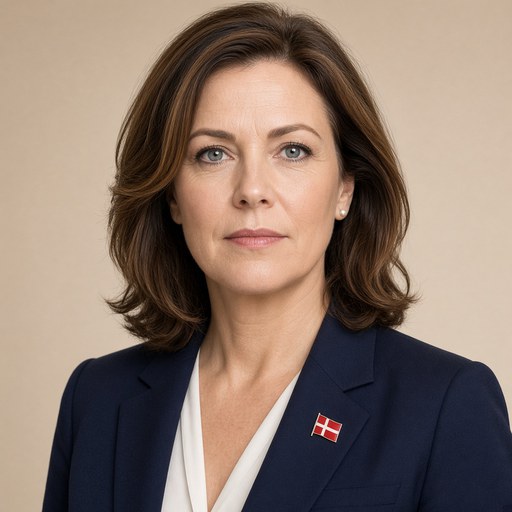
Prime Minister Helle Thorning-Schmidt's speech at the conference "More Victories and Fewer Defeats in Youth Education" on February 22, 2013.
 Helle Thorning-Schmidt · Prime Minister of Denmark
- Context
- Thorning-Schmidt addressed a conference on improving youth education outcomes in Denmark on February 22, 2013, urging students and industry to collaborate on raising educational attainment.
- Main themes
- Youth education reform, educational attainment goals, Danish education history, vocational and higher education, equal opportunity in education, economic challenges, workforce development, collaboration between students and industry, education as social equalizer, Danish identity and tradition
- Duration
- ~18 min
- Words
- 2,173
- Sentences
- 182
- Readability
- 65
- Grade
- 6.8
- Syntax
- 2.47
- Vocabulary
- 1.84
Translated from Danish
The broad sphere of national life a sentence belongs to. Every sentence has an Arena, so it is the denominator the other indices are read against.
Other182 sentences in 87 paragraphs
This summer, I visited Nano Science at Aarhus University. Here, I met a group of proud young people. Their faces were almost glowing in competition with flasks and test tubes. And they had every reason to be proud.
They had developed an idea for a new type of nanomedicine. I will not venture into the technical details. But the idea secured Denmark first place in an international competition at Harvard.
Reaching this point requires many years of education. Primary school, high school, university. In total, about 20 years of investment in education.
And it is not only researchers who spend many years of their lives becoming more skilled.
A few years ago, I was at Lindø Shipyard. It was shortly before the last ship was built, the yard closed down, and jobs were lost. But the Danish metalworkers found new paths. Because they have a solid and broad education.
A metalworker has attended primary school and has between one and a half and five and a half years of vocational training afterwards, depending on the specialization. That is 10-15 years of education. Plus the extras: all the continuing education in new methods and machines.
The people who are responsible for our health also spend many years in education. I have visited the nursing education in Aarhus. The students I met there had attended primary school, were high school graduates or social and health care assistants, and were in the midst of three and a half years of further education – up to 17 years of schooling in total.
Yes, we Danes are well-educated – nanoscientists, metalworkers, nurses, and all the rest of us. And the people I meet, in all professions and in all parts of the country, are proud of what they achieve through their education.
Education gives each of us greater freedom in life and greater security in our jobs.
Education makes society flourish through solid craftsmanship, world-class research, and secure welfare.
Education is an important part of the Denmark we cherish: with a strong community, solidarity, and good opportunities for many.
That is why the question you are asking at the conference today is so important: How can we achieve more victories and fewer defeats in education?
It is wonderful that students and industry are coming together to find answers to that question. You deserve thanks for that.
Your answers are essential for us to reach the goal that I and the government have set:
That your generation – you who are children and young people today – should be the best-educated generation in Danish history.
I will add a few more words on the way. Why is it important? And what does it require of all of us to get there?
* * *
But before I do that, I want to dwell a little on the role that education has played for Denmark in the last 100 years.
When my grandparents were young, you had to combine two school classes to find even one student who went to high school. When my parents were young, one from each class went to high school.
When I was young, there were 7-8 of us who continued to high school. And today, more than half of the class receives a high school diploma.
The high school diploma has gone from being an elite education to a public education.
In the year 1900, 397 people graduated from university – of which 30 were women. As late as the 1950s, the number was still under 1,000. But then it took off. Today, we are close to 15,000 – more than half of whom are women.
And for more than 100 years of Danish history, first the cooperative movement and then the labor movement have been the driving force behind folk high schools and popular education. The great popular movements laid the foundation for education today being for the many and not just for the few.
And what makes me proud is not just that we have reached the point of educating many. It is also the way we do it.
In Denmark, education is not just rote learning. It is group work. It is critical questions. It is collaboration, even with those you disagree with.
When you students and DI come together for a conference like today’s, you are directly continuing a special Danish tradition, where we discuss across boundaries and arrive at common solutions.
I want to hold on to a Denmark where education promotes our ability to collaborate, think creatively, and respond to changes.
I want to hold on to a Denmark where many, regardless of background or gender, have the opportunity for education. And thus a better opportunity to work and earn a decent wage. Education is the most equitable path to an equal society. To a Denmark where all talents are put to use.
* * *
We have come a long way through education. But the worst thing we can do is lean back in self-satisfaction.
For we are facing a new reality, where we need everything we can – and more.
The economic crisis is not just a parenthesis in our history. It will not be the case that when the crisis is over, the abundance of the 2000s will return. No, our conditions have changed for many years to come.
We must continue to invest in people. But precisely when we need to afford more and better education, we must review all our expenses without prejudice.
This also applies to the 19 billion kroner we spend on student grants every year.
We fundamentally have a good student grant system that we must maintain. But there is a need to target the student grants. There are two reasons for this.
First, we want young people to complete their education more quickly. Therefore, we will only provide student grants to those who are actually studying and taking the exams they need to. I think that is a reasonable requirement.
Second, our student grant system is more expensive than in any other country. And more expensive than necessary. For example, young people living at home often have more money available than their peers who have moved out.
The government presented our proposal on student grants on Tuesday.
The government’s student grant proposal is an example of the fact that we must set demands on each other when we are to move Denmark forward.
The new reality also means that companies must compete in a fiercely competitive international market. What does that do to our workplaces?
Some of them disappear. We have seen that before.
My grandmother was a telephone operator. When you called the switchboard, she connected you to the number you wanted to call. Yes, that sounds like something from the Stone Age.
Telephone operator – that was a job that did not require much schooling. And it no longer exists today.
This has happened in many areas. Many unskilled jobs are gone.
This led some to believe that we should only live off research, design, and management. That did not happen. We also need production jobs.
But the workplaces of the future do not resemble those of the past.
Once, the machine worker stood at the lathe with a piece of metal clamped in, which he could cut, file, and mill. That was manual labor.
Today, the metalworker controls production using a computer. It is still important to know the craft, but you also need to be proficient in technology and mathematics, have an understanding of materials, and be good at English.
The demands are increasing. That is the new reality.
No, we cannot lean back. We must educate ourselves even more and even better.
That is why I have set the goal that you young people should be the best-educated generation in Danish history.
* * *
The best-educated generation. What does that mean?
Well, it means two things.
First, we must meet the goals we have set, that at least 95 percent of all young people should complete a youth education. And that 60 percent of all young people should complete a higher education.
We are well on our way. More than ever are in progress. But it will require an extra effort from all of us to cross the finish line.
The government has ensured that funding follows the large intakes. This year, we are providing more than 1.4 billion kroner extra for youth education and for higher education. We have found that money in a financially difficult time.
Second, our good education must be even better. We must raise the quality through more teaching hours, more continuing education for teachers, and teaching that better fits the individual student.
We are also well underway with that work.
We invest more money in education than any other government.
We have presented an ambitious proposal that aims to make a good public school even better.
We propose a more coherent and active school day, where students and teachers spend more time together. Not only to get more teaching hours. We need that too, especially in Danish and mathematics. But also to give students a school day where they can practically work with some of the things they have learned in class. Where students get to move around. And where they can get help with some of their homework.
The public school must also become better at helping students move on after school. The school must help students choose correctly the first time. And to choose an education that they not only want but also have the opportunity to complete.
Some young people struggle with academics. They should not be forced into an education that does not suit them.
That is why we are working on a new flexible education for that specific group. It should not be a transition to another youth education. It should be a full youth education, where the goal is work afterwards.
It is also the government’s goal that more young people should start a vocational education.
Ten years ago, it was one in three who applied for a vocational education right after primary school. Today, it is one in five. And far too many of those who start drop out again. We need to reverse that trend.
That is why the government has set up a committee on vocational education, where we will develop the education together with the labor market partners, as we have a tradition for in Denmark.
One of the problems the committee has looked at is internships.
The government has taken several steps to reach a long-term solution. We are strengthening the education guarantee. We have created more and better school internship places. We are strengthening schools’ collaboration with local businesses to secure internships. That is a step in the right direction.
I understand that it is difficult for individual companies to provide internships in times of crisis. But I will appeal to companies to also take greater responsibility. We owe it to the young people.
We also owe the young people an education that meets the requirements of what a graduate should be able to do. Those requirements are constantly increasing.
Therefore, there should be more teaching time. The teacher should not work more. The teacher should spend more of their working time with the students.
Two weeks ago, the Minister of Finance reached an agreement with teachers at high schools and HF to abolish the working time regulations for that part of youth education. We also need more flexibility in vocational education. More hours with teachers lead to more skilled students.
And Denmark needs more skilled tradespeople. I am glad that all parties have taken on that task in the committee work that is underway.
* * *
I will conclude with a call to all young people: You should pursue an education. So you can choose for yourselves. So you can take care of yourselves. So you are ready for the new reality, where things are constantly changing.
The most important thing is not which education you take. The most important thing is that you take one.
Now, it is not so simple to know exactly which educations society will need in five or ten years. We must be careful not to divide knowledge into useful and useless. Is it useful to read Søren Kierkegaard, for example?
He wrote many years ago: “The great thing is not to be this or that; but to be oneself.”
He added: “And this can any person do, if they will.”
Kierkegaard turns 200 this year. And his message is still important.
For he says that we are all something special.
I believe in the specialness in each of us. I also believe in a society where we all get the chance to show the specialness we are. To show what we can do.
That is why we must demand something of ourselves and each other. So the diversity of talents can flourish.
That is why you should be the best-educated generation ever.
Thank you for your attention.
The original Danish. The tags above are read on the English translation's sentences.
I sommer besøgte jeg Nano Science på Aarhus Universitet. Her mødte jeg en flok stolte unge mennesker. Deres ansigter strålede nærmest om kap med kolber og reagensglas. Og de havde god grund til at være stolte.
De havde udviklet en idé til en ny type nanomedicin. Jeg skal ikke vove mig ud i de tekniske detaljer. Men idéen sikrede Danmark førstepladsen i en international konkurrence på Harvard.
At nå så langt kræver mange års uddannelse. Folkeskole, gymnasium, universitet. I alt omkring 20 års investering i uddannelse.
Og det er ikke kun forskere, der bruger mange år af deres liv på at blive dygtigere.
For nogle år siden var jeg på Lindøværftet. Det var kort før, det sidste skib blev bygget, værftet lukkede ned, og arbejdspladser gik tabt. Men de danske metalarbejdere fandt nye veje. Fordi de har en solid og bred uddannelse.
En metalarbejder har gået i folkeskole og har mellem halvandet og fem et halvt år på erhvervsuddannelsen efter det, alt afhængig af speciale. Det er 10-15 års uddannelse. Plus det løse: Alle efteruddannelserne i nye metoder og maskiner.
De mennesker, der får ansvar for vores sundhed, bruger også mange år på uddannelse. Jeg har besøgt sygeplejerskeuddannelsen i Århus. De studerende, jeg mødte der, havde gået i folkeskole, var studenter eller sosu-assistenter og var i gang med tre et halvt års videre uddannelse – op mod 17 års skolegang alt i alt.
Jo, vi danskere er godt uddannede – nanoforskere, metalarbejdere, sygeplejersker og alle vi andre. Og de mennesker, jeg møder, i alle erhverv og i alle dele af landet, er stolte af det, de opnår gennem deres uddannelse.
Uddannelse giver hver af os en større frihed i livet og en større tryghed i jobbet.
Uddannelse får samfundet til at blomstre gennem solidt håndværk, forskning i verdensklasse og tryg velfærd.
Uddannelse er en vigtig del af det Danmark, vi holder af: Med et stærkt fællesskab, solidaritet og gode muligheder for mange.
Derfor er det spørgsmål, I stiller på konferencen i dag, så vigtigt: Hvordan kan vi få flere sejre og færre nederlag i uddannelserne?
Det er dejligt, at elever og industri går sammen om at finde svar på det spørgsmål. Det skal I have tak for.
Jeres svar er væsentlige for, at vi kan nå det mål, jeg og regeringen har sat:
At jeres generation – I der er børn og unge i dag – skal være den bedst uddannede generation i danmarkshistorien.
Det mål vil jeg give nogle flere ord med på vejen. Hvorfor er det vigtigt? Og hvad kræver det af os alle sammen at nå derhen?
* * *
Men før jeg gør det, vil jeg dvæle lidt ved den rolle, som uddannelser har spillet for Danmark i de seneste 100 år.
Da mine bedsteforældre var unge, skulle man lægge to skoleklasser sammen for at finde bare én elev, der kom i gymnasiet. Da mine forældre var unge kom én fra hver klasse i gymnasiet.
Da jeg var ung, var vi 7-8 stykker, der gik videre til gymnasiet. Og i dag er det mere end halvdelen af klassen, der får en studenterhue.
Studentereksamen er gået fra eliteuddannelse til folkeuddannelse.
I år 1900 tog 397 personer afgangseksamen fra universitetet – heraf 30 kvinder. Så sent som i 1950’erne var tallet stadig under 1.000. Men så tog det fart. I dag er vi tæt på 15.000 – mere end halvdelen kvinder.
Og gennem mere end 100 års Danmarkshistorie har først andelsbevægelsen og siden arbejderbevægelsen været drivkraften bag højskoler og folkeoplysning. De store folkelige strømninger lagde grunden til, at uddannelse i dag er for de mange og ikke kun for de få.
Og det, der gør mig stolt, er ikke bare, at vi er nået til at uddanne mange. Det er også måden, vi gør det på.
I Danmark er uddannelse ikke kun terperi. Det er gruppearbejde. Det er kritiske spørgsmål. Det er samarbejde, også med dem, man er uenig med.
Når I elever og DI går sammen om en konference som den i dag, så lægger I jer i direkte forlængelse af en særlig dansk tradition, hvor vi diskuterer på kryds og tværs og når frem til fælles løsninger.
Jeg vil holde fast i et Danmark, hvor uddannelserne fremmer vores evne til at samarbejde, tænke kreativt og reagere på forandringer.
Jeg vil holde fast i et Danmark, hvor mange uanset baggrund eller køn får mulighed for uddannelse. Og dermed bedre mulighed for at arbejde og tjene en ordentlig løn. Uddannelse er den mest lige vej til et lige samfund. Til et Danmark, hvor alle talenter kommer i spil.
* * *
Vi er nået langt gennem uddannelse. Men det værste, vi kan gøre, er at læne os selvtilfredse tilbage.
For vi står i en ny virkelighed, hvor vi mere end nogensinde har brug for alt, hvad vi kan – og mere til.
Den økonomiske krise er ikke bare en parentes i vores historie. Det bliver ikke sådan, at når krisen er slut, så kommer nullernes overflod tilbage. Nej, vores vilkår er ændrede mange år frem.
Vi skal blive ved med at investere i mennesker. Men netop, når vi skal have råd til mere og bedre uddannelse, så må vi gå alle vores udgifter fordomsfrit igennem.
Det gælder også de 19 milliarder kroner, vi hvert år bruger på SU.
Vi har grundlæggende et godt SU-system, som vi skal bevare. Men der er brug for at målrette SU’en. Det er der af to grunde.
For det første vil vi have de unge hurtigere gennem uddannelserne. Derfor vil vi kun give SU til dem, der reelt er i gang med at læse og tager de eksaminer, de skal. Jeg synes, det er et rimeligt krav.
For det andet er vores SU-system dyrere end i alle andre lande. Og dyrere, end der er behov for. For eksempel har unge, der bor hjemme, ofte flere penge til rådighed end deres kammerater, der er flyttet hjemmefra.
Regeringen fremlagde vores forslag om SU tirsdag.
Regeringens SU-udspil er et eksempel på, at vi må stille krav til hinanden, når vi skal bringe Danmark videre.
Den nye virkelighed betyder også, at virksomhederne skal klare sig i en stenhård international konkurrence. Hvad gør det ved vores arbejdspladser?
Nogle af dem forsvinder. Det har vi set før.
Min farmor var telefondame. Når man ringede op til centralen, så stillede hun om til det nummer, man ville ringe til. Ja, det lyder som noget fra stenalderen.
Telefondame – det var en jobfunktion, som ikke krævede den store skolegang. Og som ikke findes i dag.
Sådan er det gået på mange mange områder. Mange ufaglærte arbejdspladser er væk.
Det fik nogle til at mene, at vi kun skulle leve af forskning, design og management. Sådan blev det ikke. Vi har også brug for produktionsarbejdspladser.
Men fremtidens arbejdspladser ligner ikke fortidens.
Engang stod maskinarbejderen ved drejebænken med et stykke jern spændt op, som han kunne skære, file og fræse. Det var håndens arbejde.
I dag styrer metalarbejderen produktionen ved hjælp af en computer. Det er stadig vigtigt at kunne håndværket, men man skal også have styr på teknologi og matematik, have forståelse for materialer og være god til engelsk.
Kravene stiger. Det er den nye virkelighed.
Nej, vi kan ikke læne os tilbage. Vi skal uddanne os endnu mere og endnu bedre.
Derfor har jeg sat det mål, at I unge skal være den bedst uddannede generation i danmarkshistorien.
* * *
Den bedst uddannede generation. Hvad betyder det?
Jo, det betyder to ting.
For det første skal vi opfylde de mål, vi har sat, om at mindst 95 procent af alle unge skal gennemføre en ungdomsuddannelse. Og at
60 procent af alle unge skal gennemføre en videregående uddannelse.
Det er vi godt på vej til. Flere end nogensinde er i gang. Men det vil kræve en ekstra indsats af os alle sammen at nå helt ind over målstregen.
Regeringen har sikret, at der følger penge med de store optag. I år giver vi mere end 1,4 milliarder kroner ekstra til ungdomsuddannelser og til videregående uddannelser. De penge har vi fundet i en økonomisk svær tid.
For det andet skal vores gode uddannelser være endnu bedre. Vi skal hæve kvaliteten gennem flere undervisningstimer, mere efteruddannelse til lærerne og en undervisning, der passer bedre til den enkelte elev.
Det arbejde er vi også godt i gang med.
Vi investerer flere penge i uddannelse end nogen anden regering.
Vi har fremlagt et ambitiøst udspil, der skal gøre en god folkeskole endnu bedre.
Vi foreslår en mere sammenhængende og aktiv skoledag, hvor elever og lærere er mere sammen. Ikke kun for at få flere undervisningstimer. Det skal vi også, især i dansk og matematik. Men også for at give eleverne en skoledag, hvor de i praksis kan arbejde med nogle af de ting, de har lært i timerne. Hvor eleverne får rørt sig. Og hvor man kan få hjælp til nogle af lektierne.
Folkeskolen skal også blive bedre til at hjælpe med at komme videre efter skolen. Skolen skal hjælpe eleverne med at vælge rigtigt første gang. Og til at vælge en uddannelse, som man ikke bare har lyst til, men også har mulighed for at gennemføre.
Nogle unge har svært ved det boglige. De skal ikke presses ind på en uddannelse, de ikke passer til.
Derfor arbejder vi på en ny fleksuddannelse til netop den gruppe. Det skal ikke være en overgang til en anden ungdomsuddannelse. Det skal være en fuld ungdomsuddannelse, hvor målet er arbejde bagefter.
Det er også regeringens mål, at flere unge skal i gang med en erhvervsuddannelse.
For ti år siden var det hver tredje, der søgte en erhvervsuddannelse lige efter grundskolen. I dag er det hver femte. Og alt for mange af dem, der starter, falder fra igen. Den udvikling skal vi vende.
Derfor har regeringen nedsat et udvalg om erhvervsuddannelserne, hvor vi vil udvikle uddannelserne sammen med arbejdsmarkedets parter, som vi har tradition for det i Danmark.
Et af de problemer, udvalget har set på, er praktikpladserne.
Regeringen har taget flere skridt for at nå en langsigtet løsning. Vi styrker uddannelsesgarantien. Vi har oprettet flere og bedre skolepraktikpladser. Vi styrker skolernes samarbejde med lokale virksomheder om at skaffe praktikpladser. Det er et stykke ad vejen.
Jeg forstår godt, at det ude på den enkelte virksomhed er svært at levere praktikpladser i krisetider. Men jeg vil appellere til, at virksomhederne også tager et større ansvar. Det skylder vi de unge.
Vi skylder også de unge, at de får en uddannelse, der lever op til kravene om, hvad en færdiguddannet skal kunne. De krav vokser hele tiden.
Derfor skal der være mere undervisningstid. Læreren skal ikke arbejde mere. Læreren skal være sammen med eleverne i mere af sin arbejdstid.
For to uger siden indgik finansministeren en aftale med lærerne på gymnasier og HF om at afskaffe arbejdstidsreglerne på den del af ungdomsuddannelserne. Vi har også brug for mere fleksibilitet på erhvervsuddannelserne. Flere timer med lærerne giver dygtigere elever.
Og Danmark har brug for flere dygtige faglærte. Jeg er glad for, at alle parter har taget den opgave på sig i det udvalgsarbejde, der er i gang.
* * *
Jeg vil runde af med en opfordring til alle unge: I skal tage en uddannelse. Så I kan vælge selv. Så I kan klare jer selv. Så I er klar til den nye virkelighed, hvor tingene forandrer sig hele tiden.
Det vigtigste er ikke, hvilken uddannelse I tager. Det vigtigste er, at I tager en.
Nu er det heller ikke så enkelt, præcis hvilke uddannelser samfundet får brug for om fem eller ti år. Vi skal passe på med at dele viden op i nyttig og nytteløs. Er det nyttigt at læse Søren Kierkegaard, for eksempel?
Han skrev for mange år siden: ”Det Store er ikke at være Dette eller Hiint; men at være sig selv.”
Han tilføjede: ”Og dette kan ethvert Menneske, naar han vil.”
Kierkegaard fylder 200 år i år. Og hans budskab er stadig vigtigt.
For han siger, at vi alle sammen er noget særligt.
Jeg tror på det særlige i hver af os. Jeg tror også på et samfund, hvor vi alle sammen får chancen for at vise det særlige, vi er. For at vise, hvad vi kan.
Derfor skal vi kræve noget af os selv og af hinanden. Så mangfoldigheden af talenter kan blomstre.
Derfor skal I være den bedst uddannede generation nogensinde.
Tak for ordet.