




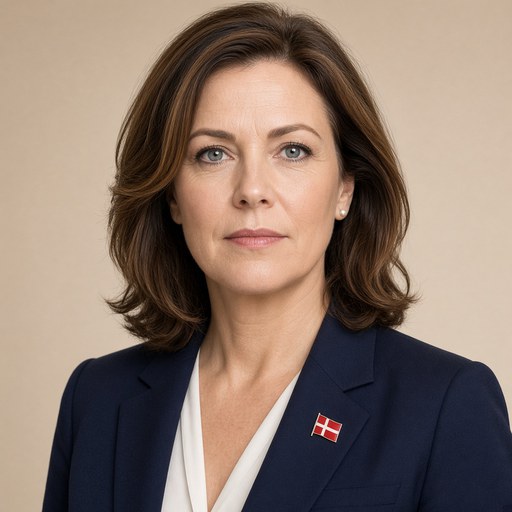
Prime Minister Helle Thorning-Schmidt's speech at the conference "Danish People's Pension" on December 10, 2012.
 Helle Thorning-Schmidt · Prime Minister of Denmark
- Context
- Thorning-Schmidt addressed the 'Danish People's Pension' conference on December 10, 2012, marking the 25th anniversary of the 1987 Joint Declaration on labor market pensions.
- Main themes
- Danish labor market pension system, the Danish model of social partnership, long-term welfare reform, the 1987 Joint Declaration anniversary, competitiveness and economic crisis, solidarity-based solutions, Danish pension system excellence, historical labor market agreements, energy policy, tax reform
- Duration
- ~16 min
- Words
- 1,894
- Sentences
- 152
- Readability
- 59
- Grade
- 7.8
- Syntax
- 2.49
- Vocabulary
- 2.04
Translated from Danish
The broad sphere of national life a sentence belongs to. Every sentence has an Arena, so it is the denominator the other indices are read against.
Other152 sentences in 71 paragraphs
When a brewery worker received her payslip in 1993, she could see a new item: Labor Market Pension. It was 0.9 percent of her salary. Today, the item has increased to around 12 percent for members of 3F.
Employees with ordinary incomes have gained security and safety. The foundation was laid 25 years ago. And a few years later, it was transformed into real pension savings for real people. For the security of the individual and thus for all of us. That is what today's conference is about.
Thank you for the invitation to be here. Thank you to Insurance and Pension for taking the initiative to celebrate our special Danish tradition of finding common, secure, and solid solutions. We celebrate some of the best aspects of Denmark.
Our country is not without contradictions. All of us gathered here today do not necessarily agree on everything. But we meet. We discuss. That is how Denmark is. And when we are at our best, we build a solid and supportive bridge into the future.
And the bridge rests on results achieved by generations before us.
The cornerstones of Danish cooperation in the labor market were not erected 25 years ago, but 113 years ago. In 1899.
Back then, there was a fierce class struggle. Anyone who has read Pelle the Conqueror knows that. And in a time of deep social divides, there grew an understanding that by working together, all parties could become winners, instead of everyone being losers.
That is the spirit of the Danish model. A model that encompasses more than our system of agreements. It is our entire way of thinking. And acting. The Danish model is not about standing firm on one’s own and being opposed to change. Because then we come to a standstill.
No, the Danish model is the courage to think anew and take responsibility for Denmark. It is our ability to reach broad, solidarity-based solutions that move Denmark forward.
From the 1930s Kanslergade Agreement, where across ideological divides, the economy and jobs were given a boost in a socially just manner.
To the 1960s Comprehensive Solution, where the first steps were taken towards better pensions.
To the Joint Declaration in 1987, which we celebrate today. Where responsible trade unions, employers, and politicians implemented the most long-term welfare reform in decades.
And further to the Welfare Agreement in 2006, where we secured welfare in a time when Danes, fortunately, live longer. And where we simultaneously found funds for forward-looking investments in education and research.
All along, we have shown that we can create solidarity-based and long-term solutions together.
It is not always easy. It is not always that the pieces fall into place, as they did on December 8, 1987.
The result was a decent pension, also for laborers, craftsmen, and social and health care assistants. A result that has great significance for millions of Danes and for all of Denmark. A result that is so long-term that it does not yet have full effect 25 years later.
* * *
Even today, we need to think long-term. Denmark's situation today has several common traits with that of the mid-1980s.
Even today, we struggle with the fact that everything went too fast in the time leading up to the crisis, and that it has created problems for competitiveness. Over the past ten years, competitiveness has fallen by almost 20 percent. There is much we need to catch up on.
During the economic boom leading up to the crisis, Danish companies' costs rose more than in most other countries. And the problem is not lessened by the fact that Germany and Sweden, our two largest trading partners, have had a good development in their competitiveness.
Even today, we need to change when we are to bring Denmark well through the crisis and further out on the other side. We need to make broad decisions. We are in the process of doing that:
Just before the summer holidays, we entered into the broadest tax agreement in over 25 years.
We are lowering the tax on work for ordinary employees with ordinary incomes.
We have decided that Denmark should be one of the most ambitious countries in the world in the energy sector. With more wind turbines. More biogas. More biomass. And a focus on saving energy.
These are long-term and broad solutions that cannot be implemented from Christiansborg alone. They require that many agree, that many are involved in implementing the policy.
* * *
25 years ago, the Joint Declaration was implemented, and it led to significant results.
Competitiveness improved. Private savings increased. And the balance of payments was turned around after 30 years of continuous deficits. The latter was not solely due to the Joint Declaration, but it helped.
And above all, we built in Denmark one of the perhaps most robust pension systems in the world.
In the Australian study, which will be presented at the conference this afternoon, Denmark outperforms all other countries.
We are the only country that receives an A grade for our pension system.
We receive this because pensions cover a wide range and have existed for so long. We achieve this due to the balance we have struck between public and private responsibility and between collective and individual arrangements.
And that is precisely why labor market pensions are of great importance to our welfare society.
It provides security that everyone with a stable connection to the labor market is ensured a reasonable pension in relation to the income they had while working.
It is completely unique that ordinary employees today can retire with a solid savings that can ensure good conditions for life as a pensioner.
60-year-old Danes have on average saved one and a half million for retirement. And the number is rising because more and more save throughout their working lives.
It is reassuring for us to know that our pensions are secure. And it is reassuring for our children that they do not have to support us. It is solidarity between generations.
Labor market pensions relieve public finances and are a contribution to the sound economic policy that is important for us to finance our welfare, also in the future.
We must also develop our welfare. And here, cooperation between the private and public sectors is an important path.
I do not belong to those who believe that one sector is more important than the other. We need both a skilled public sector and skilled private companies. When the two parts of Denmark work together, we make the best use of all good forces.
That is why I also think it is very positive that three pension funds, together with private construction companies, entered into a new collaboration aimed at public-private partnership a couple of weeks ago.
The ambition is to invest 5 billion kroner in public construction projects. This could be a hospital. It could be a sports hall. It could be a school.
I can also mention that the state is putting a large construction project out to tender. We need to build a new large office building at Kalvebod Brygge on Banedanmark's land. And we will precisely do this as a public-private partnership. This will ensure coherence between the construction work and operations for many years to come.
I am convinced that the public sector and private companies can learn from each other. Cooperation can create new growth. It can create new jobs. We must take a shared responsibility for our society.
* * *
Labor market pensions are a social responsibility based on a clear division of labor.
Pensions are agreed upon by the parties in the labor market. Politicians ensure that the legislation is in place – and refrain from changing it all the time. Pension companies commit to managing the arrangements responsibly.
We have a strong foundation, but there may still be a need to adjust along the way.
I would cautiously point out three areas where there may be a need to ask whether things are functioning well enough:
First, there are the people who do not have a stable connection to the labor market. And thus are not covered by labor market pensions.
This is a group that has become smaller and continues to shrink, but whom we must take care of. We must help those who need it the most. It is an important part of our solidarity-based society.
That is why the government has ensured that those pensioners who have the least will receive a larger elderly check. This will be deposited into the accounts of 260,000 pensioners starting January 1.
Second, it is important that pension assets are put to work for the benefit of Danish savers, for the benefit of Danish companies, for the benefit of all of us.
There is a crisis. The banks are under pressure. This also affects our many smaller companies. Some have difficulty finding money for good ideas.
The government is working to ensure that smaller companies have the opportunity to finance investments by issuing bonds together with other companies. We are developing a market for small business corporate bonds – of course on market terms.
These are bonds that will hopefully be attractive to pension funds.
Third, it is simply too difficult for all of us who save for retirement to understand what we get out of our savings.
Pension wealth means a lot to the individual, but many people do not understand all the intricacies of pensions. We take it for granted that things are in order. This places a very large responsibility on you in the pension companies.
Some companies have twice the costs of others. But their returns are not greater. Those differences need to be brought to light, where customers can see them and ask questions.
You as management should be able to see in black and white whether you are doing well enough. Members should have a debate based on informed grounds and hold you accountable.
And pensions should not only be understandable for those who have taken finance courses in the evening.
I know that you are aware of the problems. You have initiated actions. I encourage you to continue the work to ensure that consumers and others have the opportunity to see your cards.
Danish pension savings should not disappear in high administrative costs. And we should have a fair chance to see what we get for our money.
Even in the world's best pension system, there is room for improvement.
* * *
But when the dust settles, what remains is still a historic agreement.
The Joint Declaration from 1987 is an example of the decisiveness that truly distinguishes Denmark as a country and as a people.
Cooperation and solidarity have brought our society far. It is also our strongest force as we move through the crisis and out on the other side with the Denmark we cherish intact.
And here we can learn from the important results achieved 25 years ago. Many of you who were there at that time are present in the hall today. First and foremost, the then Minister of Labor Henning Dyremose, who will speak after me.
Congratulations to you. Congratulations to all of you. And congratulations to all of us. We benefit from the results you have achieved for all of Denmark.
Thank you for your attention.
The original Danish. The tags above are read on the English translation's sentences.
Når en bryggeriarbejder fik sin lønseddel i 1993, kunne hun se en ny post: Arbejdsmarkedspension. Den var på 0,9 procent af hendes løn. I dag er posten steget til omkring 12 procent for 3F’s medlemmer.
Lønmodtagere med almindelige indkomster har fået tryghed og sikkerhed. Grundlaget blev lagt for 25 år siden. Og blev nogle år senere omsat til rigtig pensionsopsparing for rigtige mennesker. Til tryghed for den enkelte og dermed for os alle sammen. Det er det, konferencen i dag handler om.
Tak for invitationen til at være med. Tak til Forsikring og Pension, der har taget initiativ til, at vi fejrer vores særlige danske tradition for at finde fælles, trygge og solide løsninger. Vi fejrer noget af det bedste ved Danmark.
Vores land er ikke uden modsætninger. Alle os, der er samlet her i dag, er ikke nødvendigvis enige om alt. Men vi mødes. Vi diskuterer. Sådan er Danmark. Og når vi er bedst, så bygger vi en solid og solidarisk bro ind i fremtiden.
Og broen hviler på resultater, der er opnået af generationer før os.
Grundpillerne i det danske samarbejde på arbejdsmarkedet blev ikke rejst for 25 år siden, men for 113 år siden. I 1899.
Dengang var der benhård klassekamp. Det ved enhver, der har læst Pelle Erobreren. Og på en tid med dybe sociale skel, voksede der en erkendelse af, at ved at arbejde sammen kunne alle parter blive vindere, i stedet for at alle blev tabere.
Det er ånden i den danske model. En model, der rummer mere end vores aftalesystem. Det er hele vores måde at tænke på. Og handle på. Den danske model er ikke at stå fast på sit og være modstander af forandring. For så går vi i stå.
Nej, den danske model er modet til at tænke nyt og tage ansvar for Danmark. Den er vores evne til at nå frem til brede, solidariske løsninger, som bringer Danmark videre.
Fra 1930’ernes Kanslergadeforlig, hvor man på tværs af ideologiske skel fik skub i økonomi og arbejdspladser på en socialt retfærdig måde.
Til 1960’ernes Helhedsløsning, hvor man tog de første skridt til bedre pensioner.
Til Fælleserklæringen i 1987, som vi fejrer i dag. Hvor ansvarlige fagforeninger, arbejdsgivere og politikere gennemførte den mest langsigtede velfærdsreform i årtier.
Og videre til Velfærdsforliget i 2006, hvor vi sikrede velfærden i en tid, hvor danskerne heldigvis lever længere. Og hvor vi samtidig fandt penge til fremsynede investeringer i uddannelse og forskning.
Hele vejen har vi vist, at vi kan lave solidariske og langsigtede løsninger sammen.
Det er ikke altid nemt. Det er ikke altid, at brikkerne falder på plads, som de gjorde den 8. december 1987.
Resultatet blev en ordentlig pension, også for arbejdsmænd, håndværkere og sosu-hjælpere. Et resultat, der har stor betydning for millioner af danskere og for hele Danmark. Et resultat, der er så langsigtet, at det ikke her 25 år efter har fuld effekt endnu.
* * *
Også i dag har vi brug for at tænke langsigtet. Danmarks situation i dag har flere fælles træk med dengang midt i 80’erne.
Også i dag kæmper vi med, at det hele gik for hurtigt i tiden op til krisen, og at det har skabt problemer for konkurrenceevnen. De seneste ti år er konkurrenceevnen faldet med næsten 20 procent. Der er meget, vi skal indhente.
Under højkonjunkturen op til krisen steg danske virksomheders omkostninger mere end i de fleste andre lande. Og problemet bliver ikke mindre af, at Tyskland og Sverige, vores to største samhandelspartnere, har haft en god udvikling i deres konkurrenceevne.
Også i dag har vi brug for at forandre, når vi skal bringe Danmark godt gennem krisen og videre ud på den anden siden. Vi har brug for at tage brede beslutninger. Det er vi i gang med:
Lige før sommerferien indgik vi den bredeste skatteaftale i over 25 år.
Vi sætter skatten på arbejde ned for helt almindelige lønmodtagere med helt almindelige indkomster.
Vi har besluttet, at Danmark skal være et af de mest ambitiøse lande i verden på energiområdet. Med flere vindmøller. Mere biogas. Mere biomasse. Og fokus på at spare på energien.
Det er langsigtede og brede løsninger, som ikke kan gennemføres fra Christiansborg alene. De kræver, at mange er enige, at mange er med til at føre politikken ud i livet.
* * *
For 25 år siden blev Fælleserklæringen ført ud i livet, og den førte til markante resultater.
Konkurrenceevnen blev forbedret. Den private opsparing steg. Og betalingsbalancen blev vendt efter 30 års uafbrudt underskud. Det sidste var så ikke kun Fælleserklæringens fortjeneste, men den hjalp til.
Og først og fremmest opbyggede vi i Danmark et af de måske mest robuste pensionssystemer i verden.
I den australske undersøgelse, som bliver præsenteret på konferencen i eftermiddag, fejer Danmark alle andre lande af banen.
Vi er det eneste land, der får karakteren A for vores pensionssystem.
Det får vi, fordi pensionerne dækker meget bredt og har eksisteret så længe. Det får vi på grund af den balance, vi har opnået mellem offentligt og privat ansvar og mellem kollektive og individuelle ordninger.
Og netop derfor har arbejdsmarkedspensionerne meget stor betydning for vores velfærdssamfund.
Det giver en tryghed, at alle med fast tilknytning til arbejdsmarkedet er sikret rimelig pension i forhold til den indkomst, de havde, da de var i arbejde.
Det er helt unikt, at almindelige lønmodtagere i dag kan gå på pension med en solid opsparing, der kan sikre gode rammer om livet som pensionist.
60-årige danskere har i gennemsnit sparet halvanden million op til pension. Og tallet stiger, fordi flere og flere sparer op gennem hele deres arbejdsliv.
Det er trygt for os at vide, at vores pensioner er sikre. Og det er trygt for vores børn, at de ikke skal forsørge os. Det er solidaritet mellem generationer.
Arbejdsmarkedspensionerne aflaster de offentlige finanser og er et bidrag til den sunde økonomiske politik, som er vigtig for, at vi kan finansiere vores velfærd, også i fremtiden.
Vi skal også udvikle vores velfærd. Og her er samarbejde mellem den private og den offentlige sektor en vigtig vej.
Jeg hører ikke til dem, der mener, at den ene sektor er vigtigere end den anden. Vi har brug for både en dygtig offentlig sektor og dygtige private virksomheder. Når de to dele af Danmark arbejder sammen, så får vi brugt alle gode kræfter bedst muligt.
Derfor synes jeg også, at det er meget positivt, at tre pensionskasser sammen med private byggefirmaer for et par uger siden indgik i et nyt samarbejde vendt mod offentligt-privat partnerskab.
Ambitionen er at investere 5 milliarder kroner i byggeprojekter i det offentlige. Det kan for eksempel være et sygehus. Det kan være en sportshal. Det kan være en skole.
Jeg kan også nævne, at staten sender et stort byggeprojekt i udbud. Vi skal have opført et nyt stort kontorhus på Kalvebod Brygge på Banedanmarks grund. Og det vil vi netop lave som et offentligt-privat partnerskab. Det skal sikre sammenhæng mellem byggearbejdet og driften i de næste mange år.
Jeg er overbevist om, at den offentlige sektor og private virksomheder kan lære af hinanden. Samarbejde kan give ny vækst. Det kan skabe nye arbejdspladser. Vi skal tage et fælles ansvar for vores samfund.
* * *
Arbejdsmarkedspensionerne er et samfundsansvar, der bygger på en klar arbejdsdeling.
Pensionerne aftales af arbejdsmarkedets parter. Politikerne sørger for at lovgivningen er på plads – og lader være med at lave den om hele tiden. Pensionsselskaberne forpligter sig til at administrere ordningerne på forsvarlig vis.
Vi har et stærkt fundament, men derfor kan der godt være brug for at justere hen af vejen.
Jeg vil forsigtigt pege på tre områder, hvor der kunne være behov for at spørge, om tingene fungerer godt nok:
For det første er der de mennesker, der ikke har fast tilknytning til arbejdsmarkedet. Og dermed ikke er dækket af arbejdsmarkedspensioner.
Det er en gruppe, som er blevet mindre, og som fortsat bliver mindre, men som vi skal tage hånd om. Vi skal hjælpe dem, der har mest brug for det. Det er en vigtig del af vores solidariske samfund.
Derfor har regeringen fået gennemført, at de folkepensionister, der har allermindst, får en større ældrecheck. Den kommer ind på kontoen hos 260.000 pensionister fra den 1. januar.
For det andet er det vigtigt, at pensionsformuerne kommer ud at arbejde til gavn for de danske opsparere, til gavn for danske virksomheder, til gavn for os alle sammen.
Der er krise. Bankerne er pressede. Det går også ud over vores mange mindre virksomheder. Nogle har svært ved at finde penge til gode idéer.
Regeringen arbejder på, at mindre virksomheder får mulighed for at finansiere investeringer ved at udstede obligationer sammen med andre virksomheder. Vi er ved at udvikle et marked for mindre virksomheders erhvervsobligationer – selvfølgelig på markedsvilkår.
Det er obligationer, der forhåbentlig vil være attraktive for pensionskasserne.
For det tredje så er det simpelthen for svært for alle os, der sparer op til pension, at gennemskue, hvad vi får ud af vores opsparing.
Pensionsformuen betyder meget for den enkelte, men mange mennesker forstår ikke alt det med pension. Vi tager det for givet, at tingene er i orden. Det giver jer et meget stort ansvar i pensionsselskaberne.
Nogle selskaber har dobbelt så store omkostninger som andre. Men deres afkast er ikke større. De forskelle skal frem i lyset, hvor kunderne kan se dem og stille spørgsmål.
I skal som ledelse kunne se sort på hvidt, om I gør det godt nok. Medlemmerne skal have en debat på et informeret grundlag og stille krav til jer.
Og så skal pensioner ikke kun være til at forstå for dem, der har taget finansiering på aftenkursus.
Jeg ved, at I selv er opmærksomme på problemerne. I har sat ting i gang. Jeg vil opfordre til, at I fortsætter arbejdet med at sikre, at forbrugere og andre har mulighed for at se jer i kortene.
Danskernes pensionsopsparing skal ikke forsvinde i høje omkostninger til administration. Og vi skal have en fair chance for at se, hvad vi får for vores penge.
Selv i verdens bedste pensionssystem er der plads til forbedring.
* * *
Men når støvet har lagt sig, så er det, der står tilbage, stadig en historisk aftale.
Fælleserklæringen fra 1987 er et eksempel på den beslutningskraft, der for alvor skiller Danmark ud som land og som folk.
Samarbejde og solidaritet har bragt vores samfund vidt. Det er også vores stærkeste kraft, når vi skal videre gennem krisen og ud på den anden side med det Danmark, vi holder af, i behold.
Og her kan vi lære af de vigtige resultater, som blev opnået for 25 år siden. Flere af jer, der var med dengang, er til stede i salen i dag. Først og fremmest daværende arbejdsminister Henning Dyremose, som får ordet efter mig.
Til lykke til dig. Til lykke til jer. Og til lykke til os alle sammen. Vi nyder godt af de resultater, I har opnået for hele Danmark.
Tak for ordet.