




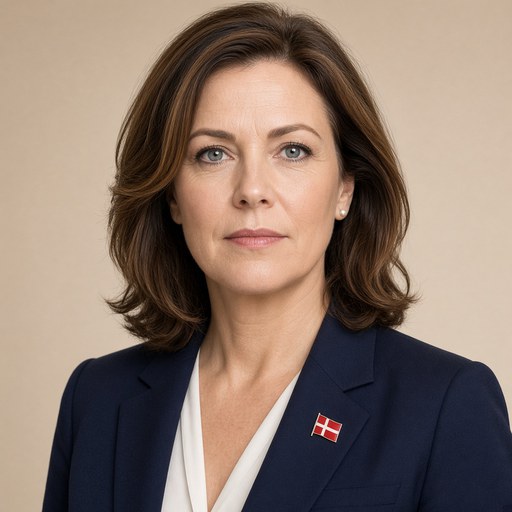
Prime Minister Helle Thorning-Schmidt's speech at the DI Top Meeting on September 25, 2012.
 Helle Thorning-Schmidt · Prime Minister of Denmark
- Context
- Thorning-Schmidt addressed the Confederation of Danish Industry (DI) Top Meeting on September 25, 2012, outlining Denmark's economic challenges and government strategy for growth.
- Main themes
- Danish competitiveness, trade and investment strategy, BRIC markets, EU economic governance, productivity growth, labor market flexibility, Nordic economic model, business-government cooperation, globalization, competition policy
- Duration
- ~21 min
- Words
- 2,529
- Sentences
- 227
- Readability
- 58
- Grade
- 7.8
- Syntax
- 2.43
- Vocabulary
- 1.97
Translated from Danish
The broad sphere of national life a sentence belongs to. Every sentence has an Arena, so it is the denominator the other indices are read against.
Other227 sentences in 105 paragraphs
Thank you for the invitation to speak at the DI Summit today.
To Karsten Dybvad and to some of the business leaders here in the room, I would like to add: Thank you for last time.
We were in China together two weeks ago. A visit that confirmed that there is great respect for Denmark and for Danish companies. There is a demand for what you can do and for what you produce. We must take advantage of that.
It has been the government's clear strategy from the day we took office.
We have set the goal of increasing trade with and investments from the new growth countries.
That is why we have appointed a Minister for Trade and Investment. That is why we hold meetings with Chinese investors who have an interest in Denmark. That is why we have a strategy that focuses on the large markets that are growing rapidly: Brazil. Russia. India. And China.
So we can create growth and prosperity. So we can create jobs in Denmark. That is the government's goal.
For Denmark's future lies in Denmark. But in close cooperation with China, Brazil, Germany, and other important countries.
Today, I will share my views on where I and the government see Denmark's challenges. And not least, what the government's answers to those challenges are. Answers in which you, who are here today, play an important role.
* * *
I will start out in the world. It is still turbulent times in the global economy and also in Europe.
In this difficult situation, the EU has managed to make decisions that were hard to imagine before the crisis.
Decisions to restore the European economy – among other things with the fiscal compact.
Decisions about growth and more jobs – among other things with the growth package, which was a Danish hallmark, and which was adopted during our presidency.
Everyone knows that the work of getting Europe back on track is not over yet.
In the coming months, the EU faces important decisions. Banking union. A strengthening of the Economic and Monetary Union.
These are discussions we will be closely involved in. Because the political decisions in the EU will have significant implications. Also for Danish companies and Danish jobs – also for you.
You write in the agenda for today that Denmark wins when companies win.
But what is Denmark's chance of winning?
During the boom leading up to the crisis, Danish companies' costs rose more than in most other countries. This happened not least because the previous government's policies led to an overheating in the last years before the crisis.
At the same time, productivity grew far too slowly.
Your competitiveness has deteriorated. And the problem is not lessened by the fact that Germany and Sweden, our two largest trading partners, have had a good development in their competitiveness.
We are faced with a problem that we – the government and the business community – each have a role in solving.
A problem that the government is addressing, among other things, in our productivity commission. As Dansk Industri is addressing with the productivity panel you are establishing today.
One of the areas where the government will take action is increased competition. It is a fact that competition in some industries is not strong enough to drive productivity.
And since the domestic market industries are subcontractors to you, the weak competition also affects your companies. The competition proposal that the government will present shortly will not only benefit consumers but also your companies.
It is obvious that we cannot solve the problems with competitiveness by striving for a wage and tax level like in Asia. Just as little as they can copy our way of doing things in Denmark.
On the contrary, we must build on the strengths we have.
In Denmark, we have a special way of doing business: With a strong tradition for education, collaboration, and a short path from bottom to top. Therefore, Danish companies are quick to respond to changes in the markets.
And we have a solid relationship between the labor market parties. Where trade unions and employers respect each other and have the opportunity to strike or lock out. But most of the time reach responsible solutions through negotiation and cooperation.
I believe that there is a lack of understanding in many places about what good cooperation has meant and means for our society: Responsible agreements. Fair competition. Well-educated employees. Decent wages and working conditions.
It is generally thought-provoking that the Nordic societies have proven to be quite robust during the crisis.
What are we doing right?
First and foremost, a flexible labor market that is matched by security for the individual. And equality both economically, in terms of education, and between genders. An equality that gives many people the opportunity to use their abilities.
It also matters how Danes meet the outside world. It is interesting that we are the people in Europe who are most positive about globalization. And that is a great advantage, even in a time of crisis.
* * *
A strong community provides a decision-making power that is crucial in difficult times. The societies that manage to make the right, but not necessarily popular, decisions will come best through the crisis.
Denmark is one of the countries in Europe that has done the most to secure jobs. We are pursuing an expansive policy. With a kickstart. With renovation of homes. With investments in infrastructure.
The government's efforts will secure 10,000 jobs this year that we otherwise would not have had. Next year, it will be 21,000 more jobs.
At the same time, we have made decisions that are necessary to get Denmark completely and well through the crisis and into the future.
We have decided that Denmark should be one of the most ambitious countries in the world in the energy sector. With more wind turbines. More biogas. More biomass. And a focus on saving energy.
We have adopted a budget law so that we can get control of public spending. We will keep the budgets. It sounds like a given. It is not.
Under the VK government, budgets were exceeded year after year. Now the state, regions, and municipalities must adhere to the frameworks that are set.
There is control over the money. There is trust in the Danish economy. Just yesterday, we saw that the agencies that assess creditworthiness give top marks to the government's policy.
This means a low interest rate when you need to finance your investments. It secures jobs. And it is an important framework condition for you.
Just before the summer holidays, we entered into the broadest tax agreement in over 25 years.
We are lowering the tax on work. That is certainly an old wish from many of you here in the room.
We are removing 275,000 Danes from the top tax bracket. That is also an old wish from many here in the room.
We have introduced an investment window. This gives you an opportunity for extra depreciation on investments in machinery.
And we are abolishing the entrepreneur tax that Venstre and the Conservatives introduced. It is a tax that hinders the desire to create. We need the opposite.
Let me add that we already abolished the VK government's multimedia tax with last year's finance bill. We will not hinder technological development.
Such changes in taxes help your companies and secure jobs in Denmark.
What should happen in the tax area going forward?
Fundamentally, taxes and duties are necessary to pay for our well-functioning society. But I am not blind to the other side of the coin: Taxes and duties can affect competitiveness. It is an important framework condition.
There must, of course, be room for reasonable adjustments of taxes and duties.
But the government has no plans for new general increases in duties, business taxes, or income taxes. That is my clear message to you today.
The tax reform is, as mentioned, the broadest in more than 25 years.
And if we look at the nearly 30 new political agreements that the government has entered into during our first year, V and K have been involved in most of them. And the Red-Green Alliance in half.
We have put an end to bloc politics. It benefits Denmark. It benefits you. Because broad solutions are solid and long-term solutions. They provide you with a stable framework to run your businesses.
Denmark is still in crisis. There is no room for extravagance. But that does not mean we should stand still.
In the finance bill proposal we have just presented, we actively prioritize the money that is available.
Some areas must hold back – this also applies to business support. Other areas will receive more – this applies to youth and education.
We must break the vicious circle where young people cannot get work because they do not have experience. And they cannot get experience when they do not have work. Therefore, we must allow jobs to rotate so that young people take over while older workers are in further education.
I will also encourage you to give young people a chance to gain the experience they so desperately need.
I have set the goal that young people should be the most skilled generation in Danish history.
This year, 60,000 young people have secured a place in higher education. That is a record for Denmark.
In our finance bill proposal, we allocate an additional 2.9 billion kroner for education next year.
And we will, as the next major task, give primary schools a boost. All children must be smarter. And first and foremost, they must be better at the very basic subjects: Danish and mathematics. You will hear more about this later in the year.
More young people must take vocational education, and they must be able to complete it.
The government has secured several thousand school internship places. DI is also doing a great job of securing internship places. Many of your companies take in many young people. But I also have to say:
More is needed.
We always tell young people: You must take an education. Then we must also ensure that they can get the internship that is part of the education.
We are missing almost 4,000 internship places. Today, you representatives from around 700 companies are here in the room. Let us do a thought experiment – something simplified. But what if each of you took one or two extra young people in. And the largest among you a few more. Then we would be halfway to solving the problem. And then there are all the companies that are not here today.
It should not be an insurmountable task.
I will appeal to you to take an even greater responsibility for ensuring internship places for our young people. You need well-educated employees.
In late summer, I met a group of very engaged young people. Very creative. Very successful. Even award-winning.
No, I am not thinking of the young Danes at the Olympics in London, although several of them fit the description. I am thinking of when I visited Nano Science at Aarhus University a few weeks ago.
Here, I met a group of students who won first place in an international competition at Harvard. The Danish young people won with their idea for a new type of nanomedicine.
The young award winners at Aarhus University are creative. They think completely new across disciplines, on the shoulders of skilled teachers and with opportunities to unfold their talent. They have just the enthusiasm and ability to generate new ideas that have made Denmark a leader in many fields.
The inspiring young people from Aarhus build on a proud Danish tradition of developing medicines, technical equipment, and aids in collaboration between the public sector and private companies.
I will not attempt to identify the winning industries of the future. But I am a strong advocate for us to build on and become even better in the areas where we are already skilled. Where we can see that there is progress in global markets. And where we are helping to solve important problems.
That is the idea behind the seven groups that the government has established in seven important business areas. We call them growth teams. The seventh on tourism and experience economy was established two weeks ago.
The seven growth teams cover their respective business areas. Areas where we are particularly skilled in Denmark. Such as health, energy, and food.
Within each area, we look at how we can improve the growth conditions for that specific business area. We give the growth conditions a service check. We do this in close dialogue with the business community – with you. The work should result in good ideas for concrete business policy.
Several of the business areas covered by our growth teams have a close connection between development and production.
I cannot say it clearly enough. Those who years ago would have written off industry in Denmark were wrong.
That is why the government has also chosen to make production research a strategic research area. We are allocating funds specifically for that area.
We are putting state money behind a collaboration between universities, the approved technological service institutes, and companies. All good forces must find solutions together.
Denmark is a production country. Today and in the future.
I will conclude with yet another good piece of news for Danish companies.
Last week, the government proposed a new initiative for the many, especially smaller, companies that have difficulty financing healthy projects.
We believe it is important that Danish companies have good opportunities to do business. But many companies today have difficulty finding financing for good ideas and products.
Therefore, we will increase the Growth Fund's loan framework from half a billion to 6 billion kroner.
We will also improve the Growth Fund's ability to provide guarantees for loans.
And we will allow the Export Credit Agency to offer guarantees for investment loans for exports.
Overall, we expect this to provide new loans to smaller companies of around 12 billion kroner.
In short: A helping hand to many production companies that need new buildings, production facilities, and machinery. All over Denmark.
I encourage you to take advantage of the new opportunities.
* * *
The government is ensuring you better conditions to create jobs. With a sound economic policy. With broad reforms. With investments in education. With new opportunities for loans for healthy investments.
DI's member companies represent the diversity of Danish business life. You are large companies. You are small companies. You are industry, service, trade, transport, and energy. I have great confidence that you will do your part.
I can see that the message here today is that Denmark wins when businesses win. I agree with that in many ways.
But Denmark also wins when we have a healthy economy. Skilled employees. Good education and more jobs. Because then we all win here in Denmark.
So perhaps it can also be turned around and said that businesses win when all of Denmark wins.
Thank you for the word. And enjoy the rest of the summit.
The original Danish. The tags above are read on the English translation's sentences.
Tak for invitationen til at tale på DI Topmødet i dag.
Til Karsten Dybvad og til nogle af erhvervslederne her i salen vil jeg tilføje: Tak for sidst.
Vi var i Kina sammen for to uger siden. Et besøg, der bekræftede, at der er stor respekt om Danmark og om danske virksomheder. Der er rift om det, I kan, og om det, I producerer. Det skal vi udnytte.
Det har været regeringens klare strategi fra den dag, vi trådte til.
Vi har sat det mål, at vi vil øge handel med og investeringer fra de nye vækstlande.
Derfor har vi udpeget en handels- og investeringsminister. Derfor holder vi møder med kinesiske investorer, der har en interesse i Danmark. Derfor har vi en strategi, hvor vi sætter fokus på de store markeder, der vokser hurtigt: Brasilien. Rusland. Indien. Og Kina.
Så vi kan skabe vækst og fremgang. Så vi kan skabe arbejdspladser i Danmark. Det er regeringens mål.
For Danmarks fremtid ligger i Danmark. Men i tæt samspil med Kina, Brasilien, Tyskland og andre vigtige lande.
I dag vil jeg give mit bud på, hvor jeg og regeringen ser Danmarks udfordringer. Og ikke mindst, hvad der er regeringens svar på udfordringerne. Svar, hvor netop I, der sidder her i dag, spiller en vigtig rolle.
* * *
Jeg vil starte ude i verden. Det er stadig turbulente tider i verdensøkonomien og også i Europa.
I den vanskelige situation har EU formået at træffe beslutninger, som var svære at forestille sig før krisen.
Beslutninger om at genoprette europæisk økonomi – blandt andet med finanspagten.
Beslutninger om vækst og flere arbejdspladser – blandt andet med den vækstpakke, som var en dansk mærkesag, og som blev vedtaget under vores formandskab.
Alle ved, at arbejdet med at bringe Europa på ret kurs ikke er ovre endnu.
I de næste måneder står EU over for vigtige beslutninger. Bankunion. En styrkelse af ØMU’en.
Det er diskussioner, vi vil involvere os tæt i. For de politiske beslutninger i EU vil få stor betydning. Også for danske virksomheder og danske arbejdspladser – også for jer.
I skriver i oplægget til i dag, at Danmark vinder, når virksomhederne vinder.
Men hvad er Danmarks vinderchance?
Under højkonjunkturen op til krisen steg danske virksomheders omkostninger mere end i de fleste andre lande. Det skete ikke mindst, fordi den tidligere regerings politik førte til en overophedning i de sidste år før krisen.
Samtidig voksede produktiviteten alt for langsomt.
Jeres konkurrenceevne er blevet forværret. Og problemet bliver ikke mindre af, at Tyskland og Sverige, vores to største samhandelspartnere, har haft en god udvikling i deres konkurrenceevne.
Vi står med et problem, som vi – regeringen og erhvervslivet – har hver vores rolle i at løse.
Et problem, som regeringen tager fat på, blandt andet i vores produktivitetskommission. Som Dansk Industri tager fat på med det produktivitetspanel, I nedsætter i dag.
Et af de steder, regeringen vil sætte ind, er øget konkurrence. Det er et faktum, at konkurrencen i nogle erhverv ikke er stærk nok til at drive produktiviteten.
Og da hjemmemarkedserhvervene er underleverandører til jer, så har den svage konkurrence også betydning for jeres virksomheder. Det konkurrenceudspil, som regeringen vil lægge frem om kort tid, vil ikke alene være til gavn for forbrugerne, men også for jeres virksomheder.
Det er åbenlyst, at vi ikke kan løse problemerne med konkurrenceevnen ved at stræbe efter et løn- og skatteniveau som i Asien. Lige så lidt som de kan kopiere vores måde at gøre tingene på i Danmark.
Tværtimod må vi bygge videre på de styrker, vi har.
I Danmark har vi en særlig måde at drive virksomhed på: Med en stærk tradition for uddannelse, samarbejde og kort vej fra bund til top. Derfor er danske virksomheder hurtige til at reagere på ændringer i markederne.
Og vi har et solidt forhold mellem arbejdsmarkedets parter. Hvor fagforeninger og arbejdsgivere respekterer hinanden og har mulighed for at strejke eller lock-oute. Men for det meste når frem til ansvarlige løsninger gennem forhandling og samarbejde.
Jeg tror, at der mange steder mangler forståelse for, hvad det gode samarbejde har betydet og betyder for vores samfund: Ansvarlige aftaler. Fair konkurrence. Veluddannede medarbejdere. Ordentlige løn- og arbejdsvilkår.
Det er i det hele taget tankevækkende, at de nordiske samfund har vist sig ret robuste under krisen.
Hvad gør vi rigtigt?
Først og fremmest et fleksibelt arbejdsmarked, der modsvares af tryghed for den enkelte. Og en lighed både økonomisk, når det gælder uddannelser og mellem kønnene. En lighed, der giver mange mennesker mulighed for at bruge deres evner.
Det betyder også noget for, hvordan danskerne møder omverdenen. Det er interessant, at vi er det folk i Europa, som er mest positive over for globaliseringen. Og det er en stor fordel, også i en krisetid.
* * *
Et stærkt fællesskab giver en beslutningskraft, der er afgørende i svære tider. De samfund, der formår at træffe de rigtige, men ikke nødvendigvis populære, beslutninger, vil komme bedst gennem krisen.
Danmark er et af de lande i Europa, der har gjort allermest for at sikre arbejdspladser. Vi fører en ekspansiv politik. Med kickstart. Med renovering af boliger. Med investeringer i infrastruktur.
Regeringens indsats sikrer i år 10.000 arbejdspladser, som vi ellers ikke ville have haft. Næste år er det 21.000 flere arbejdspladser.
Samtidig har vi truffet beslutninger, der er nødvendige for at få Danmark helt og godt gennem krisen og ind i fremtiden.
Vi har besluttet, at Danmark skal være et af de mest ambitiøse lande i verden på energiområdet. Med flere vindmøller. Mere biogas. Mere biomasse. Og fokus på at spare på energien.
Vi har vedtaget en budgetlov, så vi får styr på de offentlige udgifter. Vi vil holde budgetterne. Det lyder som en selvfølge. Det er det ikke.
Under VK-regeringen blev budgetterne overskredet år efter år. Nu skal stat, regioner og kommuner holde de rammer, der bliver sat.
Der er styr på pengene. Der er tillid til dansk økonomi. Så sent som i går så vi, at de bureauer, der vurderer kreditværdigheden, giver topkarakter til regeringens politik.
Det betyder en lav rente, når I skal finansiere jeres investeringer. Det sikrer arbejdspladser. Og det er et vigtigt rammevilkår for jer.
Lige før sommerferien indgik vi den bredeste skatteaftale i over 25 år.
Vi sætter skatten på arbejde ned. Det er vist et gammelt ønske fra mange af jer her i salen.
Vi trækker 275.000 danskere ud af topskatten. Det er vist også et gammelt ønske fra mange her i salen.
Vi har indført et investeringsvindue. Det giver jer en mulighed for ekstra afskrivninger på investeringer i maskiner.
Og vi afskaffer den iværksætterskat, som Venstre og de Konservative indførte. Det er en skat, der hæmmer virkelysten. Vi har brug for det modsatte.
Lad mig tilføje, at vi allerede med sidste års finanslov afskaffede VK-regeringens multimedieskat. Vi vil ikke spænde ben for den teknologiske udvikling.
Sådanne ændringer af skatterne hjælper jeres virksomheder og sikrer arbejdspladser i Danmark.
Hvad skal der så ske på skatteområdet fremover?
Helt grundlæggende er skatter og afgifter nødvendige for at betale for vores velfungerende samfund. Men jeg er ikke blind for den anden side af mønten: Skatter og afgifter kan påvirke konkurrenceevnen. Det er et vigtigt rammevilkår.
Der skal naturligvis være plads til fornuftige omlægninger af skatter og afgifter.
Men regeringen har ingen planer om nye generelle forhøjelser af afgifter, erhvervsskatter eller indkomstskatter. Det er mit klare budskab til jer i dag.
Skattereformen er som sagt den bredeste i mere end 25 år.
Og hvis vi ser på de næsten 30 nye politiske aftaler, som regeringen har indgået i løbet af vores første år, har V og K været med i langt de fleste. Og Enhedslisten med i halvdelen.
Vi har gjort op med blokpolitikken. Det gavner Danmark. Det gavner jer. For brede løsninger er solide og langsigtede løsninger. De giver jer en stabil ramme til at drive jeres virksomheder.
Danmark er stadig i krise. Der er ikke plads til at skeje ud. Men det betyder ikke, at vi skal stå stille.
I det finanslovforslag, vi netop har lagt frem, prioriterer vi de penge, der er, aktivt.
Nogle områder må holde for – det gælder også erhvervsstøtten. Andre områder får mere – det gælder unge og uddannelse.
Vi skal bryde den onde cirkel, hvor de unge ikke kan få arbejde, fordi de ikke har erfaring. Og de kan ikke få erfaring, når de ikke har arbejde. Derfor skal vi lade jobbene rotere, så de unge tager over, mens de ældre er på efteruddannelse.
Jeg vil også opfordre jer til at give de unge en chance for at få den erfaring, de har så hårdt brug for.
Jeg har sat det mål, at de unge skal være den dygtigste generation i danmarkshistorien.
I år har 60.000 unge fået plads på en videregående uddannelse. Det er Danmarksrekord.
I vores finanslovforslag sætter vi 2,9 milliarder kroner mere af til uddannelse til næste år.
Og vi vil som den næste store opgave give folkeskolen et løft. Alle børn skal være dygtigere. Og først og fremmest skal de være dygtigere til de helt basale fag: Dansk og matematik. Det kommer I til at høre mere om senere på året.
Flere unge skal tage en erhvervsuddannelse, og de skal kunne gøre den færdig.
Regeringen har skaffet flere tusind skolepraktikpladser. DI gør også et stort arbejde for at skaffe praktikpladser. Flere af jer virksomheder tager mange unge ind. Men jeg er også nødt til at sige:
Der skal mere til.
Vi siger altid til de unge: I skal tage en uddannelse. Så må vi også sørge for, at de kan få den praktikplads, som er en del af uddannelsen.
Vi mangler næsten 4.000 praktikpladser. I dag sidder I repræsentanter for omkring 700 virksomheder her i salen. Lad os lave et tankeeksperiment – noget forsimplet. Men hvis nu hver af jer tog en eller to ekstra unge ind. Og de største af jer lidt flere. Så var vi halvvejs til at løse problemet. Og så er der jo alle de virksomheder, som ikke er med i dag.
Det burde ikke være en uoverkommelig opgave.
Jeg vil appellere til, at I tager et endnu større ansvar for at sikre praktikpladser til vores unge. I har brug for veluddannede medarbejdere.
I sensommeren mødte jeg en gruppe meget engagerede unge mennesker. Meget kreative. Meget succesrige. Ligefrem prisvindende.
Nej, jeg tænker ikke på de unge danskere til OL i London, selvom flere af dem passer til beskrivelsen. Jeg tænker på, da jeg besøgte Nano Science på Aarhus Universitet for nogle uger siden.
Her mødte jeg en gruppe studerende, der har vundet førstepladsen i en international konkurrence på Harvard. De danske unge vandt med deres idé om en ny type nanomedicin.
De unge prisvindere på Aarhus Universitet er kreative. De tænker helt nyt på tværs af faggrænser, på skuldrene af dygtige undervisere og med muligheder for at folde talentet ud. De har netop den begejstring og den evne til at få nye idéer, som har gjort Danmark førende på mange felter.
De inspirerende unge århusianere bygger videre på en stolt dansk tradition for at udvikle lægemidler, teknisk udstyr og hjælpemidler i et samarbejde mellem den offentlige sektor og private virksomheder.
Jeg vil ikke forsøge at udpege fremtidens vinderbrancher. Men jeg er en stærk fortaler for, at vi skal bygge ovenpå og blive endnu dygtigere på de områder, hvor vi i forvejen er dygtige. Hvor vi kan se, der er fremgang på verdensmarkederne. Og hvor vi er med til at løse vigtige problemer.
Det er idéen med de i alt syv grupper, regeringen har nedsat på syv vigtige erhvervsområder. Vækstteams kalder vi dem. Det syvende om turisme og oplevelsesøkonomi blev nedsat for to uger siden.
De syv vækstteams dækker hver deres erhvervsområde. Områder, hvor vi er særligt dygtige i Danmark. Som for eksempel sundhed, energi og fødevarer.
Inden for hvert område ser vi så på, hvordan vi kan gøre vækstvilkårene bedre for netop det erhvervsområde. Vi giver vækstvilkårene et servicetjek. Det gør vi i tæt dialog med erhvervslivet – med jer. Arbejdet skal munde ud i gode idéer til helt konkret erhvervspolitik.
Flere af de erhvervsområder, som er dækket af vores vækstteams har en tæt kobling mellem udvikling og produktion.
Jeg kan ikke sige det tydeligt nok. De, der for år tilbage ville dømme industrien ude af Danmark, tog fejl.
Derfor har regeringen også valgt at gøre produktionsforskning til et strategisk forskningsområde. Vi sætter penge af særligt til det område.
Vi sætter statslige penge bag et samarbejde mellem universiteter, de godkendte teknologiske serviceinstitutter og virksomheder. Alle gode kræfter skal finde løsninger sammen.
Danmark er et produktionsland. I dag og i fremtiden.
Jeg vil slutte af med endnu en god nyhed til danske virksomheder.
Regeringen foreslog i sidste uge en ny indsats for de mange især mindre virksomheder, der har svært ved at få finansieret sunde projekter.
Vi mener, at det er vigtigt, at danske virksomheder har gode muligheder for at drive forretning. Men mange virksomheder har i dag svært ved at finde finansiering til gode idéer og produkter.
Derfor vil vi øge Vækstfondens låneramme fra en halv milliard til 6 milliarder kroner.
Vi vil også forbedre Vækstfondens muligheder for at stille kaution for lån.
Og vi vil give mulighed for, at Eksport Kredit Fonden kan tilbyde garantier for investeringslån til eksport.
Samlet forventer vi, at det vil give nye lån til mindre virksomheder på omkring 12 milliarder kroner.
Kort sagt: En håndsrækning til mange produktionsvirksomheder, som skal bruge nye bygninger, produktionsanlæg og maskiner. Over hele Danmark.
Jeg vil opfordre jer til at bruge de nye muligheder.
* * *
Regeringen sikrer jer bedre rammer til at skabe arbejdspladser. Med en sund økonomisk politik. Med brede reformer. Med investeringer i uddannelse. Med nye muligheder for lån til sunde investeringer.
DI’s medlemsvirksomheder repræsenterer mangfoldigheden i dansk erhvervsliv. I er store virksomheder. I er små virksomheder. I er industri, service, handel, transport og energi. Jeg har stor tiltro til, at I vil gøre jeres del.
Jeg kan se, at budskabet her i dag er, at Danmark vinder, når virksomhederne vinder. Det er jeg på mange måder enig i.
Men Danmark vinder også, når vi har en sund økonomi. Dygtige medarbejdere. Gode uddannelser og flere arbejdspladser. For så vinder vi alle sammen her i Danmark.
Så måske kan man også vende den om og sige, at virksomhederne vinder, når hele Danmark vinder.
Tak for ordet. Og fortsat godt topmøde.