




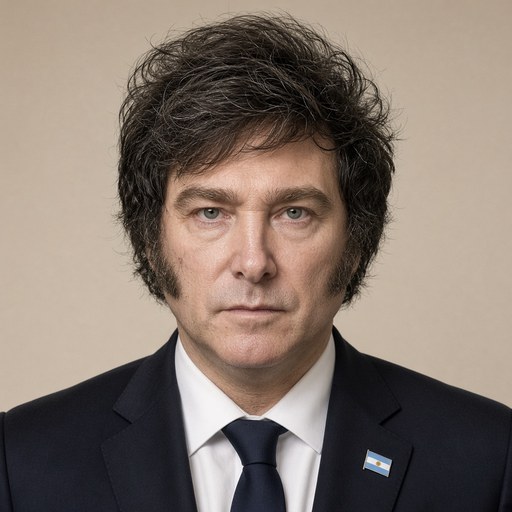
Words of President Javier Milei during the visit to the Human Capital Training Center.
 Javier Milei · President of Argentina
- Context
- Milei spoke at the inauguration of a Human Capital Training Center in Argentina on March 27, 2026, celebrating a legal victory and welfare reform initiatives.
- Main themes
- Human capital development, YPF Burford legal victory, criticism of Kirchnerism, anti-poverty dependency model, Sandra Pettovello recognition, libertarian economic philosophy, social welfare reform, state resources misuse, Argentina's poverty crisis, picketer organizations, Ayn Rand ethics of emergency
- Duration
- ~27 min
- Words
- 3,261
- Sentences
- 136
- Readability
- 51
- Grade
- 11.7
- Syntax
- 3.09
- Vocabulary
- 2.15
Translated from Spanish
The broad sphere of national life a sentence belongs to. Every sentence has an Arena, so it is the denominator the other indices are read against.
Other136 sentences in 29 paragraphs
Hello everyone. Good morning to all. The reality is that if I didn’t say a few words, because this day is a very special day for Argentina and a day of great joy, I would be a hypocrite. I took a few minutes to arrive, I apologize, because I was meeting with the CEO of YPF, this “giant,” Horacio Marín. And the delay was due to the fact that we won against Burford in the United States.
Thanks to Horacio's management, at YPF and the entire team of lawyers - especially the Attorney General's Office - we have managed to ensure that Argentina avoids the payment of 18 billion dollars. And, since I am Milei, I will say it in Milei's style: we had to come to fix the messes made by the useless, idiot, incompetent Kicillof during the second government of the corrupt and imprisoned Cristina Fernández de Kirchner.
And now they come to say: “oh, but Milei's trips to the United States. Oh, but the jumpsuit. Oh, but the management…” Here is the management: 18 billion dollars. Yes, now I return to the normal channels.
First of all, I want to thank our Minister Sandra Pettovello for leading this initiative and for fighting - tirelessly - to develop human capital in our country. This is a double recognition for Sandra. When we started the management… you already know that when I take off my glasses it’s the unstable part of the speeches, you can expect anything… When we started the management - without a doubt - the most torpedoed, most questioned, most operated, most smeared Minister by the corrupt media in Argentina was, precisely, Minister Sandra Pettovello. For something that is incredible, I mean, they smeared and operated against her for being honest, for cutting the scams of the poverty intermediaries, for cutting the scams of the poverty managers, who, in addition - along with the enormous task of the current National Senator for the Autonomous City of Buenos Aires and, at that time, Minister of Security, Dr. Bullrich - not only faced the criminals, mafias that appropriated the money of the vulnerable, but also, that money they stole was used to extort people to go to the marches. And we went from having 9,000 blockades per year to 0, and that is thanks to the management of Dr. Bullrich and the management of Minister Sandra Pettovello, thanks to them. So - Manuel - at some point later, it will be time to thank you.
In addition, I want to thank the companies and organizations that are present and that Sandra already mentioned. If you had read a little slower, we would have applauded everything, but you were a bit rushed. The reality is that you, today, are the protagonists and pioneers of this initiative, which has a lot to offer the country.
The history of this building is interesting: what - once was a children's home - was co-opted during Kirchnerism by the picketer organizations, entrenched in Social Development, used for militant activities and left it literally in ruins. That is what Kirchnerism does with state resources: it turns them into war booty for its organizations, parasites them, and leaves them in ruins.
Today, this place returns to being what it always should have been: a place that allows Argentines to grow, a place that takes them out of dependency, instead of plunging them into it. Because - ultimately - it is the core of their model: they need Argentines not to believe in themselves; they need them to give up their values; to give up their pride and kneel forever before state handouts. And thus - for decades - Argentine society was taught that the maximum aspiration of a person was to work in the state, that the state was the redeemer, that the state was the one that gave, the one that protected, the one that solved, and when the state was not enough, social plans appeared as a substitute. The result is known: 2 out of 3 children were poor; formal private employment had not grown for 15 years and just over half of the population was below the poverty line. Moreover, they generated such a disaster and some forget, but 30% of formal workers were poor. That was what Kirchnerism left behind. That is not an accident. That is the inevitable consequence of a system that replaced work with handouts and freedom with dependency.
And the serious thing about this perversion is that they do not believe it is something negative. They believe that a whole life - subjected to the will of others is desirable - especially if they are the ones who control the levers. We flatly reject that maxim. But that does not mean we neglect the most vulnerable; on the contrary, we understand that decades of populism and clientelism left society impoverished and dependent and that cutting off social assistance outright would only generate a humanitarian crisis, which would be - in itself - unjust.
In fact, when Sandra and I were thinking about the idea of the Ministry of Human Capital, back in 2022, one of the things that came out clearly was what Ayn Rand calls “the ethics of emergency.” That is to say, we - as libertarian liberals - understand perfectly that these aids are financed with taxes, but we also understand that the most vulnerable sectors have been victims of a situation of high expropriation, by corrupt politicians, patronage businessmen, complicit journalists, who built - a corporate Argentina - whose consequence was to leave a trail of poor people, and that one could not cut that situation outright, because it would also be unjust for those people, and that the answer was to change the logic of social policy: it was for people to stop waiting for the fish and start going out to fish, and with that is the idea of human capital. Now, in a few lines, I will make some reflections on human capital.
But, also, what needs to be understood is that the end of assistance is to accompany those who are on their knees so that they can stand up by themselves; so that they can walk on their own feet and not have to ask anyone for anything in the future to be well; so that they can form a family and educate it as they see fit, within the framework of common law. But to achieve this, it was not enough to simply give money or food. One must proverbially teach to fish, and that is something that Sandra is more than clear about.
In that sense, the Ministry of Human Capital is not a bureaucratic name, it is a declaration of principles. We know, and empirical evidence shows, that human capital explains around 70 percentage points of long-term economic growth. This is the reason why this Ministry exists, not to distribute plans, but to build the conditions that allow Argentines to grow.
The truth is that the foundation of this Ministry, without a doubt, is a tribute to Gary Becker. To give you an idea of the admiration I have for Gary Becker, at the time I lived in Abasto, until I had to tear down the wall due to the arrival of my little ones, who required more space, I had a one-and-a-half by one-meter painting of Gary Becker deriving the intertemporal Slutsky equation, that is, how the consumption pattern changes in response to changes in the interest rate, to put it in Spanish. So, he is someone who, in fact, I have all of Gary Becker's books, and what is interesting is how the idea of human capital appeared. The idea of human capital arose because Robert Solow tried to test his growth model, developed in 1956, he tested it in 1957, and could only explain 15% of economic growth. The answer to that empirical precariousness of the results, the answer from the one who managed the Department of Economics at the University of Chicago, who was George Stigler, told Solow: “your problem is that you do not incorporate human capital.” And from there, two lines of research in human capital develop: the line of human capital in microeconomics, developed by Gary Becker, and then he ends up presenting a book called ‘Human Capital’..., later I will make a reference to how this place is designed and why it has a deep relationship with Gary Becker's human capital theory.
This seemed like a political speech, but it turned into a technical speech; I didn’t take off my glasses, but since I’m speaking over the glasses, you can imagine that…, more or less the same. And then, in the line of macro-dynamics, that is, of economic growth, Hirofumi Uzawa incorporates human capital into economic growth models. This is not a minor issue. Hirofumi Uzawa was also the thesis advisor of - probably - the best Argentine economist in all of history, who was Miguel Sidrauski, who is known and rose to fame for incorporating money into economic growth models. However, the profession decided to go another way. It decided to include technological progress, exogenously, something like it was by finger, and the literature on economic growth sank, and back in the '70s, it was absolutely stagnant, on the way to extinction. Robert Lucas Jr., who had already become extremely well-known with rational expectations, began to ask: “ok, this pointless debate with Keynesianism is over,” he said, “but here what matters is growth.”
So, he began to explore economic growth and - back in 1983 - a mathematician, also at the University of Chicago, named Paul Romer, developed the first endogenous growth model. He made an endogenous growth model based on human capital, based on creative destruction, and in 1985, Lucas Robert Jr., who was Paul Romer's thesis advisor, basically, in Lionel Robbins' readings goes and explains the role of human capital in economic growth. This generates a whole series of debates, and that debate technically concludes in 1989, with an article by Gregory Mankiw, David Romer, not Paul Romer, David Romer and David Well, who test economic growth incorporating human capital, and explaining 15%, the incorporation of human capital makes the explanation jump to 85%. They said: “Ok, the issue is settled.” What generates economic growth is human capital, and that is the concept behind the design of our Ministry of Human Capital. Human capital is what generates growth and, if we want to make Argentina great again, we need human capital for that challenge. And that is what we are proposing and that is what we are doing.
Regarding what human capital is - from the micro perspective - that is, microeconomics, it has two dimensions: The first has to do with the health and nutrition of children. If a child does not develop well in their early years, it is very difficult to recover that time later. That is why we doubled the Universal Child Allowance and strengthened the 1,000 Days Plan. But the second dimension, and this is already called first-generation human capital, is that children are educated and healthy so that they can enter school, train, and be able to work, which is second-generation human capital.
The second dimension, then, is what brings us here today. It has to do with education and labor reintegration, with what Argentines can learn, train, and enter the labor market. For generations, this country taught that the only truly dignified work was the one that came with a university degree. Thus, university education was fetishized and trades were despised. I say being a doctor, being a lawyer, engineer, physicist, mathematician, economist are valuable professions, but there are many other professions that are also valuable and that are precisely the ones that are scarce today, such as being an electrician, plumber, welder, or refrigeration technician.
Today we have a labor market where companies are looking for skilled personnel in various trades and cannot find them. At the same time, we have young people who want to work, do not have a way to certify that they know how to do something, or do not find work related to what they study.
In Argentina today, a plumber actually earns more than someone who has just graduated, and this is because the market recognizes what is scarce and what it needs, that is, it is the price signal. That is, there is a clear shortage of trades, and what is scarce are the hands that know how to do things and solve problems for others. And here is the heart of what we are doing: this project - driven by Human Capital - is an example of when incentives are put in order, the private sector alone seeks to generate employment and develop the capabilities of Argentines.
This center operates with a simple logic, opposite to that of Kirchnerism: it is not the state that decides what is taught, it is the companies, because the companies are the ones that hire, the ones that know what they need, and the ones that pay the salaries. The private sector finances, the private sector trains, the private sector employs, the state provides the framework given the space and steps aside.
This part, this definition and the way this center is built here is also a tribute to Gary Becker. When you study Gary Becker's book —“Human Capital”—, what Gary Becker points out is that there are two types of training. There is general training and specific training. When you have a company and you train, you do not provide general training…, it is an obvious matter of incentives. That is, if you provide general training, you are investing and you will not be able to benefit from that increase in the person's skills because that person takes the training and can go work elsewhere. Is that clear?
So, companies do not provide general training. What do they do? Specific training. And that is what makes you increase productivity, be valuable to companies, and that generates two very important situations because as the company has to invest in training that human capital, the company then protects those jobs with nails and teeth because it is safeguarding the investment it made. In other words, that partnership—between workers and employers—becomes much stronger, no matter how much the Marxists do not want to see it. So, that generates a virtuous association that, in addition, boosts growth—through greater productivity—and improves the living conditions of human beings because greater productivity also implies higher wages.
Therefore, this is not merely a project. This is already functioning. MetroGAS has already trained gas fitters. Sinteplast has already trained painters. FECOBA has already worked with its companies. Diplomas have already been awarded; the data kills the narrative. And I want to explain something that is equally important: we are converting plans into work, and where many said it, we do it; that is a big difference, I mean, there are many very nice slogans, we say it better because we know what we are talking about, but we also do it.
The people who received the "Return to Work" plan will be able to access—if they wish—a training to reintegrate into the labor market. Kirchnerism also asked for a counterpart, but the counterpart was to go to a march. That is to say, after so much time was claimed, that in reality the plans should be to reintegrate people into the labor market and that no one did anything, those who are doing it are us. Thank you, Sandra.
In short, this is not just an administrative change, it is a change of conception: the State no longer gives people a plan to keep them stagnant, it gives them a tool so they can grow on their own in life, to integrate into the market, to work, because work dignifies and handouts perpetuate poverty. The Argentina we are building will need many trained people; we have investments of more than 100 billion dollars announced: Vaca Muerta, mining, industry, nuclear energy, agribusiness, technology. All of that generates jobs, but it generates jobs for people who know how to do things. The question is not whether there will be jobs in Argentina, the question is whether Argentinians will be prepared to take them, because, in turn, it is the multiplication of trained workers that raises the value of employment.
This center is a fundamental piece to begin to answer this question, and we are convinced that the answer will be yes. What we inaugurate today here, in La Paternal, is only a first step. We signed agreements with more than ten companies that operate in the metropolitan area of Buenos Aires, but the model is designed to be replicated throughout the country because the problem is not Buenos Aires, it is Argentine. And the solution cannot be limited to a building. It has to reach every province, every city, every young person who wants to work and today does not have the tool to do so. It has to be as extensive as possible. That is why I invite all companies and chambers that want to see the country prosper to join this dream.
Large, medium, or small; mining, livestock, energy producers, logistics, or gastronomy; whether urban or rural. Every company, without any distinction, can join the construction of this great national job bank. An initiative that brings together dreaming Argentinians with companies in search of high human and professional value workers.
And then this project helps, why not, Argentinians pursue their dreams wherever their services are most needed. The future belongs to those who know how to do, and today, here, we begin to form it. Before closing the speech, I also want to highlight something that Sandra mentioned when she started walking through this dilapidated building and that she did it with Adelmo and..., there is a Chinese ideogram that expresses crisis, but it also says that it is an opportunity. It seems abstract, I will tell it with an example that a German businessman once gave me that I found brilliant, a great entrepreneur. He says that two shoe companies send their sales directors to a very, very, very poor country, to the point that when these two directors arrive, they find that all the people are barefoot. Obviously, both are in the place and return. One of them says: “No, nothing can be done here. Everyone is barefoot.” And the other said: “Hey, there is a huge business opportunity here, everyone is barefoot. Look at all the people we have to give a pair of shoes to.” And that is the attitude that Sandra and Adelmo have shown when they walked through the ruins of this place, which were the ruins of great Argentina. Because when you see the building, it is imposing, that glorious, brilliant Argentina, that liberal Argentina that became one of the richest countries in the world at the end of the 19th century and that was an admirable country at the beginning of the 20th century until we were invaded by socialists of different stripes with different manners.
Therefore, bringing this building back from the ruins is not just about recovering a building, it is about working to recover the glory we lost, to make Argentina great again. Thank you very much to everyone.
They anticipated me at the closing. May God bless Argentinians, may the forces of heaven accompany us, and long live freedom, damn it! Let’s make Argentina great again. Thank you very much.
The original Spanish. The tags above are read on the English translation's sentences.
Hola a todos. Buenos días a todos. La realidad es que, si no dijera unas palabras, porque este día es un día muy especial para Argentina y un día de mucha alegría, sería un hipócrita. Me demoré unos minutos en llegar, les pido mis disculpas, porque estaba reunido con el CEO de YPF, este “gigante”, que es Horacio Marín. Y la demora obedeció a que le hemos ganado a Burford, en Estados Unidos.
Gracias a la gestión de Horacio, en YPF y todo el equipo de abogados - en especial a la Procuración - hemos logrado que Argentina tenga que evitar el pago de 18.000 millones de dólares. Y, como soy Milei, lo voy a decir al estilo Milei: tuvimos que venir a arreglar las cagadas que hizo el inútil, imbécil, incompetente de Kicillof, durante el segundo gobierno de la corrupta y presidiaria Cristina Fernández de Kirchner.
Y que ahora vengan a decir: “ah, pero los viajes de Milei, a Estados Unidos. Ah, pero el mameluco. Ah, pero la gestión…” Acá está la gestión: 18.000 millones de dólares. Sí, ahora vuelvo a los cauces normales.
En primer lugar, quiero agradecerle a nuestra Ministra Sandra Pettovello por liderar esta iniciativa y por luchar - incansablemente - para desarrollar el capital humano, en nuestro país. Esto es un doble reconocimiento para Sandra. Cuando nosotros iniciamos la gestión… ya saben que cuando me saco los anteojos es la parte inestable de los discursos, pueden esperar cualquier cosa… Cuando nosotros iniciamos la gestión - sin lugar a dudas - la Ministro más torpedeada, más cuestionada, más operada, más ensuciada, por los ensobrados medios de comunicación corruptos de Argentina fue, justamente, la Ministra Sandra Pettovello. Por algo que es increíble, o sea, la ensuciaron y la operaron por ser honesta, por cortar el curro de los intermediarios de la pobreza, por cortar el curro de los gerentes de la pobreza, que, además - junto a la enorme tarea de la hoy Senadora nacional por la Ciudad Autónoma de Buenos Aires y ,en aquel entonces, Ministro de Seguridad, la doctora Bullrich - no sólo enfrentaron a los delincuentes, mafiosos que se apropiaban del dinero de los vulnerables, sino que, además, ese dinero que le robaban, lo utilizaban para extorsionar a la gente y que les fuera a las marchas. Y pasamos de tener 9000 piquetes por año a 0, y eso es gracias a la gestión, de la doctora Bullrich y la gestión de la Ministra Sandra Pettovello, gracias a ellas. Así es que - Manuel - en algún momento después va a tocar darte las gracias.
Además, quiero agradecerle a las empresas y organizaciones que están presentes y que ya mencionó Sandra. Si hubieras leído un poco más lento, aplaudíamos a todo, pero estabas como acelerada. La realidad es que ustedes, hoy, protagonistas y pioneros de esta iniciativa, que tiene mucho para ofrecerle al país.
La historia de este edificio es interesante: lo que - alguna vez fue un hogar de niño - fue cooptado durante el kirchnerismo por las organizaciones piqueteras, atrincheradas en Desarrollo Social, usaron para actividades militantes y lo dejaron literalmente en ruinas. Eso es lo que el kirchnerismo hace con los recursos del Estado: los convierte en botín de guerra para sus organizaciones, las parasita y las deja en ruinas.
Hoy, este lugar vuelve a ser lo que siempre debió ser: un lugar que le permite a los argentinos crecer, un lugar que los saca de la dependencia, en vez de sumirlos en ella. Porque - en última instancia - es el núcleo de su modelo: ellos necesitan que los argentinos no crean en sí mismos; necesitan que resignen sus valores; que resignen su orgullo y se arrodillen para siempre ante la dádiva estatal. Y así - durante décadas - se le enseñó a la sociedad argentina que lo máximo a lo que podía aspirar una persona era trabajar en el Estado, que el Estado era el redentor, que el Estado era el que daba, el que protegía, el que resolvía, y cuando el Estado no alcanzaba aparecían los planes sociales como sustituto. El resultado es conocido: 2 de cada 3 chicos eran pobres; el empleo privado formal llevaba 15 años sin crecer y poco más de la mitad de la población se encontraba debajo de la línea de la pobreza. Es más, generaron semejante desastre y algunos se olvidan, pero 30% de los trabajadores formales eran pobres. Eso fue lo que dejó el kirchnerismo. Eso no es un accidente. Esa es la consecuencia inevitable de un sistema que reemplazó el trabajo por la dádiva y la libertad por la dependencia.
Y lo grave de esta perversidad es que ellos no crean que sea algo negativo. Creen que toda una vida - sometida a la voluntad ajena es deseable - sobre todo si son ellos quienes manejan las palancas. Nosotros rechazamos de plano esa máxima. Pero no por eso descuidamos a los más vulnerables; al contrario, comprendemos que décadas de populismo y clientelismo dejaron a la sociedad empobrecida y dependiente y que cortar de entrada con la asistencia social sólo generaría una crisis humanitaria, que sería - en sí misma - injusta.
De hecho, cuando con Sandra íbamos pensando la idea del Ministerio de Capital Humano, allá por el 2022, una de las cosas que salía con claridad era lo que Ayn Rand denomina “la ética de la emergencia”. Es decir, nosotros - como liberales libertarios - entendemos perfecto, que estas ayudas están financiadas con impuestos, pero también entendemos que los sectores más vulnerables han sido víctimas de una situación de alta expropiación, por parte de políticos corruptos, empresarios prebendarios, periodistas cómplices, que armaron - una Argentina corporativa -. que la consecuencia fue dejar un tendal de pobres, y que uno no podía cortar esa situación de cuajo, porque también era injusta para esas personas, y que la respuesta era cambiar la lógica de la política social: era que la gente dejara de esperar el pescado y empezara a salir a pescar, y con eso es la idea del capital humano. Ahora, en unas líneas más adelante voy a hacer algunas reflexiones sobre capital humano.
Pero, también, lo que hay que entender es que el fin de la asistencia es acompañar a quien está de rodillas para que pueda incorporarse por sí mismo; para que pueda andar con sus propios pies y no tenga que pedirle nada a nadie, en el futuro, para estar bien; para que pueda formar una familia y educarla como le parezca mejor, dentro del marco de la ley común. Pero para poder lograrlo no bastaba exclusivamente con dar dinero o comida. Hay que proverbialmente enseñar a pescar, y eso es algo que Sandra tiene más que claro.
En ese sentido, el Ministerio de Capital Humano no es un nombre burocrático, es una declaración de principios. Nosotros sabemos, y la evidencia empírica lo demuestra, que el capital humano explica alrededor de 70 puntos porcentuales, del crecimiento económico, a largo plazo. Esta es la razón por la que existe este Ministerio, no para repartir planes, sino para construir las condiciones que hacen a que los argentinos puedan crecer.
La verdad que el fundamento de este Ministerio, sin lugar a dudas, es un tributo a Gary Becker. Para que tengan una idea la admiración que yo tengo por Gary Becker, en la época que vivía en el Abasto, hasta que tuve que tirar la pared por la llegada de mis hijitos, que requería más espacio, tenía un cuadro de un metro y medio por un metro de Gary Becker derivando la ecuación de Slutsky intertemporal, es decir, cómo se modifica el patrón de consumo ante cambios en la tasa de interés, para ponerlo en español. Así es que, es alguien que, de hecho, tengo todos los libros de Gay Becker, y lo interesante es cómo apareció la idea del capital humano. La idea del capital humano, a raíz de que Robert Solow intenta testear su modelo de crecimiento, desarrollado en el año 56, lo testea, en el año 57, y solamente puede explicar el 15% del crecimiento económico. La respuesta a esa precariedad empírica de los resultados, la respuesta de quién manejaba, el Departamento de Economía, de la Universidad de Chicago, que era George Stigler, le dice a Solow: “tu problema es que no incorpora el capital humano”. Y a partir de ahí se desarrollan dos líneas de investigación en capital humano: la línea de capital humano en microeconomía, la desarrolla Gary Becker, y después termina, de hecho, presentando un libro que se llama ‘Capital humano’..., después voy a hacer una referencia a cómo está diseñado este este lugar y por qué guarda profunda relación con la teoría de capital humano de Gary Becker.
Esto parecía un discurso político, pero se convirtió en un discurso técnico; no me saqué los anteojos, pero como estoy hablando arriba de los anteojos se imaginarán que…, más o menos lo mismo. Y después, en la línea de macrodinámica, o sea de crecimiento económico, Hirofumi Uzawa incorpora el capital humano, en los modelos de crecimiento económico. No es un tema menor. Hirofumi Uzawa, además, fue el tutor de tesis de – probablemente - quien fuera el mejor economista argentino de toda la historia, que fue Miguel Sidrauski, que es conocido y saltó a la fama por incorporar el dinero adentro de los modelos de crecimiento económico. Sin embargo, la profesión decidió ir por otro lado. Decidió por meter el progreso tecnológico, de manera exógena, algo así como que era a dedo, y la literatura de crecimiento económico naufragó, y allá, por los ’70, estaba absolutamente estancada, estaba camino a la extinción. Robert Lucas Junior, que ya se había hecho sumamente conocido con expectativas racionales, se había empezado a preguntar: “ok, se terminó este debate sin sentido con el keynesianismo”, dijo, “pero acá lo importante es el crecimiento”.
Entonces, empezó a explorar el crecimiento económico y - allá por el año ‘83 - un matemático, también en la Universidad de Chicago, que es Paul Romer, desarrolla el primer modelo de crecimiento endógeno. Ha hecho, un modelo de crecimiento endógeno basado en capital humano, basado en destrucción creativa y, en el año 85, Lucas Robert Junior, que era el tutor de tesis de Paul Romer, básicamente, en las lecturas Lionel Robbins va y explica el rol del capital humano en el crecimiento económico. Eso genera toda una serie de debates, y ese debate concluye – técnicamente - en el año 1989, con un artículo de Gregory Mankiw, David Romer, no Paul Romer, David Romer y David Well, que lo que hacen es testear el crecimiento económico incorporando el capital humano, y de explicar el 15%, la incorporación del capital humano hace que la explicación salte al 85%. Dijeron: “Ok, se terminó la cuestión”. Lo que genera crecimiento económico es el capital humano, y ese es el concepto que está detrás del diseño, de nuestro Ministerio de Capital Humano. El capital humano es lo que genera crecimiento y, si queremos hacer grande nuevamente, a la Argentina, necesitamos capital humano para ese desafío. Y eso es lo que nos planteamos y eso es lo que estamos haciendo.
Respecto a lo que es el capital humano - desde la perspectiva micro - o sea, microeconómica, tiene dos dimensiones: La primera tiene que ver con la salud y la alimentación de los chicos. Si un niño no se desarrolla bien, en sus primeros años, después es muy difícil recuperar ese tiempo. Por eso duplicamos la Asignación Universal por Hijo y fortalecemos el Plan Mil Días. Pero la segunda dimensión, y ya esto se llama capital humano, de primera generación, es decir que los chicos se formen y que estén sanos para que puedan ingresar a estudiar, formarse y poder trabajar, que es el capital humano, de segunda generación.
La segunda dimensión, entonces, es la que nos trae hoy aquí. Tiene que ver con la educación y con la reinserción laboral, con lo que los argentinos pueden aprender, capacitarse y entrar al mercado de trabajo. Durante generaciones, este país enseñó que el único trabajo verdaderamente digno era el que venía con el título universitario. Así se fetichizó la educación universitaria y se despreciaron los oficios. Digo ser médico, ser abogado, ingeniero, físico, matemático, economista son profesiones valiosas, pero hay muchas otras profesiones que, también, son valiosas y que son justamente, las que hoy, escasean, como es ser electricista, plomero, soldador o técnico en refrigeración.
Hoy tenemos un mercado laboral, donde las empresas buscan personal capacitado en oficios de distinto tipo y no los encuentran. Al mismo tiempo, tenemos jóvenes que quieren trabajar, no tienen como certificar que saben hacer algo o tampoco encuentran trabajo relacionado con aquello que estudian.
En la Argentina, hoy, un plomero, de hecho, gana más que alguien recién recibido, y ello es porque el mercado reconoce lo que escasea y lo que necesita, es decir, es la señal de precios. O sea, hay un claro faltante de oficios, y lo que escasea son las manos que saben hacer cosas y resolver problemas al prójimo. Y acá está el corazón de lo que estamos haciendo: este proyecto - impulsado por Capital Humano - es un ejemplo de cuando se ponen en orden los incentivos, el sector privado por sí solo busca generar empleo y desarrollar las capacidades de los argentinos.
Este centro funciona con una lógica simple y opuesta a la del kirchnerismo: no es el Estado el que decide qué se enseña, son las empresas, porque las empresas son las que contratan, las que saben qué necesitan y las que pagan los salarios. El privado financia, el privado forma, el privado emplea, el Estado pone el marco dado el espacio y se corre del medio.
Esta parte, esta definición y la forma en la que acá está construido este centro también es un tributo a Gary Becker. Cuando ustedes estudian el libro de Gary Becker —“Capital humano”—, lo que señala Gary Becker que es que hay dos tipos de formación. Hay formación general y formación específica. Cuando ustedes tienen una empresa y capacitan, ustedes no dan formación general…, es una cuestión obvia de incentivos. O sea, si ustedes dan formación general, ustedes están invirtiendo y no se van a poder beneficiar de ese aumento de las habilidades de la persona porque esa persona toma la capacitación y se puede ir a trabajar a otro lado. ¿Está claro?
Entonces, las empresas no hacen formación general. ¿Qué es lo que hacen? Formación específica. Y eso es lo que hace que ustedes aumenten la productividad, sean valiosos para las empresas y eso genera dos situaciones muy importantes porque como la empresa tiene que estar invirtiendo en formar ese capital humano, la empresa después cuida esos empleos con uñas y dientes porque está cuidando la inversión que hizo. Es decir, esa asociación - entre trabajadores y empresarios - se hace muchísimo más fuerte por más que los marxistas no la quieran ver. Entonces, eso genera una asociación virtuosa que, además, potencia el crecimiento - vía en la mayor productividad - y mejora las condiciones de vida de los seres humanos porque la mayor productividad implica también salarios más altos.
Por lo tanto, esto no es meramente un proyecto. Esto ya está funcionando. MetroGAS ya capacitó gasistas. Sinteplast ya formó pintores. FECOBA ya trabajó con sus empresas. Ya hay diplomas entregados; el dato mata al relato. Y quiero explicar algo que es igualmente importante: estamos reconvirtiendo los planes en trabajo, y donde muchos lo decían, nosotros lo hacemos; eso es una gran diferencia, o sea, hay muchos eslóganes muy lindos, nosotros lo decimos mejor, porque sabemos de qué estamos hablando, pero además lo hacemos.
Las personas que recibían el plan “Volver al Trabajo” van a poder acceder - si así lo quisieran - a una capacitación para reinsertarse en el mercado laboral. El kirchnerismo también pedía una contraprestación, pero la contraprestación era para ir a una marcha. Es decir, después de tanto tiempo que se reclamó, que en realidad los planes deberían ser para reinsertar la gente al mercado laboral y que nadie hizo nada, los que lo estamos haciendo somos nosotros. Gracias, Sandra.
En definitiva, esto no es sólo un cambio administrativo, es un cambio de concepción: el Estado ya no le da a la gente un plan para que se quede, le da una herramienta para que pueda crecer por sí misma en la vida, para que se integre al mercado, para que trabaje, porque el trabajo dignifica y la dádiva perpetúa la pobreza. La Argentina que estamos construyendo va a necesitar mucha gente capacitada, tenemos inversiones por más de 100 mil millones de dólares anunciadas: Vaca Muerta, minería, industria, energía nuclear, agroindustria, tecnología. Todo eso genera trabajo, pero genera trabajo para personas que sepan hacer cosas. El interrogante no es si va a haber trabajo en la Argentina, el interrogante es si los argentinos van a estar preparados para tomarlo, porque, a su vez, es la multiplicación de trabajadores capacitados lo que hace subir el valor del empleo.
Este centro es una pieza fundamental para comenzar a responder a esta pregunta, y estamos convencidos que la respuesta será sí. Lo que hoy inauguramos acá, en La Paternal, es solamente un primer paso. Firmamos convenios, con más de diez empresas, que operan en el área metropolitana de Buenos Aires, pero el modelo está diseñado para replicarse en todo el país porque el problema no es de Buenos Aires, es argentino. Y la solución no puede limitarse a un edificio. Tiene que llegar a cada provincia, a cada ciudad, a cada joven que quiera trabajar y hoy no tiene la herramienta para hacerlo. Tiene que ser tan extensivo como sea posible. Por eso invito a todas las empresas y cámaras que quieran ver al país prosperar a sumarse a este sueño.
Grandes, medianas o chicas; mineras, ganaderas, productoras de energía, logística o gastronómicas; sean urbanas o rurales. Toda empresa, sin ninguna distinción, puede sumarse a la construcción de esta gran bolsa de trabajo nacional. Una iniciativa que acerque a los argentinos soñadores con las empresas en búsqueda de trabajadores de alto valor humano y profesional.
Y luego este proyecto ayude, por qué no, a los argentinos a perseguir sus sueños en donde más requieran sus servicios. El futuro les pertenece a los que saben hacer y hoy, acá, empezamos a formarlo. Antes de cerrar el discurso, también, quiero destacar algo de lo que comentaba Sandra cuando comenzó a caminar por este edificio en ruinas y que lo hacía con Adelmo y…, hay un ideograma chino que manifiesta la crisis, pero el mismo también dice que es una oportunidad. Parece algo abstracto, lo voy a contar con un ejemplo que una vez me dio un empresario alemán que me pareció brillante, un gran emprendedor. Dice que dos empresas de zapatos mandan a sus directores de ventas a un país muy, muy, muy pobre, a punto tal que cuando llegan estos dos directores se encuentran que todas las personas estaban descalzas. Obviamente, los dos están en el lugar y vuelven. Uno de ellos dice: “No, acá no se puede hacer nada. Están todos descalzos”. Y el otro dijo: ‘”che, acá hay una oportunidad de negocio enorme, están todos descalzos. Mirá todos los que tenemos para ponerle un par de zapatillas, un par de zapatos”. Y esa es la actitud, que han manifestado Sandra y Adelmo, cuando recorrían las ruinas de este lugar, que eran las ruinas de la gran Argentina. Porque cuando ustedes ven el edificio es imponente, esa Argentina que fue gloriosa, brillante, esa Argentina liberal que se convirtió en uno de los países más ricos del mundo a fines del siglo XIX y que era un país admirable a inicios del siglo XX hasta que nos invadieron los socialistas de distintos pelajes con distintos modales.
Por lo tanto, sacar de las ruinas a este edificio no es sólo recuperar un edificio, es trabajar por recuperar la gloria que perdimos, para volver a hacer a la Argentina grande nuevamente. Muchísimas gracias a todos.
Se me anticiparon al cierre. Que Dios bendiga a los argentinos, que las fuerzas del cielo nos acompañen y ¡viva la libertad, carajo! Hagamos grande a la Argentina nuevamente. Muchas gracias.