




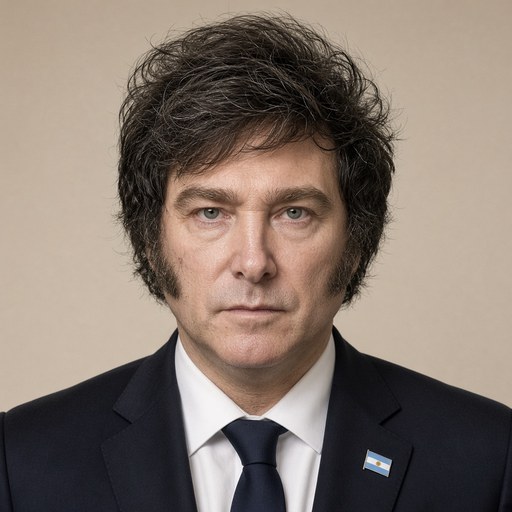
Words of the President of the Nation, Javier Milei, at the Council of the Americas 2025, at the Alvear Palace Hotel in the City of Buenos Aires.
 Javier Milei · President of Argentina
- Context
- Milei addressed the Council of the Americas 2025 at the Alvear Palace Hotel in Buenos Aires on August 21, 2025, defending his government's economic reforms.
- Main themes
- Kirchnerist opposition obstruction, fiscal responsibility and deficit spending, monetary issuance and inflation, Argentina's economic recovery, libertarian governance model, political corruption and clientelism, poverty as political tool, free-market reform, Argentina's 2023 crisis legacy, Council of the Americas address
- Duration
- ~42 min
- Words
- 4,995
- Sentences
- 165
- Readability
- 48
- Grade
- 13.7
- Syntax
- 3.34
- Vocabulary
- 2.07
Translated from Spanish
The broad sphere of national life a sentence belongs to. Every sentence has an Arena, so it is the denominator the other indices are read against.
Other165 sentences in 31 paragraphs
Good morning everyone. I would like to thank Susan Segal, Natalio Grinman, and the other members of the Council of the Americas and also of the Chamber of Commerce and Services for inviting me to speak at this important event for the political and economic relations of the American continent. Hello, Eduardo, how are you? Today is not just any day. Yesterday we witnessed a macabre spectacle in the National Congress. They made it very clear once again that we are facing a Congress hijacked by Kirchnerism, a Congress that only responds to its own interests; they reminded us that they have a single legislative agenda: to break the National State. It is surprising to hear from these "honorable" Kirchnerist legislators that their spending spree is to stop the cruelty of this Government. They who - two years ago - left us all on the brink of catastrophe hide the fact that the end point of all these initiatives is to break the State.
They know that without access to external financing due to their constant fiscal imbalances and mistreatment of creditors, this deficit spending can only be financed through monetary issuance. Reopening the tap of monetary issuance means returning to the catastrophic path of inflationary destruction, which cost us so much to leave behind.
That is why we say that the Kirchnerists in Congress have no other intention than to return the 47 million Argentines to the worst moment of 2023, and also, why not say it, the crisis that they left behind and that we were able to successfully avoid. And why would the supposed champions of poverty want to destroy the country? Are they not noble souls who feel the suffering of the most miserable? It is simple; they seek to break the economy because they know that theirs will always be there - and even more so - theirs will always be there as long as people believe they depend on them. Let’s see if it is understood once and for all: Kirchnerism does not care about ruining the lives of all good Argentines, as long as it goes against our management.
And it is very easy to understand why. They do not know - firsthand - what it is like to suffer in a country with inflation; a country with economic chaos; without job opportunities and stagnated without any horizon. Because they have always lived off politics and have always increased their own salaries at will, just by raising their hands. Because all their relatives and friends have lived, for years, off the State, either as public employees or because they have illegitimate businesses with the State and the provinces. They see in the economic destruction they cause a great opportunity. Because it is - then - when they offer their future clients the bloodied hand of the State hidden behind a veil of charity. For them, every poor person is - nothing more and nothing less - than an opportunity to accumulate even more power, to economically subjugate the honest citizen. That is why they multiply them; that is why they do not want us to get out of the pit. Any working Argentine understands that, when it comes to growth, effort, savings, and sacrifice come first, and then the results follow. That is something a politician does not understand or does not find useful to admit publicly.
They want to make people believe that results can appear by magic. In this way, they present themselves as the ones who could solve the problems, problems that, of course, they themselves caused in the first place. And that is how they have governed their entire lives, ignoring the natural conditions of work and the management of resources. They do not understand or care about the calvary that society has lived through over the last decade and a half. In 2023, the model of the caste reached its limit, Argentines looked into the abyss of chaos and hyperinflation, and in the face of that, we took the risks of embarking on a 180-degree change. We decided to stop doing the same old thing; to truly change direction. That is why they voted for the first libertarian liberal President in history, and all this despite the fact that this change did not promise magical solutions, much less instant ones. It did not promise to be more of the same that ruined us, but now doing it right. The commitment to society was not to do the wrong things correctly, but to do good knowing that even through effort, the fruits harvested would be lasting.
A year and a half later, we have demonstrated that doing things differently is possible, that we do not have to reinvent the wheel, that with effort and responsibility - both from the Government and from Argentines - we can move the country forward; and that is how we are beginning to see the first results of this arduous process. We are finally laying the strong foundations of a new country, a task that the political class has banished from its ideology because it considered it impossible. All politicians were content to manage decay.
We, on the other hand, dare to dream of greatness. They saw no further than the immediate present and were the cause of our miserable past, while we think about the future and continue to think about the future. That is why many people are hopeful, despite the great effort of these years, and that is why politics is terrified, because - as a prominent figure of 21st-century socialism confessed - when people are better off, when the poor begin to have, they stop listening to leftist governments, because they know that if the country moves forward, people will no longer need them, because they never believed that what we achieved in this year and a half was even possible. They need to break the illusion of the people because if that illusion materializes, they lose forever. That is why their only plan at present is to sabotage the future, because they want to take us back directly to the past. This has been demonstrated in the last three months, in Congress, and they no longer even try to hide it.
Here I want to make an additional reference because sometimes one has the feeling that analysts or journalists or those who dedicate themselves to watching politics do not have a clear understanding of what we have in front of us, what is happening. Perhaps they do not even take the trouble to look at the horrific things that are done in Congress. But there are many who criticize by saying: in the first year or during 2024, there was political management and - now - there is no political management. The reality is that there are basically two major errors in that way of making the argument: first, it is not understanding what Kirchnerists are and how they are.
We, during the first year, managed to pass many reforms; in fact, we made the largest reform in Argentine history; we made 8,000 structural reforms, in the context of the most successful stabilization plan in Argentina. However, one could say: but - during 2024 - the legislative agenda flowed and - during 2025 - it is stuck. It is very simple, the reason why things were not approved is that they believed they would go wrong; that is, they enabled it because they were convinced that we would end up burning the ideas so that they could perpetuate themselves in power; what happens is that the ideas of freedom work and began to work very well. So, when they said that we would not be able to lower inflation because inflation is multi-causal, we demonstrated to them that inflation is always and everywhere a monetary phenomenon.
And from having an inflation rate of 1.5% daily; today, or if you prefer 17,000% annually, today the numbers are 1.5% monthly, that is, levels of 20%. Not only that, we made the largest fiscal adjustment in the history of humanity. We made almost 7 points of fiscal adjustment in the first month of Government, something that no one achieved in the previous 123 years, but also, we cleaned up the balance of the Central Bank and, in addition, we lifted the capital controls, despite them saying that, in an election year, we would not do it, but what always prevails is the moral solution over the utilitarian; and it was a success as well.
Therefore, they said that - afterwards - we would fall into a sort of great depression; then, while we continued to insist that it would be a V, they started saying that it was actually an L, that it would flatten; then that it was the soft Nike swoosh; then they recognized that it was a short V, and then - they had no choice - but to look astonished that it was a tilde. Because if we take GDP - measured by EMAE, in its monthly seasonally adjusted frequency - December '24 ended 6% above December '23. That is, we not only managed to defeat inflation, but we also did it with growth; not only that, but also, the cruel liberals lifted 12 million people out of poverty, and - today - those who said that people could not afford to eat, there are 6 million more Argentines who can eat today.
Therefore, it is not that they supported us and accompanied us or did not obstruct us because they wanted to collaborate after understanding the message of the polls. In reality, they believed that everything would catch fire and what went wrong for them because the ideas of freedom truly work; and naturally - now - we are in an election year. If you look at the numbers from the polls, you will understand what is happening, you will understand each of the things that are happening because it is very simple: we are at a turning point, we are facing the possibility of definitively ending Kirchnerism, specifically they are splitting the elections because they cannot face the National Government fully and genuinely.
That is why the election on September 7 is so important, because - basically - Kirchnerism is going to throw everything there; do not forget that voting is done differently and they will try all kinds of fraud, chain voting, stuffed ballot boxes, operators directly buying schools, not only that, but also - in addition - the moral fraud that are the testimonial candidacies. And all the mayors throwing the apparatus. That is to say, that - by September - we will be seeing the ceiling of Kirchnerism.
On the other hand, we know that, in the October election, voting is done with a single paper ballot; a reform that we made, which no government has ever done because when governments are in power, they want to use the machinery of the State to twist the course of elections. We, on the other hand, do make the reforms that Argentina needs, regardless of whether they benefit us or not.
And the testimonials will not be there either, nor will the mayors be risking their lives with their apparatus, and it is also the national election. Therefore, we have a floor, in September, and in October, it will be much better. More or less to give you an order of magnitude: when we faced the runoff, the key to winning the runoff was that we lost the province of Buenos Aires by less than 16 points; since we lost the province of Buenos Aires in the runoff by two points, we won the runoff by 14 points. What problem does Kirchnerism face today? That, given their best election, which will be in September, we are in a close fight and if people go to vote, that fight can tilt in our favor, because the more people vote, the less the apparatus weighs, and the reality is that if we also manage to win - in September - because in October we will win, but if we beat them in September, we would be putting the last nail in the coffin of Kirchnerism and ending the decadent and operator populism that so burdens us.
Moreover, we have the mandate and the moral obligation that - for the first time in decades - the illusion is matched with a better future and that is why we have dedicated all our government effort to building a country from the ground up, not from the top down as if it were about pulling its leaves for a tree to grow. Let us remember, for a second, where Argentina was a year ago when I spoke before this same Council. We had an economy still very battered by the legacy; with severe distortions from the currency controls and a gap around 40%; with inflation still traveling above 4% monthly and with a risk that was above 1,500 points. At that time, we invited you to judge our intentions to follow the outlined path and even predicted that the path would hold, despite any global turbulence that might exist, and there have certainly been global turbulences in the last 12 months. Today, a year later, we have traveled an important stretch of that path and we invite you again to judge us, but - this time - to judge us by what we have done, by the results obtained. We are well aware that these results are the first and that we still have a long way to go because if there is one thing we learned from the past, it is that if we want to take Argentina to the highest and turn it into a skyscraper, we must first lay secure and deep foundations. This will ensure that the building does not collapse, as has happened so many times.
And this is what our first half of government was based on: on removing the soil and digging deep to make changes from the root; on cleaning up a devastated macroeconomy so that it would not be a brake on the creativity and investment of Argentines; on restoring the price system so that all economic agents could make better decisions. As we anticipated back then, our intention is to do things right rather than do them quickly, and that is how it has been. I take, for example, the currency controls, one of the greatest economic distortions inherited by our administration and one of the main sources of anxiety for the private sector, from day one. This year - as we promised - we managed to exit the currency controls without a spike in the dollar, but with a convergence of the parallel dollar to the official one and without a spike in inflation; another thing that you will have to acknowledge: that the pass-through is merely a fallacy and that it is an error of economists who do not understand monetary theory. In other words, despite the constant attempts at destabilization, via the exchange rate - the Argentine economy did not experience any pass-through, thanks to our monetary tightening, there was no monetary validation that justified an increase in the rest of the prices in the economy. And as I clarified before, we achieved all this in a context of international volatility that had not been seen in years.
Argentina, by remaining true to its macroeconomic anchors, managed to weather the storms in the form of external shocks to find itself where it is today. You might then ask, where is Argentina today? Today we find ourselves with a country whose inflation is around 1.5% monthly, that is, we are around 20% annually; with a Country Risk around 700 points; a country whose economy has been growing steadily at a rate of 6% year-on-year, according to the latest data. I want to make a note about this because sometimes we get anxious, those who have taken any course on growth, to understand the logic of how compound interest works, that is, how exponential functions work, especially in terms of growth, there is something called the Rule of 70. The Rule of 70 relates to the number of years you need to double GDP.
So, for example, if you grow at 7%, in 10 years you will double GDP. Why is this important? Because we have been growing at rates of 6%, at this moment, and obviously when we leave behind the kuka risk and no one is afraid for the stability of the fiscal balance, which I also thank the 83 heroes from yesterday who defended the fiscal balance against the fiscal degenerates..., only the fiscal balance will ensure a growth of 4%, but if - in addition - we add the enormous structural reforms we have been making, from the Deregulation Ministry and in Human Capital and in terms of opening up, we will be able to make a clearly higher growth rate permanent. In fact, if it were 6%, in 10 years, in 11 years we would be doubling GDP, but in 22 years we would be multiplying it by 4 and we would already be at levels typical of a power. That is to say, it is not so far away, it is just a matter of doing things right, it is just a matter of embracing the ideas of freedom, and as long as we continue to embrace that path, Argentina will be great again, do not doubt it.
On the other hand, there is also a whole discussion about the exchange rate and so on here, despite the fact that the exchange rate floats, the exchange rate floats; it seems that they have not internalized that yet. Still, I have grown tired of getting angry with economists, it seems they have an allergy to reading Hayek, Mises, Rothbard, but at some point they will read them and understand how the price system works, they will understand what fatal arrogance is, they will understand what the use of information in society is about. But if we want to look at the exchange rate problem, not only is our exchange rate free and unified today, but its value is below that of the financial dollars a year ago. In other words, today the dollar… moreover, it does not differ much from when we took office the parallel one, not to mention if you adjust it for inflation. And the truth is that there are both cyclical issues and long-term issues because this could be explained - in part - by our sustained trade surplus, based on record exports in various sectors of our economy; in the energy sector, for example, we had the largest trade surplus in the last 35 years, driven by countless investments being made in the sector. In fact, yesterday, we met with two mining companies and each of them is going to end up making an investment of 20 billion dollars each. Which, in addition, will generate a huge amount of foreign currency in terms of mineral exports. That is to say, not to mention everything related to continuing to develop Vaca Muerta, not to mention everything that the Argentine countryside contributes, not to mention everything we have to do in nuclear matters. That is to say, from here on out, what is in surplus is dollars, but it is also important to keep in mind that it is not just about the dollars, because - at the bottom - it is neither more nor less than when one looks at the dollar it is the relative price..., the dollar in relation to the peso and it is also important the tough monetary policy we are carrying out, not letting ourselves be carried away by the siren songs that call for monetary issuance so that someone is calm, with the interest rate. Guys, if you fix the amount of money, you are in an election year, you have volatility in the demand for money and on the other side is the kuka risk, where do you want the interest rate? What do you think, can you have an interest rate under normal conditions of pressure and temperature when on the other side you have those who want to break the whole country? Impossible. So less crying about the volatility of the rate that we are carrying without jolts throughout the economy, despite the kukas.
And, on the other hand, as always there are the complainers, yes, there are people who complain about the current account; now the issue is that the current account deficit is mainly explained by the increase in imports of capital goods for the rehabilitation of our economy, and this deficit is entirely financed by the private sector. There are several issues to discuss here. Essentially, the current account deficit has to do with the difference between domestic savings and investment and when the equilibrium conditions of the local economy imply an intertemporal coordination interest rate above the international one, the economy generates a current account deficit; exactly. Why? Because there are investment opportunities that can be realized and that - in other contexts - could not be realized. Therefore, if the current account deficit is generated by investment, it is not a problem. Moreover, if you look at us - in 2017 - we had a current account deficit of 8 points of GDP, and 7 were explained by the fiscal deficit. Today, 1.8% current account deficit, that is, nothing. And all derived from the private sector. Moreover, I will tell you something: once the elections are over, once the kuka risk is over, you know what? The interest rate will go down, and you know what it will generate? More current account deficit, obviously.
But it is a current account deficit that will be generated, by whom? the private sector, and it is resolved among private parties, and it manifests itself in the exchange market, how much fear do you have of the price system? Basically, I see no reason for so much concern about something that economic theory has explained and proven so widely. It is incredible that decisions continue to be made and fears are loaded based on improper models that have been failing for 70 or 80 years and that are also wrong. In other words, they are neither good, in theory, because they are collections of inconsistent partial equilibrium models, that is, having a system of equations does not imply that you have a general equilibrium system, the difference would need to be explained, we need to do a little more teaching. But, then, they are almost natural results because in fact, all countries that have made strong convergence have lived, for many years, with current account deficits. So when economists appear scaring you about the current account, look at what the current account is composed of and if it is due to investments and everything remains in the private sector, and the public sector is not involved, go ahead because it is resolved in the private sector and it is the prelude to strong economic growth.
I could not help but deviate a little always… In addition, we also managed to put into operation the Incentive Regime for Large Investments, which boosts various industrial sectors, such as energy and mining. We have already presented nearly 20 projects… I remember that, in fact, what the opposition said, and I believe that is the reason why it was approved, was that it would not work, and not only do we have 20 approved projects, 35 billion dollars are already committed, meanwhile the Soviet one does not have RIGI, in the province of Buenos Aires. And if that were not enough, all this was achieved by reducing our country's debt, thanks to our unwavering commitment to fiscal surplus. Thus, we managed to reduce consolidated public debt by more than 50 billion dollars. Did you hear that right? We reduced the debt by 50 billion dollars, which represented a 10% reduction in the stock of our public debt. And we achieved this without access to international markets, so we had to pay cash for debt maturities. Those who run companies and so on know how difficult it is to live without rollover; here the best Minister of Economy in history did it, along with Pablo Quirno. Thank you ‘Toto’, thank you Pablo.
But all these achievements are just the beginning of getting out of the hole we have been sinking into due to politics. It is true that we have made progress, but we have not come out of the storm; on the contrary, we are in the midst of a political turbulence, the outcome of which will determine the future of the Argentine Republic. For the first time in the last century, two distinct models of the country have been put on the table, awaiting the decision of the sovereign Argentine people. Essentially what I am saying is: there is a Chinese curse that says: “may you live in interesting times.” And the reality is that we are facing a very interesting moment in history. For the first time, Argentines will go to the polls to confront two models and - fortunately - and thanks to the enormous talent of each of my Ministers and each of the Argentines, who supported this, we can also present results and people will be able to choose, people will be able to choose between the path of freedom and prosperity or continue embracing collectivist-socialist ideas and end up sinking into a pit. So that is wonderful, we are facing a pivotal moment and I hope that Argentines choose freedom.
In fact, without going too far, we are just a few days away from the local legislative elections in the province of Buenos Aires, our largest province, and two months away from the national legislative elections, which will significantly change the composition of our Congress. This represents a warning sign for the Kirchnerists, they know their time is running out, they know we are going to sweep them away and take away the seats they currently use for their own benefit. That is why they are desperate, resorting to any resource at their disposal to detonate the macroeconomic order and generate a crisis that ends with the government elected by popular vote. They do not care about setting the economy and social order on fire. In fact, they have already done it and then offered themselves as saviors, willing to govern over the ashes of the fire they themselves provoked. That is how vile they are. Kirchnerism is an emblematic case, their rise to power was nothing more than a social explosion, generated by those who later divided up the positions. They know that our greatest strength is the macroeconomic order because if our surplus model acts like an armored ship, the deficit model they want to return us to is like a raft full of holes, and the reason is simple: they have come to extract the wealth of Argentines as quickly as possible, and the long-term benefit of having the accounts in order is not part of their concerns.
They want to go back, right now, to continue milking the cash cow; that is why they pass laws that threaten our fiscal surplus. That is why they try to separate local elections from national ones to confuse people and ensure the prevalence of rented votes, but people already know them, they have suffered from them for 20 years, and are aware of all their tricks and just like in 2023, they will again say: enough.
To understand the kind of politicians we are dealing with, recently, an opposition candidate boasted on television that his only plan is to halt the deregulation process to prevent the investments our country needs from coming in. That is the kind of psychopaths who are the historical burden of the country; they believe that Argentina belongs to them, including its people and its wealth; and they would rather own a destroyed country than be ordinary citizens of a prosperous and great Nation. That is why they are capable of turning paradise into hell just to return; that is why I say it is not simply them or us, it is them or the Argentines. I am just in the middle.
Argentina is playing the most important match in its history; it must decide whether to persist on the path of change and growth or to turn back to the path of misery and Kirchnerist servitude. There are only two paths: either we finish what we started and change the country definitively, or we go back and throw all our effort in the trash.
Our doors are open to anyone who wants to join us at this pivotal moment; anyone who wants to push towards a prosperous Argentina will always be welcome, but know that we are unbreakable, our iron conviction prevents us from deviating a millimeter from the course we have set. Argentina will leave behind its century of humiliation once and for all.
That is why not voting is not a viable option this time, because - on the other side - there are fiscal arsonists willing to vote as many times as necessary to take the fruits of our effort. They have never been interested in doing anything else, so it is up to us to tip the scales and tell them never again: never again to their abuses; never again to their misery; never again to using the money of all Argentines as a war booty; never again to fiscal slavery; never again to Kirchnerism.
For all this, I want to thank everyone present for being part of this conference. May God bless the Argentines, may the strength of heaven be with us, and… long live freedom, damn it! Thank you very much.
The original Spanish. The tags above are read on the English translation's sentences.
Buenas días a todos. Les agradezco nuevamente a Susan Segal, a Natalio Grinman y a los demás integrantes del Council of the Americas y también de la Cámara de Comercio y Servicios por haberme invitado a hablar a este evento tan importante para las relaciones políticas y económicas del continente americano. Hola, Eduardo, ¿cómo anda? Hoy no es un día como cualquier otro. Ayer asistimos a un espectáculo macabro en el Congreso de la Nación. Nos dejaron bien en claro una vez más que enfrente tenemos un Congreso secuestrado por el kirchnerismo, un Congreso que solo responde a sus propios intereses; nos recordaron que ellos tienen una sola agenda legislativa: quebrar al Estado Nacional. Es sorprendente escuchar de parte de estos “honorables” legisladores kirchnerista que su festival de gasto es para frenar la crueldad de este Gobierno. Ellos que - hace dos años - nos dejaron a todos al borde de la catástrofe esconden que el punto de llegada, de todas estas iniciativas, es quebrar al Estado.
Saben que sin acceso al financiamiento externo por culpa de sus constantes y desajuste fiscales y maltratos a los acreedores, este gasto deficitario sólo se podría financiar vía emisión monetaria. Volver a abrir la canilla de la emisión monetaria implica volver al sendero catastrófico de destrucción inflacionaria, que tanto nos costó dejar atrás.
Por eso decimos que los kirchneristas, en el Congreso, no tienen ninguna otra intención más que devolver a los 47 millones de los argentinos el peor momento del 2023, y también, por qué no decirlo, la crisis que tanto dejaron plantada y que pudimos evitar exitosamente. Y por qué querrían al supuesto paladines de la pobreza destruir al país, no son acaso almas nobles, que sienten en carne propia sufrimiento de los más miserables; es sencillo, ellos buscan romper la economía porque saben que la suya siempre va a estar - y más aún - la suya va a estar siempre que la gente crea que dependen de ellos. A ver si se entiende de una vez: al kirchnerismo no le importa arruinarle la vida a todos los argentinos de bien, con tal de ir contra nuestra gestión.
Y es muy fácil de comprender por qué. Ellos no conocen - en carne propia - lo que es sufrir un país con inflación; un país con caos económico; sin oportunidades laborales y estancados sin horizonte alguno. Porque ellos siempre vivieron de la política y siempre se aumentaron sus propios sueldos a gusto, tan sólo levantando la manito. Porque todos sus familiares y amigos viven, desde hace años, del Estado, ya sea porque son empleados públicos o porque tienen negocios ilegítimos con el Estado y las provincias. Ellos ven en la destrucción económica, que causan, una gran oportunidad. Porque es – entonces - cuando le acercan a sus futuros clientes la mano ensangrentada del Estado escondida de un velo de caridad. Para ellos cada pobre no es - ni más ni menos - que una oportunidad de acumular aún más poder, de someter económicamente al ciudadano honesto. Por eso los multiplican; por eso no quieren que salgamos del pozo. Cualquier argentino de trabajo entiende que, a la hora de crecer, primero viene el esfuerzo, el ahorro, el sacrificio, y luego vienen los resultados. Eso es algo que un político no entiende o que no le sirve admitir públicamente.
Ellos le quieren hacer creer a la gente que los resultados pueden aparecer por arte de magia. De esa forma se presentan como los que podrían solucionar los problemas, problemas que, desde luego, ellos mismos causaron en primer lugar. Y así gobernaron toda su vida, ignorando las condiciones naturales de trabajo y la administración de los recursos. Ellos no comprenden ni les importa el calvario que vivió la sociedad, durante la última década y media. En el 2023, el modelo de la casta llegó a su límite, los argentinos miramos al abismo del caos y la hiperinflación, y frente a eso, asumimos los riesgos de emprender un cambio de 180 grados. Decidimos dejar de hacer lo mismo de siempre; cambiar verdaderamente de dirección. Por eso votaron al primer Presidente liberal libertario de la historia y todo esto a pesar de que ese cambio no prometía soluciones mágicas ni mucho menos instantáneas. No prometía ser más de lo mismo que nos arruinó, pero ahora haciéndolo bien. El compromiso con la sociedad no fue hacer las cosas malas correctamente, sino hacer el bien a sabiendas de que aun atravesando el esfuerzo los frutos cosechados serían duraderos.
Un año y medio después, hemos demostrado que hacer las cosas de otra forma es posible, que no hay que reinventar la rueda, que con el esfuerzo y la responsabilidad - tanto el Gobierno como de los argentinos - se puede sacar el país adelante; y así es que se empiezan a ver los primeros resultados de este arduo proceso. Estamos asentando, finalmente, los cimientos fuertes de un nuevo país, una tarea que la clase política desterró de su ideario por considerarla imposible. Todos los políticos se contentaban con administrar la decadencia.
Nosotros - en cambio - nos atrevemos a soñar con la grandeza. Todos ellos no veían más allá del presente inmediato y fueron la causa de nuestro pasado miserable, y nosotros pensamos en el futuro y seguimos pensando en el futuro. Por eso mucha gente está ilusionada, a pesar del gran esfuerzo de estos años, y por eso la política está aterrada, porque - como confesó una encumbrado referente del socialismo del siglo XXI - cuando a la gente le va mejor, cuando los pobres empiezan a tener, dejan de escuchar a los gobiernos de izquierda, porque saben que si el país sale adelante la gente ya no los va a necesitar, porque nunca creyeron que fuera siquiera posible lo que logramos en este año y medio. Ellos necesitan romper la ilusión de la gente porque si esa ilusión se concreta, ellos pierden para siempre. Por eso su único plan en el presente es sabotear el futuro, porque quieren devolvernos directo al pasado. Esto es lo que ha quedado demostrado en los últimos tres meses, en el Congreso, y ya ni siquiera buscan esconderlo.
Acá quiero quiero hacer una referencia adicional porque, a veces, uno tiene la sensación de que no tienen en claro - los analistas o los periodistas o los que se dedican a mirar la política - qué es lo que tenemos enfrente, qué es lo que está pasando. Quizás ni siquiera se toman el trabajo de mirar las cosas dantescas que se hacen, en el Congreso. Pero hay muchos que hacen como crítica diciendo: en el primer año o en el durante el 2024, hubo gestión política y – ahora - no hay gestión política. La realidad es que ahí hay, básicamente, dos grandes errores en esa forma de hacer el planteo: primero, es no entender qué son y cómo son los kirchneristas.
Nosotros, durante el primer año, hemos logrado pasar muchísimas reformas; de hecho, hemos hecho la reforma más grande de la historia argentina; hemos hecho 8.000 reformas estructurales, en el contexto también del plan de estabilización más exitoso de la Argentina. Sin embargo, uno podría decir: pero - durante el 2024 - la agenda legislativa fluyó y - durante el 2025 - está empastada, atascada. Es muy simple, el motivo por el cual no se aprobaban las cosas es porque creían que iban a salir mal; es decir, lo habilitaron porque estaban convencidos que íbamos a terminar de incendiar las ideas para que ellos pudieran perpetuarse en el poder; lo que pasa es que las ideas de la libertad funcionan y empezaron a funcionar muy bien. Entonces, cuando decían que no íbamos a poder bajar la inflación porque la inflación es multicausal, nosotros le demostramos que la inflación es siempre y, en todo lugar, un fenómeno monetario.
Y de tener una inflación que viajaba al 1.5% diario; hoy, o si ustedes quieren 17.000% anual, hoy los números son del 1.5% mensual, es decir niveles del 20%. No sólo eso, hicimos el ajuste fiscal más grande de la historia de la humanidad. Hicimos casi 7 puntos de ajuste fiscal, en el primer mes de Gobierno, algo que no logró nadie en los 123 años anteriores, sino que, además, también limpiamos el balance del Banco Central y, además, sacamos el cepo, a pesar de que dijeron que, en un año electoral, no lo íbamos a hacer, pero lo que prima siempre es la solución moral sobre la utilitarista; y vaya que fue un éxito también.
Por lo tanto, dijeron que – después - nos íbamos a caer en una suerte de gran depresión; después, mientras que nosotros seguíamos insistiendo que iba a ser una V, empezaron con que en realidad era una L, que se iba a aplanar; después que era la pipita de Nike suave; después reconocieron que era en V corta, y después - no les quedó otra - que mirar azorados que fue una tilde. Porque si tomamos el PBI - medido por el EMAE, en su frecuencia mensual desestacionalizada - diciembre del ‘24 terminó 6% por encima de diciembre del ‘23. Es decir, no sólo hemos logrado derrotar a la inflación, sino que, además, lo hicimos con crecimiento; no sólo eso sino que, además, los crueles liberales sacamos a 12 millones de personas de la pobreza, y – hoy - los que decían que la gente no le alcanza para comer hay 6 millones más de argentinos que sí hoy pueden comer.
Por lo tanto, no es que nos apoyaron y acompañaron o no obstruyeron porque querían colaborar por haber entendido el mensaje de las urnas. En realidad creían que todo se iba a prender fuego y lo que le salió mal porque las ideas de la libertad verdaderamente funcionan; y naturalmente – ahora - estamos en año electoral. Si ustedes miran los números de las encuestas van a entender lo que está pasando, van a entender cada una de las cosas que está pasando porque es muy simple: estamos en un momento bisagra, estamos frente a la posibilidad de terminar – definitivamente - con el kirchnerismo, concretamente desdoblan las elecciones porque no pueden enfrentar al Gobierno Nacional de manera plena y genuina.
Por eso es tan importante la elección del 7 de septiembre, porque – básicamente - el kirchnerismo va a tirar todo ahí; no se olviden que se vota de una manera distinta y van a intentar todo tipo de fraude, el voto cadena, la urna embarazada, punteros comprándose directamente los colegios, no solo eso, sino que - además - el fraude moral que son las candidaturas testimoniales. Y todos los intendentes tirando el aparato. Es decir, que - para septiembre - vamos a estar viendo el techo del kirchnerismo.
Por otra parte, nosotros sabemos que, en la elección de octubre, se vota con boleta única papel; reforma que hicimos nosotros, que nunca hizo un oficialismo porque cuando los oficialismos son oficialismo quieren utilizar la maquinaria del Estado para torcer el rumbo de las elecciones. Nosotros, en cambio, sí hacemos las reformas que la Argentina necesita, a pesar de que nos beneficien o no.
Y tampoco van a estar las testimoniales y tampoco van a estar los intendentes jugándose la vida con sus aparatos, y además es la elección nacional. Por ende, nosotros tenemos un piso, en septiembre, y en octubre, va a ser mucho mejor. Más o menos para que tengan un orden de magnitudes: nosotros cuando enfrentábamos el balotaje, la clave para poder ganar el balotaje era que perdiéramos la provincia de Buenos Aires por menos de 16 puntos; como perdimos la provincia de Buenos Aires en el balotaje por dos puntos, ganamos en el balotaje por 14 puntos. ¿Cuál es el problema que enfrenta hoy el kirchnerismo? Que, dada su mejor elección, que va a ser la de septiembre, estamos en una pelea pareja y que si la gente va a votar esa pelea se puede llegar a inclinar en favor nuestro, porque cuanto más gente vote, menos pesa el aparato, y la realidad es que si, además, le llegamos a ganar - en septiembre -, porque en octubre les vamos a ganar, pero si les ganamos en septiembre estaríamos poniendo el último clavo al cajón del kirchnerismo y terminar con el populismo decadente y operador que tanto nos agobia.
Además, nosotros tenemos el mandato y la obligación moral de que - por primera vez en décadas - la ilusión sea correspondida con un futuro mejor y por eso hemos dedicado todo nuestro esfuerzo de Gobierno a construir un país desde los cimientos hacia arriba, no desde arriba hacia abajo como si va a estar con tirar de sus hojas para que un árbol crezca. Recordemos, por un segundo, dónde estaba Argentina, hace un año, cuando expuse ante este mismo Consejo. Teníamos una economía aún muy golpeada por la herencia; con distorsiones severas con el cepo cambiario y una brecha en torno al 40%; con una inflación que aún viajaba por encima del 4% mensual y con un riesgo que estaba por encima de los 1.500 puntos. En aquel entonces, los invitamos a juzgar por nuestras intenciones de cumplir el camino trazado e incluso auguramos que el camino se sostendría, a pesar de cualquier turbulencia global, que pudiera existir, y vaya que han existido turbulencias globales en los últimos 12 meses. Hoy, un año después, hemos transitado un importante trecho de ese camino y los invitamos nuevamente a juzgarnos, pero - esta vez - a que nos juzguen por lo hecho, por los resultados obtenidos. Tenemos bien en claro que estos resultados son los primeros y que aún nos queda mucho porque si hay algo que aprendimos del pasado es que si queremos llevar adelante a la Argentina lo más alto y convertirla en un rascacielos, primero debemos asentar cimientos seguros y profundos. Así aseguraremos que el edificio no colapse, como ha sucedido tantas veces.
Y en eso se basó nuestra primera mitad de Gobierno: en remover la tierra y calar profundo para hacer cambios desde la raíz; en sanear una macroeconomía devastada para que la misma no sea un freno a la creatividad y a la inversión de los argentinos; recomponer el sistema de precios para que todos los agentes económicos puedan tomar mejores decisiones. Tal como anticipamos, en aquel entonces, nuestra intención es hacer las cosas bien en lugar de hacerlas rápido, y así fue. Tomo - por ejemplo - el cepo cambiario, una de las mayores distorsiones económicas que heredó nuestra gestión y una de los principales focos de ansiedad del sector privado, desde el día cero. Este año - tal como lo prometimos - logramos salir del cepo sin una disparada del dólar, sino con una convergencia del dólar paralelo al oficial y sin una disparada inflacionaria; otra cosa que van a tener que reconocernos: que el pass-thru es solamente una falacia y que es un error propio de economistas que no saben de teoría monetaria. O sea, que - a pesar de los constantes intentos de esa desestabilización, vía el tipo de cambio - la economía argentina no experimentó ningún pass-thru, gracias a nuestro torniquete de pesos no existió convalidación monetaria que justificara un aumento en el resto de los precios de la economía. Y tal como aclaré antes, todo esto lo logramos en un contexto de volatilidad internacional que no se veía hace años.
Argentina, gracias a mantenerse fiel a sus anclas macroeconómicas, logró atravesar las tempestades en forma de shock externos para encontrarse donde está hoy. Ustedes podrían preguntarse entonces, ¿dónde está Argentina hoy? Hoy nos encontramos con un país, cuya inflación viaja en la zona del 1,5% mensual, es decir, estamos en torno al 20% anual; con un Riesgo País ubicado en torno a los 700 puntos; un país cuya economía viene creciendo sostenidamente al ritmo del 6% interanual, según el último dato. Quiero hacer una nota de color sobre esto porque a veces nos gana la ansiedad, aquellos que hayan tomado algún curso de crecimiento, para entender la lógica de cómo trabaja el interés compuesto, es decir, cómo trabaja las funciones exponenciales, en especial en materia de crecimiento, hay algo que se llama la Regla del 70. La Regla del 70 tiene que ver con la cantidad de años que ustedes necesitan para duplicar el PBI.
Entonces, por ejemplo, si ustedes crecen al 7%, en 10 años van a lograr duplicar el PBI. ¿Por qué es importante? Porque nosotros venimos creciendo a tasas del 6%, en este momento, y obviamente que cuando dejemos atrás al riesgo kuka y que nadie ya tenga miedo por la estabilidad del equilibrio fiscal, que agradezco, además, a los 83 héroes, de ayer, que defendieron el equilibrio fiscal frente a los degenerados fiscales…, solamente el equilibrio fiscal va a asegurar un crecimiento del 4%, pero si - además - sumamos las enormes reformas estructurales que venimos haciendo, desde el Ministerio Desregulación y en Capital Humano y en lo que tiene que ver con la apertura, vamos a poder hacer permanente una tasa de crecimiento claramente más alta. De hecho, si fuera del 6%, en 10 años, en 11 años estaríamos duplicando el PBI, pero en 22 años lo estaríamos multiplicando por 4 y estaríamos ya en niveles propios de una potencia. Es decir, no está tan lejos, sólo se trata de hacer las cosas bien, sólo se trata de abrazar las ideas de la libertad, y - en tanto y en cuanto - sigamos abrazados a ese camino, Argentina va a ser grande nuevamente, no tengan dudas.
Por otra parte, también hay toda una discusión sobre el tipo de cambio y demás siempre acá, a pesar de que el tipo de cambio flota, el tipo de cambio flota; parece que esa todavía no la internalizan. Igual, ya hasta me cansé de enojarme con los economistas, o sea, parece que le tienen alergia a leer a Hayek, Mises, a Rothbard, pero en algún momento los leerán y entenderán cómo funciona el sistema de precios, entenderán qué es la fatal arrogancia, entenderán de qué se trata el uso de la información en la sociedad. Pero si queremos mirar el problema cambiario, no sólo que hoy nuestro tipo de cambio es libre y unificado y su valor se encuentra debajo del que se encontraban los dólares financieros, hace un año atrás. Es decir, hoy el dólar… es más, no difiere mucho de que cuando asumimos el paralelo, ni qué hablar si lo ajustan por inflación. Y la verdad que esto hay cuestiones coyunturales y con cuestiones de largo plazo porque esto podría explicarse - en parte - por nuestro superávit comercial sostenido, a base de exportaciones récord en distintos sectores de nuestra economía; en el sector energético, por ejemplo, tuvimos el mayor saldo comercial de los últimos 35 años, impulsado por un incontable cantidad de inversiones que se están haciendo en el sector. De hecho, ayer, estuvimos reunidos con dos mineras y cada una de ellas va a terminar haciendo, cada una, una inversión de 20 mil millones de dólares. Que, además, van a generar una cantidad enorme de divisas en lo que tiene que ver con la exportación de minerales. Es decir, ni que hablar todo lo que tiene que ver con seguir desarrollando Vaca Muerta, ni que hablar todo lo que aporta el campo argentino, ni que hablar de todo lo que tenemos para hacer en materia nuclear. Es decir que - de acá para adelante - lo que sobran son dólares, pero también hay que tener en cuenta que no es solamente los dólares, porque - en el fondo - no es ni más ni menos que cuando uno mira el dólar es el precio relativo…, el dólar respecto al peso y también es importante la dura política monetaria que llevamos, de no dejarnos llevar por los cantos de sirena que piden emisión monetaria para que alguien esté tranquilo, con la tasa de interés. Muchachos, si uno fija la cantidad de dinero, están en año electoral, tienen volatilidad en la demanda de dinero y del otro lado está el riesgo kuka, ¿a dónde la quieren la tasa de interés? ¿Qué creen, pueden tener una tasa de interés de condiciones normales y de presión y temperatura cuando del otro lado tienen los que quieren romper todo el país? Imposible. Así que menos llanto por la volatilidad de la tasa que bastante, que estamos llevando sin sobresalto toda la economía, a pesar de los kukas.
Y, por otra parte, como siempre están los quejosos, sí, hay gente que se queja de la cuenta corriente; ahora el tema es que el déficit de cuenta corriente, el mismo está explicado – principalmente - por el aumento de importaciones de bienes de capital para la rehabilitación de nuestra economía, y este déficit es financiado enteramente por el sector privado. Acá hay varias cuestiones para discutir. En el fondo, el déficit de la cuenta corriente no tiene más que ver con la diferencia entre el ahorro doméstico y la inversión y cuando las condiciones de equilibrio de la economía local implican una tasa de interés de coordinación intertemporal por encima de la internacional, la economía genera déficit de cuenta corriente; exactamente. ¿Por qué? Porque hay oportunidades de inversión que se pueden realizar y que - en otros contextos - no se podrían realizar. Por lo tanto, si el déficit de cuenta corriente es generado por inversión, no es un problema. Es más, si ustedes se fijan nosotros - en el 2017 - teníamos déficit de cuenta corriente de 8 puntos del PBI, y 7 eran explicados por el déficit fiscal. Hoy, 1.8% de déficit de cuenta corriente, o sea, nada. Y todo derivado del sector privado. Es más, les voy a decir algo: superada las elecciones, terminado el riesgo kuka, ¿saben qué? La tasa de interés va a bajar, ¿y saben qué va a generar? Más déficit de cuenta corriente, obviamente.
Pero es un déficit de cuenta corriente que lo va a generar, ¿quién? el sector privado, y se resuelve entre privados, y se manifiesta en el mercado de cambios, ¿tanto miedo, tanto miedo le tienen al sistema de precios? Básicamente, no veo motivo para tanta cuestión sobre algo que la teoría económica lo tiene explicado y probado tan ampliamente. Es increíble que se sigan tomando decisiones y cargándose de miedos, en función de modelos impropios, que llevan 70 u 80 años fallando y además que encima están mal. O sea, no son ni buenos, en lo teórico, porque son colecciones de modelo de equilibrio parcial no consistentes, es decir, tener un sistema de ecuaciones no implica que ustedes tienen un sistema de equilibrio general, habría que explicar la diferencia, necesitamos hacer un poquito más de docencia. Pero, entonces, son casi resultados naturales porque de hecho, todos los países que han hecho convergencia fuerte han vivido, muchos años, con déficit de cuenta corriente. Así es que cuando les aparecen los economistas atemorizándolo por la cuenta corriente, miren de qué se compone la cuenta corriente y si es por inversiones y queda todo en el sector privado, y ahí no está metido el sector público, vayan para adelante porque se resuelven el sector privado y es la antesala de un fuerte crecimiento económico.
No podía dejar de desviarme un poco siempre… Además, también logramos poner en funciones el Régimen de Incentivo a las Grandes Inversiones, que catapultan a distintos sectores industriales, como energía y minería. Ya llevamos cerca de 20 proyectos presentados… Yo recuerdo que, de hecho, lo que decía la oposición, y yo creo que es el motivo por el cual lo aprobó, era que no iba a funcionar, y no sólo que llevamos 20 proyectos aprobados, ya están comprometidos 35.000 millones de dólares, mientras tanto el soviético no tiene RIGI, en la provincia de Buenos Aires. Y por si fuera poco, todo esto lo logramos desendeudando nuestro país, gracias a nuestro compromiso férreo con el superávit fiscal. Así logramos reducir la deuda pública consolidada en más de 50 mil millones de dólares. ¿Escucharon bien? Redujimos la deuda en 50.000 millones de dólares, lo que representó reducir un 10% del stock, de nuestra deuda pública. Y esto lo logramos sin acceso a los mercados internacionales, por lo que debimos recurrir a pagar cash los vencimientos de deuda. Aquellos que manejan empresas y demás, saben de lo difícil que es vivir sin rollover; acá el mejor Ministro de Economía de la historia lo hizo, junto a Pablo Quirno. Gracias ‘Toto’, gracias Pablo.
Pero todos estos logros no son más que comenzar a salir del pozo en el que nos fuimos hundiendo por la política. Es cierto que hemos avanzado, pero no hemos salido la tormenta; al contrario, estamos en medio de una turbulencia política, cuyo resultado determinará el futuro, de la República Argentina. Por primera vez, en el último siglo, se han puesto sobre la mesa dos modelos de país distintos, aguardando la decisión del soberano pueblo argentino. En el fondo lo que estoy diciendo es: hay una maldición china que dice: “ojalá te toque vivir tiempos interesantes”. Y la realidad es que estamos frente a un momento muy interesante de la historia. Por primera vez, los argentinos van a llegar a las urnas para poder enfrentarse a dos modelos y – afortunadamente - y gracias al talento enorme de cada uno de mis Ministros y cada uno de los argentinos, que acompañó con esto podemos además exponer resultados y la gente va a poder elegir, la gente va a poder elegir entre el camino de la libertad y la prosperidad o seguir abrazando las ideas colectivistas-socialistas y que nos terminemos hundiendo en un pozo. Así es que eso es maravilloso, estamos frente a un momento bisagra y espero que los argentinos decidan por la libertad.
De hecho, sin ir muy lejos estamos a pocos días de las elecciones legislativas locales en la provincia de Buenos Aires, nuestra provincia más grande, y a dos meses de las elecciones legislativas nacionales, que cambiarán significativamente la composición de nuestro Congreso. Esto representa una señal de alarma para los kirchneristas, saben que se les acaba el tiempo, saben que vamos a arrasar y les vamos a quitar los asientos que hoy utilizan para su propio beneficio. Por eso están desesperados, echando mano a cualquier recurso a su alcance para detonar el orden macroeconómico y generar una crisis que termine con el Gobierno elegido por el voto popular. A ellos no les importa incendiar la economía y el orden social. Es más, ya lo han hecho y- luego - se ofrecieron como salvadores, dispuestos a gobernar sobre las cenizas del incendio que ellos mismos provocaron. Así de canallas son. El kirchnerismo es un caso emblemático, su llegada al poder no fue más que un estallido social, generado por los mismos que luego se repartieron los cargos. Ellos saben que nuestra mayor fortaleza es el orden macroeconómico porque si nuestro modelo de superávit actúa como un barco acorazado, el modelo deficitario al que quieren devolvernos ellos es semejante a una balsa llena de agujeros, y la razón es simple: han venido a extraer la riqueza de los argentinos lo más rápido posible, y el beneficio - a largo plazo - de tener las cuentas en orden no forma parte de sus preocupaciones.
Quieren volver, ya mismo, a seguir exprimiendo la vaca lechera; por eso sacan leyes que atentan contra nuestro superávit fiscal. Por eso intentan separar las elecciones locales de la nacionales para confundir a la gente y asegurar la prevalencia del voto rentado, pero la gente ya los conoce, ya los padeció durante 20 años, y está al tanto de todas sus mañas y así - como en el 2023 - otra vez les va a decir: basta.
Para que comprendan la clase de políticos con la que estamos tratando, hace poco, un candidato de la oposición hizo alarde en televisión acerca de que su único plan es frenar el proceso desregulatorio para evitar que lleguen las inversiones que nuestro país necesita. Ese es el tipo de psicópatas que son el lastre histórico del país, creen que Argentina les pertenece, incluyendo su gente y su riqueza; y prefieren ser dueños de un país destrozado antes que ciudadanos de a pie de una Nación próspera y grande. Por eso son capaces de transformar el paraíso en un infierno con tal de volver; por eso digo que no es simplemente ellos o nosotros, es ellos o los argentinos. Yo solamente estoy en el medio.
Argentina está jugando el partido más importante de su historia, debe decidir si persiste en el camino del cambio y el crecimiento o si da marcha atrás para retornar el camino de la miseria y la servidumbre kirchnerista. Hay sólo dos caminos: o terminamos lo que empezamos y cambiamos el país de forma definitiva, o volvemos atrás y tiramos a la basura todo nuestro esfuerzo.
Nuestras puertas están abiertas a todo aquel que quiera acompañarnos en este momento bisagra, quien quiera empujar a la dirección de una Argentina próspera siempre será bienvenido, pero sepan que somos inquebrantables, nuestra convicción de hierro nos impide desviarnos un milímetro del rumbo que hemos trazado. Argentina dejará atrás su siglo de humillación de una vez por todas.
Por eso, no votar no es una opción viable en esta oportunidad, porque - del otro lado - hay pirómanos fiscales dispuestos a ir a votar cuantas veces sean necesarias para quedarse con el fruto de nuestro esfuerzo. Nunca les interesó hacer otra cosa, por lo que depende de nosotros inclinar la balanza y decirles nunca más: nunca más a sus atropellos; nunca más a su miseria; nunca más a usar la plata de todos los argentinos como un botín de guerra; nunca más al esclavismo fiscal; nunca más al kirchnerismo.
Por todo esto, quiero darle las gracias a todos los presentes por ser parte de esta conferencia. Que Dios bendiga a los argentinos, que la fuerza del cielo nos acompañen y…¡viva la libertad, carajo! Muchas gracias.