




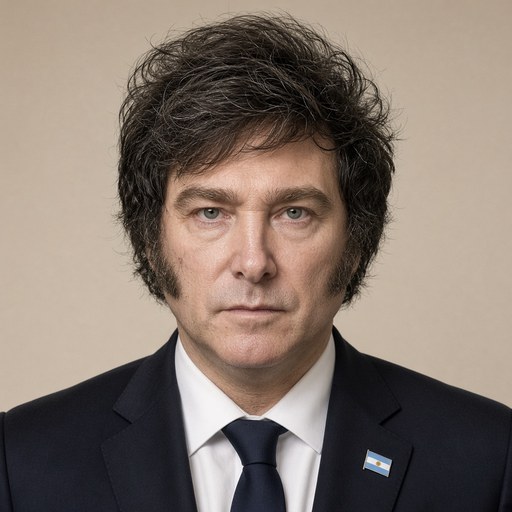
National Address by the President of the Nation, Javier Milei. Measures to fortify zero deficit and the monetary policy of the Government.
 Javier Milei · President of Argentina
- Context
- Milei addressed the Argentine nation on August 8, 2025, announcing measures to defend the fiscal surplus and monetary order against congressional spending laws.
- Main themes
- Fiscal surplus and zero deficit, inflation reduction, monetary policy reform, public spending criticism, congressional opposition, poverty reduction, economic stability, currency controls removal, pension and wage policy, political accountability, Argentine economic recovery
- Duration
- ~29 min
- Words
- 3,432
- Sentences
- 120
- Readability
- 45
- Grade
- 13.9
- Syntax
- 3.28
- Vocabulary
- 2.13
Translated from Spanish
The broad sphere of national life a sentence belongs to. Every sentence has an Arena, so it is the denominator the other indices are read against.
Other120 sentences in 25 paragraphs
Good evening everyone. Dear Argentinians: as you all know, this administration took on the presidency of the Nation with a clear economic mandate, to end inflation and create the conditions for Argentina to grow sustainably over time. As I told you a few months ago, when we announced the end of the currency controls, we came to fix the economy at its roots, without shortcuts or gradualism, and the only way to achieve this goal is through fiscal order, monetary order, and exchange rate order.
After a year and a half of efforts, our program has begun to yield its first results. Inflation has plummeted, going from an annual rate of 300% when we took office to an annual rate of 25%, and it is on track to disappear by mid-next year. We have lifted more than 12 million people out of poverty, of which more than 2.5 million are young people, and extreme poverty has dropped from 20.2% to 7.3%, meaning that nearly 6 million people who could not afford to eat now can.
Moreover, private sector wages have been systematically outpacing inflation since April of last year. These are some of our initial results, but that does not mean that all the problems we inherited are already resolved, because you cannot fix in two years what has been destroyed over nearly a century. That is why, before creating false hopes for Argentinians, we chose to be frank in telling them how hard the road would be and to be firm in walking it, understanding that nothing valuable in life happens overnight.
Today, I want to start by thanking you once again for supporting us in the course we have charted and asking you not to be deceived by those who have already led the country into the pit from which we are trying to emerge. In the last month, we have witnessed a new lamentable spectacle in Argentine politics: the National Congress has pushed a set of laws aimed at destroying the fiscal surplus that has cost all Argentinians so much effort and which is the cornerstone for sustainable economic recovery and genuine growth.
Using noble causes as excuses, they enact laws that inevitably lead to national bankruptcy. The projects approved by Congress, if we add them all up — which include reinstating the pension moratorium, increasing teachers' salaries, and disability pensions, among others — represent an annualized expenditure of practically 2.5% of GDP. This would imply an increase in public spending equivalent to one YPF per year or, in other words, it would imply additional debt of more than 300 billion dollars, or an increase in the National State's debt of 70%.
It seems like a noble intention, but when there is no money, it is nothing more than a demagogic deception on the part of politicians who take citizens for fools, but unfortunately, this is not about ensuring better incomes for retirees, teachers, or the disabled; this is about power, this is about a political class that lost power two years ago and will do anything to regain it, regardless of whether that means destroying the stability that has cost us so much to achieve. For me, it would be easy to support any initiative from Congress, increase spending, and disregard the future consequences as previous presidents did. It would even be politically beneficial because many voters would have more money in their pockets in the months leading up to the national elections.
But my task as President is not to do what is convenient for me in terms of power, but to ensure the present and future well-being of the 47 million Argentinians. I did not come here to seek shortcuts, but to turn the page on our decadent history. My task is not to appear good; it is to do good, even if the cost is being called cruel, and to rectify a hypothetical present injustice, but at the cost of jeopardizing our future once again, is simply doing evil. But first, it is important to explain why increasing public spending is a destructive act: when a State spends more than it collects and cannot borrow or raise taxes, it resorts to monetary issuance to finance its expenses. This is nothing more than adding invented money to the existing money supply in the economy, which produces inflation. Hence, inflation is always and everywhere a monetary phenomenon, caused by an excess supply of money, whether due to an increase in supply, a decrease in demand, or both at the same time, which leads to a loss of purchasing power of money, that is, a rise in the price level.
In other words, if inflation were not directly linked to the amount of money in an economy, we could happily print bills for everyone and abolish poverty by law. The harsh reality is that issuing money does not create wealth; it destroys it, because it devalues the money that was already in circulation, the money that is in the pockets of each of the Argentinians. Why? Because the amount of goods and services that money can buy remains the same, which means there are more pesos for each good and service available; we call this theft inflation. Those who have lived through hyperinflations know well that having more bills does not mean being able to buy more things. In this way, purchasing power is stolen from the most vulnerable sectors who cannot defend themselves from this assault.
What makes this phenomenon so difficult to identify and so attractive to politicians is that it operates with a lag of 18 to 24 months, dissociating the causes from their effects. In line with this, we set the amount of money a year ago, which will cause inflation to completely disappear next year. What also makes inflation so tempting is that, since it is not distributed equally throughout society, it generates inequalities in favor of politics. That is, since the Central Bank does not deposit the issued money directly into the pockets of each of the Argentinians and, therefore, pesos do not depreciate equally for everyone, those who issue the money can spend it before prices are affected by the inflationary phenomenon. In other words, those who distribute, as always happens with politics, keep the best part. This is known as the Hume-Cantillon effect.
At the same time, those who need to deny that inflation is a monetary phenomenon often excuse themselves by saying that the value of the dollar is what determines prices in the economy and that the rise of the dollar will cause an increase in all prices forever, but this is false. When the monetary base is fixed, if for some reason there is a change in the composition of demand in favor of good A, to the detriment of good B, the price of A will rise and therefore spending on good A also rises, which will inevitably cause spending on good B to fall and thus its price as well. Therefore, what raises the price of A is compensated by the fall in the price of B, so the general price level does not change; rather, what occurs is a change in relative prices. Thus, the only way for there to be inflation is for the Central Bank, to prevent the price of B from falling, to issue money, causing the price of A to rise more than proportionally and giving rise to inflation.
This means that, without monetary validation, or put another way, with the monetary base fixed, the price level does not vary. That is why, when the lags of past monetary issuance are cleaned up, fluctuations in the dollar, potatoes, or carrots do not have to impact the general price level and, therefore, the inflation rate. It must be said over and over again: the only causal relationship that exists is from the amount of money to the price level; there is no causal relationship between the exchange rate and the price level. The amount of money is what will determine prices, and if we keep it constant, once the lags of the monetary policy inherited from the disaster of the previous administration are cleaned up, inflation will only be a bad memory of the past.
Today, the National Congress is promoting spending without explaining its source of financing and without worrying whether that source implies printing money or not. By doing so, it is proposing nothing other than either more taxes that destroy economic growth, or more debt causing a genocide against the youth, our children, our grandchildren, and future generations, or more inflation, which particularly hits the most vulnerable sectors that they claim to defend. Of course, in high inflation regimes, the salaries of deputies and senators increase at the rate of inflation and do not lose purchasing power. Therefore, they do not suffer firsthand the consequences of their own irresponsibility. That is why, for them, it is politically profitable to present themselves as defenders of the disadvantaged, because they do not recognize or suffer that the direct consequences of the policies they promote are generating inflation and destroying the purchasing power of the people. This practice defines the entire political class and is something that politicians of all kinds have done throughout history. As Sun Tzu said more than two millennia ago: the cowardly ruler is capable of setting fire to his own country in order to reign over its ashes. And that is exactly what Congress is trying to do with its constant assaults on fiscal balance. It is no coincidence that we are the first government in 123 years to have zero deficit after interest payments. It is paradoxical that the figure of Parliament was originally conceived with the purpose of protecting the assets of its constituents from the clutches of the Executive Power. That is why, during the American revolutions, the phrase "no taxation without representation" was popular. In a healthy republic, the Executive proposes the taxes to be collected, and the Parliament, representing the people, decides whether to accept them or not, in order to defend the interests of its constituents.
The madness is that here, it is the Parliament itself that seeks to increase spending, which implies higher taxes and, therefore, threatens the income of its constituents. The true world upside down. How far we are today from that ideal we took as normal, that Congress imposes on us the great unlegislated tax that is inflation. For this reason, and in the face of the continuous attempts by the National Congress to undermine the economic program of the Government and the prosperity of Argentinians, I want to announce that in the coming days we will be taking two measures to fortify the zero deficit and the monetary policy of this Government.
First, on Monday I will sign an instruction to the Ministry of Economy of the Nation to prohibit the Treasury from financing primary spending with monetary issuance. The National Treasury, through this act, will not be able to borrow money from the Central Bank to finance its spending. This is a measure that, although we have already implemented in practice, we are formalizing today.
Second, in the coming days I will be sending a bill to Congress to penalize the approval of national budgets that incur fiscal deficits. This project establishes a strict fiscal rule that requires the national public sector to achieve a financial result with balance or surplus. Any new spending or revenue cut that affects this result must imply a cut in the same proportion: every new peso they want to spend must have a name and a surname; they must say where it comes from and from whom it is taken. It will also establish a criminal penalty for legislators and officials who do not comply with these new fiscal rules. These measures may seem abstract, but allow me to tell you what would happen if we had to ratify the laws that Congress is celebrating today.
Due to being the country with the worst default record in the last 100 years, we still lack access to international credit markets, which is why it would be virtually impossible for us to take on debt to finance the current expenses that Congress is approving. Therefore, we would have to finance all these expenses with monetary issuance or by raising explicit taxes. Argentinians already know what will happen if we finance these expenses with monetary issuance; we saw it just a few years ago, a snowball effect would form similar to what we experienced throughout 2023 when inflation reached a rate of 1.5% daily and our lives were out of control, where we had no idea how much things were worth, nor any way to protect our purchasing power against the sustained rise in prices. That is just the most recent memory, but we have lived through several similar experiences that have devastated our economy. In the last 100 years, we have removed 13 zeros from our currency and changed its name five times trying to start from scratch, and yet, the final result of each new adventure was the same: hyperinflation, an increase in poverty, and social upheaval. Ultimately, a new crisis.
If instead of resorting to monetary issuance we were to resort to tax increases, we would have to raise export taxes again, reimpose the PAÍS tax, the tax on property transfers, revert the updates to the amounts of the income tax, increase personal property taxes, raise tariffs on countless products making life more expensive for Argentines, and raise all the taxes we have lowered over the past two years. The problem is that increasing taxes destroys the potential for economic growth, which translates into fewer jobs and lower wages, and would ultimately impoverish us all. Furthermore, the decline in activity would also end up reducing the level of revenue, causing the State to have less and less money to meet its obligations, such as pensions or disability benefits, and even then it would not have enough money to cover all these expenses that Congress intends to impose on us.
This would inevitably force us to print money again and, consequently, inflation would start to rise every month instead of decreasing, ultimately leading to a new hyperinflation. In other words, approving all these projects from Congress means, nothing more and nothing less, than turning back time and returning Argentina to a past of impoverishment and decay, that is, throwing away all the sacrifices we have made as Argentines over this year and a half, mortgaging the future, a deal only for politicians.
I want to be very clear about something: there is no possibility that I will allow this to happen. We are not going back, we are not going back to the past, we are not going back to the path of decay, and to Congress I say: if you want to go back, you will have to take me out feet first.
Argentines, we cannot keep doing the same thing as always and expect different results. If we want inflation to continue to decrease, if we want poverty to continue to retreat, if we want incomes to rise and the standard of living of Argentines to improve, then we cannot repeat the same recipes that led us to failure and expect that this time they will magically work. It will not work. The economic policy of the State party only serves the politicians, not the good Argentines. It is time to face the truth. The only way for Argentine incomes to improve sustainably over time is with genuine economic growth, and the only way to grow is with fiscal and monetary order. With genuine growth, the incomes of everyone will improve, of the private sector, of public sector workers, of retirees, and of social benefits. But there are no shortcuts in the economy, there is no easy way out. As in all areas of life, magic recipes lead to failure. If increasing public spending were a solution, we would be the most prosperous country not only in the world but in the entire galaxy. For all this, know that there are only two possible paths, one is the one we offer, a different path that Argentina has hardly ever traveled in its history, it is the path of genuine economic growth. This path is only possible by closely guarding the fiscal surplus and property rights, which allow savings to appear that finance investment for growth. It is a process that little by little and sector by sector is bearing fruit and that will soon transfer its benefits to the entire economy.
The politicians know this very well. That is why Congress has redoubled its efforts at sabotage and obstruction, that is why they want to break the economy and drag us back into the abyss. They are aware that every step we take forward takes us further away from regaining power and their privileges. They know that when Argentina finally takes off, they will become nothing more than a bad memory of history. Once Argentines learn that we can live better, we will have broken the unhealthy bond that kept us subjected to demagogic and populist governments, and there is nothing that terrifies them more than knowing that we do not need them and that they will have to earn a living honestly in the private sector.
The other path is one we know well because it is the one we have been traveling as a country for a century: the preferred path of politics, the path of monetary illusion and state servitude. It is the path proposed by this Congress that wants to convince us that printing money and giving it away works. According to them, wealth can be printed, but we have seen not long ago that this path leads directly to collapse because it is nothing more than theft and an illusion. We have already traveled that path and it led us straight to the most terrible poverty, it led us to the destruction of our future, and in the recent past it left us on the brink of hyperinflation that, with enormous sacrifice, we have managed to avoid. I believe I have made it very clear the choice we face today as a country: we must choose between responsibility or magical realism, between doing what is right, even if it requires patience, or taking the shortcut and inevitably crashing again.
The first two years of our government can be explained by an old logical paradox: what would happen if an unstoppable force collides with an immovable object? The unstoppable force is our determination to change the economic course, implementing a program that has never been done before in Argentine history. The immovable object is the political addiction to unbacked public spending, which gives them immediate returns but destroys the future of all Argentines. Each of the sessions that have been seen in Congress over the past six months has been an expression of the clash between this unstoppable force and that immovable object, and today we are on the brink of resolving this conflict.
Fortunately, for all Argentines, the upcoming elections in October will resolve this paradox once and for all. And a new Congress will be able to be elected that allows us to move forward more quickly with the changes the country needs. It is you who will define who resists more, the unstoppable force of change or the immovable object. There are no third ways at this crossroads. There are no magic solutions. Today we must take responsibility for the weight of the past to guarantee future generations a better future. That is the basic task of a patriotic government. And the moment we neglect it, we will cease to be worthy of the trust that the people have placed in us.
Today I ask you, members of the National Congress, to rise to the occasion of the task entrusted to you by the will of our great nation, and I ask society to trust in the project. I assure you that this government will not back down in its fight to eliminate inflation, maintain the fiscal surplus, and end the privileges of politics, with the aim of redirecting the country on the path of progress and prosperity. I remind you of a phrase from Virgil, which Ludwig von Mises frequently quoted: “Never yield to evil, but combat it with much more vigor.” May God bless the Argentines and may the forces of heaven accompany us. Thank you very much.
The original Spanish. The tags above are read on the English translation's sentences.
Buenas noches a todos. Queridos argentinos: como todos saben, esta gestión asumió la presidencia de la Nación con un mandato económico claro, terminar con la inflación y generar las condiciones para que la Argentina crezca de forma sostenida en el tiempo. Como les dije hace algunos meses, cuando anunciamos la salida del cepo cambiario, nosotros vinimos a arreglar la economía de raíz, sin atajos ni gradualismo, y la única manera de lograr este objetivo es a través del orden fiscal, el orden monetario y el orden cambiario.
Luego de un año y medio de esfuerzos, nuestro programa empezó a arrojar sus primeros resultados. La inflación se ha desplomado, pasando de una tasa interanual del 300% cuando asumimos a una tasa interanual del 25% y va camino a desaparecer para mitad del año que viene. Sacamos de la pobreza a más de 12 millones de personas de los cuales más de 2,5 millones son jóvenes y la indigencia pasó del 20,2% al 7,3%, es decir, que cerca de 6 millones de personas que no les alcanzaban para comer, hoy comen.
Y, además, los salarios privados le vienen ganando sistemáticamente a la inflación desde el mes de abril del año pasado. Estos son algunos de nuestros primeros resultados, pero ello no quiere decir que todos los problemas que hemos heredado ya estén resueltos, porque no se puede arreglar en dos años lo que se destruyó en casi un siglo. Por eso, antes de generarle falsas ilusiones a los argentinos, nosotros optamos por ser francos en decirles cuán duro sería el camino y ser firmes a la hora de recorrerlo, entendiendo que nada valioso en la vida ocurre de la noche a la mañana.
Hoy quiero comenzar por agradecerles una vez más por apoyarnos en el rumbo que hemos trazado y pedirles que no se dejen engañar por los que ya llevaron al país al pozo del que estamos intentando salir. En el último mes, hemos presenciado un nuevo espectáculo lamentable en la política argentina: el Congreso de la Nación impulsó un conjunto de leyes dirigidas a destruir el superávit fiscal que tantos esfuerzos nos ha costado a todos los argentinos y que es la piedra angular para que la recuperación económica sea sostenible en el tiempo y se transforme en crecimiento genuino.
Usando causas nobles como excusas, promulgan leyes que irremediablemente llevan a la quiebra nacional. Los proyectos aprobados por el Congreso, si los sumamos todos —que incluyen reinstalar la moratoria previsional, aumentar el salario de docentes y las pensiones por discapacidad, entre otros—, representan un gasto anualizado de prácticamente 2,5% del PBI. Esto implicaría un aumento del gasto público equivalente a una YPF por año o, dicho de otra manera, implicaría un endeudamiento adicional de más de 300.000 millones de dólares, o un incremento de la deuda del Estado Nacional del 70%.
Parece una pretensión noble, pero cuando no hay plata no se trata más que un engaño demagógico de parte de la política que toma los ciudadanos como idiotas, pero lamentablemente esto no se trata de que los jubilados, los docentes o los discapacitados tengan mejores ingresos, esto se trata de poder, esto se trata de una clase política que hace dos años perdió el poder y van a hacer cualquier cosa con tal de recuperarlo sin importar si eso implica destruir la estabilidad que tanto nos ha costado conseguir. Para mí sería fácil acompañar cualquier iniciativa del Congreso, aumentar el gasto y desentenderme de las consecuencias futuras como hicieron los presidentes anteriores. Incluso sería beneficioso políticamente porque muchos votantes tendrían más dinero en el bolsillo en los meses previos a las elecciones nacionales.
Pero mi tarea como Presidente no es hacer lo que me conviene a mí en términos de poder, sino que mi tarea es asegurar el bienestar presente y futuro de los 47 millones de argentinos. No vine acá a buscar atajos, sino a dar vuelta la página de nuestra decadente historia. Mi tarea no es parecer bueno, es hacer el bien, incluso si el costo es que digan que soy cruel, y rectificar una hipotética injusticia presente, pero al costo de rifar nuestro futuro una vez más, es lisa y llanamente hacer el mal. Pero primero es importante explicar por qué aumentar el gasto público es un acto destructivo: cuando un Estado gasta más de lo que recauda y no puede endeudarse o subir impuestos, recurre a la emisión monetaria para financiar sus gastos. Esto no es otra cosa que agregar dinero inventado de la masa de dinero existente en la economía, lo cual produce inflación. De aquí que la inflación es siempre y en todo lugar un fenómeno monetario, causado por el exceso de oferta de dinero, ya sea por un aumento de la oferta, por una caída de la demanda o las dos a la vez, lo cual lleva a la pérdida del poder adquisitivo del dinero, esto es una suba del nivel de precios.
O sea, si la inflación no estuviera directamente ligada a la cantidad de dinero de una economía, podríamos felizmente imprimir billetes para todos y abolir la pobreza por ley. La dura realidad es que emitir dinero no crea riquezas, sino que las destruye, porque le quita valor al dinero que ya estaba en circulación, el dinero que está en el bolsillo de cada uno de los argentinos ¿Por qué? Porque la cantidad de bienes y servicios que ese dinero puede comprar sigue siendo la misma, lo que hace que haya más pesos por cada bien y servicio disponible, a este robo le damos el nombre de inflación. Quienes hayan vivido hiperinflaciones saben bien que tener más billetes no significa poder comprar más cosas. De esta forma, se le roba poder de compra a los sectores más vulnerables que no pueden defenderse de este atropello.
Lo que vuelve a este fenómeno tan difícil de identificar y tan atractivo para los políticos es que opera con un rezago de 18 a 24 meses, disociando las causas de su efecto. En línea con esto, nosotros fijamos la cantidad de dinero hace un año, lo que hará que, para el año que viene, la inflación desaparezca por completo. Lo que también vuelve tan tentadora a la inflación es que, al no ser distribuida igualmente a lo largo y a lo ancho de la sociedad, genera desigualdades en favor de la política. Es decir, como el Banco Central no le deposita el dinero emitido a cada uno de los argentinos directamente en sus bolsillos y, por ende, no se le deprecian los pesos a todos por igual, quienes emiten el dinero pueden gastarlo antes de que los precios se vean afectados por el fenómeno inflacionario. Es decir, quien reparte, como siempre ocurre con la política, se queda con la mejor parte. Esto se conoce como el efecto Hume-Cantillon.
Al mismo tiempo, quienes necesitan negar que la inflación es un fenómeno monetario, suelen excusarse diciendo que el valor del dólar es el que determina los precios de la economía y que la suba del dólar va a causar un aumento de todos los precios para siempre, pero esto es falso. Cuando la base monetaria está fija, si por algún motivo se produce un cambio en la composición de la demanda en favor de un bien A, en detrimento de un bien B, el precio de A va a subir y por ende también sube el gasto en el bien A, por lo que inexorablemente el gasto en el bien B va a caer y por ende también su precio. Por lo tanto, lo que sube el precio de A es compensado con la caída del precio de B, por lo que el nivel general de precios no cambia, sino que lo que ocurre es un cambio de precios relativos. Por lo tanto, la única forma de que haya inflación es que el Banco Central para evitar la caída del precio B, emita dinero haciendo subir el precio de A más que proporcionalmente y dando lugar a la inflación.
Esto significa que, sin convalidación monetaria, o puesto de otra manera, con la base monetaria fija, el nivel de precios no varía. Por eso, cuando se terminen de limpiar los rezagos de la emisión monetaria pasada, las fluctuaciones del dólar, de la papa o de la zanahoria no tienen por qué impactar sobre el nivel general de precios y, por ende, en la tasa de inflación. Hay que decirlo una y otra vez: la única relación causal que existe es desde la cantidad de dinero hacia el nivel de precios; no existe relación causal entre el tipo de cambio y el nivel de precios. La cantidad de dinero es la que va a determinar los precios y, si la dejamos constante, una vez que se limpien los rezagos de la política monetaria heredados del desastre de la gestión anterior, la inflación solo será un mal recuerdo del pasado.
Hoy, el Congreso de la Nación, está impulsando gastos sin explicar su fuente de financiamiento y sin preocuparse porque esa fuente implique o no imprimir dinero. Al hacerlo no está proponiendo otra cosa que, o más impuestos que destruyen el crecimiento económico, o más deuda causando un genocidio contra los jóvenes, nuestros hijos, nuestros nietos y las generaciones futuras, o más inflación, que golpea especialmente a los sectores más vulnerables que ellos dicen defender. Por supuesto, en regímenes de alta inflación, los salarios de los diputados y senadores aumentan al ritmo de la inflación y no pierden poder adquisitivo. Por lo cual, no sufren en carne propia las consecuencias de su propia irresponsabilidad. Por eso, para ellos es rendidor políticamente mostrarse como defensores de los desventajados, porque no reconocen ni sufren que las consecuencias directas de las políticas que impulsan sean generar inflación y destruir el poder de compra de la gente. Esta práctica define a la casta en su totalidad y es algo que han hecho políticos de todo tipo a lo largo de la historia. Como dijo Sun Tzu, hace más de dos milenios: el gobernante cobarde es capaz de prender fuego a su propio país con tal de reinar sobre sus cenizas. Y, es exactamente lo que el Congreso está intentando hacer con sus constantes embates al equilibrio fiscal. No en vano somos el primer gobierno en 123 años que tiene déficit cero después del pago de intereses. Es paradójico que la figura del Parlamento fue concebida originalmente con el propósito de proteger el patrimonio de sus representados de las garras del Poder Ejecutivo. Por eso, durante las revoluciones americanas era popular la frase de “no hay tributación sin representación”. En una república sana, el Ejecutivo propone los impuestos a cobrar y el Parlamento, en representación del pueblo, decide si los acepta o no, en pos de defender los intereses de sus representados.
La locura es que aquí, es el propio Parlamento el que pretende aumentar el gasto, lo cual implica mayores impuestos y, por ende, atenta contra los ingresos de sus representados. El verdadero mundo al revés. Cuán lejos estamos hoy de aquel ideal que tomamos como normal, que el Congreso nos imponga el gran impuesto no legislado que es la inflación. Por eso mismo y frente a los continuos intentos del Congreso de la Nación de atentar contra el programa económico del Gobierno y de la prosperidad de los argentinos, quiero anunciarles que en los próximos días estaremos tomando dos medidas para amurallar el déficit cero y la política monetaria de este Gobierno.
En primer lugar, el día lunes firmaré una instrucción al Ministerio de Economía de la Nación para prohibir que el Tesoro financie el gasto primario con emisión monetaria. El Tesoro Nacional, mediante este acto, no podrá solicitar dinero prestado al Banco Central para financiar su gasto. Esta es una medida que, si bien en la práctica ya implementamos, hoy lo estamos formalizando.
En segundo lugar, en los próximos días estaré enviando un proyecto de ley al Congreso para penalizar la aprobación de presupuestos nacionales que incurran en déficit fiscal. Este proyecto establece una regla fiscal estricta que le exige al sector público nacional obtener un resultado financiero con equilibrio o superávit. Todo nuevo gasto o recorte de ingreso que afecte este resultado deberá implicar un recorte en la misma proporción: cada peso nuevo que quieran gastar tiene que tener un nombre y un apellido; tienen que decir de dónde sale y a quién se lo sacan. También establecerá una sanción penal a los legisladores y funcionarios que no cumplan con estas nuevas reglas fiscales. Estas medidas parecen abstractas, pero permítanme contarles qué pasaría si tuviéramos que ratificar las leyes que hoy celebra el Congreso.
Debido a ser el país con peor historial de default de los últimos 100 años, aún carecemos de acceso a los mercados internacionales de crédito, por eso nos sería virtualmente imposible tomar deuda para financiar los gastos corrientes que el Congreso está aprobando. Por lo tanto, deberíamos financiar todos estos gastos con emisión monetaria o subiendo impuestos explícitos. Los argentinos ya sabemos lo que ocurrirá si financiamos estos gastos con emisión monetaria, lo vimos hace muy pocos años, se formaría un efecto de bola de nieve semejante a lo que vivimos a lo largo del 2023 cuando la inflación llegó al ritmo del 1,5% diaria y la vida de todos nosotros era un descontrol en el que no teníamos ni noción de cuánto valían las cosas, ni forma de cuidar nuestro poder adquisitivo ante la suba sostenida de precios. Ese es tan solo el recuerdo más reciente, pero hemos vivido varias experiencias similares que se llevaron puesta a nuestra economía. En los últimos 100 años le quitamos 13 ceros a nuestra moneda y le cambiamos el nombre cinco veces intentando empezar de cero y, sin embargo, el resultado final de cada nueva aventura fue el mismo, la hiperinflación, el aumento de la pobreza y el estallido social. En definitiva, una nueva crisis.
Si en vez de recurrir a la emisión monetaria recurriéramos a la suba de impuestos, deberíamos volver a subir las retenciones, volver a imponer el impuesto PAÍS, el impuesto a las transferencias inmuebles, retrotraer las actualizaciones a los montos del impuesto a las ganancias, aumentar bienes personales, subir los aranceles de infinidad de productos encareciendo la vida de los argentinos y volver a subir todos los impuestos que hemos bajado a lo largo de los últimos dos años. El problema es que aumentar los impuestos destruye el potencial de crecimiento económico, lo cual se traduce en menos puestos de trabajo y menores salarios, y nos terminaría empobreciendo a todos. A su vez, la caída de la actividad también terminaría reduciendo el nivel de recaudación, haciendo que el Estado disponga de cada vez menos dinero para hacer frente precisamente a sus obligaciones, como jubilaciones o pensiones por discapacidad, y aun así no alcanzaría el dinero para pagar todos estos gastos que el Congreso pretende imponernos.
Esto nos forzaría inevitablemente a volver a imprimir dinero y, en consecuencia, a que la inflación, en vez de disminuir todos los meses, empiece a aumentar todos los meses hasta terminar en una nueva hiperinflación. Es decir, aprobar todos estos proyectos del Congreso implica, ni más ni menos, que volver el tiempo atrás y volver a la Argentina al pasado del empobrecimiento y de la decadencia, es decir, tirar a la basura todo el sacrificio de este año y medio que hemos hecho los argentinos, hipotecando el futuro, un negocio solo para los políticos.
Quiero ser muy claro con algo: no hay ninguna posibilidad de que yo permita que esto suceda. No vamos a volver atrás, no vamos a volver al pasado, no vamos a volver al sendero de la decadencia, y al Congreso le digo: si ustedes quieren volver atrás, me van a tener que sacar con los pies para adelante.
Argentinos, no podemos seguir haciendo lo mismo de siempre y esperar resultados distintos. Si queremos que la inflación siga bajando, si queremos que la pobreza continúe en retirada, si queremos que los ingresos aumenten y que el nivel de vida de los argentinos mejore, entonces, no podemos repetir las mismas recetas que nos llevaron al fracaso y pretender que mágicamente esta vez vayan a funcionar. No va a funcionar. La política económica del partido del Estado solo le sirve a los políticos, no a los argentinos de bien. Es momento de hacerse cargo de la verdad. La única manera de que los ingresos argentinos mejoren de forma sostenida a lo largo del tiempo, es con crecimiento económico genuino y la única manera de crecer es con orden fiscal y monetario. Con crecimiento genuino mejorarán los ingresos de todos, de los privados, de los trabajadores del sector público, de los jubilados y las asignaciones sociales. Pero no existen atajos en la economía, no hay salida fácil. Como en todos los órdenes de la vida, las recetas mágicas conducen al fracaso. Si aumentar el gasto público fuera una solución, seríamos el país más próspero no solo del mundo, sino de la galaxia entera. Por todo esto sepa que solo hay dos caminos posibles, uno es el que ofrecemos nosotros, un camino distinto por el que la Argentina no ha transitado prácticamente nunca en su historia, es el camino del crecimiento económico genuino. Este camino solo es posible custodiando celosamente el superávit fiscal y los derechos de propiedad, que permitan que aparezca el ahorro que financia la inversión para el crecimiento. Es un proceso que poco a poco y sector por sector, está rindiendo frutos y que pronto trasladará sus beneficios a toda la economía.
Eso los políticos lo saben muy bien. Por eso el Congreso ha redoblado sus esfuerzos de sabotaje y obstrucción, por eso quieren quebrar la economía y arrastrarnos de nuevo al abismo. Son conscientes de que cada paso que damos hacia adelante nos aleja más de recuperar el poder y sus privilegios. Saben que cuando la Argentina despegue definitivamente, ellos se convertirán en nada más que un mal recuerdo de la historia. Una vez que los argentinos aprendamos que se puede vivir mejor, habremos roto el lazo enfermizo que nos mantenía sometidos a gobiernos demagogos y populistas, y no hay nada que les genere más terror que saber que no los necesitamos y que deberán ganarse la vida honestamente en el sector privado.
El otro camino es uno que conocemos bien porque es el que venimos transitando como país hace un siglo: el camino predilecto de la política, el camino de la ilusión monetaria y la servidumbre estatal. Es el camino que propone este Congreso que nos quiere convencer de que imprimiendo dinero y regalándolo funciona. Según ellos, se puede imprimir la riqueza, pero ya vimos hace no tanto tiempo que ese sendero lleva directamente al colapso porque no es más que un robo y un espejismo. Hemos transitado ya ese camino y nos llevó directo a la más terrible de las pobrezas, nos llevó a la destrucción de nuestro futuro, y en el pasado reciente nos dejó al borde de una hiperinflación que, con un enorme sacrificio, hemos logrado evitar. Creo que he dejado muy en claro la elección ante la cual hoy nos enfrentamos como país: tenemos que elegir entre la responsabilidad o el realismo mágico, entre hacer lo correcto, aunque implique tener paciencia, o tomar el atajo e inevitablemente volver a chocar.
Los primeros dos años de nuestro gobierno se pueden explicar bajo una vieja paradoja lógica: ¿qué pasaría si una fuerza imparable se choca con un objeto inamovible? La fuerza imparable es nuestra determinación por cambiar el rumbo económico, implementando un programa que no se hizo nunca antes en la historia argentina. El objeto inamovible es la adicción de la política al gasto público sin respaldo, que les da rédito inmediato a ellos, pero que destruye el futuro de todos los argentinos. Cada una de las sesiones que se han visto en el Congreso a lo largo de los últimos seis meses ha sido una expresión del choque entre esta fuerza imparable y aquel objeto inamovible, y hoy estamos a las puertas de la resolución de este conflicto.
Por suerte, para todos los argentinos las próximas elecciones de octubre van a dirimir esta paradoja de una vez por todas. Y se podrá elegir un nuevo Congreso que nos permita avanzar a mayor velocidad con cambios que el país necesita. Son ustedes los que van a definir quién resiste más, la fuerza imparable del cambio o el objeto inamovible. No hay terceras vías en esta encrucijada. No hay soluciones mágicas. Hoy toca hacernos cargos del peso del pasado para garantizarle a las futuras generaciones un mejor porvenir. Esa es la tarea básica de un gobierno patriota. Y el instante en el que la descuidemos, dejaremos de ser merecedores de la confianza que el pueblo ha depositado en nosotros.
Hoy les pido a ustedes, miembros del Congreso Nacional, que por una vez estén a la altura de la tarea que les fue encomendada por la voluntad de nuestra gran nación, y les pido a la sociedad que confíe en el proyecto. Les aseguro que este gobierno no va a claudicar en su lucha para eliminar la inflación, mantener el superávit fiscal y terminar con los privilegios de la política, con el objetivo de reencaminar al país en la senda del progreso y la prosperidad. Les recuerdo una frase de Virgilio, que citaba recurrentemente Ludwig von Mises: “Jamás cedamos frente al mal, vamos a combatirla con mucha más fuerza”. Que Dios bendiga a los argentinos y que las fuerzas del cielo nos acompañen. Muchas gracias.