




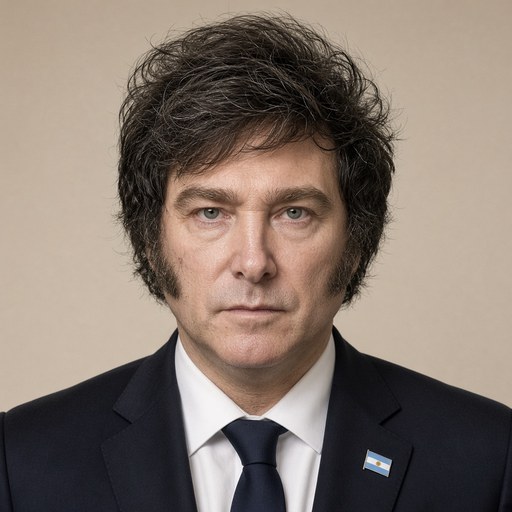
Words of President Javier Milei at the presentation of the "Spokespersons of Freedom" of the Faro Foundation.
 Javier Milei · President of Argentina
- Context
- Milei addressed the Faro Foundation's 'Spokespersons of Freedom' event in Argentina on August 4, 2025, championing the cultural battle for libertarian ideas.
- Main themes
- Cultural battle for liberty, libertarian ideas and dissemination, political and institutional reform, Torah and Parashat Devarim, persistence in defending freedom, Argentina's economic crisis legacy, Faro Foundation, socialism as threat, social support for reforms, public education of citizens
- Duration
- ~70 min
- Words
- 8,391
- Sentences
- 308
- Readability
- 52
- Grade
- 12.5
- Syntax
- 3.21
- Vocabulary
- 2.11
Translated from Spanish
The broad sphere of national life a sentence belongs to. Every sentence has an Arena, so it is the denominator the other indices are read against.
Other308 sentences in 47 paragraphs
PRESIDENT: - Hello everyone. As always, it is a pleasure to be here in front of you, members, collaborators, and friends of the Faro Foundation, which is gradually becoming a fundamental enclave in our great cultural battle.
When I started fighting the cultural battle, several years ago, I was an economist who made a living giving lectures and writing books, and many times I felt lonelier than Adam on Mother's Day. Because publicly defending liberalism at that time was frowned upon, and there were few media outlets or spaces that welcomed me. Not only that, I remember that at that time the talks felt like an elevator was too big for us, but fortunately, things changed for the better.
Today I have a slightly more demanding job, and we are increasingly more people defending this cause. But I have never set aside, nor will I set aside, my role as a disseminator of the ideas of freedom. Because —besides, I must say— it is the part of my job that I enjoy the most. In any case, now that I am President, my responsibility to wage the cultural battle is even greater, because the word of a President has a greater effect than that of an ordinary citizen. And because, in addition to being morally correct to fight the cultural battle, it contributes to the success of the reforms we are carrying out from the Government. Because social support makes our reforms sustainable over time and ensures that in the future it will be the citizens themselves who defend their freedom and not allow themselves to be trampled again by socialists, whether they are well-mannered or not. There are the very totalitarian ones and there are the friendly ones, but they are equally sinister.
That is why I always say that the great endeavor to change Argentina has three fronts of battle that, although distinct from one another, are equally indispensable. The management front to design and implement the deep reforms that the country needs, the political front where we build the institutional power necessary to promote those reforms and sustain them politically. And of course, the cultural battle, where we ensure that these changes are sustainable in the long term by educating the sovereign, in other words, that those who have eyes begin to see it once and for all.
This is precisely relevant to the Parashah of this past week, which says… These are the words that Moses spoke to all the people of Israel. I clarify that I am not believing myself to be Moses —I warn— I am only quoting the Parashah from last week. Please, I clarify because... Because you see, it seems that in Argentina some are going to die from literalness. So, I have to be careful even when I make quotes. But the wise explain to us that the truths that Moses spoke must be seen and studied by us each day as something new. That is why the emphasis on the word "these." To give context, this Parashah begins the fifth and final book of the Pentateuch, that is, the Torah, where the Hebrew people, having walked the desert for 40 years, were very close to the Promised Land. And when they were about to arrive, just before that important moment, Moses repeats the events of the entire Exodus, reviewing with the people everything that happened until they got there. He emphasized the importance of living each day renewed by the truths that allowed them to reach their destination and that enabled them to achieve freedom.
That is to say, notice that upon entering the Promised Land, the Jewish people might start to think that it would no longer be so necessary to continue studying the Torah, since they had achieved their goal. However, Moses made it clear to them that when conquests are obtained, that is precisely when one cannot relax; that is when we must raise our guard even higher and be even more diligent. This reflection is fundamental to understanding the cultural battle because it teaches us that a political victory is not the end of the struggle for ideas, but the beginning of a new struggle to defend them. Achieving one challenge means the emergence of a new challenge, and so on. This is very interesting because sometimes we are accused of systematically repeating achievements, but sometimes one has the feeling that the task is underestimated or that they have forgotten that we were facing the abyss. That is to say, we took on the worst legacy in the history of Argentina. We combined the crisis, for example, the monetary imbalance in terms of money overhang worse than in 1975. That is to say, the prelude to the Rodrigazo. We had a Central Bank balance that was worse than the one Alfonsín had before his hyperinflation, and we also had social indicators that were worse than those of 2001. That is to say, we had the combination of all evils, and the reality is that in the face of such a titanic task, I want to ask for a round of applause for our Minister of Economy, the best Minister in the world.
Sometimes it seems they forget where we come from. So, I think it is worth pointing out, because it seems that those who today complain so much about pensions, for example, are the same ones who at the time vetoed and said that the State was being declared bankrupt, and who left pensions of 80 dollars and who today are above 320 dollars, that is, they multiplied by four. Or there were salaries of 300 dollars and now they are 1100 dollars. And then they come to say, "No, we can't make ends meet."
Well, I say that we must agree that it is clear that the phrase sounds very interesting, to get sentimental, right? And it is very interesting because if it were true, you would have to walk down the street and it would be full of corpses; that is to say, someone then seriously thought about that nonsense because, ultimately, if it were true, the streets would be much more complicated, and besides, it is an insult to those who obviously make a great effort to try to move forward through the honest path; I mean, of course, that path, the kukas and much of the journalism do not know it.
I remember the other day they were showing a banner, where in a television program of a journalist who always speaks ill of me whenever he can, and one who, when the forced misinterpretation of my second speech at Davos was made, took one paragraph, removed two from the middle, left the last one to make me say something I didn't say, a person came out to defend me. And it happens that another, from Spain, who was presenting his book, this journalist, called to tell him: "No, no, how can you defend him? Now is the time to hit him to take him down." So they were showing a banner that said, for example: "Economic relief: this year inflation will not exceed 100%." How interesting, right?, about how they changed in... Ah, I have a luxury visit, there is a luxury visit. He is filming now, get down the phone, but we have the honor of having here, stand up, Mike's brother, Pablo Boggiano, the conductor. You are looking more and more like Muti... So, we have to be aware of where we come from. If necessary, we will have to keep repeating, because the kukas seem to have left us in Switzerland and we generated a massacre, when in reality those who destroyed and consumed the capital impoverishing the people were them.
Moreover, I also want to... this is a reflection I had during the last week, and it is: it is much easier to destroy than to build, since building takes a lot of time. That is why the effort to build must be sustained over time, and we must not be dazzled or satisfied with achievements that are merely intermediate steps on our long journey. If we think about it in terms of the Argentine situation, it is impossible to rebuild in a year and a half what has been destroyed for almost a century, and therefore it is also insane for others to demand that speed from us. That is to say, this is also very important to keep in mind: that building requires a lot of effort, a lot of work, takes time, and destroying is much easier. That is why sometimes one also has this reaction towards those who only dedicate themselves to destroying or who simply ignore. There are people who directly ignore the restrictions, directly. There are others who contemplate some restrictions, and only those of us here in the Government know the restrictions we face and the type of problems at stake when one is in real power. So, we have almost 100 years of destruction. That is why I really like Federico Domínguez's classification of long cycles, which takes the Argentine case in cycles: it takes 1853-1943, 1943-2003... then he calls the first one the liberal cycle, and it is the same: Argentina goes from being a country of barbarians to becoming a world power. 1943-2003... 2023, sorry, the cycle in which, the decline, where clearly the last 20 years were the worst of that decline, which is when we embraced collectivist ideas. And the author wonders if, well, if now the liberal cycle is coming. Well, we are doing everything humanly possible to make that dream of a great Argentina possible again.
And sincerely, it is an enormous job, and sometimes I think there is no order of magnitude of what we are doing. I always say that we are doing the best Government in history, and basically it is because there is a work called Passing the Buck by Gerardo Della Paolera and done together with Bózzoli and Irigoin, in which he evaluates the different governments in Argentine history and shows that until that moment the best Government in history had been Menem's best Government, and basically, if one looks at it, that Government was characterized by two things: a successful stabilization plan and a set of structural reforms, and the reality is that we have managed to reduce inflation much more quickly. First of all, for those who start to talk and criticize, we have a first big difference: we did it without expropriations, we did not do the Bonex plan. Therefore, some people should be more careful when making evaluations about the current program, especially if they were complicit or benefited from them at the time of stabilization. Not only that, but well, life is full of ingrates. There are some who have already understood.
Moreover, not only did we do it without expropriations, we did not have the prior hyperinflation or two prior hyperinflations that destroyed all financial assets, so it was obvious that the demand for money could no longer fall more than it had fallen, and therefore stabilization was easier; we also did not fix the exchange rate because sometimes people from that government criticize us for having the currency appreciated, and it is supposed that at that time the currency was much lower; there it was indeed well pegged, which would be an exchange rate today of 700 pesos; it is incredible because people from that time complain about the exchange rate, but well, we already know how ingrates are, not only that but also that unlike other plans that first adjusted tariffs to then show a better achievement, we were adjusting tariffs during the process and from an inflation that was traveling at almost 1, 1.5% daily, which manifested in a wholesale price index in December of 54%, which annualized gave 17,000 and that there were monetary conditions for that inflation of that caliber to be validated; in fact, Ariel Coremberg recently made an estimate of the monetary imbalances, how much was the potential inflation, and it gave 18,000, so they are wrong; and today inflation in Argentina at the peak travels at a rate between 20 and 25%; not only that, if we look at wholesale prices, it travels at less than 10%; if we look at food and beverages or the basic basket, it travels at less than 10%; and clearly in a context where salaries have been growing systematically in real terms since April, something that allowed this Government of "insensitive and cruel" to lift 12 million people out of poverty and 2.5 million children out of poverty, we are indeed doing things right.
But not only that. If we take the structural reforms, by reform package, the reform is 28 times larger than the one Menem did. And if we take it by articles, which is where it clearly counts, it is a reform 80 times larger than the one Menem did. That is to say, we have made more than 8,000 structural reforms in a year and a half. Without a doubt, I am eternally grateful to the entire Government team, because without a doubt we are doing the best Government in history.
But ultimately, what we must make clear is that, despite all these monumental achievements, getting the country back on track will take time. That is to say, we are not going to become a developed country overnight. Convergence processes can take 30, 35, or 40 years. So, it is not only a matter of working hard, but also having patience, having perseverance, and that is why the cultural battle is so important. Management is important, the political battle is fundamental. Thank you, Chief, for all that you are achieving.
But without the cultural battle, we will not be able to sustain the reforms over time. This will require a continuous fight, a continuous struggle, to continuously shed light, to be a beacon of beacons, in the end, towards where we want to go. And that is what we must comment on. That is to say, in addition to having a clear north, it is essential to have the willpower and the patience necessary to reach our destination.
That is why we must be aware that the struggle is constant; there will always be new objectives to achieve and new challenges that we must overcome. And that is why the enormous task of the Faro Foundation in the active defense of the ideas of freedom is so important, ideas without which any government quickly loses its way and runs aground on the cliff of socialism. I see many of those present around me and also those who preceded me in speaking, and I find a common denominator: we did not emerge from politics or the State, but we are, above all, Argentine citizens; we are patriots concerned about the fate of our country. Having reached where we are is living proof that civil society can and must take the public square. We have shown that to make a difference, one must get into the mud of debate, and why not, also of politics. We are clear that we can no longer be mere spectators, because if we do not actively defend ourselves, the elite will run us over. I always say: goals are not scored by the stands, but by the players on the field. And although we may believe we can do little, the difference between doing little and doing nothing is already, in itself, infinite.
That is why Diego Recalde, Mike Boggiano, and Ramiro Castiñeira are a great example to follow, because they not only take care of their particular activities, but they make the effort every day to expose their ideas in public and to attack the countless paid spokespeople of the State party, and of course, they do all this at a great personal and often professional cost. That is why I say to you: Welcome to the spokespeople of freedom.
They and many others dive headfirst into the minefield of political discussion to defend positions silenced by the parasitic elite, because the cultists of the State do everything in their power to ensure that the only ideas that reach the people are theirs, the nefarious ideas that produce their criminal model of poverty and subjugation. Making a historical parallel, in ancient Greece, free men were those who could participate in public debate, and for that, they needed free time, something that slaves did not have because they were working from dawn to dusk.
In Argentina, in recent decades, something similar has happened: honest citizens have been forced to work more and more to sustain with taxes the extravagant lives of politicians. And of course, they took advantage of the surplus of free time to happily promote their own confiscatory ideas on television channels. Thus, the political left has a structural advantage in the cultural battle, because supported by the favor that political power gives, it has dedicated itself for decades to infiltrating all possible institutions, subverting their values and shaping them to promote its agenda. An operation that, for many, would be invisible if it were not for the giant contribution of my great friend and executive director of this foundation, Agustín Laje.
Thus, politicians, business tycoons, union bosses, and the expanded elite ended up repeating the same set of ideas almost as if it were a chip in their brains, which are ideas contrary to the most basic notions of freedom. This is what Axel Kaiser, where are you Axel? Congratulations on your work. While we are at it, let’s also applaud Adrián Ravier, who will also be our candidate from La Pampa. And which Axel extensively developed in his book Mental Parasites, which I strongly suggest you read. Come on, break the piggy bank. Those ideas that at first glance seem innocent and feed on our good intentions, but in the long run lead to misery. Ideas that are actively promoted by the political elite through state and para-state propaganda, and whose purpose is to legitimize the unlimited expansion of the public sector.
I clarify that when I speak of mental parasites, I do not refer to people. People are victims of these ideas lodged in a brain through decades of collectivist indoctrination. The point is that once the ideas—these mental parasites—take hold of the mind, the more they take hold of that mind, the problem is that they turn them into zombies, that is, they turn them into a sect, which is basically what they are: the kuka sect. That is, it does not matter what data you present. For example, you present them with the inflation data: they say, “No, you are lying about inflation”; you present them with the poverty data: “No, you are lying about poverty.” Of course, if they had directly eliminated the indicator because it was stigmatizing.
Because ultimately, and extending to other planes, the thief believes everyone is of his same condition. And I clarify, extending also to other planes. Whoever wants to understand, let them understand. Recalde is very sharp and understands everything I am saying.
A first example of a mental parasite is the notion of social justice, which has nothing to do with social justice, since it is based on the injustice of taking from one by force to give to another. That is, it robs a person's work to distribute it arbitrarily. It has two problems, right? Because it has the theft that precedes it and it has unequal treatment before the law, which is fundamentally nothing more than doing charity with someone else's money. And this naturally leads us to another mental parasite, which is the notion of social rights. That said, these are the first two chapters of Axel's book. According to this parasite, from every difference, whatever it may be, a supposed right arises that can only be resolved through state intervention. That is, public spending paid for with present or future taxes.
The issue is that, thank God, the differences are infinite among each of us, and I say thank God, because if they were not, there would be no division of labor and consequently no efficient social and economic cooperation, nor prosperity. The endpoint of this perspective is total State intervention and the total appropriation of private product for its future distribution. In other words, applying this idea to its ultimate consequences leads to totalitarianism. I was going to anticipate another part that comes in the speech, and I remembered, and for now, I will not deviate; I will deviate in a little while.
Moreover, even that would not be enough, because it is something that is logically contradictory: the inflation of rights generates unlimited expectations in people and authorizes and demands that the State fulfill those expectations. The problem is that rights must be paid for, and while people's expectations are infinite, resources are indeed finite. So, to fulfill such nonsense, one would have to violate the first law of economics, which is the law of scarcity. As Thomas Sowell says, the first law of economics is scarcity, that is, there is not enough for everyone. And what is the first law of politics? To violate the first law of economics. Something we have learned quite a bit about, right? Because the other day—I am trying to moderate my words—there was a guy...with a poisoned pen who basically said: no, a plan is not just fiscal balance, enabling fiscal degenerates, because in the end, zero deficit is indeed a policy, and it is called respecting the budget constraint, and not respecting the budget constraint has cost us Argentines dearly. In fact, in the 123 years prior to our arrival in government, except for 10 periods, there was always a deficit, always, and those that did not have a deficit were because we were in default, so it was false that we were not in deficit. So, if for 123 years no one could do it and we came and did it, and they also said it was impossible, for example, that it was impossible to reduce public spending by one point of GDP, and we made an adjustment of seven points of GDP in the first month, public spending in real terms fell by more than 30%, and they said it was impossible. Then some items were restored, and the final adjustment ended up being five points of GDP. And that was achieved in one month. This is interesting because Federico Sturzenegger did a study on fiscal adjustments from the mid-20th century to the present, and there are only 24 cases in which a reduction in public spending of this magnitude was made. The interesting thing is that the other 23 cases were after a war, which is quite clear, right? Spending increases due to war expenses, and when the war ends, spending decreases. Therefore, we have done something that has never been done in recent history, surely. But not only that, if we also add the adjustment in the Central Bank's balance of 10 points of GDP, it is basically the largest fiscal adjustment in the history of humanity made in 6 months.
Here I also want to make a note of color because in one of the interviews that Toto gave, they are all very good, but there are some that have some things that go beyond the extraordinary and that also show the enormous task of this other colossus who is here, Santiago Bausili, the President of the Central Bank, at one point points out that we had a fiscal deficit of 15 points of GDP, 5 was in the Treasury and 10 in the Central Bank, and this is very interesting because what Toto shows is that even if we had made the adjustment in the fiscal sector, if we did not fix the disaster of the Central Bank, hyperinflation would have occurred anyway, with the aggravating factor that they would have told us that we had hyperinflation even after making the fiscal adjustment; imagine what that would be in terms of cultural battle. The most interesting thing about all this is that when we first did it, they said it was impossible; then when they started to see it, they said it was unsustainable; then they started to say we were going to sink into a tremendous recession, and that could also be understandable in light of the literature on the subject. The most interesting thing is that we made a tremendous adjustment, and the most incredible thing, and the reason why the world talks about the Argentine miracle, is that in the first year, if you compare December 24 with December 23, gross product increased by 6%.
So we have something to say and contribute, which is that we know how to make an adjustment that lowers inflation that is not recessionary and lifts a quarter of the population out of poverty. So, ultimately, going back to the issue of mental parasites, these mental parasites hide a distortion of the concept of freedom. If for liberalism freedom is the possibility of pursuing a life project in a context of equality before the law, for collectivism, freedom only exists if there is a guarantee of success for all. The left does not conceive that since individuals are so varied, each one will use their freedom as they see fit and will live with the consequences. What happens is that when you take the definition of freedom, for example, Hayek's freedom, freedom is that you can, as long as you are not affecting others, you are free to do what you want. Now, that said, you also have to take responsibility for the costs. In other words, freedom and responsibility are two sides of the same coin. But well, what are they going to tell about responsibility to guys who promote a fiscal hole of 2.8% of GDP? They would smoke a YPF per year. The sentimentalists.
That is to say, for them, everyone must be able to access the same goods, with the State being the one who administers the lives of individuals, moving from the equality before the law proposed by liberalism to a context of the so-called equality of opportunity, where, as we have seen, everything that makes us unique as individuals fades away. To top it off, they then claim to defend diversity and plurality. The problem with all these things is that they violate the budget constraint. That is to say, our interpretation of this mental parasite is that the issue of social rights appears in the face of the failure of the parasite—I just got a hair in my eye, and you have no idea how much it bothers me—but not so much as to keep increasing the insult counter. I will do this: I will stop using insults to see if they are in a position to discuss ideas. Because I believe they discuss forms because they lack the intellectual level to discuss ideas.
I still want to make a note of color: there was a gentleman who was president who was a serial insulter; they called him "The Crazy One," and he was the one who transformed Argentine education. The gentleman's name was Domingo Faustino Sarmiento. According to this group of flag bearers and exquisite forms, they would have directly condemned him to the stake. But well, it is like this... the dictatorship of forms; we will confront them by respecting their forms, once and for all, to see if they show they have the intellectual level to give us the battle of ideas. In other words, the only thing they do is, since they cannot respond in ideas, they lean on forms. So now we are throwing down a challenge to you, flag bearers of forms; now we will use the forms you like. You know for what? To make it clear that you are an empty shell.
But these ideas that sound nice, about equality of opportunity and so on, there is a story called Harrison Bergeron by Kurt Vonnegut, which depicts a perfectly egalitarian world, where there is a general handicapper whose job is to ensure that no one is smarter than anyone else, stronger than anyone else, faster than anyone else, or prettier than anyone else. Those who had particular beauty had to wear a horrible mask or undergo procedures to make them less attractive, and the most intelligent had to wear an earpiece that emitted shrieks that prevented them from thinking. That is ultimately the utopia that socialists propose; in other words, deep down it’s like, I don’t know, equality of opportunity, so, I don’t know, it happens that now I like to play tennis, so in order to have equality of opportunity, and I had the privilege of hosting Djokovic in Olivos, so imagine that I would have liked to dress like a tennis player and play a match with him. Now, equality of opportunity, I could have made it temporary or permanent. I would go for the temporary ones because they are not so severe, but what? I would have had to chain one arm, one leg, and have poor Djokovic play like that, or imagine these hypotheses of equality in a basketball team. This is interesting because in a basketball team, clearly those who are taller have some advantage, right? So what would they do? They would cut their legs until everyone was the same height as Mike. Of course, but Mike wants to play basketball; they have to give him equality of opportunity.
And this, beyond the fact that I can say this to Mike, these jokes because I’m a friend, I hope you’re not offended, let’s see if you still sue me because you feel offended and think I want to make an institutional attack on your new role at Fundación Faro, but beyond that, there is something very interesting because when you make these arguments to socialists, they will never accept that they equalize downwards; they will never accept that. They say no: that equality is upwards. The problem is that this is false because it violates the budget constraint. Let’s suppose I have an economy that produces 100 and there is a group that takes 20 and another that takes 80, well, what happens if I want both to have the same? Well, initially, I couldn’t have a situation where both take 80 because for both to take 80, I would have to produce 160, and I am producing 100, so the first thing that is going to happen is that I violate the budget constraint, and violating the budget constraint is not a matter of being heartless; it’s not that one wants to respect the budget constraint because one has no heart or is not sensitive, but because the solution to denying the budget constraint is much worse because the attempt for everyone to earn 50, the problem is that the one who generates 80 is not going to be willing to be paid 50, so what is he going to do? He is going to adjust his production to be 50, if the other was not producing for 50, therefore what is going to happen is that they are going to go down to 70. So if you insist with this dynamic, what you are going to do is expel the talented, something that socialists always do, right? They end up expelling talented people, and not only that, but the violation of the budget constraint is either financed with debt — that is, with future taxes — condemning future generations to misery, like what the populist demagogues in Congress did, or they finance it with monetary issuance and end up taking 13 zeros off the currency (and we could take three more). And not only that, but they also condemn the most vulnerable to misery. Which group is among the most vulnerable? The elderly or, without any hesitation, raising explicit taxes, which ends up undermining economic growth. Ultimately, the remedy ends up being worse than the disease, and besides, there is a wonderful phrase from Hayek that says: "If socialists knew economics, they wouldn’t be socialists." Economic knowledge leads to liberalism. But well, these people, well, they are zombies. And that is why our task, now that we have taken the Leviathan by the horns, is no less titanic than being outside. Because the state party has decades of advantage. They have spent decades inoculating our population with these mental parasites that have become common sense. And they have become common sense to the point that many people who have never voted for any version of collectivism in their lives, whether Peronism, Kirchnerism, socialism, social democracy, or even communists, like the Soviet dwarf Kicillof, take them for granted.
We have the mandate to dismantle the tentacular structure that the state cultists have built to infiltrate all aspects of people's lives. Those who, like Procrustes in Ancient Greece, cut the legs of the people to mold them to their twisted ideal of equality and to fill their heads with mental parasites. The case of Procrustes is interesting. Procrustes was a person who was deeply involved with equality. And this is interesting as a metaphor. Procrustes invited people to his house, then he invited them to dinner and gave them drinks to get them drunk. And when they were very drunk, Procrustes was so generous that he invited them to stay overnight. So, if they were too tall, he would cut their legs; if they were too wide, he would cut their arms; if they were too short, he would stretch them. In other words, the guy was a bloodthirsty killer. And that is egalitarianism. That is what the guillotine of equality is about: it is deeply violent, bloodthirsty, and, above all, impoverishing.
Therefore, if we only focus on reforming the national state and neglect the provinces and municipalities, these districts will serve as a refuge for the agents of the caste to hide during the storm, and from there, make no mistake, they will gather strength to then undo everything that has been achieved. They already admit that they plan to return worse. In fact, they openly admit that they will return worse. One day I saw a tweet that when the delegated faculties had ended and Federico published all the entities that had been eliminated, one of these zombies, part of the sect, jumped out and said: here is the government program of the next government, which is to break everything that this government does. In other words, their proposal is only to destroy. So we will have to keep fighting to not only defend what we have achieved but also to continue building. In fact, not to go further, today Kicillof dedicates a good part of the budget of the province of Buenos Aires to feed an army of functionaries with no function whatsoever. As if that weren’t enough, he also has the luxury of financing all the streaming channels in the country, even if they have 10 views. In other words, even he, who doesn’t know much about thinking, knows how important it is to constantly fight in the realm of ideas and culture.
The province of Buenos Aires is a place where Kicillof’s propaganda apparatus has wreaked real havoc, infecting the minds of millions of Buenos Aires residents who, even living in the most affected misery, remain captive to Kirchnerism. The power of ideas and these mental parasites is such that, under an illusion of social justice and rights, it leads entire societies to the precipice. That is why, in these legislative elections in September, we must make reality itself speak; we have to ask the Buenos Aires residents to look around them and evaluate what has happened to the province in recent decades and in the municipalities, to look, for example, at the management of people like my dear friend Diego Valenzuela.
The elections must be a space for people to express whether throughout all this time the provinces have improved or not, whether security has improved or not, whether they walk more peacefully down the street every day or not, whether they have invested in improving the quality of essential services that a state must ensure or whether the money of the people has been squandered on inconsequential matters, leaving the most basic needs unattended.
Finally, the Buenos Aires residents must decide whether the disproportionate and costly provincial state has served the well-being of society or, on the contrary, whether they are paying more and more taxes to pay the salaries of loafers who do not work, friends of Kicillof, militants of Kicillof, or militants of the parasitism of the state party. Therefore, I repeat, this is precisely what the election that the Buenos Aires residents will have on September 7 is about: saying no to decades upon decades of sustained misery in the province of Buenos Aires, which today is overseen by the useless spherical Kicillof. Useless spherical is because it is useless no matter how you look at it. Saying no to confiscatory taxes, saying no to a state that spends on nonsense but fails to meet its basic needs, and saying never again to Kirchnerism, the government experiment that has been insisted upon for decades, but in the province has only yielded failure after failure. Here I also want to make a note of color and optimism regarding what is coming electorally. This election is fundamental, not only in the province of Buenos Aires but is fundamental for all good Argentines. Because it could mean the end of Kirchnerism. Here there is something very important to note, in this provincial election, much more than a district is at stake, but it must be taken into account that they are carrying out the farce and the moral fraud that is the testimonial candidacies. Not only that, the mayors are coming out to play on the field putting all the apparatus and they are also willing to commit fraud and they vote with a different electoral system. In other words, that enables fraud. Therefore, why is this election important? Because it will mean the ceiling of Kirchnerism, and for us, it will mean the floor, because in the national election there will be no testimonials or if there are, they are not ours and it will be voted with another system. It will be voted with a single paper ballot. A system that supposedly harms the ruling parties, and the only ones who had the courage to promote the single paper ballot were us, the liberals.
Therefore, what happens in September will be a floor for us. This means that from here to October we will continue to grow, but the most important thing of all is that we have this opportunity and we have the one in October. However, they have only this one, that is why they are burning their ships, that is why the levels of operation are gigantic that each of the people who make up this government are suffering because if in September we were to win the province of Buenos Aires, we would have put the last nail in the coffin of Kirchnerism.
Returning to the pertinent issues also of the province of Buenos Aires, guided by the sacred scriptures, the prophet Isaiah tells of a time when the kingdom of Judea was immersed in profound social and religious corruption; he recounts that God rebuked the Jewish people and said: when you extend your hands in prayer, I will turn my eyes away from you, and even when you offer me multiple prayers, I will not listen to you because your hands are full of blood, and that is what the province of Buenos Aires is, a province where the government has blood on its hands because the province of Buenos Aires is a true bloodbath; at its core, what this fragment is proposing is that the quality of man is defined by his actions; we can have good ideas or we can have good intentions, but what matters ultimately is to perform good actions. There is a very interesting phrase from Milton Friedman that says that economic policies are not judged by their intentions, but by their results, hence the government is characterized by extreme Bilardism, in some cases we carry it proudly. In reality, we are all Talibanized, but someone has to put a little moderation, and it wasn’t going to be me.
So it’s not about who we think we are; it’s what we do that defines us. I will give another example: we not only talk about freedom, but also, when we had to stabilize, we respected property rights because we didn’t implement a Bonex plan, we didn’t impose price controls, nor did we call businessmen and pressure people to not raise prices, much less put a 9 mm on the table or send the police to chase street vendors. But, I think what best shows our commitment in terms of public policy design, which are policies thought from a moral and ethical perspective, is what happened with the capital controls. The entire economic team was strongly committed to eliminating the capital controls. The capital controls are basically a torture tool, and it was very appropriate that it was called capital controls because basically, if you earn your money honestly, you should be able to spend it on whatever you want; no official should come to tell you what you can or cannot buy. And that has consequences, not only on your level of utility, in economic terms, in friendly terms, satisfaction, but also that destroyed your savings.
Think that if you in the year 2001 had the possibility of keeping 1,350 pesos today —I clarify, today, because it will continue to drop— well, to be precise, 1,360. So you had 1,360 pesos and you could keep either 1,360 dollars or 1,360 pesos. So, if you kept 1,360 dollars, today you would have 1,360 dollars. If you kept 1,360 pesos, today you would only have one dollar. Later you will be able to buy more dollars, but that doesn't matter, that's another detail that will come later. And, which implies that you would have destroyed your wealth, your quality of life would have deteriorated enormously. People didn't choose the dollar because they hated the country. In reality, they chose the dollar because, rightly so, they hated the politicians, who are the ones who issued it.
I remember that about 6 months had passed since I became a deputy and a journalist asked me what I thought now that I was in politics, what I thought of politics, and I told him that I had made a mistake. Then the journalist went on to reproach me whether now that I was here I changed my mind and I said, “I will clarify something, it’s not that I improved my opinion about politicians, now it’s that it’s much worse than I thought before.” The interesting thing is that we had clearly defined that we wanted to get out, both in the Ministry of Economy and here is the giant José Luis Daza who had made his estimates; the rest is also here, Furiase, the mute, the hawk, there was the estimate of how many dollars needed to come out of the Central Bank and what I believed we needed. So we had reached the consensus that with 12 billion dollars we could open up, but since Toto and I are hyper Bilardistas in this, we said no, well, if we get 15 billion, we will go out. Well, the program ended up being bigger but what they said was that they would not come out in any way, they would not dare to float or lift the restrictions in an election year, that is, they believed there was a utilitarian view of life, they believed that for us to embrace freedom was only a matter of having a bigger GDP and what they did not understand was that we designed policies with a moral perspective, with an ethical perspective and therefore if the dollars appeared, what election year, not a chance! What speculation! Freedom is not negotiable for a minute and when we could lift the restrictions, even though it was an election year and against everything the State party and the caste said, we successfully lifted the restrictions.
But, since we are talking about putting the final nail in the coffin of Kirchnerism, we have to return to what Kirchnerism has done, right? What it did to the country and the province speaks volumes. They have no way to hide before the eyes of God, nor of the people, because they have destroyed everything they have touched. It’s like the king, it would be Sadim, no, King Midas, everything he touched turned to gold, these people turn everything they touch into, well… is “excrement” okay? I mean, any resident of Buenos Aires, no matter where they live, looks around and knows that the province is the same or worse than it was last century. It doesn’t matter that they fill their mouths talking about solidarity with grandiloquent speeches, if when push comes to shove, in practice, they are willing to break the State and ruin the future of everyone. Know that not only God, but also the people, will evaluate you by what you do, not by what you say. Because, ultimately, as that old saying goes, the road to hell is paved with good intentions. Argentines decided to leave behind the Kirchnerist hell, and I hope they do so on this September 7 in the elections.
In short, this is the adversary we face, and that is why the work of foundations like Faro is so important. I want to take a moment to reflect on the name of the foundation: it is conceived in honor of Benjamín Solari Parravicini. He spoke of Argentina being the beacon of beacons, the first beacon of a new era. And what does a beacon do? It illuminates the way, marks a north, a destination for the lost boat to approach the port. And that is precisely what the Fundación Faro is doing through its various initiatives. Today they honor their name and their purpose. And in addition to presenting their new spokespersons in the cultural battle, they also announce a project as ambitious as it is necessary: the Council of Freedom. It will be a true order of knights dedicated to thinking about the liberal reforms that the provinces need to accompany the Nation on the path of freedom that we have embarked on, and therefore they have the enormous task of attacking those products of statism that operate as an anvil, slowing down an economy that has all the ingredients to take off.
In summary, through the Council of Freedom, this foundation will create beacons that function at the local level, tasked with illuminating every last corner of Argentina with the ideas of freedom, sent by their mother house, the foundation itself, which is the beacon of beacons. And nothing is better to achieve this goal than to add to the team people from the private sector, those who are used to interacting with the Byzantine system set up by the political caste and their partners. Because they are the ones who know exactly how these noble privileges in the form of law oppress all citizens to favor particular interests. Because the private sector is the true silent patriots, given by the system, those who work every day to provide their fellow citizens with better quality goods at a lower price. Not those who call themselves patriots, but only know how to rob some to give half to others and keep the difference. And that is why private citizens are indicated, those who have both the knowledge and the will to carry out this titanic task.
This group of reforms will play a key role in designing projects of different types for the particular situation of each province. I am sure they will be very useful for the legislative agendas of the years to come. I speak of the agenda of La Libertad Avanza, yes, but I also allow myself to dream and think: hopefully generate a contagion effect and other political forces find value in these projects. Why not? A compass is always needed behind that directs and gives content to political efforts. Because if the goal is to lower taxes and make our economy the freest and most competitive in the world, we need to immerse ourselves in the reality of each province to understand what ridiculous regulations hinder them, what local taxes suffocate them, or how many “ñoquis” are left over in the spheres of subnational states. Diego has already done it, because it is the municipality with the lowest number of employees per capita. Congratulations again, Diego. I hope you crush it in the first round.
We have already learned from the past that efforts to change the country cannot be timid, they must be ambitious and deep, they must occur at the root and must encompass provincial and even municipal regulations because for those who produce or trade, for those who work, for those who employ, innovate, and undertake, their economic reality is one, they cannot and should not separate the national from the local and it requires that at all levels the path towards greater freedom be set. For all this, I want to thank the Fundación Faro, my dear friend Agustín Laje, Adrián Ravier who has also done his part in this cultural battle defending the ideas of the Austrian school, Axel Kaiser, the giant Toto Caputo who has sponsored this project, and the hawk of orthodoxy Felipe Núñez who will carry it out. I want to tell you that you have my sincerest gratitude and my total support because nothing is more proper of a patriot than to fight to bring freedom to their fellow citizens.
In conclusion, may God bless you all, may the forces of heaven accompany us and: Long live freedom, damn it! Thank you very much to everyone.
The original Spanish. The tags above are read on the English translation's sentences.
PRESIDENTE: - Hola a todos. Como siempre, es un placer estar aquí frente a ustedes, integrantes, colaboradores y amigos de la Fundación Faro que poco a poco se va convirtiendo en un enclave fundamental en nuestra gran batalla cultural.
Cuando empecé a dar la batalla cultural, hace ya varios años, yo era un economista que vivía de dar conferencias y escribir libros y muchas veces estaba más solo que Adán en el Día de la madre. Porque defender públicamente al liberalismo por aquellos tiempos era mal visto, y había pocos medios o espacios en los que me recibieran. No solo eso, recuerdo que en aquel momento las charlas creo que un ascensor nos quedaba grande, pero bueno, por suerte las cosas cambiaron para bien.
Hoy tengo un trabajo un poquito más exigente, y somos cada vez más los que defendemos esta causa. Pero nunca dejé de lado, ni voy a dejar de lado, mi rol como divulgador de las ideas de la libertad. Porque —aparte, dicho sea de paso— es la parte que más me divierte de mi trabajo. En todo caso, ahora que soy Presidente, mi responsabilidad por librar la batalla cultural es aún mayor, porque la palabra de un Presidente tiene un efecto más grande que la de un ciudadano común. Y porque, además de ser moralmente correcto dar la batalla cultural contribuye al éxito de las reformas que estamos llevando a cabo desde el Gobierno. Porque el apoyo social hace a nuestras reformas sostenibles en el tiempo y hace que en el futuro sean los propios ciudadanos los que defiendan su libertad y no se dejen pisotear nuevamente por los socialistas, de buenos o de malos modales. Están los muy totalitarios y están los amigables, pero son igual de siniestros.
Por eso siempre digo que, la gran gesta para cambiar la Argentina tiene tres frentes de batalla que, si bien son distintos el uno al otro, son igualmente indispensables. El frente de la gestión para diseñar e implementar las reformas profundas que el país necesita, de frente de la política donde construimos el poder institucional necesario para impulsar esas reformas y sostenerlas políticamente. Y por supuesto la batalla cultural, donde aseguramos que estos cambios sean sostenibles en el largo plazo educando al soberano, dicho de otra manera, que quienes tengan ojos empiecen a verla de una vez por todas.
Precisamente viene al caso la Parashá de esta semana que pasó, que dice… Estas son las palabras que habló Moisés a todo el pueblo de Israel. Aclaro que no me estoy creyendo Moisés —aviso—, estoy solamente citando la Parashá de la semana pasada. Por favor, aclaro porque...Porque vieron que parece que en Argentina algunos se van a morir de literalidad. Entonces, ya tengo que tener cuidado hasta cuando hago las citas. Pero los sabios nos explican que las verdades que habló Moisés deben estar vistas y estudiadas por nosotros en cada día como algo nuevo. Por eso el énfasis en la palabra éstas. Para dar contexto, esta Parashá da inicio al quinto y último libro del Pentateuco, o sea, la Torá, donde el pueblo hebreo, habiendo caminado el desierto por 40 años, ya estaba muy cerca de la Tierra Prometida. Y cuando estaban a punto de llegar, justo antes de ese momento tan importante, Moisés repite los eventos de todo el Éxodo, repasando con el pueblo todo lo que sucedió hasta que llegaron allí. Les acentuó la importancia de vivir cada día de manera renovada las verdades que le permitieron llegar a su destino y que le permitieron alcanzar la libertad.
Es decir, fíjense que al ingresar a la tierra prometida, el pueblo judío podría empezar a pensar que ya no sería tan necesario seguir estudiando la Torá, ya que habían logrado su objetivo. Sin embargo, Moisés les dejó en claro que cuando se obtienen las conquistas es precisamente cuando uno no se puede relajar, ahí debemos levantar aún más la guardia y ser aún más aplicados. Esta reflexión es fundamental para entender la batalla cultural, porque nos enseña que una victoria política no es el fin de la lucha por las ideas, sino el comienzo de una nueva lucha para defenderlas. Concretar un desafío significa la aparición de un nuevo desafío y así sucesivamente. Esto es muy interesante porque a veces se nos acusan de estar repitiendo sistemáticamente los logros, pero a veces, uno tiene la sensación o que se subestima la tarea o que sean olvidado de que estábamos frente al abismo. Es decir, nosotros asumimos con la peor herencia de la historia de la Argentina. Combinábamos la crisis, por ejemplo, el desequilibrio monetario en términos de money overhang peor que el 1975. Es decir, la previa del rodrigazo. Teníamos un balance del Banco Central que era peor que el que tenía Alfonsín en la previa de su hiperinflación y teníamos además, indicadores sociales que eran peores que los del 2001. Es decir, que teníamos la combinación de todos los males y la realidad es que frente a semejante titánica tarea y quiero pedir un aplauso para nuestro Ministro de Economía, el mejor Ministro del mundo.
A veces parece que se olvidaran de dónde venimos. Entonces, yo creo que vale la pena señalarlo, porque parece que los que hoy tanto reclaman por las jubilaciones, por ejemplo, son los mismos que en su momento vetaron y que decían que se le estaba declarando la quiebra al Estado, y que dejaron jubilaciones de 80 dólares y que hoy están arriba de 320 dólares, o sea, se multiplicaron por cuatro. O había salarios de 300 dólares y ahora son de 1100 dólares. Y entonces ahora vienen a decir “No, no se llega a fin de mes”.
Bueno, digo que además convengamos que está claro que la frase suena muy interesante, para ponerse sensiblero ¿sí? y es muy interesante porque si fuera cierta ustedes tendrían que caminar por la calle y tendría que estar llena de cadáveres, es decir, alguien se puso entonces a pensar en serio esa pelotudez porque en definitiva, si fuera cierto las calles serían bastante más complicadas y además, es un insulto a quienes obviamente hacen un gran esfuerzo para tratar de seguir adelante por la vía honesta digo claro esa vía, los kukas y gran parte del periodismo no la conoce.
Recuerdo el otro día pasaban un zócalo, donde en un programa de televisión de un periodista que siempre que puede hablar mal de mí lo hace, y uno que, cuando se hizo la mala interpretación forzada de mi segundo discurso de Davos, que tomaron un párrafo, quitaron dos del medio, dejaron el último para hacerme decir algo que no dije, una persona salió a defenderme. Y sucede que otra, desde España, que estaba presentando su libro, periodistas este, lo llamó a decirle: “No, no, ¿cómo lo vas a defender? Es el momento de pegarle ahora para voltearlo”. Entonces pasaban un zócalo que decía, por ejemplo: “Alivio económico: este año la inflación no superará el 100%”. Qué interesante, ¿no?, de cómo cambiaron en... Ah, tengo una visita de lujo, hay una visita de lujo. Está filmando ahora, bajate el teléfono, pero tenemos el honor de tener acá, ponete de pie, al hermano de Mike, Pablo Boggiano, el director de orquesta. Estás cada día más parecido a Muti… Así es que, tenemos que tomar conciencia de dónde venimos. Si es necesario vamos a tener que seguir repitiendo, porque los kukas parece que nos hubieran dejado en Suiza y nosotros generamos una masacre, cuando en realidad los que destruyeron y se consumieron el capital empobreciendo a la gente fueron ellos.
Además, esto también quiero... esto es una reflexión que tuve durante la última semana, y es: es mucho más fácil destruir que construir, ya que construir requiere de mucho tiempo. Por eso, el esfuerzo de construir tiene que ser sostenido a lo largo del tiempo y no debemos encandilarnos o conformarnos con logros que son meramente pasos intermedios en nuestro largo camino. Si lo pensamos en términos de la situación argentina, resulta imposible reconstruir en un año y medio lo que se lleva destruyendo hace casi un siglo, y por lo tanto también es demencial que otros nos exijan esa velocidad. Es decir, esto es lo que también es muy importante tener en cuenta: que construir requiere de mucho esfuerzo, de mucho trabajo, demanda tiempo, y destruir es mucho más fácil. Por eso a veces uno también tiene esta reacción frente a los que solamente se dedican a destruir o que simplemente ignoran. Hay gente que directamente ignora las restricciones, directamente. Hay otros que contemplan algunas restricciones, y solamente los que estamos acá en el Gobierno, sabemos las restricciones que enfrentamos y el tipo de problemas que se juega cuando uno está en el poder real. Entonces, llevamos casi 100 años de destrucción. Por eso me gusta mucho la clasificación de ciclos largos de Federico Domínguez, que toma el caso argentino en ciclos: toma el 1853-1943, 1943-2003... entonces llama al primero el ciclo liberal, y es igual: Argentina se convierte, de ser un país de bárbaros, se convierte en una potencia mundial. 1943-2003... 2023, perdón, el ciclo en el cual, la decadencia, donde claramente los últimos 20 años fueron los peores de esa decadencia, que es cuando abrazamos las ideas colectivistas. Y el autor se pregunta si, bueno, si ahora viene el ciclo liberal. Bueno, estamos haciendo todo lo humanamente posible para que ese sueño de la Argentina grande nuevamente sea posible.
Y sinceramente, es un trabajo enorme y que a veces yo creo que no hay un orden de magnitudes de lo que estamos haciendo. Yo siempre digo que estamos haciendo el mejor Gobierno de la historia y básicamente es porque hay un trabajo que se llama Passing the Buck de Gerardo Della Paolera y hace junto a Bózzoli e Irigoin, en el cual evalúa los distintos gobiernos de la historia Argentina y demuestra que hasta ese momento el mejor Gobierno de la historia había sido el mejor Gobierno de Menem y básicamente, si uno se fija, ese Gobierno se caracterizó por dos cosas, por un plan de estabilización exitoso y por un conjunto de reformas estructurales y la realidad es que nosotros hemos logrado bajar la inflación de una manera mucho más rápida. En primer lugar, para los que se ponen a hablar y criticar, tenemos una primer gran diferencia: lo hicimos sin expropiaciones, nosotros no hicimos plan Bonex. Por lo cual, algunas personas deberían ser más cuidadosos al hacer evaluaciones sobre el programa actual, en especial si fueron cómplices o se beneficiaron de ellas al momento de estabilizar. No solo eso, sino que, pero bueno la vida está llena de ingratos. Hay algunos que ya entendieron.
Además no solo eso que lo hicimos sin expropiaciones, nosotros no tuvimos la hiperinflación previa o dos hiperinflaciones previas que destruyeran todos los activos financieros, entonces era obvio que la demanda dinero ya no podía caer más de lo que cayó y por ende la estabilización era más fácil, tampoco fijamos el tipo de cambio porque a veces nos critican gente de ese gobierno que tenemos la moneda apreciada y se supone y en ese momento estaba mucho más abajo la moneda ahí sí estaba bien pegadita ppp que sería un tipo de cambio de hoy de 700 pesos, es increíble porque gente de ese momento se queja del tipo de cambio, pero bueno ya sabemos cómo son los ingratos, no solo eso sino que además a diferencia de otros planes que primero ajustaban las tarifas para después mostrar un mejor logro nosotros fuimos ajustando las tarifas durante el proceso y de una inflación que viajaba al uno casi 1,5% diario que se manifestó en un índice de precios mayorista en diciembre del 54% que anualizado eso daba 17.000 y que había condiciones monetarias para que justamente se validara una inflación de ese calibre, de hecho, Ariel Coremberg hace poco hizo una estimación de los desequilibrios monetarios cuánto era la inflación potencial y le daba 18.000 así que están mal no está y hoy la inflación en Argentina en la punta viaja a un ritmo entre el 20 y el 25%, no sólo eso, si miramos mayoristas viaja a menos del 10, si miramos los alimentos y bebidas o la canasta básica viaja a menos del 10% y claramente en un contexto donde los salarios crecen sistemáticamente en términos reales desde el mes de abril, algo que permitió que a este Gobierno de “insensibles y crueles” hayamos sacado a 12 millones de personas de la pobreza y 2,5 millones de chicos de la pobreza, vaya que estamos haciendo las cosas bien.
Pero no solo eso. Si tomamos las reformas estructurales, por paquete de reformas, la reforma es 28 veces más grande que la que hizo Menem. Y si la tomamos por articulado, que es por donde claramente cuenta, es una reforma 80 veces más grande que la que hizo Menem. Es decir, hicimos más de 8000 reformas estructurales en un año y medio. Sin lugar a duda, soy un eternamente agradecido a todo el equipo de Gobierno, porque sin lugar a dudas estamos haciendo el mejor Gobierno de la historia.
Pero en definitiva, lo que tenemos que dejar claro es que, a pesar de todos estos logros mayúsculos, sacar al país adelante va a llevar tiempo. Es decir, no nos vamos a convertir en un país desarrollado de un día para el otro. Los procesos de convergencia pueden durar 30, 35 o 40 años. Entonces, no es solamente una cuestión de trabajar duro, sino que además hay que tener paciencia, hay que tener perseverancia, y por eso es tan importante la batalla cultural. La gestión es importante, la batalla política es fundamental. Gracias, Jefe, por todo lo que estás logrando.
Pero sin la batalla cultural no vamos a poder sostener las reformas en el tiempo. Esto va a requerir de una continua pelea, de una continua lucha, de estar continuamente dando la luz, ser faro de faros, en el fondo, hacia dónde queremos ir. Y eso es lo que tenemos que comentar. Es decir, de modo que, además de tener el norte claro, es fundamental contar con la fuerza de voluntad y la paciencia necesaria para llegar a destino.
Por eso debemos ser conscientes de que la lucha es constante, siempre habrá nuevos objetivos que alcanzar y siempre surgirán nuevos desafíos que debemos superar. Y por eso es tan importante la enorme tarea de la Fundación Faro en la defensa activa de las ideas de la libertad, ideas, sin las cuales, cualquier gobierno pierde rápidamente su rumbo y encalla en el acantilado del socialismo. Veo a mi alrededor a muchos de los presentes y también a quienes me precedieron en la palabra y encuentro un denominador común: nosotros no surgimos ni de la política ni del Estado, sino que somos, antes que nada, ciudadanos argentinos, somos patriotas preocupados por el destino de nuestro país. Haber llegado a donde llegamos es la viva muestra de que la sociedad civil puede y debe tomar la plaza pública. Demostramos que para hacer una diferencia hay que meterse en el barro del debate, y por qué no, también de la política. Tenemos en claro que no podemos seguir siendo meros espectadores, porque si nosotros no nos defendemos activamente, la casta nos va a pasar por encima. Siempre lo digo: los goles no los hace la tribuna, sino los jugadores en la cancha. Y aunque creamos que podamos hacer poco, la diferencia entre hacer poco y no hacer nada ya es, de por sí, infinita.
Por eso, Diego Recalde, Mike Boggiano y Ramiro Castiñeira, son un gran ejemplo a seguir, porque ellos no solo se ocupan de sus actividades particulares, sino que hacen cada día el esfuerzo de exponer sus ideas en público y atacar a los infinitos voceros pagos del partido del Estado y desde ya, que todo esto lo hacen con un gran costo personal y a menudo profesional. Por eso les digo: Bienvenidos a los voceros de la libertad.
Ellos y muchos otros se meten de lleno en el campo minado de la discusión política para defender posiciones silenciadas por la casta parasitaria, porque los cultistas del Estado hacen todo lo que está a su alcance para que las únicas ideas que lleguen a la gente sean las suyas, las ideas nefastas que producen su modelo criminal de pobreza y sometimiento. Haciendo un paralelismo histórico, en la Grecia antigua los hombres libres eran aquellos que podían participar del debate público, y para ello se necesitaba tiempo libre, cosa que los esclavos no tenían por estar trabajando de sol a sol.
En la Argentina, en las últimas décadas, sucedió algo parecido: los ciudadanos honestos fuimos obligados a trabajar más y más para sostener con impuestos las vidas extravagantes de los políticos. Y claro, estos aprovechaban el excedente de tiempo libre para pasarse alegremente por los canales de televisión promoviendo sus propias ideas confiscatorias. De modo que la izquierda política cuenta con una ventaja estructural en la batalla cultural, porque apoyada en el favor que da el poder político, se dedicó durante décadas a infiltrarse en todas las instituciones posibles, subvirtiendo sus valores y moldeándolas para impulsar su agenda. Una operación que, para muchos, sería invisible si no fuera por el gigante aporte de mi gran amigo y director ejecutivo de esta fundación, Agustín Laje.
Así, los políticos, los empresaurios, los sindigarcas, los perisobres y toda la casta ampliada, terminó repitiendo el mismo conjunto de ideas casi como si se tratara de un chip en el cerebro, que son ideas contrarias a las nociones más básicas de libertad. Esto es lo que Axel Kaiser ¿Dónde estás Axel? Felicitaciones por tu trabajo. Ya que estamos aplaudamos también a Adrián Ravier, que además va a ser candidato nuestro de La Pampa. Y que Axel desarrolló ampliamente en su libro Parásitos mentales, el cual sugiero enfáticamente que lo lean. Vamos, rompan el chanchito. Esas ideas que a simple vista parecen inocentes y que se alimentan de nuestras buenas intenciones, pero que a la larga conducen a la miseria. Ideas que son promovidas activamente por la casta política mediante la propaganda estatal y paraestatal, y que tienen como propósito legitimar la expansión ilimitada del sector público.
Aclaro que cuando hablo de parásitos mentales no me refiero a personas. Las personas son víctimas de estas ideas alojadas en un cerebro a fuerza de décadas de adoctrinamiento colectivista. El punto es que, una vez que las ideas —estos parásitos mentales— le toman la cabeza, cuanto más le toman esa cabeza, el problema es que los convierten en zombis, es decir, los convierten en una secta, que es básicamente lo que son: la secta kuka. Es decir, no importa el dato que presentes. Por ejemplo, ustedes les presentan el dato de inflación: dicen “no, la inflación la estás mintiendo”; les ponen el dato de pobreza: “no, la pobreza está mintiendo”. Claro, si ellos habían directamente eliminado el indicador porque era estigmatizante.
Porque en definitiva, y extendiendo a otros planos, el ladrón cree a todos de su misma condición. Y aclaró, extendiendo también a otros planos. Quien quiere entender, que entienda. Está muy afilado Recalde y entiende todo lo que estoy diciendo.
Un primer ejemplo de parásito mental es la noción de justicia social, que de justicia social no tiene nada, dado que parte de la injusticia de arrebatarle a uno por fuerza, para darle a otro. Es decir, le roba el trabajo a una persona para repartirlo arbitrariamente. Tiene dos problemas, no. Porque tiene el robo que la precede y tiene el trato desigual frente a la ley y que en el fondo es ni más ni menos que hacer caridad con dinero ajeno. Y esto naturalmente nos lleva a otro parásito mental que es la noción de derechos sociales. Dicho esto, son los dos primeros capítulos del libro de Axel. Según este parásito, a partir de cada diferencia, sea cual sea nace un supuesto derecho que solo puede ser resuelto por vías de la intervención estatal. O sea, gasto público pagado con impuestos presentes o futuros.
El asunto es que como gracias a Dios, las diferencias son infinitas entre cada uno de nosotros y digo gracias a Dios, porque si no lo fueran, no habría división del trabajo y en consecuencia no habría cooperación social y económica eficiente, ni prosperidad. El punto de llegada de esta perspectiva es la intervención Estatal total y a la apropiación total del producto privado para su futura distribución. Dicho de otra forma, aplicar esta idea en sus últimas consecuencias lleva al totalitarismo. Me iba a estar anticipando a otra parte que viene el discurso y me acordé y por ahora no me desvío, me desvío dentro de un rato.
Además, ni con ello alcanzaría, porque se trata de algo que es lógicamente contradictorio: la inflación de derechos genera expectativas ilimitadas en la gente y autoriza y exige al Estado cumplir esas expectativas. El problema está en que los derechos hay que pagarlos, y mientras que las expectativas de la gente son infinitas, los recursos sí son finitos. O sea que, para poder cumplir con semejante disparate, habría que incumplir la primera ley de la economía, que es la ley de la escasez. Como dice Thomas Sowell, la primera ley de la economía es la escasez, es decir, no hay de todo para todos. ¿Y cuál es la primera ley de la política? Violar la primera ley de la economía. Algo de lo cual nosotros hemos aprendido bastante, ¿no? Porque el otro día —estoy tratando de moderar mis palabras— había un sujeto...con una pluma envenenada que básicamente decía: no, un plan no es solamente el equilibrio fiscal, habilitando a los degenerados fiscales, porque en el fondo el déficit cero sí es una política y se llama respetar la restricción de presupuesto, y no respetar la restricción de presupuesto a los argentinos nos salió muy caro. De hecho, los 123 años previos a nuestra llegada al gobierno, salvo en 10 períodos, siempre hubo déficit, siempre, y los que no hubo era porque estábamos en default, con lo cual era falso que no estábamos con déficit. Entonces, si durante 123 años nadie lo pudo hacer y vinimos y lo hicimos nosotros, que además decían que era imposible, por ejemplo que era imposible bajar el gasto público en un punto del PBI, y nosotros en el primer mes hicimos un ajuste de siete puntos del PBI, el gasto público en términos reales bajó más de 30%, y decían que era imposible. Después se recompusieron algunas partidas, el ajuste final terminó siendo de cinco puntos del PBI. Y eso se logró en un mes. Esto es interesante porque hizo un estudio Federico Sturzenegger sobre los ajustes fiscales de mitad del siglo XX para acá, y hay solamente 24 casos en los cuales se hizo una baja del gasto público de esta magnitud. Lo interesante es que los 23 casos restantes fue después de una guerra, lo cual es bastante claro, no: sube el gasto por el gasto bélico y termina la guerra y se baja el gasto. Por lo tanto, hemos hecho algo que no se hizo nunca en la historia reciente, seguramente. Pero no solo eso, si además sumamos el ajuste en el balance del Banco Central de 10 puntos del PBI, básicamente es el ajuste fiscal más grande de la historia de la humanidad hecha en 6 meses.
Acá también quiero hacer una nota de color porque en una de las entrevistas que dio Toto son todas muy buenas, pero hay algunas que tienen algunas cosas que ya superan a lo extraordinario y que también muestra la enorme tarea de este otro coloso que está acá que es Santiago Bausili, el Presidente del Banco Central, en un momento señala porque nosotros teníamos un déficit fiscal de 15 puntos del PBI 5 era en el Tesoro y 10 en el Banco Central y esto es muy interesante porque lo que muestra Toto es que aún cuando hubiéramos hecho el ajuste en el fisco si no arreglábamos el desastre del Banco Central, la hiperinflación hubiera ocurrido igual con el agravante que además nos hubieran dicho que tuvimos una hiperinflación aún haciéndole el ajuste fiscal, imagínense lo que sería en términos de batalla cultural, lo más interesante igual de todo esto es que cuando nosotros, primero decían que era imposible, después cuando lo empezaron a ver dijeron que no era sostenible, después empezaban a decir que nos íbamos a hundir en una tremenda recesión y eso también digo podría ser entendible a la luz de la bibliografía de que hay en la materia, lo más interesante es que nosotros hicimos tremendo ajuste y lo más increíble y es el motivo por el cual en el mundo se habla del milagro argentino es que en el primer año si ustedes comparan diciembre del 24 con diciembre del 23 el producto bruto subió 6%.
Así es que tenemos algo para decir y para aportar, que es, nosotros sabemos hacer un ajuste que baje la inflación que no sea recesivo y saque un cuarto de la población de la pobreza. Entonces, en el fondo, volviendo al tema de los parásitos mentales, estos parásitos mentales esconden una deformación del concepto de libertad. Si para el liberalismo la libertad es la posibilidad de perseguir un proyecto de vida en un contexto de igualdad ante la ley, para el colectivismo solo existe libertad si hay garantía de éxito para todos. La izquierda no concibe que como los individuos son tan variados, cada uno hará uso de su libertad como le parezca y vivirá con las consecuencias. Lo que pasa que cuando ustedes toman la definición de libertad, por ejemplo libertad de Hayek, libertad es que ustedes pueden, mientras que no estén afectando a terceros, ustedes son libres de hacer lo que quieran. Ahora, eso sí, también se tiene que hacer cargo de los costos. O sea, libertad y responsabilidad, son dos caras de la misma moneda. Pero bueno, qué le van a hablar de responsabilidad a tipos que impulsan un buraco fiscal de 2.8 del PBI, o sea, se fumarían una YPF por año. Los sensibleros.
Es decir, para ellos todos deben poder acceder a los mismos bienes, debiendo ser el Estado quien administre la vida de los individuos, pasando de la igualdad ante la ley que propone el liberalismo a un contexto de mal llamada igualdad de oportunidades, donde como vimos todo lo que nos hace únicos como individuos, se desvanece. Para colmo después dicen defender la diversidad y la pluralidad. El problema con todas estas cosas es que violan la restricción de presupuesto. Es decir, la interpretación que tenemos acerca de este parásito mental es que el tema de los derechos sociales aparece frente al fallo del parásito - se me acaba de meter un pelo en el ojo y no saben lo que me molesta - pero aun así no tanto como para hacer seguir aumentando el contador de insultos. Voy a hacer esto: voy a dejar de usar insultos a ver si están en condiciones de poder discutir ideas. Porque yo creo que discuten las formas porque carecen de nivel intelectual suficiente para discutir las ideas.
Igual quiero hacer una nota de color: había un señor que fue presidente que era un insultador serial, le decían “El Loco” y fue el que transformó la educación argentina. El señor se llamaba Domingo Faustino Sarmiento. Según este conjunto de abanderados y exquisitos de las formas, lo hubieran directamente condenado a la hoguera. Pero bueno es así… la dictadura de las formas, vamos a enfrentarlos respetándoles sus formas, así de una vez por todas a ver si muestran tener nivel intelectual para poder darnos la batalla en las ideas. O sea, lo único que hacen es como no pueden responder en las ideas, se apalancan sobre las formas. Así que ahora les estamos lanzando un desafío, abanderados de las formas, ahora vamos a usar las formas que a ustedes les gustan. ¿Saben para qué? Para que queden en evidencia que son una cáscara vacía.
Pero estas ideas que suenan bonito, de la igualdad de oportunidades y demás, ahí hay un cuento llamado Harrison Bergeron de Kurt Vonnegut, que retrata un mundo perfectamente igualitario, donde existe un discapacitador general cuyo trabajo es asegurarse que nadie sea más inteligente que nadie, más fuerte que nadie, más rápido que nadie ni más lindo que nadie. Los que tenían una belleza particular debían llevar una máscara horrible o meter demandas para afearlos y, a los más inteligentes, debían llevar un auricular que emitían chillidos que le impedían pensar. Esa es finalmente la utopía que proponen los socialistas, es decir, en el fondo es como que no sé, igualdad de oportunidades, entonces, no sé, sucede que ahora me gusta jugar al tenis, entonces para poder tener igualdad de oportunidades y tuve el privilegio de recibirlo a Djokovic en Olivos, entonces, imagínese que me hubiera gustado vestirme de jugador de tenis y jugar un partido con él. Ahora, igualdad de oportunidades, podría haber hecho transitorias o permanentes. Voy a ir por las transitorias porque no son tan graves, pero ¿qué? Le tendría que haber encadenado un brazo, una pierna y que el pobre de Djokovic juegue así o imagínense estas hipótesis de la igualdad en un equipo de básquet. Esto es interesante, porque si el equipo de básquet, claramente los que son más altos tienen alguna ventaja, no. Entonces ¿qué harían? le cortarían las piernas hasta que queden todos iguales de altura que Mike. Claro, pero Mike quiere jugar al básquet, le tienen que dar igualdad de oportunidades.
Y esto, más allá de que le pueda decir esto a Mike, estos chistes porque soy amigo espero no estés ofendido, a ver si todavía me demandas porque te sentís ofendido y crees que te quiero hacer un ataque institucional a tu nuevo rol en Fundación Faro, pero más allá de eso hay algo que es muy interesante porque cuando ustedes les hacen estos planteos a los socialistas jamás van a aceptar que ellos igualan para abajo eso jamás van a aceptar eso. Ellos dicen que no: que la igualdad es para arriba. El problema es que eso es falso porque viola la restricción de presupuesto. Supongamos que yo tengo una economía que produce 100 y hay un grupo que se lleva 20 y otro se lleva a 80, bueno ¿qué es lo que pasa si yo quiero que los dos tengan lo mismo? bueno, en principio no podría tener una situación en los que en la que los dos se llevan 80 porque para que los dos se lleven 80 yo tendría que producir 160 y estoy produciendo 100 con lo cual lo primero que me va a estar pasando es que violo la restricción de presupuesto y violar la restricción de presupuesto no es de desalmado, no es que uno quiere respetar la restricción de presupuesto porque no tiene corazón porque no es sensible sino porque la solución a negar la restricción de presupuesto es muchísimo peor porque el intento de que todos ganen 50, el problema es que el que genera por 80 no va a estar dispuesto a que le paguen 50, entonces qué va a hacer, va a ajustar su producción a que sea 50, si el otro no producía por 50, por lo tanto lo que va a pasar es que se van a ir a 70. Entonces si ustedes con esta dinámica insisten, lo que van a hacer es expulsar a los talentosos, algo que hacen los socialistas siempre ¿no? terminan expulsando a la gente talentosa, sino que además la violación de la restricción del presupuesto o la financian con deuda —es decir, con impuestos futuros—, condenando a la miseria a generaciones futuras, como lo que hicieron los demagogos populistas del Congreso o lo financian con emisión monetaria y terminan quitándole 13 ceros a la moneda (y le podríamos sacar tres más). Y no solo eso, sino que además condenan a la miseria a los más vulnerables ¿Grupo que está dentro de los más vulnerables? Los adultos mayores o sin otro reparo, subir los impuestos explícitos, con lo cual terminan atentando contra el crecimiento económico. En definitiva, el remedio termina siendo peor que la enfermedad y, además, hay una frase de Hayek, que es maravillosa, que dice: "Si los socialistas supieran de economía, no serían socialistas". el conocimiento económico conduce al liberalismo. Pero bueno, esta gente, bueno, son zombies. Y por eso nuestra tarea, ahora que tomamos el Leviatán por las astas no es menos titánica que estando afuera. Porque el partido del Estado corre con décadas de ventaja. Llevan décadas de inocular en nuestra población estos parásitos mentales que se volvieron sentido común. Y se volvieron sentido común hasta el punto de que los dan por cierto mucha gente que no votó ninguna versión del colectivismo en su vida, sea peronismo, kirchnerismo, socialismo, socialdemócrata o, incluso comunistas, como el enano soviético Kicillof.
Nosotros tenemos el mandato de desarmar la estructura tentacular que los cultistas del Estado armaron para meterse en todos los aspectos de la vida de las personas. Los que como hacía Procusto en la Antigua Grecia, le cortan las piernas al pueblo para que amolde a su ideal retorcido de igualdad y para llenar su cabeza de parásitos mentales. Es interesante el caso de Procusto. Procusto era una persona que estaba profundamente involucrada con la igualdad. Y esto es interesante como metáfora. Procusto invitaba gente a la casa, entonces los invitaba a cenar y les daba de beber para que quedaran alcoholizados. Y cuando ya estaban muy alcoholizados, Procusto era tan generoso que los invitaba a quedarse a dormir. Entonces, si eran muy altos, le cortaba las piernas; si eran muy anchos, les cortaba los brazos; si eran muy cortos, los estiraba. Es decir, el tipo era un sanguinario. Y eso es el igualitarismo. De eso se trata la guillotina de la igualdad: es profundamente violenta, sanguinaria y, sobre todas las cosas, empobrecedora.
Por lo tanto, pero si solo nos enfocamos en reformar el Estado nacional y descuidamos las provincias y municipios, estos distritos van a servir de refugio para que los agentes de la casta se guarden durante la tormenta y desde ahí, no tengan dudas que van a reunir fuerzas para luego volver a deshacer todo lo logrado. Ellos ya admiten que piensan volver peores. De hecho, admiten abiertamente que van a volver peores. Un día vi pasar un Twitter que cuando habían terminado las facultades delegadas y Federico publicó todos los entes que se habían eliminado, saltó uno de estos zombies, parte de la secta y salió a decir: acá está el programa de gobierno, del próximo gobierno, que es romper todo lo que hace este gobierno. O sea, la propuesta de ellos es solamente destruir. Así es que habrá que seguir luchando para, no solo defender lo que hemos logrado, sino además para seguir construyendo. De hecho, sin ir más lejos, hoy día Kicillof dedica una buena parte del presupuesto de la provincia de Buenos Aires a alimentar a un ejército de funcionarios sin función alguna. Como si esto fuera poco, también se da el lujo de financiar a todos los canales de streaming del país, aunque tengan 10 reproducciones. O sea, hasta él, que de pensar no sabe mucho, sabe lo importante que es dar constantemente la batalla en el reino de las ideas y de la cultura.
La provincia de Buenos Aires es un lugar donde el aparato propagandístico de Kicillof ha hecho verdaderos estragos, infectando la mente de millones de bonaerenses que, aun viviendo en la miseria más afecta, siguen cautivos por el kirchnerismo. El poder de las ideas y de estos parásitos mentales es tal que, bajo una ilusión de justicia social y derechos, conduce a sociedades enteras al precipicio. Por eso, estas elecciones legislativas en septiembre debemos hacer hablar a la realidad misma, tenemos que pedirles a los bonaerenses que miren a su alrededor y evalúen qué ha pasado con la provincia en las últimas décadas y en los municipios, que miren, por ejemplo, la gestión de personas como mi querido amigo Diego Valenzuela.
Las elecciones tienen que ser un espacio para que la gente pueda expresar si a lo largo de todo este tiempo las provincias han mejorado o no, si la seguridad ha mejorado o no, si caminan cada día con más tranquilidad por la calle o no, si ha invertido en mejorar la calidad de los servicios esenciales que tiene que asegurar un Estado o si se despilfarró el dinero de la gente en asuntos inconducentes, dejando desatendida las necesidades más básicas.
Finalmente, los bonaerenses deben decidir si el desproporcionado y costoso Estado provincial ha servido el bienestar de la sociedad o, si por el contrario, se pagan cada vez más impuestos para pagarle el salario a ñoquis que no trabajan, amigos de Kicillof, militantes de Kicillof o militante del parasitismo del partido del Estado. Por lo tanto, repito, de esto se trata precisamente la elección que los bonaerenses van a tener el 7 de septiembre: decirle que no a décadas tras décadas de miseria sostenida en la provincia de Buenos Aires, que hoy encarga el inútil esférico de Kicillof. Inútil esférico es porque es inútil lo miren por dónde lo miren. Decirle que no a los impuestos confiscatorios, decirle que no a un Estado que gasta en estupideces, pero fracasa en cumplir sus necesidades básicas y decirle nunca más al kirchnerismo, el experimento de gobierno con el que se insiste hace décadas, pero en la provincia solo arrojó fracaso tras fracaso. Acá también quiero hacer una nota de color y de optimismo, respecto a lo que viene electoralmente. Esta elección es fundamental, no solo en la provincia de Buenos Aires, sino es fundamental para todos los argentinos de bien. Porque podría significar el fin del kirchnerismo. Acá hay algo que es muy importante notar, en esta elección provincial, es mucho más que un distrito lo que se juega, pero hay que tener en cuenta que están llevando a cabo la farsa y el fraude moral que es las candidaturas testimoniales. No solo eso, están saliendo los intendentes a jugar en la cancha poniendo todo el aparato y además están dispuestos a hacer fraude y además votan con un sistema electoral distinto. O sea, que habilita el fraude. Por lo tanto ¿Por qué es importante esta elección? porque va a significar el techo del kirchnerismo y para nosotros va a significar el piso, porque en la elección nacional no habrá testimoniales o si las habrán, no son nuestras y se va a votar con otro sistema. Se va a votar con boleta única papel. Un sistema que supuestamente perjudica a los oficialismos y los únicos que tuvimos el coraje para impulsar la boleta única papel fuimos nosotros los liberales.
Por lo tanto, lo que ocurra en septiembre para nosotros va a ser un piso. Esto quiere decir que de acá a octubre vamos a seguir creciendo, pero lo más importante de todo es que nosotros tenemos esta oportunidad y tenemos la de octubre. Sin embargo, ellos tienen ésta sola, por eso se están quemando las naves, por eso los niveles de operación gigantes que están sufriendo cada una de las personas que integran este gobierno porque si en septiembre llegáramos a ganar la provincia de Buenos Aires, habremos puesto el último clavo en el ataúd del kirchnerismo.
Volviendo a las cuestiones pertinentes también de la provincia de Buenos Aires guiado con las sagradas escrituras, el profeta Isaías cuenta de una época en el que el reino de Judea estaba sumergido en una profunda corrupción social y religiosa; cuenta que Dios reprendió al pueblo judío y les dijo: cuando extiendan sus manos en oración apartaré mis ojos de ustedes y aun cuando me ofrezcan múltiples oraciones no los escucharé porque sus manos están llenas de sangre y eso es lo que es la provincia de Buenos Aires, una provincia donde el gobierno tiene las manos llena de sangre porque la provincia de Buenos Aires es un verdadero baño de sangre, en el fondo lo que está planteando este fragmento es que la calidad del hombre la define sus acciones, podemos tener buenas ideas o podemos tener buenas intenciones pero lo que importa en última instancia es realizar buenas acciones. Ahí hay una frase muy interesante de Milton Friedman que dice que a las políticas económicas no se la juzga por sus intenciones, sino que se la juzga por sus resultados, de ahí que el gobierno se caracteriza por un bilardismo extremo, en algunos casos lo llevamos orgullosos. En realidad, estamos todos talibanizados pero había que poner, alguien tiene que poner un poco de mesura y no iba a ser yo.
O sea que no se trata de quiénes creemos que somos, es lo que hacemos lo que nos define. Voy a hacer otro ejemplo: nosotros no solo que hablamos de libertad, sino que, además, cuando tuvimos que estabilizar, respetamos el derecho de propiedad, porque no hicimos un plan Bonex, no metimos controles de precios, ni llamamos empresarios y apretamos gente para que no suban los precios, mucho menos ponerle una 9 mm en la mesa o mandar la policía a perseguir arbolitos. Pero, me parece que lo que mejor muestra nuestro compromiso en materia de diseño de políticas públicas, que son políticas pensadas desde una cuestión moral y ética, es lo que pasó con el cepo. Todo el equipo económico estaba fuertemente comprometido con eliminar el cepo. El cepo básicamente es una herramienta de tortura, y estaba muy bien que se llamara cepo, porque básicamente, si ustedes ganan su dinero honestamente, ustedes lo tendrían que poder gastar en lo que se les da la gana, no tiene por qué venir ningún funcionario a decirles qué pueden comprar o no pueden comprar. Y eso tiene consecuencias, no solo sobre su nivel de utilidad, en términos económicos, en términos amigables, satisfacción, sino que además eso también les destrozaba el ahorro.
Piensen que si ustedes en el año 2001 tenían la posibilidad de quedarse con 1.350 pesos hoy —aclaro, hoy, porque va a seguir bajando— bueno, para hacerlo bien 1360. Entonces tenían 1.360 pesos y se podían quedar con 1.360 dólares o con 1.360 pesos. Así que, si se quedaban con 1.360 dólares, hoy tendrían 1.360 dólares. Si se quedaban con $1.360 pesos, hoy tendrían solamente un dólar. Más adelante van a poder comprar más dólares, pero no importa, ese es otro detalle que ya vendrá después. Y, con lo cual, eso implica que ustedes hubieran destrozado su riqueza, se hubiera deteriorado su calidad de vida enormemente. La gente no es que elegía el dólar porque odiaba al país. En realidad, elegía el dólar porque, con justa razón, odiaba a los políticos, que son los que lo emitían.
Yo me acuerdo que habían pasado cerca de 6 meses de que llevaba como diputado y un periodista me preguntó qué opinaba ahora que estaba en política, qué opinaba de la política y yo le dije que me había equivocado. Entonces el periodista salió a recriminarme con si ahora que está acá adentro cambiaba de opinión y le digo “le voy a aclarar algo en realidad no es que mejoré mi opinión sobre los políticos, ahora es que es muchísimo peor de lo que pensaba antes”. Ahí lo interesante es que nosotros teníamos claramente definido que queríamos salir, nosotros tanto en el Ministerio de Economía y que acá está el gigante José Luis Daza había hecho sus estimaciones; también está el resto, está Furiase, el mudo, el halcón, estaba la estimación de cuántos dólares necesitaba salir del Central y estaba lo que yo creía que necesitábamos. Entonces habíamos llegado al consenso de que con 12.000 millones de dólares podíamos abrir, pero como Toto y yo en esto somos hiper bilardistas, dijimos no bueno, si conseguimos 15000 millones, salimos. Bueno el programa terminó siendo más grande pero qué era lo que decían no van a salir de ninguna manera no se van a animar a ir a flotación o liberar el cepo en un año electoral, es decir, creían que había una visión utilitarista de la vida, creían que para nosotros abrazar la libertad era solamente una cuestión de tener un PBI más grande y lo que no entendieron que nosotros diseñamos las políticas con una perspectiva moral, con una perspectiva ética y por lo tanto si parecieron los dólares ¡qué año electoral ni ocho cuartos! ¡qué especulación! la libertad no se negocia un minuto y cuando pudimos abrir el cepo, por más que era año electoral y contra todo lo que decía el partido del Estado y la casta abrimos el cepo exitosamente.
Pero, dado que estamos hablando de que hay que meterle el último clavo al cajón del kirchnerismo, tenemos que volver a lo que ha hecho el kirchnerismo ¿no? Lo que hizo con el país y con la provincia, habla a rabiar. No tienen forma de esconderse ante los ojos de Dios, ni de la gente, porque han destruido todo lo que han tocado. Es decir, algo así como el rey, sería Sadim, no, el rey Midas todo lo que tocaba lo convertía en oro, estos todo lo que tocan lo convierten en, bueno… ¿en excremento está bien? O sea, cualquier bonaerense, no importa dónde viva, mira a su alrededor y sabe que la provincia está igual o peor que en el siglo pasado. No importa que se llenen la boca hablando de solidaridad con discursos grandilocuentes, si a la hora de la verdad, en los hechos, están dispuestos a quebrar el Estado y arruinar el futuro de todos. Sepan que no solo Dios, sino también la gente, los va a evaluar por lo que hacen, no por lo que dicen. Porque, en definitiva, como dice aquel viejo refrán, el camino al infierno está pavimentado de buenas intenciones. Los argentinos decidieron dejar atrás el infierno kirchnerista, y espero que así lo hagan en este 7 de septiembre en las elecciones.
En definitiva, este es el adversario con el que nos enfrentamos, y por eso es tan importante la labor de fundaciones como Faro. Quiero reparar un momento en el nombre de la fundación: está concebida en honor a Benjamín Solari Parravicini. Él hablaba de que la Argentina sería faro de faros, el primer faro de una nueva era. ¿Y qué hace un faro? Ilumina el camino, marca un norte, un punto de llegada para que el bote extraviado pueda acercarse al puerto. Y eso es precisamente lo que la Fundación Faro está haciendo mediante sus distintas iniciativas. Hoy hacen honra a su nombre y a su propósito. Y además de presentar a sus nuevos voceros en la batalla cultural, anuncian también un proyecto tan ambicioso como necesario: el Consejo de la Libertad. Será una verdadera orden de caballeros dedicados a pensar las reformas liberales que las provincias necesitan para acompañar a la Nación en el camino de la libertad que hemos emprendido, y que por tanto tienen la enorme tarea de atacar esos productos del estatismo que operan como un yunque, frenando una economía que tiene todos los ingredientes para despegar.
En resumen, a través del Consejo de la Libertad, esta fundación va a crear faros que funcionen a nivel local, encargados de iluminar hasta el último rincón de la Argentina con las ideas de la libertad, enviados por su casa madre, la fundación misma, que es el faro de faros. Y nada mejor para lograr este objetivo que sumar al equipo a gente del sector privado, a los que están acostumbrados a interactuar con el sistema bizantino montado por la casta política y sus socios. Porque son quienes saben exactamente cómo estos privilegios nobiliarios con forma de ley oprimen a toda la ciudadanía para favorecer intereses particulares. Porque los privados son los verdaderos patriotas silenciosos, dados por el sistema, los que trabajan cada día para darle a su prójimo bienes de mejor calidad a un menor precio. No los que se dicen patriotas, pero solo saben robarles a unos para darles la mitad a otros y quedarse con la diferencia. Y por eso los ciudadanos particulares son indicados, los que tienen tanto el saber como la voluntad para llevar adelante esta tarea titánica.
Este grupo de reformas tendrá el rol clave de diseñar proyectos de distinto tipo para la situación particular de cada provincia. Estoy seguro que serán de mucha utilidad para las agendas legislativas de los años por venir. Hablo de la agenda de La Libertad Avanza, sí, pero también me permito soñar y pienso: ojalá generar un efecto contagio y otras fuerzas políticas encuentren valor en estos proyectos. ¿Por qué no? Siempre es necesaria una brújula detrás que direccione y dote de contenido a los esfuerzos políticos. Porque si la meta es bajar impuestos y eficientizar nuestra economía para que sea la más libre y competitiva del mundo, necesitamos sumergirnos en la realidad de cada provincia para comprender qué regulaciones ridículas los entorpecen, qué impuestos locales los asfixian o cuántos ñoquis sobran en las esferas de los estados subnacionales. Diego ya lo hizo, porque es el municipio que tiene la menor cantidad de empleados per cápita. Felicitaciones nuevamente, Diego. Espero que los arrases en la primera.
Ya aprendimos del pasado que los esfuerzos por cambiar el país no pueden ser tímidos, tienen que ser ambiciosos y profundos, tienen que ocurrir en la raíz y tienen que ser abarcativos de las normativas provinciales y hasta municipales porque para que el que produce o comercia, para que el que trabaja, para el que emplea, innova y emprende, su realidad económica es una sola, no puede ni tiene por qué separar lo nacional de lo local y requiere que en todos los niveles se encamine el sendero hacia una mayor libertad. Por todo esto quiero agradecerle la Fundación Faro, a mi querido amigo Agustín Laje, a Adrián Ravier que también ha hecho su parte en esta batalla cultural defendiendo las ideas de la escuela austríaca, a Axel Kaiser, al gigante Toto Caputo que ha apadrinado este proyecto y al halcón de la ortodoxia Felipe Núñez que lo llevará adelante. Quiero decirles que tienen mi más sincero agradecimiento y mi respaldo total porque nada más propio de un patriota que luchar por llevar adelante la libertad a sus conciudadanos.
En definitiva, que Dios los bendiga a todos, que las fuerzas del cielo nos acompañen y: ¡Viva la libertad, carajo! Muchas gracias a todos.