




- Context
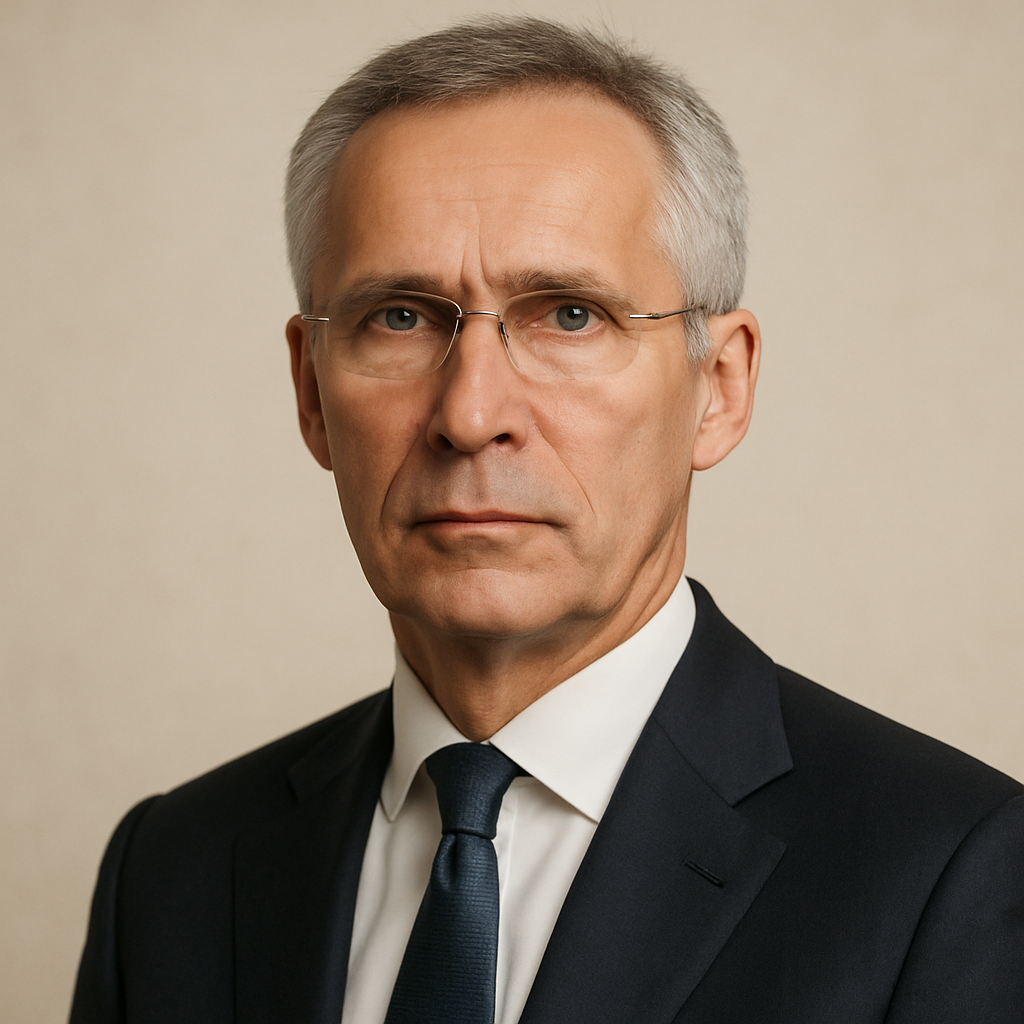
- NATO Secretary General Jens Stoltenberg delivered a speech at the Munich Security Conference on 15 February 2023, addressing security challenges amid the ongoing conflict in Ukraine.
- Main themes
- Support to Ukraine, deterrence and defense, resilience of societies, dependency on authoritarian regimes, transatlantic Alliance
- Duration
- ~7 min
- Words
- 798
- Sentences
- 78
- Readability
- 62
- Grade
- 7.2
- Syntax
- 2.30
- Vocabulary
- 2.07
The broad sphere of national life a sentence belongs to. Every sentence has an Arena, so it is the denominator the other indices are read against.
Other78 sentences in 14 paragraphs
Secretary General of the North Atlantic Treaty Organization Addressing the Munich Security Conference 2023, Jens Stoltenberg called for greater efforts to support Ukraine, deter Russia, and enhance the resilience of NATO.
Speech: 02:20–09:16 Thank you so much Heather and it’s great to be back in Munich, and great to be here together with Mette, Sauli and Maia. And I look forward to our conversation in just a few minutes.
Russia’s war against Ukraine grinds on. We may be shocked by its brutality. But we should not be surprised. This is part of a pattern of Russian aggression for several years. And NATO Allies shared precise intelligence about Moscow’s plans for an invasion long in advance. Over many months, we made every effort to engage Russia in diplomacy. And just days before, on this very stage in Munich, I called on President Putin to step back from the brink. But despite our calls for peace, he chose to attack.
We can already draw some important lessons from the war.
First, we must sustain and step up our support to Ukraine. Putin is not planning for peace. He is planning for more war. New offensives. And there are no indications he has changed his ambitions. He is mobilizing hundreds of thousands of troops. Increasingly putting the Russian economy on a war footing. And reaching out to other authoritarian regimes, such as Iran and North Korea, to get more weapons. So we must give Ukraine what they need to win and prevail as a sovereign, independent nation in Europe.
Some worry that our support to Ukraine risks triggering escalation. Let me be clear. There are no risk-free options. But the biggest risk of all is if Putin wins. If Putin wins in Ukraine, the message to him and other authoritarian leaders will be that they can use force to get what they want. This will make the world more dangerous. And us more vulnerable. So supporting Ukraine is not only the morally right thing to do. It is also in our own security interest.
The second lesson is that we need to continue to strengthen our deterrence and defense. Wars are unpredictable. And we do not know when or how this one will end. But I do know this. Even if the war ends tomorrow, our security environment has changed for the long-term. There is no going back. The Kremlin wants a different Europe. One where Russia controls neighbours.
We also know that Beijing is watching closely. To see the price Russia pays. Or the reward it receives for its aggression. What is happening in Europe today could happen in Asia tomorrow. So the war in Ukraine demonstrates that security is not regional, it is global.
In this new and more contested world, we can no longer afford to treat defense as optional. It is a necessity. Yes, spending more on defense means less money for other important tasks. But nothing is more important than our security. To preserve peace.
The third lesson is that we need to strengthen the resilience of our societies. Military forces are necessary to protect our security. But they are not sufficient. We must also secure our cyberspace, our supply chains, and our infrastructure.
The war in Ukraine has made clear the danger of over-reliance on authoritarian regimes. Not so long ago, many argued that importing Russian gas was purely an economic issue. It is not. It is a political issue. It is about our security. Because Europe’s dependency on Russian gas made us vulnerable.
So we should not make the same mistakes with China and other authoritarian regimes. We must not become too dependent on products and raw materials we import. Avoid exporting key technologies that could be used against us. And protect our critical infrastructure at home. Of course, we should continue to trade and engage economically with China. But our economies and our economic interests cannot outweigh our security interests. So it is only right that we protect ourselves. But in doing so, we must remember that trade among friends and Allies makes us stronger and more resilient. We must not create new barriers between free and open economies.
The most important lesson from the war in Ukraine is that North America and Europe must stand together. In a more dangerous world, we need our transatlantic Alliance more than ever. Without NATO, there is no security in Europe. So, this is not the time to look beyond the Alliance. This is the time to strengthen and enlarge our Alliance. To promote peace. Protect our shared security. And defend a global system based on our values and international law.
Related Content Chapter 6: Zeitenwende? (2020–2024) More Chapter 6: Zeitenwende? (2020–2024) Volodymyr Zelenskyy (2022) More Volodymyr Zelenskyy (2022) Emmanuel Macron (2023) More Emmanuel Macron (2023)