




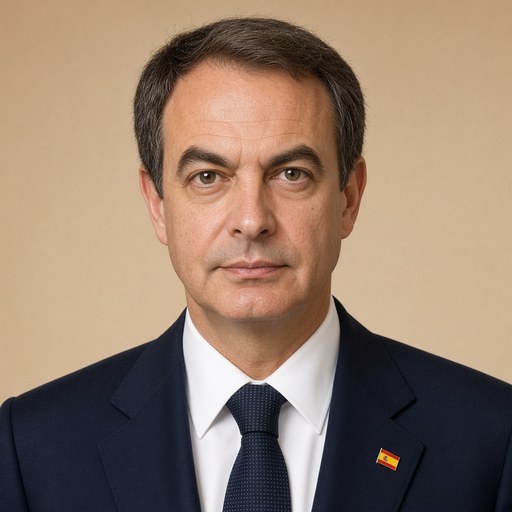
Press conference of the President of the Government after the meeting of Heads of State and Government of the Eurogroup.
 José Luis Rodríguez Zapatero · Prime Minister of Spain
- Context
- Zapatero addressed press after the first-ever extraordinary Eurogroup Heads of State summit in October 2008, convened to coordinate a European response to the global financial crisis.
- Main themes
- International financial crisis response, Eurogroup coordination, financial system stability, state guarantees for financial entities, bank recapitalization, European economic solidarity, credit facilitation, Spain's financial measures, EU economic governance
- Duration
- ~21 min
- Words
- 2,520
- Sentences
- 82
- Readability
- 42
- Grade
- 14.9
- Syntax
- 3.49
- Vocabulary
- 2.06
Translated from Spanish
This is an interview, press conference or exchange with other speakers. It is split into sentences and counted in the corpus, but its sentences are not tagged on the twelve indices.
82 sentences in 40 paragraphs
President.- Good evening. Thank you for being here.
I want to account for what this extraordinary meeting of Heads of Government and State of the Eurogroup has represented, that is, the countries that share the common currency, the euro, within the European Union, and I say extraordinary because it is the first time it has occurred.
As you know, we had requested an extraordinary meeting of the Eurogroup to address the crisis of the international financial system, and it has taken place. We had called for a coordinated and strong action from the Eurogroup to respond to this serious crisis of the international financial system, and that has also occurred. These are two essential conditions to restore normality to the international financial system, which, as you know, seriously endangers the economy of all countries in the world and which largely determines the capacity of the European Union as well.
I express my satisfaction with the outcome of the meeting and with the work that has been done by President Sarkozy, the President of the Commission, the President of the Central Bank, and the President of the Eurogroup.
I will summarize in one idea what the conclusion adopted by the Eurogroup is: European countries are going to support with all their means the financial system of our countries, and they will do so because the health and future of our companies depend on it, because the jobs of citizens depend on it, because the savings of citizens depend on it, and because, ultimately, it depends on the functioning of the economy. The economy functions through the financial system, which finances companies, which finances individuals, and which guarantees future expectations.
The financial system needs, in this situation and in this unprecedented moment, to regain trust, and that trust can only return if the States put all their means at their disposal.
Those means that today are contemplated in the conclusion of the Eurogroup meeting and that will continue in the European Council meeting are, basically, the following: first, to support the financial system and financial entities; second, to promote the financing and solvency of financial entities.
To this end, the countries that are part of the Eurogroup have agreed to act in a coordinated manner with various instruments, instruments that relate to the financing of financial entities, first of all, such as the fund that you know the Government of Spain has adopted, for an amount of up to fifty billion euros, to temporarily acquire assets and facilitate the financing of financial entities.
Measures such as the recapitalization of financial entities, that is, the injection of capital to guarantee their solvency, which is a measure that various Governments contemplate adapted to their needs and which our country, given the solvency of financial entities to date, does not contemplate.
And, third, a new measure that we have adopted today in a coordinated manner and that the Government of Spain will put into operation immediately, which will be approved immediately: we are going to guarantee the new debt of financial entities, debt of up to five years, from now until December 31, 2009, to facilitate the activity of financial entities. It is a guarantee of the annual debt they acquire, logically through a consideration in favor of the State, and that allows financial entities to issue, to equip themselves with instruments, so that they, in turn, can facilitate the task of providing credit to companies and ultimately maintaining economic activity.
These are the three basic instruments that the Eurogroup has adopted today. Specifically, I must say that the conclusions of the Eurogroup welcome and incorporate the initiative that Spain has adopted, which consists of the fund you already know.
Next Wednesday we have a meeting of the European Council. Today the Eurogroup has adopted this strong, decisive, and determining action in support of the international financial system, which is the same as saying in support of the resources of citizens and companies. And I want to emphasize that the Eurogroup represents 72 percent of the GDP of the European Union.
As you know, he participated at the beginning of the meeting, and this morning he met with the President of the Council, British Prime Minister Gordon Brown, who also has a plan to support the financial system and which we have tried to coordinate and will continue to coordinate. The Eurogroup plus Great Britain represents 88 percent of the Gross Domestic Product of the European Union.
This is the way: a coordinated, unanimous, and strong action, determined to face the greatest crisis of the international financial system. It would be very desirable for all countries of the European Council to walk in the same direction that the Eurogroup has marked today, and it would be very desirable for this initiative, which is the most significant adopted so far in the world regarding the financial system crisis, to be an initiative that is coordinated at the same time with the rest of the major economies of the world, particularly with the United States of America. I know that this is an intention and a desire of the European Union, and we hope that this great field of international coordination can provide a serious, adequate, and essential response to the crisis of the international financial system.
I must say that the analysis of all the Prime Ministers and Heads of State of the Eurogroup regarding the situation of the international financial crisis is shared, affects everyone equally, and can have very serious consequences for the economy of our countries.
In short, satisfaction. I believe that this is the most forceful, most determined, and most decisive response, and I reiterate that the Government will immediately adopt the system of guarantees for the commitments, for the new debts that our financial entities establish in the timeframes and in a coordinated manner with all European countries.
Q.- President, I wanted to ask you if it took a lot to reach the agreement among the Fifteen, if there was any country that resisted or how much they resisted, and if you trust that on Wednesday the rest of the Twenty-Seven will accept this agreement reached by only fifteen countries. What level of confidence or hope do you have that this message of agreement will positively influence the markets tomorrow, on Monday, after the very bleak week that was experienced in the past days?
And one more domestic thing: when do you plan to explain to the opposition leader, Mariano Rajoy, I suppose, this agreement that has been reached today in the Élysée?
President.- There has been a great consensus, and that unanimous agreement of the Eurogroup has been easy to reach. Let’s say that the debate has been around the nuances. Why? Because, as I said earlier, there is a full agreement on the analysis that there is a crisis of the international financial system that originates from the United States and from the crisis of those toxic assets, the subprime mortgages, and that has spread absolutely throughout the international financial system, generating an unprecedented distrust, to such an extent that the market in the financial system for banks to lend to each other and to have a minimum of trust and predictability is practically nonexistent.
Agreement because the analysis is shared and because today we have seen, and I think it is very important, European will, we have seen European response from the countries that share a currency, which, logically, has great significance.
I am convinced that the Twenty-Seven… I have given the figure of what the Gross Domestic Product of the countries that make up the euro represents because I think it is significant: with Great Britain, which will be at the European Council meeting, 88 percent; therefore, it has evident strength and power as a message to the markets. However, I have also added that it is desirable that this continued coordination be in the realm of the entire International Community. Europe counts a lot to give confidence, and today it has demonstrated that the governments and European institutions are committed to that task; but it is very necessary that this coordination occurs.
I will call Mr. Rajoy immediately, almost certainly tomorrow morning, to inform him of what has happened and to finalize the appointment, once, as had been agreed with him, the economic teams met last Thursday, which surely will not be the last because we will have to talk about the new initiative that I have just explained regarding the guarantees of the new debt of our financial system that all countries will adopt, and it has been established in the Eurogroup.
The Stock Markets? I believe it would be advisable for the message of confidence to be read by the markets, not based on a mere declaration, but based on the concrete contents of what the governments have put on the table to improve that situation. The European Central Bank also has a very important role, as the responsible party for monetary policy and liquidity, which all governments have respected, and we, in a collective action responding to an obligation given the seriousness of the situation, have committed to financing the financial system, which is tantamount to saying that it is the only door for companies to be financed and, therefore, for companies to maintain employment, for savers to have a guarantee of the future, and for the economy to function.
This is the only door, and today we have opened it together and with determination. My opinion is that it should have positive effects tomorrow. We have a serious crisis, and logically, when there is a serious crisis, it will be difficult to overcome. We will overcome it, but it will take effort. Together, as has happened today, we will achieve it sooner and more effectively, but it will take work.
Q.- I wanted to ask you how all these measures that have been agreed upon reconcile with the Stability Pact or the risks of not being up to the 3 percent deficit, as well as with the community rules on competition.
President.- The Eurogroup's own declaration establishes the commitment to guarantee the rules of competition and the rules that affect state aid. The Commission is the guarantor of that procedure, and I have no doubt that it will fulfill its task.
Secondly, we are fundamentally talking about commitments that relate to debt, not to the deficit, and, therefore, from that point of view, for example, our country has a very wide margin because, as is known and I reiterate now, we have a debt that does not reach 40 percent, twenty points below the average. In addition, we also have a margin because, as is evident, until now our financial system has great solvency.
Our measures are aimed at ensuring that Spanish Banks and Savings Banks can restart the task of granting credit, credit among themselves, credit to companies, and renewing companies, small, medium, and large, because that is what maintains employment, and employment is crucial for the purchasing power of our families. As you know, in recent weeks we have been witnessing practically a non-existence of the credit market that must be overcome as soon as possible.
Undoubtedly, the Stability Pact is in force; undoubtedly, the Common Market and its rules are in force; and, undoubtedly, the rules regarding European state aid are in force. States have a margin. Not only that, but it has been the President of the European Central Bank who, in the meeting, urged governments to take measures to assist financing and, if necessary, to recapitalize financial entities. Its task is to promote liquidity; it is in charge of monetary policy, but in a situation like this, where we have a financing problem, and in some cases solvency, governments are here for what we have done today.
Q.- Mr. President, are you going to impose any additional restrictions on banks in their lending activities, etc., in exchange for these guarantees?
Can you explain your confidence that in countries where the rescue plan will be stronger and state aid will be more generous, those banks will not have any advantage in competition against Spanish banks?
President.- Precisely, what we have done today is coordinate actions to guarantee what can be equitable rules of the game. In addition, the President of the Commission, the President of the Council, the President of the Eurogroup, and the President of the Central Bank have been mandated to be a monitoring group of all the actions that are put in place, of the responses, of the initiatives, and of the plans of each government.
There is a central underlying position that I expressed in the first part of my initial intervention, which is that the governments have decided to support and prevent the collapse or bankruptcy of financial entities that have a relevant impact on our economic system.
There is no concern. Of course, the measures that the Government of Spain has adopted so far, one, the fund, which is one of the tools contemplated in the Eurogroup agreement, and, two, the guarantees, we believe are useful and sufficient instruments for the support we need. Other countries and other governments will also need to recapitalize some financial entities due to solvency issues, and, of course, it is logical that this is the case. This is a shared reflection by the entire Eurogroup. We do not need it today, but if we did, we would do it.
Q.- Mr. President, aside from the two measures you just mentioned, I would like to know if there will be additional money to guarantee these interbank loans that will be put on the table. If so, how much?
President.- It is a guarantee, it is a kind of insurance that is produced; logically, an insurance that has, I insist, a consideration that the financial entities will have to satisfy to the State, and an insurance works as everyone knows. We back and guarantee the debts that the financial entities incur during this period until December 31, 2009, debt for a term of up to five years. But there will be no additional amount.
Q.- Do you know the value of that debt?
President.- But, if it is new debt, does anyone know what new debt our banks will incur? What is facilitated is that they incur it, but I imagine it will be what they estimate, the market conditions, and what the guarantee entails. No one knows what new debt they will incur, logically. What we want is for the market to move and for them to be able to incur new debt up to that five-year term, because, logically, if not, they do not have sufficient resources to lend to companies, and companies to carry out their economic activity and to maintain their employment.
In short, the financial system is the economic system, and if the financial system does not work, the economic system does not work, and if the economic system does not work, neither do the companies, big or small, which are the ones that create jobs and maintain employment.
Thank you very much.
The original Spanish. The tags above are read on the English translation's sentences.
Presidente .- Buenas noches. Gracias por estar aquí.
Quiero dar cuenta de lo que ha representado esta reunión extraordinaria de Jefes de Gobierno y de Estado del Eurogrupo, es decir, de los países que comparten la moneda común, el euro, en el seno de la Unión Europea, y digo extraordinaria porque es la primera vez que se produce.
Como saben, habíamos pedido una reunión extraordinaria del Eurogrupo para abordar la crisis del sistema financiero internacional y se ha producido. Habíamos solicitado una acción coordinada y fuerte del Eurogrupo para responder a esta grave crisis del sistema financiero internacional y se ha producido también. Son dos condiciones imprescindibles para restablecer la normalidad del sistema financiero internacional que, como saben, pone en peligro gravemente la economía de todos los países del mundo y que determina, en gran medida también, la capacidad de la Unión Europea.
Expreso mi satisfacción por el resultado de la reunión y por la tarea que han realizado, tanto el Presidente Sarkozy, como el Presidente de la Comisión, como el Presidente del Banco Central y como el Presidente del Eurogrupo.
Les resumiré en una idea cual es la conclusión adoptada por el Eurogrupo: los países europeos van a respaldar con todos sus medios al sistema financiero de nuestros países y lo van a hacer porque de ello dependen la salud y el futuro de nuestras empresas, porque de ello dependen los empleos de los ciudadanos, porque de ello depende los ahorros de los ciudadanos y porque de ello depende, en definitiva, que funcione la economía. La economía funciona a través del sistema financiero, que financia empresas, que financia particulares y que garantiza las expectativas de futuro.
El sistema financiero necesita en esta situación y en este trance inédito recuperar la confianza, y esa confianza sólo es posible que vuelva si los Estados ponen todos sus medios al alcance.
Esos medios que hoy contempla la conclusión de la reunión del Eurogrupo y que tendrá su continuación en la reunión del Consejo Europeo son, básicamente, los siguientes: en primer lugar, sostener el sistema financiero y las entidades financieras; en segundo lugar, favorecer la financiación y la solvencia de las entidades financieras.
Para ello, los países que formamos parte del Eurogrupo hemos acordado actuar de manera coordinada con diversos instrumentos, instrumentos que tienen que ver con la financiación de las entidades financieras, en primer lugar, como el fondo que saben que el Gobierno de España ha adoptado, por un importe de hasta cincuenta mil millones de euros, para adquirir activos temporalmente y facilitar la financiación de las entidades financieras.
Medidas como la recapitalización de las entidades financieras, es decir, la inyección de capital para garantizar su solvencia, que es una medida que contemplan diversos Gobiernos adaptadas a su necesidad y que es una medida que nuestro país, dada la solvencia de las entidades financieras hasta el día de hoy, no contemplamos.
Y, en tercer lugar, una nueva medida que hoy hemos adoptado de manera coordinada y que el Gobierno de España pondrá de inmediato en funcionamiento, que aprobará con carácter inmediato: vamos a garantizar la deuda nueva de las entidades financieras, deuda de hasta cinco años, de aquí al 31 de diciembre de 2009 para facilitar la actividad de las entidades financieras. Es una garantía de la deuda anual que adquieran, lógicamente a través de una contraprestación a favor del Estado, y que permita emitir a las entidades financieras, dotarse de instrumentos, para que éstas, a su vez, puedan facilitar la tarea de dar crédito a las empresas y de mantener, en definitiva, la actividad económica.
Ésos son los tres instrumentos básicos que hoy el Eurogrupo ha adoptado. De manera singular, he de decir que las conclusiones del Eurogrupo saludan y recogen la iniciativa que España ha adoptado, y que consisten en el fondo que ya conocen.
El próximo miércoles tenemos reunión del Consejo Europeo. Hoy el Eurogrupo ha adoptado esta acción fuerte, decidida, determinante, en respaldo del sistema financiero internacional, que es lo mismo que decir en respaldo de los recursos de los ciudadanos y de las empresas. Y quiero subrayar que el Eurogrupo representa el 72 por 100 del PIB de la Unión Europea.
Como saben, ha participado al inicio de la reunión, y esta mañana ha estado reunido con el Presidente del Consejo, el Primer Ministro británico, Gordon Brown, que tiene un plan también de apoyo al sistema financiero y que hemos tratado de coordinar y trataremos de coordinar. El Eurogrupo más Gran Bretaña representa el 88 por 100 del Producto Interior Bruto de la Unión Europea.
Éste es el camino: una acción coordinada, unánime y fuerte, decidida para hacer frente a la mayor crisis del sistema financiero internacional. Sería muy deseable que todos los países del Consejo Europeo caminaran en la misma dirección que hoy ha marcado el Eurogrupo y sería muy deseable que esta iniciativa, que es la más transcendente hasta ahora adoptada en todo el mundo en torno a la crisis del sistema financiero, fuera una iniciativa que se coordinara a la vez con el resto de las grandes economías del mundo, en particular, con los Estados Unidos de Norteamérica. Sé que ésa es una intención y un deseo de la Unión Europea, y esperemos que ese gran campo de coordinación de actuación internacional pueda dar una respuesta seria, adecuada e imprescindible a la crisis del sistema financiero internacional.
He de decir que el análisis de todos los Primeros Ministros y Jefes de Estado del Eurogrupo sobre la situación de la crisis financiera internacional es compartido, afecta a todos de igual manera y tiene, puede tener, unas gravísimas consecuencias para la economía de nuestros países.
En definitiva, satisfacción. Creo que es la respuesta más contundente, más decidida y más determinada, y reitero que el Gobierno adoptará con carácter inmediato el sistema de garantías para los compromisos, para las deudas nuevas, que nuestras entidades financieras establezcan en los plazos y de manera coordinada con todos los países europeos.
P.- Presidente, quería preguntarle si para este acuerdo que han alcanzado ha costado mucho llegar al acuerdo entre los Quince, si ha habido algún país que se resistía o cuánto se resistía, y si confían ustedes que el miércoles el resto de los Veintisiete acepten de buen grado este acuerdo que han alcanzado sólo quince países. ¿Qué nivel de confianza o de esperanza tienen ustedes en que este mensaje de acuerdo influya mañana positivamente en los mercados, mañana lunes, después de la semana negrísima que se vivió en los días pasados?
Y una cosa ya más doméstica: ¿cuándo piensa usted explicarle al líder de la oposición, Mariano Rajoy, supongo, este acuerdo que se ha alcanzado hoy en el Elíseo?
Presidente .- Ha habido un gran consenso y ese acuerdo unánime del Eurogrupo ha sido fácil alcanzarlo. Digamos que el debate ha estado en torno a los matices. ¿Por qué? Por lo que he dicho anteriormente: se comparte plenamente el análisis de que hay una crisis del sistema financiero internacional que arranca de Estados Unidos y de la crisis de esos activos tóxicos, las hipotecas "subprime", y que se ha extendido absolutamente por todo el sistema financiero internacional, generando una desconfianza inédita hasta ahora, de tal manera que es prácticamente inexistente el mercado en el sistema financiero a la hora de prestarse unos bancos a otros y a la hora de tener un mínimo de confianza y previsibilidad.
Acuerdo porque el análisis es compartido y porque hoy hemos visto, y creo que es muy importante, voluntad europea, hemos visto respuesta europea de los países que compartimos una moneda, lo que, lógicamente, tiene una gran transcendencia.
Estoy convencido de que los Veintisiete… He dado la cifra de lo que representa el Producto Interior Bruto de los países que formamos el euro, porque me parece significativa: con Gran Bretaña, que estará en la reunión del Consejo Europeo, el 88 por 100; por tanto, tiene una fuerza y una potencia evidentes como mensaje ante los mercados. Ahora bien, también he añadido que lo deseable es que esa coordinación continúa sea en el ámbito de toda la Comunidad Internacional. Europa cuenta mucho para dar confianza y hoy ha demostrado que los Gobiernos y las instituciones europeas están volcados en esa tarea; pero es muy necesario que se produzca esa coordinación.
Llamaré al señor Rajoy inmediatamente, casi con toda seguridad mañana por la mañana, para informarle de lo que ha ocurrido y para concertar de manera definitiva la cita, una vez, tal y como había quedado con él, que los equipos económicos el pasado jueves ya mantuvieron una reunión, que seguramente no será la última porque deberemos hablar de la nueva iniciativa que hoy acabo de explicar en relación con las garantías de la deuda nueva de nuestro sistema financiero que van a adoptar todos los países, y ha sido así establecido en el Eurogrupo.
¿Las Bolsas? Yo creo que sería conveniente que el mensaje de confianza sea leído por los mercados, no en función de una mera declaración, sino en función de los contenidos concretos de aquello que los Gobiernos han puesto encima de la mesa para mejorar esa situación. También el Banco Central Europeo tiene un papel muy importante, como responsable de la política monetaria y de la liquidez, que todos los Gobiernos hemos respetado y nosotros, en una acción colectiva respondiendo a una obligación ante la gravedad de la situación, hemos comprometido la financiación del sistema financiero, que es tanto como decir que es la única puerta para que las empresas se puedan financiar y, por tanto, para que las empresas mantengan el empleo, para que los ahorradores tengan garantía de futuro y para que la economía funcione.
Ésta es la única puerta y hoy la hemos abierto entre todos y con determinación. Mi opinión es que debe producir efectos positivos mañana. Tenemos una crisis grave y, lógicamente, cuando hay una crisis grave, va a costar remontarla. La vamos a remontar, pero va a costar. Todos juntos, como hoy ha sucedido, lo conseguiremos antes y con más eficacia, pero va a costar trabajo.
P.- Quería preguntarle cómo se concilian todas estas medidas que se han acordado, tanto con el Pacto de Estabilidad o los riesgos de no estar a la altura del 3 por 100 de déficit, como también con las reglas comunitarias sobre la competencia.
Presidente .- La propia declaración del Eurogrupo establece el compromiso de garantizar las reglas de la competencia y las reglas que afectan a las ayudas de Estado. La Comisión es garante de ese procedimiento y no tengo ninguna duda de que cumplirá su tarea.
En segundo lugar, estamos hablando, fundamentalmente, de compromisos que tienen que ver con la deuda, no con el déficit, y, por lo tanto, desde ese punto de vista, por ejemplo, nuestro país tiene un margen muy amplio porque, como es conocido y reitero ahora, tenemos una deuda que no llega al 40 por 100, veinte puntos por debajo de la media. Además, también tenemos un margen porque, como es evidente, hasta ahora nuestro sistema financiero tiene una gran solvencia.
Nuestras medidas están destinadas a que los Bancos y las Cajas españolas puedan reiniciar la tarea de conceder crédito, crédito entre sí, crédito a las empresas, y renovar a las empresas, a las pequeñas, a las medianas y a las grandes, porque eso es lo que mantiene el empleo y el empleo es determinante para la capacidad adquisitiva de nuestras familias. Como saben, en las últimas semanas venimos asistiendo prácticamente a una inexistencia del mercado del crédito que hay que remontar cuanto antes.
Sin duda alguna, el Pacto de Estabilidad está vigente; sin duda alguna, el Mercado Común y sus reglas están vigentes; y, sin duda alguna, las reglas referentes a las ayudas estatales europeas están vigentes. Los Estados disponen de un margen. No sólo eso, sino que ha sido el Presidente del Banco Central Europeo el que en la reunión ha instado a los Gobiernos a tomar medidas de ayuda a la financiación y a la recapitalización, en su caso, de las entidades financieras. Su tarea es la tarea de favorecer la liquidez, tiene la política monetaria a su cargo, pero en una situación como ésta, donde tenemos un problema de financiación, y en algunos casos de solvencia, los Gobiernos están para lo que hemos hecho hoy.
P.- Señor Presidente, ¿usted va a imponer algunas restricciones adicionales en los Bancos en sus actividades de prestación, etcétera, a cambio de estas garantías?
¿Nos puede explicar su confianza en que en países donde el plan de rescate será más fuerte y las ayudas estatales serán más generosas esos bancos no vayan a tener alguna ventaja en la competición contra los bancos españoles?
Presidente .- Precisamente, lo que hemos hecho hoy es coordinar actuaciones para garantizar lo que pueden ser unas reglas del juego equitativas. Además, el Presidente de la Comisión, el Presidente del Consejo, el Presidente del Eurogrupo y el Presidente del Banco Central han quedado mandatados para ser un grupo de seguimiento de todas las acciones que se ponen en marcha, de las respuestas, de las iniciativas y de los planes de cada Gobierno.
Hay una posición central de fondo que yo expresaba en la primera parte de mi intervención inicial y es que los Gobiernos hemos decidido apoyar e impedir que se produzcan caídas o quiebras de entidades financieras que tienen un impacto relevante en nuestro sistema económico.
No hay ninguna preocupación. Desde luego, las medidas que el Gobierno de España ha adoptado hasta ahora una, el fondo, que es una de las herramientas que contempla el acuerdo del Eurogrupo, y, dos, las garantías creemos que son instrumentos útiles y suficientes para el respaldo que necesitamos. Otros países y otros Gobiernos van a necesitar también recapitalizar algunas entidades financieras por problemas de solvencia y, desde luego, es lógico que así sea. Es una reflexión compartida por todo el Eurogrupo. Nosotros no lo necesitamos al día de hoy pero, si lo necesitaríamos, lo haríamos.
P.- Presidente, aparte de las dos medidas que acaba de comentar, yo quisiera saber si va a haber dinero adicional para garantizar estos préstamos interbancarios que se van a poner encima de la mesa. Si es así, ¿cuánto?
Presidente .- Es una garantía, es una especie de seguro que se produce; lógicamente, un seguro que tiene, insisto, una contraprestación que las entidades financieras tendrán que satisfacer al Estado y un seguro funciona como todo el mundo sabe. Avalamos y garantizamos lo que son las deudas que contraigan las entidades financieras durante este período hasta el 31 de diciembre de 2009, deuda por un plazo de hasta cinco años. Pero no habrá ninguna cuantía adicional.
P.- ¿Conoce el valor de esa deuda?
Presidente .- Pero, si es deuda nueva, ¿alguien sabe qué deuda nueva van a contraer nuestros Bancos? Lo que se facilita es que la contraigan, pero yo imagino que será lo que ellos estimen, las condiciones del mercado y lo que suponga la garantía. Nadie sabe qué deuda nueva van a contraer, lógicamente. Lo que queremos es que se mueva el mercado y que puedan contraer deuda nueva hasta ese plazo de cinco años, porque, lógicamente, si no, ellos no disponen de los recursos suficientes para prestar a las empresas y las empresas para realizar su actividad económica y para mantener su empleo.
En definitiva, el sistema financiero es el sistema económico y, si el sistema financiero no funciona, no funciona el sistema económico, y, si no funciona el sistema económico, no funcionan las empresas, ni grandes ni pequeñas, que son las que crean empleo y las que mantienen empleo.
Muchas gracias.