




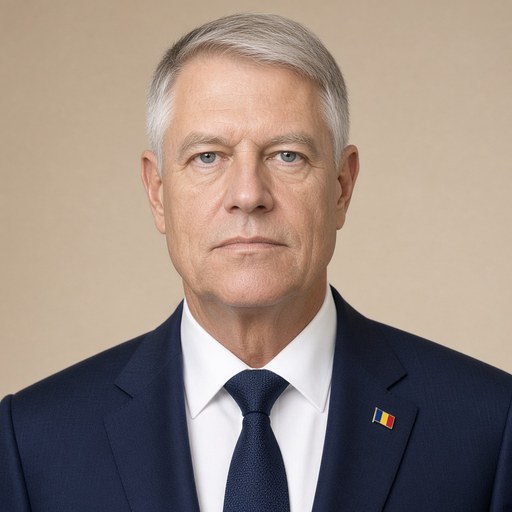
The speech and interventions of the President of Romania, Mr. Klaus Iohannis, at the event "Future Skills & Future of Work," organized by the League of Romanian Students Abroad.
 Klaus Iohannis · President of Romania
- Context
- Iohannis addressed the League of Romanian Students Abroad conference on "Future Skills & Future of Work" in September 2019, discussing Romania's education and labor market challenges.
- Main themes
- Education reform, future of work, skills development, labor market alignment, vocational education, lifelong learning, digitalization and robotization, green economy, research and innovation, Romanian Students Abroad, PSD government criticism, "Educated Romania" project
- Duration
- ~32 min
- Words
- 3,847
- Sentences
- 170
- Readability
- 49
- Grade
- 11.8
- Syntax
- 3.10
- Vocabulary
- 1.92
Translated from Romanian
The broad sphere of national life a sentence belongs to. Every sentence has an Arena, so it is the denominator the other indices are read against.
Other170 sentences in 69 paragraphs
Thank you, Mr. President of the Romanian Students' League Abroad!
I congratulate you on the topic addressed at today's conference, one of extreme urgency for Romania, given that we are at a crossroads for our economy and society.
Our old advantages, such as low labor costs, will no longer be sufficient to drive economic growth and convergence with the living standards of the rest of Europe.
We need well-trained professionals who can quickly adapt to a very dynamic labor market.
This training is largely generated by the quality of the educational system.
And, unfortunately, it is precisely in this area that Romania has fallen behind and faces many chronic problems.
The high rate of early school leaving, which exceeds 16%, is far from the target of 11% assumed by Romania for the year 2020. The high level of functional illiteracy, the low participation in higher education – which unfortunately places us last in the European Union – or the poor quality of vocational education are just a few examples that illustrate the serious situation in education.
Many of the recent legislative changes have done nothing but disrupt the Romanian education system.
That is why, when I launched the "Educated Romania" project, I started from the idea that it is essential to consult as many stakeholders in the field as possible, in order to integrate their initiatives into a unified concept.
The ministers that the PSD has cycled through the Ministry of Education, however, have not resisted the harmful temptation to make educational policies on a whim, with chaotic minor modifications made at least monthly to the current system.
In order to build a high-performing education system, we need basic information, which we often lack.
Although there have been studies conducted on graduates, we do not have a permanent national system that maps the relationship between education and the labor market. A system that indicates our current needs, anticipates future ones, and shows us which educational pathways have the highest integration rates of graduates into the economy.
The current needs of the labor market cannot represent the only criterion on which we shape our vision of education, because we would risk entering a perpetual stagnation.
By increasing the overall level of participation in education, developing a systematic mapping system of labor market needs, and transforming vocational education, we lay the foundations for a truly developed economy.
Romania must have enough well-educated young people not only to meet current needs but also because an educated population can respond much more easily to changes in the structure of the economy, changes that will occur.
International studies show us that, in the future, the skills sought by employers in graduates are not necessarily those that come from over-specialization, but especially those related to creativity, innovation, synthesis capacity, decision-making, and even emotional intelligence.
Those who will win the battle with the processes of digitalization and robotization are those who develop high-level skills, knowing from the very beginning that initial training is just the first step, not a guarantee of success.
And we can easily see the speed with which changes are occurring in the economy today. In Europe, more and more companies are complaining about the lack of labor in countries where there are still many unemployed people.
Given that an ordinary person works for 40 years after finishing their studies, we have a real need for lifelong learning programs and mechanisms.
Such programs must be carried out in partnership with the private sector and contribute to removing the stigma associated in some cases with retrained workers. Moreover, they must take into account emerging global challenges, such as climate change.
Europe wants to become a leader in building a green economy, and these ambitions must be reflected in our training and retraining programs.
Around us, the world is evolving at a staggering pace. New branches of the economy appear every few years, and young people are the first to have the natural chance to benefit from these unprecedented changes.
Billion-dollar projects are being funded in the field of artificial intelligence, mapping the human brain, treating diseases of the last century, or preventing climate change.
Research and innovation are essential in a country with such creative potential among young people as Romania. The question is what we do in this world full of opportunities.
In the last three years, Romania has been held back by a government concerned only with solving the legal problems of its leaders, a very important time stolen from our development.
This is not the path of an educated Romania; this is not the direction that people chose for their country on May 26, through the vote cast in the referendum.
In any case, one thing must be clear to us: without a strategic approach to the relationship between education and the economy, we cannot prosper in a dynamic era focused on innovation.
We have a large number of talented and entrepreneurial citizens, but we must provide them with the tools to achieve their personal and professional development goals.
At the same time, we must consider both the short-term needs of the economy and, more importantly, the fact that we are training young people who will likely remain in the labor market until around 2060.
I conclude by congratulating you again on the project and wishing success to all Romanian young people studying abroad, with the hope that we will see as many of them as possible active and involved in our economy and society, here in Romania.
We look forward to seeing the concrete results of this endeavor, and I invite you to continue participating, to strengthen the results of the "Educated Romania" project. And, in today's session, I must admit that I am looking forward to the question-and-answer part, hoping that my brief introduction has piqued your curiosity.
Question and answer session:
Question: Mr. President, where is Romania now? We have talked about perspectives, we have talked about other countries. Where is Romania at this moment?
The President of Romania, Mr. Klaus Iohannis: Well, as I mentioned in my introduction, at the bottom of the ranking. It is very sad to note this. Of course, there are areas where we are not at the bottom of the ranking, where we are somewhat in the middle. I hope the rectors, who lead very good universities in our country, do not take offense, but I want to describe a slightly broader picture of the phenomenon we are facing, in relation to the theme you have chosen today.
Compared to countries in the European Union, we are doing poorly. In most chapters, we are doing poorly; we know this, we boast about achievements from the '80s, '90s, and more recently. We have notable results from some students, we have gold and silver medalists at the Olympics, but if we take a line per chapter, we see that things are a little different. We have peaks, but the lower part is disproportionately large in relation to the peak nonetheless.
We have all mentioned artificial intelligence, and here in Romania, I can say that we have a few student teams that achieve notable, recognized results. Overall, however, in this chapter, we are nowhere, if I can express it that way, unacademically. This, in the European context, which, unfortunately, compared to the rest of the world, is also doing about as poorly as we are in relation to the European context. Europe, which considers itself innovative, progressive, modern, in reality, in the field of research on artificial intelligence, almost does not exist, and this is a big problem. We have fallen very far behind due to the way our economies function, how our economies relate. This is to put the situation a bit into context.
So, at a global level, all of Europe, if we talk about artificial intelligence, is doing very poorly, and we, within this Europe, are again doing poorly. So, I would have liked to give you a much better answer, to tell you that we are doing well and that we do not need to do much, that we are at the forefront. It is not so.
And if we continue for a while to lead the educational system into a spiral of involution, then we will have an extremely big problem, not next year or in two years, but in 10 years, in 15 years, in 30 years. And for this reason, I decided - and for this reason, I decided - to develop, together with my colleagues from the Presidential Administration, the presidential project "Educated Romania."
Education is not a hobby. Education is not just a calling, a necessity. Education is Romania of tomorrow. And I did not invent this. This was already said by Spiru Haret 100 years ago and is still valid. As the educational system looks today, so will Romania look tomorrow.
Unfortunately, of all the categories or occupations that exist at the moment, one certainly will not disappear and bears great blame for us being here. I believe you realize, we are talking about the political class.
An annex – We also have honest politicians. We just need to promote them a bit, to start fixing things. So, do not misunderstand me, that the political class is guilty, but that does not mean there are no hopes. There are; we just need to look for them.
Question: My question would be a short one and related to how you concluded. Are you optimistic about the political class in Romania for the future? And, if so, do you believe that with a gradual change in the political class, the future of our country would change as well, more or less in terms of the education system?
The President of Romania, Mr. Klaus Iohannis: You know, if I were not optimistic, I would not be here. I am optimistic and I believe it is possible. That is why I entered politics. If I did not believe it was possible and did not believe it was possible in Romania, I would not be here; this is absolutely clear, at least for me.
I believe that it is possible in Romania, and I believe we have this chance to find solutions. I did not develop the "Educated Romania" program, and I am not running in elections, and I do not do the things I do because I do not believe it is possible. I believe it is possible, and I want to be part of the solution, to promote the solution.
So, yes, it is possible, but if someone imagines that it is simple, then they are in a great error. It is not simple at all. And if we want to have well-prepared people and well-prepared politicians, politicians who deal with good public policies that help society, that help the ordinary Romanian, then we need to have educated people. Well, to have well-educated people, we need to take care of education. Absolutely any field starts from education. There is no other comparative factor for the society of tomorrow if we were to take the importance of that factor.
And yes, I believe we can find people; I believe change will occur. It will not happen very quickly. We still hear all kinds of people coming up with unheard-of ideas and coming up with unseen solutions. I believe it is not that simple. I believe we need to roll up our sleeves and work, both we politicians and you students, and everyone in their place of work.
If it were simple, on the one hand, everyone would know how to do it. Secondly – maybe there should not even be politicians if it were that simple. I am willing to get involved; many others are willing. I do not want to name them because that is not why I came here; some of them are even in the room, and things can be directed towards a net improvement. But it will not happen without education and without involvement.
Question: I am very interested in the concept of universal basic income. Do you think we could implement such a program in the future in Romania, and what would be the difficulties in its implementation?
The President of Romania, Mr. Klaus Iohannis: Perhaps we can find a specialist in the field who can clarify this for us.
Question: I studied abroad and took on a challenge three years ago. I returned to the country to take my first job. (...) Looking back at the last three years, I have noticed that my quality of life has decreased compared to the moment I arrived, and as a young person who wants to be independent from my parents (...) it is very difficult for me to be independent. It is very hard to start life as a young person, to achieve independence. (...) What can we do as a country to help young people become independent during perhaps the hardest period of their lives, the moment when they need to plan their future (...)?
President of Romania, Mr. Klaus Iohannis: I must say that it was difficult for me at the beginning, and probably it was quite difficult for others as well at the beginning. I do not believe we can find a solution where everyone feels very good and very comfortable from the beginning to the end. These are called the challenges of life, and we must face them, but beyond that, it is clear that in Romania we need a completely different approach towards the younger generation. And here I am not talking about measures that replace the young person's concern for their own future, but about measures that facilitate their integration into a job or into multiple jobs - these approaches can also be a solution. There is a need for specific programs that also prepare the student, the pupil, for what comes next. I believe this is a part that has been totally neglected in our educational system; to prepare the young person for what will happen after they have their diploma, they are proud, they go home and wonder, "What do I do now?" Certainly. There is also a need for more purely social measures. How do we help a young person to manage, to find housing, and for those who are starting a young family, how do we outline the framework in society for a young family, how do we make it easier for young people who have a small child to go to work, to have someone take care of the child, and so on. In reality, there is a need for a very complex mix of measures, and I believe some of them are known, and many of them are, paradoxically, relatively simple to implement. The question is, if it is so simple, why hasn't it been done? I believe you have already provided the answer, and I remind you that you started with "in the last three years." It has been very difficult for me in the last three years as well!
Question: (...) The message is about a more social attitude, both from the Government and public authorities, in encouraging people to form unions in the corporate system in Romania, to demand their rights when those companies make a profit.
President of Romania, Mr. Klaus Iohannis: It is a very interesting theme, and I am glad you brought it up. Essentially, what you are talking about is called social equity. A society where social equity is not an assumed value has a problem, because it automatically creates such a large polarization that categories emerge which are then very, very difficult to bring together.
However, I want to be clear from the outset: I believe in social equity, I believe in the responsibility of companies towards the society in which they make profits, and there are many companies in Romania that have understood this, not very many, but many, and we see that they have started to support NGOs, organizations, some support sports movements, others support various forms of art, and so on. What I cannot accept, however, is for this contribution to society to come from coercive measures; the state must have the wisdom to create a mechanism and measures that support companies that understand their social responsibility, and then we are already entering an area that, in the last three years, as our young colleague said, has been profoundly neglected. Healthy, sustainable economic measures that create a framework of predictability, and then, certainly, we can move forward – on taxation, on levies, and all the other measures that can be implemented.
It is not moral, and for many it is even very annoying if a large company tries to externalize profits, but, on the other hand, if we look at the behavior of the state, we are speaking generically, in recent years, what should the management of a company think if the rules change from one day to the next, if an ordinance like Ordinance 114 appears from one day to the next, if the fundamental way of taxation changes from one day to the next, or if the way in which an employee's contribution for social security is perceived changes fundamentally from one day to the next. It is possible that the leaders of that company may consider that, unfortunately, Romania is no longer a safe ground, and then such tendencies appear.
And here we return to the story I have been trying to tell since I became President; if we want Romania to be a prosperous, safe country, a country that considers social equity a core value, then the state policy, namely that of those who govern and those who make laws, must be a wise policy for all in Romania, it must be a policy that creates a stable, safe, predictable framework, and then all the other things can be gradually implemented.
This economic and financial hopping, which we have unfortunately experienced in recent years, leads to such excesses as those criticized by the young person who spoke earlier. And in Luxembourg, these issues have been resolved for many decades, because it has been understood in Luxembourgish politics that without stability there is no security, and there is no safety for the citizen.
Question: The UN youth strategy for 2030 talks about the transition from school to school and from school to work. If we talked in the three presentations about the transition from school to work, I would like to open the topic of the transition from school to school. Given the teaching experience of Mr. President, I would like to open the subject of the pre-university environment, the fact that we do not know what we are getting into when we enter universities both in Romania and abroad.
President of Romania, Mr. Klaus Iohannis: The concern is legitimate and absolutely correct, and one of the important concerns we have in the team coordinating the "Educated Romania" project is how to develop or how to propose for discussion a system that clearly addresses this issue as well. We are currently captives of a system that actually emerged somewhere in the second half of the 20th century. It is not a system created even for the beginning of the 21st century, but certainly not for the decades to come. And here we need to work very hard. First of all, predictability is completely lacking. If a young family sends their child to the first grade today, yesterday, they have no idea what educational path the child will have. However, this is a minimal request, to at least define the school career, if you cannot define the subsequent career, and an essential part of this is the organic link that must exist between the different levels of education.
The problem is not new; it was exactly the same when I finished high school. I took an exam and went to university, and in the first class of the first year, a university staff member came and started teaching, you know, how Heisenberg's relationship is, and from there we go further. Look, I studied that later in the second year, in the second semester in "Special Mathematics." So, not only was the curriculum from there not known, the person obviously had no idea and was not interested in what we had done in high school. We would have been interested, but only later did we develop the courage to ask questions of the teachers. So, these discrepancies, in reality, what I gave you as an example is easy to correct, but the discrepancies are serious and simply affect the chances of young people.
Question: Since time is limited, we will conclude here with one more question. (...) We, Mr. President, would keep you talking all night.
President of Romania, Mr. Klaus Iohannis: Perhaps we should have more such sessions, so we can delve deeper into the topic.
Question: Who should do something, what should they do, what exactly should students from abroad and from the country do? Can they contribute to this issue of changing trends?
President of Romania, Mr. Klaus Iohannis: I believe the answer here is, on the one hand, extremely simple, and on the other hand, extremely complicated. I can give an impulse and can, with my team, guide a process of reflection. Parliament can concretize the result of the reflection process into a legislative endeavor and a legislative package. Then the Ministry of Education, along with the Ministry of Labor and others, can implement these things.
It sounds relatively simple. In reality, it is much more complicated. I have to do my part, you have to play your role, and everyone else has to play their role, because if we were to make such a change and society did not accept it, the result would be not only uncertain, but the result would be a failure. How, if the concept were not good, it would be pointless to have accepted it; the result would still be a failure.
And then we quickly reach the conclusion that active involvement is needed, so not just involvement in the sense of "OK, let me read what these guys have done and agree," but participation in the construction of the entire concept.
And I have good news for you, Romanian society is waking up. It is evident, it has been seen in recent years, people are becoming more active, they are eager to get involved, they are manifesting, society is alive, and with such a society, I hope we can solve the problems. So, to answer your question, it is necessary for everyone to be involved, simply put.
Intervention: Thank you very much, Mr. President. You have honored us, and we are pleased with your presence at this event. Here, unfortunately, we must conclude our event, not before taking a group photo, a selfie, and we invite you to a photo.
President of Romania, Mr. Klaus Iohannis: I thank you for the invitation, for your participation, for the very pertinent questions, for your interest, and we continue the project!
The original Romanian. The tags above are read on the English translation's sentences.
Mulțumesc, domnule Președinte al Ligii Studenților Români din Străinătate!
Vă felicit pentru tema abordată în cadrul conferinței de astăzi, una de extremă urgență pentru România, în condițiile în care ne aflăm într-un moment de răscruce pentru economia și societatea noastră.
Vechile noastre atuuri, de exemplu costurile scăzute ale forței de muncă, nu vor mai fi suficiente pentru a impulsiona creșterea economiei și convergența cu nivelul de trai din restul Europei.
Avem nevoie de oameni bine pregătiți profesional, capabili să se adapteze rapid unei piețe a muncii foarte dinamice.
Această pregătire este în mare parte generată de calitatea sistemului educațional.
Iar, din păcate, tocmai în acest domeniu România a rămas în urmă și se confruntă cu multe probleme care s-au cronicizat.
Rata mare de părăsire timpurie a școlii, care depășește 16%, este departe de ținta de 11% asumată de România pentru anul 2020. Nivelul ridicat de analfabetism funcțional, participarea scăzută la învățământul superior – care ne plasează, din nefericire, pe ultimul loc din Uniunea Europeană – sau slaba calitate a educației profesionale sunt doar câteva exemple care arată situația gravă din educație.
Multe dintre modificările legislative recente nu au făcut altceva decât să bulverseze sistemul românesc de învățământ.
De aceea, când am lansat proiectul „România Educată”, am pornit de la ideea că este esențial să consultăm cât mai mulți actori din domeniu, pentru a integra într-un concept unitar inițiativele acestora.
Miniștrii pe care PSD i-a perindat la Ministerul Educației nu au rezistat însă tentației păguboase de a face politici educaționale după ureche, cu mici modificări haotice aduse cel puțin lunar actualului sistem.
Pentru a putea construi un sistem de educație performant avem nevoie de informații de bază, care de multe ori ne lipsesc.
Deși au existat studii făcute asupra absolvenților, nu avem un sistem național permanent care să cartografieze relația dintre educație și piața muncii. Un sistem care să ne indice nevoile actuale, să le anticipeze pe cele viitoare și care să ne arate care filiere educaționale au cea mai mare rată de integrare a absolvenților în economie.
Nevoile actuale ale pieței forței de muncă nu pot să reprezinte singurul criteriu pe baza căruia conturăm viziunea despre educație, pentru că am risca să intrăm într-o stagnare perpetuă.
Crescând nivelul general de participare la educație, dezvoltând un sistem de cartografiere sistematică a nevoilor pieței muncii, transformând educația profesională, punem bazele unei economii cu adevărat dezvoltate.
România trebuie să aibă suficienți tineri bine educați nu doar pentru a satisface nevoile de acum, ci pentru că o populație educată poate răspunde mult mai ușor unor modificări în structura economiei, modificări care vor surveni.
Studiile internaționale ne arată faptul că, în viitor, competențele căutate de către angajatori la absolvenți nu sunt neapărat cele care provin din supra-specializare, ci mai ales cele care țin de creativitate, inovare, capacitatea de sinteză și luarea deciziilor și chiar inteligență emoțională.
Cei care vor câștiga lupta cu procesele de digitalizare și robotizare sunt cei care își dezvoltă competențe la nivel înalt, știind de la bun început că formarea inițială este doar primul pas, nu o garanție pentru succes.
Și vedem lesne viteza cu care se produc astăzi schimbările în economie. În Europa, din ce în ce mai multe companii se plâng de lipsa forței de muncă în state în care există totuși multe persoane neangajate.
În condițiile în care un om obișnuit lucrează 40 de ani după finalizarea studiilor, avem o reală nevoie de programe și mecanisme de învățare pe tot parcursul vieții.
Astfel de programe trebuie să fie derulate în parteneriat cu sectorul privat și să contribuie la îndepărtarea stigmatului asociat în unele cazuri muncitorilor recalificați. Mai mult, ele trebuie să țină cont de provocările globale emergente, precum schimbările climatice.
Europa dorește să se convertească într-un lider în construcția economiei verzi, iar aceste ambiții trebuie să se reflecte în programele noastre de formare și de recalificare.
În jurul nostru lumea evoluează cu o viteză uluitoare. Noi ramuri ale economiei apar la fiecare câțiva ani, iar tinerii sunt primii care au șansa naturală de a beneficia de aceste schimbări fără precedent.
Proiecte de miliarde sunt finanțate în domeniul inteligenței artificiale, cartografierii creierului uman, tratării maladiilor ultimului secol sau prevenirii schimbărilor climatice.
Cercetarea și inovarea sunt esențiale într-o țară cu atât potențial creator în rândul tinerilor cum este România. Problema este ce facem noi în această lume plină de oportunități.
În ultimii trei ani, România a fost ținută în loc de o guvernare preocupată doar să rezolve problemele penale ale liderilor, un timp extrem de important furat dezvoltării noastre.
Nu acesta este drumul României educate, nu aceasta este direcția pe care oamenii au ales-o pentru țara lor pe 26 mai, prin votul dat la referendum.
În orice caz, trebuie să ne fie clar un lucru: fără o abordare strategică asupra relației dintre educație și economie nu putem să prosperăm într-o epocă dinamică, axată pe inovare.
Avem un număr mare de cetățeni talentați și întreprinzători, dar trebuie să le oferim instrumentele pentru a-și atinge obiectivele de dezvoltare personală și profesională.
În același timp, trebuie să avem în vedere atât nevoile pe termen scurt ale economiei, cât mai ales faptul că formăm tineri care vor rămâne pe piața muncii probabil cam până în anul 2060.
Închei nu înainte de a vă felicita din nou pentru proiect și a ura succes tuturor tinerilor români care studiază peste granițe, cu speranța că îi vom revedea pe cât mai mulți activi și implicați în economia și societatea noastră, de aici, din România.
Așteptăm cu nerăbdare să vedem rezultatele concrete ale acestui demers și vă invit să participați în continuare, să consolidăm rezultatele proiectului „România Educată”. Iar, în sesiunea de astăzi, recunosc că aștept cu nerăbdare partea de întrebări, cu speranța că mica mea introducere v-a făcut curioși.
Sesiune de întrebări și răspunsuri:
Întrebare: Domnule Președinte, unde se află România acum? Am vorbit de perspective, am vorbit de alte țări. Unde se află România în momentul de față?
Președintele României, domnul Klaus Iohannis: Păi, așa cum am spus și în introducerea mea, la coada clasamentului. Foarte trist să constatăm acest lucru. Sigur, avem domenii în care nu suntem la coada clasamentului, unde suntem cam pe la mijloc. Sper să nu se supere domnii rectori, care conduc universități foarte bune de la noi, dar vreau să descriu o imagine un pic mai largă a fenomenului cu care ne confruntăm, în relație cu tema pe care ați ales-o astăzi.
În comparație cu țările din Uniunea Europeană, stăm prost. La majoritatea capitolelor stăm prost, știm acest lucru, ne lăudăm cu realizări din anii ’80, ’90, și mai recent. Avem rezultate notabile ale unor elevi, avem medaliați cu aur, cu argint, la olimpiade, dar dacă stăm să tragem linie per capitol, vedem că lucrurile stau puțin diferit. Avem vârfuri, dar partea de jos este disproporționat de mare în relație cu vârful totuși.
Am menționat cu toții inteligența artificială și aici, în România, pot să spun că avem câteva echipe de studenți care obțin rezultate notabile, recunoscute. În ansamblu însă la acest capitol stăm pe nicăieri, dacă pot să mă exprim așa, neacademic. Asta, în context european, care, din păcate, contextul european, comparat cu restul lumii, stă tot cam așa cum stăm noi în relația cu contextul european. Europa, care se consideră inovatoare, progresistă, modernă, în realitate, în domeniul de cercetare pe inteligență artificială, aproape că nu există, și asta este o mare problemă. Noi am rămas foarte mult în urmă din motive legate de felul cum funcționează economiile noastre, cum relaționează economiile noastre. Asta ca să punem un pic în context situația.
Deci, la nivel global, întreaga Europă, dacă vorbim de inteligența artificială, stă foarte prost, și noi, în cadrul acestei Europe, stăm iarăși prost. Deci, aș fi vrut să vă dau un răspuns mult mai bun, să vă spun că stăm bine și că nu trebuie să facem mare lucru, că suntem în frunte. Nu este așa.
Și dacă mai continuăm o vreme să ducem sistemul educațional într-o spirală a involuției, atunci o să avem o problemă extrem de mare, nu la anul sau peste doi ani, peste 10 ani, peste 15 ani, peste 30 de ani. Și din acest motiv am decis - și din acest motiv am decis - să dezvoltăm, împreună cu colegele și colegii mei de la Administrația Prezidențială, proiectul prezidențial „România Educată”.
Educația nu este un hobby. Educația nu este doar o chemare, o necesitate. Educația este România de mâine. Și acest lucru nu l-am inventat eu. Acest lucru a fost spus deja de Spiru Haret acum 100 de ani și este în continuare valabil. Așa cum arată sistemul educațional astăzi, așa va arăta România de mâine.
Din păcate, dintre toate categoriile sau ocupațiile care există în momentul de față, una cert nu va dispărea și poartă o mare vină că suntem aici. Cred că vă dați seama, vorbim despre clasa politică.
O anexă – Avem și politicieni onești. Trebuie doar să-i promovăm un pic, ca să începem să reparăm lucrurile. Deci, să nu mă înțelegeți greșit, că e vinovată clasa politică, dar asta nu înseamnă că nu sunt speranțe. Sunt, trebuie doar să le căutăm.
Întrebare: Întrebarea mea ar fi una scurtă și legată de cum ați încheiat dumneavoastră. Sunteți optimist în legătură cu clasa politică din România pe viitor? Și, dacă da, credeți că, cu o schimbare treptată în clasa politică, s-ar schimba și viitorul țării noastre, mai mult sau mai puțin prin prisma sistemului de educație?
Președintele României, domnul Klaus Iohannis: Știți, dacă n-aș fi optimist, n-aș sta aici. Sunt optimist și cred că se poate. De asta am intrat în politică. Dacă n-aș fi crezut că se poate și n-aș fi crezut că se poate în România, n-aș fi aici, e absolut clar, cel puțin pentru mine, acest lucru.
Eu cred că în România se poate și cred că avem această șansă, să găsim soluții. Nu am dezvoltat programul „România Educată”, și nu candidez în alegeri, și nu fac lucrurile pe care le fac fiindcă nu cred că se poate. Eu cred că se poate și vreau să fiu parte din soluție, să promovez soluția.
Deci, da, se poate, însă, dacă cineva își imaginează că este simplu, atunci este într-o mare eroare. Nu este simplu deloc. Și dacă vrem să avem oameni bine pregătiți și politicieni bine pregătiți, politicieni care se ocupă de politici publice bune, care ajută societatea, care ajută pe românul de rând, atunci trebuie să avem oameni educați. Or, ca să avem oameni bine educați, trebuie să ne îngrijim de educație. Absolut orice domeniu pornește de la educație. Nu există niciun alt factor comparativ pentru societatea de mâine, dacă am lua importanța factorului respectiv.
Și da, cred că putem să găsim oameni, cred că schimbarea se va produce. Nu se va produce foarte repede. Auzim și acum tot felul de oameni care vin cu idei nemaiauzite și care vin cu soluții nemaivăzute. Cred că nu este așa de simplu. Cred că trebuie să punem mâna și să muncim, și noi, politicienii, și voi, studenții, și fiecare la locul lui de muncă.
Dacă ar fi simplu, una la mână, ar ști toată lumea cum se face. Doi – poate nici n-ar trebui să mai existe politicieni, dacă ar fi chiar atât de simplu. Eu sunt dispus să mă implic, mulți alții sunt dispuși. Nu vreau să îi nominalizez, fiindcă nu de asta am venit aici, unii dintre ei sunt chiar în sală, și lucrurile pot fi duse spre o îmbunătățire netă. Dar ea nu se va produce fără educație și fără implicare.
Întrebare: Mă interesează foarte mult conceptul de universal basic income . Credeți că am putea implementa un astfel de program în viitor în România și care ar fi dificultățile în implementarea sa?
Președintele României, domnul Klaus Iohannis: Poate găsim un specialist în domeniu care ne lămurește.
Întrebare: Am studiat afară și am ales acum trei ani o provocare. M-am întors în țară să iau primul meu job. (...) Privind la ultimii trei ani am observat că mie mi-a scăzut calitatea vieții față de momentul în care am venit și ca tânăr care vrea să fie independent de părinți (...) îmi este foarte greu să fiu independent. Este foarte greu să pornești în viață ca tânăr, să-ți atingi o independență. (...) Ce putem face noi ca țară pentru a ajuta tinerii să devină independenți în perioada poate cea mai grea a vieții, momentul în care trebui să-și planifice viitorul (...)?
Președintele României, domnul Klaus Iohannis: Trebuie să spun că și mie mi-a fost greu la început și probabil și altora le-a fost destul de greu la început. Nu cred că putem să găsim o soluție unde tuturor le este foarte bine și foarte ușor de la început până la sfârșit. Acestea se numesc provocările vieții și trebuie să ne confruntăm cu ele, dar, dincolo de asta, este clar că în România avem nevoie de o cu totul și cu totul altă abordare față de tânăra generație. Și aici nu vorbesc despre măsuri care înlocuiesc preocuparea tânărului pentru propriul viitor, ci de măsuri care înlesnesc integrarea lui într-un job sau în mai multe joburi - pot fi și aceste abordări o soluție. Este nevoie de programe specifice care îl și pregătesc pe student, pe elev, pentru ceea ce urmează. Cred că este o parte care a fost neglijată total în sistemul nostru educațional, să-l pregătim pe tânăr pentru ce va fi după ce are diploma, este mândru, merge acasă și se întreabă „Acum ce fac?”. Cu siguranță. Este nevoie și de mai multe măsuri de tip pur și simplu social. Cum ajutăm pe un tânăr să se descurce, să găsească o locuință, iar pentru cel care întemeiază o tânără familie cum creionăm cadrul în societate pentru o tânără familie, cum facem ca să le fie mai simplu tinerilor care au un copil mic să meargă și la serviciu, să aibă și cineva grijă de copil, și așa mai departe. În realitate, este nevoie de un mix foarte complex de măsuri și cred că unele dintre ele sunt cunoscute și multe dintre ele sunt, în mod paradoxal, relativ simplu de pus în practică. Întrebarea este dacă este așa de simplu, de ce nu s-a făcut? Răspunsul cred ca l-ați dat deja și vă amintesc că ați început cu „în ultimii trei ani”. Și mie mi-a fost foarte greu în ultimii trei ani!
Întrebare: (...) Mesajul este despre o atitudine cât mai socială, atât din partea Guvernului și a autorităților publice, în a încuraja oamenii să-și formeze sindicate în sistemul corporatist din România, care să-și ceară drepturile atunci când companiile acelea produc profit.
Președintele României, domnul Klaus Iohannis: E o temă foarte interesantă și mă bucur că ați adus vorba. În esență, despre ce ați vorbit se numește echitate socială. O societate unde echitatea socială nu este o valoare asumată are o problemă, fiindcă se produce automat o polarizare atât de mare, încât apar categorii care pe urmă foarte, foarte greu mai pot fi aduse împreună.
Însă vreau să fiu clar din capul locului: cred în echitatea socială, cred în răspunderea companiilor față de societatea în care fac profit și sunt multe companii din România care au înțeles acest lucru, nu foarte multe, sunt multe, și vedem că ele au început să sprijine ONG-uri, organizații, sprijină, unii, mișcarea sportivă, alții sprijină diferitele forme de artă și așa mai departe. Ceea ce însă nu pot să accept este ca această contribuție către societate să apară din măsuri coercitive, statul trebuie să aibă înțelepciunea să creeze un mecanism și măsuri care vin în sprijinul companiilor care îți înțeleg răspunderea socială și atunci, deja venim într-o zonă care, în ultimii trei ani, cum spunea tânărul nostru coleg, o zonă care a fost profund neglijată. Măsuri economice sănătoase, sustenabile, care creează un cadru de predictibilitate și atunci, cu siguranță, putem să mergem mai departe – pe impozitare, pe taxare și toate celelalte măsuri care pot fi puse în practică.
Nu este moral, și cu siguranță, pentru mulți este chiar foarte enervant dacă o mare companie încercă să externalizare profiturile, dar, pe de altă parte, dacă ne uităm la comportamentul statului, vorbim generic, în ultimii ani, ce să creadă conducerea unei companii dacă de azi pe mâine se schimbă regula, dacă pe azi pe mâine apare de tipul Ordonanța 114, dacă de azi pe mâine se schimă fundamental modul de impozitare, sau dacă de azi pe mâine se schimbă fundamental felul în care se percepe cotizația unui angajat pentru contribuția socială. E posibil ca liderii acelei companii să considere că, din păcate, România nu mai este un teren sigur și atunci apar astfel de tendințe.
Și iată că ne întoarcem la povestea pe care încerc să o spun de când am ajuns Președinte, dacă vrem ca România să fie o țară prosperă, sigură, o țară care consideră echitatea socială o valoare de bază, atunci și politica statului, recte a celor care guvernează și celor care fac legi, să fie o politică înțeleaptă pentru toți din România, să fie o politică care creează un cadru stabil, sigur, predictibil și atunci toate celelalte lucruri pot fi ușor, ușor implementate.
Această țopăială economico-financiară, de care am avut din păcate parte în ultimii ani, duce și la astfel de excese precum cele criticate de tânărul care a luat cuvântul înainte. Iar în Luxemburg aceste lucruri sunt rezolvate de multe decenii, fiindcă s-a înțeles în politica luxemburgheză că fără stabilitate nu există securitate și nu există siguranța cetățeanului.
Întrebare: Se vorbește în strategia de tineret a ONU pentru anul 2030 despre tranziție între school to school și school to work . Dacă am vorbit în cele trei prezentări despre tranziția school to work , aș vrea să deschid și tema tranziției school to school . Având în vedere experiența didactică a domnului Președinte, aș vrea să deschid subiectul mediului preuniversitar, faptul că noi nu știm în ce ne băgăm când intrăm în facultățile atât din România, cât și din afară.
Președintele României, domnul Klaus Iohannis : Preocuparea este legitimă și absolut corectă și una dintre preocupările importante pe care le avem în echipa care coordonăm proiectul „România Educată” este cum să dezvoltăm sau cum să propunem în discuție un sistem care abordează, evident, și această chestiune. Noi suntem, momentan, captivii unui sistem care a apărut de fapt undeva în a doua parte a secolului XX. Nu este un sistem creat nici măcar pentru începutul secolului XXI, dar în niciun caz pentru deceniile care urmează. Și aici trebuie să lucrăm foarte mult. În primul rând, lipsește total predictibilitatea. Dacă o tânără familie își trimite acum, astăzi, ieri, copilul în clasa I, habar nu are ce parcurs școlar va avea copilul. Or, aceasta este o solicitare minimală, să poți defini măcar cariera școlară, dacă nu poți să definești cariera ulterioară și parte esențială de aici este legătura care trebuie să fie organică între diferitele trepte de școlarizare.
Problema nu este nouă, exact așa a fost și când am terminat eu liceul. Am dat examen și am mers la universitate și la primul curs din primul an, a venit un cadru universitar și a început predarea, știți, cum este relația lui Heisenberg, și de acolo mergem mai departe. Iată, aceea am studiat-o pe urmă în anul II, în semestrul II la „Matematici Speciale”. Deci, nu numai că nu a fost cunoscută programa de acolo, persoana, evident, habar nu avea și nici nu o interesa ce am făcut noi în liceu. Pe noi ne-ar fi interesat, dar abia ulterior am dezvoltat curajul de a pune întrebări și dascălilor. Deci, aceste necorelări, în realitate, ce v-am dat eu, un exemplu, este ușor de corectat, dar necorelările sunt grave și afectează pur și simplu șansele tinerilor.
Întrebare: Pentru că timpul este limitat, vom încheia aici cu încă o întrebare. (...) Noi, domnule Președinte, v-am ține toată noaptea la discuții.
Președintele României, domnul Klaus Iohannis : Poate ar trebui să mai facem astfel de sesiuni, ca să intrăm mai profund în temă.
Întrebare: Cine ar trebui să facă ceva, ce ar trebui să facă, ce ar trebui mai exact studenții din străinătate și din țară? Pot să aducă ei un aport la această problematică a trendurilor care sunt în schimbare?
Președintele României, domnul Klaus Iohannis : Cred că aici răspunsul este pe de o parte extrem de simplu, pe de altă parte extrem de complicat. Eu pot să dau un impuls și pot, cu echipa mea, să ghidăm un proces de reflecție. Parlamentul poate să concretizeze rezultatul procesului de reflecție într-un demers legislativ și un pachet legislativ. Pe urmă ministerul Educației, cu ministerul Muncii și alții pot implementa aceste lucruri.
Așa sună relativ simplu. În realitate, este mult mai complicat. Trebuie eu să fac partea mea, voi trebuie să jucați rolul vostru și toți ceilalți trebuie să joace rolul lor, fiindcă dacă am face o astfel de schimbare și societatea nu ar accepta-o, rezultatul ar fi nu doar incert, ci rezultatul ar fi un eșec. Cum, dacă conceptul nu ar fi bun, degeaba ar fi acceptat, rezultatul tot ar fi un eșec.
Și atunci ajungem destul de repede la concluzia că este nevoie de implicarea activă, deci nu doar de implicare la modul „OK, să citesc ce au mai făcut ăștia și să fiu de acord”, ci la participarea în construcția întregului concept.
Și am o veste bună pentru voi, societatea românească se trezește. Se vede, s-a văzut în ultimii ani, oamenii devin mai activi, devin dornici de implicare, se manifestă, societatea este vie și cu o astfel de societate am speranța că putem să rezolvăm problemele. Deci, este nevoie de implicarea tuturor, ca să vă răspund la întrebare, așa, simplu.
Intervenție: Mulțumim frumos, domnule Președinte. Ne-ați onorat și ne bucură prezența dumneavoastră la acest eveniment. Aici, din păcate, ar trebui să încheiem evenimentul nostru, nu înainte de a face o poză de grup, un selfie, și vă invităm la o poză.
Președintele României, domnul Klaus Iohannis : Eu vă mulțumesc pentru invitație, pentru participare, pentru întrebările foarte pertinente, pentru interesul vostru și continuăm proiectul!