





- Context
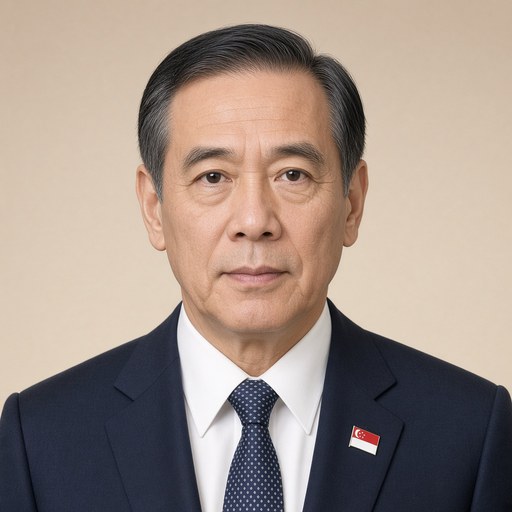
- Lee delivered the Mandarin segment of the National Day Rally 2004 in Singapore, addressing economic restructuring, social concerns, and national cohesion as Singapore approached its 40th anniversary.
- Main themes
- Nation-building and trust between government and people, economic restructuring and job creation, cost of living and medical expenses, older Singaporeans, workforce retraining and upgrading, social cohesion, MediShield reform, Singapore's 40th anniversary, low-income household support, entrepreneurship and investment attraction
- Duration
- ~18 min
- Words
- 2,218
- Sentences
- 153
- Readability
- 57
- Grade
- 8.9
- Syntax
- 2.73
- Vocabulary
- 2.09
The broad sphere of national life a sentence belongs to. Every sentence has an Arena, so it is the denominator the other indices are read against.
Other153 sentences in 38 paragraphs
Introduction
Next year, Singapore will turn 40. Over the years, we have attained achievements admired by others. We succeeded through hard work, and by working closely together as a country. We adopted sound and forward looking policies that benefited Singapore as a whole and propelled us forward. But most importantly, in this growing process, we cared for one another, and built trust between the people and the Government.
The process of building trust between the people and Government started when Mr Lee Kuan Yew was first elected Prime Minister. He and his generation believed passionately that we could build a future working together, government and people as one. Mr Goh Chok Tong built on this. He communicated with Singaporeans in a personal and sincere way. He got different communities and different segments of the society to work together. He brought all Singaporeans closer together.
This sense of togetherness as a nation is our most precious asset, which we must continue to enhance. We cannot run away from analysing our problems in a hard-headed, logical way, so that we can come up with sensible, workable solutions for the country as a whole. But we also know that the people are at the receiving end of policies. Policy problems are inevitably people problems. As a government, we must do what we can to address the people aspect of policies as much as possible.
Restructuring and Finding Jobs
Many grassroots leaders have told me that our first priority should be to grow the economy and to create more jobs. This is the way to reduce the number of people who are unemployed, and ease the pressure on low income households. I agree with them. That is why we have been restructuring our economy, so that we can become more competitive, attract more investments, and create more jobs. This strategy is working, but is only the first phase of our effort.
I am confident that if we continue the path we are taking, we will attract more investments, more tourists, fuel entrepreneurship, and grow with the region. Our policies can help us shape a bright future.
But at the people's level, restructuring can be painful. Some jobs will be lost, and new jobs will be created. We have to help workers who are affected to retrain, upgrade their skills, and find new jobs which they can do. We have also tried to cushion the pain for the poor and the worst affected, through rebates and social support. However, it is important that our older and less well educated workers make the effort to upgrade themselves and get re-employed. If not, they will be left behind, and will lose their self respect and be unable to look after their families.I am proud and pleased to learn that many of our older workers have successfully acquired new skills and switched industries. The Singapore Workforce Development Agency and Lianhe Wanbao recently organised a "Working Heroes" award, to recognise such workers. One winner this year is Ms Cheong Leng Sin (张莲仙). She was a bank supervisor — 23 years with the same bank. Last year she was retrenched. But she did not give up. She took up a part-time Nursing Assistant course. She did so well that the National Heart Centre offered her a scholarship for a full-time nursing course. Now, she got a new job, and finds it very meaningful helping patients at the Heart Centre. Ms Cheong demonstrated her resolve and her resilience to help herself, and to continue to contribute in her own way. What she did, many other retrenched workers can do too.
Cost of Living and Medical Expenses
Besides jobs, our people have two other big concerns — one is the general cost of living, another is medical costs. These affect people's lives directly. Sometimes the reasons are beyond our control. For example, crude oil prices went up and drove up up electricity charges. Prices of eggs have also gone up, because of Bird Flu in Malaysia.
But where things are within our control, and where good policies can alleviate the problems, we should try our best to adopt them. Many Singaporeans worry that our loved ones, or ourselves, can fall very sick unexpectedly, and need intensive and costly medical care. We need to improve the Medishield scheme, to give greater protection against high medical bills. This will reduce the risk and the worry. I have asked Khaw Boon Wan to work on this.
The real solution to the cost of living problem is to build a competitive, thriving economy which creates prosperity for all. That way rising incomes will help everyone to cope with any increase in the cost of living. And we can do more to help the smaller group of unemployed or needy Singaporeans.
Older Singaporeans
Older Singaporeans are particularly worried about the cost of living and medical costs. Many are retired, and are living on their savings. Because I have focussed more on the new generation, some older Singaporeans feel left out. But we will not forget them, because we owe them an obligation. They helped to bring us here, and are respected members of our society.
That is why the Government topped up the Medisave accounts of older Singaporeans recently. This gesture will help them meet some of their medical costs. In future when we we have surpluses to distribute to citizens, we will remember to do more for our senior citizens.
Where possible, we should also make adjustments to make them feel more at home. For example, some Chinese speaking older Singaporeans have difficulty finding their way around the island because English is now used so pervasively. It is particularly a problem when they travel on the MRT. The Chinatown station and some others have Chinese signs, but not all do. This is a practical problem which we can solve. We have therefore decided to install multilingual signs in all MRT stations. This will be especially helpful to the segment of population who can only read Chinese.
Chinese Culture and Language
Besides bread and butter issues, we also must pay attention to preserving our cultural heritage, so that we have a clear sense of who we are and where we come from. For Chinese Singaporeans, knowing and speaking Chinese is an important part of our identity.
I was in Chinese schools for twelve years. This experience formed my outlook and attitude to life. Today when I meet people in the Chinese mainland or Taiwan, I can understand directly what they say. I do not have to depend on the interpreter. Outside official meetings we converse in Mandarin, which helps to build rapport and comfort.
Bilingualism will remain the cornerstone of our education system. But we need to make changes to the syllabus and the teaching methods for the mother tongue. One size cannot fit all. We must adapt the standards to the language ability and family language backgrounds of the students, so that all students will be motivated to study and use the language. We must set realistic standards for the weaker students, while providing opportunities to those with the ability and interest to learn more.
At the top, we must develop a group of Singaporeans who are bicultural. The Government will launch a rigorous and full programme to achieve this. Students on this programme will be proficient in English, but at the same time will master the Chinese Language, and understand Chinese culture and history, including not just the old classics but China's recent past and contemporary trends. This is important for sustaining and transmitting Chinese culture in Singapore. It is also important in nurturing a group of Singaporeans who can operate on the same wavelength as the Chinese, share the same cultural references, understand their thinking, and communicate without any barriers. Not everyone can achieve a high standard in both languages, but those who can will find themselves in great demand.
Conclusion
While we encourage use of our mother tongues, we must remember that we are ultimately Singaporeans. Singapore is not China, Malaysia, Indonesia, or India, even though we share the same languages as these societies. We are a different country, with our own national interests and perspective.
Recently I made a private and informal visit to Taiwan. China reacted strongly, and protested that my visit contradicted our "One China" policy. I did not go to Taiwan to anger China. That could not be, because we value our relations with China. I have met many senior Chinese leaders, and deeply appreciate their goodwill and friendship, and their readiness to cooperate with Singapore. But even with friendly countries, from time to time our interests may diverge, or we may take different approaches to a problem. It is the reality of international relations. When that happens, we must quietly stand our ground.
Let me explain why I needed to pay a visit to Taiwan. The cross straits situation is potentially the most dangerous problem in the region. In the current, very tense situation, as the PM I will have to make some difficult judgment calls. I am aware that the Chinese leaders are absolutely serious about the issue of Taiwan independence. But I must also understand the thinking of the Taiwanese. In the 20 years of my political career, I made many Taiwanese friends and established many contacts, who are now key leaders on both the Pan-Green and Pan-Blue camps. I need to understand their thinking and make an impartial assessment, which other countries will accept and take seriously because we are seen to be balanced. This way Singapore can help to prevent miscalculation by some key players. I cannot get this feel just by sitting in my office, reading reports and watching CNA.
We know that "One China" is a core interest of China's. Singapore has always upheld "One China" since it is in our own vital interest to do so. We took this position right from our independence in 1965. We established diplomatic relations with China in 1990. By then China understood Singapore's position on Taiwan: that we historically have unique and important interests there which continue to be vital to our national security. My visit therefore does not contradict Singapore's "One China" policy.
The Taiwanese know well our position, that we are opposed to Taiwan independence. Indeed, we are alarmed by the rise of Taiwan independence forces. So my visit could not have emboldened those pushing for independence.
My assessment after visiting Taiwan is that there is a real risk of miscalculation and mishap. The peoples on both sides of the Strait are our good friends. Once war breaks out, we will be faced with a difficult choice. This is something we do not wish to see happen. But if the conflict is provoked by Taiwan, Singapore will not support Taiwan.
Our cooperation with China has always been on the basis of equality, mutual respect and mutual benefit. If our cooperation is affected, both countries lose. I regret that my visit to Taiwan has caused this severe reaction from China which affected relations. I also regret the way the Taiwanese media played up my private and unofficial visit.
I will not change our "One China" policy. But I had no choice in making my private visit to Taiwan in order to be confident that I can take the right decision for Singapore in a looming crisis.
Building the Next Generation
Let me now move to another important topic — babies. One traditional trait of Chinese families is that they enjoy children. They aspired to have three or more generations under one roof, and to fill the house with children and grandchildren. But times have changed, family values have changed, and we now have a problem of too few babies. We have been discussing this problem since 1988, but since then it has only got more serious.
We still preserve some traditional attitudes. The Chinese birth rate fluctuates with the Zodiac calendar. During the year of the Dragon in 1988, we had a bumper crop — 50,000 babies. But 12 years later, in year 2000, the dragon was much smaller — only 40,000 babies. Last year, not a dragon year, the harvest was miserable — only 32,000 babies. At this rate, if we do not do something, by 2012, the dragon may become a little worm!
I understand that young couples now have career aspirations and other life goals besides becoming parents. We have to help our young couples cope with their parenting responsibilities, and lighten their burden of raising children.
I will announce some measures to do this later. But ultimately, this is an issue about values. We want young Singaporeans to have strong family values, to love children, and have children because they see joy in doing so.
Conclusion
Our forefathers build a Singapore which combines the best of east and west, and offers opportunities and fulfilling lives to all its citizens. Just as we can enjoy the fruits from the trees which they planted, let us continue to plant trees to provide shade and fruits for ourselves and for our children.
The world is fast changing, and so is Singapore. I am proud to be part of the new generation of Singaporeans building this island as a home for our people, and a country of hope for our future generations.