





- Context
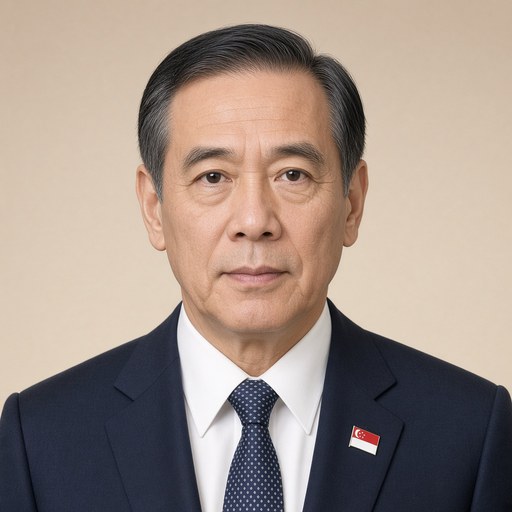
- Lee Hsien Loong delivered the National Day Rally 2005 address in Singapore, focusing on Malay community progress and social challenges.
- Main themes
- Malay community progress, drug abuse reduction, education and post-secondary achievement, inter-generational poverty cycle, young marriage and divorce, community volunteerism, tsunami relief in Aceh, Malay language and cultural understanding, social welfare programs, ComCare and CDC support, role of community organizations
- Duration
- ~10 min
- Words
- 1,157
- Sentences
- 82
- Readability
- 49
- Grade
- 9.9
- Syntax
- 2.68
- Vocabulary
- 2.17
Translated from Malay
The broad sphere of national life a sentence belongs to. Every sentence has an Arena, so it is the denominator the other indices are read against.
Other82 sentences in 20 paragraphs
National Day Rally 2005
Fellow citizens
Last year, I discussed the characteristics of our successful modern Malay society, looking forward, playing a full role in national development while still maintaining their customs and way of life. I am pleased that every year, the Malay community is progressing.
Last December, when the tsunami struck neighboring countries, the people of Singapore acted swiftly to help. The Singapore Armed Forces and the Civil Defence Force (SCDF) provided assistance and hope to the residents. Our volunteer groups also organized massive efforts. We helped in places that were in dire need, and at critical moments.
One important reason for our success is the presence of volunteers and team members who are fluent in Malay and understand Malay culture, including those who are not Malay. They were able to connect with the people of Aceh, understand their needs, and liaise with local authorities. Our experience in Aceh shows that non-Malay Singaporeans should also understand the Malay language and culture. More schools are now teaching Malay as a third language. I hope more students will learn it.
The Malay community has made significant progress. You are on track to achieve the goal of 90 percent of the Malay student cohort reaching post-secondary education. Even now, many Malay children are studying life sciences and multimedia. An increasing number are becoming confident and successful professionals and executives.
One of your major successes is the effort to tackle drug abuse. It used to be a serious problem. Ten years ago, over 3,000 Malay drug addicts were arrested. This was more than half of the total number of addicts arrested. Now, the number has significantly decreased. In the first six months of this year, only 40 Malay addicts were arrested.
This is an outstanding achievement. I congratulate all of you, especially the volunteers from NCADA or the National Council Against Drug Abuse, SANA, Mendaki and AMP, Pertapis, Jamiyah, Taman Bacaan, and others who have greatly assisted in rehabilitating addicts.
I feel it is necessary to mention the late Mr. Harun Ghani. He made this effort his personal mission and fought against drug abuse with all his heart and soul. His strong determination and sincerity have inspired many addicts. It is a significant contribution to our success in combating drug abuse. His passing is a loss to Singapore. I am sure you will agree when I say that Mr. Harun should be a role model for the younger generation to focus their attention and energy on improving the welfare of society and the nation!
We have succeeded in combating drug abuse because we brought the issue to the forefront, discussed it openly, acknowledged the existence of problems that needed to be solved, and mobilized the entire community to address it. This is also how we approach the issue of educational performance among Malay children. I realize that some Malays are uncomfortable with this approach because their problems are brought to attention. But if we do not highlight them, perhaps these issues would not have been resolved until now.
This evening, I would like to invite you to examine another issue that is also difficult and sensitive. Most Singaporeans can navigate change. However, there is a small number who are left behind and in difficulty. They lack skills or stable employment. They dropped out of school before completing secondary education. Many are unemployed and have young children they cannot support.
In community engagement sessions, Members of Parliament often meet them. They have many problems. Their families are unstable due to absent fathers or fathers in prison. Mothers have to raise young children alone. They cannot make ends meet or pay their water and electricity bills. Their children are struggling academically in school. This cycle of misfortune may continue into the next generation.
This is not a new problem, and it is not confined to the Malay community alone. But it affects the Malay community more than the Indian or Chinese communities because more Malay couples marry young and divorce early. For example, last year, 18 percent of Malay brides were under 21 years old, compared to 9 percent of Indian brides and 3 percent of Chinese brides.
We need to help these families become self-sufficient, not just with financial assistance, but more importantly, by providing guidance to change their attitudes and way of life. Malay organizations have many programs that can help these families break free from the cycle of misfortune. Community leaders and Members of Parliament, including Malay MPs, are assisting with resources from the Community Development Councils (CDC) and ComCare programs. They have raised funds to help at-risk students acquire basic skills to make it easier for them to find work.
I have discussed this with Minister Yaacob Ibrahim and Malay MPs. They are very concerned and have discussed this issue with other Malay leaders. They acknowledge the need for a more coordinated effort to tackle this challenge. They have asked me to bring this matter to the forefront so that we can move forward in addressing it.
The Community Leaders Forum will be held again this November. I urge participants to examine the facts, analyze the issues, and outline programs to address them. The lives and futures of these young people, as well as their children, are at stake. The entire Malay community must come together. Ensure that our boys and girls continue their education until they obtain their qualifications. This will give them a brighter future. The government will provide full support. But only with personal involvement and intervention from community leaders can we change the situation, just as we have tackled the drug problem.
We must view this issue against the backdrop of many successes and achievements of the Malay community. It should not weaken our spirit. I am confident that the Malay community can overcome it, just as you have succeeded in improving the educational standards of Malay children and reducing drug problems. We can and will help those in need among all races, including Malays, to progress. We must also open opportunities for those with talent and energy to advance further.
In addition to your own community issues, Malay Singaporeans also share the same concerns as other Singaporeans. We must reshape our economy, our education system, our service culture, and build a dynamic world-class city. This requires a collective effort from the entire nation.
I am confident about our future, and the future of the Malay/Muslim community. Asia is in a good position. We are forging closer ties with the Middle East, especially the Gulf countries. Knowledge of the Malay language and Islamic culture can help us build friendships and conduct business with this region.
Malay Singaporeans must hone their skills and experiences to fully participate in addressing Singapore's challenges and seize the various opportunities around us. This is how we achieve our vision of an Excellent Community. Let us work together to elevate Singapore and the Malay community to the next level.
The original Malay. The tags above are read on the English translation's sentences.
Rapat Umum Hari Kebangsaan 2005
Saudara-saudara setanah air
Tahun lalu, saya bincangkan ciri masyarakat Melayu kita yang moden berjaya, memandang ke depan, memainkan peranan penuh dalam pembangunan negara dan masih mengekalkan adat resam dan cara hidup mereka. Saya gembira kerana setiap tahun, masyarakat Melayu bertambah maju.
Disember lalu, apabila tsunami melanda negara-negara jiran, rakyat Singapura bertindak pantas untuk membantu. Angkatan Bersenjata Singapura dan Pasukan Pertahanan Awam (SCDF) telah menolong dan memberi harapan kepada para penduduk. Kumpulan-kumpulan sukarelawan kita juga mengadakan usaha besar-besaran. Kita telah menolong di tempat yang amat memerlukan, dan pada saat yang mendesak.
Satu sebab penting kejayaan kita ialah kerana adanya relawan dan anggota pasukan kita / yang fasih berbahasa Melayu dan memahami budaya Melayu, termasuk yang bukan Melayu. Mereka dapat berhubung dengan penduduk Aceh, memahami keperluan mereka, dan berurusan dengan pihak berkuasa tempatan. Pengalaman kita di Aceh menunjukkan bahawa warga Singapura yang bukan Melayu juga harus memahami bahasa dan budaya Melayu. Kini lebih banyak sekolah mengajar bahasa Melayu sebagai bahasa ketiga. Saya harap lebih ramai pelajar mempelajarinya.
Masyarakat Melayu telah mencapai kemajuan besar. Anda sedang menuju ke arah mencapai matlamat 90 peratus kohort pelajar Melayu sampai ke pos-menengah. Sekarang pun, sudah ramai anak Melayu mempelajari sains hayat dan multi-media. Kian ramai menjadi karyawan dan eksekutif yang berkeyakinan dan berjaya.
Satu kejayaan besar anda ialah usaha menangani salahguna dadah. Ia pernah menjadi satu masalah serius. Sepuluh tahun lalu, lebih 3,000 penagih dadah Melayu ditangkap. Ini lebih dari separuh jumlah penagih yang ditangkap. Kini, jumlahnya jauh merosot. Dalam enam bulan pertama tahun ini, hanya 40 penagih Melayu ditangkap.
Ini adalah satu pencapaian cemerlang. Saya ucapkan syabas kepada anda semua, terutama para relawan NCADA atau Majlis Mencegah Salahguna Dadah, SANA, Mendaki dan AMP, Pertapis, Jamiyah, Taman Bacaan, dan lain-lain yang telah banyak membantu memulihkan penagih.
Saya rasa perlu menyebut tentang Almarhum Cikgu Harun Ghani. Beliau menjadikan usaha ini sebagai misi peribadi dan memerangi salahguna dadah dengan seluruh jiwa raganya. Tekadnya yang kuat dan keikhlasan beliau, telah menginsafkan ramai penagih. Ia adalah satu sumbangan besar kepada kejayaan kita memerangi salahguna dadah. Pemergian beliau adalah satu kehilangan kepada Singapura. Saya yakin anda bersetuju jika saya katakan bahawa Cikgu Harun harus menjadi teladan kepada generasi muda untuk menumpukan perhatian dan tenaga mereka dalam meningkatkan taraf masyarakat dan negara!
Kita berjaya memerangi salahguna dadah kerana kita membawa perkara itu ke tengah, membincangkannya secara terbuka, menerima hakikat adanya masalah yang perlu diselesaikan, dan menggembleng seluruh masyarakat untuk mengatasinya. Begitulah juga cara kita dalam mengatasi masalah prestasi pendidikan anak-anak Melayu. Saya sedar, sebilangan orang Melayu kurang selesa dengan pendekatan ini kerana masalah mereka menjadi perhatian. Tetapi jika kita tidak ketengahkan, mungkin masalah itu tidak selesai hingga sekarang.
Petang ini, saya ingin mengajak anda sama-sama meneliti satu lagi isu yang juga sukar dan sensitif. Kebanyakan warga Singapura dapat mengharungi perubahan. Namun, ada sebilangan kecil yang ketinggalan dan dalam kesulitan. Mereka tiada kemahiran atau kerja tetap. Mereka berhenti sekolah sebelum tamat pendidikan menengah. Ramai yang menganggur, dan mempunyai anak-anak kecil yang tidak mampu mereka tanggung.
Dalam sesi bertemu rakyat, para Anggota Parlimen sering bertemu mereka. Mereka banyak bermasalah. Keluarga mereka tidak mantap kerana ditinggalkan bapa atau bapanya di penjara. Ibu terpaksa membesarkan anak-anak kecil secara sendirian. Mereka tidak mampu menyara hidup atau membayar bil air dan elektrik. Anak-anak mereka lemah dalam pelajaran di sekolah. Lingkaran musibah ini mungkin bersambung ke generasi selanjutnya.
Ini bukanlah satu masalah baru, dan ia tidak tertumpu pada masyarakat Melayu sahaja. Tetapi ia menjejas masyarakat Melayu lebih daripada India atau Cina kerana lebih ramai pasangan Melayu yang berkahwin muda dan bercerai awal. Misalnya, pada tahun lalu, 18 peratus pengantin perempuan Melayu berusia di bawah 21 tahun, berbanding dengan 9 peratus perempuan India dan 3 peratus perempuan Cina.
Kita perlu bantu keluarga-keluarga ini supaya dapat berdikari, bukan hanya dengan bantuan wang, tetapi lebih penting memberi bimbingan untuk mengubah sikap dan cara hidup mereka. Badan-badan Melayu ada banyak program yang dapat membantu keluarga-keluarga ini bebas dari lingkaran musibah. Para pemimpin masyarakat dan Anggota Parlimen, termasuk Anggota Parlimen Melayu, membantu dengan sumber dari Majlis Pembangunan Masyarakat (iaitu CDC) dan program ComCare. Mereka telah mengumpul dana untuk membantu pelajar-pelajar yang tercicir mendapatkan kemahiran asas agar lebih mudah mendapatkan kerja.
Saya telah berbincang dengan Menteri Yaacob Ibrahim dan Anggota Parlimen Melayu. Mereka amat prihatin dan telah membincangkan masalah ini dengan pemimpin-pemimpin Melayu yang lain.Mereka akur perlunya usaha lebih sepadu untuk menangani cabaran ini. Mereka meminta saya ketengahkan perkara ini supaya kita dapat melangkah ke depan dalam menghuraikannya.
Forum Pemimpin Masyarakat akan diadakan lagi November ini. Saya menggesa para peserta meneliti fakta, menganalisa masalah itu, dan melakar program mengatasinya. Kehidupan dan masa depan muda mudi ini, serta anak-anak mereka, agak terancam. Seluruh masyarakat Melayu perlu berganding bahu. Pastikan agar anak-anak lelaki dan gadis kita terus bersekolah hingga mendapat sijil kelulusan. Ini akan memberi mereka masa depan yang lebih cerah. Pemerintah akan memberi sokongan penuh. Tetapi hanya dengan pelibatan peribadi dan campur tangan pemimpin masyarakat, barulah kita boleh mengubah keadaan, sebagaimana kita mengatasi masalah dadah.
Kita harus melihat masalah ini di sebalik banyak kejayaan dan pencapaian masyarakat Melayu. Ia tidak harus melemahkan semangat kita. Saya yakin masyarakat Melayu boleh mengatasinya, seperti mana anda berjaya meningkatkan taraf pendidikan anak-anak Melayu dan mengurangkan masalah dadah. Kita boleh dan akan membantu golongan yang memerlukan di kalangan semua kaum, termasuk orang Melayu, untuk meningkat maju. Kita juga harus membuka peluang kepada yang berkebolehan dan bertenaga untuk maju lebih jauh.
Selain isu masyarakat anda sendiri, warga Melayu Singapura juga mempunyai keprihatinan yang sama seperti rakyat Singapura yang lain. Kita mesti membentuk semula Singapura ekonomi kita, sistem pendidikan kita, budaya perkhidmatan kita, dan membina kota bertaraf dunia yang dinamik. Ini memerlukan gabungan daya usaha seluruh negara.
Saya yakin akan masa depan kita, dan masa depan masyarakat Melayu/Islam. Asia berada dalam keadaan baik. Kita menjalin hubungan lebih erat dengan Timur Tengah, terutama Negara-negara Teluk. Pengetahuan bahasa Melayu dan budaya Islam dapat membantu kita untuk menjalin persahabatan dan berurus niaga dengan rantau ini.
Orang Melayu Singapura harus mengasah kemahiran dan pengalaman untuk menyertai sepenuhnya usaha menangani cabaran Singapura, dan memanfaatkan berbagai peluang di sekeliling kita. Inilah caranya mencapai wawasan Masyarakat Cemerlang kita. Marilah kita bekerjasama untuk meningkatkan Singapura dan masyarakat Melayu ke tahap selanjutnya.