





- Context
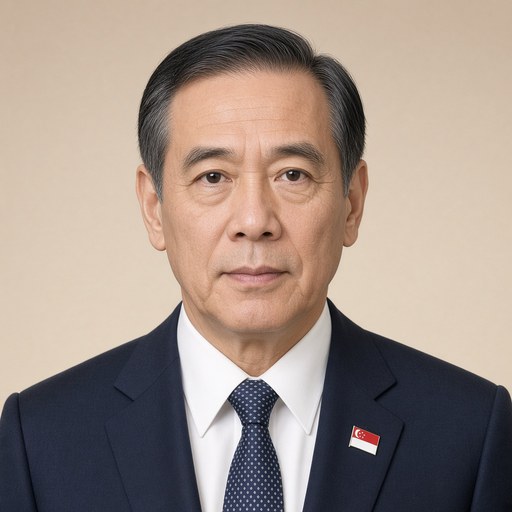
- Lee Hsien Loong delivered the Mandarin segment of the National Day Rally on 21 August 2005, marking Singapore's 40th year of independence.
- Main themes
- Singapore's 40th independence anniversary, external relations and diplomacy, Chinese language and culture revival, bilingualism, China's rise, economic challenges and globalisation, ageing population, healthcare policy, new generation of Chinese Singaporeans, cross-strait relations, ASEAN partnerships
- Duration
- ~19 min
- Words
- 2,246
- Sentences
- 169
- Readability
- 56
- Grade
- 8.7
- Syntax
- 2.60
- Vocabulary
- 2.13
The broad sphere of national life a sentence belongs to. Every sentence has an Arena, so it is the denominator the other indices are read against.
Other169 sentences in 39 paragraphs
Introduction
This is our 40th year of independence. In the history of a nation, it is not a long time. But for a newly independent country, it is a significant milestone. Many countries became independent after the war, but most soon ran into difficulties. Very few have celebrated their 40th anniversary in circumstances as happy as ours. Our economy has prospered, our people are well educated, and our homes are secure. We have ample reason to rejoice.
Favourable External Relations
As a small country, we put great emphasis on good external relations. I am happy that over the last year, we have strengthened these relations further, both with ASEAN countries, and also with other important partners, such as India and Japan. Last month, in Washington I signed the Strategic Framework Agreement with President Bush. This will help us to broaden and deepen our cooperation with the US, especially in security and defence, with the present emphasis on counter-terrorism.
Our relations with China are back on track. NPC Chairman Wu Bangguo had a successful visit to Singapore in May. Vice Premier Wu Yi is scheduled to come in September for the 2nd meeting of the Joint Council for Bilateral Co-operation. I am looking forward to visiting China later this year, to strengthen our ties further.
Our One China policy remains unchanged. As a friend of both sides of the Taiwan Strait, we were happy to see the successful visits by Lien Chan and James Soong to the mainland a few months ago. The cross-strait situation has stabilised, which is good for all countries in the region.
A New Confidence, A New Generation
Over the past year, I have noticed a new mood and confidence in the Chinese community. A new generation is emerging. They are well-educated, bilingual, and understand Chinese culture. They are bright and energetic, and not surprisingly in high demand. They see a role for themselves helping to expand Singapore’s economic space and meet future challenges.
Significantly, even the older generation of Chinese-educated (those my age or older) feels renewed confidence. Many who missed going to universities in the past are making up by taking courses at the Open University, or studying for external degrees from Chinese Universities.
China’s emergence has strengthened our confidence in the future of Chinese language and culture in Singapore. More generally, Chinese Singaporeans appreciate their Chinese heritage and identity more, and understand the importance of learning Chinese. Some are picking up Chinese for the first time, while others are rediscovering the language after many years of neglect. Jack Neo said that only the English educated are the elite 精英, while the Chinese educated are the true essence of the country 精华, and talked about 最后的精华 (the disappearing essence). I disagree. This is a long running serial, and the best shows are yet to come.
I have met young Singaporeans who are working in China, Hong Kong and Taiwan. They told me that they were very grateful that the Government made them learn Chinese in school. At that time, they struggled with Chinese. But it gave them an important foundation, without which they could not have operated in China.
Westerners are learning Chinese too. In US universities, Chinese language courses are all full. Recently, a well-known American investor, Jim Rogers was in Singapore. He was the partner of George Soros. He was looking for a place to live, and was exploring Singapore as a possibility. He wanted his 2-year-old daughter to grow up in a Chinese-speaking environment. This little girl is already bilingual, and immersed in all things Chinese. Rogers is bullish about China’s long-term prospects. Asked for investment tips, he said: teach your children and grandchildren Chinese. It will be the most important language in their lifetime.
By the time Westerners who do not speak Chinese recognise its importance, all the more Chinese-speaking couples should make full use of their natural advantage, to bring up their children to become bicultural.
Last year we revised the Chinese language curriculum to ensure the long-term vitality of the language in Singapore. I look forward to your continued support for this major reform.
Concerns and Challenges
Apart from cultural concerns, many Singaporeans are pre-occupied with bread-and-butter issues.
Many are anxious about jobs. In fact, this is a concern shared by people all over the world. Even in China 200-300 highly qualified people will compete for every job opening. Such intense competition is the reality of our globalised world. We must accept this reality.
We have to deal with various social issues. Our population is ageing, and Singaporeans are worried about rising healthcare costs. I will speak about getting older people to work longer in my English speech. On healthcare, we intend to raise the MediShield age limit, and adjust the Medisave rules to make them more flexible. Khaw Boon Wan is working on these changes.
Another priority is to help the lower income groups. Their incomes were affected during the recession. Bonuses and overtime payments shrank. Now that the economy has picked up, their incomes are rising again, but are not yet fully restored. The lower income groups are the most affected. So Singaporeans are naturally very concerned with the cost of living. We will help this group of Singaporeans.
The Government has many schemes to lessen the burden on lower income groups. This year, I introduced ComCare, which will target help at those who need it most. We will improve these schemes progressively. Their aim should be to get people to become self-reliant again, and not to make them dependent on the state.
One major way the Government helps lower income Singaporeans is by helping them to own assets, such as an HDB flat. This is much better than subsidising consumption. If we follow the example of some Western countries and give generous unemployment benefits, we are sure to cause a dependency mentality. Through the HDB home ownership programme, we have given nearly every household a stake in Singapore. We will improve this policy. We will give lower income households an extra leg up when they buy an HDB flat, by topping up their CPF account with a housing grant to help pay for the flat. This will help to narrow the income gap between rich and poor.
However, the Government should not be solely responsible for helping the poor and needy. This is unwise. Charities and community-based organisations play an important role. These organisations have volunteers who are committed and passionate about helping others. They have close knowledge of the communities and the needs of the target groups. They can do things better than the Government. Also when successful citizens come forward to help the less fortunate, we will become a more compassionate, more cohesive society.
Among the charities in Singapore, NKF is the biggest, and has the most donors. Channel 8 viewers are among its staunchest supporters. This reflects the strong spirit of solidarity and mutual help among Singaporeans. That is why Singaporeans were shocked and angered to learn about problems in NKF.
Now a new team has taken charge in NKF. They are actively examining NKF’s affairs, and have called in the Commercial Affairs Division. They will get to the bottom of the matter, account fully to the public, and put right all the problems which they find. Let us give them time to do so.
At the same time, I hope you will continue to support other charities. They put in an enormous amount of effort, and do much good work. If we stop supporting them, it will affect many people who need our help.
Remaking Singapore
While financial assistance and charity are helpful, they can only solve the immediate problems of the lower income and needy. The best long term solution is to foster economic growth. With a growing economy, we can create more jobs. At the same time, our people must grasp new skills and knowledge, to do the more demanding jobs, and earn higher pay. Hence the Government will do its utmost to educate and train our people.
To grow the economy, we have to remake Singapore. Change is difficult, but essential. If we fear the effort and resist change, we will soon lose competitiveness. Even China feels this pressure to change. The traditional attitude was 穷则变,变则通 (when desperate, one must adapt and in adapting, one will find a way out). But today we have to change this to 变则通,不变则穷 (To adapt will enable one to find a way out, and if one doesn’t adapt, that will be the end). We cannot wait until resources and ideas have run out before changing, or it will be too late. Hence, in China everywhere the slogan is 三年一小变,五年一中变,七年一大变 (Small changes every three years, moderate changes every five years and major changes every seven years)。
The Chinese government is focussing on revitalising the Northeast of China. Recently three leaders from all three Northeast provinces visited Singapore. I met them. They all were restructuring their economies as rapidly as they could. I asked the Governor of Jilin why he needed to move so fast. He said it was like holding a popsicle in his hand if he did not move quickly, all the value in the companies would soon melt away. Millions of workers would be affected. The central government and the provincial government would help to take care of them. But the workers had to help themselves too. By the time a large country like China is reforming itself so resolutely, all the more Singapore cannot stand still but must speed up the pace and stay abreast of global changes.
For Singapore to outperform other countries, our education system must give every student both skills and opportunities. We deeply believe that every student has potential and talent. We want every Singaporean to complete school and go on to post-secondary training, whether in universities, polytechnics or ITEs. Even if you do not go to university, you can take other paths, and achieve success in many other ways. In the long term, this is the most important way to narrow the income gap, and uplift the lower income groups. The new generation will be much better equipped to make a living, and so no longer face the problem of low skills and low incomes.
We are focussing on polytechnics and ITEs because the majority of students go there. Our polytechnics and ITEs are already very good. But we are still not satisfied. We will upgrade them further, so that their students will get a first-class education, suited to their diverse abilities, talents and ambitions.
Education and training are not just for young people. 活到老,学到老(one is never too old to learn). Our workers should also aspire to learn practical skills, get NITECs, diplomas and even degrees.
As our economy restructures, Singaporeans need not only skills and knowledge, but also a strong service culture. This is especially necessary to do well in tourism and other services. Hong Kong used not to have a reputation for good service. But in recent years they have improved greatly. Nowadays, visitors to Hong Kong are treated extremely well.
Our service standards lag behind Hong Kong and other developed countries. We need to catch up quickly. Changing mindsets is the first step. Serving others is an honourable living. In fact, 助人为快乐之本 (helping others always gives one tremendous satisfaction), good service is part of being a more gracious people and society. We should not look down on service jobs. All jobs are worthy of respect, and offer opportunities for progression. For example, Peach Garden, a popular Cantonese restaurant, is run by two ladies who used to work at a hotel, moved up from waitresses to captains, and then left to start their own restaurant.
To succeed in remaking Singapore and attracting talent, we must also make our city vibrant and cosmopolitan, throbbing with energy and excitement. Asian cities like Taipei and Shanghai are changing. In the past, Shanghai used to be considered a hardship posting. Today, it is a posting of choice. I hear that some Singaporeans are so happy there that they do not want to come back.
Singapore is already known as a place where the environment is green and clean, and the streets are safe and secure. We can build on these strengths to transform our city its architecture, its activities, and its atmosphere. We are renewing HDB estates, to create a more comfortable and convenient environment for our people. We also plan to transform the city centre and business district. This will attract tourists, talent and investments, and also allow Singaporeans to enjoy life in a vibrant, global city.
Conclusion
The Chinese say that it is hard to start a business, but even harder to maintain it. Singapore today is a thriving business. Our task is not just to maintain Singapore’s success but to grow and upgrade it. We must make this a special nation where every citizen belongs and everyone has a contribution to make. Every citizen should enjoy Singapore’s success, so long as he makes the effort and plays his part. Nobody should be left behind as Singapore progresses.
I am confident that Singapore will succeed. 路是人走出来的 (roads are formed by the footsteps of pathfinders). We have come a long way in 40 years. We can be proud of what we have achieved, through our own efforts. If we continue to work hard together to reinvent Singapore, we will assure a bright future for ourselves and our children for many years to come.