




Keynote Address By Senior Minister, Mr Lee Kuan Yew At The 10Th Anniversary Dinner Of The Singapore International Monetary Exchange (Simex) At The Westin Plaza On Saturday, 24 September 1994
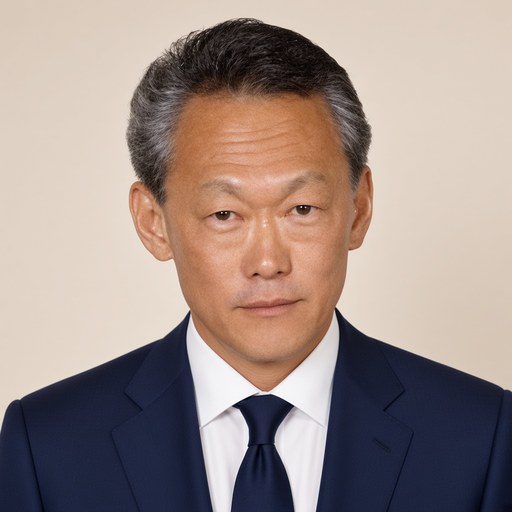
 Lee Kuan Yew · Senior Minister of Singapore
- Context
- Lee addressed the SIMEX 10th anniversary dinner at the Westin Plaza in Singapore on September 24, 1994, announcing staged liberalisation of CPF investments, greater use of local financial institutions by state entities, and fund tax changes.
- Main themes
- Singapore as a regional financial centre, tenth anniversary of SIMEX, liberalisation of CPF investments, overseas investment by CPF holders, fund manager approval conditions, government-linked companies using local financial institutions, growth of fund management and investment banking, tax changes for offshore and domestic funds, competition with Hong Kong's low tax rate, SIMEX and Chicago Mercantile Exchange mutual offset
- Duration
- ~21 min
- Words
- 2,467
- Sentences
- 144
- Readability
- 42
- Grade
- 11.7
- Syntax
- 2.77
- Vocabulary
- 2.31
Source: National Archives of Singapore ↗
The broad sphere of national life a sentence belongs to. Every sentence has an Arena, so it is the denominator the other indices are read against.
Other144 sentences in 59 paragraphs
We are facing a period of unprecedented growth in East Asia.
Singapore’s Role As a Regional Financial Centre
The Singapore Government encouraged international financial institutions to establish themselves in Singapore 26 years ago. In 1968, we set up the Asian Dollar Market to channel funds from the inside and outside the region to finance economic development in the region. This Asian Dollar Market provided the foundation for many financial activities. Singapore is now the world’s fourth largest foreign exchange trading centre. It is the largest centre in Asia for trading of international currencies other than the Japanese yen.
Our system is always open to new ideas. With strong public and private sector cooperation, we developed the financial centre. The Singapore International Monetary Exchange (SIMEX) was established in 1984, when financial futures trading in Asia was only a glimmer in the eyes of a few Monetary Authority of Singapore (MAS) officials and private sector bankers.
They were inspired by the Chicago Mercantile Exchange (CME), one of the world’s most successful futures exchanges. They wanted to bring financial futures trading to the Asian time zone. SIMEX approached CME for a partnership. The CME was then looking to expand to overseas markets, and eagerly embraced this initiative which could lead to round-the-clock global trading. The two exchanges pioneered the mutual offset arrangement, which allows positions taken on one exchange to be transferred to the other, thus bridging the Asian and American time zones.
The tenth anniversary of SIMEX is cause for celebration. SIMEX has a rapidly growing derivatives market. It enables international investors to trade almost 12 hours a day, including on Singapore public holidays. It traded 70,000 contracts on the 9th of August, Singapore’s National Day. Average trading volume has now risen to 100,000 contracts, 40 per cent more than last year, making SIMEX one of the world’s top 20 futures exchanges.
Future Challenges and Opportunities
The dynamic growth of the region has made the financial markets and important conduit for users and suppliers of capital. Several financial centres in the region are emerging to compete in financial services. We have to change and liberalise to stay ahead.
Singapore has a head start over the past 26 years. We have built up core competencies in a wide range of financial services. We can leverage on these skills to offer corporations in the region innovative funding solutions tailored to their specific requirements and risk profiles. We can strengthen our position as an integrated global financial and capital market, by building up expertise in fund raising and risk management.
Financial centres tend to co-exist because they develop specialised functions to complement each other. In America, New York is the hub of banking and securities activities and over-the-counter derivative products, while Chicago is the exchange-traded derivative centre. In Europe, Zurich is Europe’s premier safe haven for funds although London has the bigger financial clout.
Singapore has the attributes to be the Chicago and the Zurich of East Asia. We have a record as a safe haven.
For example, during the Gulf War, amidst turmoil in the world’s financial markets, many international investors chose to transact in Singapore. Over the last 10 years SIMEX has gained the confidence of a critical mass of international financial institutions and global customers, functioning through crises like the October 1987 meltdown in global stock markets. SIMEX locals have gained experience managing risk and creating liquidity for the market. This expertise is not easily reproduced. A new exchange will need time to prove itself to be as dependable.
Feedback from Private Sector
Over the past few months, I have sought the views of several leading Singaporean bankers. I have been picking their brains on how Singapore can play a bigger role in meeting the expanding demand for capital in East Asia. I wanted to learn how to improve and expand our financial services sector, how to attract more providers of regional and international financial services to base their activities in Singapore. They told me that we must strengthen our capabilities in international fund management and investment banking. This will provide depth and breadth to our capital markets and enable us to compete in these growth areas.
Our fund management industry is still small compared with the other centres. International fund managers commonly cite the lack of institutional investors in Singapore. The Central Provident Fund (CPF) systems siphons away the bulk of peoples' long term savings which would otherwise have been managed by private fund managers.
Our small industrial base is another constraint. Multinational companies (MNCs) dominate the manufacturing sector. They enjoy strong financial support from their parent corporations and thus seldom tap the Singapore capital market.
The Government, statutory boards and Government-linked companies (GLCS) accumulate significant financial surpluses, and have little need to borrow from the capital market.
But the immense demand for funds in the region makes investment banking a growth area. We must build up our capabilities in order to serve the region.
To support and encourage the development of fund management and investment banking, the Government will implement several measures.
Liberalisation of CPF Investments
Currently, 227,000 CPF holders have $8.9 billion in disposable funds for investment in approved instruments under the Enhanced Investment Scheme (EIS). Of this only $1.4 billion have been invested. These CPF holders have acquired experience as stock investors as the Government has progressively liberalised the investment rules for CPF funds over the years. The Government will further liberalise these rules, to allow CPF account holders to invest in overseas stocks. This will be done in three stages :
(A) In the first stage, to start on 1 January 1995, we will expand the investment scope of approved CPF unit trusts and fund management accounts.
(i) Approved CPF unit trusts will be allowed to invest in foreign stocks and bonds traded on the Stock Exchange of Singapore (SES). The proportion of foreign currency denominated investments is limited to 20 per cent of the value of the funds to prevent over-exposure to currency risks.
(ii) CPF fund management accounts will also be allowed to invest in foreign stocks and bonds traded on SES. In addition they can invest in selected regional markets such as Malaysia, Thailand , Hong Kong, South Korea and Taiwan. Fund management accounts can have wider latitude because only CPF members with investible balances of above $200,000 can open such accounts. They can be considered sophisticated investors.
(B) The second stage will take effect from 1 January 1997. We will expand the investment scope of approved unit trusts to include stocks listed in the regional capital markets, and raise the limit on foreign currency denominated investments from 20 per cent to 40 per cent.
(C) The third stage will be implemented from 1 January 1999. We will expand the investment scope for approved unit trusts and fund management accounts to include capital markets outside Asia, such as US, Germany and Japan. We will also raise the limit on foreign currency denominated investments to 50 per cent of the value of the fund.
CPF members have to rely on competent fund managers to carry out their fund management and fiduciary responsibilities properly. To manage CPF savings, fund managers should have high integrity and sound track records in fund management. For the benefit of CPF members, MAS will give approved status to fund managers who meet the following three conditions:
(A) A sound track record in Singapore of managing funds for at least three years and a minimum of S$500 million of funds under management in its Singapore office at the time of application;
(B) At least three professional fund managers. These managers must have at least five years of fund management experience, or two years of experience and hold the Chartered Financial Analyst qualification. They must also be persons of good character;
(C) Proper firewalls, i.e. segregation of fund management from investment banking functions, to avoid any conflicts of interest. The fund manager must provide full annual disclosure of the performance of his investments, portfolio composition and management fees charged to clients; and
(D) Fund managers of approved CPF unit trusts must invest a minimum of 10 per cent of the value of the fund in deposits with banks in Singapore.
Singapore Government Securities , statutory board bonds and Singapore trade bills. This is to ensure adequate liquidity to meet unanticipated withdrawals by unit holders. Further, as CPF funds are long term savings of low and middle- income individuals, fund managers should invest prudently.
They should not invest on a leveraged basis, or speculate in financial derivatives.
The Central Provident Fund Board will announce details of the liberalisation plan in due course.
CPF investors need time to gain experience in managing their investments prudently. The CPF investment guidelines and timetable I announced are therefore conservative. The Government will periodically review the situation, and fine-tune the liberalisation depending on the response from CPF investors and the performance of the fund managers.
Increased Use of Financial Institutions’ Services by Government - linked Companies and Statutory Boards
Most of our statutory boards have healthy surpluses. Even if they require external financing, they often arrange to borrow directly from POSB, thereby bypassing the private sector capital market. This policy will now change.
Statutory boards and GLCs will tap the capital markets for their funding requirements. They will seek fund management services to invest their cash surpluses. The details are as follows:
(A) Use of financial institutions in Singapore by GLCs and Temasek. The Government of Singapore Investment Corporation (GIC) and Temasek Holdings (Temasek) will allocate more funds from their East Asian portfolio to be managed by fund managers out of their Singapore offices. GIC and Temasek will also use banks, merchant banks and securities companies in Singapore to execute the following transactions;
(i) investment in regional stocks and bonds;
(ii) foreign exchange, interest rate and currency swaps; and
(iii) subscription to international issues of stocks and bonds.
(B) Use of financial institutions in Singapore by Government, GLCs and statutory boards. Statutory boards and GLCs which need external financing will conduct a substantial part of their fund raising activities through the capital market. They will also engage private sector fund managers in Singapore with good track records to manage increasing proportions of their surplus funds. Government will also seek the services of financial institutions in privatising statutory boards and floating GLCs.
In channelling business to financial institutions in Singapore, Government agencies will take into account the institutions’ track record, professional expertise, and commitment to expanding investment banking and fund management activities in Singapore.
Fine-tuning the Tax System
I now turn to measures to fine-tune the tax system to foster fund management activities:
(A) Taxation of offshore funds managed by fund managers. Presently, funds under the Tax Exemption Scheme for Fund Management are exempted from tax if they are at least 95 per cent held by foreign investors. To give fund managers more flexibility in managing off shore funds, we will reduce this minimum from 95 per cent to 80 per cent.
(B) Domestic Funds. Presently, domestic unit trusts are subject to the corporate rate of tax, currently 27 per cent, on 10 per cent of their trading gains. We will exempt trading gains of such trusts from tax.
This will bring taxation of unit trusts into line with other fund management centres. Distributions by the unit trusts to resident investors will be subject to withholding tax pegged to the corporate tax rate, while distributions to non-residents investors will be tax exempt.
Several bankers have cited Hong Kong’s low tax rate, presently 16.5 per cent, as a key attraction for locating their regional financial operations there.
Unfortunately Singapore cannot follow Hong Kong. If we do we will become a tax haven and lose the benefits of the many Double Taxation Agreements (DTAS) we have. Our strategy of selective tax incentives to promote high value added activities has attracted many desirable investments into Singapore. The government will continue to use tax incentives to promote new, higher valued financial activities. At the same time, it will reduce corporate and personal tax rates to the maximum extent possible consistent with our revenue requirements, and without turning Singapore into a tax haven.
Conclusion
To match the needs of lenders with borrowers, we need a critical mass of good financial analysts, fund managers and investment bankers. The Singapore Government will hasten the formation of this critical mass by giving fund managers and investment bankers greater access to the large pool of funds now in the hands of the GLCs, statutory boards, MAS and GIC.
Comfortable in-house loan arrangements will not help GLC executives and government officers to sharpen their sense for opportunities and innovation, which is necessary for a successful financial centre. Nor will they ensure that Government’s reserves are optimally deployed to earn the best returns.
Although CPF funds have been released for investments in the Stock Exchange since 1986, currently only S$7 billion out of a potential pool of S$26 billion has been invested. By the year 2000 the potential pool of CPF monies for investments should rise to S$40 billion, In addition, a comparable sum can be available for private sector management from the funds held by the GLCs, statutory boards, Temasek and GIC.
Fund managers will have to market their products to CPF holders. The Singaporean is familiar with buying properties, and buying Singapore and Malaysian shares on the SES. He usually prefers to buy and sell on his own.
The idea of putting his money in a unit trust or leaving S$500,000 in the hands of a fund manager for a fixed period, to invest at the managers’ discretion, is something new. He will do this when fund managers show that his money can get more than the two per cent or three per cent the CPF pays.
The liberalisation of CPF investments use, and increased use of financial markets by Government agencies, can only provide an initial push for fund management and investment banking activities. Thereafter, it is up to the financial institutions to develop their capabilities in these areas to meet regional needs. I hope more international financial institutions will start up or expand their business in Singapore. They should bring in their experienced dealers, fund managers and corporate finance personnel. We hope they will contribute through seminars and training courses to train local talent. Much depends on getting a flow of capable people with the right educational background into this field.
If we make Singapore the most convenient meeting centre for the providers and users of capital, as well as for ideas and opportunities, we will contribute to the growth of East Asia. We must emulate the best attributes of the major financial centres - safe haven virtues of Zurich; dynamism of the future exchanges of Chicago; and inventiveness of New York and London.