




Retreat of the National University of Singapore Medicine International Council
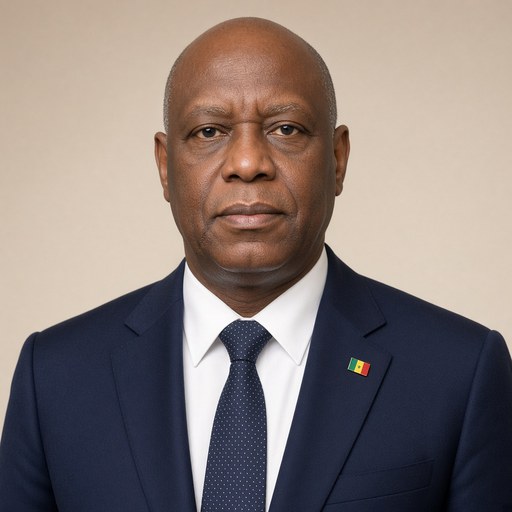
 Macky Sall · President of Senegal
- Context
- Sall addressed the NUS Medicine International Council retreat in Marrakech in November 2024, speaking on African public health and geopolitical challenges.
- Main themes
- Public health in Africa, pharmaceutical sovereignty, COVID-19 pandemic lessons, vaccine production, health system resilience, intellectual property rights and TRIPS, climate change and cross-border health challenges, Mpox outbreak, digital health and AI, African Union health goals, Senegal health investments
- Duration
- ~8 min
- Words
- 967
- Sentences
- 51
- Readability
- 29
- Grade
- 13.9
- Syntax
- 2.90
- Vocabulary
- 2.40
The broad sphere of national life a sentence belongs to. Every sentence has an Arena, so it is the denominator the other indices are read against.
Other51 sentences in 33 paragraphs
Ladies and Gentlemen,
Dear Friends,
Good morning everyone. I would like first to thank Ambassador Kishore Mahbubani and his colleagues for the kind invitation to this retreat on public health, within a geopolitical context and from an African perspective.
I warmly congratulate the National University of Singapore for its excellent world ranking, and for organizing this retreat here in Marrakech, in collaboration with Morocco, a country with which Senegal shares a long-standing tradition of fraternal friendship.
The theme of this gathering undoubtedly addresses a topic of major interest. With climate change, cross-border health challenges are indeed among the major concerns of our time, requiring solutions beyond national capacities.
The Mpox outbreak is a reminder, while we remain deeply marked by the devastation of the COVID-19 pandemic, which revealed the world’s unpreparedness to face health crises. Even the most sophisticated national health systems showed serious limitations.
In a publication dated April 8, 2020, titled Africa and the World Facing COVID-19: An African Perspective, I highlighted the paradox of a world that makes scientific and technological breakthroughs daily, even in space, while lacking masks, test kits, personal protective equipment, beds, and ventilators.
And in this general turmoil, the impact was hardest on Africa due to the structural vulnerabilities of its health systems and the prevalence of other diseases on the continent.
However, faced with these challenges, Africa proved resilient. Although the economic and social impact of the pandemic was particularly harsh, the scenario of a health disaster did not happen.
To explain this resilience, some factors have been cited, including the continent’s youth, climate, low connectivity which may have slowed the virus’s spread, and immunity due to the presence of other coronaviruses.
Scientifically, many experts believe that there are, as yet, no solid studies to substantiate these hypotheses. However, it is certain that African countries were responsive in combating COVID-19.
On the one hand, coordinated efforts at regional and continental levels enabled information exchanges, data collection by the Africa CDC, and joint vaccine purchases under the AVAT (African Vaccine Acquisition Trust).
On the other hand, internally, countries generally implemented restrictive measures to limit the virus’s spread and deployed health and socio-economic response plans.
In Senegal, for instance, we mobilized over $2 billion to organize the health response, support households and businesses. Other efforts focused on constructing and equipping numerous healthcare facilities (including eight major hospitals) and recruiting more than 2,000 medical and paramedical staff.
One of the lessons we must learn from recurring health crises is the need to invest more in health to progressively ensure pharmaceutical and medical sovereignty. For example, Africa consumes around 25% of the world’s vaccine production but meets only about 1% of its needs.
To address this deficit, the African Union has set a goal of covering 60% of African vaccine needs by 2040. Nine pioneering countries are working to help meet this goal: Algeria, South Africa, Egypt, Ghana, Kenya, Morocco, Nigeria, Rwanda, and Senegal.
Accordingly, I launched the construction of a vaccine production facility in collaboration with the Pasteur Institute in Dakar, with an investment of over $200 million.
The facility which will soon be operational includes:
• A mRNA vaccine manufacturing unit,
• A research & development center,
• And a vaccine training Center dedicated to Senegal and other African countries.
Looking ahead, I would say that despite undeniable progress, Africa still faces many public health challenges.
First, we need to build more referral and community health facilities, train and recruit more human resources, manufacture more medical and biotechnological products, update pharmaceutical and medical regulations.
The development of digital health (e-health), artificial intelligence and biotechnologies such as mRNA and genomics could also improve access to care, enabling rapid and tailored responses through effective diagnosis and treatment even in remote areas.
The second challenge relates to the over-protection of intellectual property rights, which hinders biotechnological production on the continent, even during health emergencies.
Indeed, in response to the COVID emergency, the WTO reached in 2022 a consensus on Trade-Related Aspects of Intellectual Property Rights (TRIPS). This agreement allows a waiver for vaccine production patents. But it is valid only until 2027, and there is no consensus yet to include diagnostic and treatment products in the agreement.
The third challenge is producing competitively priced vaccines and gaining access to vaccine marketing platforms. To that end, African producer countries will certainly need collaboration with partners like GAVI.
Fourth , Africa must better prepare for future health emergencies, as we currently see with Mpox. Some countries are working within the WHO initiative to create regional logistics hubs for the dispatching of necessary products and equipment in case of emergency.
Thus, in 2021, Senegal provided the WHO with a site on which the Organization constructed an Emergency Management Center. The first phase has been inaugurated in December 2023.
This center has the necessary logistics for storage, innovation, monitoring, and data analysis. The other two WHO regional centers are hosted by South Africa and Kenya.
Finally, the fifth challenge is to invest more in research to stimulate pharmaceutical and medical innovation on the continent. This is the purpose of the Galien Africa Forum, endowed with a Prize which Senegal hosted from 2018 to 2023. I can also cite the holding of the Grand Challenges Annual Meeting of the Bill Gates Foundation in Dakar in October 2023. The Gates Foundation considerably supports Africa’s health sector.
The Macky Sall Foundation for Peace, Dialogue, and Development also intends to contribute to this dynamic, requiring the mobilization of all actors: governments, the private sector, civil society, the scientific community, and philanthropists.
This is why I am delighted with your prestigious university’s retreat here in Marrakech; and my Foundation, whose Administrator is here to follow your discussions, remains ready to collaborate with you on your future initiatives. I wish you a successful retreat.