




- Context
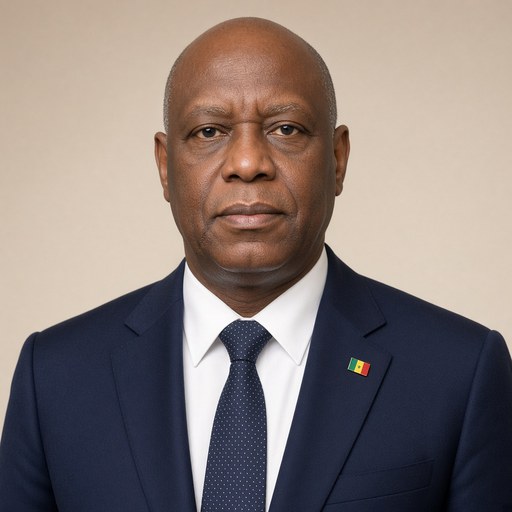
- Sall addressed the Europe-Africa Foundation meeting on November 4, 2024, to discuss the future of Europe-Africa relations and propose reforms to the partnership framework.
- Main themes
- Europe-Africa relations, Euro-African partnership reform, development investment vs. aid, conditionality in cooperation, migration and irregular migration, Global Gateway strategy, geopolitical shifts, African sovereignty, Libya and Sahel instability, war in Ukraine's impact on Africa-EU ties, infrastructure financing, civilizational imposition concerns
- Duration
- ~9 min
- Words
- 1,022
- Sentences
- 49
- Readability
- 31
- Grade
- 14.0
- Syntax
- 3.11
- Vocabulary
- 2.38
The broad sphere of national life a sentence belongs to. Every sentence has an Arena, so it is the denominator the other indices are read against.
Other49 sentences in 16 paragraphs
Ladies and Gentlemen, Dear Friends,
First, I would like to thank our friend Mo Ibrahim and the Europe-Africa Foundation for their kind invitation to this Euro-African dialogue. I also extend my gratitude to Ms. Nathalie Delapalme for coordinating my participation alongside my team.
I willingly accepted to focus my contribution on the future of Europe-Africa relations because I believe it is a timely and relevant topic. We find ourselves at a pivotal moment in history where this subject imposes itself and merits collective reflection if we want, on both sides, to maintain and strengthen our relationship by adapting it to the new realities of the world.
How should we envision these relations beyond immediate challenges and circumstantial concerns? The first element of an answer, in my opinion, is to recognize and embrace the unique nature of Europe-Africa relations, shaped by history, geographical proximity, and the immense sacrifices made during the war—twice in one generation. These factors have fostered human intermingling, linguistic affinities, and comprehensive cooperation. This is why Europe and Africa are inseparable.
At the same time, new dynamics have emerged over time, disrupting the comfort of habits and established certainties. From the Europe of Six in 1951 with the European Coal and Steel Community, we now have the Europe of 27, with more diverse and complex needs, constraints, and mechanisms. Our friend Charles Michel knows more about this than I do!
Meanwhile, over sixty years after its first independence movements, Africa—with a population that is predominantly young and less influenced by colonial history—has undergone profound internal transformations while broadening its circle of partners. This shows that while our relations remain unique, the Euro-African exceptionalism faces new challenges. The war in Ukraine, which broke out a few days after the 6th European Union–African Union Summit in Brussels in February 2022, is one such test.
The Brussels Declaration aimed to consolidate a renewed partnership for solidarity, security, peace, and sustainable economic development. Commitments were made, particularly in the areas of peace and security, a €150 billion investment package until 2027 under the Global Gateway strategy, the mobilization of Special Drawing Rights, the fight against illicit financial flows, food security, energy transition, and youth exchange programs, including expanded Erasmus+ initiatives. Then the war broke out in Ukraine. Europe refocused on this vital emergency, which is understandable, while Africa maintained a certain distance from the conflict.
However, I believe that the future of Euro-African relations must be analyzed beyond this major, though circumstantial, event. In my view, the very mindset of these relations needs to be revisited by changing methods and practices.
First of all , interventions like NATO’s in Libya, despite the African Union’s disapproval, must end. Over a decade later, Europe and Africa continue to suffer the consequences. Libya lost peace and stability without gaining democracy, and the Libyan chaos fuels terrorism networks in the Sahel and illegal migration to Europe. Additionally, sanctions such as those imposed on Zimbabwe for several years, even during the COVID-19 pandemic when circumstances have changed, contribute to degrading Europe-Africa relations and foster anti-Western resentment in Africa.
Secondly , Euro-African cooperation policies need to evolve by disconnecting them from conditionalities tied to cultural or civilizational norms. This practice, perceived as a form of civilizational imposition, is increasingly contested in Africa, especially as alternatives without political conditions become available to the continent. Furthermore, the limitations of official development assistance should compel us to promote partnership through investment, supported by appropriate mechanisms. This would allow Africa to mobilize larger resources for its development and provide Europe with more opportunities for its private sector.
For instance, the Global Gateway investment package plans €150 billion for Africa between 2022 and 2027, while Africa’s annual infrastructure financing needs alone are estimated between $130 and $170 billion, according to the African Development Bank. We must think beyond development aid and move towards co-constructed partnerships for shared growth and prosperity. A developing Africa is a stabilizing factor for Europe. Conversely, a poor Africa, burdened by unequal trade, debt, and disinvestment, will always be a source of concern for Europe. Irregular migration, which continues to worsen despite considerable efforts to address it, is an example of this. I am thinking of the FRONTEX operation and the controversial initiatives to create “hot spots” in third countries to send rejected asylum seekers. Clearly, indicators show that such initiatives—often struck down by the courts—would only affect a small fraction of migrants and cannot constitute a solution to irregular migration. Perhaps it would be more appropriate to seek concerted solutions in the conclusions of the 2015 Europe-Africa Summit in Malta on migration.
Thirdly , I believe that our two continents should work more closely together on reforming global governance. I must point out that the European Union, through President Charles Michel, was the first to support Africa’s candidacy for G20 membership, a proposal I initiated during my tenure at the head of the African Union. Africa would certainly appreciate maintaining this momentum on other major issues such as a fair and equitable energy transition and the reform of the global financial architecture, including the World Bank, the IMF, and the credit rating methodologies of evaluation agencies.
To conclude, I would say that Europe-Africa relations are at a crossroads between a bygone era and one in the making. We can move toward a New Deal that brings us closer together or drift apart. For my part, I choose the New Deal, given everything that unites us. It is in our common interest to define this New Deal together, based on revitalized dialogue and shared values, for a prosperous and mutually beneficial future.
On this path to the future, I propose as guidance the wisdom of an eminent European who once said: “Political leaders must have the serenity to accept the things they cannot change, the courage to change the things they can, and the wisdom to distinguish between the two.” I refer to German Chancellor Helmut Schmidt.
I strongly encourage the Europe-Africa Foundation to continue working toward bringing our two continents closer together. The Macky Sall Foundation for Peace, Dialogue, and Development stands ready to contribute to this effort.
Thank you.