




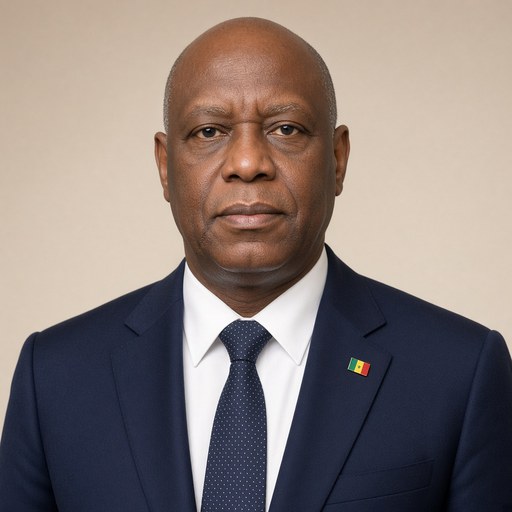
WTO Presidential Conference: Towards inclusive and sustainable world trade
 Macky Sall · President of Senegal
- Context
- Sall addressed a WTO Presidential Conference in Geneva on December 13, 2023, speaking on inclusive and sustainable global trade challenges facing developing nations.
- Main themes
- Inclusive and sustainable world trade, WTO reform and multilateralism, trade equity and justice for developing countries, fisheries subsidies agreement, food insecurity and health crises, TRIPS agreement and pharmaceutical sovereignty, AfCFTA and African integration, agricultural subsidies and fair competition, fossil fuel financing double standards, ocean sustainability and SDGs, vaccine production in Africa
- Duration
- ~9 min
- Words
- 1,086
- Sentences
- 48
- Readability
- 32
- Grade
- 14.4
- Syntax
- 3.27
- Vocabulary
- 2.39
The broad sphere of national life a sentence belongs to. Every sentence has an Arena, so it is the denominator the other indices are read against.
Other48 sentences in 39 paragraphs
Excellencies, Ladies and Gentlemen Ambassadors, Madam Director-General of the World Trade Organization, dear Ngozi Okonjo-Iweala, Ladies and Gentlemen,
I am pleased to meet with you, in the heart of international Geneva, for this discussion on the theme of inclusive and sustainable global trade, a crucial issue for both the present and the future.
Thank you, dear NGOZI, for your kind invitation. I commend your leadership at the helm of the Organization and extend my continued encouragement and support as you carry out your delicate mission in service of the member states.
Thank you, Madam Ambassador MOLOKOMME, Chair of the General Council, for your valuable efforts in leading the Council’s work.
I greet the representatives of the countries and organizations present here, and I reaffirm Senegal’s commitment to the friendly relations that unite us.
Ladies and Gentlemen,
Since ancient times, trade, in its fundamental role of exchange and connection, has always been a driver of progress, peace, security, friendship, and human fraternity. Whether through barter or monetary exchange, under the shade of a tree, in a small corner shop, a large supermarket, or online, trade aims to create wealth and meet needs.
As such, trade creates bonds and brings people together. While it may not prevent the harms of war, it certainly highlights the benefits of peace.
In modern times, the global trading system has changed dramatically in terms of its volume, complexity, and the numerous challenges associated with it. But its purpose remains the same: to establish legal security and create conditions of trust and mutual benefit between the parties involved. Trade suffers whenever one of these parameters is broken.
It is in this spirit that the General Agreement on Tariffs and Trade of October 1947, and its successor in January 1995, the World Trade Organization (WTO), were established.
With 164 member states representing 98% of global trade, the WTO has gained universality, and its achievements are significant, such as the recent adoption of the Agreement on Fisheries Subsidies, after two decades of difficult negotiations.
By concluding this historic Agreement, member states have taken a major step forward in ensuring the sustainability of oceans by prohibiting harmful fishing subsidies, in response to the depletion of fishery resources.
It is fortunate that the Agreement takes into account the specific needs of artisanal fishing and provides a transition period for Least Developed Countries (LDCs) to implement certain provisions.
It is important that the Technical Assistance and Capacity-Building Fund, established by the Agreement, becomes fully operational once the text enters into force, to assist beneficiary countries with its implementation.
Senegal remains fully committed to the second phase of negotiations on fishing subsidies that contribute to overcapacity and overfishing.
A comprehensive agreement on fishing subsidies will indeed contribute to efforts to achieve the Sustainable Development Goal related to protecting oceans, seas, and their resources.
I also welcome the significant outcomes of the 12th Ministerial Conference, particularly those concerning the urgent response to food insecurity and preparedness for future health crises, including the Agreement on Trade-Related Aspects of Intellectual Property Rights (TRIPS).
This is an important step towards better integrating Africa into global production, distribution, and supply chains, especially in the context of the African Continental Free Trade Area (AfCFTA) and our quest for pharmaceutical and medical sovereignty.
On this note, I am pleased to announce that the Institut Pasteur in Dakar, which has been producing and distributing the yellow fever vaccine since 1937, is undertaking an ambitious project to establish a multidimensional vaccine hub that includes a full production line for vaccines using messenger RNA technology.
For us, developing countries, the challenge of global trade between actors of unequal strength primarily revolves around equity, justice, and respect for international law.
For global trade to be sustainable, it must be beneficial to all.
Trade cannot be sustainable when those who have more always gain more, and those who have less always lose more.
Trade cannot be sustainable when the free movement of people, goods, and services, supposedly governed by the virtues of market law, is distorted by the law of the strongest.
Trade cannot be sustainable when, through trade wars, national measures with extraterritorial effects harm third parties.
Trade cannot be sustainable when abusive agricultural subsidies violate fair competition rules to the detriment of millions of small producers.
Trade cannot be sustainable when developed countries, the primary polluters, continue to use coal while prohibiting foreign financing for fossil energy sources, including gas, which is much less polluting than coal. This is neither fair nor equitable.
Finally, trade cannot be sustainable when, through abusive tax evasion practices or tax holidays, taxes are not paid where wealth is created. I am particularly thinking of the digital and extractive industries.
On this matter, the historic OECD Agreement of October 2021 on a global minimum tax of 15% should be welcomed.
The purpose of the international trade system is to regulate exchanges for the benefit of all.
If the system does not meet its primary purpose, it deepens inequalities instead of reducing them; it increases tensions instead of easing them; it multiplies disputes instead of resolving them; it heightens the risk of its own contestation and creates conditions for its rejection.
This is why we advocate for the reform of global economic and financial governance, to make it more just and inclusive.
After Africa’s admission to the G20 and the continent’s allocation of a third seat on the IMF Board of Directors, let us continue our efforts to reform the international financial architecture, including the IMF, the World Bank, and the rating agency systems.
In the same spirit, Senegal supports the WTO’s work on institutional reforms aimed at improving the effectiveness of its functioning.
Inclusive global trade requires a functional, transparent, and accessible dispute settlement system for all members.
Moreover, equity and inclusion must remain at the heart of our agenda. Fair global trade offers all countries opportunities to create jobs or other income-generating activities, especially for young people and women.
Conversely, unequal trade excludes and marginalizes most countries. It impoverishes them and contributes to the uncontrolled movement of people, including illegal migration flows.
This means that inclusive and sustainable trade is not only an ideal to strive for but also a necessity and a shared interest.
When practices are fair, transparent, just, and equitable, there must be room for everyone, so that the international trading system and the Organization that embodies it can maintain their primary purpose: to promote economic and commercial exchanges, contribute to development, and foster peaceful relations between nations.
Thank you.