




CEREMONY OF THE OFFICIAL OPENING OF THE SEMINAR ON THE IMPLEMENTATION OF RISDA DEVELOPMENT PROJECTS
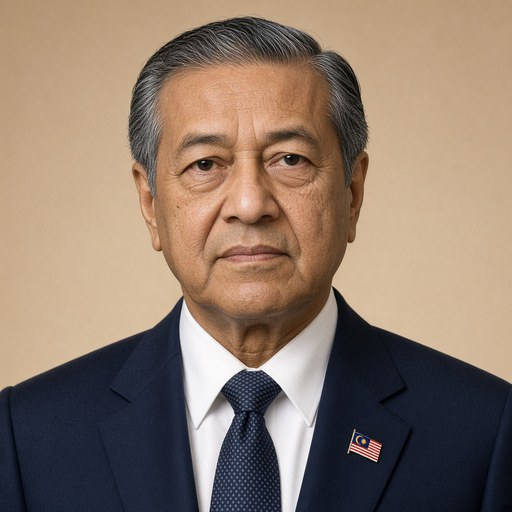
 Mahathir Mohamad · Prime Minister of Malaysia
- Context
- Mahathir addressed the opening of a RISDA seminar on development project implementation in Malaysia on 5 February 1982, focusing on smallholder and rural development.
- Main themes
- RISDA development projects, smallholder welfare, rubber industry, rural poverty alleviation, community participation in planning, political slander and social critics, balanced spiritual and material development, Malaysian economic development, metric system controversy, illegal immigration accusations, electoral politics
- Duration
- ~16 min
- Words
- 1,869
- Sentences
- 101
- Readability
- 52
- Grade
- 10.5
- Syntax
- 2.67
- Vocabulary
- 2.40
Translated from Malay
The broad sphere of national life a sentence belongs to. Every sentence has an Arena, so it is the denominator the other indices are read against.
Other101 sentences in 20 paragraphs
In the name of Allah, the Most Gracious, the Most Merciful. The Honorable Dato' Shariff Ahmad, Minister of Agriculture; The Honorable Tan Sri (Dr.) Arshad Ayub, Secretary-General of the Ministry of Agriculture; The Honorable Dato' Hishamudin Yahaya, Chairman of RISDA; The Honorable Dato' Dr. Mohd. Noor bin Abdullah, Director-General of RISDA; Honorable Members; Distinguished Guests; Ladies and Gentlemen. Assalamu'alaikum warahmatullahi wabarakatuh. First of all, I would like to express my gratitude to RISDA for inviting and honoring me to officiate the Seminar on the Implementation of RISDA Development Projects today.
2. Development in Malaysia is for the people and not for boasting. Therefore, development not only requires the involvement and enjoyment of benefits by the people at the implementation level but also, where possible, should involve the people at the problem identification stage, and subsequently, the problems that can be identified should be taken into account in planning. I have been informed that the participants of this seminar consist not only of RISDA officials but also of RISDA community developers, namely the smallholders themselves. I hope that through this combination of participation, the RISDA authorities, by identifying the problems faced by both parties, can improve planning, implementation, and management.
3. Smallholders in our country represent an important economic group. They are producers of a significant portion of the output of one of the country's important sources of wealth, namely natural rubber. However, smallholders make up a large part of our population that falls below the poverty line. Although our national economy no longer solely depends on rubber and since 1980, petroleum has taken the place of rubber as the main source of our national revenue, the dependence of a large portion of the population on rubber compels us to take all necessary actions to ensure that the status of this commodity is not compromised.
4. Ladies and gentlemen, you are aware that the development efforts undertaken by the Government aim to bring prosperity and well-being to the people and the nation. Unfortunately, efforts towards the common good do not always receive support from all parties. Indeed, there are benefits for anyone, including themselves. However, this does not deter them from expressing their opinions that do not bring about these benefits. For example, when the Government implements the metric system, they criticize the Government for allegedly intending to facilitate the Chinese in deceiving Muslims. They forget that the metric system is used in most Islamic countries, including Saudi Arabia, where Muslims go to perform the Hajj. We can ask them, does the use of the metric system by the governments of these countries intend to deceive Muslims? Similarly, there are those who maliciously claim that it is the Government that plans for illegal immigrants from Vietnam to come to Malaysia with the aim of reducing the percentage of Malays. Likewise, the synchronization of time between the Peninsula and Sabah-Sarawak is supposedly intended to confuse Muslims so that they cannot perform their religious duties. When the camera tax was abolished as a ploy to improve the national economy, they cynically remarked, "Cameras cannot be eaten. If rice prices drop, that would make sense." They are also the ones who previously questioned why roads in the villages cannot be eaten, while riding their Hondas on village roads.
5. Every day, they think of nothing but finding anything to use as slander. That Islam considers slander to be more dangerous than killing is not given the slightest heed.
6. People like this are the refuse of society. They are the ones who tarnish the fate of the community. They are the ones who hinder progress. And if we examine them, we will find that they do not hesitate to enjoy the benefits from the efforts or activities that they criticize.
7. I draw attention to this group of societal refuse because they are part of the reason we do not reap the full benefits from all our efforts, including the efforts to restore the status of smallholders assigned to RISDA. I hope you will be cautious of this group and distance yourselves from them and their slander. Their efforts will multiply as they anticipate that elections will soon be held, and elections are fertile ground for mushrooms like these to proliferate their slander.
Ladies and gentlemen.
8. Development in our country, Malaysia, emphasizes both aspects of progress, namely spiritual and physical progress. It is inaccurate for certain parties to say that we are carried away by the Western model of development that prioritizes material or physical aspects. However, we do not deny that we will adopt aspects of development, whether from the West or elsewhere, if they align with our needs and do not contradict our religious values.
9. I am particularly interested in the development programs implemented by RISDA, especially the concept of RISDA community development, which emphasizes the importance of integrated development that encompasses both spiritual and physical aspects as advocated by the Government. We need a society and a nation that possesses positive values towards both spiritual and material aspects that will lead us and our country through an era of high achievement and success. The smallholder community is also part of the overall society that we aim to create.
10. Every citizen, regardless of their occupation or status, must cultivate and nurture a balanced attitude towards worldly and spiritual matters. This attitude should not only be fostered within themselves but also towards their family members and, if possible, towards their community members. A balanced attitude towards the world and the hereafter, without neglecting either, is important because well-being and prosperity in this world can be achieved not only through means that are pleasing to religion but also because well-being and prosperity in this world enable a person to enhance their capacity for worship and contribute to the prosperity and strength of the ummah. If a large portion of the population, especially those who are Muslim, follows the irresponsible calls to completely disregard the world in preparation for the hereafter, this would certainly contradict the Islamic injunction to not forget our share in this world while preparing ourselves for the hereafter. Likewise, every activity of living in society and nation-building as an independent ummah is a demand in Islam as a fardhu kifayah aimed at ensuring the strength and integrity of the ummah. To fulfill the demands of our religion, the Rukunegara, and our development aspirations, every citizen must work hard to meet these requirements. If the demands of Islam are not followed by Muslims, then surely calamity will befall them.
11. In our rubber industry, we find a peculiarity that I must mention. While two-thirds of rubber plantation land is owned by smallholders and one-third by large estates, in terms of production, one-third comes from smallholders and two-thirds from large estates. We know that the reason for this peculiarity is that the methods and techniques of planting and maintaining rubber plantations by smallholders do not follow the good practices recommended by experts. However, even though we know we do not practice what is advised, good performance is not achieved either. We continue to request various actions to be taken by the Government. Unfortunately, even if a thousand and one more actions are taken by the Government, as long as we ourselves are not willing to practice good practices, all actions will be in vain.
Ladies and gentlemen.
12. To achieve satisfactory income from our rubber plantations, we need a large area of land. The higher our ambitions, the more land is required. But we certainly know that land does not grow like our ambitions, which can expand over time. If we want to achieve sufficient income, we must look elsewhere to find sources for additional income. In fact, while working in the rubber plantation, we have a lot of time. After tapping in the morning, we can do other work. We must think about what else we can do to increase our income. If we cannot think of it ourselves, there are government officials assigned to advise us. I am confident that if we are willing, there is always something we can do to increase our income. We must not allow the devil to influence us. After working in the rubber plantation and after worship, we still have plenty of time to make our lives happier. In other words, discipline yourself and be wary of the devil's influence.
13. At this time, we know that rubber prices have fallen due to the global economic downturn. How easy it would be to face this problem if we had other sources and avenues to help us overcome the shortfall in income from rubber. But because we are too dependent on rubber, we face problems. Perhaps we think that at this time the Government should help solve all our problems. In fact, much assistance has been given, but it is impossible for the Government to solve all the problems of income shortfall because at this time the Government is also receiving less revenue due to the drop in rubber prices.
Ladies and gentlemen.
14. All Malaysians have various opportunities to improve their economic status and quality of life. As long as they are willing to work hard, willing to endure hardships, and willing to use all of God's gifts positively, it is not difficult for each of our citizens to improve their fortunes. If one wants to become rich quickly, wants to become rich easily, wants to try their luck, this is certainly not among the qualities desired in the context of integrated development that encompasses both spiritual and physical progress that I mentioned earlier. Without these qualities, it is easy to blame any party for the misfortunes that befall oneself, and if this attitude does not change, it will be difficult to change one's fate. I hope every citizen, especially community developers and RISDA officials who are agents of change at the grassroots level, will spread the "formula" or recipe for success that I have explained so that it will become the foundation of our collective success.
15. RISDA has always strived to diversify and expand the sources of income for smallholders since the beginning of the Third Malaysia Plan. I am confident that if both parties, RISDA and the smallholder community, unite and work hard with clear objectives, we will see a significant change among rural communities. I hope the RISDA Smallholder Development Centers located throughout the country will become one of the centers that bring about spiritual and physical change in rural areas. I want to see the economic capacity of rural areas increase with various agricultural activities and agricultural-based enterprises that can compete in the modern market in the shortest possible time. This should not be seen merely as a desire and hope but as a channeling of faith and worship in national development and the progress of the ummah. RISDA officials and community developers are the leaders who not only bear the responsibility to bring about the expected changes but also to continue efforts to create and nurture leadership for a dynamic rural development sector.
16. With this hope, I am pleased to officially open the Seminar on the Implementation of RISDA Development Projects.
Wassalamu'alaikum warahmatullahi wabarakatuh.
The original Malay. The tags above are read on the English translation's sentences.
Bismillahir rahmanir rahim.Yang Berhormat Dato' Shariff Ahmad, Menteri Pertanian; Yang Berbahagia Tan Sri (Dr.) Arshad Ayub, Ketua Setiausaha Kementerian Pertanian; Yang Berbahagia Dato' Hishamudin Yahaya, Pengerusi RISDA; Yang Berbahagia Dato' Dr. Mohd. Noor bin Abdullah, Ketua Pengarah RISDA; Yang Berhormat-Yang Berhormat; Dif-dif Kehormat; Tuan-tuan dan Puan-puan sekelian.Assalamu'alaikum warahmatullahi wabarakatuh.Terlebih dahulu saya mengucapkan terima kasih kepada RISDA kerana telah menjemput dan memberi penghormatan kepada saya untuk merasmikan Seminar Pelaksanaan Projek-projek Pembangunan RISDA pada hari ini.
2. Pembangunan di Malaysia adalah untuk rakyat dan bukan untuk bermegah-megah. Oleh itu pembangunan bukan sahaja memerlukan penglibatan serta pengecapan nikmat oleh rakyat di peringkat pelaksanaan tetapi juga, di mana yang boleh, harus melibatkan rakyat di peringkat pengenalan masalah dan seterusnya masalah-masalah yang dapat dikenal-pasti harus diberi perkiraan di dalam perancangan. Para peserta Seminar ini, saya difahamkan, adalah terdiri bukan sahaja daripada pegawai-pegawai RISDA tetapi juga para pemaju masyarakat RISDA, iaitu pekebun-pekebun kecil sendiri. Saya harap, melalui gabungan penyertaan seperti ini pihak berkuasa RISDA, dengan mengenal-pasti masalah-masalah yang dihadapi oleh kedua-dua pihak, dapat memperbaiki perancangan, pelaksanaan dan pengurusannya.
3. Pekebun kecil di negara kita merupakan satu golongan ekonomi yang penting. Mereka adalah pengeluar sebahagian besar daripada hasil salah satu sumber kekayaan negara yang penting, iaitu getah asli. Namun demikian, pekebun kecil merupakan sebahagian besar daripada rakyat kita yang termasuk di dalam golongan yang terletak di bawah paras kemiskinan. Sungguhpun ekonomi negara kita tidak lagi bergantung hanya kepada getah dan mulai daripada tahun 1980 petroleum telah mengambil tempat getah sebagai sumber utama kewangan negara kita, pergantungan sebahagian besar rakyat kepada getah memaksa kita mengambil segala tindakan untuk menentukan kedudukan barangan ini tidak terjejas.
4. Saudara-saudara sekelian maklum bahawa usaha-usaha pembangunan yang dilaksanakan oleh Kerajaan adalah bertujuan untuk membawa kemakmuran dan kesejahteraan bagi rakyat dan negara. Malangnya, usaha ke arah kebaikan tidak selalunya mendapat sokongan daripada semua pihak. Memang terdapat faedah kepada sesiapa, termasuk dirinya sendiri. Tetapi, ini tidak menjemukan mereka dari mengeluarkan pendapat mereka yang tidak mendatangkan faedah ini. Umpamanya apabila Kerajaan melaksanakan sistem metrik mereka ini mengecam Kerajaan kerana kononnya Kerajaan berhajat untuk memudahkan orang Cina menipu orang Islam. Mereka ini lupa bahawa sistem metrik adalah sistem yang digunakan dikebanyakan negara Islam, termasuk Arab Saudi di mana umat Islam berkunjung untuk membuat ibadat Haji. Kita boleh bertanya mereka, apakah dengan penggunaan sistem metrik kerajaan negara-negara ini berhajat untuk menipu orang Islam. Begitu juga ada di antara orang yang pandai menyakiti hati orang lain ini yang berkata bahawa Kerajaanlah yang merancang supaya pendatang haram dari Vietnam datang ke Malaysia dengan tujuan untuk mengurangkan peratusan orang Melayu. Begitu juga persamaan waktu Semenanjung dengan waktu Sabah-Sarawak, kononnya bertujuan mengelirukan orang Islam supaya tidak dapat berbuat ibadat.Apabila cukai kamera dihapuskan sebagai satu muslihat untuk memperbaiki ekonomi negara, mereka ini secara sinis berkata, "Kamera bukan boleh makan. Kalau beras turun harga patutlah" Mereka ini jugalah yang dahulu bertanya buat jalan di kampung bukan boleh makan, sambil menunggang Honda mereka di jalan kampong.
5. Tiap-tiap hari mereka ini tidak fikir lain melainkan mencari apa sahaja yang hendak dijadikan bahan fitnah. Bahawa agama Islam menganggap fitnah sebagai lebih bahaya dari membunuh, tidak sedikit pun dihiraukan.
6. Orang yang seperti ini adalah sampah masyarakat. Merekalah yang memburukkan nasib masyarakat. Merekalah yang menghalang kemajuan. Dan jika kita memeriksa mereka kita tetap akan dapati bahawa mereka tidak segan-segan mengecap nikmat hasil dari usaha-usaha ataupun aktiviti-aktiviti yang mereka kutukkan itu.
7. Saya menarik perhatian kepada golongan sampah masyarakat ini kerana mereka adalah sebahagian dari sebab kita tidak mendapat hasil yang penuh dari segala usaha kita, termasuklah usaha memulihkan kedudukan pekebun kecil yang ditugaskan kepada RISDA. Saya berharap saudara-saudara akan berhati-hati dengan golongan ini dan menjauhkan diri dari mereka dan fitnah mereka. Usaha mereka akan berlipat ganda kerana mereka menjangka tidak lama lagi akan diadakan pilihanraya, dan pilihanraya adalah tanah subur bagi cendawan seperti ini untuk membiakkan fitnah mereka.
Tuan-tuan dan puan-puan.
8. Pembangunan di negara kita Malaysia menekankan kedua-dua aspek kemajuan iaitu kemajuan rohani dan juga jasmani. Adalah tidak tepat sekiranya pihak-pihak tertentu mengatakan bahawa kita terbawa-bawa oleh model pembangunan di Barat yang lebih mementingkan aspek material atau kebendaan. Tetapi kita tidak nafikan bahawa kita akan mengambil aspek-aspek pembangunan, sama ada dari Barat ataupun dari lain-lain tempat, sekiranya sesuai dengan kehendak dan keperluan kita dan tidak bertentangan pula dengan nilai-nilai keagamaan kita.
9. Saya tertarik hati dengan program-program pembangunan yang dilaksanakan oleh RISDA, khususnya konsep pembangunan masyarakat RISDA, yang memberi kepentingan kepada hasrat pembangunan sepadu yang merangkumi aspek rohani dan jasmani sebagaimana yang dianjurkan oleh Kerajaan. Kita perlukan satu masyarakat dan bangsa yang mempunyai nilai-nilai hidup yang positif terhadap aspek kerohanian dan kebendaan yang akan membawa kita dan negara kita melalui satu era pencapaian dan kejayaan yang tinggi. Masyarakat pekebun kecil juga adalah sebahagian daripada keseluruhan masyarakat yang akan kita wujudkan ini.
10. Setiap rakyat, tidak kira pekerjaan atau taraf kedudukannya, mestilah menyemai dan memupuk sikap yang memberi kepentingan yang seimbang terhadap masalah-masalah dunia dan juga akhirat. Ia bukan sahaja harus memupuk sikap ini pada dirinya tetapi juga terhadap anggota keluarganya dan seterusnya, jika ia mampu terhadap anggota masyarakatnya. Sikap yang seimbang terhadap dunia dan juga akhirat, iaitu tanpa meninggalkan mana-mana satunya, adalah penting kerana kesejahteraan dan kemakmuran di dunia bukan sahaja boleh dicapai melalui cara-cara yang diredhai oleh agama malahan kesejahteraan dan kemakmuran di dunia membolehkan seseorang meningkatkan lagi kemampuannya untuk beribadat dan memberi sumbangan terhadap kemakmuran dan kekuatan umat. Sekiranya sebahagian besar daripada rakyat, khususnya yang beragama Islam, mengikut gesaan pihak-pihak yang tidak bertanggungjawab supaya mengenepikan dunia sama sekali bagi membuat persiapan ke akhirat, ini tentulah bertentangan dengan kehendak Islam supaya kita tidak melupai habuan kita di dunia semasa kita menyediakan diri untuk akhirat. Begitu juga setiap aktiviti hidup bermasyarakat dan bernegara sebagai umat yang berdikari adalah merupakan tuntutan di dalam Islam sebagai fardhu kifayah yang bertujuan untuk menjamin kekuatan dan keutuhan umat. Bagi memenuhi kehendak agama kita, Rukunegara dan hasrat pembangunan kita, setiap rakyat mestilah bekerja keras untuk mengisi dan menepati kehendak-kehendak ini. Jika kehendak agama Islam tidak diturut oleh orang Islam maka sudah tentu mala-petaka akan menimpa mereka.
11. Dalam perusahaan getah kita dapati satu keanihan yang patut saya sebutkan. Sementara dua- pertiga dari tanah kebun getah dimiliki oleh pekebun kecil dan satu pertiga oleh estate besar, tetapi dari segi pengeluaran pula satu-pertiga adalah dari pekebun kecil dan dua pertiga dari estet-estet besar. Kita tahu bahawa sebabnya berlaku keanihan ini ialah oleh kerana cara dan teknik penanaman dan pemeliharaan kebun getah oleh pekebun kecil tidak mengikut amalan-amalan yang baik yang dinasihatkan oleh pakar-pakar.Tetapi sungguhpun kita tahu kita tidak mengamal apa yang tindakan, prestasi yang baik tidak juga dicapai. Kita meminta lagi supaya bermacam tindakan lagi diambil oleh Kerajaan. Malangnya jikalau seribu satu tindakan lagi diambil oleh Kerajaan pun, selagi kita sendiri tidak sanggup mengamalkan amalan yang baik semua tindakan akan menjadi sia-sia sahaja.
Tuan-tuan dan puan-puan sekelian.
12. Untuk mendapat pendapatan yang memuaskan hati kita dari kebun getah kita perlukan bidang tanah yang luas. Semakin tinggi cita-cita kita semakin luas tanah yang diperlukan.Tetapi kita tentu tahu bahawa tanah tidak membesar seperti cita-cita kita yang dapat membesar sepanjang masa. Jika kita ingin mendapat pendapatan yang mencukupi maka perlulah kita menoleh ke arah lain untuk mencari sumber-sumber untuk mendapat tambahan pendapatan. Sebenarnya dalam menjalankan kerja atau tugas di kebun getah kita mempunyai banyak masa.Selepas menoreh sebelah pagi kita boleh membuat kerja-kerja lain. Kita harus fikir tentang apa lagi yang boleh kita buat untuk menambah pendapatan. Jika kita tidak dapat fikir sendiri ada pegawai Kerajaan yang diberi tugas untuk menasihati kita. Saya yakin jika kita sanggup ada sahaja yang dapat kita buat untuk menambah jumlah pendapatan kita.membenar Iblis mempengaruhi kita. Selepas bekerja di kebun getah, selepas beribadat kita masih mempunyai banyak masa untuk menjadikan kehidupan kita lebih bahagia. Dengan perkataan lain, disiplinkan diri dan tentang pengaruh Iblis.
13. Di waktu ini kita tahu harga getah telah turun kerana kemerosotan ekonomi dunia. Alangkah mudahnya kita menghadapi masalah ini jika kita mempunyai sumber-sumber dan punca-punca lain yang boleh menolong kita mengatasi kekurangan hasil pendapatan dari getah. Tetapi kerana kita terlalu bergantung kepada getah, kita menghadapi masalah.Mungkin kita berpendapat bahawa di waktu ini Kerajaan patut tolong mengatasi semua masalah kita. Sebenarnya banyak pertolongan yang telah diberi tetapi tak mungkin Kerajaan dapat mengatasi segala masalah kekurangan pendapatan kerana di waktu ini Kerajaan juga mendapat hasil yang kurang akibat kejatuhan harga getah.
Tuan-tuan dan puan-puan sekelian.
14. Semua rakyat Malaysia mempunyai berbagai-bagai peluang untuk memperbaiki kedudukan ekonomi dan mutu kehidupan mereka. Asalkan sanggup bekerja keras, sanggup melalui kesusahan, sanggup menggunakan segala pemberian Tuhan secara positif, adalah tidak sukar bagi setiap rakyat kita untuk memperbaiki nasib mereka. Kalau hendak jadi kaya cepat, hendak jadi kaya dengan cara senang, hendak mencuba-cuba, ini sudah tentu bukan daripada sifat-sifat yang dikehendaki dalam konteks pembangunan sepadu yang meliputi kemajuan rohani dan jasmani yang saya sebutkan tadi. Tanpa sifat-sifat ini tentu senang menyalahkan mana-mana pihak di atas nasib buruk yang menimpa diri sendiri dan sekiranya sikap ini tidak berubah sampai bilapun susah untuk mengubah nasib. Saya harap setiap rakyat, lebih-lebih lagi pemaju-pemaju masyarakat dan pegawai-pegawai RISDA yang menjadi agen-agen perubahan di peringkat akar-umbi, akan menyebarkan "formula" atau ramuan kejayaan yang saya jelaskan itu supaya ia akan menjadi teras kejayaan kita bersama.
15. Pihak RISDA sentiasa berusaha untuk mempelbagai dan memperluaskan sumber pendapatan pekebun kecil semenjak permulaan Rancangan Malaysia Ketiga. Saya yakin sekiranya kedua-dua pihak, RISDA dan masyarakat pekebun kecil bersatu dan bekerja kuat dengan matlamat-matlamat yang jelas, kita akan melihat satu perubahan yang besar di kalangan masyarakat luar bandar. Saya harap Pusat Pembangunan Pekebun Kecil RISDA yang terdapat di seluruh negara akan menjadi satu daripada pusat yang membawa perubahan, rohani dan jasmani di luar bandar. Saya ingin melihat kemampuan ekonomi luar bandar yang meningkat dengan berbagai-bagai kegiatan pertanian dan perusahaan-perusahaan berasaskan pertanian yang dapat bertanding dalam pasaran moden dalam masa yang sesingkat-singkatnya. Ini tidak harus dilihat sebagai hasrat dan harapan sahaja tetapi sebagai penyaluran iman dan ibadat di dalam pembangunan negara dan kemajuan umat. Pegawai-pegawai RISDA dan pemaju-pemaju masyarakat RISDA adalah barisan pemimpin yang bukan sahaja memikul amanah untuk membawa perubahan yang diharapkan ini tetapi juga untuk meneruskan usaha mewujud dan memupuk kepimpinan bagi pembangunan sektor luar bandar yang dinamis.
16. Dengan harapan ini saya dengan sukacitanya merasmikan pembukaan Seminar Pelaksanaan Projek-projek Pembangunan RISDA.
Wassalamu'alaikum warahmatullahi wabarakatuh.