




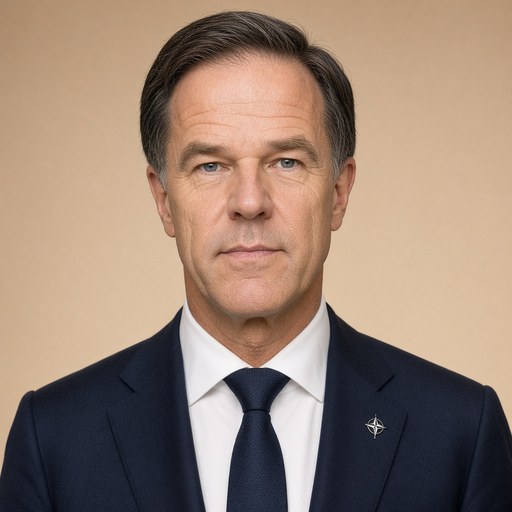
Speech by Prime Minister Rutte at the 60th anniversary of the Dutch Society of Editors-in-Chief
 Mark Rutte · Prime Minister of the Netherlands
- Context
- Rutte addressed the Dutch Society of Editors-in-Chief at their 60th anniversary dinner in The Hague on April 11, 2019, reflecting on press-politics relations.
- Main themes
- Free press and democracy, press-politics relationship, media landscape transformation, journalistic independence, social media revolution, news consumption changes, media fragmentation, de-pillarization, tribute to Max van Weezel, political accountability to press
- Duration
- ~26 min
- Words
- 3,082
- Sentences
- 188
- Readability
- 57
- Grade
- 9.3
- Syntax
- 2.85
- Vocabulary
- 2.11
Translated from Dutch
The broad sphere of national life a sentence belongs to. Every sentence has an Arena, so it is the denominator the other indices are read against.
Other188 sentences in 38 paragraphs
The changing tango: on the importance of a free press and its relationship with politics
Ladies and gentlemen,
First of all: congratulations on your 60th anniversary. A true ‘society’ is already quite chic, but a society that is 60 years old is certainly very venerable, especially in
Des Indes.
That is tradition piled on decorum, topped with grandeur.
And a reason for a celebration. Although I cannot ignore the fact that it is also a celebration overshadowed by the passing of Max van Weezel. A man who was a phenomenon in parliamentary journalism for most of your existence, over 40 years. We knew, of course, that Max was seriously ill, and yet there is shock when you receive the sad news that he has passed away. Max was a journalistic icon, a craftsman, and a role model for many.
Always sharp in his questions and analyses, but never below the belt. Very well-informed, without being pretentious. And above all, a master interviewer with a sense for the right atmosphere. I still remember very well, when I started in The Hague, how I looked up to him. He was already working at Vrij Nederland when I was in elementary school. But over the years, we built a mutual bond of respect and personal appreciation. Even in that last period, I spoke to him a few times, and I cherish the memories of those moments. But I think I am not the only one in this company with fond memories of Max. Dutch journalism became poorer yesterday.
Ladies and gentlemen, I am of course honored to speak here today, thank you for that. But you are immediately saddling me with a small problem. On the one hand, I do not want to speak with sugar-coated words, and I hope you do not expect that from me either. At the same time, it is not my place as acting Prime Minister to have various judgments about your work and that of your editorial teams. Journalism is, after all, the fly in the ointment of politics. That is precisely why, immediately after my appointment in 2010, I moved the weekly press conference after the Cabinet meeting from the Ministry of General Affairs to Nieuwspoort. The Prime Minister should be a guest of the press, and not the other way around. That is how it should be. So tonight will be a bit of an exercise in walking on eggshells. But that is actually always the case in my job, because it is as the Belgian politician Herman de Croo once said: ‘With a newspaper, you can kill both a minister and a fly.’
So let me start safely, by looking back. And that is also appropriate, because at such anniversaries, you almost automatically look back. It remains astonishing how quickly and profoundly the world has changed. Especially the relationship between your profession and mine. Legendary is, for example, the story about Beel, who was awaited at the bottom of the airplane steps in Jakarta, then Batavia, by a group of journalists and subsequently received this significant question: ‘Did you have a good trip, Excellency?’ Those were the days!
In 1959, the newspaper, quite literally, was still a gentleman. We can hardly imagine it now, but when this society was founded, the leader of the Anti-Revolutionary Party in the House of Representatives was simultaneously the editor-in-chief of Trouw. A combination of roles that is unthinkable today. A few hundred thousand people had a TV in their living room, and on the days when there were broadcasts on that one available channel, they lasted a mere 2 hours...
These were also the years in which the legendary parliamentary reporter Henri Faas of the Volkskrant – the one and only ‘Wandelganger’ – was boycotted by Prime Minister Drees as punishment because he allegedly published prematurely from the Prinsjesdag documents. Later, it turned out that it was not a leak, but a display of clever deduction and top journalism. But back then, it was still possible for a Prime Minister to simply exclude a journalist. Those were truly different times. Just imagine: Drees being interviewed by Rutger or Jaïr. Den Uyl as a candidate on the smartest person – which he undoubtedly was. Or Ruud Lubbers or Dries van Agt having to settle for 140 characters to say something.
In short, the media landscape and the media logic, as we have come to call it, have completely changed in those sixty years. First through the de-pillarization, which also removed the self-evidence of authority. Later through the internet and social media revolution, in which we are still very much immersed. But you all know that better than I do. How recipients have become senders and vice versa. How the number of media – print, image, and sound, online – continues to grow and become more intertwined. How at the same time, circulation and the number of independent titles are under pressure, because paying for news has become less and less self-evident. How the risk looms that we as news consumers will all spin in our own news bubble. And how traditional newspapers and current affairs programs have increasingly become the interpreters of the news, because hard news comes to us 24/7 in other ways. That has changed your work enormously. But it has also changed my work, if only because I, as the serving Prime Minister, am increasingly directly addressed about everything that is happening in politics. I am officially the Minister of General Affairs, but I often feel like the Minister of all affairs. And that has everything to do with the information society and media logic of today.
The great paradox of our time is that in the overload of information, opinions, and viewpoints, it is becoming increasingly difficult to distinguish fact from fiction. This is something that both journalists and politicians should be concerned about. Because fake news and internet trolls are truly among us, and that is not something to take lightly. If a fact becomes merely an opinion, the public debate and the democratic rule of law are the first victims. Hence, for example, that government campaign about fake news, because it is so incredibly important that people, especially around elections, remain critical of the sources of news. Another great danger is that it is becoming increasingly acceptable to blame serious media for everything and anything. Even in our country. That is unjust, and we must continue to stand against it. And by ‘we,’ I mean you and me. We share that responsibility for the protection and cultivation of the democratic culture and the freedom of expression in our country. Each from our own role, of course.
Of course, we all need to be able to handle criticism, and freedom of expression does not stop at opinions about the press. In that sense, resilience is as good a quality for journalists as it is for politicians. The press is also part of the societal debate, and there is nothing wrong with that. But we must not slide down that slippery slope that leads to self-censorship or, worse, because that undermines the very root of what the press is and should be for our society: a source of information, a gathering point for opinions, and a check on power.
That slippery slope to self-censorship is subtle and implicit. But sometimes the threat is also very explicit and direct. 6 out of 10 journalists have been threatened with violence at some point, and for 3 out of 10, this happens even regularly, meaning weekly or monthly. That cannot be and must not be allowed. That is why it is good that the Public Prosecution Service from this month has a doubled penalty demand for threats and violence against journalists, just as we do for emergency workers. And that is also why it is good that there is now a special site to report incidents, so that priority can be given to this even better. Your Society plays an important role in this, and that deserves great praise.
When I look at myself, there are those moments when it really matters, such as after the attack on Charlie Hebdo in January 2015. Even if I live to be a hundred, I will never forget that silent march through Amsterdam and the incredible anger and strength of all those thousands of people on the Dam. ‘Hands off our freedom,’ I said there at the time. And that remains the core for me, because in a well-functioning democracy, everyone must be able to say anything within the bounds of the law, and journalists must be able to do their work freely. That is essential. Hence, I am now increasingly critical on behalf of the Netherlands about what is happening in countries like Poland and Hungary, where freedom of expression and a free press are under pressure. There can only be one response from the other member states: it cannot and must not be allowed.
But let us also continue to look at ourselves. Because freedom of expression and a free press are never a quiet possession. Not so long ago, Herman Tjeenk Willink published a small but significant book in which he expresses his great concerns about the dangers threatening our democratic rule of law.
Think bigger, act smaller is the title – you probably know it. It is a book full of uncomfortable questions. About politics and to politicians, but also about and to the press. Who, for example, still presents the often uncomfortable facts in all the social media noise? And who dares to say out loud that some opinions in that same social media noise may be less well-founded than others and therefore carry less weight?
Tjeenk Willink formulates that important role of independent journalism with a few poignant sentences, and I quote:
‘Its ability to weigh information, expose connections, and pay attention to developments behind the incidents. Its task, supported by facts, to contradict authorities and give the other reality a chance. Its goal is to enable citizens to form their own judgment.’
End of quote; the ideal picture, of course.
But let me also allow myself a critical remark, because I am not here today to curry favor with you. To be honest: I can sometimes get worked up about the hyperbole and breathlessness of the news. After all these years, I can still be amazed at how the sensational, the personal drama can dominate the news. Even in the 1970s, there was an unnamed journalist who always seemed to say: ‘We want nice news; we prefer to see those people with their pants around their ankles.’ Whether that quote is accurate, I am not a hundred percent sure, but some stories are also too good to fact-check. And there is, in any case, a kernel of truth in it, because the conversation of the day often revolves more around the incident than the content.
I add to that: I too, we politicians, do not get off scot-free. Fair is fair. Your daily obsession is also ours. Politicians also care about a newspaper headline, a 1-0-1, a trending tweet, or an opening of the news broadcast. Most parliamentary questions, especially the oral ones during the Tuesday question hour, nowadays have a news item as their trigger. That mutual dependency has always existed, even though the relationships were completely different in the past. The unforgettable Kees Lunshof once described the relationship between politics and parliamentary journalism as ‘tangoing under a cheese dome.’ And indeed, it is a relationship of repulsion and attraction, of tension and relaxation. A relationship in which one always ultimately needs the other and also makes use of it. And I would almost say: that is how the game should be played.
Now you hear me claim from time to time that I better say nothing about topic A or B, because it does not help in the process. Former Minister Piet-Hein Donner quoted in a speech in 2011 Bismarck's famous saying that laws are like sausages, and you better not see how they are made. That brought him a lot of criticism at the time because he also concluded that the Open Government Act should be significantly curtailed. I certainly do not share that conclusion, but it is true that in some cases, a form of confidentiality is inevitably needed to achieve a result.
The formation of the second Den Uyl cabinet, which never came to be, is legendary in that respect. The press was almost at the table, and every Dutch citizen could follow all the skirmishes day by day. That
Diary of a Negotiator by Ed van Thijn is still both shocking and delightful. So much openness that you can hardly believe it. That undoubtedly contributed significantly to the establishment of the first Van Agt cabinet.
But I also think, for example, of the migration deal with Turkey. Of the social agreement from 2013. Or more recently: the purchase of shares in
Air France-
KLM. These are all topics where too much openness beforehand – and sometimes also afterward – hinders the result. That is a consideration every time. And I understand that this is annoying from your perspective and that you do everything you can to get a finger in the door. But I also ask – on behalf of my colleagues – for understanding for the fact that we occasionally push back and resist. That is all part of that joint tango.
How paradoxical it may sound: a pluralistic and transparent democracy cannot do without confidentiality at certain moments. In a political system with coalitions, you simply have to negotiate and make compromises. That is becoming increasingly necessary. And yes, you must be accountable for that, but that cannot always be during the process, because then everyone will choke on their own righteousness, and it will fall apart. Just look at that second Den Uyl cabinet that never came to be. The alternative is sham transparency for show, and no one is waiting for that.
What we as a cabinet are increasingly aware of is that it is important not to always present ourselves in absolute terms and with goal-oriented reasoning. As politicians, we prefer to speak in final images and clear opinions, without a trace of uncertainty. In a sense, that is the easiest approach, because we live in a time of quick judgments, where any hint of doubt is harshly and directly punished. A time where changing one's mind is quickly seen as a loss or weakness. Or even as unreliability. The great tile lighter himself, Henk Hofland, once said this about it: 'My only opinion that might be a bit contrary is that a person should be able to change their conviction or insight an unspecified number of times during their life, without being bothered by others who supposedly stand firm in their shoes.' I agree with that, and I speak from personal experience: there must always be room for evolving insight. That is why you will never see me cling to an unachievable plan.
The reality is that politics is about the distribution of scarcity, and that means you always have to make choices, you always have to weigh different interests against each other, and there are always dilemmas. It is never just yes or no, black or white. And what we are discussing in the Trêveszaal now is how we can involve you and the rest of the Netherlands more and earlier in all those considerations and dilemmas. I would like to avoid that rotten word 'gap' today, but understanding does start with insight, with clarity. And I take a hard look at myself. We need to dare to show much more often what is really in those sausages. Including the political struggle that often accompanies it.
To give just one concrete example: the climate agreement and the climate debate. If we are not careful, the discussion about it will forever narrow down to for or against, with ominous reporting about unaffordable measures on one side and apocalyptic images about the end of the world on the other. I truly believe it is up to us as a cabinet to make it clear that the truth lies in the middle. Without shying away from unpopular messages - because they certainly belong there. But also by bringing realism into the discussion and nuance. By showing the alternatives and choices early on. And by – as you have seen – also adjusting plans when necessary. That is vulnerable in today’s stormy media and social media landscape, but that is precisely why we need to do it more often. I lay that intention here today openly and plainly on the table, hoping that some of it will seep into your newspapers and programs in the coming years. Because among all the different interests between your and my profession, is not the nuanced consideration and professional doubt a shared interest, as it makes us both stronger and more convincing?
And to preempt your first critical question: this does not stand in stark contrast to what I just said about the confidentiality that is sometimes necessary. It is about explaining very clearly why we bought those shares in Air France-KLM and why it had to go the way it did. That is also a dilemma about which you can be clear.
Ladies and gentlemen,
Looking back 60 years is easy. Looking forward sixty years is actually impossible. None of us has a crystal ball. But I dare to make this prediction: just as the media landscape of 1959 is from another planet, the media landscape of 2079 will be as well. It may also be obvious that the printed newspaper and television in their current form will no longer exist in sixty years. But beyond that? I dare not say, because reality will undoubtedly surpass our wildest dreams.
Yet some things hopefully remain as they are. As one of your almost ex-members, Peter Vandermeersch, once said: 'We are not in the world to make white paper black, we are in the world to do journalism.' That can be done in various ways and in various forms. But the essential democratic role of critical, independent, and idiosyncratic journalism does not change. That remains. So even for the sixty-year-old Dutch Association of Editors-in-Chief, the retirement age is not yet in sight. I wish you, as a collective and as individual media, many more years and a very successful future.
Thank you.
The original Dutch. The tags above are read on the English translation's sentences.
De veranderende tango: over het belang van een vrije pers en de relatie met de politiek
Dames en heren,
Allereerst: van harte gefeliciteerd met uw 60e verjaardag. Een heus ‘genootschap’ is sowieso al heel chique, maar een genootschap van 60 jaar oud is natuurlijk wel heel eerbiedwaardig, zeker in
Des Indes.
Dat is traditie gestapeld op deftigheid overgoten met grandeur.
En reden voor een feest. Al kan ik er niet omheen: het is ook een feest waar een grauwsluier overheen ligt, door het overlijden van Max van Weezel. Een man die het grootste deel van uw bestaan, ruim 40 jaar, een fenomeen was in de parlementaire journalistiek. We wisten natuurlijk dat Max ernstig ziek was en toch schrik als je het trieste bericht krijgt dat hij is overleden. Max was een journalistiek icoon, een vakman en een voorbeeld voor velen.
Altijd scherp in zijn vragen en analyses, maar nooit onder de gordel. Zeer goed ingevoerd, zonder daarmee te koketteren. En bovenal een meesterinterviewer met gevoel voor de goede sfeer. Ik weet nog heel goed, toen ik in Den Haag begon, hoe ik naar hem opkeek. Hij werkte al bij Vrij Nederland toen ik naar de lagere school ging. Maar door de jaren heen hebben we een wederzijdse band van respect en persoonlijke waardering opgebouwd. Ook in die laatste periode heb ik hem nog een paar keer gesproken en ik koester de herinneringen aan die momenten. Maar ik denk dat ik in dit gezelschap niet de enige ben met mooie herinneringen aan Max. De Nederlandse journalistiek is gisteren armer geworden.
Dames en heren, ik ben uiteraard vereerd hier vandaag het woord te mogen voeren, dank daarvoor. Maar u zadelt mij wel meteen met een klein probleem op. Aan de ene kant wil ik hier niet met meel in de mond praten en dat verwacht u hopelijk ook niet van mij. Tegelijkertijd past het mij als acterend minister-president niet allerlei oordelen te hebben over uw werk en dat van uw redacties. De journalistiek is nu eenmaal de luis in de pels van de politiek. Dat is precies de reden waarom ik direct na mijn aantreden in 2010 de wekelijkse persconferentie na de ministerraad heb verplaatst van het ministerie van Algemene Zaken naar Nieuwspoort. De premier dient te gast te zijn bij de pers, en niet andersom. Dat hoort zo. Het wordt dus een beetje een oefening in op eieren lopen vanavond. Maar dat is eigenlijk altijd het geval in mijn baan, want het is zoals de Belgische politicus Herman de Croo ooit zei: ‘Met een krant kun je zowel een minister als een vlieg doodslaan.’
Laat ik daarom veilig beginnen, bij vroeger. En dat mag ook, want bij dit soort jubilea kijk je natuurlijk bijna automatisch even achterom. Het blijft verbazingwekkend hoe snel en ingrijpend de wereld is veranderd. Zeker ook de verhouding tussen uw beroepsgroep en de mijne. Legendarisch is bijvoorbeeld dat verhaal over Beel, die in Jakarta’, toen nog Batavia, onder aan de vliegtuigtrap opgewacht werd door een groep journalisten en vervolgens deze belangwekkende vraag kreeg: ‘Hebt u een goede reis gehad excellentie?’ Dat waren nog eens tijden!
In 1959 was de krant, ook letterlijk, nog een mijnheer. We kunnen het ons nauwelijks nog voorstellen, maar toen dit genootschap werd opgericht, was de fractievoorzitter van de Antirevolutionaire Partij in de Tweede Kamer tegelijkertijd hoofdredacteur van Trouw. Een combinatie van functies die vandaag de dag ondenkbaar is. Een paar 100.000 mensen hadden een tv in de huiskamer en op de dagen dat er uitzendingen waren op die ene beschikbare zender duurden die maar liefst 2 uur…
Het waren ook de jaren waarin de legendarische parlementair verslaggever Henri Faas van de Volkskrant – de enig echte ‘Wandelganger’ – door premier Drees voor straf werd geboycot omdat hij voortijdig gepubliceerd zou hebben uit de Prinsjesdagstukken. Later bleek het niet om een lek te gaan, maar om een staaltje slimme deductie en topjournalistiek. Maar dat kon toen dus nog, als premier een journalist simpelweg buitensluiten. Het waren echt andere tijden. Stelt u zich eens voor: Drees die geïnterviewd wordt door Rutger of Jaïr. Den Uyl als kandidaat bij de slimste mens – die hij zonder twijfel was. Of Ruud Lubbers of Dries van Agt die genoegen moeten nemen met 140 tekens om iets te zeggen.
Kortom, het medialandschap en de medialogica zoals we dat zijn gaan noemen, zijn in die zestig jaar totaal veranderd. Eerst door de ontzuiling, waarmee ook de vanzelfsprekendheid van het gezag verdween. Later door de internet en social media-revolutie, waar we feitelijk nog middenin zitten. Maar dat weet u allemaal beter dan ik. Hoe ontvangers zenders zijn geworden en andersom. Hoe de aantallen media – print, beeld en geluid, online – nog altijd groeien en meer met elkaar verweven raken. Hoe tegelijkertijd de oplages en het aantal zelfstandige titels onder druk staan, omdat betalen voor nieuws steeds minder vanzelfsprekend is geworden. Hoe het risico dreigt dat we als nieuwsconsumenten allemaal rondjes gaan draaien in onze eigen nieuwsbubble. En hoe de traditionele kranten en actualiteitenrubrieken steeds meer de duiders van het nieuws zijn geworden, omdat het harde nieuws 24/7 op andere manieren tot ons komt. Dat heeft uw werk enorm veranderd. Maar het heeft ook mijn werk veranderd, al was het alleen maar omdat ik minister-president van dienst steeds vaker direct wordt aangesproken op alles wat er in de politiek beweegt. Ik ben officieel minister van Algemene Zaken, maar voel me vaak minister van alle zaken. En dat heeft alles te maken met informatiesamenleving en medialogica van nu.
De grote paradox van onze tijd is dat het in de overload aan informatie, aan meningen en meninkjes, steeds moeilijker wordt om feiten en fictie uit elkaar te houden. Dat is iets waar zowel journalisten als politici zich zorgen over moeten maken. Want het nepnieuws en de internettrollen zijn echt onder ons en dat is niet iets om licht over te denken. Als een feit ook maar een mening wordt, zijn het publieke debat en de democratische rechtsstaat het eerste slachtoffer. Vandaar bijvoorbeeld die overheidscampagne over fake nieuws, omdat het zo verschrikkelijk belangrijk is dat mensen, zeker rond verkiezingen, kritisch blijven kijken naar de bronnen van het nieuws. Een ander groot gevaar is dat het steeds salonfähiger wordt om de serieuze media de schuld te geven van van alles en nog wat. Ook in ons land. Dat is onterecht en we moeten ons daartegen teweer blijven stellen. En met ‘we’ bedoel ik u en ik. We delen die verantwoordelijkheid voor de bescherming en cultivering van de democratische cultuur en de vrijheid van meningsuiting in ons land. Ieder vanuit onze eigen rol natuurlijk.
Natuurlijk, met kritiek moeten we allemaal kunnen omgaan en de vrijheid van meningsuiting stopt niet bij opvattingen over de pers. In die zin is incasseringsvermogen voor journalisten net zo’n goede eigenschap als voor politici. Ook de pers is zelf onderdeel van het maatschappelijk debat en daar is niks mee. Maar het hellende vlak dat tot zelfcensuur leidt of nog erger, moeten we niet op. Want daarmee leggen we de bijl aan de wortel van wat de pers is en moet zijn voor onze samenleving: een bron van informatie, verzamelpunt van meningen en controleur van de macht.
Dat hellende vlak naar zelfcensuur is subtiel en impliciet. Maar soms is de dreiging ook heel expliciet en direct. 6 op de 10 journalisten wordt weleens bedreigd met geweld en bij 3 op de 10 gebeurt dat zelfs regelmatig, dus wekelijks of maandelijks. Dat kan niet en dat mag niet. Daarom is het goed dat het OM vanaf deze maand een verdubbelde strafeis hanteert voor bedreigingen en geweld tegen journalisten, zoals we dat ook doen voor hulpverleners. En daarom is het ook goed dat er nu een speciale site is om incidenten te melden, zodat hier nog beter prioriteit aan kan worden gegeven. Uw Genootschap speelt hierin een belangrijke rol en dat verdient een groot compliment.
Als ik naar mezelf kijk, dan zijn er van die momenten dat het erop aankomt, zoals na die aanslag op Charlie Hebdo, in januari 2015. Al word ik honderd, ik vergeet nooit meer die stille tocht door Amsterdam en die ongelooflijke boosheid en kracht van al die duizenden mensen op de Dam. ‘Handen af van onze vrijheid’, zei ik daar toen. En dat blijft voor mij de kern, want in een goed functionerende democratie moet iedereen binnen de grenzen van de wet alles kunnen zeggen en moeten journalisten in alle vrijheid hun werk kunnen doen. Dat is essentieel. Vandaar ook dat ik namens Nederland nu steeds zo kritisch ben op wat er in landen als Polen en Hongarije gebeurt, waar de vrijheid van meningsuiting en de vrije pers onder druk zijn komen staan. Daarop is vanuit de andere lidstaten maar één antwoord mogelijk: kan niet en mag niet.
Maar laat ons vooral ook naar onszelf blijven kijken. Want de vrijheid van meningsuiting en een vrije pers zijn nooit een rustig bezit. Nog niet zo lang geleden publiceerde Herman Tjeenk Willink een klein maar behartenswaardig boekje waarin hij zijn grote zorgen uitspreekt over de gevaren die onze democratische rechtsorde bedreigen.
Groter denken, kleiner doen
is de titel – u kent het vast. Het is een boekje vol met ongemakkelijke vragen. Over de politiek en aan politici, maar ook over en aan de pers. Wie draagt bijvoorbeeld in al het social media geweld nog de vaak ongemakkelijke feiten aan? En wie durft nog hardop te zeggen dat sommige opvattingen in datzelfde social media geweld misschien iets minder gefundeerd zijn dan anderen en dus ook iets minder gewicht in de schaal leggen?
Tjeenk Willink formuleert die belangrijke rol van de onafhankelijke journalistiek met een paar rake zinnen, en ik citeer:
‘Haar vermogen informatie te wegen, verbanden bloot te leggen en aandacht te schenken aan de ontwikkelingen achter de incidenten. Haar opdracht, met feiten onderbouwd, gezagsdragers tegen te spreken en de andere werkelijkheid een kans te geven. Haar doel burgers in staat te stellen zelf een eigen oordeel te vormen.’
Einde citaat; het ideale plaatje natuurlijk.
Maar laat ik me ook een enkele kritische opmerking veroorloven, want ik ben hier vandaag niet om een wit voetje bij u te halen. In alle eerlijkheid: ook ik kan me soms opwinden over de hyperigheid en hijgerigheid van het nieuws. Na al die jaren kan ik me nog steeds verbazen over hoe het rellerige, het persoonlijke drama het nieuws kan domineren. Al in de jaren ’70 was er een naamloze journalist die het altijd zo scheen te zeggen: ‘We willen mooi nieuws, het liefst zien wij die mensen met hun broek op hun enkels.' Of het citaat klopt, weet ik niet honderd procent zeker, maar sommige verhalen zijn te ook te goed om kapot te checken. En er zit hoe dan ook een kern van waarheid in, want het gesprek van de dag gaat vaker over het incident dan over de inhoud.
Ik zeg daar achteraan: ook ik, ook wij politici gaan bepaald niet vrijuit. Eerlijk is eerlijk. Uw waan van de dag is ook de onze. Ook politici hechten belang aan een krantenkop, een 1-0-1'tje, een trending tweet of een opening van het journaal. De meeste Kamervragen, zeker de mondelinge tijdens het dinsdagse vragenuur, hebben tegenwoordig een nieuwsbericht als aanleiding. Die wederzijdse afhankelijkheid is er eigenlijk altijd geweest, ook al lagen de verhoudingen vroeger totaal anders. De onvergetelijke Kees Lunshof noemde de relatie tussen politiek en parlementaire journalistiek ooit ‘samen tangoën onder kaasstolp’. En inderdaad, het is een relatie van afstoten en aantrekken, van spanning en ontspanning. Een relatie waarin de een de ander uiteindelijk altijd nodig heeft en daar ook gebruik van maakt. En ik zou bijna zeggen: zo hoort het spel ook gespeeld te worden.
Nu hoort u mij met enige regelmaat beweren dat ik over onderwerp A of B maar beter even niets zeg, omdat het niet helpt in het proces. Oud-minister Piet-Hein Donner citeerde in 2011 in een speech Bismarcks bekende uitspraak dat wetten als worstjes zijn en je maar beter niet kunt zien hoe ze gemaakt worden. Dat kwam hem toen op veel kritiek te staan, omdat hij er ook de conclusie aan verbond dat de Wet openbaarheid van bestuur flink aan banden gelegd zou moeten worden. Die conclusie deel ik zeker niet, maar het is wel waar dat in sommige gevallen onvermijdelijk een vorm van vertrouwelijkheid nodig is om tot een resultaat te komen.
De formatie van het tweede kabinet-Den Uyl, dat er nooit kwam, is in dat opzicht natuurlijk legendarisch. Daar zat de pers bijna aan tafel en kon elke Nederlander alle schermutselingen van dag tot dag volgen. Dat
Dagboek van een onderhandelaar
van Ed van Thijn is nog steeds zowel onthutsend als om van te smullen. Zoveel openheid dat je het bijna niet gelooft. Dat heeft zonder enige twijfel in hoge mate bijgedragen aan de totstandkoming van het eerste kabinet-Van Agt.
Maar ik denk zelf bijvoorbeeld ook aan de migratiedeal met Turkije. Aan het sociaal-akkoord uit 2013. Of recent nog: aan de aankoop van aandelen
Air France-
KLM. Het zijn allemaal onderwerpen waar teveel openheid vooraf - en soms ook achteraf – het resultaat in de weg staat. Dat is iedere keer opnieuw een afweging. En ik begrijp dat dat vanuit uw perspectief irritant is en dat u er alles aan doet om een vinger achter de deur te krijgen. Maar ik vraag – mede namens de collega’s – ook begrip voor het feit dat we af en toe gaan tegenhangen en terugduwen. Dat hoort allemaal bij die gezamenlijke tango.
Hoe paradoxaal het ook klinkt: een pluriforme en transparante democratie kan niet zonder vertrouwelijkheid op sommige momenten. Je moet in een politiek systeem met coalities nu eenmaal onderhandelen en compromissen sluiten. Dat moet zelfs steeds vaker. En ja, daar moet je verantwoording over afleggen, maar dat kan niet altijd tijdens het proces, want dan gaat iedereen stikken in zijn eigen gelijk en dan gaat het kapot. Kijk maar naar dat 2e kabinet-Den Uyl dat er nooit kwam. Het alternatief is schijntransparantie voor de bühne en daar zit ook niemand op te wachten.
Waar we ons als kabinet wel steeds meer van bewust zijn, is dat het belangrijk is niet altijd in absolute termen en met doelredeneringen naar buiten te treden. We praten als politici het liefst in eindplaatjes en duidelijke meningen, zonder een spoor van onzekerheid. Dat is in zekere zin het makkelijkst, want we leven nu eenmaal in een tijd van snelle oordelen, waarin elk zweem van twijfel hard en direct wordt afgestraft. Een tijd waarin van mening veranderen al snel als verlies of zwakte wordt gezien. Of zelfs als onbetrouwbaarheid. De grote tegellichter himself, Henk Hofland, zei daar ooit dit over: 'Mijn enige mening die misschien een beetje dwars is, luidt dat een mens in de loop van zijn leven een niet nader bepaald aantal malen van overtuiging of inzicht moet kunnen veranderen, zonder daarover te worden lastig gevallen door anderen, die zogenaamd stevig in hun schoenen staan.' Ik ben het daarmee eens en ik spreek uit eigen ervaring: er moet altijd ruimte zijn voor voortschrijdend inzicht. Daarom zult u mij ook nooit zien vasthouden aan een onhaalbaar plan.
De realiteit is dat politiek gaat over verdeling van schaarste en dat betekent dat je altijd keuzes moet maken, dat je altijd verschillende belangen tegen elkaar moet afwegen en dat er altijd dilemma’s zijn. Dat is nooit alleen maar ja of nee, zwart of wit. En waar we het in de Trêveszaal nu dus met elkaar over hebben, is hoe we u en de rest van Nederland meer en eerder mee kunnen nemen in al die afwegingen en dilemma’s. Ik wil dat rotwoord ‘kloof’ vandaag graag vermijden, maar begrip begint wel bij inzicht, bij duidelijkheid. En ik steek de hand in eigen boezem. We moeten het veel vaker aandurven om wel te laten zien wat er allemaal in die worstjes zit. Inclusief de politieke worsteling die daar vaak bij hoort.
Om maar één concreet voorbeeld te noemen: het klimaatakkoord en het klimaatdebat. Als we niet oppassen, versmalt de discussie daarover voor altijd tot voor of tegen, met onheilszwangere berichtgeving over onbetaalbare maatregelen aan de ene kant en apocalyptische beelden over het einde van de wereld aan de andere kant. Ik vind echt dat het aan ons als kabinet is om duidelijk te maken dat de waarheid in het midden ligt. Zonder weg te lopen voor impopulaire boodschappen - want die horen er zeker bij. Maar ook door realisme in de discussie te brengen en nuance. Door al in een vroeg stadium de alternatieven en keuzes te laten zien. En door – u hebt het gezien – plannen ook aan te passen als dat nodig is. Dat is in het stormachtige media- en social media landschap van nu kwetsbaar, maar juist daarom moeten we het vaker doen. Ik leg dat voornemen hier vandaag maar open en bloot op tafel, in de hoop dat iets ervan de komende jaren doorsijpelt in uw kranten en programma’s. Want is bij alle verschillende belangen tussen uw en mijn beroepsgroep niet juist de genuanceerde afweging en de professionele twijfel een gedeeld belang, omdat het ons allebei sterker en overtuigender maakt?
En om uw 1e kritische vraag maar meteen voor te zijn: dit staat niet in schril contrast met wat ik net zei over de vertrouwelijkheid die soms nodig is. Het gaat erom dat we heel goed uitleggen waarom we die aandelen Air France-KLM hebben gekocht en waarom het moest gaan zoals het is gegaan. Ook dat is een dilemma waar je helder over kunt zijn.
Dames en heren,
60 jaar terugkijken is makkelijk. Zestig jaar vooruitkijken eigenlijk onmogelijk. Niemand van ons heeft een glazen bol. Maar deze voorspelling durf ik wel aan: net zoals het medialandschap 1959 van een andere planeet is, zal het medialandschap van 2079 dat ook weer zijn. Het ligt misschien ook voor de hand dat de gedrukte krant en de tv in hun huidige vorm over zestig jaar niet meer bestaan. Maar verder? Ik durf het niet te zeggen, want de werkelijkheid zal onze stoutste dromen ongetwijfeld overtreffen.
Toch blijven sommige dingen hopelijk ook zoals ze zijn. Zoals een van uw bijna ex-leden, Peter Vandermeersch, het ooit zei: ‘We zijn niet op de wereld om wit papier zwart te maken, we zijn op de wereld om aan journalistiek te doen.’ Dat kan dus op allerlei manieren en in allerlei vormen. Maar aan de essentiële democratische rol van kritische, eigenzinnige en onafhankelijke journalistiek verandert dat niets. Die blijft. Dus ook voor het zestigjarige Nederlands Genootschap van Hoofdredacteuren is de pensioenleeftijd nog niet in zicht. Ik wens u, als collectief en als afzonderlijke media, graag nog vele jaren en een heel succesvolle toekomst toe.
Dank u wel.