




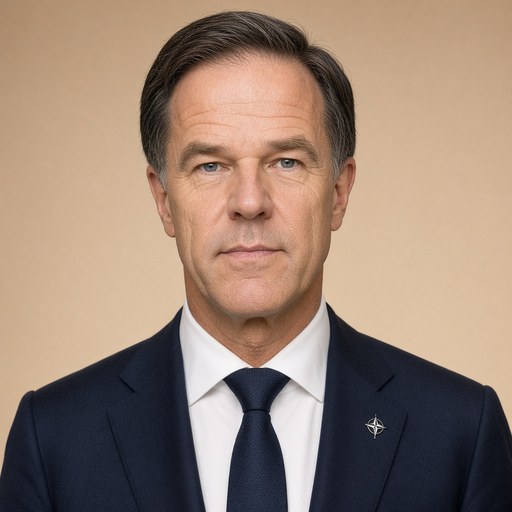
Speech by Prime Minister Rutte at the closing meeting of the sitting Senate
 Mark Rutte · Prime Minister of the Netherlands
- Context
- Rutte addressed the closing session of the Dutch Senate on 3 June 2019, paying tribute to departing members and outgoing Chair Ankie Broekers-Knol, whom he decorated with the Order of Orange-Nassau.
- Main themes
- Farewell to departing senators, tribute to Senate Chair Ankie Broekers-Knol, Senate's role as chambre de réflexion, institutional memory and experience, cabinet minority in Senate, parliamentary quality and substance, royal decoration for the Chair, change of guard in the Senate
- Duration
- ~6 min
- Words
- 758
- Sentences
- 41
- Readability
- 58
- Grade
- 9.7
- Syntax
- 2.99
- Vocabulary
- 2.14
Translated from Dutch
The broad sphere of national life a sentence belongs to. Every sentence has an Arena, so it is the denominator the other indices are read against.
Other41 sentences in 41 paragraphs
Thank you, Madam Chair, it is an honor to be present at this special meeting where so many beautiful words have been spoken.
And I have great admiration for the Herculean achievement you have just accomplished.
Today marks a change of the guard.
More than half of the members currently sitting in these benches will be leaving the Senate.
44 members, including you as Chair.
That is quite a significant loss.
I have been informed that more than 300 years of Senate experience will be leaving this building for the last time.
And of the ten longest-serving members, only one will remain.
That is no small matter.
It is bittersweet that so many veterans are departing from the Senate.
But the fact that they have been able to build such a long record of service in this house says a lot about the Senate.
Expertise, institutional memory, and experience are highly valued here.
And you can feel it in everything.
As someone with experience, I can say that debates here, even in the past four years, are conducted on substance, with mutual respect and a sense of style.
The Senate thus fulfills its unique role in our political system as a chambre de réflexion with distinction: with little political hyperventilation, a bit of distance from the whims of the day, and an eye for the broader perspective.
I find it admirable that your Chamber, Madam Chair, has managed to maintain its specific character and independent role even under increasing pressure from politicization and publicity.
That commands respect.
And I would like to express my great appreciation to the members of the Senate – also on behalf of my colleagues.
We have had special years behind us, with a minority or only a minimal majority for the cabinet in the Senate.
Our plans had to be substantiated with good arguments and defended here in debates.
Sometimes at the sharpest edge, but always based on substance.
Even in the new composition of the Senate, the cabinet – just like the previous one – does not have a majority, and we will therefore have to pull out all the stops again to find support for our plans.
I happen to know that you, Madam Chair, wholeheartedly welcome that situation because it benefits the quality of the parliamentary process.
So I suspect you can appreciate that the voter has facilitated that once again.
It is up to your successor to guide that exciting process smoothly.
As you have done with distinction in the past years.
As a referee in the debate, objective and unflappable, with a flexibility that allowed for an optimal exchange of arguments.
The role of Chair suited you from the very beginning, blessed as you are with a natural authority that even 74 autonomous senators accept without complaint.
In the beginning, your name recognition left something to be desired: Ferry Mingelen reportedly exclaimed in 2013 in despair: ‘Ankie, who is Ankie?’.
But before long, your authority extended far beyond the walls of this chamber, and the Volkskrant even declared you to be ‘a kind of Chair of the Netherlands.’
It shows once again: you cannot play the role of Chair, you are it.
And why you are such a self-evident Chair, there are countless explanations to be found.
But you could also sum it up in how you succinctly expressed it in an interview: ‘just being myself, hatsekidee.’
It may be somewhat unorthodox to put it that way, but it is essentially why you are so valued.
Knowledgeable, autonomous, and authentic, and moreover warm in personal contact.
I speak on behalf of everyone here when I say: Madam Chair, and today it may be for one time: dear Ankie, thank you so much for the many years as a senator and for your knowledgeable chairmanship since 2013.
As a figurehead of the Senate, you have contributed in every possible way to the proper functioning of the Senate, and we are all immensely grateful to you for that.
Your work has not gone unnoticed – not among colleagues, not in the media, and not at the palace either.
It is a great honor for me to inform you that it has pleased His Majesty the King to appoint you as a Knight in the Order of Orange-Nassau.
I would like to ask you to come forward so that I can drape the accompanying insignia around your neck.
And I know it is not customary in the Senate, but in this case, a big round of applause seems more than justified!
The original Dutch. The tags above are read on the English translation's sentences.
Dank u wel mevrouw de voorzitter, ik vind het een eer aanwezig te zijn op deze bijzondere bijeenkomst waarin al zoveel mooie woorden gesproken zijn.
En ik heb grote bewondering voor de herculische prestatie die u zojuist hebt geleverd.
Vandaag vindt er een wisseling van de wacht plaats.
Meer dan de helft van de leden die nu nog in deze bankjes zitten, zal de Eerste Kamer gaan verlaten.
44 leden, inclusief u als voorzitter.
Dat is een flinke aderlating.
Ik heb me laten vertellen dat straks meer dan 300 jaar aan Eerste Kamer-ervaring dit pand voor het laatst verlaat.
En van de tien langstzittende leden blijft er maar één over.
Dat is niet niks.
Het stemt weemoedig dat zoveel oudgedienden uit de senaat vertrekken.
Maar het feit dat zij überhaupt zo’n lange staat van dienst konden opbouwen in dit huis, zegt ook veel over de Eerste Kamer.
Deskundigheid, institutioneel geheugen en ervaring staan hier hoog in het vaandel.
En dat merk je aan alles.
Ik kan als ervaringsdeskundige zeggen dat debatten hier, ook in de afgelopen vier jaar, op de inhoud gevoerd worden, met wederzijds respect en gevoel voor stijl.
De Eerste Kamer vervult daarmee haar unieke rol in ons politieke bestel als chambre de réflexion met verve: met weinig politieke hyperventilatie, een beetje afstand tot de waan van de dag en oog voor het bredere perspectief.
Ik vind het bewonderenswaardig dat uw Kamer, mevrouw de voorzitter, ook onder toenemende druk van politisering en publiciteit, haar specifieke karakter en eigenstandige rol heeft weten te behouden.
Dat dwingt respect af.
En ik wil hier dan ook graag mijn grote waardering uitspreken naar de leden van de Eerste Kamer – ook namens mijn collega’s.
We hebben bijzondere jaren achter de rug, met een minderheid of slechts een minimale meerderheid voor het kabinet in de Eerste Kamer.
Onze plannen moesten we met goede argumenten onderbouwen en hier in debatten komen verdedigen.
Soms op het scherpst van de snede, maar altijd op basis van de inhoud.
Ook in de nieuwe samenstelling van de Eerste Kamer heeft het kabinet – net als het vorige - geen meerderheid, en zullen we dus weer alles uit de kast moeten halen om steun te vinden voor onze plannen.
Ik weet toevallig dat u, mevrouw de voorzitter, die situatie van harte toejuicht omdat het de kwaliteit van het parlementaire proces ten goede komt.
Dus ik vermoed dat u het kunt waarderen dat de kiezer daarin opnieuw gefaciliteerd heeft.
Het is aan uw opvolger om dat spannende proces in goede banen te leiden.
Zoals u dat in de afgelopen jaren met verve heeft gedaan.
Als scheidsrechter in het debat objectief en onverstoorbaar, met een souplesse die een optimale uitwisseling van argumenten mogelijk maakte.
De rol van voorzitter zat u van begin af aan als gegoten, gezegend als u bent met een natuurlijk gezag dat zelfs 74 autonome senatoren zonder morren accepteren.
In het begin liet uw naamsbekendheid nog wat te wensen over: zo zou Ferry Mingelen in 2013 in vertwijfeling hebben uitgeroepen: ‘Ankie, wie is Ankie?’.
Maar binnen de kortste keren strekte uw autoriteit zich uit tot ver voorbij de muren van deze zaal en riep de Volkskrant u zelfs uit tot ‘een soort voorzitter van Nederland.’
Het laat maar weer eens zien: voorzitter kun je niet spelen, dat bén je.
En waarom u nou zo’n vanzelfsprekende voorzitter bént, daar kun je legio verklaringen voor proberen te vinden.
Maar je kunt het ook houden op hoe u het zelf in een interview kernachtig verwoordde: ‘gewoon mezelf zijn, hatsekidee’.
Het is misschien wat onorthodox gesteld, maar het is in essentie wel waarom u zo gewaardeerd wordt.
Kundig, autonoom en authentiek, en bovendien warm in het persoonlijk contact.
Ik spreek namens iedereen hier als ik zeg: mevrouw de voorzitter, en vandaag mag het voor één keer: beste Ankie, ontzettend bedankt voor de vele jaren als senator en voor je kundige voorzitterschap sinds 2013.
Als boegbeeld van de Eerste Kamer heb je je op alle mogelijke manieren ingezet voor het goed functioneren van de senaat en daar zijn we je allemaal enorm dankbaar voor.
Je werk is niet onopgemerkt gebleven – niet onder collega’s, niet in de media, maar ook niet ten paleize.
Het is mij een grote eer je te mogen meedelen dat het Zijne Majesteit de Koning heeft behaagd je te benoemen tot Ridder in de Orde van Oranje-Nassau.
Ik wil je vragen naar voren te komen, zodat ik je de bijbehorende versierselen kan omhangen.
En ik weet dat het eigenlijk niet hoort in de senaat, maar in dit geval lijkt me een groot applaus meer dan gerechtvaardigd!