




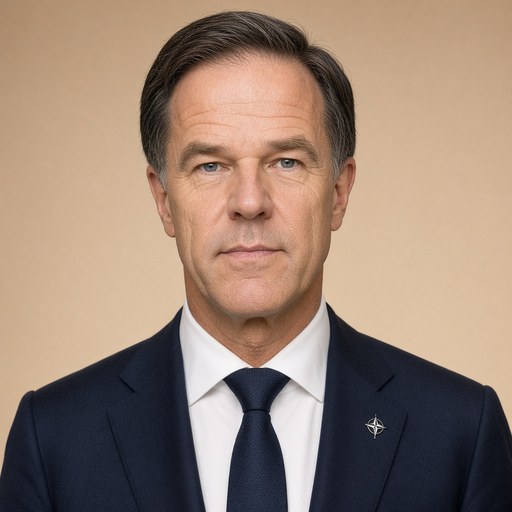
Speech by Prime Minister Rutte at the closing meeting of the sitting Senate and farewell to senators
 Mark Rutte · Prime Minister of the Netherlands
- Context
- Rutte addressed the Dutch Senate at the closing session to bid farewell to departing senators and reflect on years of cabinet-Senate cooperation.
- Main themes
- Farewell to departing senators, appreciation for the Senate's role, political craftsmanship and wisdom, cooperation and constructive debate, polarization concerns, coronavirus crisis legacy, pension reform, Environmental Act, democratic dialogue, strength of institutions
- Duration
- ~6 min
- Words
- 761
- Sentences
- 59
- Readability
- 67
- Grade
- 7.1
- Syntax
- 2.61
- Vocabulary
- 2.06
Translated from Dutch
The broad sphere of national life a sentence belongs to. Every sentence has an Arena, so it is the denominator the other indices are read against.
Other59 sentences in 27 paragraphs
Thank you, Mr. Chairman.
And thank you for the opportunity to say a few words here today. For me, this is now the fourth time I have had the privilege to speak on this occasion, but never before in this chamber.
It is clear that the architects have done their utmost to incorporate familiar elements.
The layout of the chamber.
The shared benches.
The brass lamps.
Yet it still looks very different.
All the more impressive is that this place also breathes the characteristic calm, tradition, and political craftsmanship that is so typical of the Senate. Although it did not help that during the past period so many Senators changed factions. And that those factions then changed names, which led to many mistakes from the cabinet.
So my request to those who continue would be: please stay in your own faction, then it remains clear!
But that wisdom and political craftsmanship can only be radiated if the people who are here do it themselves. The ultimate proof that the strength of this institution lies in the people. In the accumulated knowledge and skills of all the senators together. And that is of great value to our political system. And today we have heard another wonderful example of that wisdom: prevent a ripple, keep it simple.
A healthy distance from the whims of the day, combined with the mindset to do what is necessary in the general interest. More than in other political institutions, that is what characterizes senators, and what characterizes the Senate as a whole.
On behalf of my colleagues in the cabinet, I would like to express my great appreciation for that once again today, as so many members of the House are saying goodbye. The chairman has already spoken beautiful words about each of you, which I wholeheartedly endorse.
I will say right away: the past years have not always been easy. Not for you and not for the cabinet. It covers a period that coincided entirely with the coronavirus crisis. And until the very end, complicated dossiers were presented to you.
Moreover, you did not always agree with the cabinet. For us, this meant that we had to substantiate our plans with good arguments and sometimes defend them here at the sharpest edge.
No matter how difficult this was, I have experienced each time that the debate was constructive and focused on the content. Always with the aim of reaching the best decision for the Netherlands.
There were red threads to be found, for example in the consideration of the Environmental Act and pensions.
In this, I saw a willingness to cooperate. A willingness to find common ground, despite the differences. That was there and that is still there. The debate on pension reform last week is yet another proof of that.
I do not need to explain to you how important that willingness to cooperate is. Last December, the Social and Cultural Planning Office wrote that three-quarters of the Dutch people are concerned about polarization. Not only in their own lives but especially in politics. Those are conclusions that we should ponder over.
In that light, I was pleased with the outcomes of the statements that your chamber organized last year on Open Monument Day. Visitors to Open Monument Day could indicate how they felt about the Senate that day.
I would like to recall one, namely the one that received the most responses:
"The Senate could be abolished." A bold statement.
Fortunately, you undoubtedly know what the result was. The majority of visitors were against it.
There is no better proof that your work is seen and appreciated. It shows how much value is placed on your judgment. On your craftsmanship. On the important role of this house in our political system. And I can only say: that is completely justified.
Ladies and gentlemen, thank you very much for your commitment and involvement over the past years. I wish everyone who is here today for the last time as a member of the House all the best for the future.
And to the members who are staying or will fill the empty seats after today, I would like to say: the cabinet looks forward to the cooperation. I already know that there will be moments when it will be close. When we will have to pull out all the stops to convince you. And I look forward to that as well.
Because the cement of every healthy democracy is and remains dialogue. And that is what the Senate stands for.
Chairman, thank you very much.
The original Dutch. The tags above are read on the English translation's sentences.
Dank u wel meneer de voorzitter.
En dank voor de gelegenheid hier vandaag een paar woorden te zeggen. Voor mij is dit nu de 4e keer dat ik bij deze gelegenheid iets heb mogen zeggen, maar nog nooit in deze zaal.
Het is duidelijk dat de architecten hun uiterste best hebben gedaan om vertrouwde elementen terug te laten komen.
De indeling van de zaal.
De gedeelde bankjes.
De messing lampjes.
Maar toch ziet het er toch heel anders uit.
Des te indrukwekkender is het, dat ook deze plek in alles de voor de Eerste Kamer zo kenmerkende rust, traditie en politiek vakmanschap ademt. Al hielp het niet dat in de afgelopen periode zoveel Eerste Kamerleden wisselden van fractie. En dat die fractie vervolgens van naam wisselde, waardoor we vanuit het kabinet vaak fouten hebben gemaakt.
Dus mijn verzoek zou zijn aan degene die doorgaan: blijf alsjeblieft in je eigen fractie, dan blijft het overzichtelijk!
Maar die wijsheid en dat politieke vakmanschap uitstralen, dat kan alleen maar als de mensen die hier zitten, dat zelf doen. Het ultieme bewijs dat de kracht van dit instituut zit in de mensen. In de opgetelde kennis en kunde van alle senatoren samen. En dat is van grote waarde voor ons politieke bestel. En van die wijsheid hebben we vandaag weer een prachtig voorbeeld gehoord: voorkom een rimpel, houd het simpel.
Een gezonde afstand tot de waan van de dag, gecombineerd met de instelling te doen wat nodig is in het algemeen belang. Nog meer dan in de andere politieke instituties, is dat wat senatoren, en wat de Eerste Kamer als geheel, typeert.
Ook namens mijn collega’s in het kabinet wil ik daarvoor vandaag nog eens extra mijn grote waardering uitspreken, nu zoveel Kamerleden afscheid nemen. De voorzitter heeft over ieder van u al prachtige woorden gesproken, waar ik mij natuurlijk van harte bij aansluit.
Ik zeg meteen: de afgelopen jaren zijn niet altijd makkelijk geweest. Niet voor u en niet voor het kabinet. Het beslaat een periode die helemaal samenviel met coronacrisis.En tot op het laatst kwamen er ingewikkelde dossiers op u af.
Daarbij was u het lang niet altijd met het kabinet eens. Voor ons betekende dit dat we onze plannen steeds met goede argumenten moesten onderbouwen en ze hier soms op het scherpst van de snede moesten verdedigen.
Hoe lastig dit ook was, ik heb elke keer ervaren dat het debat constructief en op de inhoud werd gevoerd. Altijd met het doel tot het beste besluit voor Nederland te komen.
Daar waren rode draden in te vinden, bijvoorbeeld bij de behandeling van de Omgevingswet en de pensioenen.
Daarbij zag ik een bereidheid tot samenwerking. Een bereidheid elkaar te vinden, over de verschillen heen. Die was er en die is er. Het debat over de pensioenhervorming vorige week is daarvoor het zoveelste bewijs.
Ik hoef u niet uit te leggen hoe belangrijk die bereidheid tot samenwerking is. Afgelopen december schreef het Sociaal Cultureel Planbureau dat driekwart van de Nederlanders zich zorgen maakt over polarisatie. Niet alleen in hun eigen leven, maar vooral ook in de politiek. Dat zijn conclusies waar we ons best over achter de oren mogen krabben.
In dat licht stemden de uitkomsten van de stellingen die uw Kamer vorig jaar op Open Monumentendag organiseerde, mij gelukkig. Bezoekers van de Open Monumentendag konden die dag aangeven hoe ze over de Eerste Kamer dachten.
Ik breng er graag 1 in herinnering, namelijk die waarop het meest werd gereageerd:
‘De Eerste Kamer kan beter worden afgeschaft’. Een gewaagde stelling.
Gelukkig weet u ongetwijfeld wat de uitslag was. Het merendeel van de bezoekers was tegen.
Een beter bewijs dat uw werk gezien en gewaardeerd wordt, is er niet. Het laat zien hoeveel waarde er wordt gehecht aan uw oordeel. Aan uw vakmanschap. Aan de belangrijke rol van dit huis in ons politieke bestel. En ik kan alleen maar zeggen: dat is volkomen terecht.
Dames en heren, heel veel dank voor uw inzet en betrokkenheid in de afgelopen jaren. Ik wens iedereen die hier vandaag voor het laatst als Kamerlid aanwezig is, het allerbeste toe voor de toekomst.
En tegen de leden die blijven of na vandaag de lege plaatsen op gaan vullen, wil ik graag zeggen: het kabinet ziet uit naar de samenwerking. Ik weet nu al dat er momenten zullen komen dat het erom zal spannen. Dat we alles uit de kast zullen moeten halen om u te overtuigen. En ook daar kijk ik naar uit.
Want het cement van elke gezonde democratie, is en blijft de dialoog. En daar staat de Eerste Kamer voor.
Voorzitter, dank u wel.