




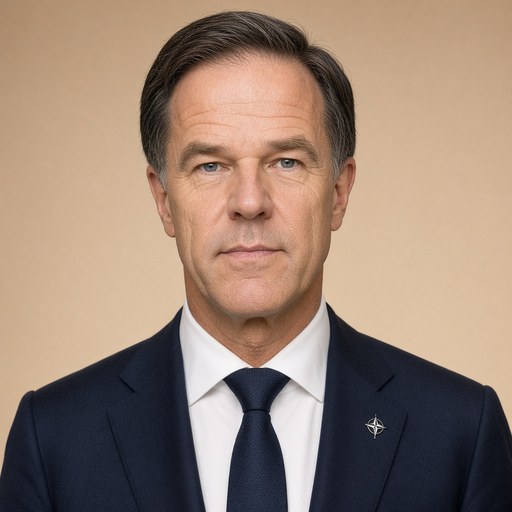
Speech by Prime Minister Rutte on the resignation of the cabinet
 Mark Rutte · Prime Minister of the Netherlands
- Context
- Rutte addressed the Dutch House of Representatives on 9 July 2023 to announce his cabinet's resignation due to irreconcilable differences over migration policy.
- Main themes
- Cabinet resignation, migration policy disagreements, coalition collapse, early elections, caretaker government responsibilities, Rutte's political retirement, support for Ukraine, childcare benefits scandal, Groningen gas extraction, nitrogen and agriculture policy, housing and climate challenges
- Duration
- ~5 min
- Words
- 544
- Sentences
- 48
- Readability
- 58
- Grade
- 7.9
- Syntax
- 2.42
- Vocabulary
- 2.03
Translated from Dutch
The broad sphere of national life a sentence belongs to. Every sentence has an Arena, so it is the denominator the other indices are read against.
Other48 sentences in 18 paragraphs
Madam Chair,
I would like to make a brief statement about the political situation we find ourselves in.
Last Friday, as is known, I offered the King the resignation of the cabinet. That decision was unanimous, but it has nevertheless weighed heavily on all of us. And that certainly applies to me personally.
In this situation, the cabinet can decide to call for elections. It is good practice for this to happen after the House has been given the opportunity to express its views on the matter.
The coalition agreement articulates the ambition to gain more control over migration. Migration is a significant and important issue in the Netherlands. But it is also a topic over which opinions differ. We see that in the country. We see that in this House. And we also saw it in the cabinet.
In recent months, despite the differing opinions, all parties have worked very hard on proposals to realize that ambition in the coalition agreement. All parties have gone to great lengths.
But sometimes the will to come to a joint solution, no matter how strong, is unfortunately not enough. Then there is no other option but to end the collaboration. That conclusion was drawn by the four parties last Friday with heavy hearts.
I say "with heavy hearts," because despite the sometimes significant differences among us, this cabinet has been able to achieve results. Major investments in education. The modernization of the labor market. The large climate package from this spring. The future of pensions and the purchasing power package from last autumn.
It is regrettable that we will not be moving forward as a cabinet. And such a situation never arises at a good time. Not now either.
We face major questions in the Netherlands. Nitrogen. The future of agriculture and nature. But also the housing market, the climate, and healthcare. These are themes that demand solutions, not delays.
The cabinet has the responsibility to do what is necessary for the Netherlands. That is also what the King has asked us to do now.
Of course, the cabinet should exercise restraint when it comes to new policies and legislation. The House determines which proposals it still wishes to address.
But there are always urgent issues that require decisions now. The cabinet will therefore, together with the House, strive to implement the most sensible policies possible in the coming months.
This certainly applies to our support for Ukraine in their fight against Russian aggression, the further handling of both the childcare benefits scandal and the consequences of natural gas extraction in Groningen. But it is now, of course, primarily up to the House.
In recent days, there has been speculation about what would motivate me. And the only answer is: the Netherlands. My position in this is completely subordinate.
Yesterday morning, I made the decision that I will not be available again as the leader of the VVD. Upon the formation of a new cabinet after the elections, I will leave politics. I informed my party chair and the group leaders of that yesterday afternoon.
That is my personal consideration, which stands apart from the developments of the past weeks. But I wanted to share that with you at the beginning of this debate.
Thank you.
The original Dutch. The tags above are read on the English translation's sentences.
Mevrouw de voorzitter,
Ik leg graag een korte verklaring af over de politieke situatie waarin wij ons bevinden.
Afgelopen vrijdag heb ik, zoals bekend, de Koning het ontslag aangeboden van het kabinet. Die beslissing was unaniem, maar is ons desondanks allemaal zwaar gevallen. En dat geldt zeker ook voor mij persoonlijk.
In deze situatie kan het kabinet besluiten verkiezingen uit te schrijven. Het is goed gebruik dat dit gebeurt nadat de Kamer in de gelegenheid is gesteld zich hierover uit te spreken.
In het coalitieakkoord is de ambitie verwoord meer grip op migratie te krijgen. Migratie is een groot en belangrijk onderwerp in Nederland. Maar ook een onderwerp waarover de meningen uiteenlopen. Dat zien we in het land. Dat zien we in deze Kamer. En we zagen het ook in het kabinet.
De afgelopen maanden is er, ondanks de verschillende opvattingen, door alle partijen heel hard gewerkt aan voorstellen om die ambitie in het coalitieakkoord te verwezenlijken. Daarbij zijn alle partijen tot het uiterste gegaan.
Maar soms is de wil om er samen uit te komen, hoe sterk ook, helaas niet voldoende. Dan blijft er geen andere mogelijkheid over dan de samenwerking te beëindigen. Die conclusie hebben de 4 partijen afgelopen vrijdag met pijn in het hart getrokken.
Ik zeg ‘met pijn in het hart’, want ondanks de soms grote onderlinge verschillen, heeft dit kabinet resultaten kunnen boeken. Grote investeringen in het onderwijs. De modernisering van de arbeidsmarkt. Het grote klimaatpakket van dit voorjaar. De toekomst van de pensioenen en het koopkrachtpakket van vorig najaar.
Het is betreurenswaardig dat we als kabinet niet verder gaan. En zo’n situatie komt nooit op een goed moment. Ook nu niet.
We staan in Nederland voor grote vraagstukken. Stikstof. De toekomst van landbouw en natuur. Maar ook de woningmarkt, het klimaat en de zorg. Het zijn thema’s die om oplossingen vragen, niet om uitstel.
Het kabinet heeft de verantwoordelijkheid om te doen wat nodig is voor Nederland. Dat is ook wat de Koning ons nu gevraagd heeft.
Uiteraard past het kabinet terughoudendheid als het gaat om nieuw beleid en wetgeving. De Kamer bepaalt welke voorstellen zij nog wil behandelen.
Maar er zijn altijd urgente thema’s die nu om besluiten vragen. Het kabinet zal dan ook, samen met de Kamer, proberen ook de komende maanden zo verstandig mogelijk beleid te voeren.
Dat geldt in ieder geval voor onze steun aan Oekraïne in hun strijd tegen de Russische agressie, de verdere aanpak in zowel het toeslagenschandaal en de gevolgen van de aardgaswinning in Groningen. Maar het is nu uiteraard allereerst aan de Kamer.
Er is de afgelopen dagen gespeculeerd over wat mij zou motiveren. En het enige antwoord is: Nederland. Mijn positie daarin is volstrekt ondergeschikt.
Gisterochtend heb ik het besluit genomen dat ik niet opnieuw beschikbaar ben als lijsttrekker van de VVD. Bij het aantreden na de verkiezingen van een nieuw kabinet zal ik de politiek verlaten. Ik heb gistermiddag mijn partijvoorzitter en de fractievoorzitters daarvan op de hoogte gesteld.
Dat is mijn persoonlijke afweging die los staat van de ontwikkelingen de afgelopen weken. Maar ik wilde u dat wel aan het begin van dit debat vertellen.
Dank u wel.