




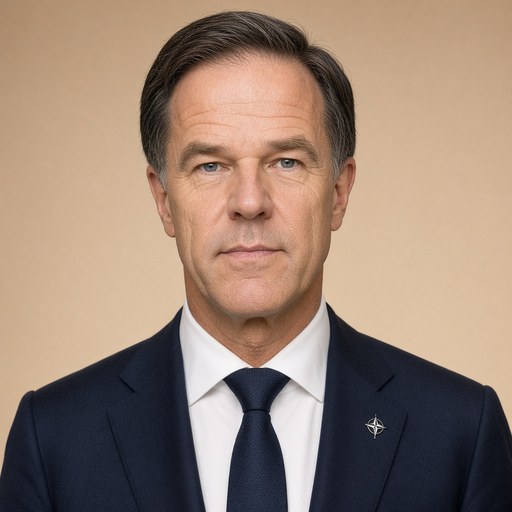
Speech by Prime Minister Rutte at the commemoration of Dick Dolman, The Hague
 Mark Rutte · Prime Minister of the Netherlands
- Context
- Rutte addressed a commemorative gathering in The Hague on 30 January 2019 to honour former Dutch Speaker of the House Dick Dolman.
- Main themes
- Commemoration of Dick Dolman, parliamentary leadership, Speaker of the House role, Dutch democracy, political authority, 1980s Dutch politics, public service, democratic institutions, humor and pragmatism in politics, Council of State contributions
- Duration
- ~5 min
- Words
- 576
- Sentences
- 38
- Readability
- 63
- Grade
- 8.2
- Syntax
- 2.82
- Vocabulary
- 2.36
Translated from Dutch
The broad sphere of national life a sentence belongs to. Every sentence has an Arena, so it is the denominator the other indices are read against.
Other38 sentences in 18 paragraphs
Madam Chair,
Dick Dolman was the Speaker of the House during my youth. He was indeed one of the political figureheads in the 1980s - the decade in which I became politically aware.
Politically, it was a completely different time with major debates about cruise missiles and cuts to civil servant salaries. For ten years, he led that debate with a steady hand. And I still vividly remember how he intervened resolutely when Member of Parliament Marcel van Dam used the word 'lie.'
In the end, Dolman allowed the formulation 'the opposite of the truth.' In that respect as well, it was a completely different time.
Speaker Dolman radiated immense authority, even though he was not yet a political veteran when he took up the speaker's gavel.
Or as the Algemeen Dagblad described it at the time:
'Richly young for the fulfillment of a position that must be seen as the crowning achievement of a long political career.'
But he certainly did not betray the trust of the House. Already in 1980, after a year as Speaker, NRC Handelsblad labeled him the 'undisputed discussion leader of Dutch democracy.' In the years that followed, he further grew into an authoritative and defining Speaker of the House. He was widely regarded as one of the icons of the post-war period.
What makes someone a good Speaker of the House is difficult to pinpoint precisely. And it is certainly not for me to judge that, even in retrospect. But Dolman certainly exuded authority and was not afraid to intervene. Whether it was a fellow Member of Parliament or a minister - he kept them literally and figuratively short. But he also certainly left room for debate and humor - or as he called it: a little joke. With that style - businesslike, but certainly not colorless - Dolman left his mark on the 1980s.
In hindsight, he could relativize his role firmly. In a recent interview with Gerry van der List, for a book about Speakers of the House, he said dryly:
'It is not a physically demanding job. You don't have to make important decisions, and after three days you can rest again.'
However, that relativizing side did not mean that he underestimated the weight of the position. He was too driven and too motivated to do the job really well for that. According to Dolman, the Speakership was the highest democratic office, and the Speaker was the one who represented the Dutch people 'squared.'
In that role, he flourished, and of course, he was disappointed when in 1989 the fourth re-election passed him by. But he quickly reconciled with it, easily distanced himself from the plush, and got to work behind the scenes.
At the Council of State, he delved deeply into the substance, particularly in the field of spatial planning. 'I really enjoyed it there,' he later said about it, 'and I got to know the Netherlands better.'
In all the roles that Dick Dolman fulfilled in his long and rich career, he operated straightforwardly, with a healthy pragmatism and a unique sense of humor. As a civil servant, Member of Parliament, Speaker of the House, and Member of the Council of State, he made a significant contribution to our democratic system throughout his life.
For that, we are grateful to him. And today we remember him with great respect.
On behalf of the Cabinet, I wish his family and other survivors much strength.
Thank you.
The original Dutch. The tags above are read on the English translation's sentences.
Mevrouw de Voorzitter,
Dick Dolman was de Kamervoorzitter van mijn jeugd. Hij was immers 1 van de politieke boegbeelden in de jaren '80 - het decennium waarin ik politiek bewust werd.
Politiek een totaal andere tijd met grote debatten over kruisraketten en korten op ambtenarensalarissen. 10 jaar lang leidde hij dat debat met vaste hand in goede banen. En ik herinner me nog levendig hoe hij resoluut ingreep toen Kamerlid Marcel van Dam het woord 'leugen' gebruikte.
Uiteindelijk stond Dolman de formulering 'het tegendeel van de waarheid' toe. Ook in dat opzicht was het een totaal andere tijd.
Kamervoorzitter Dolman straalde een enorm gezag uit, terwijl hij nog geen politieke veteraan was toen hij de voorzittershamer ter hand nam.
Of zoals het Algemeen Dagblad het toentertijd omschreef:
'Rijkelijk jong voor de vervulling van een baan die als de bekroning van een langjarige politieke carrière moet worden gezien.'
Maar hij beschaamde het vertrouwen van de Kamer zeker niet. Al in 1980, na een jaar voorzitterschap, betitelde NRC Handelsblad hem als de 'onbetwiste gespreksleider van de Nederlandse democratie.' In de jaren erna groeide hij verder uit tot een gezaghebbende en gezichtsbepalende Kamervoorzitter. Alom gerekend tot één van de iconen van na de oorlog.
Wat iemand tot een goede Kamervoorzitter maakt, is lastig precies te duiden. En het is al helemaal niet aan mij om daar over te oordelen, ook niet in retrospectief. Maar Dolman straalde in ieder geval autoriteit uit en was niet bang om in te grijpen. Of het nou een collega-Kamerlid was of een minister - hij hield ze letterlijk en figuurlijk kort. Maar hij liet ook zeker ruimte voor debat en humor - of zoals hij het zelf noemde: een gebbetje. Met die stijl - zakelijk, maar zeker niet kleurloos - heeft Dolman zijn stempel gedrukt op de jaren '80.
Achteraf kon hij zijn rol stevig relativeren. In een recent interview met Gerry van der List, voor een boek over Kamervoorzitters, zei hij onderkoeld:
'Het is fysiek geen zware baan. Je hoeft geen belangrijke beslissingen te nemen en na drie dagen kun je weer uitrusten.'
Die relativerende kant betekende echter niet dat hij het gewicht van de functie onderschatte. Daarvoor was hij ook te gedreven en te gemotiveerd om het werk echt goed te doen. Volgens Dolman was het Kamervoorzitterschap het hoogste democratische ambt en de voorzitter degene die het Nederlandse volk 'in het kwadraat' vertegenwoordigt.
In die rol floreerde hij en natuurlijk was hij teleurgesteld toen in 1989 de 4e herverkiezing aan hem voorbij ging. Maar hij verzoende zich er snel mee, nam makkelijk afstand van het pluche en ging achter de schermen aan de slag.
Bij de Raad van State dook hij diep de inhoud in, met name op het gebied van de ruimtelijke ordening. 'Ik had het daar erg naar mijn zin', zei hij daar later over, 'en heb er Nederland beter leren kennen'.
In alle functies die Dick Dolman in zijn lange en rijke carrière heeft vervuld, opereerde hij recht door zee, met een gezonde nuchterheid en een geheel eigen gevoel voor humor. Als ambtenaar, Tweede Kamerlid, Kamervoorzitter en Lid van de Raad van State heeft hij gedurende zijn leven een grote bijdrage geleverd aan ons democratisch bestel.
Daarvoor zijn we hem dankbaar. En vandaag herdenken we hem met groot respect.
Namens het kabinet wens ik zijn familie en andere nabestaanden veel sterkte toe.
Dank u wel.