




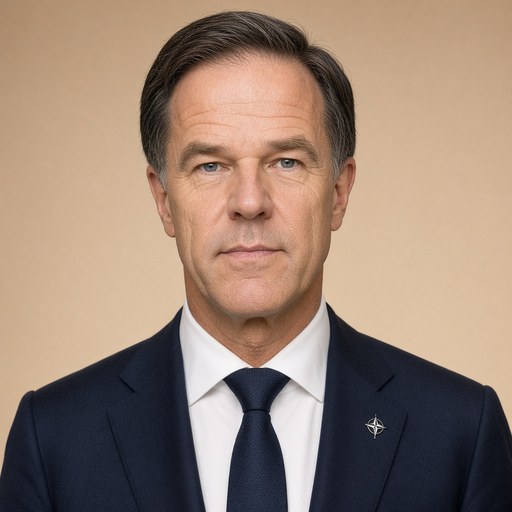
Speech by Prime Minister Mark Rutte at the meeting of Dutchbat-III veterans
 Mark Rutte · Prime Minister of the Netherlands
- Context
- Rutte addressed Dutchbat III veterans at their reunion meeting on 17 June 2022, issuing a formal government apology for failures during and after the Srebrenica mission.
- Main themes
- Srebrenica genocide, Dutchbat III veterans recognition, Dutch government apology, failure of international community, war crimes and accountability, trauma and lack of aftercare, Russian aggression in Ukraine, camaraderie and healing, Dutch state responsibility
- Duration
- ~7 min
- Words
- 852
- Sentences
- 57
- Readability
- 56
- Grade
- 9.0
- Syntax
- 2.73
- Vocabulary
- 2.11
Translated from Dutch
The broad sphere of national life a sentence belongs to. Every sentence has an Arena, so it is the denominator the other indices are read against.
Other57 sentences in 25 paragraphs
Veterans – women and men of Dutchbat III,
Ladies and gentlemen,
One sentence keeps echoing in my mind since I watched that impressive three-part documentary about Dutchbat III. "Where was the world?"
A question that encompasses everything. Everything you experienced back then and what still feels like yesterday for many Dutchbatters 27 years later. And for your families, of course – your home front, which is so incredibly important.
It is the same feeling that was expressed during the meeting I had in October 2015 with a significant number of you in Amersfoort. Those conversations are etched in my memory. Especially that maddening helplessness, that you could not do what you once became a soldier for – to protect people, to defend our democratic rule of law. That feeling of being cut off from the outside world, abandoned by everything and everyone. And also the easy accusations afterwards, from critics who themselves were safe and sound in the secure Netherlands.
So yes, I understand that question very well: where was the world? And inevitably, we also think today: where do we stand now, as the population of Ukraine suffers under brutal Russian aggression. How painful it is that there is war again on our continent and that war crimes are being committed just a few hours' flight from here?
And that thought confronts us with the dreadful fate of the more than 8,000 boys and men who were coldly murdered after the fall of Srebrenica. Where was the international community when they needed protection?
The answer remains heartbreaking and brutally harsh. The world failed them in a terrible way.
For more than 8,000 boys and men, there was no protection, no safe haven. And we in the Netherlands are forever connected to them through history.
Even today, the memory of the victims is with us. Their families are in our thoughts today. And that will remain so.
(…)
Today you are here as Dutchbatters among yourselves, to catch up, to recall memories, and to support each other. That is not only good and valuable, it is also desperately needed.
Of course, each of you has your own memories, experiences, and ways of processing. But for many veterans, Srebrenica is still not a closed chapter.
The lack of recognition is still felt every day. Recognition for the fact that the mandate, material, and military support during the mission fell short. That you were sent out with a mission that turned out to be unfeasible along the way. While at one point, even the most basic needs were lacking in the compound.
But also a lack of recognition and appreciation after the mission. Upon returning home, there was insufficient aftercare. There was too little understanding of the impossible position of Dutchbat III and the heart-wrenching choices you often had to make in the chaos of the moment, often in a split second. And there was not enough support from the political and military leadership when a rain of unjust criticism soon descended on Dutchbat from all corners. Not everything went flawlessly; that is simply not possible.
But there is and has been only one party guilty of the fall of the Srebrenica enclave and the genocide that followed: the Bosnian Serbs and not Dutchbat III.
The cabinet acknowledges that feeling of lack of recognition and wants to be clear about it today. Tangibly, with a sum for every Dutchbat III veteran and with the awarding of the Honorary Decoration for Merit.
But also with words, with this statement. Because almost 27 years later, some words still have not been spoken.
It is true, and has often been said, that the Srebrenica mission took place under a UN mandate. But that does not diminish the special responsibility of the Dutch state for the circumstances under which you were deployed, for the reception after your return, and for the lack of support when Dutchbat III was unjustly placed in the dock in public perception.
Today, on behalf of the Dutch government, I apologize to all women and men of Dutchbat III. To you and to those who are not here today. With the utmost appreciation and respect for the way Dutchbat III has always tried to do the right thing under difficult circumstances, even when that was no longer possible.
Veterans, ladies and gentlemen,
There were certainly two things that were not lacking during and after your mission.
Firstly, the spirit of camaraderie and mutual solidarity, which is also tangible and palpable today. You understand each other better than anyone else.
And secondly, there has always been that deep-seated involvement with the victims and their families. With numerous initiatives and testimonies, you show: Srebrenica is not a closed book. The pain and the difficult memories are not just gone. But by facing the past together, by giving words to everything that has happened and also to what has been left undone, we come step by step closer to healing, closer to each other, and closer to the victims and their families.
Let us underline that today with a minute of silence for the dead of Srebrenica.
The original Dutch. The tags above are read on the English translation's sentences.
Veteranen – vrouwen en mannen van Dutchbat III,
Dames en heren,
1 zin blijft maar door mijn hoofd malen sinds ik die indrukwekkende driedelige documentaire over Dutchbat III heb gezien. ‘Waar was de wereld?’
Een vraag waar alles in zit. Alles wat jullie toen mee hebben gemaakt en wat voor veel Dutchbatters 27 jaar later nog steeds voelt als de dag van gisteren. En voor jullie gezinnen en families natuurlijk – jullie thuisfront, dat zo ongelooflijk belangrijk is.
Het is hetzelfde gevoel dat sprak uit de ontmoeting die ik in oktober 2015 met een flink aantal van jullie mocht hebben in Amersfoort. Die gesprekken staan in mijn geheugen gegrift. Vooral die gekmakende machteloosheid, dat je niet hebt kunnen doen waarvoor je ooit militair bent geworden – mensen beschermen, onze democratische rechtstaat verdedigen. Dat gevoel afgesneden te zijn van de buitenwereld, door alles en iedereen in de steek gelaten. En ook de gemakkelijke verwijten achteraf, van critici die zelf hoog en droog in het veilige Nederland zaten.
Dus ja, ik begrijp die vraag heel goed: waar was de wereld? En onwillekeurig denken we vandaag natuurlijk ook: waar staan wij nu, nu de bevolking van Oekraïne lijdt onder de brute Russische agressie. Hoe pijnlijk is het dat het weer oorlog is op ons continent en dat er opnieuw oorlogsmisdaden worden gepleegd op een paar uur vliegen van hier?
En die gedachte confronteert ons met het afschuwelijke lot van de ruim 8000 jongens en mannen die na de val van Srebrenica in koelen bloede werden vermoord. Waar was de internationale gemeenschap toen zij bescherming nodig hadden?
Het antwoord blijft schrijnend en snoeihard. De wereld liet het op een verschrikkelijke manier afweten.
Voor ruim 8000 jongens en mannen was er geen bescherming, geen veilig heenkomen. En wij in Nederland zijn door de geschiedenis voor altijd met hen verbonden.
Ook vandaag is de nagedachtenis aan de slachtoffers bij ons. Hun families zijn vandaag in gedachten bij ons. En dat blijft zo.
(…)
Vandaag zijn jullie hier als Dutchbatters onder elkaar, om bij te praten, herinneringen op te halen en elkaar te steunen. Dat is niet alleen goed en waardevol, het is ook keihard nodig.
Natuurlijk, ieder van jullie heeft zijn of haar eigen herinneringen, ervaringen en manier van verwerken. Maar voor heel veel veteranen is Srebrenica nog altijd geen voltooid verleden tijd.
Het gebrek aan erkenning wordt nog elke dag gevoeld. Erkenning voor het feit dat het mandaat, materieel en de militaire support tijdens de uitzending tekortschoten. Dat jullie op pad werden gestuurd met een opdracht die gaandeweg onuitvoerbaar bleek. Terwijl in de compound op een zeker moment zelfs aan de meest elementaire levensbehoeften tekort was.
Maar ook een gebrek aan erkenning en waardering na de uitzending. Thuisgekomen was er onvoldoende nazorg. Er was te weinig begrip voor de onmogelijke positie van Dutchbat III en de hartverscheurende keuzes die jullie in de chaos van het moment vaak in een split second moesten maken. En er was niet genoeg steun vanuit de politiek en defensietop, toen vanuit allerlei hoeken en gaten al snel een regen van onterechte kritiek op Dutchbat neerdaalde. Niet alles is foutloos gegaan, dat kan ook helemaal niet.
Maar er was en is maar 1 partij schuldig aan de val van de enclave Srebrenica en de genocide die daar op volgde: de Bosnische Serviërs en niet Dutchbat III.
Het kabinet rekent zich dat gevoel van gebrek aan erkenning aan en wil daar vandaag duidelijk over zijn. Tastbaar, met een bedrag voor elke Dutchbat III veteraan en met de uitreiking van het Ereteken voor Verdienste.
Maar ook met woorden, met deze verklaring. Want bijna 27 jaar na dato zijn sommige woorden nog altijd niet uitgesproken.
Het is waar, en ook al vaak gezegd, dat de Srebrenica-missie plaatsvond onder een VN-mandaat. Maar dat doet niets af aan de speciale verantwoordelijkheid van de Nederlandse staat voor de omstandigheden waaronder jullie werden uitgezonden, voor de opvang na terugkeer en voor het gebrek aan steun toen Dutchbat III in de beeldvorming onterecht in het beklaagdenbankje terecht kwam.
Vandaag maak ik namens de Nederlandse regering excuses aan alle vrouwen en mannen van Dutchbat III. Aan jullie en aan de mensen die er vandaag niet bij zijn. Met de grootst mogelijke waardering en respect voor de manier waarop Dutchbat III onder moeilijke omstandigheden steeds heeft geprobeerd het goede te doen, zelfs toen dat eigenlijk niet meer ging.
Veteranen, dames en heren,
Aan 2 dingen heeft het tijdens en na jullie uitzending zeker niet ontbroken.
Ten 1e aan de geest van kameraadschap en onderlinge solidariteit, die ook vandaag weer tastbaar en voelbaar is. Jullie begrijpen elkaar beter dan wie dan ook.
En ten 2e is er altijd die diepgevoelde betrokkenheid bij de slachtoffers en hun families. Met tal van initiatieven en getuigenissen laten jullie zien: Srebrenica is geen gesloten boek. De pijn en de moeilijke herinneringen zijn niet zomaar weg. Maar door het verleden gezamenlijk onder ogen te zien, door woorden te geven aan alles wat er is gebeurd en ook nagelaten, komen we stap voor stap dichter bij heling, dichter bij elkaar en +dichter bij de slachtoffers en hun families.
Laat ons dat vandaag onderstrepen met een minuut stilte voor de doden van Srebrenica.