




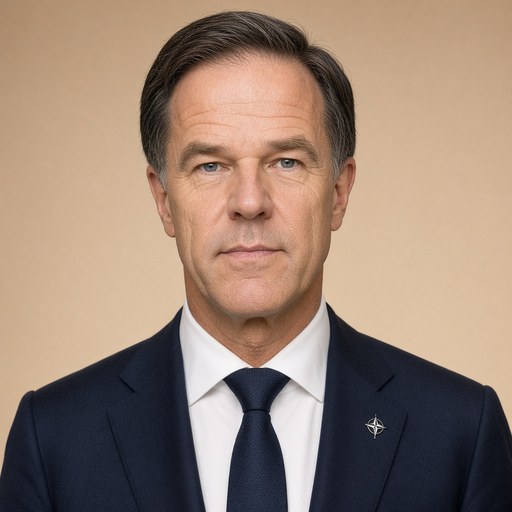
Speech by Prime Minister Mark Rutte at the presentation of the book Great Ideals, Narrow Margins
 Mark Rutte · Prime Minister of the Netherlands
- Context
- Rutte addressed guests at the presentation of a book on Dutch parliamentary history, praising the CPG and reflecting on 1970s politics on 31 August 2022.
- Main themes
- Dutch parliamentary history, the book 'Great Ideals, Narrow Margins', 1970s political figures, polarization and party renewal, historical parallels to current crises, oil crisis and inflation, social unrest and protest, cabinet histories, CPG contributions
- Duration
- ~6 min
- Words
- 690
- Sentences
- 47
- Readability
- 61
- Grade
- 8.4
- Syntax
- 2.67
- Vocabulary
- 2.14
Translated from Dutch
The broad sphere of national life a sentence belongs to. Every sentence has an Arena, so it is the denominator the other indices are read against.
Other47 sentences in 26 paragraphs
Dear Thom,
Dear Carla,
Dearest Hans and Jan, it’s great to have you here,
Ladies and gentlemen,
As a lover of parliamentary history, I would like to first and foremost sincerely thank you and all CPG members for this beautiful book. You have succeeded once again. And in the best tradition of the series Parliamentary History of the Netherlands, it has become a substantial book once more. But no one can complain about that with 6 cabinets in such 650 pages. After all, that’s just a little over 100 pages on average per cabinet.
I admit, that seems a bit on the generous side for Biesheuvel 2. But I believe you could fill an entire shelf just on the Den Uyl cabinet. So, kudos for this achievement, which demonstrates self-restraint.
Of course, I can say little about the content yet, but I am very curious about it, as this book covers a period I have always found fascinating. And especially the main characters. Striking figures from my youth – I thought so even as a child.
With you, Hans, as the best prime minister our country never had, as you always beautifully say. With Joop den Uyl, the driven one, whom I have always secretly admired for his drive and idealism. That government statement from 1973, for example, I still consider a highlight in our parliamentary history.
And of course Dries van Agt, the elusive jurist of the Holy Land Foundation, the only man who can steer by disrupting, with that beautiful baroque language as the ultimate tool. And I haven’t even mentioned Hans van Mierlo, Ed van Thijn, Haya van Someren, and all those other strong characters from that time.
This book is about the interaction between those individuals and their parties, in a time of polarization, party renewal, and protest. It can only yield beautiful and educational stories and analyses, and I look forward to that.
And what I also realize again today is that history never repeats itself, but sometimes it does rhyme. Thus, a study like this can also provide perspective in the here and now.
Of course, I do not diminish the significant problems our country, and thus we as a cabinet, are currently facing. There is indeed a lot going on, and much of it simultaneously.
But anyone who looks through half-closed eyes at the period described in this book can draw no other conclusion than that there was also much going on back then. I’ll just mention a few.
The oil crisis.
The Cold War.
Kidnappings and bombings in various European countries.
The alarming report from the Club of Rome.
A soaring inflation and a looming wage-price spiral.
Astronomical budget deficits.
Even then, a housing crisis, with mortgage rates rising above 10 percent. And even then, protest and social unrest, think of the abortion demonstrations and the squatter riots.
In short, social problems are timeless, and it is up to politics to address those problems. That is at least one constant in our parliamentary history and a thought to hold on to.
So once again, thank you for this beautiful book, and here’s to the Lubbers cabinets. And may I, as a reader, suggest treating those cabinets in one volume as well? I am already looking forward to that, and to the Lubbers biography, of course, which is also in good hands at the CPG.
Finally, Carla, I want to thank you once again especially. Not only for this book, your last major project as director of the CPG, but for all those years in which you have led the center and we from The Hague never knocked in vain in Nijmegen.
As prime minister and minister of General Affairs, I am grateful for all those times you helped and advised us, especially with the evaluations of several formations and the research into the income of the King. I was always impressed by your expertise, clarity, and the calm you exude.
Thank you very much for that, and I wish you much joy and success in this new phase of life.
And once again, thanks to everyone who contributed to this beautiful book.
The original Dutch. The tags above are read on the English translation's sentences.
Beste Thom,
Beste Carla,
Allerbeste Hans en Jan, fijn dat jullie er zijn,
Dames en heren,
Als liefhebber van de parlementaire geschiedenis wil ik jullie en alle CPG´ers allereerst heel hartelijk danken voor dit mooie boek. Het is jullie weer gelukt. En het is in de beste traditie van de serie Parlementaire Geschiedenis van Nederland opnieuw een kloek boek geworden. Maar daar mag niemand over klagen met 6 kabinetten in zo´n 650 pagina´s. Dat is per slot van rekening maar iets meer dan 100 pagina´s gemiddeld per kabinet.
Ik geef toe, dat lijkt wat aan de ruime kant voor Biesheuvel 2. Maar alleen al over het kabinet-Den Uyl kun je volgens mij een hele plank volschrijven. Hulde dus voor deze prestatie, die getuigt van zelfbeheersing.
Over de inhoud kan ik natuurlijk nog weinig zeggen, maar ik ben er wel heel nieuwsgierig naar, want dit boek gaat over een periode die ik altijd fascinerend heb gevonden. En dan vooral de hoofdrolspelers. Aansprekende figuren uit mijn jeugd – dat vond ik als kind al.
Met jou Hans, als de beste minister-president die ons land nooit gehad heeft, zoals je dat zelf altijd zo mooi zegt. Met Joop den Uyl, de gedrevene, die ik stiekem altijd heb bewonderd om zijn dadendrang en idealisme. Die regeringsverklaring uit 1973 vind ik bijvoorbeeld nog altijd een hoogtepunt in onze parlementaire geschiedenis.
En natuurlijk Dries van Agt, de ongrijpbare jurist van de Heilige-Landstichting, de enige man die kan sturen door te ontregelen, met die prachtige barokke taal als ultieme middel. En dan heb ik Hans van Mierlo, Ed van Thijn, Haya van Someren en al die andere sterke karakters uit die tijd nog niet eens genoemd.
Dit boek gaat over de wisselwerking tussen die personen en hun partijen, in een tijd van polarisatie, partijvernieuwing en protest. Het kan niet anders of dat levert mooie en leerzame verhalen en analyses op en daar verheug ik me op.
En wat ik me vandaag ook weer realiseer, is dat de geschiedenis zich nooit herhaalt, maar soms wel rijmt. Daarmee kan een studie als deze ook relativeren in het hier en nu.
Ik doe natuurlijk helemaal niks af aan alle grote problemen waar ons land, en dus ook wij als kabinet, op dit moment mee te maken hebben. Er speelt echt veel en ook veel tegelijkertijd.
Maar wie door zijn oogharen naar de periode kijkt die in dit boek wordt beschreven, kan geen andere conclusie trekken dan dat er ook toen het nodige aan de hand was. Ik doe zomaar een greep.
De oliecrisis.
De koude oorlog.
Gijzelingen en bomaanslagen in verschillende Europese landen.
Het alarmerende rapport van de Club van Rome.
Een gierende inflatie en een dreigende loon-prijsspiraal.
Astronomische begrotingstekorten.
Ook toen een huizencrisis, met hypotheekrentes die opliepen tot boven de 10 procent. En ook toen protest en maatschappelijke onrust, denk aan de abortusdemonstraties en de krakersrellen.
Kortom, maatschappelijke problemen zijn van alle tijden en het is aan de politiek die problemen aan te pakken. Dat is in ieder geval 1 constante in onze parlementaire geschiedenis en een gedachte om vast te houden.
Dus nogmaals dank voor dit mooie boek en op naar de kabinetten-Lubbers. En mag daarbij ik als lezer de suggestie doen om die kabinetten ook in 1 band te behandelen? Daar verheug ik me nu al op, en op de Lubbers-biografie natuurlijk, die bij het CPG ook in goede handen is.
Tot slot, Carla, wil ik jou nog eens speciaal bedanken. Niet alleen voor dit boek, je laatste grote project als directeur van het CPG, maar voor al die jaren waarin je het centrum hebt geleid en wij vanuit Den Haag nooit tevergeefs aanklopten in Nijmegen.
Als minister-president en minister van Algemene Zaken ben ik je dankbaar voor al die keren dat je ons hielp en adviseerde, vooral met de evaluaties van enkele formaties en het onderzoek naar het inkomen van de Koning. Ik was elke weer onder de indruk van je deskundigheid, duidelijkheid en de rust die je uitstraalt.
Heel hartelijk dank daarvoor en heel veel plezier en succes in deze nieuwe levensfase.
En nogmaals dank aan iedereen die heeft meegewerkt aan dit mooie boek.