




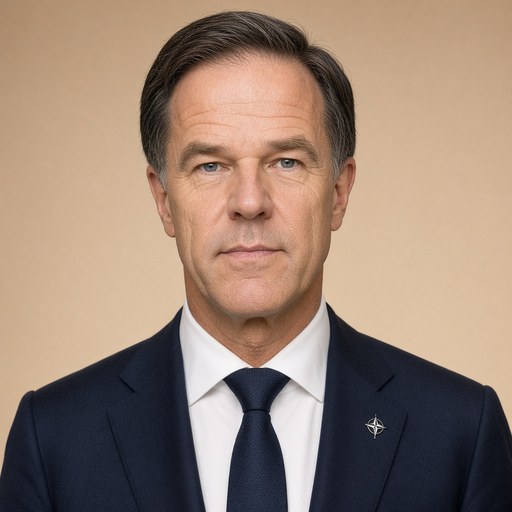
Speech by Prime Minister Mark Rutte at the National Holocaust Remembrance, Amsterdam
 Mark Rutte · Prime Minister of the Netherlands
- Context
- Rutte addressed the National Holocaust Remembrance ceremony in Amsterdam on 25 January 2020, offering a formal government apology for Dutch official complicity during the Holocaust.
- Main themes
- Holocaust remembrance, Dutch government apology, antisemitism, Jewish persecution in the Netherlands, complicity and collaboration, moral accountability, memory and commemoration, resistance and courage, post-war recognition failures, 'Never Again'
- Duration
- ~4 min
- Words
- 512
- Sentences
- 40
- Readability
- 64
- Grade
- 7.5
- Syntax
- 2.61
- Vocabulary
- 2.05
Translated from Dutch
The broad sphere of national life a sentence belongs to. Every sentence has an Arena, so it is the denominator the other indices are read against.
Other40 sentences in 18 paragraphs
Ladies and gentlemen,
Little Anny Aa was 1 year and almost 10 months old when she was murdered in the gas chamber of Sobibor. Her name is the first of 102,000 names that will be read out this week in Westerbork. The names of more than a hundred thousand Jewish fellow citizens, of hundreds of Roma and Sinti – men, women, children. Here nearby, they will also have their name returned to them in stone. What they themselves cannot reclaim, we must return to them.
The question remains: how could it happen? How could there be so much hate, cruelty, and lawlessness? How could persecution, deportation, and murder take place almost unhindered, in front of the eyes of so many?
The answer is dark and also confronting.
We know the facts, the stories. Of Dutch Jewish hunters who drove thousands to death for a paltry sum of 'bounty', as it was horrifically called.
Of the betrayal that was always lurking.
Of the looking away, out of self-preservation, opportunism, or indifference – when people were taken away and their homes looted.
And also the looking away after liberation, when the few who returned from hell were met with a cold reception.
Of course, there was also the hope of hiding, the courage of resistance, the collective uprising during the February strike. And yet...
And yet, all in all, it was too little. Too little protection. Too little help. Too little recognition.
And we wonder what we would have done ourselves in those exceptional circumstances.
We know: the German occupier was ruthless. Raids, reprisals, and torture were the instruments of a regime of terror and fear. How brave would we be?
Hopefully, we will never have to answer that question. But the 'Never again Auschwitz' at this Spiegelmonument does call for permanent accountability from us, as a society. Because 75 years after Auschwitz, antisemitism is still among us.
That is precisely why we must fully acknowledge what happened back then and also speak it out loud.
When a group of compatriots was separated, excluded, and dehumanized under a murderous regime, we fell short. When authority became a threat, our government agencies fell short, as guardians of law and safety.
Certainly, there was individual resistance within the government, but too many Dutch officials carried out what the occupier asked of them. Others tolerated the great evil in the hope of still being able to do something good – which sometimes succeeded, but much more often did not. And the bitter consequences of registration and deportation were not recognized in time and not sufficiently.
Now that the last survivors are still among us, I offer today, on behalf of the government, apologies for the actions of the government at that time. I do so with the realization that no word can ever encompass something as great and horrific as the Holocaust.
It is our task, the generations after the war, to continue to remember. To honor the dead with their full name. To account time and again. To stand together firmly in the here and now.
The original Dutch. The tags above are read on the English translation's sentences.
Dames en heren,
De kleine Anny Aa was 1 jaar en bijna 10 maanden oud toen zij werd vermoord in de gaskamer van Sobibor. Haar naam is de 1e van 102.000 namen die deze week worden voorgelezen in Westerbork. De namen van meer dan honderdduizend Joodse medeburgers, van honderden Roma en Sinti – mannen, vrouwen, kinderen. Hier vlakbij krijgen zij ook in steen hun naam terug. Wat zij zelf niet terug kunnen nemen, moeten wij hen teruggeven.
De vraag blijft: hoe kon het gebeuren? Hoe kon het er zijn: zoveel haat, wreedheid en rechteloosheid? Hoe konden vervolging, deportatie en moord zich vrijwel ongehinderd voltrekken, onder de ogen van zovelen?
Het antwoord is donker en ook confronterend.
We kennen de feiten, de verhalen. Van Nederlandse Jodenjagers die duizenden de dood injoegen voor een luttel bedrag aan ‘kopgeld’, zoals dat met een afschuwelijk begrip heette.
Van het verraad dat altijd op de loer lag.
Van het wegkijken, uit zelfbehoud, opportunisme of onverschilligheid – toen mensen werden weggevoerd en hun huizen leeggeroofd.
En ook het wegkijken na de bevrijding, toen de weinigen die uit de hel terugkeerden een kille ontvangst wachtte.
Natuurlijk, er was ook de hoop van onderduik, de moed van verzet, het collectieve opstaan tijdens de Februaristaking. En toch….
En toch was het alles bij elkaar te weinig. Te weinig bescherming. Te weinig hulp. Te weinig erkenning.
En wij vragen ons af wat we in die uitzonderlijke omstandigheden zelf zouden hebben gedaan.
We weten: de Duitse bezetter was meedogenloos. Razzia’s, represailles en marteling waren de instrumenten van een regime van terreur en angst.Hoe moedig zouden wij zijn?
Hopelijk hoeven we die vraag nooit te beantwoorden. Maar het ‘Nooit meer Auschwitz ’bij dit Spiegelmonument vraagt wel om permanente rekenschap van ons, als samenleving. Want 75 jaar na Auschwitz is antisemitisme nog altijd onder ons.
Juist daarom moeten we voluit erkennen wat er destijds is gebeurd en dat ook hardop uitspreken.
Toen een groep landgenoten onder een moorddadig regime apart werd gezet, buitengesloten en ontmenselijkt, zijn we tekortgeschoten. Toen het gezag een bedreiging werd, zijn onze overheidsinstanties tekortgeschoten, als hoeders van recht en veiligheid.
Zeker, ook binnen de overheid was er individueel verzet, maar te veel Nederlandse functionarissen voerden uit wat de bezetter van hen vroeg. Anderen verdroegen het grote kwaad in de hoop nog iets goeds te kunnen doen – wat soms lukte, maar veel vaker niet. En de bittere consequenties van registratie en deportatie werden niet tijdig en niet voldoende onderkend.
Nu de laatste overlevenden nog onder ons zijn, bied ik vandaag namens de regering excuses aan voor het overheidshandelen van toen. Dat doe ik in het besef dat geen woord zoiets groots en gruwelijks als de Holocaust ooit kan omvatten.
Aan ons, de generaties van na de oorlog, is de opdracht te blijven herdenken. Om de doden met hun volle naam te eren. Steeds opnieuw rekenschap af te leggen. Samen pal te staan in het hier en nu.