




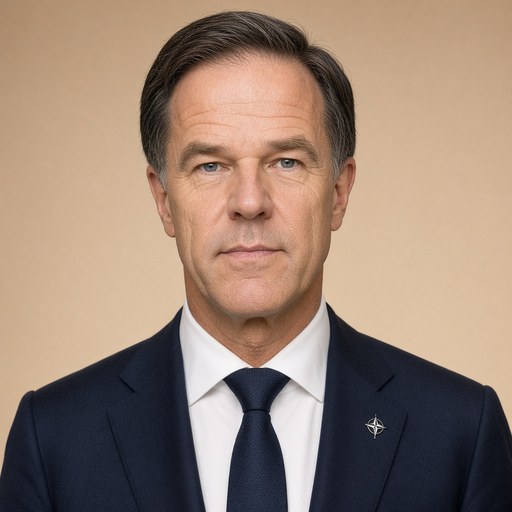
Speech by Prime Minister Mark Rutte at the reopening of the Gemäldegalerie Alte Meister, Dresden.
 Mark Rutte · Prime Minister of the Netherlands
- Context
- Rutte addressed dignitaries at the reopening of the Gemäldegalerie Alte Meister in Dresden on 27 February 2020, celebrating Dutch-German cultural ties.
- Main themes
- Dutch-German cultural relations, Leiden fine painters, Augustus the Strong and art collecting, Rembrandt and Gerrit Dou, Old Masters Gallery Dresden, European cultural exchange, bourgeois art of the Dutch Republic, history of Leiden, international art networks, German-Dutch friendship
- Duration
- ~8 min
- Words
- 966
- Sentences
- 60
- Readability
- 52
- Grade
- 10.0
- Syntax
- 2.73
- Vocabulary
- 2.37
Translated from German
The broad sphere of national life a sentence belongs to. Every sentence has an Arena, so it is the denominator the other indices are read against.
Other60 sentences in 39 paragraphs
Professor Ackermann,
Mr. Prime Minister,
Mr. President of the Bundestag,
Mr. Schleweis,
Dr. Koja,
esteemed guests,
dear friends!
You surely know the famous saying by Karl Valentin: "Art is beautiful, but it requires a lot of work."
And if there is a place where this truth is revealed to the visitor, it is here, in the cultural capital of Dresden and in the world-famous Old Masters Gallery.
Amidst centuries of artistic virtuosity – an overwhelming experience.
"Much work" seems to me a severe understatement!
I am very honored that you have invited me to this festive reopening. Thank you for that.
But I stand here, of course, primarily as an admirer and not as an expert. For I am not an art historian. I studied history, but I have strayed quite far from that path by now.
In my current role, almost everything revolves around current politics. You will therefore understand that I feel a bit inhibited in the company of so many eminent art connoisseurs.
Nevertheless, I gladly accepted the invitation to give a greeting. This is also related to my place of study, the Dutch city of Leiden, with its centuries-old university, which has always attracted many German students.
Leiden is the city where Rembrandt saw the light of the world – and also the light of painting. And there he also had his first student: Gerrit Dou, probably the most famous of the Leiden fine painters, who are so numerous in this museum.
None other than Goethe wrote after a visit to Dresden that in the work of the Leiden painters "the brush triumphed over nature." A wonderful and apt description that has lost none of its validity.
For we too can only marvel at the precision and richness of detail with which Gerrit Dou and others, such as Gabriel Metsu, Frans and Willem van Mieris, and Pieter Cornelisz van Slingelandt, depicted their world.
With their fine rendering of colors and fabrics, they simultaneously struck the nerve of the greatest source of prosperity in Leiden at that time, the textile industry. Even today, centuries later, we are speechless in admiration for such mastery.
As a graduate of Leiden University and Prime Minister of the Netherlands, I am, of course, proud that the Leiden fine painters occupy such a prominent place in the Old Masters Gallery.
But you know, the man to whom we owe this connection between Germany and the Netherlands was truly a son of Dresden: the famous Augustus the Strong. He bore his nickname rightly. In multiple respects.
Allegedly, he could bend a horseshoe with his bare hands. But the enormous number of over 350 children he is said to have fathered also suggests good physical condition and endurance.
And Augustus's passion for collecting was strong, which he passed on to his namesake son.
Art is international; it was no different then than it is today. The two Augustuses could rely on their own advisors, but also on a very active European network of merchants, intermediaries, agents, and collectors.
As far as works by the Leiden fine painters were concerned, the contacts surprisingly concentrated in Antwerp, thus outside the Republic of the Seven United Netherlands.
I also find it remarkable that Augustus the Strong was one of the first European rulers to collect bourgeois art from the Republic. At that time, princely collectors primarily looked to Italy, where the most beautiful representations of religious and mythological scenes could be found.
What a difference from the taverns, game dealers, and kettle makers of the Leiden fine painters! Their lifelike domestic scenes, workshops, children, and the elderly were drawn from the everyday lives of people and intended for a market of free citizens. That was truly new and truly different.
And works by other Dutch masters also found buyers early on at the Saxon court, including the idiosyncratic Baroque of Rembrandt. An unmistakable testament to openness and a sense of quality.
Today we can state that Augustus the Strong and his son made a significant contribution to the emergence of a common European culture, to the international exchange of ideas, and to the feeling of connectedness between our countries. We stand in this tradition, and I am glad that culture can still fulfill this role. The friendly relationship between Germany and the Netherlands is hard to imagine without cultural exchange.
When we talk about German-Dutch relations, we quickly come to topics such as export and import, hard economic data, and political cooperation in Europe.
But Germany is also the most important cultural partner for the Netherlands. And this is no coincidence. For just as in the times of Augustus the Strong, Germany and the Netherlands are similar enough to feel mutual familiarity and different enough to be interesting to each other.
Ladies and gentlemen,
when Johan Rudolf Thorbecke, the greatest Dutch liberal statesman of the 19th century, visited Dresden in 1821 as a young man, he immersed himself deeply in everything this city had to offer in art and culture. In his letters home, he wrote: "One feels an unspeakable desire not to drink from this stream of delight, but to plunge right into it and drown in it."
I am quite sure that future generations of visitors will feel the same way.
Congratulations and thanks to all who have been involved in the renovation of the Old Masters Gallery and the collection since 2013.
Today we are once again made aware that not only does art require much work, but so does its conservation, accessibility, and professional presentation.
You have done fantastic work – for Dresden and for Germany, for the Dutch painters in the collection, and for European culture.
For that, I am very grateful to you – as an art lover and as a neighbor!
Thank you for your attention.
The original German. The tags above are read on the English translation's sentences.
Frau Professor Ackermann,
Herr Ministerpräsident,
Herr Bundestagspräsident,
Herr Schleweis,
Herr Doktor Koja,
sehr verehrte Gäste,
liebe Freunde!
Sie kennen sicher den berühmten Satz von Karl Valentin: »Kunst ist schön, macht aber viel Arbeit.«
Und wenn es einen Ort gibt, wo sich diese Wahrheit dem Besucher offenbart, dann hier, in der Kulturhauptstadt Dresden und in der weltberühmten Gemäldegalerie Alte Meister.
Inmitten von Jahrhunderten künstlerischer Virtuosität – eine überwältigende Erfahrung.
»Viel Arbeit« erscheint mir da schwer untertrieben!
Ich fühle mich sehr geehrt, dass Sie mich zu dieser feierlichen Wiedereröffnung eingeladen haben. Vielen Dank dafür.
Aber ich stehe hier natürlich vor allem als Liebhaber und nicht als Kenner. Denn ich bin kein Kunsthistoriker. Ich habe zwar Geschichte studiert, aber mittlerweile bin ich von diesem Pfad doch sehr weit abgekommen.
In meiner jetzigen Tätigkeit dreht sich fast alles um die Tagespolitik. Sie werden also verstehen, dass ich mich im Kreise so vieler eminenter Kunstkenner ein wenig gehemmt fühle.
Dennoch habe ich die Einladung zu einem Grußwort sehr gerne angenommen. Das hat auch zu tun mit meinem Studienort, dem holländischen Leiden, mit seiner jahrhundertealten Universität, die immer schon viele deutsche Studenten angezogen hat.
Leiden ist die Stadt, in der Rembrandt das Licht der Welt erblickte – und auch das Licht der Malerei. Und dort hatte er auch seinen ersten Schüler: Gerrit Dou, vermutlich der bekannteste der Leidener Feinmaler, die in diesem Museum so zahlreich vertreten sind.
Niemand Geringeres als Goethe schrieb nach einem Besuch in Dresden, dass im Werk der Leidener Maler »der Pinsel über die Natur den Sieg davontrug«. Eine wunderbare und treffende Beschreibung, die nichts von ihrer Gültigkeit verloren hat.
Denn auch wir können nur staunen über die Präzision und den Detailreichtum, mit denen Gerrit Dou und andere, wie Gabriel Metsu, Frans und Willem van Mieris und Pieter Cornelisz van Slingelandt, ihre Lebenswelt abbildeten.
Mit ihrer feinen Wiedergabe von Farben und Stoffen trafen sie zugleich den Nerv der größten Leidener Wohlstandsquelle jener Tage, der Tuchindustrie. Auch heute noch, Jahrhunderte später, sind wir sprachlos vor Bewunderung für so viel Meisterschaft.
Als Absolvent der Leidener Uni und Ministerpräsident der Niederlande bin ich natürlich stolz, dass die Leidener Feinmaler in der Gemäldegalerie Alte Meister einen so prominenten Platz einnehmen.
Sie wissen aber, der Mann, dem wir diese Verbindung zwischen Deutschland und den Niederlanden zu verdanken haben, war nun wahrlich ein Sohn Dresdens: der berühmte August der Starke. Seinen Beinamen trug er zu Recht. In mehrfacher Hinsicht.
Angeblich konnte er ein Hufeisen mit bloßer Hand verbiegen. Aber auch die ungeheure Zahl von über 350 Kindern, die er gezeugt haben soll, unterstellt eine gute physische Kondition und Ausdauer.
Und stark war auch Augusts Sammelleidenschaft, die er seinem gleichnamigen Sohn vererbte.
Kunst ist international, das war damals nicht anders als heute. Die beiden Augusts konnten sich auf eigene Berater stützen, aber auch auf ein sehr aktives europäisches Netz von Händlern, Mittelsleuten, Agenten und Sammlern.
Soweit es um Arbeiten der Leidener Feinmaler ging, konzentrierten sich die Kontakte erstaunlicherweise in Antwerpen, also außerhalb der Republik der Sieben Vereinigten Niederlande.
Bemerkenswert finde ich auch, dass August der Starke als einer der ersten europäischen Herrscher bürgerliche Kunst aus der Republik sammelte. Damals richteten fürstliche Sammler ihren Blick vor allem auf Italien, wo man die schönsten Darstellungen religiöser und mythologischer Szenen fand.
Was für ein Unterschied zu den Wirtshäusern, Wildhändlern und Kesselflickern der Leidener Feinmaler! Ihre lebensechten häuslichen Szenen, Werkstätten, Kinder und Alten waren aus dem Alltag der Menschen gegriffen und für einen Markt von freien Bürgern bestimmt. Das war wirklich neu und wirklich anders.
Und auch Werke anderer holländischer Meister fanden schon früh Abnehmer am kursächsischen Hof, darunter auch das eigenwillige Barock Rembrandts. Ein untrüglicher Ausweis von Offenheit und Qualitätssinn
Heute können wir feststellen, dass August der Starke und sein Sohn einen beachtlichen Beitrag zum Entstehen einer gemeinsamen europäischen Kultur geleistet haben, zum internationalen Austausch von Ideen und zum Gefühl der Verbundenheit zwischen unseren Ländern. In dieser Tradition stehen wir, und ich bin froh, dass Kultur diese Rolle nach wie vor erfüllen kann. Das freundschaftliche Verhältnis zwischen Deutschland und den Niederlanden ist ohne kulturellen Austausch nur schwer vorstellbar.
Wenn wir über die deutsch-niederländischen Beziehungen sprechen, sind wir schnell bei Themen wie Export und Import, bei harten Wirtschaftsdaten und bei der politischen Zusammenarbeit in Europa.
Aber Deutschland ist für die Niederlande auch das wichtigste Abnehmerland auf kulturellem Gebiet. Und das ist kein Zufall. Denn wie zu Zeiten Augusts des Starken sind sich Deutschland und die Niederlande ähnlich genug, um gegenseitige Vertrautheit zu empfinden, und verschieden genug, um füreinander interessant zu sein.
Meine Damen und Herren,
als Johan Rudolf Thorbecke, der größte niederländische liberale Staatsmann des 19en Jahrhunderts, Dresden im Jahre 1821 als junger Mann besuchte, tauchte er tief ein in alles, was diese Stadt an Kunst und Kultur zu bieten hatte. In seinen Briefen an die Heimat schrieb er: »Man spürt ein unaussprechliches Verlangen, von diesem Strom des Ergötzens nicht zu trinken, sondern sich mitten in denselben zu stürzen, um darin unterzugehen.«
Ich bin ganz sicher, dass es künftigen Generationen von Besuchern genauso ergehen wird.
Kompliment und Glückwunsch an alle, die seit 2013 an der Sanierung der Gemäldegalerie und der Sammlung mitgewirkt haben.
Heute wird uns noch einmal bewusst, dass nicht nur Kunst viel Arbeit macht, sondern auch ihre Konservierung, ihre Zugänglichmachung und professionelle Präsentation.
Sie haben phantastische Arbeit geleistet – für Dresden und für Deutschland, für die holländischen Maler in der Sammlung und für die europäische Kultur.
Dafür bin ich Ihnen sehr verbunden – als Kunstliebhaber und als Nachbar!
Ich danke Ihnen für Ihre Aufmerksamkeit.