




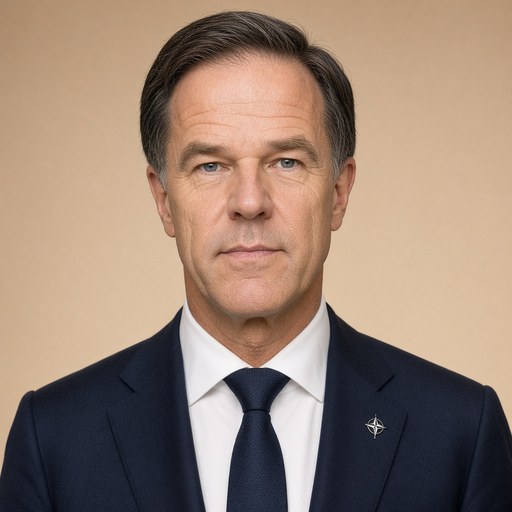
Speech by Prime Minister Mark Rutte at the commemoration of State Minister Dr. J.A. van Kemenade in the Senate.
 Mark Rutte · Prime Minister of the Netherlands
- Context
- Rutte addressed the Dutch Senate on 9 March 2020 to commemorate State Minister Jos van Kemenade, a former Education Minister and lifelong public servant.
- Main themes
- Commemoration of Jos van Kemenade, education reform policy, social inequality and equal opportunity, public administration, active citizenship, democratic values, personal legacy, Dutch political history
- Duration
- ~5 min
- Words
- 618
- Sentences
- 29
- Readability
- 41
- Grade
- 12.8
- Syntax
- 3.11
- Vocabulary
- 2.22
Translated from Dutch
The broad sphere of national life a sentence belongs to. Every sentence has an Arena, so it is the denominator the other indices are read against.
Other29 sentences in 19 paragraphs
Mr. Chairman,
When Jos van Kemenade was appointed as the Queen's Commissioner in North Holland in 1992, the Parool wrote with a keen characterization: "He has always remained the minister who just happened not to be in the cabinet."
This aligns with what Van Kemenade said about himself in his memoirs: that he has always been more of a scholar and administrator than anything else.
Many have already recalled around his passing how he, as Minister of Education in the Den Uyl cabinet, was at the foundation of a whole series of reforms and plans.
From mother mavo to the two-phase structure and from the infamous contour note to the equally infamous, but also failed, middle school.
Even as a member of Parliament, he could not refrain from engaging in scientific practice and legislation, writing both a thick standard work on education policy and a thoroughly substantiated initiative bill on adult education. A proposal that he was then able to handle himself as a minister in the short-lived second Van Agt cabinet – perhaps a unique occurrence in our parliamentary history.
And even in 2018, he could regretfully note that the middle school had indeed come about with a second Den Uyl cabinet.
In short, Jos van Kemenade was a man of substance and perseverance, who was not afraid of administrative and policy horizons.
In one of his first interviews as a minister, he already sketched the image of education as a mammoth tanker that might not be easily steered, but could indeed change course significantly with small nudges.
Whether his staff at the department recognized that image of those small nudges, I dare to doubt, because Minister van Kemenade wanted to change a lot and also a lot at once. But the sense of reality that later characterized him as an administrator was already present then.
And although he may have been somewhat less groundbreaking in his later years than as a young minister, he was consistent in his vision. What drove him was a deeply rooted conviction that social inequality was bad for the country and bad for the individual. And good education for everyone was, for him, the way to address that.
He remained true to that principle, to that ideal, throughout his life. Undoubtedly also stemming from his personal experience as the first highly educated member of his family – a story he often told.
In his later career, Jos van Kemenade grew into a significant administrator; a man who lived for the public good, which he served at all levels. Nationally, provincially, and locally. In government, politics, and science.
And as chairman of numerous advisory committees and social organizations, for saying no to administrative responsibility was not in his nature. The title of Minister of State that came to him in 2002 was therefore a well-deserved crowning achievement of an impressive career in public administration.
In that last capacity, I also had the privilege of meeting him personally a few times and was impressed by his sharp and analytical mind. He could argue and put things into perspective at the same time, but that perhaps made him all the more convincing.
Mr. Chairman,
At his farewell as chairman of the Council for Public Administration in 2009, Jos van Kemenade delivered a strong and – of course – well-considered plea for active citizenship as the foundation of a strong and well-functioning democratic system. He has, as it were, exemplified that active citizenship throughout his long and rich career in the service of the common good.
We remember him with gratitude and great respect.
On behalf of the cabinet, I wish his family and other survivors all the strength in coping with this great loss.
The original Dutch. The tags above are read on the English translation's sentences.
Mijnheer de voorzitter,
Bij de benoeming van Jos van Kemenade tot commissaris van de Koningin in Noord-Holland in 1992 schreef het Parool met een rake typering: ‘Hij is altijd de minister gebleven die toevallig niet in het kabinet zat.’
Dat sluit aan bij wat Van Kemenade in zijn memoires over zichzelf zei: dat hij eigenlijk altijd meer wetenschapper en bestuurder is geweest dan iets anders.
Velen hebben rond zijn overlijden al gememoreerd hoe hij als minister van Onderwijs in het kabinet-Den Uyl aan de basis stond van een hele rij hervormingen en plannen.
Van moedermavo tot tweefasenstructuur en van de roemruchte contourennota tot de al even roemruchte, maar ook gesneefde middenschool.
Zelfs als Kamerlid kon hij de wetenschapsbeoefening en het wetgeven niet laten en schreef hij zowel een dik standaardwerk over onderwijsbeleid als een grondig onderbouwd initiatiefwetsvoorstel over volwasseneneducatie. Een voorstel dat hij vervolgens als minister in het kortstondige 2e kabinet-Van Agt zelf in behandeling kon nemen – misschien wel een unicum in onze parlementaire geschiedenis.
En nog in 2018 kon hij met spijt in zijn stem vaststellen dat de middenschool er met een 2e kabinet-Den Uyl wel was gekomen.
Kortom, Jos van Kemenade was een man van de inhoud en lange adem, die niet bang was voor bestuurlijke en beleidsmatige vergezichten.
In 1 van zijn 1e interviews als minister schetste hij in 1973 al het beeld van het onderwijs als een mammoettanker die zich misschien niet zo makkelijk laat sturen, maar met kleine tikjes wel degelijk flink van koers kon veranderen.
Of zijn medewerkers op het departement dat beeld van die kleine tikjes hebben herkend, waag ik overigens te betwijfelen, want minister van Kemenade wilde veel veranderen en ook veel ineens. Maar de realiteitszin die hem later als bestuurder zo kenmerkte, zat er dus ook toen al in.
En al was hij in zijn latere jaren misschien wat minder hemelbestormend dan als jong bewindsman, consistent in zijn visie was hij ook. Wat hem dreef was een diepgewortelde overtuiging dat sociale ongelijkheid slecht was voor het land en slecht voor het individu. En goed onderwijs voor iedereen was voor hem dé manier om daar wat aan te doen.
Aan dat principe, aan dat ideaal, bleef hij zijn leven lang trouw. Ongetwijfeld ook vanuit zijn persoonlijke ervaring als 1e hoogopgeleide lid van zijn familie – een verhaal dat hij vaak heeft verteld.
In zijn latere carrière groeide Jos van Kemenade uit tot een bestuurder van formaat; een man die leefde voor de publieke zaak, die hij op alle niveaus diende. Landelijk, provinciaal en lokaal. In de overheid, politiek en wetenschap.
En als voorzitter van talloze adviescommissies en maatschappelijke organisaties, want nee zeggen tegen bestuurlijke verantwoordelijkheid lag niet zo in zijn aard. Het ministerschap van Staat dat hem in 2002 toeviel, was dan ook een zeer verdiende bekroning op een indrukwekkende carrière in het openbaar bestuur.
In die laatste hoedanigheid heb ik hem ook persoonlijk een paar keer mogen ontmoeten en raakte ik onder de indruk van zijn scherpe en analytische geest. Hij kon betogen en relativeren tegelijkertijd, maar dat maakte hem misschien wel des te overtuigender.
Mijnheer de voorzitter,
Bij zijn afscheid als voorzitter van de Raad voor het Openbaar Bestuur in 2009 hield Jos van Kemenade een stevig en – uiteraard – doorwrocht pleidooi voor actief burgerschap als fundament onder een sterk en goed functionerend democratisch bestel. Dat actieve burgerschap heeft hij ons als het ware voorgeleefd gedurende zijn lange en rijke loopbaan in dienst van het algemeen belang.
Wij herdenken hem met dankbaarheid en groot respect.
Namens het kabinet wens ik zijn familie en andere nabestaanden alle kracht toe bij de verwerking van dit grote verlies.