




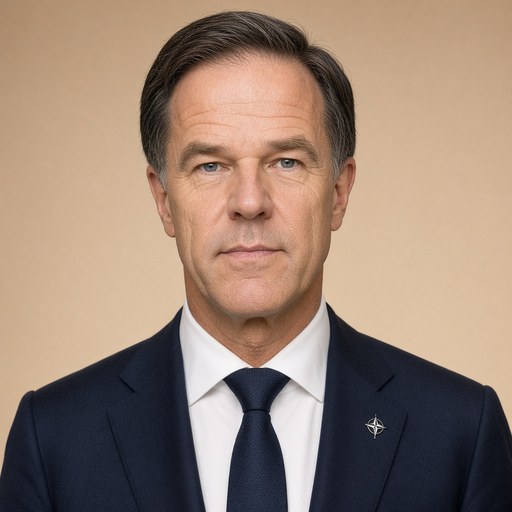
Speech by Prime Minister Mark Rutte at the VNG Members' Meeting
 Mark Rutte · Prime Minister of the Netherlands
- Context
- Rutte addressed the VNG extraordinary members' meeting on 23 May 2024 to discuss municipal finances and the growing responsibilities of Dutch local governments.
- Main themes
- Municipal finances, decentralization of government, Thorbecke's constitutional legacy, local government responsibilities, intergovernmental relations, social domain decentralizations, housing and shelter, migration and international pressures, citizen trust in government, VNG membership
- Duration
- ~11 min
- Words
- 1,378
- Sentences
- 89
- Readability
- 60
- Grade
- 8.7
- Syntax
- 2.90
- Vocabulary
- 2.02
Translated from Dutch
The broad sphere of national life a sentence belongs to. Every sentence has an Arena, so it is the denominator the other indices are read against.
Other89 sentences in 34 paragraphs
Ladies and gentlemen, dear people,
When I became Prime Minister not so long ago – at least that’s how it feels – I didn’t change much in the decor of the Torentje.
And in the years that followed, I didn’t really change much either. That’s because my predecessor had bought new furniture not long before, we were in the midst of a financial crisis, and to be honest, I thought it was all fine as it was.
But there is one thing I did do right away. I had the portrait of Thorbecke, which had once been removed from the Torentje, hung back up immediately.
I still consider it an act of historical justice. Because we all stand on the shoulders of giants. And there are few giants in our parliamentary history greater than Johan Rudolf Thorbecke.
No matter how you look at it, it remains phenomenal how that house of Thorbecke was built by him in just a few years and still stands strong after more than 175 years. Of course, with a few extensions here and there, with necessary major maintenance from time to time, and with a peeling window frame or two that need some attention – but nonetheless: indestructible.
That image of a shared administrative house with one front door remains so strong because it does justice to Thorbecke’s original intent.
‘The state,’ for him, was municipalities, provinces, and the national government together. And not in a hierarchical relationship, but as an organic whole, in which each layer of government has its own role.
And certainly not a small or subordinate role for local government. On the contrary, he once said about the Municipalities Act of 1851 that ‘there could hardly be a greater blessing to the nation.’ You can still take that to heart.
So when we talk about the principle of one government in our time, that also goes back to Thorbecke. Moreover, the municipality of Rotterdam actually thought at the beginning of the last century that it was completely unnecessary to become a member of the VNG, which had just been established.
Because, as the then mayor said, ‘A Union of Dutch Municipalities? That already exists! That is the state of the Netherlands.’
That was very logically reasoned, but of course that was before the VNG had been able to convincingly prove its right to exist. Let me add that right away, to avoid any misunderstanding that I do not hold your association in high regard. The opposite is true.
Dear people, if you have the same job for a long time like I do, you have to be careful not to fall into repetition. Although that is sometimes unavoidable.
I don’t know who here still remembers it, but in June 2012 I also had the honor of addressing the VNG. That was on the occasion of the 100th anniversary. And just like today, the finances were the main theme of the meeting back then.
Today, that is even the direct reason for calling an extra members’ meeting. And I understand that very well.
Because there is quite a lot on the plate of the municipalities. Even more so, also due to the decentralizations in the social domain and the Environmental Act.
And I am not revealing a secret when I say that the call for a government that provides tailored solutions, that applies the human scale and thus stands close to its citizens, is becoming increasingly stronger. You could cautiously conclude that the role of municipalities is unlikely to diminish.
Personally, I still believe that the principle of ‘decentralized where possible’ is a good principle. Because the town hall, whether online or not, is for the vast majority of people the first and only place where they encounter government. Where a real person answers the phone and responds.
There they renew their passport and driver’s license. There they arrange their WMO provision. There they apply for a permit for a dormer window or a demonstration. And there you speak out on plans that the government has for your street, your neighborhood, your district. Not in an anonymous policy tower in The Hague. And not in the House of Representatives either.
In that sense, the concept of ‘first government’ is completely justified. Although such an honorary title also creates obligations, but I don’t need to explain that to you. People naturally seek support and certainty as close as possible. With what they know. And I believe that this need is only growing in these times, with everything that is happening internationally.
Because no matter how far away some things may seem, they often come very close, very quickly. The war in Ukraine, the violence in the Middle East, migration – it all lands locally as well. And that touches on very important questions, for example about shelter, housing, public order, but also on individual feelings of safety and trust in the future. Just look at the recent protests in student cities.
Municipalities also have a large and important task for their residents in this regard. With everything that is already on your plate in terms of legal responsibilities. And I know that you want to take on that role.
I realize very well, we as a cabinet realize very well, that sufficient funding is needed for all those municipal tasks. But you will understand that I stand here as a very caretaker prime minister and representative of a very caretaker cabinet with not one but two hands tied behind my back. First of all, I am not the minister responsible, and secondly, our successors are, so to speak, already waiting in the wings. The conversation that you will undoubtedly want to have about the further elaboration of the framework agreement is really with the next cabinet.
But let me say this about it. I still remember how I had to come to your celebration in 2012 with a rather gloomy financial message. We were facing major economic problems as a country, the threat of enormous deficits, and thus unprecedented cuts. And that inevitably meant less money for the Municipal Fund in the step-up-step-down system.
Today, I stand here with a somewhat different feeling, especially after the latest Spring Memorandum. Understand me correctly, I am fully aware that not all the financial issues you face as municipalities can be resolved with the Spring Memorandum with one stroke of the pen.
But hopefully, you also agree with me that the Spring Memorandum shows that the conversation between municipalities and the national government has yielded a positive outcome. If only because of the abolition of that not very popular scaling discount, I might add euphemistically.
That is simply the result of consultation. Of listening to each other. As is appropriate in and at the house of Thorbecke.
We consult with the knowledge that not everything can be done and certainly not at the same time, but also with the realization that we must do it together as governments. Because in our shared house, we constantly encounter each other, in the stairwell, in all the rooms, on all the floors.
We seek each other out. And that must remain the case. As it also states in the Spring Memorandum: it is always about the balance between shared ambitions, the tasks that go with them, and the financial resources. And that is not a static whole, so that conversation does not stop.
In my experience, that administrative consultation is never a pink cloud that you sit on together. It is usually also a bit of pushing and pulling, but almost always very constructive.
And with results. As was the case during the corona period. What municipalities were often able to achieve in a few days or sometimes even a few hours borders on the incredible. I can only bow deeply to that in hindsight.
And I want to express my great appreciation for that again today towards the VNG and towards you as municipal officials. Just as for all the other good work that is being done in the municipalities, of course.
And I promise that I will leave the portrait of Thorbecke hanging when I depart from the Torentje. As a reminder that we must always continue to work together in administrative Netherlands.
Thank you.
The original Dutch. The tags above are read on the English translation's sentences.
Dames en heren, beste mensen,
Toen ik nog niet zo lang geleden – zo voelt het althans – minister-president mocht worden, heb ik aan de inrichting van het Torentje weinig veranderd.
En in de jaren daarna eigenlijk ook niet. Dat komt, mijn voorganger had niet lang daarvoor nieuwe meubels gekocht, we zaten middenin in een financiële crisis, en ik vond het eerlijk gezegd allemaal wel prima.
Maar 1 ding heb ik wel direct gedaan. Het portret van Thorbecke, dat ooit uit het Torentje was weggehaald, heb ik meteen laten terughangen.
Een daad van historische rechtvaardigheid, vind ik nog steeds. Want we staan allemaal op de schouders van reuzen. En veel reusachtiger dan Johan Rudolf Thorbecke zijn ze in onze parlementaire geschiedenis niet gemaakt.
Hoe je het ook wendt of keert, het blijft fenomenaal hoe dat huis van Thorbecke door hem in een paar jaar werd gebouwd en na ruim 175 jaar nog altijd stevig overeind staat. Natuurlijk, met hier en daar een aanbouwtje, met van tijd tot tijd noodzakelijk groot onderhoud en met links en rechts ook best een bladderend kozijntje dat wat aandacht nodig heeft – maar desalniettemin: onverwoestbaar.
Dat beeld van een gezamenlijk bestuurlijk huis met 1 voordeur blijft ook zo sterk, omdat het recht doet aan de oorspronkelijke intentie van Thorbecke.
‘De staat’, dat was voor hem gemeenten, provincies en Rijk samen. En dan niet in een hiërarchische relatie, maar als een organisch geheel, waarin elke bestuurslaag een eigen rol heeft.
En zeker geen kleine of ondergeschikte rol voor het lokaal bestuur. Integendeel, over de Gemeentewet van 1851 zei hij ooit ‘dat er nauwelijks een grooter weldaad aan de Natie' denkbaar was. Die kunt u nog steeds in uw zak steken.
Dus als wij het in onze tijd hebben over het principe van 1 overheid, gaat ook dat al terug op Thorbecke. Sterker nog, de gemeente Rotterdam vond het begin vorige eeuw eigenlijk helemaal niet nodig om lid te worden van de VNG, die toen net was opgericht.
Want, zei de toenmalige burgemeester, ‘Een Vereeniging van Nederlandse Gemeenten? Die bestaat toch al? Dat is de staat der Nederlanden.’
Dat was heel zuiver geredeneerd, maar dat was natuurlijk vóórdat de VNG zijn bestaansrecht zo overtuigend had kunnen bewijzen. Laat ik dat er wel meteen bij zeggen, om elk misverstand te voorkomen dat ik uw vereniging niet hoog zou waarderen. Het tegendeel is waar.
Beste mensen, als je zoals ik langere tijd dezelfde baan hebt, moet je oppassen niet in herhaling te vallen. Al is dat soms onvermijdelijk.
Ik weet niet wie het zich hier nog kan herinneren, maar in juni 2012 mocht ik de VNG ook toespreken. Dat was bij gelegenheid van het 100-jarig bestaan. En net zoals vandaag waren ook toen de financiën het hoofdthema van de bijeenkomst.
Vandaag is dat zelfs de directe aanleiding voor het bij elkaar roepen van een extra ledenvergadering. En ik begrijp dat heel goed.
Want er ligt nogal wat op het bord van de gemeenten. Steeds meer zelfs, ook door de decentralisaties in het sociaal domein en door de Omgevingswet.
En ik vertel hier geen geheim als ik zeg dat de roep om een overheid die maatwerk levert, die de menselijke maat hanteert en dus dicht bij haar inwoners staat, steeds sterker wordt. Daar zou je voorzichtig de conclusie aan kunnen verbinden dat de rol van de gemeenten waarschijnlijk niet kleiner zal worden.
Persoonlijk geloof ik nog altijd dat dat principe ‘decentraal wat kan’ een goed principe is. Want het gemeentehuis, al dan niet online, is voor het overgrote deel van de mensen de 1e en enige plek waar ze overheid tegenkomen. Waar een echt mens de telefoon opneemt en terugpraat.
Daar verlengen ze hun paspoort en rijbewijs. Daar regelen ze hun WMO-voorziening. Daar vragen ze een vergunning aan voor een dakkapel of een demonstratie. En daar spreek je in op plannen die de overheid heeft met jouw straat, jouw buurt, jouw wijk. Niet in een anonieme Haagse beleidstoren. En ook niet in de Tweede Kamer.
In die zin is dat begrip ‘eerste overheid’ volkomen terecht. Al schept zo’n eretitel ook verplichtingen, maar dat hoef ik u niet uit te leggen. Mensen zoeken nu eenmaal houvast en zekerheid het liefst dichtbij. Bij wat ze kennen. En ik denk zelf dat die behoefte juist in deze tijd alleen maar groter wordt, met alles wat er internationaal speelt.
Want hoe ver weg sommige dingen mogen lijken, het komt vaak heel snel heel dichtbij. De oorlog in Oekraïne, het geweld in het Midden-Oosten, migratie – het landt allemaal ook lokaal. En dat raakt aan heel belangrijke vragen, bijvoorbeeld over opvang, wonen, openbare orde, maar ook aan individuele gevoelens van veiligheid en vertrouwen in de toekomst. Kijk alleen maar naar de recente protesten in de studentensteden.
Gemeenten hebben ook hierin een grote en belangrijke taak voor hun inwoners. Bij alles wat er toch al op uw bord ligt aan wettelijke taken. En ik weet dat u die rol wilt pakken.
Ik realiseer me heel goed, wij als kabinet realiseren ons heel goed, voor al die gemeentelijke taken is voldoende geld nodig. Maar u zult begrijpen dat ik hier als zeer demissionair premier en vertegenwoordiger van een zeer demissionair kabinet sta niet met 1 maar met 2 handen op de rug gebonden. Ik ben ten 1e niet de vakminister en ten 2e staan onze opvolgers bij wijze van spreken al in de coulissen te trappelen. Het gesprek dat u ongetwijfeld zult willen voeren over de verdere uitwerking van het hoofdlijnenakkoord is echt met een volgend kabinet.
Maar laat ik er wel dit over zeggen. Ik weet nog goed hoe ik bij het jubileum in 2012 met een toch wat sombere financiële boodschap naar uw feestje moest komen. We stonden als land voor grote economische problemen, voor de dreiging van enorme tekorten en dus voor ongekende bezuinigingen. En dat betekende in de trap-op-trap-af systematiek onvermijdelijk ook minder geld voor het Gemeentefonds.
Vandaag sta ik hier toch met een iets ander gevoel, zeker na de laatste Voorjaarsnota. Begrijp me goed, ik realiseer me terdege dat niet alle financiële vraagstukken waar u als gemeenten voor staat met de Voorjaarsnota zomaar met één pennenstreek zijn opgelost.
Maar hopelijk bent u het ook met me eens dat de Voorjaarsnota laat zien dat het gesprek tussen gemeenten en Rijk een positieve uitkomst heeft opgeleverd. Al was het alleen maar vanwege de afschaffing van die niet heel populaire opschalingskorting, zeg ik maar even eufemistisch.
Dat is simpelweg het resultaat van overleg. Van luisteren naar elkaar. Zoals dat hoort bij en in het huis van Thorbecke.
We overleggen in de wetenschap dat niet alles kan en zeker niet tegelijkertijd, maar ook in het besef dat we het als overheden samen moeten doen. Want in ons gezamenlijke huis komen we elkaar voortdurend tegen, in het trappenhuis, in alle kamers, op alle verdiepingen.
We zoeken elkaar op. En dat moet vooral zo blijven. Zoals het ook in de Voorsnota staat: het gaat altijd om de balans tussen gezamenlijke ambities, de taken die daarbij horen en de financiële middelen. En dat is geen statisch geheel, dus dat gesprek stopt niet.
In mijn ervaring is dat bestuurlijke overleg nooit een roze wolk waar je samen op zit. Het is meestal ook een beetje duwen en trekken, maar bijna altijd heel constructief.
En met resultaat. Zoals dat bijvoorbeeld het geval was in de coronaperiode. Wat de gemeenten toen vaak in een paar dagen of soms zelfs een paar uur voor elkaar wisten te boksen, grenst aan het ongelooflijke. Ik kan daar ook achteraf alleen een heel diepe buiging voor maken.
En ik wil er in de richting van de VNG en van jullie als gemeentebestuurders vandaag nog eens een keer mijn grote waardering voor uitspreken. Net als voor al het andere goede werk dat in de gemeenten wordt verzet natuurlijk.
En ik beloof dat ik het portret van Thorbecke bij mijn vertrek in het Torentje zal laten hangen. Als een reminder dat we het in bestuurlijk Nederland altijd samen moeten blijven doen.
Dank u wel.