




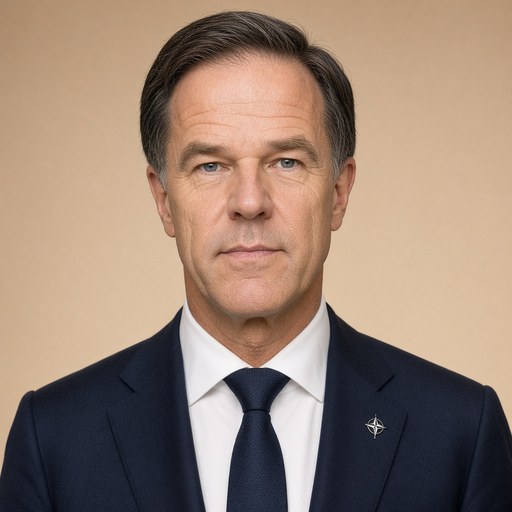
Short speech by Prime Minister Mark Rutte during the conversation with mayors in Leipzig.
 Mark Rutte · Prime Minister of the Netherlands
- Context
- Rutte addressed German and Dutch mayors and council members in Leipzig on March 21, 2024, discussing democratic participation and threats facing local politicians.
- Main themes
- Threats against politicians, democratic participation, local governance, political dialogue, resilience of democracy, civic trust, work-life balance for politicians, online and physical violence, community engagement, Netherlands-Germany cooperation
- Duration
- ~6 min
- Words
- 683
- Sentences
- 65
- Readability
- 62
- Grade
- 7.2
- Syntax
- 2.45
- Vocabulary
- 1.94
Translated from Dutch
This is an interview, press conference or exchange with other speakers. It is split into sentences and counted in the corpus, but its sentences are not tagged on the twelve indices.
65 sentences in 18 paragraphs
Dear ladies and gentlemen,
Or rather, I would like to say: dear colleagues. Because I know that I am among like-minded individuals here.
Of course, if you look briefly, you might only see differences. The Netherlands versus Germany. Responsible for a municipality or for a country.
But in all honesty: politics is politics. And governing is governing. Everywhere you encounter the same dynamics. The fact that we are meeting here today is because our similarities are far greater than our superficial differences.
For example, our conviction that politics concerns everyone. And that it is therefore important that everyone participates.
As logical as that sounds, you know better than anyone that the reality is more stubborn. And I can tell you: that is also the case in the Netherlands. For many municipalities in the Netherlands, it is difficult to find council members.
And those who think that all concerns disappear once the council is filled are mistaken. The significant time investment that council work requires sometimes feels like a job alongside the actual job. That does not have to be a problem, but for many politicians, locally, nationally, and in Europe, it is a daily balancing act between work, private life, and public governance.
And for all balancing acts, the longer you do them, the greater the chance that sooner or later you will stumble. That alone is enough reason for concern.
And for the past few years, something much worse has been added. Almost half of you, local politicians, council members, and mayors, are facing threats. Mostly online, but unfortunately sometimes also physical. Those threats are increasing, and unfortunately, that trend is clearly visible in the Netherlands as well.
That is serious. First and foremost, of course, for those affected and their loved ones, as you know all too well. But it is equally serious for society. Because as tempting as it is to think that it is just a handful of angry people, the reality is that it is often very normal people who threaten politicians. Ordinary people, who could be your neighbors. Who you know from the bakery on the corner, or from the café. How is it that they have come to see their representatives as enemies? Where have we lost sight of each other? Where have we turned a deaf ear?
These are questions we must ask ourselves. In Germany and in the Netherlands. In Europe. And in many more places around the world.
But besides asking ourselves that question, we must ask each other that question. And not just among politicians, but together with the people for whom we all once decided to enter politics. With your neighbors. With your voters. But also: with the other. Because especially when it is difficult, we must stand firm for our free and open society, which is built on tolerance and respect for others. In this mission, we meet each other.
Mayors and council members play a key role in engaging in this dialogue. You know your neighborhoods. Your communities. Your residents.
And conversely, your residents know you. It is usually in their own municipality that they gain their first experiences with how political decisions play out in practice. It is the place where the lines are shortest. Where influence can sometimes have direct results. And the place where trust can grow the fastest.
We all know how important that is. Because participation can only begin when you feel heard and seen. In 2024, a historic number of people will go to the polls worldwide, and it is crucial for democracy. Therefore, let us work together to ensure that everyone is on board. By occasionally looking back to see if everyone is still keeping up. Because if we do not do that, others will.
Dear colleagues, a resilient democracy does not come about on its own. Everyone has a role in it, and we as politicians have the greatest responsibility. It is the unwritten mandate at the top of our to-do list.
Yes, you hear it: another task on the agenda. But you also know: it is worth it.
Thank you.
The original Dutch. The tags above are read on the English translation's sentences.
Beste dames en heren,
Of eigenlijk zou ik willen zeggen: beste collega’s. Want ik weet dat ik mij hier onder gelijkgestemden bevind.
Natuurlijk, als je vluchtig kijkt, zie je misschien alleen verschillen. Nederland versus Duitsland. Verantwoordelijk voor een gemeente of voor een land.
Maar in alle eerlijkheid: politiek is politiek. En besturen is besturen. Overal kom je dezelfde dynamiek tegen. Dat we elkaar hier vandaag ontmoeten, is dan ook omdat onze overeenkomsten vele malen groter zijn dan onze oppervlakkige verschillen.
Bijvoorbeeld onze overtuiging dat politiek iedereen aangaat. En dat het dus ook belangrijk is dat iedereen meedoet.
Hoe logisch dat ook klinkt, u weet als geen ander dat de praktijk weerbarstiger is. En ik kan u vertellen: dat is ook in Nederland zo. Voor veel gemeenten in Nederland geldt dat het lastig is om raadsleden te vinden.
En wie denkt dat alle zorgen verdwenen zijn als de raad gevuld is, komt bedrogen uit. De grote tijdsinvestering die het raadswerk vraagt, lijkt soms op een baan naast de eigenlijke baan. Dat hoeft geen probleem te zijn, maar voor veel politici, lokaal, nationaal en Europees, is het een dagelijkse evenwichtsoefening tussen werk, privé en openbaar bestuur.
En voor alle evenwichtsoefeningen geldt: hoe langer je ze doet, hoe groter de kans dat je vroeg of laat een keer onderuit gaat. Dat is op zichzelf al genoeg reden tot zorg.
En sinds een paar jaar is daar iets veel ergers bijgekomen. Bijna de helft van u, lokale politici, raadsleden en burgemeesters, krijgt te maken met bedreigingen. Meestal online, maar helaas soms ook fysiek. Die bedreigingen nemen toe, en helaas is ook die trend in Nederland duidelijk te zien.
Dat is ernstig. In de 1e plaats natuurlijk voor degene die het betreft en zijn of haar naasten, daar weet u alles van. Maar het is evengoed ernstig voor de maatschappij. Want hoe verleidelijk het ook is te denken dat het om een handjevol boze mensen gaat, de realiteit is dat het vaak heel normale mensen zijn die politici bedreigen. Gewone mensen, die je buren kunnen zijn. Die je kent van de bakker op de hoek, of uit het café. Hoe kan het dat zij in hun vertegenwoordigers een vijand zijn gaan zien? Waar hebben we elkaar uit het oog verloren? Waar hebben we ons oor afgewend?
Het zijn vragen die we onszelf moeten stellen. In Duitsland en in Nederland. In Europa. En op veel meer plekken in de wereld.
Maar behalve dat we onszelf die vraag moeten stellen, moeten we elkaar die vraag stellen. En dan niet alleen als politici onderling, maar samen met de mensen voor wie wij allemaal ooit besloten in de politiek te gaan. Met je buren. Met je kiezers. Maar ook: met die ander. Want juist als het lastig is, moeten wij pal staan voor onze vrije en open samenleving, die gebouwd is op tolerantie en respect voor de ander. In deze missie komen we elkaar tegen.
Burgemeesters en gemeenteraadsleden spelen een hoofdrol in het aangaan van deze dialoog. U kent uw wijken. Uw buurten. Uw inwoners.
En andersom kennen uw inwoners u. Het is meestal in hun eigen gemeente, dat zij hun 1e ervaringen opdoen met hoe politieke beslissingen uitpakken in de praktijk. Het is de plek waar de lijnen het kortst zijn. Waar invloed soms direct resultaat kan hebben. En de plek waar vertrouwen het snelste kan groeien.
We weten allemaal hoe belangrijk dat is. Want meedoen kan pas beginnen als je je gehoord en gezien voelt. In 2024 gaat wereldwijd een historisch aantal mensen naar de stembus en komt het er voor de democratie op aan. Laten we er daarom samen voor zorgen dat iedereen aan boord is. Door af en toe eens achterom kijken, om te zien of iedereen nog meekomt. Want als wij dat niet doen, doen anderen het.
Beste collega’s, een weerbare democratie komt niet vanzelf. Daar heeft iedereen een rol in, en wij als politici nog het allermeest. Het is de ongeschreven opdracht bovenaan onze takenlijst.
Ja, u hoort het: nog een taak in de agenda. Maar u weet ook: het is het waard.
Dank u wel.
Lees de originele toespraak in het Duits.