




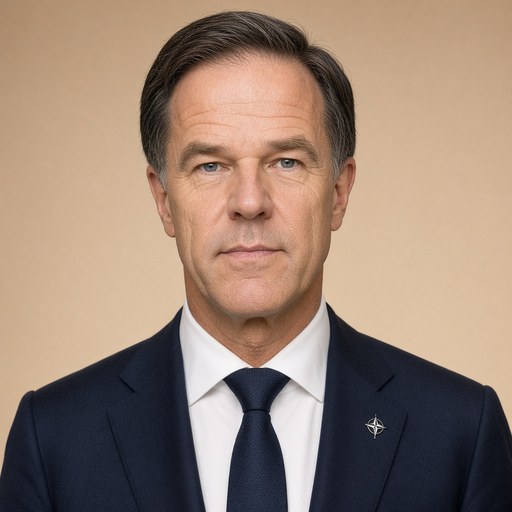
Speech by Prime Minister Mark Rutte in the National Assembly of Suriname
 Mark Rutte · Prime Minister of the Netherlands
- Context
- Rutte addressed the National Assembly of Suriname in September 2022, marking the restoration of bilateral ties and reflecting on the legacy of slavery ahead of its 150th abolition anniversary.
- Main themes
- Netherlands-Suriname relations, acknowledgment of slavery's legacy, historical reconciliation, commemoration of abolition of slavery, colonial history, bilateral cooperation, economic partnerships, recognition and healing, shared history, Surinamese diaspora in the Netherlands
- Duration
- ~14 min
- Words
- 1,652
- Sentences
- 100
- Readability
- 51
- Grade
- 10.2
- Syntax
- 2.89
- Vocabulary
- 2.22
Translated from Dutch
The broad sphere of national life a sentence belongs to. Every sentence has an Arena, so it is the denominator the other indices are read against.
Other100 sentences in 47 paragraphs
Mr. Chairman of the National Assembly,
Members of the National Assembly,
Mr. President,
Mr. Vice President,
Representatives of the high state bodies,
And all of you, ladies and gentlemen, who have taken the time today to listen to this speech, in this hall or at home, on the radio or the television screen,
Good morning – gu morgu.
First of all, I want to express how honored and grateful I am to stand here today. Here in this place, in the heart of Surinamese democracy, where past, present, and future come together. I personally experience this as a very special moment.
But even more, it is a special moment for our two countries. For too long, the relations between Suriname and the Netherlands have been disrupted.
And it is good that this bond has now been restored, as underscored by President Santokhi's visit to the Netherlands last year and my visit to Suriname now. We are once again moving forward together.
I was in Suriname once before. That was in 2009, when I was still the parliamentary leader and was here on a working visit with my fellow parliamentary leaders. I cherish the best memories of that time, due to the unprecedented warmth of the people I met and the very own scents and colors of this beautiful country.
Suriname embraces you as a visitor. And anyone who has experienced that cannot help but hold the country and its people close to their heart.
It is good to be back, and it is also good that this visit is focused on our shared future. A future that is undoubtedly promising and full of potential. It is no coincidence that a large group of companies is traveling with the delegation that is eager to do business with Suriname. These are companies from very diverse sectors, from water management to manufacturing, from the Port of Rotterdam to the dredging sector, and from agriculture to services.
This also underscores that a new chapter has been turned. We are moving forward together again, and we are looking ahead to the opportunities that lie ahead. To the future.
Yet, I cannot and do not want to avoid the past today. It is paradoxical that our shared history, which binds us and which we cherish, still carries so much pain. We cannot change that past, but we can and must confront it.
That is also why I have come to Suriname. We stand in the Kingdom of the Netherlands on the eve of the commemoration of 150 years of the abolition of slavery.
Between us in the present and that moment, there are, in fact, only a few generations, and it is entirely understandable that this is living history for the descendants of the enslaved, the indigenous population, and the contract workers. This is also true for many residents of the Kingdom of the Netherlands, including a large group of Surinamese Dutch.
For us 21st-century people, it is difficult to imagine, an absurd thought, how one human could treat another human as a commodity for centuries. With all the brutal violence and oppression that accompanied it. Slavery was literally an inhumane system, and everything we know about it, every testimony from the past that reaches us, fills us with horror.
The commemoration year 2023 must therefore be characterized by recognition. Recognition of the horrific suffering inflicted on the enslaved. Recognition of the struggle and resistance that also existed, and which has been so poignantly described by Anton de Kom in his book 'Wij slaven van Suriname'.
And of course, recognition of the societal impact of the period of slavery in the present. Because recognition is the beginning of healing.
And it is precisely about this, about that societal impact, that I hope to learn much more during this visit in various meetings. I want to hear firsthand what the legacy of slavery means today for the different population groups in Suriname. I want to hear from the youth and the elders how they view history and what they would like to see happen. I want to understand and feel the impact of the past.
So that the recognition that must come can work as healing and reconciling as much as possible. That is my fervent wish and that of the Dutch government.
Ladies and gentlemen, I just said that the relations between Suriname and the Netherlands have been disrupted for too long. But that mainly applies to the official channels at the government level. Because on a human level, the bond between our countries has always been unbreakable. And it cannot be otherwise.
350,000 people in the Netherlands have Surinamese roots. There are close family and friendship ties back and forth.
And culturally, linguistically, and culinarily, we are closely connected. We saw during the corona period how much our countries care for each other, for example, when medical experts from Suriname and the Netherlands joined forces to combat the pandemic. On those strong foundations, we can now build further, in a relationship based on equality, mutual trust, and open dialogue.
The challenges your country faces are great, and during President Santokhi's visit to the Netherlands last year, he made an urgent call to work together for the reconstruction of Suriname. I want to reiterate today, in this place, that the Netherlands is eager to respond to that call.
Since last year, we have been working together in a program aptly named 'Makandra' in Sranantongo, derived from the old Dutch 'malkander', meaning 'each other'. A word that expresses togetherness and reciprocity. As is fitting in a mature relationship between countries that are so closely connected by the past.
In Makandra, we exchange knowledge and experience in many areas. In a short time, very different projects have been launched in fields such as healthcare, defense, justice, police, financial management, and the tax service.
And I am pleased to announce that the budget for Makandra will increase from 4 million euros to 10 million euros. This will allow us to further broaden our cooperation into important areas such as water management and education. In this way, we are giving substance to the renewed bilateral relationship with each other – makandra.
And of course, Suriname and the Kingdom of the Netherlands are part of a much larger world. A world in which we are neighbors in the Caribbean region. A world that is also becoming increasingly interconnected, as the war in Ukraine unfortunately proves once again.
In Suriname, in the Netherlands, worldwide, the economic consequences of this war are directly felt in the daily lives of people. Especially in the price and availability of food, energy, and raw materials, of course.
And as we zoom out even further, we see more geopolitical changes that our countries must relate to, such as the growing international influence and assertiveness of China.
The fact is: the rules of the multilateral world order are under pressure, and that poses great questions for us. Because how do we protect our autonomy, our democracy, and our freedoms in the future?
How do we ensure that world trade can remain the engine of prosperity and well-being? How can the international community act effectively to stop global warming?
These are questions that no country can answer alone. So in this respect, our shared motto must be: makandra, working together, for example, in the United Nations.
Of the various concrete cross-border themes that require a joint approach, I want to mention organized crime today. And specifically, the international drug flows that unfortunately often – too often – run from South America through Rotterdam to Europe.
Supply and demand cannot be separated by borders or oceans. It is a many-headed monster and a significant threat to our societies, which we can only fight together.
And we have already proven that cooperation can make a difference, for example, with the International Drug Smuggling Combat Team at Zanderij Airport.
Secondly, I mention the consequences of climate change, for which we must find global solutions. No matter how great the physical differences between the Surinamese mangrove forests, the Caribbean islands of our Kingdom, and the Dutch river delta, we all face rising sea levels and more extreme weather conditions. We have seen it in recent months: extreme rainfall and flooding in Suriname, extreme drought in the Netherlands.
The Netherlands has traditionally had the necessary knowledge and expertise in water management, and we are happy to share that with Suriname. But it is abundantly clear that we will need new solutions in the future, and therefore it is important that we exchange experiences and learn from each other.
Water management in a country that consists of 90 percent tropical forest is indeed different from that in the low-lying Dutch polder landscape, and it is precisely in confronting those differences that new solutions lie. Solutions that we can only find together.
And with that, ladies and gentlemen, dear friends, I return to the simple but important message I want to convey today. Namely, that it is good that Suriname and the Netherlands are once again moving forward together.
To put it in the words of Johan Ferrier, whose name will forever be linked to the history of Suriname: 'No person, no country, no people, and no continent is independent. The essence of life is to be aware that you need others.' For Ferrier, that was the true meaning of the word srefidensi: seeking connection and cooperation from one's own strength and independence.
Let us move forward in that spirit, on the way to the crown year 2025. 50 years of srefidensi.
50 eventful years in the relationship between our countries.
What I sincerely hope and trust is that we will celebrate this anniversary as friends and partners, who will have taken new and meaningful steps to work towards a better future for all the inhabitants of Suriname and the Kingdom of the Netherlands.
Thank you – grantangi.
The original Dutch. The tags above are read on the English translation's sentences.
Mijnheer de voorzitter van de Nationale Assemblee,
Leden van de Nationale Assemblee,
Mijnheer de President,
Mijnheer de vicepresident,
Vertegenwoordigers van de hoge staatsorganen,
En u allen, dames en heren, die vandaag tijd vrij heeft willen maken om naar deze toespraak te luisteren, in deze zaal of thuis, voor de radio of het televisiescherm,
Goedemorgen – gu morgu.
Ik wil u allereerst zeggen hoe vereerd en dankbaar ik ben hier vandaag te mogen staan. Hier op deze plek, in het hart van de Surinaamse democratie, waar verleden, heden en toekomst samenkomen. Ik beleef dit persoonlijk als een heel bijzonder moment.
Maar veel meer nog is het een bijzonder moment voor onze beide landen. Want lang, veel te lang, zijn de relaties tussen Suriname en Nederland verstoord geweest.
En het is goed dat die band nu is hersteld, zoals het bezoek van president Santokhi aan Nederland vorig jaar en mijn bezoek aan Suriname nu onderstrepen. We trekken weer samen op.
Ik was 1 keer eerder in Suriname. Dat was in 2009, toen ik nog fractievoorzitter was en hier samen met mijn collega-fractievoorzitters op werkbezoek was. Ik bewaar daar de beste herinneringen aan, vanwege de ongekende hartelijkheid van de mensen die ik ontmoette én vanwege de heel eigen geuren en kleuren van dit mooie land.
Suriname omarmt je als bezoeker. En wie dat eenmaal zelf heeft ervaren, kan niet anders dan het land en de mensen in het hart sluiten.
Het is goed weer terug te zijn en het is ook goed dat dit bezoek in het teken staat van onze gezamenlijke toekomst. Een toekomt die zonder meer kansrijk en beloftevol is. Niet voor niets reist in de delegatie een grote groep bedrijven mee die graag zaken willen doen met Suriname. Dat zijn bedrijven uit heel diverse sectoren, van waterbeheer tot maakindustrie, van de Rotterdamse haven tot de baggersector en van landbouw tot dienstverlening.
Ook dat onderstreept dat er een bladzijde is omgeslagen. We trekken weer samen op en we kijken vooruit naar de kansen die er liggen. Naar de toekomst.
Toch kan en wil ik vandaag niet om het verleden heen. Het is paradoxaal dat onze gezamenlijke geschiedenis, die ons bindt en die we koesteren, nog altijd zoveel pijn in zich draagt. We kunnen dat verleden niet veranderen, maar we kunnen en moeten het wel onder ogen zien.
Ook daarom ben ik naar Suriname gekomen. We staan in het Koninkrijk der Nederlanden aan de vooravond van de herdenking van 150 jaar afschaffing van de slavernij.
Tussen ons in het heden en dat moment zitten welbeschouwd niet meer dan enkele generaties en het is volkomen begrijpelijk dat dit levende geschiedenis is voor de nazaten van de tot slaaf gemaakten, de inheemse bevolking en de contractarbeiders. Zoals dat ook geldt voor veel inwoners van het Koninkrijk der Nederlanden, waaronder een grote groep Surinaamse Nederlanders.
Het is voor ons 21e-eeuwers moeilijk voorstelbaar, een absurde gedachte, hoe de ene mens de andere mens eeuwenlang als handelswaar kon behandelen. Met al het brute geweld en onderdrukking die daarmee gepaard gingen. Slavernij was letterlijk een on-menselijk systeem en alles wat we erover weten, elke getuigenis uit het verleden die tot ons komt, vervult ons met afschuw.
Het herdenkingsjaar 2023 moet daarom in het teken staan van erkenning. Erkenning van het afschuwelijke leed dat de tot slaaf gemaakten is aangedaan. Erkenning van de strijd en het verzet, dat er ook was, en dat zo indringend is beschreven door Anton de Kom in zijn boek 'Wij slaven van Suriname'.
En natuurlijk erkenning van de maatschappelijke doorwerking van de periode van de slavernij in het heden. Want erkenning is het begin van heling.
En precies hierover, over die maatschappelijke doorwerking, hoop ik tijdens dit bezoek in diverse ontmoetingen veel meer te leren. Ik wil uit de 1e hand horen wat het slavernijverleden vandaag de dag betekent voor de verschillende bevolkingsgroepen in Suriname. Ik wil van de jeugd en van de ouderen horen hoe zij tegen de geschiedenis aankijken en wat zij graag zouden zien gebeuren. Ik wil de impact van het verleden kunnen begrijpen en invoelen.
Zodat de erkenning, die er moet komen, zoveel mogelijk helend en verzoenend kan werken. Dat is mijn vurige wens en die van de Nederlandse regering.
Dames en heren, ik zei net dat de relaties tussen Suriname en Nederland te lang verstoord zijn geweest. Maar dat geldt natuurlijk vooral voor de officiële kanalen op regeringsniveau. Want op het menselijke vlak is de band tussen onze landen altijd onverbrekelijk geweest. En dat kan ook niet anders.
350.000 mensen in Nederland hebben Surinaamse wortels. Er zijn nauwe familie- en vriendschapsbanden over en weer.
En ook cultureel, taalkundig en culinair zijn we nauw met elkaar verbonden. We hebben tijdens de coronaperiode gezien hoezeer onze landen met elkaar begaan zijn, bijvoorbeeld toen medische experts uit Suriname en Nederland de handen ineen sloegen om de pandemie te bestrijden. Op die sterke fundamenten kunnen we nu verder bouwen, in een relatie die is gebaseerd op gelijkwaardigheid, wederzijds vertrouwen en open dialoog.
De uitdagingen waar uw land voor staat zijn groot en tijdens het bezoek van president Santokhi aan Nederland vorig jaar deed hij de dringende oproep samen te werken voor de wederopbouw van Suriname. Ik wil vandaag, op deze plek, nogmaals onderstrepen dat Nederland die oproep graag beantwoordt.
Sinds vorig jaar werken we samen in een programma dat in het Sranantongo heel toepasselijk ‘Makandra’ is genoemd, afgeleid van het oud-Nederlandse ‘malkander’, ‘elkaar’. Een woord dus, dat gezamenlijkheid en wederkerigheid uitdrukt. Zoals dat hoort in een volwassen relatie tussen landen die door het verleden zo nauw met elkaar zijn verbonden.
In Makandra wisselen we op tal van terreinen kennis en ervaring uit. In korte tijd zijn heel verschillende projecten van de grond gekomen op terreinen als gezondheidszorg, defensie, justitie, politie, financieel beheer en de belastingdienst.
En het doet mij veel plezier te kunnen melden dat het budget voor Makandra met 4 miljoen euro omhoog gaat naar 10 miljoen euro. Daarmee kunnen we onze samenwerking nog verder verbreden naar belangrijke terreinen als watermanagement en onderwijs. Zo geven we invulling aan de hernieuwde bilaterale relatie met elkaar – makandra.
En uiteraard maken Suriname en het Koninkrijk der Nederlanden deel uit van een veel grotere wereld. Een wereld waarin we buren zijn in de Caribische regio. Een wereld ook die steeds meer verweven is, zoals de oorlog in Oekraïne helaas opnieuw bewijst.
In Suriname, in Nederland, wereldwijd zijn de economische gevolgen van deze oorlog direct merkbaar in het dagelijks leven van mensen. Vooral in de prijs en beschikbaarheid van voedsel, energie en grondstoffen natuurlijk.
En als we nog verder uitzoomen, zien we meer geopolitieke veranderingen waartoe onze landen zich moeten verhouden, zoals de groeiende internationale invloed en assertiviteit van China.
Feit is : de spelregels van de multilaterale wereldorde staan onder druk en dat stelt ons voor grote vragen. Want hoe beschermen we in de toekomst onze autonomie, onze democratie en onze vrijheden?
Hoe zorgen we dat de wereldhandel de motor kan blijven van welvaart en welzijn? Hoe kan de internationale gemeenschap effectief handelen om de opwarming van de aarde te stoppen?
Het zijn vragen waar geen land alleen antwoord op kan geven. Dus ook in dit opzicht moet ons gezamenlijke motto zijn: makandra, met elkaar samenwerken, bijvoorbeeld in de Verenigde Naties.
Van de verschillende concrete grensoverschrijdende thema’s die een gezamenlijke aanpak vragen, wil ik vandaag de georganiseerde criminaliteit noemen. En dan met name de internationale drugsstromen die helaas vaak – te vaak – van Zuid-Amerika via Rotterdam naar Europa lopen.
Aanbod en vraag laten zich niet door grenzen of oceanen van elkaar scheiden. Het is een veelkoppig monster en een grote bedreiging voor onze samenlevingen, waar we alleen samen tegen kunnen vechten.
En we hebben al bewezen dat samenwerking het verschil kan maken, bijvoorbeeld met het team Bestrijding Internationale Drugssmokkel op luchthaven Zanderij.
Ten 2e noem ik de gevolgen van de klimaatverandering, waarvoor we wereldwijd oplossingen moeten vinden. Hoe groot de fysieke verschillen tussen de Surinaamse mangrovebossen, de Caribische eilanden van ons Koninkrijk en de Hollandse rivierdelta ook zijn, we krijgen allemaal te maken met zeespiegelstijging en met meer uitzonderlijke weersomstandigheden. We hebben het de afgelopen maanden nog gezien: extreme regenval en wateroverlast in Suriname, extreme droogte in Nederland.
Nederland heeft van oudsher de nodige kennis en kunde in huis op het gebied van waterbeheer en die delen we graag met Suriname. Maar het is volstrekt duidelijk dat we in de toekomst nieuwe oplossingen nodig zullen hebben en daarom is het belangrijk dat we ervaringen uitwisselen en van elkaar leren.
Waterbeheer in een land dat voor 90 procent uit tropisch bos bestaat is echt anders dan in het laaggelegen Hollandse polderlandschap en juist in de confrontatie van die verschillen gaan nieuwe oplossingen schuil. Oplossingen die we alleen samen kunnen vinden.
En daarmee, dames en heren, beste vrienden, kom ik terug bij de eenvoudige, maar belangrijke boodschap die ik vandaag wil overbrengen. Namelijk dat het goed is dat Suriname en Nederland weer gezamenlijk optrekken.
Om het te zeggen met de woorden van Johan Ferrier, wiens naam voor altijd verbonden zal zijn met de geschiedenis van Suriname: ‘Geen mens, geen land, geen volk en geen continent is onafhankelijk. De kern van het leven is je ervan bewust te zijn dat je anderen nodig hebt.’ Dat was voor Ferrier de ware betekenis van het woord srefidensi: vanuit eigen kracht en zelfstandigheid verbinding zoeken en samenwerken.
Laat ons in die gedachte verder gaan, op weg naar het kroonjaar 2025. 50 jaar srefidensi.
50 bewogen jaren in de relatie tussen onze landen.
Wat ik zeer hoop en waar ik op vertrouw, is dat we dit jubileum zullen vieren als vrienden en partners, die ook dan weer nieuwe en betekenisvolle stappen hebben gezet om te werken aan een betere toekomst voor alle inwoners van Suriname en het Koninkrijk der Nederlanden.
Ik dank u wel – grantangi.