




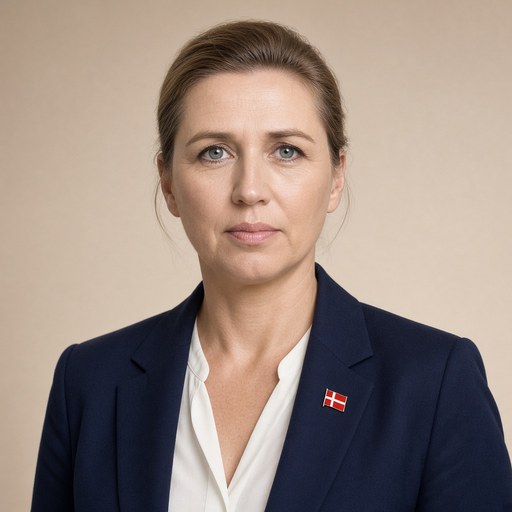
Prime Minister Mette Frederiksen's introduction to the town hall meeting on chronic care packages on October 27, 2025.
 Mette Frederiksen · Prime Minister of Denmark
- Context
- Frederiksen addressed a town hall meeting on October 27, 2025, introducing new chronic care packages aimed at improving healthcare for Danes living with chronic illnesses.
- Main themes
- Chronic illness care, chronic care packages, healthcare system reform, patient rights, cohesive treatment pathways, health inequality, COPD and chronic disease management, primary care access, home-based care, rehabilitation, patient empowerment, Danish health reform
- Duration
- ~7 min
- Words
- 828
- Sentences
- 94
- Readability
- 71
- Grade
- 5.0
- Syntax
- 2.30
- Vocabulary
- 1.90
Translated from Danish
The broad sphere of national life a sentence belongs to. Every sentence has an Arena, so it is the denominator the other indices are read against.
Other94 sentences in 44 paragraphs
"Live in the now that matters"
That is what it is all about. Regardless of whether you have a chronic illness or not.
Thank you to the Lung Choir for the lovely song.
And welcome to all of you.
Family members, health policymakers, doctors.
And not least to you, whom this is all about.
You, who live with a chronic illness.
I know that many of you have come from far away, despite your illness. Thank you for that.
You live with chronic illnesses. COPD. Type 2 diabetes. Chronic lower back pain. Heart disease. Or several chronic illnesses at once.
Your illnesses are different, and you have different needs. But what you have in common is that you need help. Either on a daily basis or now and then.
And that help needs to be better. With clear rights. Cohesion across the board. And systematic follow-up. So you can live as good a life as possible.
* * *
Today, we have a good and strong healthcare system. Cancer treatment is top-notch. More people survive diseases that once were fatal.
But even though much is going well, the help for you who live with chronic illnesses is not always as good as it should be.
Earlier today, I visited you, Anne.
You live with both COPD and heart disease. And it is wonderful to hear that despite your illness, you insist on living life to the fullest. With walks. Exercise. COPD choir. Flex jobs. And volunteer work. It is deeply inspiring!
But you have also told me that you have personally experienced inequality in the healthcare system. And that you fear there will be an A-team and a B-team.
Unfortunately, you are probably not the only one who has that experience. And it is not how it should be.
Today, one in five Danes lives with a chronic illness. And many fortunately have a life where the illness does not dominate their daily routine.
But for others, life with a chronic illness can be difficult.
Many find themselves having to be project managers in their own lives. In a convoluted system that can be hard to navigate.
Many get lost between chairs. Because the authorities do not communicate well enough with each other.
Many end up each year in one of the hospitals' emergency departments. With long-term rehabilitation following. Even though it could have been prevented.
And for many, it is difficult to get an appointment with their doctor when they need it. And there is something fundamentally wrong when there are the fewest doctors where there are the most sick.
That is not how it should be. When it is you who are vulnerable and need help.
* * *
We need to think about our healthcare system differently.
That is why we passed a health reform just over a year ago. With the clear aim of making life as a patient easier. Not least for you who live with a chronic illness.
We need to be better at taking you by the hand. Taking responsibility for your treatment across authorities. And creating pathways that are better connected.
We can certainly learn something from the cancer area. Here, patients have some clear rights. And the cancer packages ensure quick and effective treatment.
The whole idea is to create cohesive pathways for you who live with chronic illness. Where your own doctor is the coordinator. And where you have the right to a personal treatment plan that you and your doctor create together.
So you can get the treatment you need as quickly as possible. And spend your time on what you love. Instead of being a project manager.
We also need to make a special effort during exacerbations, so we can address issues early on.
And you should be able to get help even closer to your own home.
From the social and health assistant at the nursing home. The home care nurse. Or your doctor.
You should be met with competent and attentive help, no matter where you are in the country. And when you call your doctor, there should be someone on the other end of the line.
In some cases, help can move right into your own home.
So you can get help at home with your breathing if you are a COPD patient. Attend your regular check-ups while you are in your own home. Or rehabilitate your muscles via a screen instead of having to show up at the municipality.
So you can avoid spending time on transport and waiting rooms. And instead be at home. Where the laundry is piled up and the coffee tastes best. Where you feel safe.
* * *
Being diagnosed with a chronic illness can be life-changing.
We must work together to ensure that the illness takes up as little space as possible. Everyone wants to be a person before they are a patient.
I look forward to hearing what you think.
Thank you for your attention.
The original Danish. The tags above are read on the English translation's sentences.
”Leve i det nu, der gælder”
Det er jo det, det hele handler om. Uanset, om du har en kronisk sygdom eller ej.
Tak til Lungekoret for den fine sang.
Og velkommen til jer alle sammen.
Pårørende, sundhedspolitikere, læger.
Og ikke mindst til jer, det handler om.
Jer, der lever med en kronisk sygdom.
Jeg ved, at mange af jer er kommet langvejs fra, trods jeres sygdom. Tak for det.
I lever med kroniske sygdomme. KOL. Type 2-diabetes. Kroniske lænderygsmerter. Hjertesygdom. Eller flere kroniske sygdomme på en gang.
Jeres sygdomme er forskellige, og I har forskellige behov. Men fælles for jer er. At I har brug for hjælp. Enten i det daglige eller i ny og næ.
Og den hjælp. Den skal være bedre. Med klare rettigheder. Sammenhæng på tværs. Og systematisk opfølgning. Så I kan leve så godt et liv som muligt.
* * *
Vi har i dag et godt og stærkt sundhedsvæsen. Kræftbehandlingen er i top. Flere overlever sygdomme, man før døde af.
Men selvom meget går godt, så er hjælpen til jer, der lever med kroniske sygdomme, ikke altid så god, som den burde være.
Tidligere i dag besøgte jeg dig, Anne.
Du lever med både KOL og hjertesygdom. Og det er fantastisk at høre, at du på trods af sygdom insisterer på at leve livet fuldt ud. Med gåture. Træning. KOLKOR. Flexjob. Og frivilligt arbejde. Det er dybt inspirerende!
Men du har også fortalt, at du på egen krop har oplevet en ulighed i sundhedssystemet. Og at du frygter, at der bliver et A- og et B-hold.
Desværre er du nok ikke den eneste, der har den oplevelse. Og det er slet ikke sådan, det skal være.
I dag lever hver femte dansker med en kronisk sygdom. Og mange har heldigvis et liv, hvor sygdommen ikke fylder i dagligdagen.
Men for andre kan livet med kronisk sygdom være svært.
For mange oplever at skulle være projektmagere i deres eget liv. I et snørklet system det kan være svært at finde rundt i.
For mange bliver tabt mellem stole. Fordi myndighederne ikke taler godt nok sammen.
For mange ender hvert år på en af sygehusenes akutmodtagelser. Med lang tids rehabilitering til følge. Selvom det kunne være forebygget.
Og for mange oplever, at det er svært at få tid hos sin læge, når man har brug for det. Og der er jo noget helt galt, når der er færrest læger, hvor der er flest syge.
Det er ikke sådan, det skal være. Når det er jer, der er sårbare og har brug for hjælp.
* * *
Vi skal tænke vores sundhedsvæsen anderledes.
Derfor vedtog vi for godt et år siden en sundhedsreform. Med det klare formål. At gøre livet som patient lettere. Ikke mindst for dig, der lever med en kronisk sygdom.
Vi skal være bedre til at tage dig i hånden. Tage ansvar for din behandling på tværs af myndigheder. Og lave forløb, der hænger bedre sammen.
Der kan vi helt sikkert lære noget af kræftområdet. Her har patienterne nogle klare rettigheder. Og kræftpakkerne sikrer hurtig og effektiv behandling.
Hele idéen er at lave sammenhængende forløb for dig, der lever med kronisk sygdom. Hvor din egen læge er tovholder. Og hvor du har ret til en personlig behandlingsplan, som du og din læge laver sammen.
Så du kan få den behandling, du har brug for, så hurtigt som muligt. Og bruge tiden på det, du holder af. I stedet for at være projektleder.
Vi skal også gøre en særlig indsats ved forværringer, så vi tager tingene i opløbet.
Og så skal du i endnu højere grad kunne få hjælp tæt på dit eget hjem.
Af social- og sundhedsassistenten på plejehjemmet. Hjemmesygeplejersken. Eller din læge.
Du skal mødes af kompetent og nærværende hjælp, uanset hvor du er i landet. Og når du ringer til din læge, så skal der være nogen i den anden ende af røret.
I nogle tilfælde kan hjælpen flytte helt tæt på. Ind i dit eget hjem.
Så du kan få hjælp derhjemme til vejrtrækningen, hvis du er KOL-patient. Tage til dine faste kontroller, mens du er i dit eget hjem. Eller genoptræne dine muskler via en skærm i stedet for at skulle møde op hos kommunen.
Så du slipper for at bruge tid på transport og venteværelser. Og i stedet kan være hjemme. Hvor vasketøjet flyder og kaffen smager bedst. Hvor du er tryg.
* * *
At få konstateret en kronisk sygdom kan være livsforandrende.
Vi skal sammen sørge for, at sygdommen fylder mindst muligt. Alle vil jo gerne være menneske, før man er patient.
Jeg glæder mig til at høre, hvad I tænker.
Tak for ordet.