




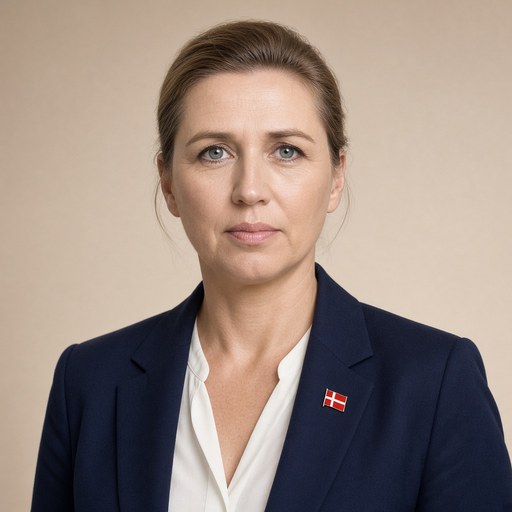
Prime Minister Mette Frederiksen's speech at the opening of the Folketing on October 7, 2025.
 Mette Frederiksen · Prime Minister of Denmark
- Context
- Frederiksen addressed the Danish Folketing at its opening session on October 7, 2025, warning of growing threats to democracy from harassment and violence targeting elected politicians.
- Main themes
- Threats to democracy, harassment and violence against politicians, protection of democratic institutions, rule of law, political culture and civility, ancient Roman parable on governance, Danish parliamentary opening, freedom of speech vs. intimidation, security of elected officials
- Duration
- ~62 min
- Words
- 7,430
- Sentences
- 749
- Readability
- 68
- Grade
- 6.0
- Syntax
- 2.32
- Vocabulary
- 2.02
Translated from Danish
The broad sphere of national life a sentence belongs to. Every sentence has an Arena, so it is the denominator the other indices are read against.
Other749 sentences in 480 paragraphs
Your Majesties.
Your Royal Highness.
The Speaker of the Folketing.
The Prime Minister of the Faroe Islands. The Chairman of the Naalakkersuisut.
Dear colleagues here in the Folketing chamber. And all of you watching from home.
I will start my speech with a little story from ancient times.
We go to the city of Capua in the ancient Roman Empire.
It was a city in development. Here, spelt, wine, roses, and spices were cultivated, salves were produced, and bronze goods were sold.
But all was far from peaceful.
In Capua, there was great dissatisfaction with the city council.
They were a bunch of criminals, it was said.
And it did not take long before people took action.
The city council was locked inside the town hall. People gathered in the square. The atmosphere was unforgiving; they were all to be executed.
But then a man took the floor.
He suggested that they first elect a new city council. Before executing the old one.
Several candidates were now brought forward.
But it was shouted about the first that he had committed embezzlement.
About the next, it was said that he was morally compromised.
And so it continued with all the names that came up.
After some time, the same man took the floor again.
He stated that it had not been possible to find a new and better city council. And therefore suggested that they instead release the old council members and ask them to resume their duties.
* * *
This little story is told in Hal Koch's book 'What is Democracy?', which he wrote immediately after World War II.
And when I bring it up today, it is not to say that this is the government's strategy leading up to the next parliamentary election.
But because it – here more than 2,000 years later – is still relevant.
In my speech today, I will touch on a topic that politicians usually avoid.
We are here to serve the people. Not to talk about ourselves.
Today, I will make an exception.
For there is something more precious at stake than our own well-being.
And the examples have become too many.
Dear colleagues.
It is true that not all of you here in the chamber have received a picture of your own gravestone.
But one of you has.
It is not all of you here in the chamber who have been awakened with your family by the police in the middle of the night. With the message that a man had sneaked into your residence with a knife and pepper spray.
But one of you has.
It is not all of you here in the chamber who have received a phone call in the middle of cooking, with the phone on speaker, so your children could hear you being called names so ugly that I will not repeat them here.
But one of you has.
It is not all of you here in the chamber who have been attacked with stones and blows in Nørrebro and had to flee to safety in a bank until the police arrived.
But one of you has.
It is not all of you here in the chamber who have been beaten while distributing croissants and campaign leaflets.
But one of you has.
It is not all of you here in the chamber whose children have received letters with false and very serious accusations about your husband and their father.
But one of you has.
It is not all of you here in the chamber who have a secret address, but who still found an intimidating message in front of your front door on Christmas Eve last year. And had to flee with your husband and children from your home in the midst of Christmas preparations.
But one of you has.
It is not all of you here in the chamber who have received a fist in the face while watching a national match.
But one of you has.
And look around you.
I believe that almost everyone here has experienced harassment. The examples are just a selection of what several of you have shared and what is known.
A life in politics is primarily filled with meaning. Influence. The opportunity to create an even better Denmark for the majority of people.
A life in politics also comes with costs. That must be the case.
With power comes responsibility, and we must all be able to tolerate criticism. Satire. Mockery.
But harassment, violence, and death threats are far over the line.
And we must not become so timid that we fail in the responsibility we share on behalf of democracy: That people, like most, want to serve our country.
It must not become the case that only the toughest remain. Those who believe one should be able to tolerate everything. And put up with anything.
Can we raise that debate? Without appearing weak?
Can we raise that debate? Without giving ammunition for a new round on social media, where politicians can be vilified?
I am not sure.
And I can already see the headlines in my mind.
Some of you may criticize me for starting with this topic. Does Denmark really not have greater and more pressing challenges?
And yes, we do. I will return to them.
But our democracy is under pressure.
From outside by forces that wish us harm.
And from within, if we allow the street's parliament to take over.
* * *
We need journalists and editors who stand guard over free debate. Without being met with threats.
We need teachers who teach. Without being called names.
We need prison guards who keep order among the inmates. Without being assaulted.
We need social workers who make decisions in difficult cases. Without being approached at their homes.
We need garbage collectors who pick up waste. Without being spat on.
We need experts who dare to present their knowledge. Without being intimidated.
We need employees at Terma who can help take care of Denmark. Without being harassed at a gas station.
We need adults who want to be referees in our children's football matches. Without being insulted or threatened.
It is not the cashier at Netto who is to blame for the long queue.
It is not the employee at the toll booth on the Great Belt who is to blame for Nets having a breakdown one evening.
The ferry assistants on Molslinjen are simply trying to make room for all the cars.
The parking attendants are just doing their job.
And the school patrols. Yes, some of them are only 11-12 years old.
I do not know if it is social media that has caused this.
That one can quickly fire off a remark. Without thinking that there is a person on the other end.
I do not know if the distance between us has become too great.
Regardless of the reason.
It is as if there is more anger – and more unforgivingness – in our society.
And it is as if the boundaries of what we can allow ourselves to say about – and to – each other have become blurred. We get used to it being this way.
Therefore, we may not see the shift that has occurred.
But perhaps it would be fitting for us to take a step back.
And perhaps it is time. That the large, broad majority. Is not also a large, silent majority.
We need all voices in the public space. Not just those who shout the loudest.
And we choose for ourselves what kind of society we want.
We can certainly import a political culture like the one we see in the USA.
But we can certainly also choose not to.
For the echo it sends. It creates a society of distrust.
And that is actually the opposite of what we have built Denmark on.
Trust.
Cooperation. Also with those who do not think the same as we do.
A strong community.
* * *
And let it be said right away.
I do not like pity.
I am not afraid of a hard debate.
There can be a slip of the tongue.
And when the election comes. Then the voters must make their decision.
But there must also be someone to vote for and preferably someone who resembles the people as they are most. Someone who steps forward and is ready to take responsibility.
In the municipal and regional council elections in November, there are thousands of fellow countrymen and women who do exactly that.
They are farmers and laboratory technicians. Police officers and educators. Lawyers and ambulance rescuers.
There are those who have their lives ahead of them. And those who have a life lived behind them.
There are those who have always been here. And those who have embraced Denmark.
People in all shapes and sizes, with all backgrounds and all opinions.
You will hardly find one with whom you agree on everything.
But you can at least find one with whom you agree on most things.
And they all have in common that they step forward and say: I want to take responsibility for our city, our municipality, our region.
That is something to celebrate.
There are also some who are no longer on the ballot.
Some would rather do something else, some have done their part. Respect for that.
But there are also those who simply can no longer.
Who have had enough of harassment, outbursts, insults, false accusations, vandalism, or violence.
Who entered politics to take action. Not to be vilified.
And who have looked their family in the eye and decided that if this is how it works. Then it will be without me.
Imagine that it has come to the point where in Hjørring they now hire guards for city council meetings. "A couple of adult men just to be there in a gray sweater," as the mayor says.
And as one of the local council members says:
"We should be able to disagree without being unpleasant."
Uh – yes.
We should.
And it should not be the case that some refrain from engaging in politics because the personal costs are too high.
But it happens.
It should not be the case that one refrains from participating in debates because one knows that afterwards one will be vilified.
But it happens.
And it should not be the case that we have to strengthen the protection of elected officials or for that matter police officers and employees in the Prison and Probation Service.
But we do – and we intend to do so.
The government will invite all parties in the Folketing to a discussion on how.
Some of the things we will propose.
Is a special protection for relatives of elected officials or others who perform public service or duties.
It is problematic enough in itself to be threatened for expressing one's opinion. But it is unacceptable when the threats are directed at one's children or family.
Dear colleagues here in the chamber.
They say that if you want to have a friend in politics, you should get a dog.
And I do not know if it is also a sign of the state of the times that several of you have done just that. In any case, there seem to be more dogs at Christiansborg.
But you also have something else.
Many of you have children. Many of you have a partner or a spouse. You all have a family.
Allow me to say a few words directly to them.
A life in politics was not your choice.
Maybe you think it is a good idea. Maybe you just live with it. Maybe you look forward to when it ends one day.
Regardless – thank you for your support.
And know that your beloved or spouse. Father or mother. Son or daughter. Brother or sister. Know that the people sitting here today. They do it because each of them has chosen to serve their country.
That will always have my deepest respect.
So will all of you candidates for the municipal and regional council elections, who in a few weeks will hang your posters on the lamp posts.
Who with the power of words try to convince voters of exactly what you stand for.
Thank you for making yourselves available for all of us.
Democracy would be nothing without you.
Is that lofty? Perhaps.
But it is primarily practical.
There is a task that needs to be solved.
Compromises that need to be found.
A country that needs to be led.
* * *
It is the laborious path of conversation and cooperation that one must walk.
And fortunately, that is the path we follow most of the time here in Denmark.
So how are we doing?
Let me mention five areas:
The purchasing power of the Danes. It has increased for most.
The waiting times at hospitals. They have fallen.
The climate goals? Yes, it seems we will reach them. At least in Denmark.
The influx of asylum seekers is low.
And employment. It is high.
Five results that can be said a lot about. One can also summarize it in just two words: Politics works! Or perhaps more accurately: Cooperation works!
It is not a characteristic of Christiansborg.
It characterizes all of Denmark.
That special resilience. When a local community comes together and defies adversity.
That inherent optimism. Where the next final round in football must be where we recreate the miracle of 1992.
Imagine that generations before us. Have created this fantastic country. Perhaps the best on the planet.
And imagine that it is now us. Who have the opportunity to make it even better. In small and in large.
We are a small country. We speak a language that very few understand.
But we have our values. Our Danish way of doing things. And we have each other.
We know well what we are made of.
And we know where we come from.
I love that Jonas Vingegaard would rather be celebrated in Skive than eat pancakes at Copenhagen City Hall.
I love that we always rise if something knocks us down.
And I love that we always ask. If we can do it a little better?
For yes – we can.
So let me return to the five things.
First: Purchasing power.
Good agreements. Tax cuts and wage increases. The government's budget proposal.
All of this means that the vast majority of Danes have – and will have – significantly more money in their hands.
Even when taking into account price increases. A wage-earning family with children living in a house, for example, will have over 30,000 DKK more for consumption next year compared to last year.
But that does not change the fact that it has become expensive to shop.
Meat. Coffee. Butter. These are just some of the things that have risen sharply in price.
Some of it is due to developments in global commodity prices. Uncertain supply chains.
Crops that have failed around the globe.
But the bottom line. Is that a number of completely ordinary goods have become so expensive that it is putting pressure on many Danes. Especially you who already have the least.
That is why we have proposed to lower the electricity tax for the next two years. That is why we have proposed to abolish a number of excise duties permanently. That is why we are starting work that will make it possible to differentiate VAT.
We will reduce parental contributions for daycare, nursery schools, and kindergartens, and we will make the daily warm meal for our elderly cheaper.
We have raised the elderly check. On January first, the state pension will rise again. The largest increase in 16 years. So, a single pensioner without supplementary income next year will receive almost 14,300 kroner more per year after tax than last year.
Secondly: Waiting times.
One of the first things we did in this electoral term was to introduce an acute plan. Later, a wage increase. Now we see the benefits.
Nurses are returning to the hospitals.
And that means that in many areas, you will be diagnosed and treated more quickly. Among other things, if you are one of those waiting for a new knee or hip.
But that does not change the fact that waiting times in child and adolescent psychiatry are still far too high. Therefore, we are investing billions in a 10-year plan for psychiatry. It will provide early help and support and more and better treatment options.
We are implementing a comprehensive health reform. So there will be more doctors where there are the most sick people. And more help for you who suffer from a chronic illness. This is especially good for life in rural areas.
And we are improving the opportunities for those of you who have difficulty starting a family.
Here, one can truly say that politics makes a difference. When you meet a lovely couple who have now had a child after we expanded the options for fertility treatment. Or have a little brother or sister on the way.
Thirdly: The climate goals and the green transition.
We have introduced a CO2 tax in industry, and it is on its way in agriculture. We have spread new technologies. And we are well underway in transitioning the transport sector, reducing nitrogen emissions, and converting agricultural land to nature.
We have entered into an ambitious green tripartite agreement.
And the projections show that we will meet the climate goals. Both for 2025 and in 2030.
In return, it looks more difficult to ensure a green and independent energy supply.
The expansion of offshore wind has become more expensive.
And we received precisely zero bids when we tendered new parks last year.
Therefore, we have improved the tender conditions. Now we are trying again. Because those wind turbines need to go up in the sea.
We will introduce Denmark's first law on nature and biodiversity. And we will set a new climate goal for 2035 that keeps us on our toes.
Fourthly: Immigration policy.
Since I became Prime Minister, we have implemented more than 30 tightening measures affecting foreigners in Denmark.
Partly with the aim of sending more criminal foreigners out of the country.
Historically few asylum seekers are coming to Denmark.
But that does not change the fact that crime and insecurity are still among our biggest challenges. Social control, dominant culture, parallel societies, religious legal systems.
It is so unforgivable that there are people coming from outside and destroying our lovely country.
Therefore, we have tightened the expulsion rules.
And today we are presenting a legislative program with new tightening measures.
We will increase penalties for violent crime and reckless driving.
We will take a tougher stance against released convicted terrorists and radicalized individuals.
Cousin marriages will become illegal in Denmark, and we will introduce stricter rules for foreigners without legal residence in Denmark.
And we will stop the rampant traffic of foreign students who have not come to study but rather to work in the service sector.
Fifthly: Employment.
We have abolished the offsetting of earned income for pensioners, so more choose to work at an older age. We have strengthened the framework conditions for Danish businesses. Made it more attractive to have a part-time job, agreed to raise the income threshold for students in youth education, and removed the AM contribution for young people under 18 years old.
Record numbers are in work.
But that does not change the fact that some are still outside.
Despite political decisions to the contrary, there are still far too many young people under 40 who are granted early retirement. There are still far too many young people who are neither in education nor in a job.
Early retirement for young people must and shall be an absolute exception.
Reserved for people with such significant disabilities that they obviously can never have a connection to the labor market.
But many of those who are now being granted early retirement – contrary to the political wishes we have here in the Folketing – yes, they are young people with mental illnesses.
Here, early retirement simply cannot be the answer.
We will do something about that.
Just as we are in the process of changing the public school system. Among other things, by introducing junior apprenticeships.
We are well underway in making education more practical and relevant to reality.
And we will address what I believe is the biggest challenge in the public school system: That there is far too much noise and disruption.
* * *
Let me say a few words about that.
For it touches on a general challenge in politics.
We can change frameworks and legislation. We can tighten and loosen rules.
The Minister of Children and Education has changed the so-called order regulation. So that schools can better intervene against poor behavior.
I do not believe we have done enough. I believe there is a need for more.
But we cannot avoid the fact that there is also a need for a cultural battle.
We cannot legislate about that from Christiansborg. But we can be clear about our values.
And we can rightly have the expectation that school leaders are also clear about that. So that individual teachers do not stand alone with the problems.
Just as we can rightly have the expectation that parents take a great responsibility.
When a child or a young person does not behave properly.
Then we, as adults, should of course try to understand what lies behind it. There must be resources to provide the necessary help and support. Especially when the children are very young.
But we are mistaken if we think that it is solely a matter of money. For the truth is that we have never spent more money on public schools than we do now.
And we must not become so understanding. That a 14-year-old boy who has assaulted a classmate can show up at school the next day and sit in the same classroom as his victim.
It is a betrayal of the victim. It is a betrayal of all those who can behave properly. But it is, in reality, also a betrayal of those who cannot.
If one experiences that wrongful actions have no consequences.
If we fool ourselves into thinking that it is always someone else's fault.
If we fail to set a boundary. Then behavior becomes boundless.
And things are interconnected.
If a 15-year-old leaves public school. With the experience that they have been able to call their teachers the worst insults in our language without anything happening.
Then it is not hard to understand that there can also be problems with disruption in high schools.
And perhaps one might also think of spitting at a garbage collector? Or something even worse.
Discipline has almost become a dirty word in today's Denmark. It should not be that way.
Discipline can be oppressive if used incorrectly.
But if used correctly, it can be guiding and allow for calm and concentration.
We can certainly have a long pedagogical discussion about what is best for the children who create disruption. In public debate, consideration for them often weighs more than consideration for all those who are affected.
But when every third teacher reports that they have been subjected to violence. When six out of ten teachers report that violence among students has increased in the last five years. And when more than one in ten experiences violent incidents daily.
Then it has gone far, far too far.
There comes a time when one must choose sides. Between the community and consideration for the few who destroy it.
We can create the frameworks from Christiansborg and in the municipalities.
As we did last week with the agreement to make all public schools mobile-free. Thanks to the parties behind it.
But we, as a society, also need to have the debate about good and bad upbringing. A debate that, among other things, the Wellbeing Commission has started.
And we need to stand firm on the fact that in the classroom and in teaching, it is indeed the teacher who decides.
A school without authorities becomes a society without authorities. A society without authorities. That is not a society.
And perhaps the time has also come for another and difficult realization.
94 percent of Danish children in 7th grade have, according to Børns Vilkår, had a profile on a social media platform before they turned 13.
We have said yes to mobile phones in our children's lives with the best intentions. So they can call home and communicate with their friends.
But the reality is that we have unleashed a monster.
Never before have so many children and young people suffered from anxiety and depression. Many have difficulty reading and concentrating.
On the screen, they see things they should not see. And as many as 60 percent of 11-19-year-old boys are not seen with a single friend physically during a week in their free time.
60 percent.
Do you think that number would be so high if it weren't for the smartphone?
Mobile phones and social media are stealing our children's childhood.
The government will therefore propose that we ban more social media for children and young people under 15 years old. With the possibility for parents to give permission from when the children are 13 years old.
I hope that you here in the chamber will join in tightening the law so that we better protect our children here in Denmark.
* * *
More calm in public schools. Fewer young people on early retirement. New tightening of immigration policy. Ambitious climate goals. An even stronger healthcare system. Addressing rising food prices.
There is much to tackle.
And this applies throughout Denmark.
Some live in the city, others in the provinces or in the countryside.
But right now, the development is pulling Denmark askew.
In the big cities, it is too difficult for many to find a home that is affordable or that they can own themselves. Therefore, there is a need for a larger supply. Of public housing and owner-occupied housing.
In other parts of Denmark, there are enough homes and space. But here it can, on the other hand, be difficult to get a loan from the bank.
And of course, one should be able to rent out their summer house or apartment.
But it should not be such that one can too easily circumvent the rules that, among other things, are meant to ensure that Copenhagen does not develop into a new Venice, where tourists have displaced the local population.
All of this will be proposed by the government to change.
And we will, in general – here in the last full parliamentary year before an election – have a greater focus on ensuring that we also politically follow through on our decisions.
Take the money we allocate to welfare. Historically large increases in welfare in municipalities and regions.
It must translate into something that citizens can feel. So that more adults in nurseries and kindergartens show up in reality and not just in the spreadsheet.
Or take the elderly reform. Our seniors and our elderly. It is you who have built Denmark.
We will replace diligent control and countless forms with presence and self-determination.
You should know much better the people who come into your home – with a fixed group of staff that you have met before and whom you trust.
Because you are never too old to feel good.
But the reform is only a success the day it can be felt at home with the elderly. That task. We will not let go of.
* * *
And here we are. The first Tuesday in October.
The Folketing opens. The Dannebrog is raised. Flowers adorn the halls of Christiansborg.
We call it the celebration day of democracy.
But we do it in the shadow of a nagging doubt.
For even though most things are going well in Denmark.
Is there really so much to celebrate on behalf of democracy when we look around the world?
I believe that many are struggling to grasp the development we are in. And which, in many ways, has only just begun.
And I believe there is something deeply human in it.
That when the world around us seems more uncertain, more unpredictable, and more overwhelming.
We focus more on the immediate.
Perhaps we kiss our children an extra time.
Perhaps we live life a little more fully.
We look for the bright spots in the dark. And we should!
But sometimes we probably have a tendency to overestimate what can be interpreted positively.
Instead of acknowledging that it was glimpses from a world we once knew.
Do we fully understand what polarization and hatred bring with them?
Do we fully understand what happens when the international rules-based world order is slowly – but surely – being dismantled?
And do we fully understand how great a threat misinformation and tech giants are to our common public sphere?
I do not think so.
But I am, on the other hand, convinced that if we fool ourselves into thinking that it will pass soon. Then we are terribly mistaken.
And yes – it is a bitter realization.
And I know well that when I say what I do. I will be criticized for being far too dramatic.
That is not my intention.
The course of the world must not make us despondent.
On the contrary. It should make us resilient.
But the prerequisite is that we understand what is at stake. That we share the honest and sober analysis with each other, even if it is unwelcome.
As long as I am your Prime Minister. I will continue to do so.
I believe wholeheartedly.
That if we hold on to our values. Even when they are under pressure.
If we stand up for ourselves and what we believe in. Even when the wind blows.
And if we act. Even though they will try to intimidate us into not doing so.
Then we are also helping to shape the future we are facing.
* * *
That drive.
The will to take fate into our own hands.
It characterizes not only us Danes.
It also characterizes you Faroe Islanders and Greenlanders to a large extent.
I know that you sometimes have the experience of having to jump from tuft to tuft. To create the future you want. For your people and for your land.
I also hope you see. That we want it differently.
We want the community between our three countries – also in the future. And it starts and ends with whether one fundamentally understands. That every people has the right to define its own future.
Therefore, we are trying to find new ways.
It has long been a wish from the Faroe Islands that you – to a greater extent than today – can speak your own case to the outside world.
And as a country that lives off fishing. Off trading with others.
So I understand well that you want your own voice in the World Trade Organization.
That is why we jointly established a committee with, among others, three Supreme Court judges – and asked them to investigate whether there is a legal path that makes it possible.
They have now indicated that path.
I am glad about that.
But it is not enough to take new paths.
There are also chapters from the past that we must confront.
This is especially true in relation to Greenland.
For years, Greenlandic women and girls were subjected to systematic discrimination.
Girls as young as 12 were involuntarily fitted with an IUD. They were deprived of the right to decide over their own bodies.
We cannot undo that. We cannot give Greenlandic women the children they never had. We cannot reverse that betrayal.
But we can take responsibility.
And we did that last week. When I, together with the chairman of the Naalakkersuisut, offered an unconditional apology. And announced that Denmark will establish a Reconciliation Fund that can provide individual compensation.
We confronted the past.
And we stand up for the future.
What that entails, we experienced in full force at the beginning of the year.
Right now, it seems far away. There may be a feeling that we can breathe a sigh of relief.
It is my conviction that we cannot.
And I must say that this is not how they feel in Greenland.
Imagine what it is like to live in one of the small settlements along the coasts. A small community. Far away from everything.
When the world's strongest superpower has spoken of one as something that can be bought. As something that can be owned. As something that must be had.
It creates an insecurity that does not just disappear.
We want to strengthen the ties even more between Denmark and Greenland.
Not long ago, we agreed on a framework agreement that ensures further investments in Greenland. Infrastructure, defense. Health and business development.
And no matter what happens. We support Greenland in determining their own future.
And we will not be threatened or scared into something that is clearly wrong.
* * *
Today marks two years since armed Hamas terrorists crossed the Israeli border early in the morning.
Murdered innocent families. Slaughtered partying young people at a music festival in cold blood. Took more than 250 hostages.
And it has been two years since Netanyahu launched his war in Gaza.
What initially was a legitimate Israeli self-defense. Now also concerns preventing a Palestinian state from ever becoming a reality.
Illegal settlements are being accelerated. Humanitarian aid is being obstructed. Children are allowed to starve – and die. And until now, they have been completely indifferent to the protests of the international community.
But the Palestinians have – just like Israel – a right to their own land. They have the right to life, freedom, and personal security.
And they have a right to a society without terrorists.
Denmark is ready to recognize a Palestinian state when Hamas has released the hostages, laid down their arms, and no longer plays a role in Gaza.
When the Palestinian Authority implements democratic reforms, and we have assurance that a future Palestinian state will be demilitarized.
We support the current peace efforts. And hope they succeed.
But if Israel continues to listen only to itself.
Then we will explore all avenues to exert maximum international pressure for more humanitarian aid to reach those in need. We will use our EU presidency for that.
For Israel. Can it really be true that everyone else is wrong? That only you are right?
The international community that you have not listened to.
It was the very same international community that gave you your existence.
In Denmark, we do not waver in our support for Israel as a state. And the Israelis' right to a life in freedom and with personal security.
Denmark was part of the founding of the United Nations.
And Denmark voted in favor when the UN, as one of its first acts – in 1947 – adopted a plan for the establishment of an Arab and a Jewish state.
With the wish. That all peoples can live in peace.
In their own state. And in the rest of the world.
Here, an increasing number of both Danes and foreigners in Denmark are failing.
On social media, the number of antisemitic comments has exploded.
People of Jewish background receive secret addresses, remove their names from mailboxes, and refrain from engaging in public debate.
Jewish children in Denmark are the only children here at home who go to school under police protection.
Recently, a football match for a Jewish club with boys under 12 was canceled in Brønshøj.
I would like to make an appeal to everyone:
We must not allow the heartbreaking injustices happening in the Middle East to divide our own society.
The hatred of Jews, which at one time was stronger than our very European civilization, and which now, after all indications, can again be found both on the far left and far right and in parts of the immigrant community.
Yes, all of us other reasonable people must take a strong stand against that.
For all of this. It is not only a threat to our Jewish citizens. It is a threat to all of us.
The Jewish community has existed in Denmark for several hundred years. It enriches us. Never the opposite. We will take care of you. And fight those who wish you harm.
* * *
Denmark and Europe find themselves in the most difficult and dangerous situation since the end of World War II.
It used to be said about us Danes that if we have a knife in one hand. Then we have a fork in the other.
Now we are rediscovering the words of Holger Drachmann.
“With sword in hand, each foreign enemy shall know us prepared.”
It is no longer just a midsummer song from a bygone time. It is no longer something we only sing at Midsummer.
The spirit of unrest blows again over Europe.
In Ukraine, it is a war on the battlefield.
On the rest of the continent, a hybrid war.
With misinformation one day. Violations of airspace the next.
At home, we were hit by the most serious attack on our infrastructure to date.
The course of events has shown that we need to get better. At detecting, pursuing, and neutralizing drones. We will learn from what we have been through.
And we will learn from some of the best. The authorities will intensify cooperation with Ukraine, which are the specialists – the most experienced in Europe – when it comes to combating drones.
There will also be a need for more investments here.
But let us not lie to the Danes. Even if we had all the capacities in the world, we would not be able to keep all drones out or avoid any attempt at sabotage.
Therefore, a thank you to our allies, who quickly and decisively helped Denmark last week with soldiers, personnel, and capacities for the effort against drones.
That is our real strength. That we are part of strong alliances. In the EU and NATO. Where we work together. Re-arm together. Ultimately defend ourselves together.
Russia has started a hybrid war. It can be long. And ugly. And difficult.
It will require an even closer cooperation across the continent.
And it will demand a lot from all of us here at home.
It is a battle for our mentality.
And the truth is usually the first victim.
Russia will say that we threaten them. Even though it is the other way around.
They will say that it is us who want confrontation. Even though it is the other way around.
And whether it is the purchase of long-range precision weapons, an ammunition factory in Northern Jutland, our support for Ukraine, or drone production in Southern Jutland.
Russia will try to make us afraid and insecure.
They want us to doubt.
And they will try to divide us and scare us from doing what is necessary.
Now is the time to hold firm.
Russia must know. That we will never accept. That a country that is transitioning its own society to a war economy, that has re-armed itself, and that has brutally attacked a European country.
That they should now tell us what we may and may not do to defend ourselves.
We want peace here at home.
And it can be won where hearts never grow cold with doubt.
A country and a continent that will not defend themselves dies slowly.
And Russia must know. That if they attack one of us. Then they attack us all.
There is much talk about the security guarantees that we others must provide to Ukraine. The truth is that it is the other way around.
Right now, Ukraine's resistance is Europe's security guarantee.
We must assume that Russia is preparing to expand the war to other parts of Europe.
That is why we are re-arming.
Here at home and in almost all of Europe.
We have increased cooperation in the Nordic countries and with the countries around the Baltic Sea.
And we are using our presidency to create a stronger Europe. A stronger EU. Not least when it comes to the defense industry and our competitiveness.
A Europe that has control over its borders, and that challenges some of the conventions that no longer apply to ordinary people. But rather to the perpetrators.
Rearmament requires a robust strengthening of Europe.
Year by year, the government has spent more money on the defense of the Kingdom than before. We will continue to do so.
We have gone from cutting back on defense to being at the forefront. It suits us. The Dannebrog flies more beautifully when the nation does not bow its head.
Rearmament comes first. And last. That will be the case for a long time to come.
The government will allocate at least 5 percent of our total wealth to defense, security, and preparedness. Of which 3.5 percent alone on defense by 2030.
This will inevitably displace other priorities. Even though the room for maneuver is large.
Some will say that what is left should just be given in tax cuts. Others, that it should be used for welfare. Or the green transition.
I believe we must also find a balance here.
And organize the economy in a way that allows us to also handle rising costs in other areas. Whether it is climate adaptation, citizens' expectations for welfare, or the tax revenues from taxes on fossil energy, which are phased out as we transition society.
Everything is interconnected.
When we spend so much money on defense. It is because what we are defending is also a strong welfare society. That requires us to prioritize it. And it also requires that we continuously grow and strengthen our economy. In a sustainable way.
You cannot remove one element from that equation without the whole collapsing. And if that happens. Then there will ultimately be too little left to defend.
That is why the government will present a comprehensive economic plan at the beginning of the new year. That primarily ensures the necessary financing of our defense, security, and preparedness. But that also delivers on welfare, Denmark's competitiveness, and the green transition.
* * *
We love our country.
But especially at midsummer.
And it was precisely in the summer that something truly amazing happened in Northern Jutland.
In Hals Mose. A little east of Aalborg. A small piece of Danish history emerged.
The Common Blue Butterfly.
A wonderfully beautiful butterfly. No more than 2-3 centimeters in size. Deep blue-violet on the upper side. And with orange crescents on the underside.
It had been absent from there for 30 years.
Its natural habitat. The bog. Had over the years been cultivated, drained, fertilized, and sprayed. Until there was finally nothing left to live on.
But now. After three decades of absence. And five years of intensive work to make Hals Mose the swamp birch forest it deserves to be.
Where the water has returned. Where the soil has been plowed so deeply that wildflowers can grow again.
Where animals and plants have been spared from harvesters and pesticides.
And where the natural breeding grounds for the butterflies have been recreated.
The Common Blue Butterfly is back.
And on a good day, you can witness two of our largest birds – the white-tailed eagle and the golden eagle – hunting in the bog.
See the crane searching for food with its young.
Further east. In Jægerspris in Hornsherred. Stands the King Oak.
It is probably Denmark's oldest tree. It is estimated to be over 1,500 years old.
It was sown when there was Iron Age in Denmark. And it probably knows the royal lineage better than most. For it has witnessed them all.
Now time is shaking its branches again.
I believe we sometimes tend to forget. That nature was here long before us.
Democracy was not.
And as Hal Koch wrote:
“It is not a victory that has been won, but a struggle that is still ongoing. It is not a one-time achievement, but a task that still needs to be solved anew.”
And with those words, I ask you to rise.
LONG LIVE DENMARK. Hurrah! Hurrah! Hurrah!
The original Danish. The tags above are read on the English translation's sentences.
Deres Majestæter.
Deres Kongelige Højhed.
Folketingets formand.
Færøernes lagmand. Formanden for Naalakkersuisut.
Kære kolleger her i Folketingssalen. Og alle jer, der ser med hjemmefra.
Jeg vil starte min tale med en lille historie fra oldtiden.
Vi skal til byen Capua i det gamle Romerrige.
Det var en by i udvikling. Her dyrkede man spelt, vin, roser og krydderier, man producerede salver og solgte bronzevarer.
Men alt var langtfra fredeligt.
I Capua herskede nemlig en stor utilfredshed med bystyret.
De var en flok forbrydere, lød det.
Og der gik ikke længe, før folk skred til handling.
Bystyret blev spærret inde på rådhuset. Man samledes på torvet. Stemningen var uforsonlig; de skulle alle henrettes.
Men så tog en mand ordet.
Han foreslog, at man først valgte et nyt bystyre. Før man henrettede det gamle.
Flere kandidater blev nu bragt på banen.
Men om den første blev råbt, at han havde begået underslæb.
Om den næste blev det sagt, at han var moralsk anløben.
Og sådan fortsatte det med alle de navne, der kom frem.
Efter nogen tid tog den samme mand nu ordet igen.
Han konstaterede, at det ikke havde været muligt at finde et nyt og bedre bystyre. Og foreslog derfor, at man i stedet lukkede de gamle byrådsmedlemmer ud og bad dem om at genoptage deres embede.
* * *
Denne lille historie er fortalt i Hal Kochs bog ’Hvad er demokrati?’, som han skrev umiddelbart efter 2. verdenskrig.
Og når jeg frembringer den i dag, er det ikke for at sige, at det er regeringens strategi frem mod næste folketingsvalg.
Men fordi den – her mere end 2.000 år senere – stadig er vedkommende.
Jeg vil i min tale i dag berøre et emne, man som politiker plejer at undgå.
Vi er her for at tjene folket. Ikke for at tale om os selv.
I dag vil jeg gøre en undtagelse.
For der er noget mere dyrebart på spil end vores eget ve og vel.
Og eksemplerne er blevet for mange.
Kære kolleger.
Det er ganske vist ikke jer alle her i salen, der har modtaget et billede af jeres egen gravsten.
Men en af jer har.
Det er ikke jer alle her i salen, der er blevet vækket med jeres familie af politiet midt om natten. Med besked om, at en mand havde sneget sig ind ved jeres bopæl med en kniv og en peberspray.
Men en af jer er.
Det er ikke jer alle her i salen, der er blevet ringet op midt i madlavningen og med telefonen på medhør, så dine børn kunne høre dig blive kaldt skældsord så grimme, at jeg ikke vil gentage dem her.
Men en af jer er.
Det er ikke jer alle her i salen, der er blevet angrebet med sten og slag på Nørrebro og måtte flygte i sikkerhed i en bank, indtil politiet kom.
Men en af jer er.
Det er ikke jer alle her i salen, der er blevet slået, mens I delte croissanter og valgpjecer ud.
Men en af jer er.
Det er ikke jer alle her i salen, hvis børn har modtaget breve med falske og meget grove anklager om jeres mand og deres far.
Men en af jer har.
Det er ikke jer alle her i salen, der har hemmelig adresse, men som alligevel fandt en intimiderende besked foran hoveddøren lillejuleaften sidste år. Og måtte flygte med mand og børn fra jeres hjem midt i juleforberedelserne.
Men en af jer har.
Det er ikke jer alle her i salen, der har fået en knytnæve i ansigtet, mens I så landskamp.
Men en af jer har.
Og kig jer rundt.
Jeg tror, at næsten alle herinde har oplevet chikane. Eksemplerne er bare et udsnit af det, flere af jer har fortalt, og som man kender til.
Et liv i politik er først og fremmest fyldt med mening. Indflydelse. Muligheden for at skabe et endnu bedre Danmark for folk flest.
Et liv i politik kommer også med omkostninger. Sådan må det være.
Med magt følger ansvar, og vi må alle kunne tåle kritik. Satire. Spot og spe.
Men chikane, vold og dødstrusler er langt over stregen.
Og vi må ikke blive så undseelige, at vi svigter det ansvar, vi sammen har på folkestyrets vegne: At mennesker, som de er flest, har lyst til at tjene vores land.
Det må ikke blive sådan, at det kun er de mest hårdhudede, der er tilbage. Dem, der mener, man skal kunne tåle alt. Og finde sig i hvad som helst.
Kan man rejse den debat? Uden at virke svag?
Kan man rejse den debat? Uden at give ammunition til en ny omgang på de sociale medier, hvor politikere kan lægges for had?
Det er jeg ikke sikker på.
Og jeg kan allerede se overskrifterne for mig.
Nogle af jer vil måske kritisere mig for at indlede med netop det her emne. Har Danmark virkelig ikke større og mere presserende udfordringer?
Og jo, det har vi. Dem kommer jeg tilbage til.
Men vores demokrati er under pres.
Udefra af kræfter, der vil os det ondt.
Og indefra, hvis vi lader gadens parlament tage over.
* * *
Vi har brug for journalister og chefredaktører, der står vagt om den frie debat. Uden at blive mødt af trusler.
Vi har brug for lærere, der underviser. Uden at blive kaldt skældsord.
Vi har brug for fængselsbetjente, der holder styr på de indsatte. Uden at blive overfaldet.
Vi har brug for socialrådgivere, der træffer afgørelser i svære sager. Uden at blive opsøgt på deres bopæl.
Vi har brug for skraldemænd, der henter affald. Uden at blive spyttet på.
Vi har brug for eksperter, der tør lægge deres viden frem. Uden at blive intimideret.
Vi har brug for ansatte på Terma, der kan være med til at passe på Danmark. Uden at blive chikaneret på en tankstation.
Vi har brug for voksne, der vil være dommere i vores børns fodboldkampe. Uden at blive tilsvinet eller truet.
Det er ikke kassedamen i Netto, der er skyld i, at køen er lang.
Det er ikke medarbejderen ved bommen på Storebælt, som er skyld i, at Nets en aften havde nedbrud.
Færgeassistenterne på Molslinjen forsøger egentlig blot at få plads til alle biler.
Parkeringsvagterne passer bare deres arbejde.
Og skolepatruljerne. Ja, nogle af dem er altså kun 11-12 år.
Jeg ved ikke, om det er de sociale medier, der har gjort det.
At man hurtigt lige kan fyre en bemærkning af. Uden tanke for, at der sidder et menneske i den anden ende.
Jeg ved ikke, om afstanden mellem os er blevet for stor.
Uanset årsagen.
Så er det som om, at der er mere vrede – og mere uforsonlighed – i vores samfund.
Og det er, som om grænserne for, hvad vi kan tillade os at sige om – og til – hinanden, er blevet udviskede. Vi vænner os til, at det er sådan, det er.
Derfor ser vi måske ikke det skred, der er sket.
Men måske ville det klæde os at træde et skridt tilbage.
Og måske er det på tide. At det store, brede flertal. Ikke også er et stort, tavst flertal.
Vi har brug for alle stemmer i det offentlige rum. Ikke kun dem, der råber højst.
Og vi vælger selv, hvad det er for et samfund, vi gerne vil have.
Vi kan godt importere en politisk kultur som den, vi ser i USA.
Men vi kan så sandelig også lade være.
For det ekko, det sender. Det skaber et samfund med mistillid.
Og det er faktisk det modsatte, vi har bygget Danmark på.
Tillid.
Samarbejde. Også med dem, der ikke mener det samme som os selv.
Et stærkt fællesskab.
* * *
Og lad det være sagt med det samme.
Jeg bryder mig ikke om medlidenhed.
Jeg er ikke bleg for en hård debat.
Der kan ryge en finke af panden.
Og når valget kommer. Så må vælgerne gøre deres stilling op.
Men der skal også være nogen at stemme på og gerne nogen, der ligner mennesker, som vi er flest. Nogen, der stiller sig frem og er klar til at tage ansvaret på sig.
Til kommunal- og regionsrådsvalget i november er der tusindvis af landsmænd og -kvinder, der gør præcis det.
Det er landmænd og laboranter. Politibetjente og pædagoger. Advokater og ambulancereddere.
Der er dem, der har livet foran sig. Og dem, der har et levet liv bag sig.
Der er dem, der har været her altid. Og dem, der har taget Danmark til sig.
Mennesker i alle afskygninger, med alle baggrunde og med alle holdninger.
Du finder næppe én, som du er enig med om alt.
Men du kan i hvert fald finde én, som du er enig med om det meste.
Og de har alle det tilfælles, at de stiller sig frem og siger: Jeg vil gerne tage et ansvar for vores by, vores kommune, vores region.
Det er der grund til at hylde.
Der er også nogen, der ikke er på stemmesedlen længere.
Nogen vil hellere noget andet, nogen har ydet deres. Respekt for det.
Men der er også dem, der simpelthen ikke kan mere.
Som har fået nok af chikane, overfusninger, skældsord, falske anklager, hærværk eller vold.
Som gik ind i politik for at handle. Ikke for at blive lagt for had.
Og som har set deres familie i øjnene og besluttet sig for, at hvis det er den her måde, det fungerer på. Så bliver det uden mig.
Tænk, at det er kommet dertil, at man i Hjørring nu hyrer vagter til byrådsmøderne. ”Et par voksne mænd til lige at være der i en grå trøje”, som borgmesteren siger.
Og som et af de lokale byrådsmedlemmer siger:
”Vi burde kunne være uenige uden at blive ubehagelige”.
Øhh – ja.
Det burde vi.
Og det burde ikke være sådan, at nogen lader være med at engagere sig i politik, fordi de personlige omkostninger er for høje.
Men det sker.
Det burde ikke være sådan, at man undlader at blande sig i debatter, fordi man ved, man bagefter bliver svinet til.
Men det sker.
Og det burde ikke være sådan, at vi er nødt til at styrke beskyttelsen af folkevalgte eller for den sags skyld politibetjente og ansatte i Kriminalforsorgen.
Men det er vi – og det har vi tænkt os at gøre.
Regeringen vil invitere alle Folketingets partier til en drøftelse af hvordan.
Noget af det, vi vil foreslå.
Det er en særlig beskyttelse af pårørende til folkevalgte eller andre, som udfører offentlig tjeneste eller hverv.
Det er problematisk nok i sig selv at blive truet, fordi man siger sin mening. Men det hører ingen steder hjemme, når truslerne rettes mod ens børn eller familie.
Kære kolleger her i salen.
Man siger, at hvis man vil have en ven i politik, skal man anskaffe sig en hund.
Og jeg ved ikke, om det ligeledes er et tegn på tidens tilstand, at der er flere af jer, der har gjort det. I hvert fald synes der at være kommet flere hunde på Christiansborg.
Men I har også noget andet.
Mange af jer har børn. Mange af jer har en partner eller en ægtefælle. Alle har I en familie.
Tillad mig at sige et par ord direkte til dem.
Et liv i politik var ikke jeres valg.
Måske synes I, det er en god ide. Måske lever I bare med det. Måske glæder I jer til, at det slutter en dag.
Uanset hvad – tak fordi I bakker op.
Og vid. At jeres kæreste eller ægtefælle. Far eller mor. Søn eller datter. Bror eller søster. Vid, at de mennesker, der sidder her i dag. De gør det, fordi de hver og en har valgt at tjene deres land.
Det vil altid have min dybeste respekt.
Det samme vil alle jer kandidater til kommunal- og regionsrådsvalget, der om få uger hænger jeres plakater op i lygtepælene.
Som med ordets magt forsøger at overbevise vælgerne om netop det, I står for.
Tak fordi I stiller jer til rådighed for os alle sammen.
Folkestyret var intet uden jer.
Er det højstemt? Måske.
Men det er først og fremmest praktisk.
Der er en opgave, der skal løses.
Kompromisser, der skal findes.
Et land, der skal ledes.
* * *
Det er samtalens og samarbejdets møjsommelige vej, man må vandre.
Og det er heldigvis den vej, vi følger det meste af tiden her i Danmark.
Hvordan går det så?
Lad mig nævne fem områder:
Danskernes købekraft. Den er for de flestes vedkommende steget.
Ventetiderne på sygehusene. De er faldet.
Klimamålene? Ja, dem ser det ud til, vi når. I hvert fald i Danmark.
Asyltilstrømningen er lav.
Og beskæftigelsen. Den er høj.
Fem resultater, man kan sige meget om. Man kan også sammenfatte det med bare to ord: Politik virker! Eller måske rettere: Samarbejde virker!
Det er ikke noget særkende for Christiansborg.
Det kendetegner hele Danmark.
Den dér helt særlige ukuelighed. Når et lokalsamfund går sammen og trodser modgangen.
Den dér iboende optimisme. Hvor den næste slutrunde i fodbold må blive der, hvor vi genskaber miraklet fra 1992.
Tænk sig, at generationer før os. Har skabt det her fantastiske land. Velsagtens det bedste på jordkloden.
Og tænk sig, at det nu er os. Der får muligheden for at gøre det endnu bedre. I det små og i det store.
Vi er et lille land. Vi taler et sprog, de færreste forstår.
Men vi har vores værdier. Vores danske måde at gøre tingene på. Og vi har hinanden.
Vi ved nok, hvad vi er gjort af.
Og vi ved, hvor vi kommer fra.
Jeg elsker, at Jonas Vingegaard hellere vil hyldes i Skive end spise pandekager på Københavns Rådhus.
Jeg elsker, at vi altid rejser os, hvis noget slår os ud.
Og jeg elsker, at vi altid spørger. Om ikke vi kan gøre det lidt bedre?
For jo – det kan vi.
Så lad mig vende tilbage til de fem ting.
For det første: Købekraften.
Gode overenskomster. Skattelettelser og lønløftet. Regeringens finanslovsforslag.
Det betyder alt sammen, at langt de fleste danskere har – og får – markant flere penge mellem hænderne.
Selv når man tager højde for prisstigningerne. Så vil en lønmodtagerfamilie med børn, der bor i hus, for eksempel have over 30.000 kr. mere til forbrug næste år sammenlignet med sidste år.
Men det ændrer ikke på, at det er blevet dyrt at handle.
Kød. Kaffe. Smør. Det er bare nogle af de ting, der er steget voldsomt i pris.
Noget skyldes udviklingen i de globale råvarepriser. Usikre forsyningskæder.
Høste, der er slået fejl rundt om på kloden.
Men bundlinjen. Den er, at en række helt almindelige varer er blevet så dyre, at det presser mange danskere. Særligt jer, der i forvejen har mindst.
Derfor har vi foreslået at sænke el-afgiften de næste to år. Derfor har vi foreslået at afskaffe en række punktafgifter permanent. Derfor sætter vi et arbejde i gang, der skal gøre det muligt at differentiere momsen.
Vi vil reducere forældrebetalingen på dagpleje, vuggestuer og børnehaver, og vi vil gøre dagens varme måltid til vores ældre billigere.
Vi har hævet ældrechecken. Første januar stiger folkepensionen igen. Den største stigning i 16 år. Så en enlig folkepensionist uden supplerende indkomst næste år vil få udbetalt samlet næsten 14.300 kroner mere om året efter skat end sidste år.
For det andet: Ventetiderne.
Noget af det første, vi gjorde i denne valgperiode. Det var at indføre en akutplan. Senere lønløftet. Nu ser vi gevinsten.
Sygeplejerskerne vender tilbage til hospitalerne.
Og det betyder, at man på mange områder hurtigere bliver udredt og behandlet. Blandt andet hvis du er en af dem, der venter på et nyt knæ eller hofte.
Men det ændrer ikke på. At ventetiderne i børne- og ungdomspsykiatrien stadig er alt for høje. Derfor investerer vi milliarder i en 10-års plan for psykiatrien. Der skal give tidlig hjælp og støtte og flere og bedre behandlingstilbud.
Vi gennemfører en omfattende sundhedsreform. Så der bliver flere læger der, hvor der er flest syge. Og mere hjælp til dig, der lider af en kronisk sygdom. Det er især godt for livet i landdistrikterne.
Og vi forbedrer mulighederne for jer, der har svært ved at stifte familie.
Her kan man virkelig tale om, at politik gør en forskel. Når man møder et skønt forældrepar, der nu har fået et barn, efter at vi udvidede mulighederne for fertilitetsbehandling. Eller har en lillebror eller en lillesøster på vej.
For det tredje: Klimamålene og den grønne omstilling.
Vi har indført en CO2-afgift i industrien, og den er på vej i landbruget. Vi har udbredt nye teknologier. Og vi er godt i gang med at omstille transportsektoren, reducere kvælstofudledningen og omlægge landbrugsjord til natur.
Vi har indgået en ambitiøs, grøn trepartsaftale.
Og fremskrivningen viser, at vi når klimamålene. Både for 2025 og i 2030.
Til gengæld ser det sværere ud med at sikre en grøn og uafhængig energiforsyning.
Udbygningen af havvind er blevet dyrere.
Og vi fik lige præcis nul bud, da vi udbød nye parker sidste år.
Derfor har vi gjort udbudsvilkårene bedre. Nu prøver vi igen. For de vindmøller skal op på havet.
Vi vil indføre Danmarks første lov om natur og biodiversitet. Og vi vil sætte et nyt klimamål for 2035, der holder os til ilden.
For det fjerde: Udlændingepolitikken.
Siden jeg blev statsminister, har vi gennemført mere end 30 stramninger med betydning for udlændinge i Danmark.
En del med det formål, at flere kriminelle udlændinge sendes ud af landet.
Der kommer historisk få asylansøgere til Danmark.
Men det ændrer ikke på, at kriminaliteten og utrygheden stadig er en af vores største udfordringer. Social kontrol, dominanskultur, parallelsamfund, religiøse retssystemer.
Det er så utilgiveligt, at der er mennesker, der kommer udefra og ødelægger vores dejlige land.
Derfor har vi strammet udvisningsreglerne.
Og vi fremlægger i dag et lovprogram med nye stramninger.
Vi vil øge straffene for personfarlig kriminalitet og vanvidskørsel.
Vi vil sætte hårdere ind over for løsladte terrordømte og radikaliserede.
Fætter- og kusine-ægteskaber bliver ulovlige i Danmark, og vi indfører strammere regler for udlændinge uden lovligt ophold i Danmark.
Og så vil vi stoppe den voldsomme trafik af udenlandske studerende, der ikke er kommet for at studere, men nok mere for at arbejde i servicebranchen.
For det femte: Beskæftigelsen.
Vi har afskaffet modregningen for arbejdsindkomst for pensionister, så flere vælger at arbejde i en sen alder. Vi har styrket rammevilkårene for dansk erhvervsliv. Gjort det mere attraktivt at få et fritidsjob, aftalt at hæve fribeløbet for elever på ungdomsuddannelserne og fjernet AM-bidraget for unge under 18 år.
Rekordmange er i arbejde.
Men det ændrer ikke på, at nogen stadig står udenfor.
Trods politiske beslutninger om det modsatte, så er der i dag alt for mange unge under 40 år, der får tilkendt førtidspension. Der er stadig alt for mange unge, der hverken er i uddannelse eller job.
Førtidspension til unge må og skal være en absolut undtagelse.
Reserveret til mennesker med så store funktionsnedsættelser, at de åbenlyst aldrig kan få en tilknytning til arbejdsmarkedet.
Men mange af dem, der nu førtidspensioneres – i modstrid med de politiske ønsker, vi har her i Folketinget – ja, det er unge med psykiske lidelser.
Her kan en førtidspension simpelthen ikke være svaret.
Det kommer vi til at gøre noget ved.
Ligesom vi er i gang med at forandre folkeskolen. Blandt andet ved at indføre juniormesterlære.
Vi er godt i gang med at gøre uddannelserne mere praktiske og virkelighedsnære.
Og vi kommer til at tage fat om det, jeg mener, er den største udfordring i folkeskolen: At der er alt for meget larm og uro.
* * *
Lad mig sige nogle ord om det.
For det rammer ned i en generel udfordring ved politik.
Vi kan ændre rammer og lovgivning. Vi kan stramme og lempe regler.
Børne- og undervisningsministeren har ændret den såkaldte ordensbekendtgørelse. Så skolerne bedre kan gribe ind over for dårlig opførsel.
Jeg tror ikke, vi har gjort nok. Jeg tror, der er behov for mere.
Men vi kommer ikke udenom, at der også er brug for en kulturkamp.
Den kan vi ikke lovgive om fra Christiansborg. Men vi kan være tydelige i vores værdier.
Og vi kan med rette have den forventning, at skolelederne også er det. Så den enkelte lærer ikke står alene med problemerne.
Ligesom vi med rette kan have den forventning, at forældrene tager et stort ansvar.
Når et barn eller et ungt menneske ikke opfører sig ordentligt.
Så skal vi som voksne selvfølgelig prøve at forstå, hvad der ligger bag. Der skal være ressourcer til at yde den nødvendige hjælp og støtte. Særligt når børnene er helt små.
Men vi tager fejl, hvis vi tror, at det alene er et spørgsmål om penge. For sandheden er, at vi samlet set aldrig har brugt flere penge på folkeskolen, end vi gør nu.
Og vi må ikke blive så forstående. At en 14-årig dreng, der har slået en klassekammerat ned. Kan møde op i skolen dagen efter og sætte sig i det samme klasseværelse som sit offer.
Det er et svigt af offeret. Det er et svigt af alle dem, der godt kan opføre sig ordentligt. Men det er i virkeligheden også et svigt af dem, der ikke kan.
Hvis man oplever, at forkerte handlinger ikke har nogen konsekvens.
Hvis vi bilder hinanden ind, at det altid er andres skyld.
Hvis vi ikke formår at sætte en grænse. Så bliver adfærden grænseløs.
Og tingene hænger jo sammen.
Hvis man som 15-årig forlader folkeskolen. Med den oplevelse, at man har kunnet kalde sine lærere for de værste skældsord i vores sprog, uden at der skete noget.
Så er det ikke svært at forstå, at der også kan være problemer med uro i gymnasierne.
Og mon ikke, man så også kan finde på at spytte efter en skraldemand? Eller det, der er endnu værre.
Disciplin er nærmest blevet et skældsord i dagens Danmark. Sådan bør det ikke være.
Disciplin kan være undertrykkende, hvis det bruges forkert.
Men hvis den bruges rigtigt, kan den være retningsgivende og give plads til ro og fordybelse.
Vi kan sikkert have en lang pædagogisk diskussion om, hvad der er det bedste for de børn, der skaber uro. I den offentlige debat fylder hensynet til dem ofte mere end hensynet til alle dem, det går udover.
Men når hver tredje lærer fortæller, at de er blevet udsat for vold. Når seks ud af ti lærere fortæller, at volden mellem elever er taget til de seneste fem år. Og når mere end hver tiende oplever voldelige episoder dagligt.
Så er det gået alt, alt for vidt.
Der kommer et tidspunkt, hvor man er nødt til at vælge side. Mellem fællesskabet og hensynet til de få, der ødelægger det.
Vi kan skabe rammerne fra Christiansborg og i kommunerne.
Som vi for eksempel gjorde i sidste uge med aftalen om at gøre alle folkeskoler mobilfri. Tak til partierne bag.
Men vi er som samfund nødt til også at tage debatten om god og dårlig opdragelse. En debat, som blandt andet Trivselskommissionen har startet.
Og vi er nødt til at stå fast på. At i klasseværelset og i undervisningen. Der er det altså underviseren, der bestemmer.
En skole uden autoriteter bliver til et samfund uden autoriteter. Et samfund uden autoriteter. Det er ikke et samfund.
Og måske er tiden også til en anden og svær erkendelse.
94 procent af danske børn i 7. klasse har ifølge Børns Vilkår haft en profil på et socialt medie, inden de blev 13 år.
Vi har sagt ja til mobiltelefonerne i vores børns liv i bedste mening. Så de kan ringe hjem og kommunikere med deres venner.
Men virkeligheden er, at vi har sluppet et monster fri.
Aldrig før har så mange børn og unge lidt af angst og depression. Mange har svært ved at læse og koncentrere sig.
På skærmen ser de ting, de ikke skal se. Og hele 60 procent af de 11-19-årige drenge ses i fritiden ikke med en eneste ven fysisk i løbet af en uge.
60 procent.
Tror I, det tal ville være så så højt, hvis ikke det var for smartphonen?
Mobiltelefonerne og de sociale medier stjæler vores børns barndom.
Regeringen vil derfor foreslå, at vi forbyder flere sociale medier til børn og unge under 15 år. Med mulighed for, at forældre kan give lov fra børnene er 13 år.
Jeg håber, at I her i salen vil være med at stramme loven, så vi passer bedre på vores børn her i Danmark.
* * *
Mere ro i folkeskolen. Færre unge på førtidspension. Nye stramninger af udlændingepolitikken. Ambitiøse klimamål. Et endnu stærkere sundhedsvæsen. Håndtering af de stigende fødevarepriser.
Der er nok at tage fat på.
Og det gælder i hele Danmark.
Nogen bor i byen, andre i provinsen eller på landet.
Men lige nu trækker udviklingen Danmark skævt.
I de store byer er det for mange svært at finde en bolig, der er til at betale, eller som man kan eje selv. Derfor er der behov for et større udbud. Af almene boliger og af ejerboliger.
I andre dele af Danmark er der boliger og plads nok. Men her kan det til gengæld være svært at få et lån af banken.
Og selvfølgelig skal man kunne leje sit sommerhus eller sin lejlighed ud.
Men det skal jo ikke være sådan, at man alt for nemt kan omgå de regler, der blandt andet skal sikre, at København ikke udvikler sig til et nyt Venedig, hvor turister har fortrængt den lokale befolkning.
Alt det vil regeringen fremlægge forslag til at ændre.
Og vi vil i det hele taget – her i det sidste hele folketingsår inden et valg – have et større fokus på, at vi også politisk følger vores beslutninger til dørs.
Tag de penge, vi sætter af til velfærden. Historisk store løft af velfærden i kommuner og regioner.
Det skal jo omsætte sig i noget, borgerne kan mærke. Så flere voksne i vuggestuer og børnehaver viser sig i virkeligheden og ikke kun i regnearket.
Eller tag ældrereformen. Vores seniorer og vores gamle. Det er jer, der har bygget Danmark.
Vi vil erstatte nidkær kontrol og utallige skemaer med nærvær og selvbestemmelse.
Du skal i langt højere grad kende de mennesker, der kommer i dit hjem – med en fast gruppe af medarbejdere, som du har mødt før, og som du har tillid til.
Fordi du aldrig bliver for gammel til at have det godt.
Men reformen er jo først en succes den dag, den kan mærkes hjemme hos de ældre. Den opgave. Den slipper vi ikke.
* * *
Og her sidder vi så. Den første tirsdag i oktober.
Folketinget åbner. Dannebrog er hejst. Blomster pryder Christiansborgs gange.
Demokratiets festdag, kalder vi det.
Men vi gør det i skyggen af en nagende tvivl.
For selvom det meste går godt i Danmark.
Er der så egentlig så meget at fejre på demokratiets vegne, når vi kigger os rundt i verden?
Jeg tror, at mange slås med at få greb om den udvikling, vi befinder os i. Og som på mange måder kun lige er startet.
Og jeg tror, der er noget dybt menneskeligt i.
At når verden omkring os synes mere usikker, mere uforudsigelig og mere uoverskuelig.
Så koncentrerer vi os mere om det nære.
Måske kysser vi vores børn en ekstra gang.
Måske lever vi livet lidt mere fuldt ud.
Vi leder efter lyspunkterne i mørket. Og det skal vi!
Men nogle gange har vi nok en tendens til. At overvurdere det, der kan tolkes positivt.
I stedet for at erkende, at det var glimt fra en verden, vi kendte engang.
Forstår vi til fulde, hvad polariseringen og hadet fører med sig?
Forstår vi til fulde, hvad der sker, når den internationale regelbaserede verdensorden langsomt – men sikkert – brydes ned?
Og forstår vi til fulde, hvor stor en trussel misinformation og tech-giganter er for vores fælles offentlighed?
Det tror jeg ikke.
Men jeg er til gengæld overbevist om. At hvis vi bilder hinanden ind, at det går over lige om lidt. Så tager vi grueligt fejl.
Og ja – det er en bitter erkendelse.
Og jeg ved godt. At når jeg siger, som jeg gør. Så vil jeg blive kritiseret for at være alt for dramatisk.
Det er ikke mit ærinde.
Verdens gang må ikke at gøre os modløse.
Tværtimod. Den skal gøre os modstandsdygtige.
Men forudsætningen er, at vi forstår, hvad der er på spil. At vi deler den ærlige og nøgterne analyse med hinanden, også selvom den er ilde hørt.
Så længe jeg er jeres statsminister. Så kommer jeg til at gøre det.
Jeg tror fuldt og fast på.
At hvis vi holder fast i vores værdier. Også når de er under pres.
Hvis vi står op for selv og det, vi tror på. Også når det blæser.
Og hvis vi handler. Selvom man vil forsøge at intimidere os til at lade være.
Så er vi selv med til at forme den fremtid, vi går i møde.
* * *
Dén drivkraft.
Viljen til at tage skæbnen i egne hænder.
Den kendetegner ikke kun os danskere.
Den kendetegner i høj grad også jer færinger og grønlændere.
Jeg ved, at I nogle gange har oplevelsen af at skulle springe fra tue til tue. For at skabe den fremtid, I ønsker. For jeres folk og for jeres land.
Jeg håber også, I ser. At vi ønsker det anderledes.
Vi vil gerne fællesskabet mellem vores tre lande – også i fremtiden. Og det starter og slutter med, om man grundlæggende forstår. At ethvert folk har ret til at definere sin egen fremtid.
Derfor prøver vi at gå nye veje.
Det har længe været et ønske fra Færøerne, at I – i højere grad end i dag – kan tale jeres egen sag over for udlandet.
Og som et land, der lever af fiskeri. Af at handle med andre.
Så forstår jeg godt, I gerne vil have jeres egen stemme i Verdenshandelsorganisationen.
Derfor nedsatte vi sammen et nævn med blandt andet tre højesteretsdommere – og bad dem om at undersøge, om der er en juridisk vej, der gør det muligt.
Den vej har de nu anvist.
Det er jeg glad for.
Men det er ikke nok at gå nye veje.
Der er også kapitler fra fortiden, vi er nødt til at konfrontere.
Det gælder især i forholdet til Grønland.
I årevis blev grønlandske kvinder og piger udsat for systematisk forskelsbehandling.
Piger helt ned til 12 år fik ufrivilligt sat en spiral op. De blev frataget retten til at bestemme over deres egen krop.
Vi kan ikke gøre det om. Vi kan ikke give grønlandske kvinder de børn, de aldrig fik. Vi kan ikke omgøre det svigt.
Men vi kan tage ansvaret på os.
Og det gjorde vi i forrige uge. Da jeg sammen med formanden for Naalakkersuisut gav en uforbeholden undskyldning. Og anmeldte, at Danmark vil etablere en Forsoningsfond, der kan give individuelle godtgørelser.
Vi konfronterede fortiden.
Og vi står op for fremtiden.
Hvad det indebærer, det oplevede vi for fuld kraft i starten af året.
Lige nu virker det langt væk. Der er måske en stemning af, at vi kan ånde lettet op.
Det er min overbevisning, at det kan vi ikke.
Og jeg skal hilse og sige, at sådan har de det ikke i Grønland.
Forestil jer, hvordan det er at bo en af de små bygder oppe langs kysterne. Et lille samfund. Langt væk fra alting.
Når verdens stærkeste supermagt har talt om én som noget, man kan købe. Som noget, man kan eje. Som noget, man er nødt til at have.
Det skaber en utryghed, som ikke bare lige forsvinder.
Vi ønsker at tætne båndene endnu mere mellem Danmark og Grønland.
For kort tid siden blev vi enige om en rammeaftale, som sikrer yderligere investeringer i Grønland. Infrastruktur, forsvar. Sundhed og erhvervsudvikling.
Og uanset hvad der sker. Så bakker vi Grønland op i, at de selv bestemmer deres fremtid.
Og vi lader os ikke true eller skræmme til noget, der åbenlyst er forkert.
* * *
I dag er det to år siden, at bevæbnede Hamas-terrorister tidligt om morgenen krydsede den israelske grænse.
Myrdede uskyldige familier. Nedslagtede festende unge på en musikfestival med koldt blod. Tog flere end 250 gidsler.
Og det er to år siden, at Netanyahu indledte sin krig i Gaza.
Det, der til at begynde med var et legitimt israelsk selvforsvar. Handler nu også om at forhindre, at en palæstinensisk stat nogensinde kan blive en realitet.
Man accelererer ulovlige bosættelser. Man forhindrer nødhjælp i at komme frem. Man lader børn sulte – og dø. Og man har indtil nu været helt ligeglade med verdenssamfundets protester.
Men palæstinenserne har – ligesom Israel – krav på deres eget land. De har ret til liv, frihed og personlig sikkerhed.
Og de har krav på et samfund uden terrorister.
Danmark er parat til at anerkende en palæstinensisk stat, når Hamas har frigivet gidslerne, nedlagt våbnene og ikke længere spiller en rolle i Gaza.
Når det palæstinensiske selvstyre gennemfører demokratiske reformer, og vi har vished for, at en fremtidig palæstinensisk stat vil være demilitariseret.
Vi støtter de aktuelle fredsbestræbelser. Og håber, det lykkes.
Men hvis Israel fortsat ikke lytter til andre end dem selv.
Så vil vi afsøge alle veje for at lægge det maksimale internationale pres for, at mere nødhjælp kommer frem. Det bruger vi vores EU-formandskab til.
For Israel. Kan det virkelig passe, at alle andre tager fejl? At kun I har ret?
Det verdenssamfund, I ikke har lyttet til.
Det var det selvsamme verdenssamfund, der gav jer jeres eksistens.
I Danmark viger vi ikke fra vores opbakning til Israel som stat. Og israelernes ret til et liv i frihed og med personlig sikkerhed.
Danmark var med til at stifte De Forenede Nationer.
Og Danmark stemte for, da FN som noget af det første – i 1947 – vedtog en plan for oprettelsen af en arabisk og en jødisk stat.
Med det ønske. At alle folkeslag kan leve i fred.
I deres egen stat. Og i resten af verden.
Her svigter et stigende antal både danskere og udlændinge i Danmark.
På sociale medier er antallet af antisemitiske kommentarer eksploderet.
Mennesker med jødisk baggrund får hemmelige adresser, fjerner deres navn fra postkassen og lader være med at blande sig i den offentlige debat.
Jødiske børn i Danmark er de eneste børn herhjemme, der går i skole under politibeskyttelse.
For nylig blev en fodboldkamp for en jødisk klub med drenge under 12 år aflyst i Brønshøj.
Jeg vil gerne rette en appel til alle:
Vi må ikke lade de hjerteskærende uretfærdigheder, der sker i Mellemøsten, splitte vores eget samfund.
Det jødehad, der i en periode var stærkere end selve vores europæiske civilisation, og som nu efter alt at dømme igen er at finde både på den yderste venstre- og højrefløj og i dele af indvandrermiljøet.
Ja, det må alle vi andre besindige mennesker tage skarp afstand fra.
For alt det her. Det er ikke alene en trussel mod vores jødiske medborgere. Det er en trussel mod os alle.
Det jødiske samfund har eksisteret i Danmark i flere hundrede år. I beriger os. Aldrig det modsatte. Vi vil passe på jer. Og bekæmpe dem, der vil jer det ondt.
* * *
Danmark og Europa befinder sig i den sværeste og farligste situation siden afslutningen på 2. verdenskrig.
Man plejede at sige om os danskere, at hvis vi har en kniv i den ene hånd. Så har vi en gaffel i den anden.
Nu er vi ved at genfinde ordene fra Holger Drachmann.
”Med sværdet i hånd skal hver udenvælts fjende beredte os kende.”
Det er ikke længere kun en midsommervise fra en svunden tid. Det er ikke længere noget, vi kun synger til Skt. Hans.
Ufredens ånd blæser igen over Europa.
I Ukraine er det en krig på slagmarken.
På resten af kontinentet en hybridkrig.
Med misinformation den ene dag. Krænkelser af luftrummet den næste.
Herhjemme blev vi ramt af det hidtil mest alvorlige anslag mod vores infrastruktur.
Forløbet har samlet set vist, at vi skal blive bedre. Til at opdage, forfølge og nedtage droner. Vi kommer til at tage ved lære af det, vi har været igennem.
Og vi kommer til at lære af nogle af de bedste. Myndighederne vil intensivere samarbejdet med Ukraine, som er specialisterne – de mest erfarne i Europa – når det handler om at bekæmpe droner.
Også her bliver der behov for flere investeringer.
Men lad os ikke lyve for danskerne. Om vi så havde alverdens kapaciteter, ville vi ikke kunne holde alle droner ude eller undgå ethvert forsøg på sabotage.
Derfor også en tak til vores allierede, der hurtigt og beslutsomt hjalp Danmark i sidste uge med soldater, personel og kapaciteter til indsatsen mod droner.
Det er vores egentlige styrke. At vi er en del af stærke alliancer. I EU og i NATO. Hvor vi arbejder sammen. Opruster sammen. Ultimativt forsvarer os sammen.
Rusland har startet en hybridkrig. Den kan blive lang. Og grim. Og svær.
Det kommer til at kræve et endnu tættere samarbejde på tværs af kontinentet.
Og det kommer til at kræve meget af os alle sammen herhjemme.
Det er en kamp om vores mentalitet.
Og sandheden er som regel det første offer.
Rusland vil sige, at vi truer dem. Selvom det forholder sig lige omvendt.
De vil sige, at det er os, der ønsker konfrontationen. Selvom det forholder sig lige omvendt.
Og om det er køb af langtrækkende præcisionsvåben, en ammunitionsfabrik i Nordjylland, vores støtte til Ukraine eller droneproduktion i Sønderjylland.
Så vil Rusland forsøge at gøre os bange og usikre.
De vil, at vi skal tvivle.
Og de vil forsøge at splitte os og skræmme os fra at gøre det nødvendige.
Det er nu, vi skal holde fast.
Rusland skal vide. At vi aldrig nogensinde vil finde os i. At et land, der omstiller deres eget samfund til en krigsøkonomi, som selv har oprustet, og som på den mest brutale vis har angrebet et europæisk land.
At de nu skal fortælle os, hvad vi må og ikke må for at forsvare os selv.
Vi vil fred her til lands.
Og den kan vindes, hvor hjerterne aldrig bliver tvivlende kolde.
Et land og et kontinent, der ikke vil forsvare sig selv, dør langsomt.
Og Rusland skal vide. At hvis de angriber en af os. Så angriber de os alle.
Der tales meget om de sikkerhedsgarantier, vi andre skal stille til Ukraine. Sandheden er, at det forholder sig stik modsat.
Lige nu er Ukraines modstandskamp Europas sikkerhedsgaranti.
Vi må lægge til grund, at Rusland forbereder sig på at kunne udvide krigen til andre dele af Europa.
Derfor opruster vi.
Herhjemme og i næsten hele Europa.
Vi har øget samarbejdet i de nordiske lande og med landene omkring Østersøen.
Og vi bruger vores formandskab på at skabe et stærkere Europa. Et stærkere EU. Ikke mindst, når det gælder forsvarsindustrien og vores konkurrenceevne.
Et Europa, der har styr på sine grænser, og som udfordrer nogle af de konventioner, der ikke længere passer på almindelige mennesker. Men snarere gerningsmændene.
Oprustning kræver en robustgørelse af Europa.
År for år har regeringen brugt flere penge på forsvaret af Kongeriget end tidligere. Det bliver vi ved med.
Vi er gået fra at skære ned på forsvaret til at være i front. Det klæder os. Dannebrog vajer smukkere, når nationen ikke bøjer nakken.
Oprustningen kommer først. Og sidst. Sådan vil det være i lang tid fremover.
Regeringen vil afsætte mindst 5 procent af vores samlede velstand på forsvar, sikkerhed og beredskab. Heraf 3,5 procent alene på forsvar senest i 2030.
Det vil uundgåeligt fortrænge andre prioriteter. Selvom råderummet er stort.
Nogle vil sige, at det, der er tilbage, bare skal gives i skattelettelser. Andre, at det skal bruges på velfærd. Eller den grønne omstilling.
Jeg tror, vi også her skal finde en balance.
Og tilrettelægge økonomien på en måde, hvor vi også kan håndtere stigende udgifter på andre områder. Hvad end det er klimatilpasning, borgernes forventninger til velfærden eller de skatteindtægter fra afgifter på fossil energi, som udfases i takt med, at vi omstiller samfundet.
Tingene hænger sammen.
Når vi bruger så mange penge på forsvar. Så er det, fordi det, vi forsvarer, også er et stærkt velfærdssamfund. Det kræver, at vi prioriterer det. Og det kræver også, at vi hele tiden vækster og styrker vores økonomi. På en bæredygtig måde.
Man kan ikke pille ét element ud af den ligning, uden at helheden krakelerer. Og hvis det sker. Så er der til sidst for lidt tilbage at forsvare.
Derfor vil regeringen i begyndelsen af det nye år præsentere en samlet økonomisk plan. Der først og fremmest sikrer den nødvendige finansiering af vores forsvar, sikkerhed og beredskab. Men som også leverer på velfærden, Danmarks konkurrenceevne og den grønne omstilling.
* * *
Vi elsker vort land.
Men ved midsommer mest.
Og netop i sommer skete der noget helt fantastisk i Nordjylland.
I Hals Mose. Lidt øst for Aalborg. Dukkede et lille stykke Danmarkshistorie op.
Bølleblåfuglen.
En vidunderlig smuk sommerfugl. Ikke mere end 2-3 centimeter stor. Dyb blåviolet på oversiden. Og med orange halvmåner på undersiden.
I 30 år var den forsvundet derfra.
Dens naturlige habitat. Mosen. Var gennem årene blevet opdyrket, drænet, gødsket og sprøjtet. Til der til sidst ikke var noget at leve af.
Men nu. Efter tre årtiers fravær. Og fem års intensivt arbejde med at gøre Hals Mose til den sumpbirkeskov, den fortjener at være.
Hvor vandet er kommet tilbage. Hvor der er blevet pløjet så dybt, at de vilde blomster igen kan gro.
Hvor dyr og planter har fået fred fra mejetærskere og plantegifte.
Og hvor de naturlige ynglesteder til sommerfuglene er blevet genskabt.
Så er bølleblåfuglen tilbage.
Og på en god dag kan du opleve to af vores største fugle – havørnen og kongeørnen – jage i mosen.
Se tranen lede efter føde med sine unger.
Længere mod øst. I Jægerspris i Hornsherred. Står Konge-egen.
Det er formentlig Danmarks ældste træ. Man regner med, det er mere end 1.500 år gammelt.
Det blev sået, da der var jernalder i Danmark. Og det kan nok kongerækken bedre end de fleste. For det har oplevet dem alle.
Nu rusker tiden igen i dets grene.
Jeg tror, vi nogle gange har det med at glemme. At naturen var her længe før os.
Det var demokratiet ikke.
Og som Hal Koch skrev det:
”Det er ikke en sejr, som er vundet, men en kamp, som stadig går på. Det er ikke et én gang opnået resultat, men en opgave, som stadig skal løses på ny.”
Og med de ord vil jeg bede jer om at rejse jer op.
DANMARK LEVE. Hurra! Hurra! Hurra!